Eric Siu breaks down Claude Opus 4.8's new dynamic workflows feature, which lets you spin up hundreds of sub-agents to handle long-running tasks like website migrations. The key advantage: sub-agents follow your exact step-by-step process instead of jumping around like LLMs normally do.
Chapters
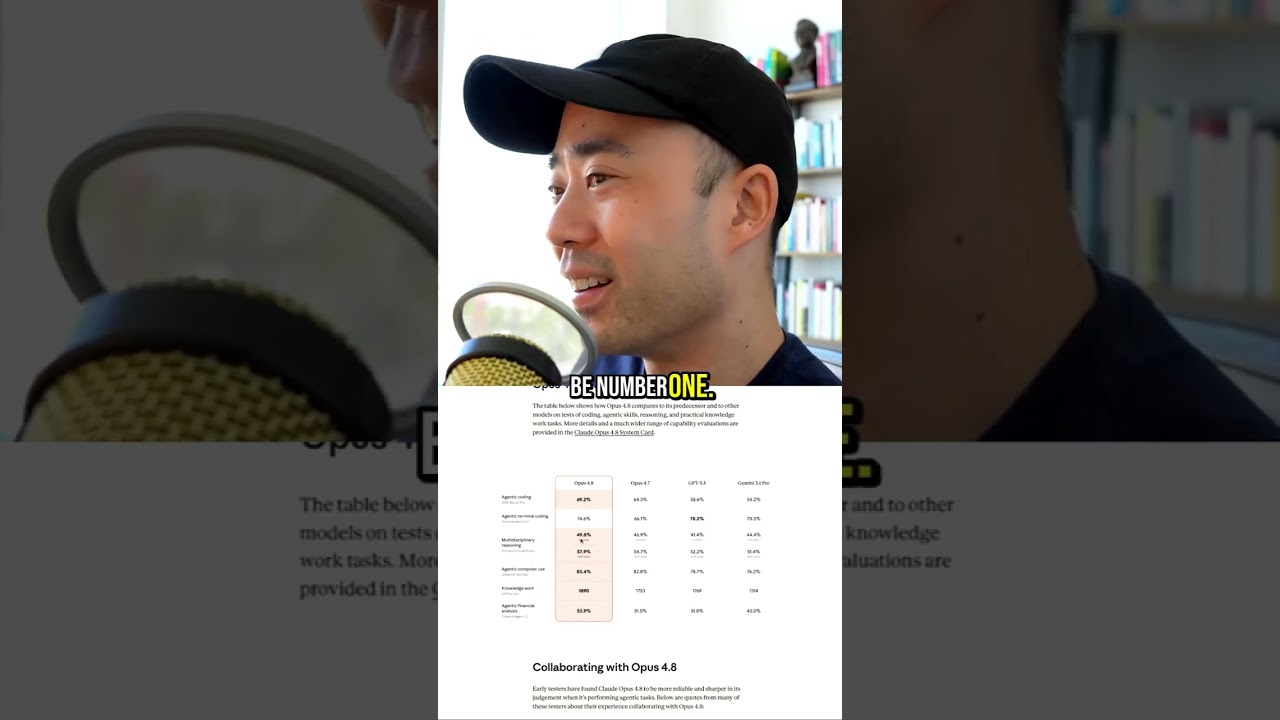
So I want to share this with everyone because I want you to, you know, this weekend's coming up and hopefully you have time to play with it. So you can see yesterday, Anthropic's like introducing Claude Opus 4.8, which I was like, okay, is it going to be like, you know, not that great? But I'm in all these AI chat, like CEO chat groups right now, and everyone's like, oh, my teams are using this. It's crazy. I'm like, crazy in a good way? And they're like, yeah, crazy in a good way, right? I'm like, okay, cool. So you can see obviously when they market themselves on these benchmarks, this is one way of marketing your LLM, right? You just show that you're beating everyone else. So whenever something new comes out, obviously you're going to be number 1, right? So you can see Opus 4A is in the red. But what I want to call out here is that they launched this new thing called dynamic workflows. Okay? So what this means, Neil, is if you want to do like a big migration on your website, you can just ask it to do it. Okay? Now I'm like, okay, well, Neil, you're not going to do a migration yourself. I'm not going to do it myself. I'm like, how do I apply this to business, to making more money, right? Yeah. And so I worked with my Hermes on this. I'm going to share a couple of prompts with you, but there's even a video down here, Embrace Long-Running Tasks with Opus 4A and Claude Code. Basically, it will create all these workflows for you, and you can have hundreds, if not thousands, of these subagents working. And they— the main benefit here is that oftentimes when you have an agent work, they might not follow the process in terms of steps. They might go step 4 first, then step 5, and then step 10, and then step 1, which screws up everything. But dynamic workflows allow you to just spin up a bunch of subagents and they follow the process. That's what it is.