Content Marketing Tips with Neil Patel and Why He Gives $30,000 Articles Away
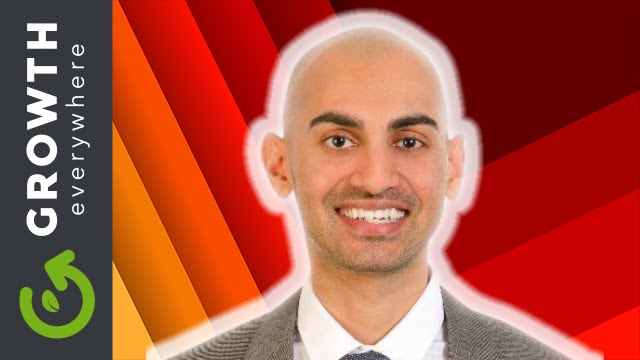
Neil Patel built Crazy Egg, Kissmetrics, and Hello Bar by networking across industries and creating massive free guides. He spends $30,000+ on articles as a branding experiment and learned hard lessons from an FTC investigation at Kissmetrics about scaling too fast.
Chapters
Do you want to impact the world and still turn a profit? Then you're in the right place. Welcome to Growth Everywhere. This is the show where you'll find real conversations with real entrepreneurs. They'll share everything from their biggest struggle to the exact strategies they use on a daily basis. So if you're ready for a value-packed interview, listen on. Here's your host, Eric Siu.
Today's episode of Growth Everywhere is brought to you by Single Grain. Single Grain is a digital marketing agency ran by yours truly that has helped venture-backed startups to Fortune 500 companies grow their revenues online. Single Grain covers services such as search engine optimization, Facebook advertising, Google advertising, YouTube advertising, content marketing, and conversion rate optimization. To learn more about Single Grain, go to www.singlegrain.com. singlegrain.com/grow to learn about 8 marketing campaigns that we've used in the past to help clients grow, including the one that helped generate over 1,500% return on investment.
All right, so today's episode is with Neil Patel, who is one of my dear friends and also one of my mentors as well.
You guys will see that Neil Patel has ran multiple successful companies and is a very well-known star, we'll just call him a star, in the internet marketing space.
Very insightful interview, a lot of new things to learn in here.
And, you know, I know Neil's done a lot of interviews in the past, so, you know, we try to avoid the questions that have been asked before. So enjoy.
Hi everyone, welcome to this week's edition of Growth Everywhere where we interview entrepreneurs and bring you business and personal growth tips. Today we have Neil Patel who is a close friend and a mentor of mine and also runs Crazy Egg, co-founder of Kissmetrics, also runs Hello Bar, and also has ran some other companies in the past as well. So Neil, how are you doing today?
I'm doing great. Thanks for having me.
Thanks for being on the show. So Neil, I guess to kick things off, why don't you dive a little more in depth into your background and kind of what led you into what you are today?
Yeah. I've always wanted to be an entrepreneur as a kid. When I first started out, I created a job board. It was an exact replica of Monster.com. And using the word exact is probably quite a bit off because it was a shitty replica of Monster.com. There was also no job postings. There were also no companies willing to pay for job postings. I also didn't know how to take credit cards online, right? I was doing that at the age of 16. I'm 29 right now, so you're roughly looking at 13 years ago. I got into the business I am right now because I thought when you put up a website, people just come to the website and it magically becomes popular. Sure, you know, if you Think about starting an online business now, everyone knows that. And I was a little kid, right? I was naive. At that time, when I started my first website and I assumed people are going to come to the website and no one came, I ended up hiring a few internet marketing firms. Now these firms didn't drive any traffic, yet they took my money. So I had no choice but to learn how to do marketing on my own because as a 16-year-old, there's only so much money I have. When you have a job that pays minimum wage, it takes a very long time to save enough cash up to pay new marketing firms. So that's how I got into the industry I am. Then from there, I got into software because I realized consulting wasn't scalable, and I just stuck to software ever since.
Cool.
Cool.
Great. So, you know, right now, I mean, you talked about how things aren't scalable, right? But you do a lot of speaking right now, so obviously speaking isn't scalable. So how do you, you know, what's the big benefit for you in terms of you doing speaking?
Sure. When I do speaking, I try to speak overseas versus the US, not because I'm looking for new experiences when it comes to traveling or seeing the world, right? I can do that whenever I want. I speak and specifically overseas because it lets me get to know and understand different cultures. When you look at the US market, yes, we have a high GDP, but the majority of the population isn't within the US. And other countries are developing at a quick pace and they're growing. So by me understanding other countries, other cultures, and getting to know some of the people on the ground, it helps us expand into new territories in the future.
Cool, cool.
So when you think— I mean, when you travel to these new cities, I mean, do you see like new stuff going on that gives you new ideas? I mean, can you give us an example of like how, you know, traveling has kind of helped you in your business endeavors?
Sure. So I just got back from Tel Aviv a few weeks ago. This all blends in. Also, when I travel, because it's not scalable, I'll try to do like six or seven different countries all at once, right? Within a thirty-day period. Now, when I was going to Tel Aviv, I quickly learned that a labor is much cheaper than here. Not a big surprise. But the interesting part was they have people from all around the world, from Russia, Germany. You name it, right? They're all there in Tel Aviv. Because they're there in Tel Aviv, a lot of companies are actually running their sales floors from there. Their culture is very competitive, right? They breed a lot of competitive people. So running a sales floor there is actually very affordable and you can run many different countries and languages all from one area versus having to set up a sales floor in London, and then again in Germany or wherever it may be, right? You can target most of Europe all just through Tel Aviv.
So how much would a sales floor be in Tel Aviv versus like a sales floor in like the US?
1/4 the cost.
1/4 the cost, wow. Okay.
I met quite a few of the sales reps there, interviewed a few people, not looking to hire or expand right away. But they are talented, they understand technology just like us, their sales guys are great, very competitive. And they'll work their butts off.
Wow, good to know. All right, so I mean, you know, you've been involved with, you know, a few different multi-million dollar companies. You've sat on, you know, different boards, done a lot of advising stuff in the past. And, you know, what are some similarities you've seen with growing these, you know, these different businesses?
It depends on the stage. The biggest problem that I see is one, entrepreneurs within companies are stuck in their own ways in which They continually work on their own products, services, and they don't lift their heads up to like talk to more than just their current customer base. So they don't really see what's happening in the marketplace or where their business needs to pivot or adapt to. Also, they're not executing fast. In many cases, people just keep excuses. Oh, we have a lot of products or we have this going on, so we can't get it done on time. Yeah, but that one thing can increase your revenue 30%. That can be a game changer for you, right? If you do that, it opens up more cash so you can expand. So those are the 2 big things that I see companies messing up on.
And how can they go about talking, you know, obviously it's easy to talk to your customers, but how can people on a tactical level go out and talk to people in the marketplace?
You just go to networking events, whether it's conferences or local meetups, whatever it may be, that's the quickest place to actually get feedback. Because you can target the meetups or the conferences around your industry. And I also recommend expanding out of your industry. Just because it'll help give you new insights. For example, I love going to like healthcare and financial events due to the fact that the entrepreneurs and the people there think quite a bit differently than the startup ecosystem. And it's just great to get different perspectives because they think differently and they have different ideas, concepts that could be leveraged in the startup community.
Got it.
So it's almost like, you know, you traveling the world, you're getting different perspectives from around the world, and then you, you know, diving into different Categories or niches, it helps you paint a more complete picture, right?
Yeah, it's not just that. For me, it's a big learning experience. So think about college, right? You go to college, you hope that you graduate, you get a job. I already have a job or I'm an entrepreneur, whatever you want to call it. I like going to other countries and events because I'm learning from the people there. The more I learn, the better off my businesses are going to do. I think knowledge is the one thing in this world that really is priceless.
Got it, okay.
So let's, you know, switching gears a little bit. I mean, you know, I've known you for a few years now and, you know, we've— I pretty much started— we started becoming friends through email. So, you know, my question to you, you know, obviously you're my mentor and a friend, so why did you decide to start helping someone that came out of the blue?
You were aggressive in which you just kept pestering me, and I don't mean that in a bad way. Pestering is probably better. You're persistent. You kept hitting me up. I'm like, all right, this guy keeps asking questions. And you were actually quite sophisticated with your questions. They weren't basic, like, you know, how do I optimize my meta tags? Assuming it was a marketing-related question. You weren't that basic. You're actually getting to the point. You didn't ramble on in your emails. So you would actually keep them short and to the point, try to ask one question at a time, which was really wise. I got to know you a bit. I'm like, all right, this kid is doing, Decent, but I actually see potential in him. Someone just needs to help him out. You don't want anything in exchange, as you already know. People did the same thing with me when I started, and I see a lot of potential in you, and I still do.
Thank you. You actually took it one step further too. I mean, you know, I pestered you with some emails, and then like afterwards you're just like, dude, let's get on like a 30-minute call. I was like, whoa, this millionaire dude wants to get on a call. And I was, you know, obviously I was really nervous on the call. So Why did you decide to take it one step further? Because 30 minutes of your time can be worth thousands of dollars.
Yeah, everyone says that, like, oh, my hourly rate is this, or, you know, when I don't work, I make this much money. But people always have downtime, from watching TV to just relaxing, maybe spending time with the family. And I'm not saying spending time with the family is not important. I don't have kids or anything like that, but I do have free time just like everyone else. It's a question of, do you want to make free time for someone or something in your life? And I saw potential in you and like I said, I still do. By making free time, it allowed me to get to know you and I'm like, all right, if this guy is smart, he's going somewhere. Maybe there's not opportunity for us to work right then and there, but maybe 2, 3 years down the line, we'll work together and we'll both make some money from it. And that's actually happened, right? It just took a while.
Yep, totally. So if someone, I mean, you know, people watching this interview, you know, everyone talks about, hey, you need to be getting a mentor, blah, blah, blah. So Is your one key takeaway to getting a mentor just being persistent, or is there another element to it?
Being persistent and also trying to be equal. What I mean by equal is you were trying to help me out as much as I was trying to help you. Now granted, at the beginning I didn't really take much of your time or help, but you offered me help and you're like, hey, you can do this better. You were giving me suggestions on ads. Do you remember that? You were saying, hey, I noticed you're doing X, Y, and Z on ads, and I saw someone else is doing this. I analyzed the data and theirs is doing better by X and you showed me stats that backed it all up and I was like, all right, this guy is smart. Let me just work with him. Let me throw some money at him and see what happens.
Cool.
Great.
Yeah, so I mean, that's— I think that's the key takeaway. I mean, even if the stuff you give away for free sometimes isn't valuable, I think sometimes other people see value in it even though what you did might seem really basic, but I think that's what it comes down to. Also being persistent. So obviously, switching to your blog, Quick Sprout, you're getting hundreds of thousands of visits a month. It's a machine. I mean, what are some tips you have for people that want to get to your level of content production?
It's just streamlining the process, knowing how to come up with topics, how to outline them, how to just crank them out. And I have a few blog posts on Quick Sprout. that break this down. I wrote one today on how to come up with ideas. I have another one that's like called, I think it's how to create a powerful blog post within 2 hours or 1 hour or something like that. So those 2 posts will help crank out the content on a consistent basis. The third thing is you got to go above and beyond so much that no one's willing to copy you. A good example of this is I create guides on ClickSprout. One, it educates people. Two, it's so ridiculous on how much design time, how much time creating the content, promoting it, et cetera, gets put into it. That people are like, I can try to replicate this, but this is just going to be too time-consuming and I'm too lazy. A lot of people are lazy. So if you go really above and beyond, most people won't replicate and copy you, and you'll actually see quite a bit of traffic.
Got it. It's funny because I interviewed one of the co-founders of Marketo, and he said the same thing. He's like, you know, we spent 2 to 3 months on these guides, you know, 100 pages or so, and 58% of our leads come through that. Marketo is a huge company, right? Is that approximately the time you spend on like a guide, like 2 months writing it and then 1 month designing it, or how does that look for you?
Probably a bit more streamlined than Marketo. While it's getting— while each chapter is being written, someone's correcting the grammar and proofreading it. As they're done with that, they're sending that chapter off to design. So within 2 months at the latest, I can crank out a whole guide that's 30,000 to 40,000 words.
How much do you spend on one of these guides?
$30,000 plus dollars.
$30,000 plus dollars. And you know, here's the thing for everyone, you know, he spends $30,000, gives all this shit away for free. Why is all this stuff free?
I don't care for the money. There really is no reason. I just thought it would be funny and like to test it out. It's like a marketing experiment, right? I like learning and the quickest way I learn is by spending money.
Come on, you started out $16. I mean, I assume as an entrepreneur, your goal is to make money, right? There's got to be some monetary benefit.
Some of it's also ego as well. Like, I do want to brand myself as a great marketer, and I believe that just giving away all this stuff for free also helps brand myself as one of the top marketers.
Okay. So you're— with Hello Bar, you guys just recently acquired Hello Bar. You know, what's the— you guys are doing Crazy Egg already, there's Kissmetrics too. You know, what's the purpose of, you know, Acquiring a company like Hello Bar, what's the long-term goal with that?
Sure. The long-term goal— acquired it almost 2 years ago, released a few different updates and variations, released a new one less than 5 days ago or earlier in the week, and we also decided for this version of Hello Bar, we turned on paid plans as well. The whole purpose of it was it's just a new way to expand the business. Business was doing well, still is, and we're just like, all right, we have extra cash. Opportunity came up because we knew the current owners of Hello Bar and they wanted to get rid of it. And we're like, we use it on our blogs, we love it, let's just buy it. And it was just a new way to expand the business.
Okay.
With, you know, switching gears here to talk about you and Heaton, and Heaton's been on this show before too. I mean, you know, Heaton's been your partner since the beginning and you both are excellent You guys are excellent at responding to almost everyone through email. And it's not using someone's— you're not using an assistant most of the time. It's just you guys responding. And you guys must get a shitload of emails. So how do you manage to do that?
I just work a lot of hours. There's no trick. I do filters within Gmail. I have an assistant that sets up meetings so that way I don't have to waste my time with that or phone calls. And that's it. I just put in a lot of time and effort. I was reading an article about Elon Musk and he was saying how he spends most of his time in emails as well. I don't know a solution. People talk about Mailbox and all these apps. I'm like, Mailbox sucks if you get a lot of emails. Anything that tells me to read an email later, remind me, that's useless because that means I spent time opening up the email, reading it, telling it to remind me, and then rereading it and then responding to it. It's more efficient if I open up the email the first time, read it, and then respond to it.
Okay, fair enough. That's funny because Keaton said the same thing. He's like, I don't know what people talk about inbox zero, blah blah blah. It's like I just crank out email, and I think email's actually productive is what he said. Which is, I think you got, you have the same perspective, right?
Yeah, my whole workday is within my email. So for example, I had to create Hello Bar templates. So that way every week we email out users like, hey, this is what happened to your Hello Bar, X clicks, click here to upgrade, right? It's also a way to generate revenue. And I emailed myself to create a template, and then I wrote it over the weekend, and I sent it off to Hiten, and I was like, hey, can you have the devs But like, I actually operate my work life based on my email, because in my email, in the starred section within Gmail, it said, create a template for a Hello Bar email.
Got it.
Now, Hello Bar, I mean, you guys, I know when you guys acquired it, you know, previously they would charge for it, and then you guys made it freemium. Is it still freemium right now, or is it generating revenues? Are you guys still trying to acquire more users?
It's freemium. There are paid plans. We are trying to, of course, always acquire more users.
How does revenue look like today for Hello Bar?
It's very small. We just turned on revenue like less than 5 days ago. I don't even know what the revenue is now.
Wow, okay. So it's, okay, got it.
It's tiny. It's not like it's making millions of dollars.
Okay. Yeah, I didn't know it was that recent, but so—
'Cause we had an old version. The old version we just stopped charging, right? We just made it free.
Okay. So you and Hiten, I mean, you know, you've been partnered up for so long. I mean, when did you know it was the right— when did you know Hiten was going to be like a long-term partner? Like, what's the story behind that?
I didn't know at the beginning. I didn't. I was also young and he was young. We didn't look at it— neither of us looked at it that way. My sister married him. That's how I met him. She introduced us and I'm like, the guy's smart. I'm technical. He understands business. He was studying business at UC Berkeley. I was like, all right, let's partner up. It's funny, I do a lot more of the business end now and he's way more technical than I will ever be. But we didn't think about it as how's this going to be long-term and what's going to happen in the future. We were just operating like, let's just grow, grow, grow, grow, whatever we can do to make more money and make companies happy, your customers, et cetera. As Heath and I started working together over the years, what we quickly realized is we got to know each other a lot more. And not just like on a friendship level, like, hey, what's up? You going to have drinks today or anything like that? But we learned how each other works. It's much more efficient for him and I to stay together as business partners because we know how each other operates, where to help each other, how we both think, et cetera. And our goals are very aligned. So it's like very little bickering or arguing. You know, people talk like, oh, my business partner did this and I didn't get along. We get along really well. At the beginning, it was much harder, but you learn from experiences, right? We learned how to deal with each other. We learned how to like, when he's stressing out, I learned how to help him out, right? When I'm stressing out and freaking out, he knows how to help me out. And what really makes our partnership great, and no one really knows about this too much, is actually my sister. So my sister, his wife, is a great middle person or middleman, whatever you want to call them, which she'll tell me, she's like, yeah, he's really stressed about X, Y, and Z. If you can do whatever to help him out, that would be great. She'll also tell him, hey, Neil's just been like traveling a lot, he's just been working one too many hours, you should like try to help him out with A, B, and C, right? So she really helps. He's actually— I would, for me, I would actually say she's the glue of our business partnership and she does way more than that, right? Just no one really ever notices what she does, but she's awesome.
So the key is to have your business partner marry your sister.
I don't know if it'll work for most people, but it works really well for me. And I probably will never have another business partner in my life other than Hiten.
Just so everyone knows, Neil's sister, Hiten's wife, is a freaking machine. I mean, she helped with the acquisition of Hello Bar, takes care of the kids, just had a new one, and then just freaking handles a lot of the, you know, the behind-the-scenes stuff, so I think it's an Indian thing, huh?
It could be, I don't know, but she was in the hospital giving birth and she was still doing support emails for Crazy Egg while she—
No way.
I'm not joking. She was at like— this was a while ago, right? Because the kid I think is like 6 months old now. But when she was at the hospital, I was kind of like, what are you doing? She's like, oh, I'm just doing support emails while I'm like waiting for the baby to come out, right? She's just a trooper, like she just works.
Yep. No, and you know, there's—
She was back on the horse. Like she spends time with her family and she does get help for, you know, to help watch the kids and stuff. She's there all the time. She's there attending soccer games, baseball games, whatever it may be, as well as, you know, helping the kids learn and doing all accounting, finance.
Okay. Dude, that's, that's, you know, that's the trend I see. I mean, between even your cousin Soojin, yourself, I mean, Heaton, Amy, your sister, I mean, it's all about helping people at the end of the day. And you know what Heaton said was— I was like, why do you help people so much? He's like, it's like a drug. So I guess my question to you is, why do you help people so much?
When I was starting out, people helped me and they didn't expect anything. And I was really appreciative. I myself would not be where I am today in my life if it wasn't for people like Andy Liu, Patrick Gavin, and there's quite a few other people. And no one knows about these guys, right? They're not famous or anything like that. They're just solid entrepreneurs. They helped me. They never asked for anything in return.
How did you find one of these entrepreneurs? Like, what's the story?
Okay, Andy I met at a conference. I was speaking at a conference and he was there as an attendee and I didn't realize how successful and smart he was. Patrick Gavin, He was in the SEO space when I was in the SEO space and I was Google and his company ranked really high up and I'll just randomly call him and get advice and pick his brain and share knowledge. But these guys helped me so I myself help others now and try to make them succeed. Don't care for anything in exchange, I just love seeing other people succeed.
Case in point. All right. So, and just so everyone knows, I just want to allude to the past episode with Hiten as well. So, you know, Neil just talked about helping each other out when one or the other is stressed. You know, Hiten calls it Batman and Robin. So, you know, you guys switch the roles every now and then and I highly recommend everyone checks that out because I think that's the best analogy available. So for one of your— let's talk about one big struggle you faced while growing one of your businesses and let's leave the web hosting one out. I think that's been talked about to death. So what's another big struggle you faced while growing one of the businesses?
Sure.
The consulting business. You want a current business or you want a past business?
Let's do a current one.
Okay. Kissmetrics. So most people don't know about this. They knew we were in a lawsuit. We were also back in the day in an FTC investigation. I spent a long time dealing with that as well. FTC investigation went by with colors, you know, nothing wrong. They just had to investigate the company because there's a lot of bad press due to privacy. And they found nothing wrong with our code. It still costs money to deal with FTC because lawyers are expensive, especially when you pay them up to $1,200 an hour with the class action lawsuit, right? We figured all that out through just lawyers. During that time, before that actually hit, the company was doing quite well and we weren't sure if we were going to raise. 'Cause Heath and I were trying to figure out how to make it profitable. And we were actually getting pretty close. That hit, we lost money because you're losing clients, right? Bad press, lost clients. When that happened, we needed to raise money. No VCs want to fund the company that's in a lawsuit, in a class action, or in a class action lawsuit and an FTC investigation. Luckily for us, we have a great staple VC, True Ventures, and they've always had our back. And they really do support us. I really do believe they're an entrepreneur-friendly venture fund. And even to this day, if I had to do another startup and I needed money, I would actually go back to Tony Conrad or Phil Black, which are 2 partners there, and get money from them. Because they're just easygoing guys. The business is going up, right? They see the growth. They're chill. They stay out of your way. They know their place in which they don't try to give feedback in areas that they're not experts in. They're good, right? But long story short, when we're going through that, it was hard for us to raise money and we needed more revenue. So we had to expand sales. And because we expanded sales, products suffered. Because products suffered, you had downtime, you had companies complaining. We were trying to fine-tune everything because sales is very upfront heavy cost. Lifetime value, you end up making it up. So we had to juggle, figure out how to cut costs, reduce Amazon costs. There's another engineer of ours named Steve Cox at Kissmetrics. He figured out how to reduce our Amazon bill. And we started doing all these things. And then on top of that, what made us really struggle is we started growing revenue, you're starting to overload the system with more customers, things start hanging. And then you got to improve product and it's even harder to improve product because you have all these customers. that are on the existing platform and you can't just be like, all right, let's pause and let's create something from scratch and then go from there. Plus our product became also really complicated because sales guys started pitching stuff and we were like, all right, if we just add X, Y, and Z feature, we'll generate more revenue. But what happens in the long run is you have a complicated product, you have revenue, and you can also have issues because you're not scaling up servers, et cetera, at the same time due to lack of funds. But we figured it out. We juggled it all. We figured out how to fine-tune the code. We've been working over the last few years to making the product better, right? More specifically last year, we got out of the lawsuit and stuff like that, but we're slowly improving even product-wise, right? It still takes us a while to go back and recover from all of this. Sure, product will always improve, but it's not going to be as usable if we started the company from day one and just built the ideal most usable product.
Sounds like it was much more of a balancing act than You know, versus starting like a Crazy Egg, right?
That's correct, because Crazy Egg was self-funded, really low expenditures, profitable, not from day one but within a few years. And if it grows or doesn't grow, it doesn't matter because you're— it's not like you have anyone to report to and it's not like you're losing money out of your pocket. But with a venture-backed business, you need to be growing at a fast pace. If you're not, then you're not going to raise the next round, no one's going to acquire you, etc. But the crazy— yeah, we still need growth and all those kind of other great things, but if you don't have them, it's not like the business is going to shut down. With a startup, you're burning money on purpose to grow faster and you're losing cash. So if you don't figure out how to cut costs and generate more income, you're going to go out of business, especially when you're in a pickle of dealing with lawsuits and investigations where you can't raise more money.
Got it.
And we were lucky, right? Venture exploded us and gave us whatever cash we needed to stay afloat and survive. Because just on our end, by fine-tuning sales and product, which we were working on and doing, it still wasn't enough to keep the company going. And True really believed in us, and hopefully they made good money on their investments because the company is doing well and growing at a fast pace.
Sounds extremely stressful. So if you were to start a new business today, and I might be answering my question already, but looking at Hello Bar, but if you were to start a new business today, would you rather do a Crazy Egg self-funded business Or, you know, go venture-backed again?
It depends. If I'm trying to do something pie in the sky really big, I would actually raise money. It's just quicker growth with more money. If I wanted a chill, more relaxed lifestyle and I didn't care about money as much, I would do a self-funded startup. I'm not saying a self-funded startup can't be bigger, but typically if you look at history, companies who raise money can grow faster because if someone gives you $100 million, you have $100 million to play with versus your own bank account. Unless you're really rich, Kind of need someone else's money.
Yeah, well, even if you were really rich, you'd still probably want to use someone else's money, right?
Yeah, and for me, most of the times, Ethan and I try to do self-funded stuff, but we've also been entrepreneurs for so long, we don't live lavish lifestyles, that we just use our own money to create more companies. Like, we don't have anything else better to do, and we enjoy it.
Right, okay, great. So, Let's talk about your little Instagram project where you spent a few, like 5-figure-ish. Can you talk a little bit about the Instagram story and what you did? What were you trying to accomplish there?
Yeah, so at first I started, there's a guy named Dan Bilzerian and a lot of male entrepreneurs were telling me about him. You're talking about some of these male entrepreneurs have a few billion dollars, some of them even more and are on the Forbes top 500 list of richest people in the And these buddies of mine who have this kind of money, they're telling me like, hey, have you seen this Dan Bilzerian? I'm like, you're 82 years old. What are you doing on Instagram looking at his pictures? And his pictures are mainly with just half-naked women. I'm like, what are you doing on Instagram looking at this? You have a wife, you have ex-kids, you even have grandkids, right? And he's just like, well, I just like living vicariously through him. And one too many entrepreneurs told me that. Now by no means was I trying to replicate what Dan Bilzerian was doing because I didn't want pictures of half-naked women on my profile, right? And if you look at my profile right now, it's actually really clean. But what I was trying to do is get enough press, and if I can get enough buzz and press, I was hoping that one of these guys would end up seeing it and it would end up resulting into more business. And funny enough, I got quite a few text messages of entrepreneurs being like, Dude, I saw so-and-so model, you know, like talking about you on Instagram. Like, you know, this is amazing. We should talk and we should do business together. And I learned my lesson, right? You got to be very careful on what you use online. I got a lot of people, male and women, who are saying like, hey, what you're doing is sexist. You shouldn't do it, etc. And I do believe they were right. And I quickly changed what I was doing, stopped leveraging females, etc. Etc. And, you know, still kept growing on Instagram and it's still working.
Cool. How much did you spend on that project so far?
So I think the blog post I said I spent $57,000 or something like that. So $57,000 there, then I paid another guy named Anthony $2,500 in October for a week of marketing testing out, and then I spent $10,000 in November. So if you're looking at it, I'm looking at what? Roughly $70,000.
Okay, $70,000 all in, and it's resulted in at least some people talking. And well, I think there is some— to me, that's press right there.
There you go. And if you look at my Google Trends and you type in my name, Neil Patel, like, and you can drop down and select entrepreneur, you'll see how much more buzz is generated. It's all from Instagram. It's like almost doubled the amount of people looking for me. I quickly learned most of those people aren't qualified. In business and I am stopping Instagram. Just like I'm stopping Instagram from actually managing my own profile and dealing with it. It's too much work. But what I'm doing is I'm still paying people every month to post about me. I think right now I'm spending $13,000 a month.
Got it.
Okay, great. So let's go into investments for a second and just a few more questions from my side. You've tried your hands at different investments, different types of investments over the years, you know, angel investing and things like that. So my question is, What has worked out well for you and what hasn't?
Yeah, I've done it right from angel investments. I won't lose money. I would say a lot of the startups don't work out not because of the idea, but because the entrepreneurs are unable to execute. That's the biggest issue I've seen, or leverage data and adapt. As for my problem with investments is I won't make a killing. I don't have an Uber or Airbnb. Funny enough, Airbnb asked me to invest during their Series A or C funding, and I said no because they wanted my help with marketing. Big mistake there. And I have a few more of those that I missed out that turned into like $5, $10 billion companies.
Wow.
I'm not good at predicting these. What I am good at is investing in myself, creating software products for SMBs, and that's what I continually do. And right now all my cash just goes into my own products and projects. I don't give other people money for their ideas anymore.
Got it, okay. And well, this actually, this next question might tie into what you just said, but what's one piece of advice you'd give to your— I mean, you're 29, so I'm gonna change the question to what's one piece of advice you'd give to your 21-year-old self?
Invest in yourself and focus. One problem, one company, and then grow from there.
Okay, so not only just invest in yourself, but one thing at a time.
Yes, I still make that mistake to this day.
Okay.
Now, I already know this answer, but for the audience, who is your idol and why?
So who do you have on your end? I'll tell you if you're right.
Elon Musk.
It is Elon Musk. The guy has like big balls. I don't know if I should be using that word, but—
Oh, it's fine.
What I mean by that is the guy, just the way he thinks is like so out there. He makes other people's dreams into reality. And I just love the way he thinks. You need people like that in this world to really think like that, or else there's going to be no more growth.
I totally agree with that, but I also saw an article on Business Insider today where he thinks that robots can start killing people in 5 to 10 years. So that kind of freaks me out, but you know—
Robots already do kill people. Look at drones, right? They are human-controlled and they are part of missiles, but I'm pretty sure you don't need the human controlling Part anymore and they can kill people. Like, I think that is what the world is gonna come to. Will it become like Terminator the movie? I have no idea.
That's exactly what he's saying. So yeah, that's kind of freaking me out, but it is what it is. But yeah, Elon Musk, great. What's one productivity hack you can share?
When you open up your email, respond to it right away. Don't mark it and respond to it later, read it later. It just creates Inefficiencies and you'll spend like double or triple the time on email.
Okay. What's one must-read book you'd recommend to an audience?
I like reading The Dip by Seth Godin. It tells people when to stick and when to quit. Because too many people don't know when to bail out of a business. Okay.
How many times have you made that mistake?
A lot.
I don't even know.
I can't even count on one hand.
Okay. Why do you think that is? I'm cheating here, one more question.
Just young and naive, not enough experience. I know now when to quit. But you know, when you're 21 and you're a young entrepreneur, you don't always know what's best for you. Okay.
So now you— I'm cheating again here, but now with the experience that you have, you know, what— I guess what tells you it's time to quit?
I wish I could tell the audience like it's one thing. And wish I could just break it down. I usually just know. It's not even like a gut feeling. I'm able to analyze businesses pretty fast, or even my own business from an outside perspective. And I'm typically able to be like, this is going to work or it's not going to work.
Yeah, I got to hand it to you. That you can do. All right, so final question. What's the best way for people to find you online?
quicksprout.com or neilpatel.com.
All right, everyone, this is Neil Patel, super popular online marketer, runs a bunch of businesses. Go to quicksprout.com, follow him on Twitter. Neil, thanks so much for doing this.
Thanks for having me.
If you're interested in growing your revenues online and you're tired of ho-hum agency work, then it might be time to check out Single Grain. Single Grain is a digital marketing agency ran by yours truly that has helped venture-backed startups to Fortune 500 companies grow their revenues online. Check out Single Grain at www.singlegrain.com/grow to get a free resource on 8 marketing campaigns that we've used to help companies grow their revenues online, including the one that drove over 1,500% return on investment.
Thanks for listening to this episode of Growth Everywhere. If you loved what you heard, be sure to head back to growtheverywhere.com For today's show notes and a ton of additional resources. But before you go, hit the subscribe button to avoid missing out on next week's value-packed interview. Enjoy the rest of your week and remember to take action and continue growing.









