Elon's Secret To Running Tesla, SpaceX, X, and DOGE
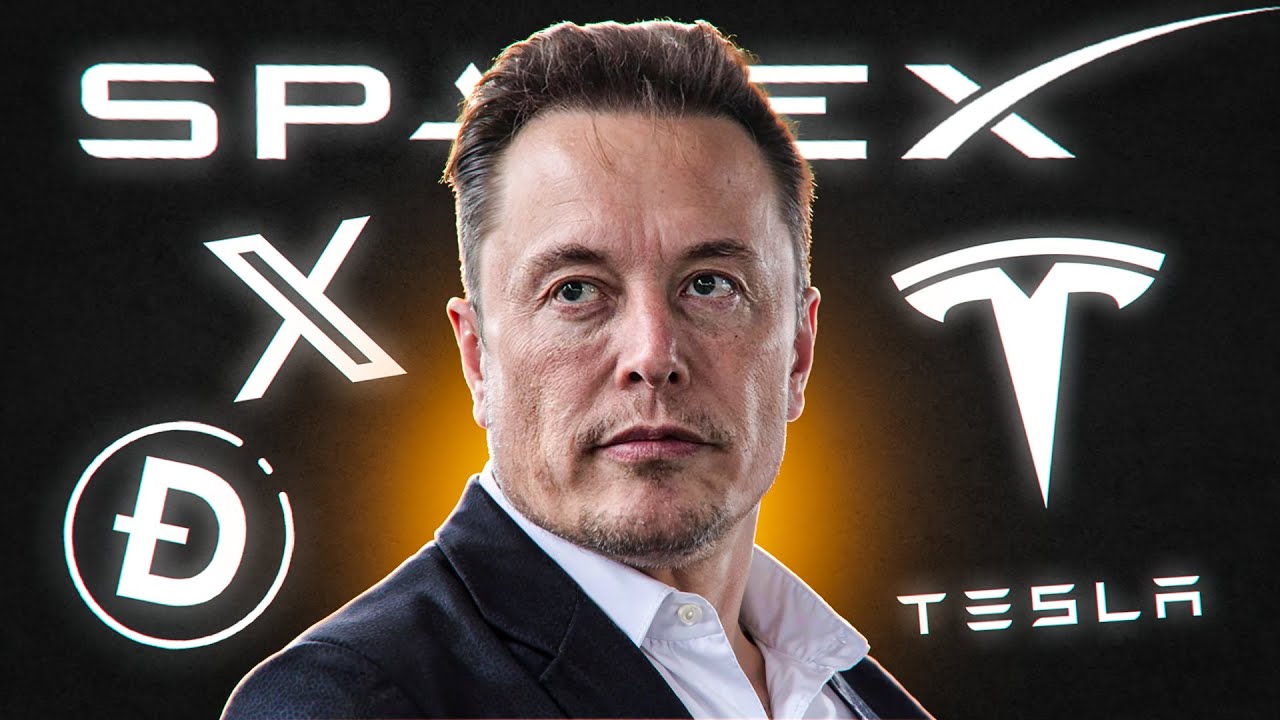
Elon Musk runs his companies by identifying one critical bottleneck each week and fixing it himself while delegating everything else. Neil Patel applies the same Theory of Constraints to his own business, focusing quarterly on a few key problems. They also discuss how AI agents need three distinct roles—orchestrator, worker, and evaluator—to avoid blind spots.
Chapters
You want to know Elon's secret to running Tesla, SpaceX, X, and Doge?
No. Okay.
You don't want to know?
No, I, I, I, I want to know, but I don't know what it is.
Okay. So Elon's secret to running Tesla, SpaceX, X, and Doge is— this is called the theory of constraints. So there's a great book out there called The Goal. Amazon's Jeff Bezos used to make all his managers read it, right? It basically talks about how In every single company, you have one major bottleneck at a time. You can't solve— there's, there's sure, there might be hundreds or thousands of bottlenecks, but there's always one major bottleneck. What Elon does is he looks at all the companies every single week. He's like, Tesla, what's the biggest problem here? SpaceX, what's the biggest problem here? He goes, he flies, he takes his Gulfstream, he flies around and solves that problem. Sometimes he'll work with like a frontline engineer or something like that to solve the biggest problem. But because he knows all the details for every company, he can go in, jump in, High level, he can go low level as well. But all he does is focus on that because he's already delegated running the day-to-day to his operators, right? He's got Gwynn, and then he's got— yeah, he's got Linda Yaccarino, right, for X. And Doji's working with Vivek on that as well. But he's got a lot of people he can delegate to. But he just lasers in on the first, the major problem for each one. So he's got at least 4 major problems a week, and he just solves that. And when I heard Marc Andreessen talk about this, I was like, oh my, This is, this is actually the book, The Goal. It's the theory of constraints. You're always going to have more bottlenecks, and just focus on the biggest one. And don't try to do too many things at once. And that's how he's so productive.
I get that. I run a similar playbook in my business because I never run the operations. Yeah, I focus on the biggest problems. But I don't do it week by week. I just go, what are the 2, 3 biggest problems that I want to solve over the next quarter? And then I just focus on those and nothing else.
And you just keep attacking those until they're done?
Yes. Every single day. And then what I do is once I get them done, I make sure that it's a systemized process, other people can rinse and repeat without me. And then I do try to check in at least a few times over the next few months to make sure no one screwed it up.
Because sometimes they do. That's a key thing. One, it's checking in during, it's checking in on the metrics, and then it's checking in after too. And I will say for me, I don't do enough of a good job there. But seems like you're pretty on top of that. So that's good.
I get bored because this is all I do. All I do is just focus on that. focus on what are the few problems that we need to solve, solve them, and that's it.
Yep.
I don't actually have to go in every single day being like, all right guys, you know, let's look at some spreadsheets or accounting, or let's solve this problem that's related to this one account. I just look at what's causing the business not to grow as fast, and I go in and I work on fixing those. And the ones I can't fix, I assign it to my co-founder because he's usually better at the opposite.
Yep.
On me, he's better at recruiting. Operations and sales, and I focus on marketing and M&A.
Relentless focus, guys. If you think you're focusing pretty good right now, I would encourage you to think about how you can focus even better. I think, you know, you've been really good at it. I've gotten, I've gotten better at it. I think 2025, I'll be even better at it. All right. So I wanted to take a second to tell you about my ad agency, Single Grain. We're a performance digital marketing agency, and we focus primarily on working with B2B companies and ecommerce. So performance marketing, that's SEO, that's paid paid media, that's CRO, that's ad creative. And there are a whole host of other things that we're doing with AI that's really cool. You can go to singlegrain.com to learn more. Again, that's singlegrain.com to learn more, and we'll see you on the other side.
Let's talk about the different AI agents that you'll need. And I don't know if you saw Marc Benioff's event for the AI agents.
The Agent Force?
I, I don't know what it was called, but I was watching it on CNBC and I was reading tons of articles on it.
Yeah.
That was happening.
So, okay. This is actually— I mean, do you want to talk about that first before I go into this article?
No, you can just go into it. It was just a vent talking about how AI agents is the future. And he was just talking about Salesforce all the time and resources people can save, efficiency. He even gave an example during that conference on here's how many support tickets that Salesforce was answering through humans and how it's drastically reduced I think it was by like something like by half. I'm making up a percentage, but it was something large like that.
You know, someone posted something to X yesterday. I guess I spent a lot of time reading X. So they talked about a complex problem, a customer service problem that they were having. And they thought they were talking to a customer service rep, right? It wasn't until like 9 minutes later when the problem was solved, and it was a complex problem, that it said at the very bottom, powered by Intercom. So Intercom's a chat tool, right? It's a little chat you can add to your site. And it's just like, man, who cares who solves it? As long as it gets solved, that's what matters at the end of the day, right? So this article is written by Anthropic. So they created Claude. And it's a really good article. It's basically how to— it's building effective agents. So if you Google building effective agents Anthropic, I would encourage everyone to read it because this is the world that we're moving into. So the one thing I want to call out, these are the different AI agents that you're going to You're going to need an orchestrator worker. So you're going to need an agent that's almost like an overseer, like a manager telling all the other agents what to do. That's one that you're going to need, right? And then another one that you're going to need is an evaluator optimizer. So you're going to need someone that's checking the work, which is what we just talked about.
Okay.
Yep. So you have an orchestrator worker and an evaluator optimizer, right? Which, which when you think about these things—
Well, let's go back. So you got the orchestrator, you got the evaluator. Are they trained using different LLMs, because if they're trained by the same ones, ones of the people doing the work are also the ones checking it and they're trained on the same model, so they make the same mistakes.
Well, they could be trained on the same data, but you would just say, hey, your role is this. And then the other one, it's like, your role is this. And they should be passing data to each other so they have more context sharing.
Okay. Yeah.
But that's like—
But you get what I mean, right? Because if someone's doing the work and it's trained by the same model and it's off, Does the evaluator know that it's actually inaccurate?
Well, I mean, I would imagine we go into a world again where they can share the data where like, for example, there's certain things you know that I don't know when it comes to SEO, for example. There's certain things I know that you don't know. But imagine if we can pull that data. This is why— this is like a separate thing, but people talk about the importance of data lakes. You know what data lakes are?
Data links?
Lakes, like a lake. Okay, like Lake Erie. So right now, the problem with a lot of data is you have data silos, right?
Yes.
And if we move, continue to move into a world where SaaS is usage-based pricing, you want all the data to be combined into a data lake. So instead of silos, right, it's all just combined into a lake. And I would imagine that's kind of a similar scenario here where you're combining all of the data coming into these orchestrators and these evaluators into a data lake. So I'm not technical, I could be talking out of my ass right now, but it sounds logical to me. So that's it for today, guys. Please don't forget to rate, view, subscribe. And, uh, don't forget to check out marketingschool.io/agency if you want to grow your agency faster, and we'll see you tomorrow.









