Experimenting with LinkedIn ads for CTV, How to find good paid SaaS agencies, and more
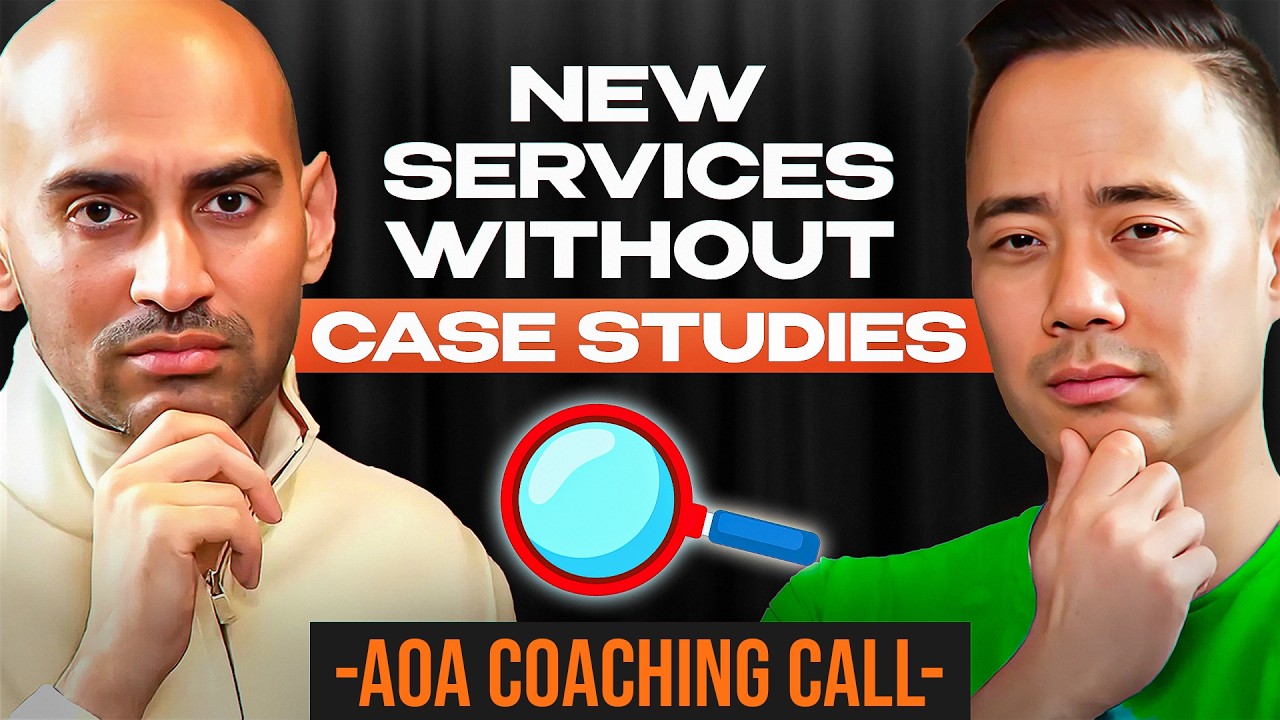
Eric Siu and Neil Patel host an Agency Owners Association call where members discuss LinkedIn Connected TV ads, finding paid social agencies for SaaS, and how to use case studies and testimonial videos on LinkedIn. They cover hiring marketing talent and launching new service offerings.
Chapters
So this next episode is covering a portion of our Agency Owners Association 1.5-hour call that Neil and I did. So if you're an agency owner and, or if you're looking to just learn more about how to scale an agency, there are a lot of questions that we get from the community members in here. This is basically a sneak preview into how the group works and one of the major benefits of the group. So if you're interested, please listen. And without further ado, here is the episode. Billy, you got anything?
Yeah, I wanted to get some of you guys' opinion on the new or semi-new LinkedIn ads for the CTV. Like, have you seen anything working there or kind of creative and any kind of insights that you've had there?
I haven't seen anything from it. I haven't played with it. Maybe my team has, just being blunt. I haven't tried it out at all. Um, what is this for customers or are you trying to run it for yourselves?
Yeah, like for customer, uh, something to offer to customers. Just haven't done it yet and, um, wanted to kind of bring a little insight to them to, you know, give them a little push that they need.
Yeah, I would look for case studies even if they're not from your agency. If anyone's talking about it, you're going to be able to find it on LinkedIn and share. Be like, look, these results have been amazing. People are doing it. We want to try it out. Let's start with a really small budget and let's go from there and try it out with a few customers. Experimenting with new stuff is always cool, but you want to, A, make sure it's a really, really tiny percentage of their budget because if you push it and it doesn't work well, then you look bad and you're burning their money. And B, I wouldn't push that until— if you haven't doubled down on what's working because let's say if they're doing paid Facebook ads but they haven't maximized their budget and it's profitable, Double down on that first before you would pitch LinkedIn Connected TV or whatever the new ad feature is.
Got it.
Does that help?
Yes, yes. Thank you.
All right.
So, but I'm telling you, just be really careful because if you're pushing something new and it doesn't work out well and they're spending a good chunk of money, they're going to be pissed off.
So you'd say it's more of a higher risk?
Low reward here.
What's the main service you offer?
Mostly the B2B go-to-market strategy. So we're doing a lot of LinkedIn ads already, a little bit of Google ads, but this is just something that looked like a lower, like something that I know we've talked a lot about with them, a lot of like connected TV, being able to reach their audience away from the computer or their mobile, but just haven't had much experience there. And didn't have like some kind of a case study to back up that we think this may be a good option for them.
First question for you, with most of your clients that you're doing LinkedIn ads on, are they able to just scale up and spend more and do it profitably or no?
Yes, for sure.
Okay, then focus on that before anything else.
Got it. Thank you.
All right, let's go with Scott and then we're going to go with Nathan finally.
Somewhat related question to previous discussion. If you have one service and obviously there's value in offering multiple services because then clients stick around longer in theory. If you're introducing new services and you don't really have case studies for those, like you said, Neil, if you mess it up, then you end up in a situation where the client is pissed and not happy, right? Because they spend the money. How do you tackle this problem if you're known for, let's say, SEO, you're starting to introduce, let's say, organic LinkedIn or video, do you, do you do a test pilot with them for free to give it a—
I was about to say, okay, test stuff out for free or for at cost or really cheap and don't get them on a retainer. Get them on just like a small test that's just really, really tiny. You can even charge them for it, but it just has to be a really tiny fraction of their budget and it has to be more like, hey, we're offering this, it works well for some clients, or We haven't tested too much of it. You can just be transparent and we'll do it for free or we'll do it for like $500. Let's just see what happens. You're already spending $20 grand a month, what's $500? And we'll just carve it out of the budget. Like, are you okay with this? Let's try it out for one month. And you got to keep having the culture with your clients that experimentation is the key to winning.
Yeah.
Because if you keep doing the same old stuff that everyone else is doing, it becomes saturated and more competitive over time. So they got to continually test and experiment and a portion of their budget should go towards that. each and every single month, even if it's a small, you know, fraction, like a few percentage points.
And Scott, one thing we do with Single Grain is we constantly reinforce the fact that if they are coming to us with ideas or pressuring us with ideas, they should fire us. And that's something we say on our sales calls and everything. So we're constantly putting the pressure on them with ideas and eventually they're just like, okay, yeah, let's try this stuff. Right? But to Neil's point, I think the key thing here is you're setting the expectation that it might not be all smooth sailing and this is very much a test. That's why they're paying nothing or pennies on the dollar.
Okay, to throw the wrench into that, with paid advertising, if we test, the feedback loop is fast, you know, a week, a couple of weeks, you get the, you know, the response. When you do organic, let's say LinkedIn or video, obviously if you do it for a small test for a month, the impact is not going to be as quick and maybe not even there unless you do it continuously for several months. How do you tackle that issue?
I think you need to set the milestones, right? It's like, hey, like, you know, what are your expectations? Here's what we think is good. By month 1, we're going to hit this, month 2, month 3. So that way, because to your point, Scott, the time to value is very important in agency. Like when you tell people SEO is going to take 6 months or whatever, sure, that's true. But like there needs to be that they need to feel like they're getting something, you know what I mean? So yeah.
Okay. All right.
Thank you.
Cool.
Alright, so let's go to you, Nathan. You got anything? If not, I'm gonna go over to Matt.
Yeah, yeah, I've got one. Good to see you guys. So, so again, my agency, we do lead generation and then we'll help convert that to revenue for newsletters. I'm thinking about other niches that that same skill set, that same service line could work for. I'm like mildly interested in SaaS, so like maybe, you know, mid-market, lower ticket SMB SaaS. What companies could be agencies, could just be SaaS companies themselves do really good paid social to converting to trial subscription?
Well, you're asking who's a good paid SaaS agency? Is that what you're asking?
It could be agency actually, maybe even more interesting because I can just look at ad libraries and funnels or the companies themselves who does that really well coming from, let's say, Meta ads.
Okay. So I'll give you an agency first, um, who, who does— they focus specifically on SaaS. It's called Powered by Search. Um, they're based in Canada. Um, Neil, you have any SaaS companies that come to mind that do good with Meta? I'm kind of blanking on that right now.
ClickFunnels has done really well over the years.
Ah, that's a good example. Yeah, but they're like, yes, yes, it's SaaS, but it's like, it's kind of different because, uh, Russell packages an offer through a webinar. He does his perfect webinar sequence and he bundles everything together. So it's It's a little different, but they do, they do have a ton of ads. I think that's something that's worth copying.
No, but the reason I say ClickFunnels is yes, they don't do it in a conventional approach and it's worked for 'em.
Yeah.
That's what makes it so successful. Everyone else, not everyone, but a large chunk just do the same stuff over and over again. But ClickFunnels has a really unique way of selling and I think that works well.
Yeah. Do you think it's possible without, is there almost like info product with SaaS on the backend? Do you think it works well to just Direct-to-offer SaaS?
It does. And they also do a direct-to-offer to SaaS. They actually try to push the SaaS first, not the info first for a lot of their offers, from what I've seen at least.
I got to take a minute to tell you about the Agency Owners Association. This is a peer group for agency owners. Think YPO or EO, but for agency owners. And I just wanted to read you a couple of testimonials. So this first one comes from Carrie, and we asked her, what do you like most about the She said, having a group of people to discuss and bounce ideas. The leads are great too. Yes, we share leads in this group as well. This one from Ollie, and he says, the ability to really post whatever I want and need, and the group responds. Great experienced members. Getting a lot of insights from conversations with other members. Getting a lot of value from sessions from Eric. Getting advice from others as well. And so if you want to grow your agency faster and you want a peer group to do so, just go to marketingschool.io/agency. This is a group that both Neil and I created. And our hope here is to create a vibrant community of agency owners and do a lot more with it in the future. So again, marketingschool.io/agency, and we'll see you inside.
Got it. Cool. Any, any other logos good to look at?
Um, I got Nathan. I, I think one company that's unconventional, they're smaller, but they're growing very quickly right now is Beehive. If you look at how they're on Twitter and they're attacking, uh, ConvertKit, uh, you know, we, we, we, Nathan's, Nathan's a friend, but just how they're going about things. And how they're shipping, right? They have a marketable moment every single month, right? I think that that's pretty intriguing to me. So up and comer.
Yeah, they're cool. We're running Tyler's newsletter and then their flagship newsletter too. They're great.
Cool. All right, Matt, over to you. You might be the last one, Matt, so make it count.
Okay, thanks. Yeah, so we wrote a case study on our sort sort of flagship client. We've— this client, we've been with them for 5 years. We've done amazing work for them. They've grown tremendously in that time. And I'm really excited to get the case study out, but the client, it's been sitting with them for a couple weeks now and I can't get it approved. I can't get it out. You know, I can't get them to give us approval to publish it. So I was curious if you guys had any ideas on how to encourage the client to move on that, number one. And then number two, earlier Neil mentioned sharing case studies on LinkedIn for B2B business. I was wondering, are you suggesting using LinkedIn articles to share that case study or just using regular LinkedIn posts driving traffic?
LinkedIn. So the second one I'll answer first is just a post. The first issue that you have with problem number one is, so if when you're posting a case study to LinkedIn, just do it as a post. But the first question that you asked, you should have your contract set up in a way where you're able to just create case studies and publish it without their approval. If you don't have that and you're not allowed to and explicitly says, then of course you need to work with them and get their approval. And it really is up to them to showcase it or not.
But typically when clients don't want to showcase their case studies is it could either be A, sensitive information, B, they don't want other people to copy. What you want to also talk to the customer about is the pros of showcasing the case study, right? Because a lot of times they think about the negative. Think about how the engagement you can get and brand recognition. Think about the backlinks you can end up getting. There's other factors that can help them grow too and help their brand get out there.
Yeah, I'm afraid that you're— that you're— that the part of the problem is that there may be a competitive issue here, that there's sort of a category-defining leader in their space, right? And so like, and now that there's all these new up-and-comers competitors coming after them, and I think they're a little bit sensitive, they're currently working on a funding round. And so I'm worried that maybe they're They're concerned about letting their secret sauce out, you know what I mean? And I don't know what—
Yeah, but it also can give them really good press and get them out there where it could help them with the fundraising round because people can see how smart they are and how well they're doing.
Right. And then on the second part, you said LinkedIn posts driving back to our website.
Yes.
Yeah. Okay. Thank you.
All right. Anything else from anybody before we work on wrapping here?
To touch on that, is there value in adding video to that as well? Doing something like a testimonial video? So resonates more just than just a single post, right?
Bingo.
You got it right.
Yeah.
How long?
Not like a 5-minute video. Like it could just be like 30 seconds, 1 minute, you know, something short.
Scott, you know, there's people, for example, there's, you know, what's that Taylor, right? From Common Thread Collective. If you follow him on Twitter, he actually does a really good job with constantly telling customer stories. And so I think People sometimes they just use the customer, they use the case study once. You can use it, you can have the document ads for the case studies, right? The, if you have like a PDF for it and then you can tell some different stories related to it as well. So I think it's taking one story and making it into 20 to 30 different things. I don't think people do that enough, especially if you have an innovative way of doing something. It's not just one and done.
Yeah.
Yeah.
And David in the group is good too at creating those video testimonials. I was just thinking like it would be perfect fit if we were to do test video case studies and whatnot. So yeah, okay, cool, sounds good.
Can you repeat that name, the one you said? Because I would love to see his work.
Taylor, Taylor from Common Thread Collective. T-A-Y-L-O-R.
Okay, Taylor Holiday, is that the guy?
Yeah, that's him, that's it.
All right, awesome.
Thank you.
Cool.
The number one challenge for businesses is hiring. And more specifically, the number one thing I get asked for all the time is, Eric, where can I go find an amazing marketer? And the reality is right now, when you think about the world, we have inflation. That also means wage inflation right now. And it means that when it comes to hiring talent, you can't spend as much as you would have in the last couple of years because it's just become too cost prohibitive. And so we've partnered with one of the best offshore recruiting firms when it comes to marketing. They've been a great asset for us, and I believe that they will be a great asset for you. All you have to do is go to marketingschool.io/hire. Again, it's marketingschool.io/hire to learn more. You can fill out the form there, and we're going to place you with the best marketing hires that we can help you find. All right.
I have one quick question. Go for it. For you, Eric and Neil, Like when you guys created AOA, kind of what is your why behind it? What was your why behind it?
I'll just be very honest. So there's actually two. One, it's I've been in a lot of communities. Neil's been in a lot of communities. We see the power of community's just going to get stronger. And if we open it up, the school community, we make it public, we know it's going to drive a ton of organic traffic. That's besides the point. But to have a group of people where we can knowledge share with each other, partner with people, send some of our leads out that we can't work with. That's a big piece of it. But the other piece too is like, okay, Kevin, is there a certain point where it makes sense for us to partner together where we do some type of deal, right? Or are there potential targets for M&A in the future too, right? So there's a whole host of different benefits here, but Neil, go ahead.
Yeah, so it could be you guys partnering up with each other or Eric acquiring or one of us trying to acquire, you guys trying to acquire another. But being also really transparent, I didn't know we created this until Eric created it and then told me. Yeah.
You know what happened, Kevin? Because so Neil has all these ideas, right? Sometimes he needs to incept himself into this idea because I had this idea years ago, right? And then he had this idea and then I was like, okay, I'm just going to do it, right? And I did it in a different way that he wasn't expecting. And then like we have this now and now that it's moving, he's like, oh, right. Like that's how you have to under— you have to understand who you're working with sometimes too.
Yeah, totally. Well, listening to you guys for so long, I totally see the dynamic in your relationship, and I love how you guys work together. Eric just goes and does it. I just want to say thank you for doing this because I've been part of a lot of masterminds, uh, you know, paying $500 a month and getting nothing out of it. I've gotten a lot out of this school. The school aspect of it is really great. It's helped me to set up some schools for my clients, um, you know.
Awesome.
And I've learned a lot from you guys, you know, practically. But what I love is the camaraderie we have as eagles. You know, we're all eagles. We're not chickens. We're not hens. You know, and you need to be around— eagles need to be around eagles. And so thank you for providing this eagle's nest where we could gather.
Of course. And Kevin, there's a lot more to come. I mean, there's, there's the live component that I think, um, that, you know, we, we have a lot of experience with. So we'd like that to happen too. But one step at a time. This, this group's only been around for a couple months. Um, so happy to have you here.
Happy to have you all here.
And Ezra, thank you for doing a tremendous job. Without Ezra, we like— this thing would just not work.
Absolutely.
I think it's a good opportunity to say that.
Thank you.
Without— so with Ezra, he's going to be moving on in a couple weeks, but we have an Ezra replacement coming in who's actually Ezra's friend. So the Ezra replacement used to work with Ezra at Mindvalley and then now works at another company, which I'm not going to mention right now.
Sure.
But yeah, that's what's going on.
So thank you for that, Kevin.
He's kidding.
Thanks, Ezra. Appreciate it.
And I'm gonna make sure he's gonna take really good care of you guys. Awesome.
Cool.
Well, look, I think that's it for today. Um, Ezra's gonna send you guys a survey just to see what we can do better here.
How you—
what you—
please be brutally honest with us. Um, and we look forward to doing the next one.
Thank you.
Have a great weekend. Bye.
Thank you very much.
Appreciate it.
Thanks, guys.
Thank you.









