Express bankruptcy: 100 stores closing amid investor rescue efforts, & Mark Zuckerberg's brand shift
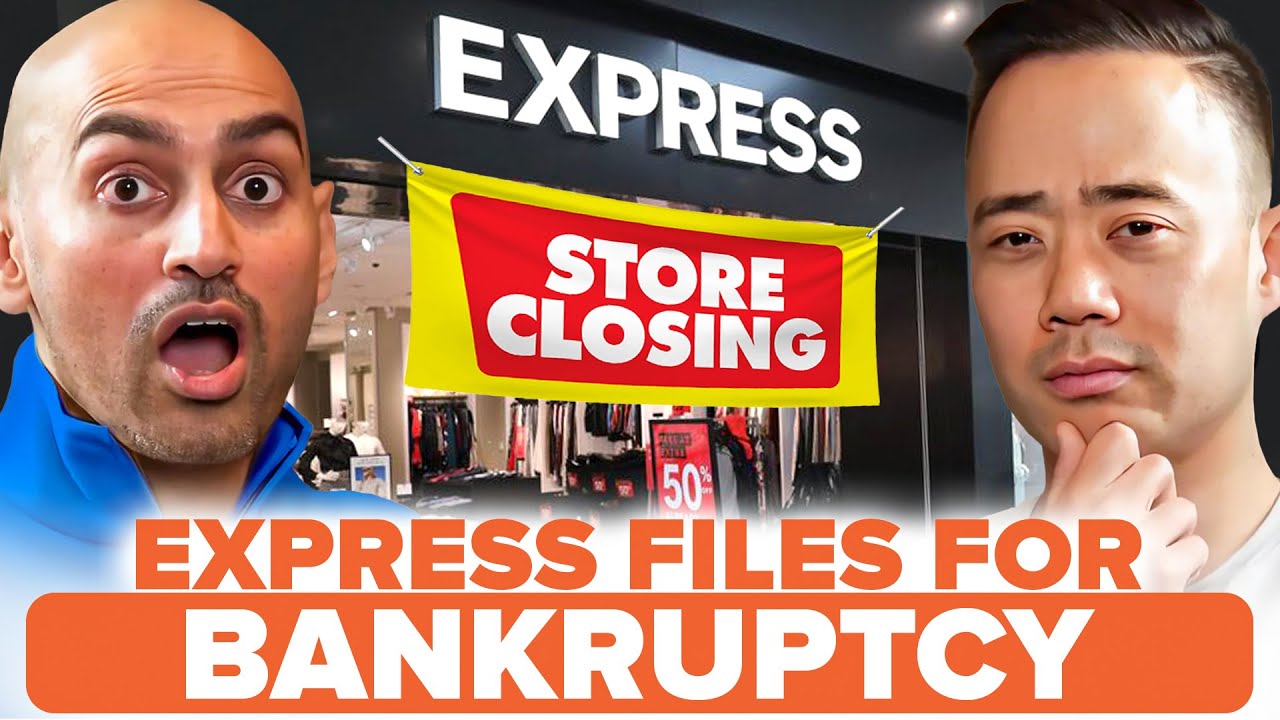
This content was created by Eric Siu. This content was uploaded by Eric Siu. This is a YouTube episode (titled "Express bankruptcy: 100 stores closing amid investor rescue efforts, & Mark Zuckerberg's brand shift") published May 9, 2024, consisting of a conversational podcast-style discussion between Eric Siu and Neil Patel. The hosts trade personal anecdotes (e.g., Eric's missed job interview and comments about weed/alcohol), then move into business topics: Express/Bonobos bankruptcy and store closures, M&A and valuation lessons for agencies, how Neil evaluates and hires companies and executives, interview questions and hiring best practices, and examples of buyouts and earnouts. They also discuss founder branding (Mark Zuckerberg’s recent public persona shift), AI/AGI timing and technical constraints, platform revenues (YouTube, Instagram, Netflix), and promotions for their own communities/events (Agency Owners Association and Leveling Up Founders). The format is an informal co-hosted episode mixing practical business advice, industry commentary, and promotional plugs.
Chapters
You know the funny story? I used— I applied for a job at Express, and then in college, uh, my friends all had edibles the night before. And then so basically I didn't make it to my job interview. And then when you have edibles, you're like lagging. And so I was lagging for like 24 hours. I was trying to drive to the interview, but I didn't make it. But go on with the story.
What do you mean by edibles?
Like edible, like weed brownies. Oh, I didn't want to eat it. And then like, you know, first time eating it, and then like my world You've never had edibles, right?
No.
Okay. Have you played like first-person shooters where you're like lagging and like, you know, the bullets aren't like, you know, your weapon's not firing and then like everything's slow?
I played Monopoly.
Oh my God. All right. Anyway, the point is when your world is like, there's like a 5 millisecond lag time to everything, it's annoying.
So when you smoke weed, there's a 5-second lag in everything you do?
If you like, if you do too much and you like have a bad trip or whatever, that's what happens.
See, this is why I don't do drugs or alcohol. Makes life easier.
First of all, we were like 20 years old. And I don't like weed, by the way. But anyway, go on with the express story.
You know what's funny? I haven't seen you do weed or even drink alcohol in a long time.
I don't like alcohol. You don't drink alcohol either.
Yeah, I stopped a long time ago.
Why? Let's tell everyone the reason. Let's go ahead.
The real reason?
Yeah.
The real reason is I'm allergic. Me too.
Yeah.
But like, I had really bad reactions after COVID.
After COVID?
Yeah, after COVID. Not getting COVID, but something happened during the time of COVID where I never drank. Even before that, I would drink, but not really drink. It would be like more like I would get one drink in a business meeting and I would sip on the whole drink over 3 hours and I may finish it.
It's not enjoyable. Yeah.
So I was never getting drunk anyways. But the problem that I ended up having is during COVID never cared for alcohol. Stop drinking it when you're in lockdowns, year plus in a home. I think it was a year plus. I don't know how long the COVID lockdowns were, but it was long enough.
It was like 2 years. Yeah.
And then all of a sudden things started opening up. Drank my first sip of alcohol like a year and a half or 2 years later. And one little tiny teeny sip, like you wouldn't even notice a glass going down much. Within 5 minutes I had a headache like it was a hangover. And then I just didn't drink anymore. I was like, oh, I got a headache. Tried it a few more times. Doesn't matter what kind of alcohol I drank. I just had a massive headache. So then I'm like, all right, cool. Don't need to drink this anymore. I'm good. I'm done with it.
Exactly. It's for me, I turn red when I drink it. Right. So that automatically means you're allergic and that's not good because if you're, if you turn red from that, I mean, they can cause cancer later. Like everything causes cancer. Right. Um, but that's what it is. But anyway, talk about this Express story.
Yeah. So Express, uh, filed Chapter 11 bankruptcy. Um, investor group called WHP Global is going to acquire most of the assets. I'm assuming including the brand name and stuff like that.
Uh, they also own, I didn't know this.
Bonobos, UpWest, and a few others. No, I didn't know that. Uh, 95 Express stores and all UpWest stores will close. So they're closing quite a bit of stores. And I forgot what the— what these guys paid for it. I think I read like something like $30 million or something.
So nothing.
But, um, yeah, dude. Uh, last spring Express acquired Bonobos operating assets and related liabilities for $25 million from Walmart.
Oh, so Bonobos used to be like— I used to buy stuff from there and it was a popular brand. Didn't work out.
For Walmart. And I'm guessing it didn't work out for Express either. But dude, these guys, no joke, paid pennies on the dollar. Look at this, Express, Bank of C—
Weren't they public before?
Let's see. Oh, they got a commitment of $35 million. So that's what it costs to buy that massive brand. It would take more than $35 million to build up those brands from scratch. Just mismanagement of the business.
Yep. We're seeing a lot of that. Yeah, you're seeing a lot of that.
I'm seeing a lot of it. It's the best time to buy. But you know what's crazy, dude? We're getting people coming to us being like, Neil, we're doing $5 million in revenue, $1 million in profit. We want to sell to you for $10 to $20 million. I'm like, who's gonna give you $10 to $20 million?
So walk us through how they're— how they react when you, when you say that.
So I first don't actually say it. So usually, typically someone comes to me and says like, Neil, you should check out our business. It's amazing. We do X, Y, and Z that you don't do. Usually if a business is making a million in profit, we don't look at it or try to buy it. But if someone's doing a million in profit and something we don't do and we know would do really well with our customer base, why wouldn't we look at it? Especially if they're doing an amazing job. So before we even get into valuation, we ask some questions. Questions like, what are you looking for from the business financially? Are you looking to stay on? We're not talking about what valuation we would pay. We're also asking questions like, how long have you been in business? How do you generate your leads? Do you have— you have built-out management team? Are you the CEO running it? Are you looking to stay on board? What's your client concentration? What's your churn rate?
And you want them to stay?
We want them to stay. We tend not to do deals where founders don't stay.
That's a key lesson for everyone. Agencies are so driven by the founder and they add so much. You can't have them— they're like a star player.
Yes.
Yeah.
You would hope that they're a star player. If not, you shouldn't buy that agency.
Yeah.
So then when we're looking at all these deals, like one of these deals, I'm like, all right, so you have 2 clients that make up a bit more than 40% of your revenue. Oh, you said your revenue is recurring. They said, no, we didn't say our revenue is recurring.
We said it's MRR.
No, they said it's reoccurring, which means it's happening often. That was a misunderstanding on my end when I heard him on the phone.
Yeah.
I'm like, all right, that's fine. Recurring, like the same clients pay you, how often? Well, this one company has paid us 3 times over the last 7 years. That's not that recurring. How long do your projects last with them? 2 to 3 months. I'm like, oh, that's not that helpful. So you can't predict out the next year. What are you looking for? We're really unique. We've been around for more than 20 years. What are you looking for? Oh, we want at least $10 to $12 million upfront.
That is very unique.
Yeah, and I was like, uh-huh, no one's going to give you You're a slow-growing business that's been around for 20+ years. Oh, and by the way, you have high churn. You don't have a built-out management team. And your profit of miraculously $1 million isn't really $1 million. You showed in your books $200,000-something. Oh, well, I'm running a lot of my personal expenses through the business. So you're running around $800,000 in personal expenses? After you take out your rent and car, how are you running all these expenses?
You can't even have this person on your team because they have such high expectations for how it costs.
Too high expectations. It won't work out. There was another lady I met, amazing company, I wanted to buy it. And my team hit her up. She's like, oh, we're not ready to sell yet.
What were the numbers?
Okay, I don't know the numbers yet, but I would buy the company. They're really good at data and analytics. So then I have my corp dev guy hit her up and then I see her in Canada. And then I was like, hey, what's up? I'm like, you should talk to Alex. And then she's like, who's Alex? I'm like, oh, we bought Alex's company. She'll make more on the earnout than she would've done just from running the company on her own because of all our customer base and upselling and cross-selling, et cetera. And we have data and analytics, but theirs is, they're way more built out.
Mm-hmm.
Because that's all they do. And then she's just like, Neil, did you guys not get the hint? I don't care for money. I don't want to sell to you. I was like, why not? She's like, we can just work together without you selling. I can still build it. I don't want, I don't care for the money. And she's like, my team, we get, I think she said 2 months off every single year, something like that. I'm like, well, technically we have unlimited PTO. And she's like, I'm not interested in selling unless you give me $20 million cash and you let all our team members have like 2 months off. And the first thing that scratched my head was I'm like, I thought you just said you don't care for the money.
I don't care for the money, but I care for the money.
Yeah, I don't care for the money, but you need to give me $20 million and I'll sell to you.
By the way, the 2 months, It's very different than unlimited PTO, because that's 2 months guaranteed versus unlimited. If they take 2 months, probably in trouble.
You and I are thinking very similar on this, right? I don't think unlimited PTO is like 2 months. And a lot of the people in our companies, they just work remotely and they get their work done and we're really flexible with them. But, you know, I was just like, but you just said you don't care for the money. And on our earlier calls, when my team originally talked to you, it was like, oh, I can build it a little bit more, make a bit more money before I sell it. And you know what she doesn't realize is talented entrepreneur, great at the product, struggles with closing tons of revenue based on what we can just estimate from headcount and logos and stuff like that. A dangerous thing in business is believing, and I had more conversation with her, but believing that you know everything and you can just get whatever you want done and you can do everything on your own and you're doing an amazing job. There's always 2 sides to this story, and I'll give you a great example of this. There's agencies we know and mutual friends that we know that sold for crazy high multiples, like 18, 19x.
Mm-hmm.
And some of the buyers of these companies paid half a billion dollars, and then they bought on another $200, $300 million worth of businesses and combined them, made them bigger and bigger. And then some of these guys now do $70, $80 million a year in profit, not revenue, profit. That's a lot of money. But their growth has flattened out and they're not growing anymore. And some of them are shrinking a little bit. And I can say, wow, these guys are idiots. They don't know how to run it. Dude, they're doing $70, $80, $90 million a year in profit. They did something right and they know something.
Mm-hmm.
Instead of looking at something like, oh, I know everything that I'm doing. Well, what can I learn from them that's made them successful and grow this fast? Even though they're flat now, but what did they do to get that growth that I have not been doing? And when you start thinking like that, you'll get more growth.
There's something to learn from everyone. Exactly.
And you and I have always had that belief.
We don't— Even from fools.
Yes. Even from a flight attendant, even from a taxi driver.
Someone can always teach you. I'm not saying flight attendants are fools.
No, no, no, no.
I don't—
I'm not saying flight attendants are fools, but I'm saying they don't even have to be in your profession and you can learn something from them. Like people look down on taxi drivers. What's wrong with it? It's an honest day's living. And they hear so much stuff in the car. They pick up a lot of stuff and they can actually teach you a lot about life.
You want a good interview question?
What?
I stole this from Chamath Palihapitiya. We started trying it, right? And so here's the interview question. So, Neil, what's something you're an expert at?
So it could be like playing the French horn or poker, but not business related, correct?
Anything.
Okay. I believe I'm an expert at marketing.
Okay. Tell me, how do you become an expert in marketing?
You become an expert in marketing by doing it for a long, long time and having hours of trial and error, failing tons of time, and figuring out how to fix all the problems that you created by doing things the wrong way.
That's the best answer I got this week, right?
So—
Why? So the— because now I have a lot of threads I can go down. Oh, tell me about the experiments you failed and tell me about these things, right? There's a logical progression in terms of how you're communicating this, and that shows you can communicate clearly. And you're giving me a lot of threads to pull on to continue the conversation. I tried this yesterday on someone, right? They made it to me, we hadn't deployed this question yet. And so usually when they get to me, I just try to brainstorm with them. I just want to see how they think on their feet. So they got to me and then I was like, oh, so tell me what you're good at. He's like, I'm really good at English. I was like, oh, interesting. So you're a good writer? He's like, yeah, I'm a great writer. So how do you become a great writer? He's like, well, I went to college. for journalism and English. And the answer stopped. And I was like, so how do you become a great writer? He's like, well, like I said, I went to college for journalism and English and I learned the AP, this and that, the MLA formats and all this shit. And then I was like, fuck. And so at that point, I was just like, I got to end the interview. But this is a Chamath question. He's like, this question shows how people think critically. So now we have that question in the very first part of the HR. And when they get to me now, I'll just ask them questions about marketing, like, hey, like, show me what you do with my website or like stuff like that.
Yeah. We had a gentleman who worked with us for a long time. His name was David Shapiro. He eventually went client side and worked with—
David Shapiro?
David Shapiro. And, you know, he gave me a call before he left and we talked and I always told him like, hey, appreciate everything you've done for us. You know, you ever need anything from me for that company or anything, I'm not talking about like income-wise, but like just need any free help, hit me up. And he's like, do you remember my first interview with you? And I was like, yeah, I remember it. And he's worked with us for a very long time. And back when he started, links are— they're still important, but they were much more important in the algorithm. And it was the leading factor that everyone was saying that, you know, improves rankings.
Yeah.
So he's just like, yeah, I gave him a really random example. My interview question with him is, you know, and keep in mind other people on the team already interviewed him at this point. My interview example was like, you got this website, you're in the life insurance space, you're ranking on page 2.
Mm-hmm.
You're at the top of page 2. You've already done everything for optimizing click rates, code, et cetera. The thing you lack is links. No one wants to link out to life insurance. You can't buy it, you can't break Google's policies and terms of service. How would you go about building links for this site? And he answered on the spot and it was a really good answer. And then I was like, cool, you're hired. That was it.
Did you, okay, that question, did you ask it consistently or did you come up with it on the spot?
No, I came up with that on the spot.
Okay, so what I learned, so it's over time it has to be consistent, then you have like apples to apples comparison. Because if we keep changing the question all the time, then how are we going to know how to compare? But that's a great question because That is very specific. And it sounds like he gave you a very specific answer. But this just goes to show, I don't know if this was with Airbnb, or maybe another tech company. But once they got to the CEO, they're like, it wasn't even an interview. It's like, hey, let's brainstorm. Okay, here's the problem set over here, blah, blah, blah. And you just learn a lot more about the person and how they respond to adversity and how they, how they think. And that's really important if you want to hire the best people.
Yes. And when I did interview other people, I did ask them a similar question. It was about link building and how do you build links. But it wasn't like life insurance. I'll just pick a random vertical. Yeah, David's was life insurance.
Yeah.
What I should have done is use the same exact example for everyone. So I could have compared apples to apples, but already knew what was a good answer because I know how to do it myself.
Yeah.
And I was like, this guy's spot on.
Yeah. So our key takeaway for this one is if you're going to— if you're going to try to get the best people, brainstorm with them. All right. Real quick, I need to tell you about the group that Neil and I created called the Agency Owners Association. And this is a group that's similar to entrepreneurial organizations such as YPO or EO. By the way, Neil and I are both in YPO, but we thought it'd be really cool if we're able to create a group that's dedicated to agency owners to helping them scale. So you can be at 6 figures, 7 figures, 8 figures. We have different groups for different levels. All you have to do is go to marketingschool.io/agency. Again, that's marketingschool.io/agency, and you can go there to apply. And I will tell you right now what we're doing is there's an online community. We do calls every now and then. There's stuff that we share in there that we don't share publicly. And you can, at least with the online community, you can cancel at any time. So you can go there to learn more about it. And that being said, back to the video.
You know, if I look at some of the best people I hired, by the time I've gotten to the candidate, it's more so been talking about the problems we're facing and discussing how we can solve these problems and what are the potential solutions that they think about. And not all of their ideas are good and not all of mine are good and some of theirs are bad and some of mine are bad. But the people that you can actually work through to try to solve problems like on an hour call or Zoom, those are the leaders that I tend to end up hiring. Yep.
And by the way, if you're at the end, the good thing about Neil is he's not afraid to have tough conversations. Sometimes I've gotten better at it, but I tend to, you know, normal human beings, I'm not saying you're not normal, but typical human beings tend to shy away from tough conversations. And I actually believe that the altitude of an organization is really dependent on the number of tough conversations you're willing to have. Because it's like a bunch of problems in an organization, right? Now we've changed it where— because at the end, after they've been through so many people, I feel bad, right? If I say no, I feel bad. You don't have that problem, right? But now I'm just a lot earlier in the process. And so when they get to me, I just cut it out and then we move on a lot faster. So yeah.
Yeah. And I do think that is the correct approach because it's like, if you're interviewing someone, you know, it's not a right fit. Like I've told people on the interview, Like, hey, you got some great skills, love what you're doing. It's not what we're looking for. And I don't want to be that person who wastes your time. But if I do run into someone who is looking for someone like you as a good fit, can I pass your resume along? Like, I'll ask them that because I don't want to send their resume.
So what percent of people made it to you that you said no? Or you said no? 10%? 20%?
Maybe 10 to 20% max.
Do you think if you were a little earlier in the process, you would have said no more?
What do you mean? There was a lot of nos before.
No, meaning that—
You're saying that the people who come to me, if I'm interviewing them, like there's an 80-90% chance we're hiring them.
Yeah, so they're already pretty sure, right?
They're pretty sure.
Yeah. Yeah. But do you think if you were earlier in the process, you would reject more people?
Of these people that I'm approving?
Uh-huh.
No, we have a pretty good success rate of the people we hire that have worked out.
What's that success rate?
If I had to give it for executives, I don't know too much about mid-level or low-level executives. Executives, 90+%?
That's great. So now, usual hires, like, let's just say normal hires, you're lucky if you can bat 50% or .500, right? But executive hiring, there's just a lot more diligence that happens as well. And so you better make sure you get the right person because it's a huge bet too.
Dude, we meet them in person, we fly to them or they fly to us, we do reference checks, we try to see who we know in our network.
Yeah.
But the other thing that's helped us hire really good executives, we tend to hire people who have worked for competitors, who have gotten promoted multiple times, so you know that, you know, someone found them valuable. And we usually hire executives that someone on our team has worked with directly in the past that we trust and is producing really well for us, because then they know what our culture is and if that person's going to be a good fit. Almost all our executives, Literally majority of them have come from referrals.
Yep, exactly. I was like, I feel like they've all worked with each other. Um, you know, like, I was gonna say something interesting, but it's gone now. So we're gonna move on to the next topic. All right, so I wanted to take a second to tell you about Leveling Up Founders. This is an event/mastermind for people doing 7, 8, 9 figures. These are founders that are doing that amount. And we've been doing this event for a couple years now. We've had amazing speakers, but more than anything, it's about the people. What I mean by that is like-minded people want to hang out with like-minded people, and this is the best spot to connect with people of a certain caliber. And we vet every single person that comes through. So if people are— even though they make a lot of money, but their character, we don't really align with that, we're not necessarily going to let them in. We did this event in Beverly Hills, and it's happening in the The beginning of August. All you have to do to learn more about it is just go to levelingup.com/founders. Again, it's levelingup.com/founders. If you want to hang out with amazing people, Neil, my podcast co-host, is going to be there. I'm going to be there. People like Syed Balkhi, he will be there as well. And again, it's going to be a great time. levelingup.com/founders to learn more. And we'll see you inside. What do you think about— so let me just set the tone here. So Mark Zuckerberg has rebranded himself basically, right? With the chain. I mean, he's got the chain, he's got the mustache now, he's got the llama, like he's riding a llama. He's like out there doing podcasts now.
Whoa, wait, he's riding a llama?
Yeah, Llama. That's their LLM. That's what it's called, Llama 3.
No, no, like a real llama.
I think it was generated by AI. Like he's like riding like a colorful llama, right? And so like, I just, his personal brand transformation, he's sharing a lot about features. He's out there a lot more now. He's doing jiu-jitsu, right? And I think it's interesting. We should talk about that. I think it's good because people, when you think about Elon, love him or hate him, Elon's very much the face of SpaceX. He's very much the face of Tesla. And he's very much the face of X, right? Even though there's multiple operators, CEOs, or people helping with these companies. Now, Zuck is out there and I'm all for it. He's out there walking out there with MMA fighters. He's at the fights, right? I like it.
Okay, so I got to read this text from Mark Zuckerberg to Priscilla Chan. He posted this on Threads a while ago. Mark says to his wife, Did you see the octagon I put in the backyard? She responds with, yes, I saw it. Mark then says, it looks awesome. Her response, Mark? Then Mark responds with, we have plenty of yard space! And then she responds with, I've been working on that grass for 2 years.
That's when it first came out and he was promoting Threads, right?
Yeah. Yeah, yeah, yeah.
Look, I think it's— I mean, what's your take on it? I think it's more and more people are going to do this because we're moving more into a world where brand is the thing that's going to stand the test of time because you have all these AI agents and all these AI, gen AI things being created.
I like the new Mark Zuckerberg. Forget the cane and the style and whatever. Okay, first off, his haircut is way better. His old haircut looked like a bowl cut.
Is that the same? No, it's like a little curly.
Yeah, but his old one was just more like a straight line and it was flat. It was more like, you know, like when I was a kid, they would do a bowl cut. Like my parents were like—
Bowl cut's different. Bowl cut's like You know, like, like a mushroom almost.
No, no, no. But like what my parents would say, because my dad used to cut my hair. He's like, oh, I can just put a bowl over your head and just cut a line and it'll be all even. Maybe my dad had it wrong.
Yeah.
And, uh, you know, but either way, I like the new Mark Zuckerberg. You see his personality. The old one seemed more robotic. And I'm not saying he's a robot, but it was just really cold. The new Mark Zuckerberg has like, it's not personality, but warmth to it.
Yeah.
In which like you can more so relate. Like when he posts that thing on like Threads about his wife getting mad, dude, most guys can relate to that. A girlfriend getting mad at you, a spouse getting mad at you. He's like, we have tons of backyard space. And Zuck doesn't just own his house, he owns all the neighboring houses in the community. So you can pretty much combine all the yards. It's not like he's struggling with yard space or anything like that. Mm-hmm. But it just shows like it's much more relatable.
Yeah.
And I think, you know, like you're saying with AI, That is the future. It really does separate a brand. It's why Kylie Cosmetics does well.
How is Kylie Cosmetics doing though?
Not as well as it probably used to do from a growth perspective. Growth has to have died down. But the problem I would say with Kylie Cosmetics is when you think about that brand, Kylie Jenner just cranked it out, sold it, and you don't see the push going towards the brand that like you used to. You see a ton of kiosks in the airports.
It was a flip.
It was a flip. Yeah, I believe it too.
Yeah.
And what's funny is I was at the kiosk the other day when I was at the airport. I was like, all right, let me order something from Kylie Cosmetics.
For what?
I was at the Las Vegas airport.
And who are you ordering it for? It was dry.
I wanted chapstick.
Oh, okay.
I could not find chapstick in this thing. Yeah, it was like lipstick. I'm like, is there chapstick in here? I didn't care if it was pink. I just wanted chapstick because it was dry in Vegas and my lips were cracking. I'm like, Give me some ChapStick. Couldn't find it. So I went into Hudson and I found ChapStick.
There you go. I don't know why you thought you would've got ChapStick from her thing in there.
I always thought it was like cool marketing to have these kiosks in the airports. I was like, oh, they probably have ChapStick. But I was very mistaken on what Kylie Cosmetics sells versus what they have. But they do have makeup stuff and lipstick stuff. I don't know what else, but—
Yeah. All the stuff for people that want to look like Kylie. Um, speaking on Zuck, just hanging on him for a second, um, he did a— this guy, I don't know if you heard of this guy, uh, how do you— this is an Indian name, I think. Dwarkesh? Is that right?
I have no idea, dude. You, you could be right, but I wasn't born in India, and, uh—
No, but when I asked you how to pronounce Saurabh, you pronounced it correctly.
I haven't heard of that Indian name. Excuse me.
Um, so, okay. This person, AT API. So this this was taken from Zuck on DoorCash Podcast. So TLDR: AI winter is here. Zuck is a realist and believes progress will be incremental from here on. No AGI for you in 2025. So this is again Zuck branding himself, but I like some of the takeaways from this podcast. It was really interesting. So this guy's like a technical guy interviewing like technical CEOs. So number one, Zuck is essentially a real-world growth pessimist. He thinks the bottlenecks start appearing soon for energy, and they will take decades to resolve. AI growth will thus be gated on real-world constraints. That's the first thing. Second thing, Zuck would stop open sourcing if the model is the product. Maybe the model ends up being more of the product itself. I think it's a trickier economic calculation then whether you want to open source that. And then number 3, he believes they will be able to move from NVIDIA's GPUs to custom silicon soon. So we're not technical here, so we don't want to go too deep, but he seems to believe no AGI coming quickly. Elon seems to believe AGI is coming quickly. Sam Altman thinks it's It's going to come, I don't know, I think sooner than 2029 because I remember Ray Kurzweil, the futurist, he thinks AGI is going to hit by 2029.
I do think AGI is going to hit within 10 years for sure. I don't know for certain. I'm not as smart as these guys. The thing I question is how good is AGI? Because I look at AI and what SG is producing right now, a lot of it is crap. I get it's just early stages, but When you have this that comes out within 5 years or 9 years, I don't think it's going to be perfect from day one, and I think it's going to go through a lot of iterations just like everything else.
I think one thing we'll both appreciate, Zuck saying this towards the end of the interview. I heard the last part today. The question was, hey, Mark Zuckerberg, what would you do if you were the CEO of Google+? He's like, I don't know, and then he starts to think about it. And so Mark Zuckerberg's like, you know, the most underrated thing with organizations, especially when you have a large organization, is the power of focus. And the thing with Google+ was they never had a CEO. They never had a head that was running it. And, you know, early on in a company, you can focus more, but when you're a lot bigger, you have to figure out how to channel the resources. And it just goes back to the same thing we've been talking about for years and years. It's focus.
Was it recently that he had a—
It was very recent, like last week. It's a good podcast.
Google+ hasn't existed in I don't even know how long.
No, so I think he just asked that question for fun because Google+ was such a flameout.
Yeah, it was a flameout.
Yeah. But like, you look at YouTube now, they have a CEO for that. And yes, so—
And YouTube's revenue is massive. Instagram generates more ad revenue than YouTube though.
But both YouTube and Instagram are bigger than Netflix. Yes.
Yeah. Uh, in revenue or in viewership?
Revenue.
I didn't know that. No, now you know. Yeah, seriously?
Mm-hmm.
No.
I'll bet you another Air One.
No, it's okay. Netflix stock, let's see how much revenue they generate. So Netflix is generating $30-ish billion, $33 billion a year. Yeah, YouTube is bigger than them in revenue.
Yep.
YouTube revenue.
So while you look at—
Ah, $31.5 in 2023. Netflix in 2023 was $33. Netflix is bigger.
Okay, slightly, right? I get the error one.
It's crazy.
It's crazy that YouTube could be— and what was Instagram's revenue? $41 billion?
Uh, I think it's $40-something the last time I looked it up.
Okay. Anyway, it's pretty crazy that these social platforms are bigger than like a Netflix. Um, by the way, going back to Amazon for a second, Prime, when they were first competing, they realized that they— because they had to keep— they didn't have their— they didn't have distribution, nor did they have content back in the day. And it used to be called Amazon Unboxed, right? And They had to pay like Sony for the distribution rights and all that. This is when they realized they're offering Sony for these titles. And then all of a sudden the price doubled. It's like, why did the price double? It's because Netflix came in and started competing. And then everyone realized they had to start making their own content to have that piece of it. And they had to create their own distribution. So Amazon Prime was the distribution, the content. So sometimes it's like a chicken and egg thing. That's why, you know, to digress a little bit, Neil and I, we don't really do marketplace businesses because when you, when you have to fight two sides, it's kind of hard. Not saying that's a marketplace, but you get what I mean. So that is it for today. I mean, let us know what you think and go to marketingschool.io/agency to learn more about the Agency Owners Association. Please don't forget to rate, review, subscribe. You know, we meet in person for this. We've got Brad from recordeditpodcast.com and yeah, we'll catch you in the next episode.









