GEO, SEO, AI SEO, AEO… Which One Will Win?
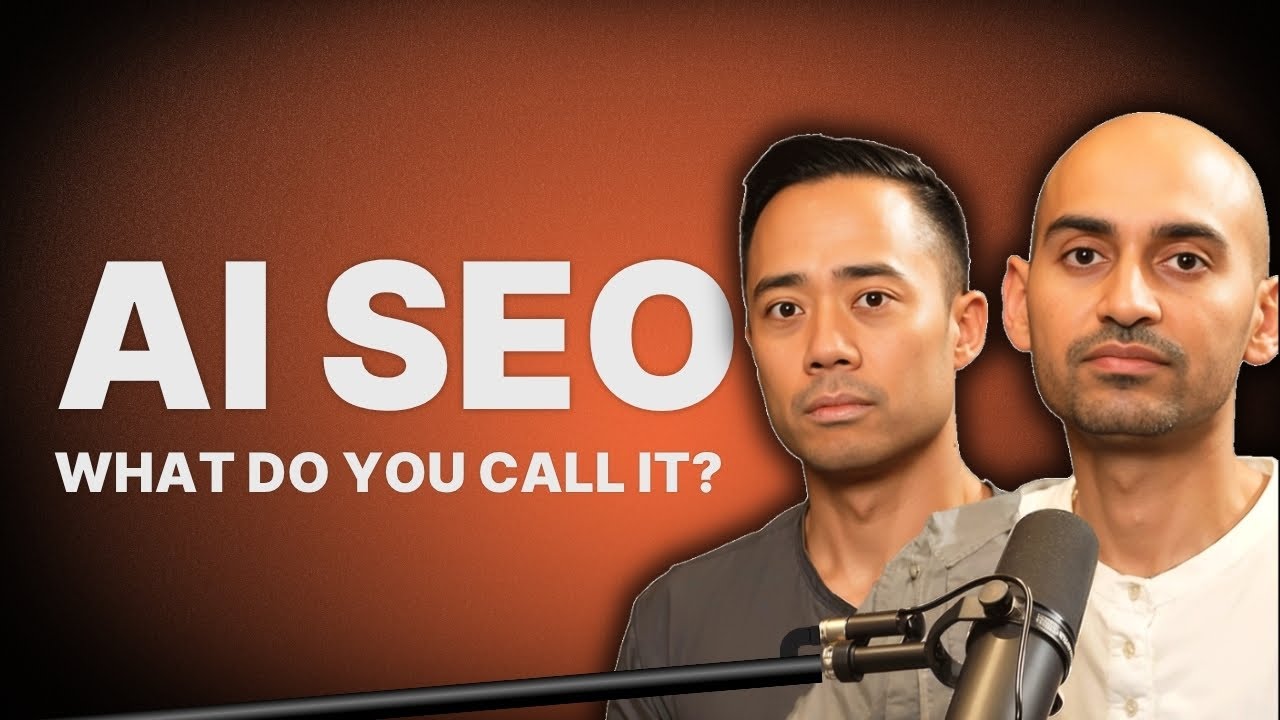
Eric Siu, Neil Patel, and Noah debate whether GEO, AI SEO, or AEO will dominate search. They argue the terminology doesn't matter as much as what clients actually call it, and discuss how agencies are adopting AI while questioning whether traditional marketing spend like billboards still works.
Chapters
GEO, SEO, AI SEO, AEO, Search Everywhere Optimization.
Which one will win?
Let's talk about that.
I think I already know the answer.
What's the answer?
What do you think the answer is?
Well, here's— this is interesting because I just spoke at an SEO conference this week. You spoke at a conference this week, but it wasn't an SEO conference, right?
I spoke at 2 this week. One was South by Southwest.
Which is not?
And not an SEO conference. One was High Levels event.
In Dallas, which is also not a SEO conference. So let me tell you this. So Patrick Stocks, who works for Ahrefs, he was speaking at the conference and this was right before my talk. So I was watching his. And so I spoke at the Ahrefs conference, shout out to Tim Soulo and the team. And he actually ran a poll to see which one would win out. And interestingly enough, search everywhere optimization won out.
Yeah. Yeah.
And so like, I'm like, Like, I'm like, somehow like yours won out, but the credit wasn't given to you, but like it won out. Like, I just think it's funny.
And they hate me the most too.
Yes, they hate you the most.
So it's shockingly that they picked it. And I didn't come up with that. I don't know who did come up with that. I know Nikki on my team has been using it a lot. I don't know who came up with search everywhere optimization. It's not me. I don't know if it's my team or not, but I know it's definitely not me.
I got it from you and I just started adopting it.
But I think I've been pushing it more than anyone else. I don't actually think search everywhere optimization is going to win.
We're talking about vernacular here, guys. So which one do you think is going to win, GEO or AEO? It's one of those.
Nope.
What do you think it is?
Doesn't matter. What will win is whatever the client tells me on the phone. And that is what I'm going to talk about. If the client wants to use the word GEO, I will say GEO. If a potential client wants to say AEO, I will say AEO. If they want to use search everywhere optimization, I will use that. And this is the biggest problem with this debate. And the reason I had this topic in here, I see it so much on LinkedIn. People are like, guys, stop calling it all this stuff. This is just SEO. Or guys, it's AEO. You're answering questions, right? Or answer engine optimization. And I'm like, dude, these people have it all wrong. They're picking and choosing the vernacular they want based on what they like or what they feel is right. You and I know this very well. The reality in businesses is the client is always right. If a client wants to call something specific or potential clients want to and you don't optimize for that, well, you're not going to get their business.
Yeah. So here's what I'll say. So actually today, this morning, I was actually on a Carrot enterprise call along with my CTO. So I'll appear on these calls sometimes just to see how these are going, right? And what had happened was that he was speaking in terms that wasn't considering their goals, right? And so when you're talking to a customer, you have to think about what they care about ultimately. It's not what you care about, right? And we've talked about this vernacular actually a couple weeks ago. And so if you can show that you can adapt and they feel like you understand them, ultimately that's what they care about ultimately. But if you try to push back on it and you try to correct them, guess what? Is that going to increase or decrease your chances of landing that deal?
I think it is going to— if you push back, I think it's going to decrease it overall. I think some people will be open to the open to your opinion being like, no, this is why it's called this and here's a reason and I'm going to educate you. But if everyone's searching for something or talking about something in a specific way and you can't adapt to them, they're going to go look for companies that are adapting to them and they'll show up and they're the ones that they're going to talk to. Because if you're calling it, this is a hypothetical here, Eric's open to whatever suggestion, but if Eric's calling it GEO and a client's calling it AI SEO and they're looking for AI SEO shops, but Eric says, and again, this is a hypothetical, This isn't really how he believes. But if Eric's like, no, it's only going to be called GEO. This is the right vernacular. This is all I'm going to talk about. Well, the client's not going to look for him because they don't call it GEO. So they don't know what he's talking about.
Yeah. It's cognitive dissonance and they're looking for something. For example, if I tear my ACL, probably going to go to an ACL surgeon, right? And if you tell me, oh no, it's actually called TCL now. I'm like, well, I'm confused now. So I'm going to go find an ACL surgeon. Right. So, so, so That's what it is, guys. I mean, it's, it's the deep— the debate doesn't really matter. But look, if I had to pick one just for the fun of it, if you had to pick one just for the fun of it, for the debate, what would you pick?
I honestly would pick search everywhere optimization, not because I don't think there's something called AI SEO or GEO. I look at the overall category is there's search on multiple platforms. A lot of platforms are adapting to AI. So Meta of course has AI whenever you search on Instagram. Google has AI overviews even with their traditional search results. So is that still called SEO? Is it still called SEO to optimize on Instagram? It's easier to just go after search everywhere optimization because there's so many platforms that people optimize for now.
Yeah. So the reason why I think the new phrase is search everywhere optimization, it's still SEO. The acronym's still SEO. It's because even at this, this SEO conference, the Ahrefs conference, everyone was talking about searches everywhere now. Like every other person's talk was searches everywhere, meaning that If you do GEO or you do answer engine optimization, you're just talking about the LLMs. But if you're talking about search everywhere, you're talking about YouTube, you're talking about Reddit, you're talking about all these other things, right? And that's genuinely where it's going. Like when you and I first started, like when I first met you, all you were doing was blogging. All I was doing back then was blogging. But it's so, we literally have a podcast now. You even did a podcast for a little bit. We have our YouTube channels. We, as much as we hate doing Shorts, we do Shorts as well, right?
Yeah.
It forces you to adapt. And I think that's the common theme that we saw at this event.
Yeah. But speaking of podcasts, you've done your own podcast, Leveling Up, for a long time, longer than we've done Marketing School. I failed at doing my own podcast. I think I lasted 3 or 4 episodes max.
I don't, I, most people give up under 5 episodes. You know that? You didn't even make it to the average.
Yeah.
I didn't, I didn't make it to the average and I don't, I'm pretty sure we released some of the episodes. I don't know where they are, but I'm assuming my team did. I could be wrong though. It was just, I couldn't do it, dude. It was just too much work.
Yeah. It's a lot more work on the, the person asking the questions, the interviewer versus the interviewee, because the interviewee, you just pop up. And this is a little easier for us because we just have a conversation. We just pick a few topics. We just talk.
But I also think it's easier for me than you.
For what?
This podcast.
This one?
Yes.
Oh, because why? Why?
Uh, a few reasons. One, We do it in my, uh, the building that I live in versus Eric. So that makes it more convenient. I still have a hard time showing up on time. And I do apologize to Eric and Noah for that one. I'm working on improving it. Lunch is on me today.
No, I'm paying for lunch. No, no, no, no, no.
I had to pay for lunch. Uh, Eric beat me to it last week. Was it last week?
Yeah. No, it was a few weeks ago. You know, that's a very Asian thing. Only Asian people fight for the bill like that.
Yeah. And I sat down, Eric sat closest to the waiter, and then he's like, here you go. And I was like, This guy. And then the second thing that does make it easier for me, Eric puts in way more work than I do from the podcast. And it isn't just recent, it's been like this from day one. You used to fly out to Vegas. Remember when we first started the podcast?
That was the very beginning. That was the very beginning. That was the very beginning, yeah.
You set up the mics, you figured out how to edit, all the software.
Yep.
Eric also had experience because he was doing it for Leveling Up, but even now he puts in way more time into that idea. So Everyone, you know, if you, if you love Marketing School, give Eric a round of applause because he does put in the effort.
Thank you. Thank you.
No one's giving me applause.
Thank you. I probably put in 5 minutes of effort with topics.
Well, here's the thing. So you are right. Like back in the day when we first started this, because this, remember guys, just to shed some light here, we started this podcast because Neil and I were walking to Creation Juice on 3rd Street in Hollywood, West Hollywood. And Neil's like, yeah, let's start a podcast. Let's call it Business School, B-School. I was like, well, there's already a course on that. So we started the podcast, but then I had all the know-how. We didn't have as many resources we have today. And so it was easier for me to get going. That part's done right now. All these ideas. So Neil and I, we have an idea sheet. A lot of my stuff comes from X. It's just stuff that I read in passing. So it's honestly not additional work for me. I just dump it in there.
Got it.
Yeah. So I don't go through like, oh man, I really need to think about the ideas. I just dump in whatever I think is interesting. That's all. But like also I think it's different for you too, because the way you do the podcast from the interviews that you were doing, you did like 4 where you interviewed CMOs, correct?
Max 4, but yes.
Yeah. I just don't think you're wired that way. I think the way you learn is different. The way you learn is by calling people quickly and then like, but the way I learn is like having conversations and like I'll research them and all that, right? It's just different styles of learning.
Yeah. The hard part about me too that I found, Eric knows this really well about me, it's hard to change my mind unless someone has stats and data. And I'm really stuck in my ways until like, if it's a gut feeling, I'm stuck in my ways. But if anyone can show me how I'm wrong with data, I will switch instantly.
Yep.
I'm a really big data guy. I'm less of a gut. Of course, when I start things out, I usually go with gut feeling because I've just been doing this for such a long time. But I look at podcasting, it doesn't generate a lot of revenue. I enjoy doing this. So for me, it's fun. Eric also enjoys doing this. And then after we record our podcast, we tend to go to lunch every single week as well, which is more fun. And we discuss marketing or work or whatever it may be. So it's pure enjoyment. And it actually for me is like an escape out of my normal day or work.
Yep.
But when I look at the data on how we generate revenue, at least from a marketing standpoint, I tend to focus all my energy on that and 110% on it because That's what works. And it's hard for me mentally to shift my efforts on anything that the data can't show me is driving a lot of revenue.
And by the way, I think there's trade-offs to everything, right? There's not— that's not like a good or bad thing. I think what we're saying, we're just experience sharing here. I will say that this podcast, in addition to being able to hang out with Noah, Neil, and all that and eat really good food after, this does in fact sharpen me. I don't know if it sharpens you, but it sharpens me because like it forces me to think about these things. And sometimes you might— we might debate it and then sometimes I might think about it a different way, right? And I remember, Brad Gerstner and Bill Gurley for their podcast. Brad was actually saying it this week and he was just saying like, this podcast, the last 2 years we've been doing it has forced me to sharpen how I think about things. And that to me is a big benefit because whatever you and I say to our team, things actually get done. And so like naturally it just starts to sit in my head rent-free and then—
Yeah.
We hang out with each other and like you are the 5 people you hang out with most. So I'm— we're already 20% of each other. So like naturally some of this stuff is going to go over into our organization.
Yes.
Yeah. And hopefully make us more money too.
No, I, dude, I totally agree.
All right. So I wanted to take a moment to tell you about my podcast co-host Neil's agency called NP Digital. And they work with a whole host of global companies or a global organization. Also, Neil has SEO tools such as Ubersuggest and Answer the Public. All you have to do is go to npdigital.com to learn more and we'll see you on the other side. You have this topic here, why raising too much money causes founders to burn it on silly things. So I assume you are referring to a picture that I sent you the other day.
Yeah, we won't mention the brand name, but Eric was at an event and I texted our mutual friend and then he's like, I'm the one who sent it to Eric. And when I texted him, I'm like, by the way, I got it from Eric. And then he's just like, I am the one who sent it to Eric. So I was just cracking up and him and I were laughing. And I was messing with him, I'm like, this is what happens when companies raise too much money.
Yeah.
Because they start burning it on silly marketing things. And—
Let me describe what happened first.
Yeah.
Okay, so this was at the Ahrefs conference and then this company, they hired a truck and these, like a driving billboard basically. And on the billboard it said, you know, try our tool, right? Use code Ahrefs for 80% off. But the ironic thing was the word Ahrefs was bigger than all the other words on that ad. And it actually drove more signups for Ahrefs.
Really?
Yeah, because people saw the word. So they, they, everyone started the next day. I was talking to someone, Patrick on their team, and Patrick's like, dude, we got a lot more signups and people are looking for an 80% discount. I was like, maybe you guys should offer some form of 80% discount just to capitalize on it.
Oh yeah, that's smart.
Yeah, but continue on. So this company, I think they've raised, let's just say tens of millions of dollars.
More than tens of millions. It's quite a bit higher.
It's not 100, but it's high up.
But either way, even in the Bay Area, you see all these people having all these billboards on the freeway to the city.
And I'm like, dude, most of these billboards don't convert the way that people want and they're paying an arm and a leg and they just don't brand it.
And it all says the same shit. AI, AI, AI, AI.
Yes. And I'm like, dude, this is just a waste of money. Marketing dollars could be spent more efficiently. And I look up some of these companies, And I was like, Ethan, have you ever heard of this company? He's my brother-in-law. I've created some companies with him in the past. And he's like, no. He's like, they must be decently big if they're spending money on these billboards. I look it up, raised over half a billion dollars. I'm like, wow, some of these companies are just raised a ton of money. I'm like, no wonder they're running these useless ads.
Yep.
And it's just like, you're not going to get an ROI from a lot of stuff. It's not that billboard ads are a bad idea, it's the messaging that they're putting in on the billboard ads and it's the offer are really terrible and they're just doing these things because they have money to blow and they should be spending it in performance areas first because that'll convert a lot higher. And I get billboard ads and offline are versions of performance, but they're just blowing money.
I also don't think that's the right person or the right company to target. Like, you know what I mean? Like you don't see other Ahrefs competitors doing that type of stuff. And so, yeah. Yes.
And even with the Bay Area billboards and them talking about AI, I'm like, dude, when I look at your offer, like I looked at the companies spending over, who raised over half a billion, I'm like, your ideal companies are outside the Bay, not in the Bay. You're trying to help old school companies adapt with AI. The companies in the Bay are very AI forward. You got to go push all these big enterprises that aren't headquartered there and convince them to, leverages technology and they want to and they don't know how instead of targeting these startups and corporations in the Bay who think they already know everything and can do it all themselves.
So the last thing I'll say is this. I've been interviewing more people because we're going on, like we're just pushing, been pushing for more headcount right now. And when I talk to people, like a lot of these people, I'm just, I become so disappointed because it's like to what you say, you just need to think a little more to go the extra mile to understand, oh, maybe my customer base isn't here, or maybe I shouldn't have my billboard say the competitor's name bigger than all the other words, right? And so when I talk to people, Like I can tell like the person that said the 75,000-person agency is doomed, I'm like in my mind, okay, this guy invests $0 in AI per month and then he's kind of expecting the next company he goes to to save him. And I'm just like, people are trapped in this like prison and all you need to do to break out of this prison is just to think a little further out and then you'll perform much better than all these other companies.
Yes, but before you leave, I'll give you the Dentsu example because a lot of people think these big ad agencies don't try to adapt. Years and years ago, before ChatGPT was even out, we hired a guy from Dentsu. His only job was to automate and leverage technology to replace humans. These organizations have spent a ton of money, not a million, not tens of millions, much more on this stuff well before ChatGPT. The issue that they end up running into is, I'll give you a prime example. Imagine you had 50,000 employees and you told your employees internally, hey, I got this new person named Lindsay. I'm making up a name.
Lindsay again.
Okay. Lindsay here is to help automate things with AI. So then that way we can just do things with less humans. How many of those 50,000 people would want to help Lindsay replace their job?
Very small.
Exactly. That's the issue with it.
Yeah. Well, I mean, you can't, it comes down to the story, right?
No, I know, but it was worded really differently because I was talking to him because we hired him and he's just like, it doesn't matter how we Positioned it. This is one of the largest holding companies. He's just like, people all saw the writing on the wall where if they helped me automate their job, they would get fired. So no, everyone pushed back and just wouldn't give me the time of day, or they would run me around in circles.
This will be a good next episode. So that's it for today, guys. Please don't forget to rate, review, subscribe, and we'll see you tomorrow.









