Google Just Changed Marketing Forever (And Nobody Noticed)
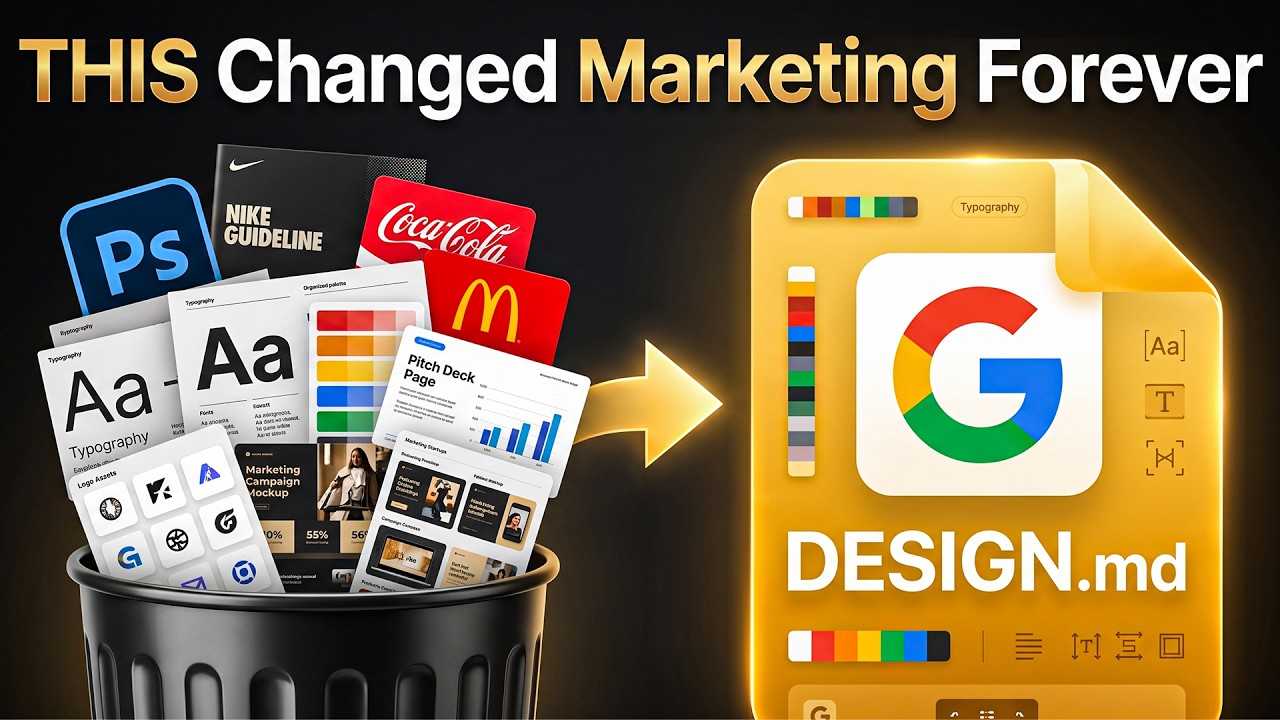
Eric Siu explains Google's new design.md format, which makes brand assets machine-readable so AI agents can generate landing pages, ads, and decks automatically. The format solves consistency and scale problems but risks vendor lock-in with proprietary design systems.
Chapters
So the real problem right now is that your brand is in a format that AI cannot see. The good news is Google just dropped something recently that changes everything, and it can all be done within one file. If you make this change, you're going to be ahead of everyone else. If you're not doing this right now, you're going to be behind. Stay until the end because I'm going to show you what this is and what it means for everything that you do. So Google recently just launched their own version of design.md, and what they're trying to do right now is they're trying to capture mindshare with their design system. So it's basically a format specification for describing a visual identity to coding agents. design.md. MD gives agents a persistent, structured understanding of a design system. This is important right now because all the stuff that you make right now from an ad standpoint, a landing page standpoint, all the things that you do with design, let's say you're not a designer or you're not technical yourself. Well, you are probably— you're guessing as you're doing it, right? You don't have a sense of consistency with the way that you're doing things. Now, the good news with their version of design.md with Google is that they want to have a format specification for describing visual identity to all coding agents out there. And so they want to become the de facto here and they've open sourced this, right? So this is what's Stitch with Google, and you can see what the format is over here. So they're trying to establish that they are basically— they're the ones that are open sourcing this. Their format is going to be the default, and they want to have something like a lot of these MD files out there, right? So when you think about the major .md files, these are the markdown files. The major one is agents.md. So they're trying to establish that their version of design.md is the de facto version. And you can see so far 8,600 stars on this, but I think this is going to be really important. And I've already started messing around with this. By the way, stay till the end because I'm going to show you a repo that has a lot of these different designs that you can steal from the most iconic websites out there today, some of the best performing websites. So you can do the same thing. What I want to show you is that it basically put together— here's a Design.md for ClickFlow, and this is one of our SaaS tools. And here's the cool thing: if I go to clickflow.com, let's just do this over here so you can see what it looks like. This is our AEO SEO tool, and I scroll down, and here's what I mean. Look at this. If I move back to here, these are the brand assets, these are the brand guidelines, whatever you want to call them. So if I say, hey, use the ClickFlow Design.md to an agent and say, I want you to make a landing page, or I want you to make ads, I want you to make a carousel from this, and I want you to follow this, it's going to work. So this is pretty And I did one for Single Grain as well. So Single Grain has one and you look at the Single Grain website, let's just go to it real quick. So singlegrain.com and this is what it looks like. This is the homepage over here. You can see who we worked with and all the things that we do. If this is going to be the new format and this is how we do things, this has already been helpful for me because I work pretty heavily with my agents and I'm always asking them questions. Hey, can you create this asset over here? Can you spin this up really quickly? And then eventually you can just have it be an end-to-end solution where it's constantly cranking out more ads. Maybe it's looking at what competitors are doing. It's looking at what's performing well by your ad library or your ad accounts, and then it's just making more iterations based on what's doing well. And so You figure all these things combined together, you can make better end-to-end solutions. Another thing that's also very important here too is that there's a lock-in problem that you have. And so don't get me wrong, I love using Claude Design. I love being within Anthropic's ecosystem. But if you're forced to use their design systems all the time, then you have to be using Anthropic. Figma has Make. Adobe is bolting AI onto Creative Cloud. And so the thing is this, I would rather have something that's more open source or more openly available that I can call on from whatever tool that I'm using. And so you can see here, okay, branding your repo for design.md, and then you have it's portable forever. That's important to me. And then works with any AI. Agent, proprietary design tool you have to use inside their app, their tokens, their format. And so breaks if you leave, locked to one model. I prefer to not have that lock-in. And so I think this is going to be big for Google. I think they're, they're playing it smartly here. And I mean, their mission hasn't changed, right? It's to organize the world's information. And here's the other thing. So marketing teams, I think this is going to have a big impact on marketing because marketing has a problem, a volume problem, right? So we have a lot of our clients right now, they want to ship a ton of volume. We're talking 500 ads, 1,000 ads per month. And so top ad accounts can ship 200 ad creatives a month. Most teams ship 4. And so if you look at this from a constraint standpoint, well, if you have one designer, you have 20 assets, okay, consistency would be high. But if you go one person agent plus DotMD, you get 500 assets and you have high consistency versus having 6 designers and 100 assets and you're gonna have mixed consistency. So this brings everyone kind of on the same page ultimately. And that's why I think it's really important for you to think about getting these because the agent can see what your brand means and that's going to be helpful for you to get more things done in a more consistent manner. The sales use case over here, check this out. So before and after. So before, maybe you're doing 20 templates per year, 2-week marketing turnaround, generic positioning, probably honestly more 2 weeks, request queue. After you get 1 deck per deal under 10 minutes, custom per deal, self-serve. And so I can make a Design.md for the presentation decks that we have that are hard converting for us right now, and then just copy that over and over and over. And then by the way, like you want a custom design, you want some sense of consistency. We want it for our case studies as well. And then agencies, obviously you can crank out a lot more. I think this ROI is pretty obvious to me. If you're spending a lot of money on designs, maybe you just make all your Design.md files open and maybe other people decide to use it. Why not? I'm okay with it. If you want to grow your AEO and your SEO faster, you have to check out ClickFlow. ClickFlow will track your AEO rankings. Not only that, it'll produce high-quality production-grade content. We've had a bunch of people come over from other content creation tools and other SEO tools, and they say they're replacing the publicly traded companies that are out there. So check it out. It's clickflow.com. Once again, it's clickflow.com, and there's a free 14-day trial that you can check out. And so this repo over here is called awesomedesign.md, and this one has 66,000 stars on GitHub. And, uh, it's called awesomedesign.md. It's from Volt Agent. You should be able to find it. Uh, getdesign.md might be the URL. So basically you can copy design.md into your project, tell your agent and build me a page that looks like this and get a pixel-perfect UI that actually matches. And so the cool thing is, for example, I think, you know, Intercom has a really good website. And let's just take a look at this. So design system inspired by Intercom. This is what it looks like over here. And so you can use this design system if you want. You can pull this into your Claude design too if you want, by the way. And I think they will make these design.md for you. But my thing is this, if you're just using Google's version of their design.md and say, hey, I want to make brand guidelines based on this website over here, like fin.ai, or, you know, based off of Cursor, or based off of whatever other site that you like, you can do that. Let's look at fin.ai right now. fin.ai. AI has a nice website. So this one over here. So maybe I like this font and maybe I want to make carousels for Instagram based on this. Maybe I want my graphs to look like this as well. So there's a lot of stuff to pull from this. And I like the style that they have over here. So you can do that. But if you want to kind of just use this and then pull from inspiration and maybe have this updated every now and then, you can work with one of your agents. We do this with our Single Brain agents where we just like add this GitHub file every 2 months or so, check for updates, and then you can make new pages from it, come up with new inspiration and go from there. That's why I think this is really helpful. I think at a higher level though, talking about Google's, Theirs is really important because if they establish this new standard, then this is the way to go. And so you might as well get ahead of it right now. And the reality is your agents are not that consistent anyway, so you might as well just start doing it right now. If you enjoyed this video, you can check out this next one over here talking about how these revenue agents will completely change your business.









