How CB Insights (CEO Anand Sanwal) Uses Content Marketing To Get 1,000+ Signups Per Month
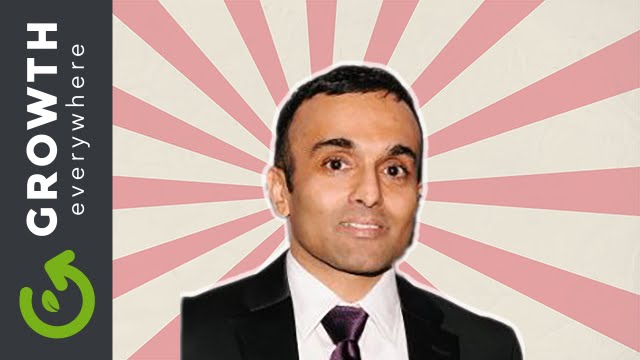
Anand Sanwal, CEO of CB Insights, built a data platform that gets 1,000 trial signups monthly through content marketing. He publishes 15-20 pieces per week, from industry briefs to news-triggered posts, and grew his journalist list from 20 to 800 through rapid, data-rich pitches. The company nearly failed early on until they sold unrelated research to survive.
Chapters
So I could probably spend hours just talking about all the ways I've effed stuff up.
Do you want to impact the world and still turn a profit? Then you're in the right place. Welcome to Growth Everywhere. This is the show where you'll find real conversations with real entrepreneurs. They'll share everything from their biggest struggle to the exact strategies they use on a daily basis. So if you're ready for a value-packed interview, listen on. Here's your host, Eric Siu.
Hey everyone, just a quick heads up that we're giving away an ebook called 29 Growth Hacking Quick Wins. We co-authored this book with Matan Griffel of One Month, and it'll give you a solid base on where you can create growth ideas from. So all you need to do is text QUICKTIPS to 33444. That's the word quick, Q-U-I-C-K, and tips. T-I-P, S as in sugar, to 33444, and you get instant access. Hello everyone, and welcome to this edition of Growth Everywhere, where we interview entrepreneurs and bring you business and personal growth tips. Today we have Anand Sanwal, who is the CEO and co-founder of CB Insights, which helps you track the world's most promising private companies, their investors, and their acquirers to help you sell more, innovate faster, and invest smarter. Anand, how are you doing today?
I'm good, Eric. Thanks for having me.
Thanks for being on the show. So why don't you tell us a little bit about kind of who you are and what your background is?
Yeah, sure thing. So as you mentioned, I'm one of the co-founders and the CEO of CB Insights. We're a data company based in New York City. Kind of started the company— now it's been kind of 6 years ago— after working in venture and M&A for a while. and kind of saw that the tools that we had to use in my old life weren't very good. I always wanted to do my own thing. So myself and a few folks from American Express left and started building CB Insights to kind of build, hopefully, the tools that we wish we had in our past lives. So that was kind of the genesis of this. We are tracking private companies, which are a vital and really massive part of the economy. But which have historically been incredibly opaque. And so we're trying to bring some visibility to those companies, to their investors, to their acquirers, and ultimately kind of help tell people what's next. So who's the next hot company? What's the next big hot industry? What's Google's next move going to be? So trying to use data to answer some of those hard questions.
Got it. Okay, perfect. So how did you end up coming up with this company?
Yeah, so I mean, it was kind of the sort of typical sort of founder story in some sense. I was at Amex running a $50 million innovation fund at American Express, and we were using all these sort of old-school incumbent tools. So Thomson, Dow Jones, folks like that who were charging a fair amount of money for a pretty mediocre experience all the way around. The data wasn't very good.
Right.
UI/UX was sort of out of 1989. And, you know, just thought, hey, there's a better mousetrap that can be built here. And then, you know, kind of thought also that technology could help us do that. So instead of having to call people up and say, hey, what deals did you do, could we build sort of machine learning software that would aggregate publicly available information and do it faster, more comprehensively, you know, than sort of the old school process? methods and sort of saw myself at Amex reaching a point where I knew if I didn't leave, I'd just stay there because life was really comfortable and decided I need to get out because I don't want to have a regret down the road of, hey, I never tried building my own thing. Got it.
Okay. So just so the audience can get a little more context as to how CB Insights helps the world in general, is there any case study that you can share?
Yeah, so let me think of it. So, yeah, so if there's, you know, if you're interested in venture capital, just as an example, right, there's a couple of ways to get that data, right? And so you can read 15 different newsletters and try to read TechCrunch and read VentureBeat every day, right, and try to aggregate all that information. Or what we do is we aggregate it all for you. So what you could say is, hey, I'm really interested in what what's happening in mobile companies in Silicon Valley at the early stage. And you can essentially just build a feed and we'll just push all that deal data to you as and when it happens. So what ends up happening is instead of spending 80% of your time gathering data and doing all this manual work, you basically kill all of that sort of manual low-value effort, to be honest, and you can actually start doing interesting things with that information. So if you're in biz dev or you're an investor, You now have more time to research those companies and reach out to them and build relationships. If you're in corporate strategy, instead of trying to, you know, do all that data aggregation, now you're actually looking at what types of companies are being funded that might be problematic for our big sort of slow-moving, you know, incumbent business. So that's kind of what people use us— that's at least one of the main use cases, is just making this really opaque. market a lot more transparent. So does that make sense?
Yeah, totally makes sense. And I love what you guys do in terms of content because it's really intuitive and it's laid out really well. So I guess, what can you share around your content marketing strategy?
Yeah, so content has been our sort of golden goose without a doubt, right? And it came to us not because I knew anything about content marketing, but just purely out of necessity. So in the beginning, we're a revenue-funded company, didn't raise any money. How do we compete against, you know, these massive storied brands like Dow Jones and Thomson who can take you to a Yankees game or who can take you to a nice dinner, right? We couldn't do any of that. So it was, okay, well, you know, venture capital is a lot like, you know, political commentary. There's a lot of opinions, but there wasn't any data. So we said, well, what we do have that's unique and nobody's doing is we have a lot of data and we can provide some insights on that. And so we just sort of accidentally started doing these like research briefs that were just taking some topic people were talking about and trying to put some rigor behind it, some data behind it. And we didn't do it, just to be very frank, we didn't do it very well in the beginning. I think with content marketing, there's a few things that are really important. One, you know, it's got to be good, but two, I think you got to do it frequently. You know, I talked to other friends of mine or entrepreneurs who are like, oh yeah, I want to do content marketing like CBI does, and The hardest thing is like you just gotta stick to it, right? Like you can't just do 2 awesome blog posts and just think like work's done, right? So now like we're doing probably 15, 20 a week, but in the beginning we weren't very consistent. So we'd get like these blips of success and then we just wouldn't keep investing in it. And we finally realized like this is a magical channel for us, so we need to just keep doing more and more of it. And then now we've kind of, you know, really growing that team out and trying to You know, do more of it and kind of innovate it in different ways as well.
Awesome. So, yeah, I think, you know, the way you guys organize your data and display it in a super intuitive way is great, but I think most, you know, content marketers don't understand how to, I guess, put a process like this together. So how does your team organize when it comes to content marketing?
Yeah, so, I mean, it's a few things, right? Like, there's— we do a couple of different types of briefs, right? So we'll do, like, deep industry type of briefs, right? And those are, like, just things maybe we're interested in and that we think the market will care about. So, you know, what's happening in edtech, right? So you kind of have your meatier, you know, longer-form types of things. And then there's things that are just newsworthy, right? Like there's a peg in the news, like, you know, Snapchat just got acquired, right, back in the day, right? And so maybe there's something else about, well, what else is happening in mobile messaging, right? So you want to try to find relevant things that people are talking about. And, you know, so we try to mix that up. And those might be shorter. Kind of, we call them internally sort of snackable posts. And then I think the other thing we're starting to experiment with a little bit more is we have this sort of deep research-oriented type of briefs. Should we do things that are a little bit more fun, that maybe are a little bit less quantitative at times, but that are interesting to our audience? So we did something just this week on the websites of 13 unicorn companies before they were $1 billion. So it's not data-driven at at all, but it's relevant to our audience and they like that. And so like that post is doing really well and it's kind of different. So I think we're trying to mix it up a little bit, but yeah, I mean, I think the biggest thing is like we try to figure out what's trending, what's interesting in the market, and then try to figure out if our data can inform that in some interesting way.
Okay. What numbers can you share first around content marketing and then what numbers can you share around the business today?
Yeah, so content marketing, right? So one thing is I think our team growth there, right? So we are— it was just me and John, who's my co-founder, in the beginning. That team is now— on Monday, it'll be 5 folks, 1 sort of person heading it up and 4 analysts who do a lot of the heavy lifting on the commentary, and then 2 data scientists. So the team's growing. I think if I could have my way and find people, it'd be 15 tomorrow. It is literally that important. to us as a channel. In terms of the metrics for us, so the other thing I think we do differently is we really don't care about page views. We don't care about number of tweets or anything. It's all about— that content is all about getting people to trial our product. So the metric we care about is the number of trial signups we get as a result of the product. And so we're probably getting, I don't know, close to 1,000 trial signups a month just off of our content. That doesn't include our landing page or any other sort of sources of lead gen. So it's a big— and we're trying to grow that pretty aggressively. I think it's like 1.5% week over week is our goal to grow the number of signups. So it's a pretty— we're trying to grow that pretty aggressively. So that's our metric, right? If something blows up and gets on Hacker News, it sort of gives us— it's a good ego boost, but we could really— we don't care if none of those people sign up for CB Insights and aren't credible potential customers. So that's kind of on the metric side that we kind of look at. In terms of the business, in 2013 we were sort of low 7 figures revenue. 2014 we grew that by a little over 200%. 2015 is looking very good. I think we'll probably grow it again by another 125%, so we'll be in the high 7 figures, low 8 figures range. Nice.
Impressive. So the— okay, so content marketing is obviously driving a lot of things. I mean, what else is driving acquisition for you guys right now?
Yeah, so I think the other big thing we did initially was media outreach, right? And so media needs data. They need to inform— they need to provide context around their articles. And we weren't trying to be TechCrunch, right? We thought we could build a really sort of symbiotic relationship with the media, so we said, if they have a need for data, we want to be the go-to place for them, right? And so I think like we are without a doubt that. Like I think this year we've had 700 different articles reference CB Insights data already this year, right? Like this past week I think it was The Economist, Bloomberg, Wall Street Journal. So the thing we did early on was we would— one, we're super responsive to the media. Like we treat them as if we, you know, they're paying customers. They don't pay us anything, but so if they come and say, hey listen, I'm looking for data on drones, Like, you know, our team will go and figure out how to get them the data and let them know, you know, hey, here's the results. But media outreach has been really big for us because what ends up happening is they, you know, will— they're writing an article about, let's say, a company that was just funded in the drone space. And in that they'll say, you know, and according to CB Insights, you know, drone funding is up 300% or whatever it is year over year. And they'll link to something that we've written, and then that link becomes another conduit by which folks find us.
Right.
And we spent a lot of time building out that media list. So what we did in the beginning was, it was pretty— it's always been sort of ground and pound. So we went to Google News, we searched for all the terms that we thought were relevant to us. So anybody covering venture capital, for instance, at a very simple level, we tried to go find them, right? So anybody who'd written an article about venture capital, we went and found them, put them in a spreadsheet, and then we went out to them and said, hey, we're releasing a report about trends in venture capital. Would you like to receive it?
Right.
And they, you know, a lot of them wrote back and said, yeah, sure, we put out, you know, our data is good. I think the big thing is like, and I see other, you know, players in the industry that do this, like their data, like journalists can't believe their data. With our data, like it's airtight. So we'd send them the data pre-release, they'd write up an article, and we'd say, hey, listen, can you include a link to this page in your article that's gonna eventually have, you know, all of our data about this topic? And so that sort of That, you know, in the beginning was 20 journalists. Now our journalist list is probably approaching sort of 800.
Wow.
And, you know, we go to them, we're very judicious about when we go to them. Like, we're not, we don't try to, you know, if we know you cover cybersecurity, we're not going to send you stuff about the on-demand economy. If we know you cover India, we're not going to cover, we're not sending you stuff about what's happening in Brazil. And, you know, I think the product, the quality of what we put out is We have a pretty high bar, and so now we just get a lot of inbound from media because they see other— their media friends using us, and it sort of has become a really nice sort of snowball effect in some sense with our media contacts.
Okay. So how many people do you have on the— let's just call them the outreach team, because going from 20 to 800 is impressive.
Oh, so the outreach team, I mean, we have one community manager right now. And we have, yeah, really in terms of like who's managing the relationships, we have one person doing that. And then a lot of it is the direct interaction between the analyst team and the media. So if somebody from CNBC wants to talk to us, they'll either have my info or they have Matt or Mike's info on our analyst team. We try not to have too many layers between them and us, right? We want to know exactly what they're after, and we tell them very quickly, like, hey, we don't have that data, right? Sometimes they have a need that's, you know, that's not related to something we have. We try to be very clear about what we're good at and what we're not, and just be responsive. But yeah, there's not a big sort of infrastructure we have to manage that. It's pretty lean, and, you know, they've built relationships with people on our team, so some of them will come to me still, but a lot of them will just go directly to folks on our research team.
Awesome. Okay. So, yeah, it sounds really unique to me. I mean, you guys are using your content marketing to, in effect, get more reach and get more links coming back to you, and it's working out really well because I think, first of all, your content stands out from the rest. So, that's great.
Yeah, and I appreciate that. You know, I think those aren't our only channels, so we were doing Pay-per-click, we're doing Twitter. You know, we're trying a bunch. We're like we experiment a lot with channels. You know, we're LinkedIn, Facebook. You know, I'm of the view that we we're not going to do ten channels really well. So what we try to do is find a channel that works, and then we try to you know internally our sort of phrase is we like try to bleed it dry, right? So like we will just keep pounding that channel until we just feel like it's diminishing returns. So you know we've tried Pinterest, we've tried Flipboard, we've tried you know Twitter, LinkedIn, Facebook. Facebook, Google PPC, you know, we're doing webinars, we've done white papers, like we've tried a bunch of things and then, you know, some things are— all of them have maybe generated some results, but we're a small team, we can't do all of them, so then we look at the data and say, okay, this is where the best leads came from, this is where the most leads came from, let's do more of those.
Makes sense. Okay, so let's switch gears for a little bit. You wrote a piece on 54 mistakes you made as a chief executive. What are some big ones and what did you learn from them?
I think, I mean, the biggest one, and I'm still learning from it, is around culture, right? So when I just always— to be very honest, I thought the whole corporate culture, business culture thing was kind of like just propaganda, right? I thought like it's something big companies do to like sort of brainwash you into feeling like you're doing something meaningful. And what I realized was over time is, you know, when we were 10 people, it was pretty easy. You know, it's me, Eric, and 8 other guys, right? And everybody knows what's going on. We're in crappy offices. I'm writing the payroll. I'm writing their checks for salary handwritten. And everybody kind of knows what the culture is. When you get to 25 or 30 or 50 people, people haven't seen the lean times. They haven't seen the terrible offices. So how do we sort of instill in them the importance of customers and of being humble and all these things that we think are important? I think that's been probably my biggest— I sort of am really bought into the idea that we need to— culture doesn't just happen, you have to actually build it. So I think that's the one big thing. I think as we've gotten bigger too, nailing process becomes important. So, you know, biz dev team, our biz dev team 8 months ago was 3 of us, it's now 13, right? So, you know, not just assuming that people just will figure it out, like actually, like, Having the scripts and having the templates and kind of nailing those things becomes important because ultimately it makes people more successful at their job if they don't have to keep reinventing the wheel. And then they can start thinking about higher-order problems. They can start thinking about better ways of doing things versus inventing them for the first time again and again. So there's process, there's culture, along with— a lot of it all boils down to culture, right? I think as we've gotten bigger, sort of over-communicating becomes important. Not everybody knows what's going on, so kind of giving updates, kind of, you know, we do a monthly review at the beginning of every month showing revenue, you know, marketing, you know, how many leads were generated, you know, kind of how content was doing. So every team sort of presents and pretty, you know, everybody knows how much money we're making all the time, so it's pretty— It's pretty transparent in that sense, and I think that's been helpful for people to know what's going well, what's not going well. I could go on and on. You saw the post. There were 54 screw-ups. I could probably spend hours just talking about all the ways I've effed stuff up. Those are probably some of the big ones that I've learned, and I'm still working on it. It's my first company, real company, so I have never built a company, whether it's 7 people, 17 people, 70 people, or 700. So it's just, there's gonna be new problems as we grow, but hopefully we're staying, you know, a step ahead of them.
Okay. So was there a specific event or like story that led you to realize, holy crap, you know, we need to work on culture/onboarding? What was that story?
Yeah, so I think there was like, with onboarding, for instance, You know, like, there was, you know, as we were getting bigger, I'd hear from other people on the team, like, hey, so-and-so's new and, like, they have no idea, like, what to do, right? And they're, like, getting— they're sort of feeling demotivated and they're, like, just feeling like they're not doing a good job. And, like, it became pretty apparent that it wasn't their fault. It was sort of my fault, or mine and John's fault, for not giving them guidance, right?
And so—
You know, I think there's this great thing that— this great article on First Round Capital's website where they basically kind of say that, you know, when you're sort of selling somebody on taking a job, right, it's all like roses and you try to present this really good picture to them. And then when they come in, you just sort of drop them in and you're like, oh yeah, like, you know, like you don't continue that sort of wooing. And I think like that became apparent because people were confused in their jobs. They didn't know the goals. They didn't know what was expected of them. They didn't even know who to have lunch with. We sort of just dropped them in. They were like, here's your computer. It wasn't even set up for you. You didn't know who to have lunch with day one, so you were maybe eating by yourself. It was just a really— being very frank, it wasn't a very good experience. You don't want to come in your first day and then go home to your friends or your significant other, whoever, and be like, yeah, I don't know if I made the right decision. So that was kind of pretty apparent. So we've tried to re-architect that with sort of— one of the things we've actually done is we set up a MailChimp drip for our onboarding. So previously what would happen is you'd get like 50 emails day 1, right? It'd be like, you got to sign up for Seamless for your lunch. You got to go fill out your payroll forms. It'd be 30 introductions from people on the team, and it was all very overwhelming. So we set up a MailChimp drip that like now you get emails over the first 2 weeks and they kind of like ease into it. So you don't get 30 introductions from people, you know, you get 2 a day, you know, you get 3 a day. You get product tutorials, but you don't get 7 on day 1, you get like 1 every 3 days so that way you learn the product slowly but surely. There's checklists that say like, hey, have you done all these things? You know, have 5 people taking you to coffee. So, you know, I think we've like tried to do better there and make those first couple weeks a lot less stressful and a lot less sort of full of friction than they used to be.
Got it. That's super smart. I'm going to steal that.
Yeah.
Cool.
So was there at any point in time where the company was on the brink of failure?
Yeah, for sure. So, you know, we decided never to— not never, but at least to date not to raise outside funding. So in the beginning, we were basically doing— before we were pre-product, we were doing anything and everything to make money. And one of those things was we were selling research totally unrelated to CB Insights to hedge funds about the credit card industry. And that was just because me and John and the team were former Amex folks. So we were trying to sell this product and John went to Columbia and I went to Wharton. So we were like, oh yeah, we have this great network. We just sort of naively thought this would be easy. We reached out to everybody we knew. Nobody wanted it. And I was actually paying the team out of my savings because we didn't have any revenue coming in. And I guess it was like a year and a half in, and I'd just been married, and seeing the savings just get killed week to week. And then we were like, I think it was like February of 2010. 6 years ago, whatever that works out to. It was basically like, hey, we haven't sold any of this research product. CBI still has to be built. We're not anywhere. It was sort of a month away. Then totally got lucky. The market, the general stock market, just kept going down at this point. Credit cards became a big deal. All these hedge fund guys started worrying about it. This person reached out to us and said, hey, I think I can sell that research product of yours because I have all these relationships. We hooked with his firm and yeah, it just literally was like we were weeks away from just being like, hey, let's just go back to big company jobs and say we gave it a shot. We got lucky, right time, right place. We were the only game in town for credit card research for 16, 18 months and we just did really well and put away all that money to then build CBI. Nice.
Okay, so it was a fortunate partnership that came.
Fortunate partnership. Part of it is just being like, we really got lucky from a timing perspective. Without going into all the economic issues, there was this mortgage crisis that happened. Right. Then after that, we built the product during that and everybody was like, hey, I'm still worried about the mortgages. I don't care about credit cards. Then once they felt good about that, credit cards happened to be the thing that these guys started worrying about. When they needed somebody in the space, there wasn't anybody but us. So, you know, part of it was this fortunate partnership with this person who was really very smart and who kind of like realized that we have something unique here. And part of it was just like us being right time, right place. Like, I wish— I would like to claim it was just genius by our team, but it was literally like just us getting lucky.
Awesome. All right. What's one piece of advice you'd give to your 25-year-old self?
My 25-year-old self. I think I was in a rush to be an entrepreneur for sure and I ended up starting it much later and I always felt like I started it sort of mid-30s, probably early 30s and I was always like, oh man, I thought I'd start a company by the time I was 25. In a lot of ways, waiting actually worked out really well. We're selling 6-figure deals now and a lot of what I learned at American Express which I always thought I'd leave in 18 months or 2 years has actually been super helpful. So, you know, I think like patience, you know, things work out the way they're supposed to work out even if they don't go exactly to the plan that you'd have hoped. You know, I think that was my biggest thing because I was always like, oh man, I'm behind schedule. I thought I'd be started— I'd have already started my company at this point. But I think like because I didn't, because I got sort of that training at Amex on how to sell into big companies— It's actually been super valuable in building CV Insights.
Interesting. Okay. How do you structure your day?
I'm terrible at this. So I am trying to get better at this. I'm just being very honest. I am trying, you know, right now it is in the morning, it's, you know, proposals out to clients and kind of response to prospective clients is where I try to spend most of my time. Just because that stuff's got time sensitivity to it often. Afternoons are— I'm trying to spend a little bit more time thinking about sort of— not just thinking. I'm not sitting at my desk just pontificating, but kind of sitting down with the team and trying to figure out, OK, on the content side, what types of experiments should we be running? What types of things do we see other people doing in other spaces that we think we could replicate?
Right.
Or thinking about with the product team, what's the thing that we should be developing, like what should be on the roadmap. So a little bit more strategic. And then sort of the latter part of the day is more sort of transactional, like responding to people that have called or just emails that were less critical. But it's not extremely— it's probably not the thing that I'm best at. I don't have a very regimented routine. You know, we, because of how we've built the business, it's, you know, we always are going to put away more money every month than we spend. So like, just as an example, this, we're at the end of the month, right? So this last week was just all about closing new business. Like, that was it, right? And so like yesterday we had a killer day, like, you know, like just, but it was, I want to close business at the end of the month. At the beginning of the month, I may be thinking more strategically about other stuff. So it probably shifts a little bit because of— It's more of just like sales cycles and where we are in the month, to be honest.
Got it. Okay. I want to shift back one second. You talked about how Amex taught you how to close 6-figure deals. I mean, what can you share around that?
Yeah, so I think the thing is that you have to realize what motivates people, right, at a company, right? Because when we started, when we launched CBI, we were like, oh, we'll be the low-cost solution in this space. And that's like the absolute stupidest thing you can do in our space. Because, you know, our customers don't care about low cost. They're not spending their money generally, right? They're spending their firm's money, right? And so what motivates most of our customers is they want to, you know, at a really simplistic level, they want to look good in front of their boss or they want to get out of work early or ideally both, right? And so you have to realize like what motivates folks. And so some people are maybe very motivated by they want They want to have some solution that's gonna like give them, let them look really good when they're doing a presentation, right? So if that's the case, you want to highlight like we want to highlight on CB Insights all these crazy visualization features that we have, right? If somebody's like the data guy who really wants to get into the weeds on the data and like build a rigorous model about what's happening in an industry, like then you want to emphasize that. So I think you want to, you know, it's the thing we try to do upfront in sales or even our customer success team is like we ask, you know, at the end of this trial or at the end of this subscription, like what's going to make it a no-brainer for you to subscribe or buy CB Insights? And so like if we can— so that tells us a lot about what they care about. You know, sometimes they'll say, well, our company cares about this, but like oftentimes they'll say like, you know, hey, like I spend a lot of time gathering financing data by reading 40 different blogs. So for that person, like we're going to show them like how we're going to save them a ton of time. While somebody else who's like, oh, I present at senior meetings and I'm at conferences all the time. I need cool stuff that I can share. Then we're going to show them a whole different set of capabilities. That's the thing I think I learned at Amex was how everybody's got different motivations. It's not about revenue or cost. Sometimes it's more ego-driven things.
Yeah.
You've got to find what those are. Figure out how your solution— you gotta get sort of in the skin of a customer and then show them how your solution helps them solve that issue or solve that challenge or that need that they have.
Awesome. Okay. So, obviously there's a lot of people, you know, you guys are top in terms of figuring out how to visualize data and collecting data in general. So, you know, everybody's talking about looking for data scientists. That's kind of like the hot role right now. So how do you go about finding great data scientists?
Yeah, it's, you know, to some degree we've been really, we've been sort of lucky on the data science side because, you know, our newsletter is growing pretty quickly. We're probably growing it by about 1,000 people a week.
Yeah.
And so like we actually end up getting a lot of inbound, right? And so like somebody who's like, hey, I love like startups and like, you know, data and venture capital, right? We're sort of like the perfect home for that person, right? And then sometimes we'll actually look on— we'll look at people's individual blogs, right? So we might see somebody who tweets out about they did a project in a particular language that we think is interesting. And then we'll go look at their blog and we'll be like, oh, that person's taken NBA statistics and done all these cool things with them, right? Then it's like, all right, somebody who's innately sort of intellectually curious and who loves data. We deal with interesting data. We're not doing actuarial tables for life insurance or something. Maybe that could be— I shouldn't say that. That might be very interesting to some people. But for us, startups, emerging tech, what's next, I think it's amazing. We can say, hey, listen, we know you're really into data. You've done all these cool things on the NBA and college sports or whatever. Hey, your skills are very transferable. Would you be interested? So I think we've been— some of it, I think, a little bit because of the brand and the newsletter, we get some people just inbound who apply. And then we try to find people who might be like-minded and say, hey, listen, you could do some really cool stuff here. And it seems to be working. I mean, we're still trying to— recruiting is always difficult, especially now. But I think we've been pretty fortunate there. Right.
It's almost like when you evaluate a designer and you go to like a Dribbble or Behance and you look for them. Same thing with like a really good blog writer, right?
Exactly, exactly. I mean, if we can find— and, you know, we'll reach out to people who just say like, not interested, I'm really happy where I am, right? But like, I think our philosophy here is like, it's never a bad idea to meet smart people, right? So, you know, if they write blogs or if they're doing stuff in statistics or whatever that seems interesting and they're messing around with different visualization libraries. Like, you know, it costs all of maybe 15 minutes to try to like send an email, you know, if that. So, you know, why not do that? So yeah, we've been, you know, yeah, I wish there was a Dribbble for data scientists. That would be cool. But—
There's an idea for the audience.
There we go. There we go. So yeah, no, I think that would be pretty cool. Cool.
All right. What's one must-read book you'd recommend?
Ooh, The Psychology of Persuasion.
Is that the Robert Cialdini book?
Yeah, yeah, exactly. Amazing book, yeah. Perfect. Cool.
So, you know, this has been great. And then what's the best way for people to find you online?
So @CBInsights is what I will kind of mention first. I'm @ASonwal, but I'm pretty bad at Twitter, so I'd probably follow @CBInsights ahead of me because we're really— we're much better at Twitter as a company. So yeah, that's the way to find us. And then our website is www.cbinsights.com. If you're interested in startups, VC, emerging tech, sign up for a free trial. It's, you know, and then, you know, if you like what you see, just reach out to me and we'll set up a demo and hopefully get you on board.
All right, yeah, it's, it's, you know, CB Insights is definitely a treat for anybody not just interested in VC but startups in general, I think. A lot of interesting insights, obviously CB Insights. But, and then thanks so much for doing this.
Yeah, thanks so much, Eric. Have a great day.
Hey everyone, just a quick heads up that we're giving away an ebook called 29 Growth Hacking Quick Wins. We co-authored this book with Matan Griffel of One Month, and it'll give you a solid base on where you can create growth ideas from. So, all you need to do is text QUICKTIPS to 33444. That's the word quick, Q-U-I-C-K, and tips, T-I-P-S as in sugar, to 33444 and you get instant access.
Thanks for listening to this episode of Growth Everywhere. If you loved what you heard, be sure to head back to growtheverywhere.com For today's show notes and a ton of additional resources. But before you go, hit the subscribe button to avoid missing out on next week's value-packed interview. Enjoy the rest of your week and remember to take action and continue growing.









