How Claude Code Can Replace Your Marketing Team
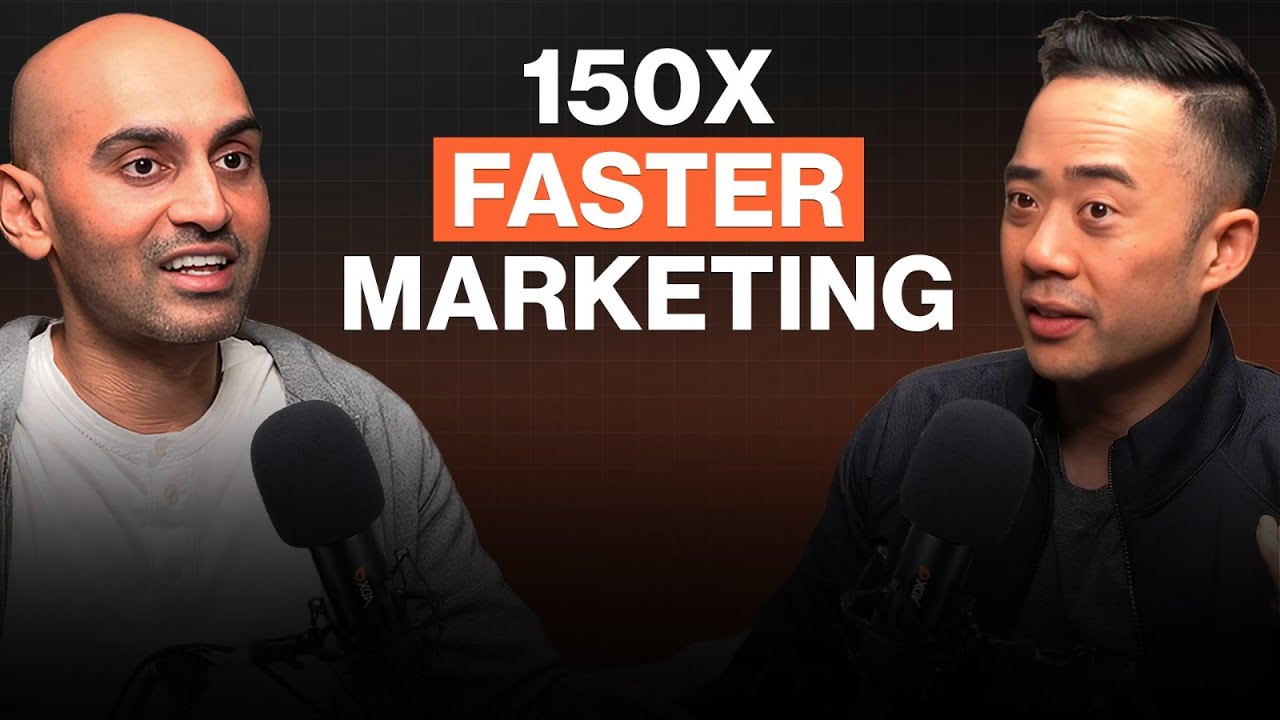
Eric Siu and Neil Patel discuss how Claude Code and AI agents are automating marketing work like go-to-market planning, email funnels, and deal revival. They cover real workflows with HubSpot and Ahrefs, productivity gains, and where AI copy still falls short.
Chapters
All right, Neil, let me tell you this, okay? Let me tell you how Claude Code will replace your marketing team. I'm going to give you some examples here because I've been on this Claude Code train. One of our mutual friends, he messaged me every day now. He's like, I wish I could just replace everyone. He's like, these 400 people gone, all these people going to be fired soon, right? And I'm just like, I ran this because we just relaunched ClickFlow today. Remember the SEO product that we had?
Mm-hmm.
So I wanted a go-to-market plan for ClickFlow, but you know how much a go-to-market plan would typically cost if you have someone that's writing your email funnels, like onboarding emails, abandoned emails, you know, churn save and all these emails, right? The landing page copy, all these things. You're probably paying a go-to-market person who's good maybe $20,000 to $30,000 for this, right?
Yeah.
So at minimum. So I basically had it interview me. I said, here's what I'm trying to do. Here's what the goals for this thing are. And it asked me like 10 questions and I used Claude Code to spit this out and it put it in these neat folders, okay? And I read through the onboarding emails, abandoned cart, all these things. It basically was 95% there. It doesn't even look like AI copy. Even the sales emails, the presale emails were good. I'm like, oh my God. So the prompt I put out to X was like, if I can create this go-to-market plan quickly, like what happens to not all marketers, what happens to most marketers, right? And I just threw this out there 'cause it's like, you still need people to do this stuff, right? But you need very high agency people to manage these things. And I was like, that is just one example where I'm just like, you know, the coders have already seen the light, right? They've already seen that. Jensen said this, Jensen Huang from NVIDIA, he was like, you know, if people are still coding, he was like, I would prefer my engineers don't code so they can work on higher leverage things, right? And so my question is, you know, What happens to most marketers?
So before I answer that question, I'm going to give you the code example, and this is a little bit tangent, but then I'll answer the marketing one. I was talking to Hiten yesterday and we were talking about all these apps, right? Like Claude and all this kind of stuff that helps engineers and people just be more efficient. And he was telling me something interesting. He's chosen historically as an entrepreneur to mainly only hire senior-level engineers. He doesn't like dealing with junior level or mid-level as much, so he prefers senior level.
Why? You should explain why.
And the reason being is he finds it much more efficient use of his time. They can just figure things out on their own. You need less of them. And now with AI, he's just like, they're so much more efficient. You don't need big teams. It's not about just hiring tons of engineers, it's about hiring the best ones and then giving them these tools and letting them go. And the reason I bring up this tangent, I think marketing is going to be somewhere, Similar. So I'll give you an example between me and my co-founder, Mike Kamo. He understands marketing, that's not his specialty, but would you—
He's a pretty good marketer.
But would you agree he's really good at sales?
He's an excellent salesperson.
And persuasion and figuring out what to say to convince people?
Yes, yes.
So sometimes when I'm writing out emails for partnerships and stuff like that, I will send it to Mike because all cold emails still to this day, I don't know if I told you, I probably send at least one cold email a day. It's on my like to-do every day. I try to send out minimum one cold email or I don't feel asleep. Really? I didn't know that.
Uh-huh.
But most of it's for partnerships or Or maybe sometimes a deal? No, no, this is for revenue generation.
Okay.
So it could be partnering with a company that could drive revenue, or it could be pitching a company and trying to get them as a customer.
Yeah, got it.
Those are usually the main 2. So I send some of my emails to Mike when they're really important and I know the person probably has a high likelihood of responding and it's a big company, like let's call it, You know, 20, 30, 50, 100, multi-hundred billion, even trillion. And I know the person who's in charge, I know they're probably going to respond. I'll have them review it and fine-tune it. He loves taking everything and running it through AI, ChatGPT, Grok, you name it, he tries them all. How many times do you think I use his email copy when he modifies mine through AI?
Through AI?
I don't—
you're a really picky person. Maybe 50% of the time.
Uh, close, but in a different way.
Okay.
I never really use any of his copy, but AI sometimes words things in a different way or adds another point.
Yeah.
And then I may take that.
You'll build on it.
I'll build on it.
Yeah. So you're really using it to help form or give you ideas, like you're pulling ideas from it and you're building on those.
Yes. The problem with AI that I see right now in marketing and Junior-level marketers and entry-level marketers and maybe some mid-level marketers, what they don't understand on certain things like copywriting, and that's an easy one to use because everyone uses AI for text-based copy, or a lot of people do. It makes crap too wordy. It adds in too many dashes and fluff.
Yep.
It tries to sell you sometimes too hard instead of just being very direct and showing that I'm coming from a place of authority or confidence, or people should just want my product and here's why.
Yep.
I found that it does a terrible job in copywriting. A lot of junior people send me stuff and mid-level, and they don't know. I'm not talking about people in my company because they've learned their lesson by now. I'm talking about from external people, and I can tell it's written by AI, and they don't know that I know, and it's just so obvious for me. And I'm like, dude, this is just crap. I do think it'll replace the junior-level people really much more easily. I don't see AI replacing the high level, like people like you and me, and I don't see it replacing the good mid-level people. I think it just adds to it. Like, you know, I think what we should talk about next is you've used AI for a year, 2 years heavily. I would say a year really heavily, like super heavily, maybe a year.
I would say I've been pretty big on it. Yeah, let's just go a year heavily, but pretty heavily already the last 2, 3 years.
Okay, so I want to ask you something and I want you to really describe it. Go and describe your day in detail, not the cold plunges. I get the screenshots from you sometimes in the morning, or it's a sauna.
I don't send screenshots to you.
It's a sauna. That's weird.
Guys, I posted Instagram stories.
Oh yeah, that's what I see. But it's a sauna and you'll put like a time on there, like 5:00 AM or 5:05 or whatever.
Yeah, I like that stuff.
Okay. Which I actually think is really good for you. At least the articles you sent me show it is. Talk about how your life used to be on a daily basis. Okay. Like really daily basis as a marketer, not running your company, but what you would do in marketing. And now break down what your life is on a daily basis now from a marketing aspect a year later, not the in-between, but that way we can see the drastic difference.
Yeah. Okay. So this is good because a year ago we had the fires going on. So that's a nice starting off point.
Minus the fires. Eric is not saying the fires were good.
I'm not saying the fires were good. I'm just saying, I just remember that. So, and thank you for that. One thing before I answer, Neil, so just to kind of close the loop on how Claude Code can replace your marketing team, what we're really saying is high agency people will never be replaced. And what it really comes down to when you say good, my definition of good ultimately comes down to someone who has a bias to action. Because if you think of all the good people you work with, like, you know, in the past you would say execute, actually quick executor, fast executor, right? Everything comes down to bias to action. Mike, strong bias to action, right? Anybody you worked with that you worked with for a while, I would say has had that strong bias to action, correct?
Yes.
That's what we really mean by good. And so anybody that has strong bias to action, you're not going to get replaced. You're going to be fine. Why are you smiling?
No, it just gives me— I'm actually thinking of a scenario of someone. When you're talking about replacing, I'm actually thinking of someone right now.
Okay. All right. Well, anyway. Okay, so let me ask you a question. So a year ago, let me think about this. So when I was using AI a year ago, There was no Claude code. I was mainly using it to— because ChatGPT had recently introduced memory. And so I was going through like a relationship thing. Okay, so I was constantly using it as my therapist at the time because it had memory, right? I was using it for advice. I was using it for basic use.
Sorry, can we slow back and go back? Because I missed like half of it. Yeah, I didn't understand what you were saying. Okay, you were saying there was no Claude code a year ago, and then you started using it for what?
Okay, let me back up. So a year ago when I was using AI, let's just call it 2025 Eric, okay? I was using AI mainly to use ChatGPT for therapy, okay? I was using it to track my diet. I was using it for calorie counts, things like that. Very, I would say rudimentary stuff. I might use it for copy and things like that. I might, and as the year went by, I started to use it for helping me scan legal documents and things like just to give me the key takeaways and things like that, right? From a marketing angle, yes, it helped me with copy. But to your point, the copy was very— there's a lot of em dashes. You can just see the very first sentence, it reads like an AI, you know, piece of content. It wasn't until— and I'll be very honest, it wasn't until actually 4 or 5 weeks ago, Neil, during the holiday break, when Claude Code actually unlocked everything, right? Maybe I can hold off a little bit, but it was at that point where I was like, oh my God, I can build anything now. And that has what changed my workflow completely. I would say in the last 4 or 5 weeks ago. Now I get anxiety if I don't get to use Claude Code, at least for a little bit, for at least 2, 3 hours a day. One hour, like you think you're going to use it for 30 minutes and it ends up being like 3 to 4 hours. If you're in B2B, here's the deal. LinkedIn account-based marketing sucks, but it doesn't have to. With Carrot, it allows you to create personalized ads towards your customers and also personalized landing pages. pages that align with the ads. So you're going to have higher conversions and influence pipeline reporting to prove that your ABM works. So if you want to learn more, just go to karrot.ai and you can join the waitlist. Again, it's karrot.ai, K-A-R-R-O-T, and we'll see you on the other side.
So, so let's go back and let's make this a little bit actionable. Okay. You do more than marketing, but you do marketing yourself and you have employees who are marketers. What do you expect? What are you expecting from an employee right now? Let's say someone doing SEO. Let's, let's just use that example because that's where we both started using SEO. What would you expect them to use AI on a daily basis for specifically?
Yeah, I'm going to answer this and then I'm going to give you, because now I'm thinking about specific use cases for me in the last year. So I'll come back to that, but this one I'll answer. So our SEO team right now, they're expected to use ClickFlow, which is our internal SEO tool. So I was actually sitting in an SEO meeting this week because I wanted to ask them about product feedback. I'm like, okay guys, you guys are using this, how much of the time, right? They're like, oh, like 80, 90% of the time. I'm like, okay, how much time are you saving with this ClickFlow thing? Copywriters, 90 hours a month, okay, per person. And then, so they're using a combination of ClickFlow to help with content, with internal linking and things like that. And we're also, they're also using Manus, which is a general agent to help with keyword research. Manus just, you know, did a partnership with SimilarWeb.
Didn't they get bought out by Facebook?
They did, but then, you know, China is trying to stop that, right? It was like, well, you didn't quite, you know, divest properly. So we don't know, we're gonna have to invest— investigate this. So all that to say, it's really those 2 things right now. So any keyword research strategy stuff, hey, what's happening with these competitors, that kind of happens with Mannis. Obviously, they still need to talk to clients and things like that too. And then I would say the other piece around content mainly comes from ClickFlow, internal linking, and, you know, updating, deleting, consolidating.
Yeah.
Yeah. But that was very recent, maybe the last couple months or so. Now, now that I remember some of the things I did last year, do you want me to answer some of those?
Yes. Okay.
So in 2025, I was— and Neil pays for all these things too, I think, even though we're both cheap. So—
Sadly, I do. I see the bills. It makes me cry every month.
So we both pay— I'm speaking for you. We both pay $200 a month for ChatGPT, the pro version, just because you can—
there's—
do you pay $200 a month?
I don't know how much I pay. I just know it goes on the corporation and I just know it's expensive.
Yeah. So $200 a month. is the individual plan.
Okay.
We both— so I pay— I was already paying, I think, $100 a month for Claude for Max. Okay. And I was paying Perplexity $20 a month because the deep research is really good. So I use Perplexity for deep research, finding things quickly. I use Gemini for image generation and video and then for studying YouTube videos too. Right. This was 2025, Eric. And then ChatGPT is— it's more like general questions or let's say if I'm— I use Granola. So if I'm arguing with you about something, I might just turn Granola on and I will just see who's right. It pisses people off. It pisses— in relationships, it really pisses people off. So I don't try to do that that much.
I'm not going to try that one. I'm married.
Yeah, yeah, you don't do that one. That'll get you in trouble no matter what.
I'm going to lose either way.
Yeah, yeah, yeah. So it's like, I've just given up on that in relationships. But what I do, by the way, like I used Granola yesterday, like I was having a debate with someone and like it called out where I was wrong and where they were wrong. And we talked about it today and we both apologized for where we were wrong, right? So it's good for solving problems. That's great. Yeah. So, 'cause you have like a, you know, an arbiter in there that doesn't really care about you or the other person. It's just listening. So all that to say, That was last year, okay? Now, and there's other tools too, but we'll just leave it at that. In the last 4 weeks or so, I use Claude Code and all these MCPs where it connects with like the tools like HubSpot, Ahrefs, Gong, and I built like a deal reviver that will surface, you know, deals that we lost maybe 12 months ago or so. It'll show the deal size and it'll show why we lost the deal, and it has an email crafted that looks like it's a very good email. You would open it, right? It's like, hey, you know, Neil, we connected 12 months ago. I just saw the announcement on this funding round. Congrats. Does it make sense for us to reconnect? Eric. That's not bad, right? It's not 100%, but it's not bad. And so the team now can click in Slack, they can select what they want, and they can just hit send email, and it'll send the email out, and then it'll record it to HubSpot. But that's an MVP, that's a prototype that I built. Just like sometimes I'll be in line at Sweetgreen, I'll just be building, right? Or I'll be on my couch, I just open my phone, it's building, right? And then sometimes I can't stand watching TV anymore. And I'll just go to my computer room until it's about time to go to bed. Like the other day, I was gonna watch TV, it was 6 PM, then it's holy shit, it's 9:30. And I was just on Claude Code the whole time building stuff in parallel. So my point now is, the way I use it is to solve problems in my organization, which I couldn't do before. It's extremely high leverage. And I was asking it, I was like, I was like, hey, The work that we did today, how much work did I do as one person? What is it equivalent to? It's like, you did the work of 5 engineers today, right? I was like, okay, break down the math for me. It's like, well, X, Y, and Z, but also I think I broke down the math to you last time. How long did it take for you to get a prototype done before, like a working prototype where you can mess around with for software?
For me, are you talking about using AI or having my team do it?
Just having your team build it in the past, like a year ago.
Working prototype being designed that you can click around or one that actually functions? Because, you know, in the design apps, I forgot what the one we use.
InVision or—
Not InVision.
Balsamiq?
Not Balsamiq. Is it InVision?
The wireframe stuff? That's what you're talking about?
No, it's actually a design you can click around.
You're talking Figma.
Figma. There you go.
Yeah. Yeah.
Yeah. So usually I'll see stuff in less than a week.
Okay. So that's for a pro— like a Figma?
For a Figma.
Okay. How about a click around, you can do stuff?
Click around and do stuff where you actually see different results. Like if you put in a URL. Usually 30 to 60 days, sadly.
So let's just say 30 days, okay? Now get this. I'm being— okay, let's say I can get these prototypes out in 20% of a day, okay? We can be conservative here, but if 20% of a day on 30 days, 30 days divided by 0.2 is 150, okay? So you can say I'm either 150 times faster, or you can argue that I'm infinitely faster now because I don't have coding abilities, right? But you and I do have strategic abilities, and we see the entire battlefield with our companies. So To me, that working prototype, the deal reviver, the ability to spot client expansion, client churn opportunities and see what exactly they said and why we should be pitching this or whatever, and then sending that to the team and seeing if they take action on it. I built all that, all of that, right? And that's why I'm so excited for you because once I inject you with this drug or you inject yourself with this drug, there's no turning back. You're going to be messaging me. We're just going to be doing this all the time because our mutual friend, we're just doing it every day. And he's like, I feel like a loser right now. I can't believe I'm in these meetings. I'm like, I can't believe I'm in these meetings too.
Yeah.
It's just so fun right now.
You know, for the sake of me, and you've known me for a long time, I don't know how many years, but it's well over 10, 15 plus?
15, 16 years. Yeah.
Okay. I can't get the life of me to spend more than 30 minutes a day using these tools. I agree they make me more efficient as a marketer, but I find my highest use of time Just doing deals more than anything else. So these tools are great and I have my team using them all day long. Engineers, marketers, product people, even customer success.
Yeah. Because we can input all the satisfied people, all the unsatisfied people, learn from it, have AI help with the responses and train our people. There's a lot that you can end up doing with these products.
But I still find my highest use or best leverage for my time is just focusing on closing deals.
I don't disagree with you, but I'm willing to bet you, I'm willing to bet you a really nice meal in 12 months or so, you're going to be using this because, and this is, and let me come back to your response too, because I do, I will say Neil typically is, I'm more on the optimistic side, sometimes too optimistic. Sometimes Neil's on the pessimistic side, sometimes too pessimistic, but it's a good balance, right? But what I would say is, Let's say I agree with you. Your highest leverage thing is doing deals, right? Whether it's, you know, whether it's an M&A transaction or like a deal, like a business transaction, like a sales transaction or a partnership. I do agree with that. This type, like, let's say that's true. What are all the things that bother you with that process right now that would be able to help you gain even more leverage there? That's how I look at it. How can I gain leverage on all these things? And that's how my friends look at it. I'm like, what are you building right now? Because arguably he should, he shouldn't be doing what he's doing right now. But I'm like, so what are you building? He's like, everything's around product right now. And It is, it's going to save him a lot on headcount, but he's like, dude, this is supercharging everything we're going to build.
So my team, Caio helped build a lot of the automation to scrape, get lists, send first cold emails for M&A. So we've already built a lot of this stuff and we're using AI for a lot of the grunt work that we hated hiring people for, or, you know, that I would just manually go on LinkedIn and go look for companies. A lot of that's done. The main way I use AI to make deals happen is I go and do research. And when I say research is I'll ask ChatGPT questions or, you know, AI mode questions or Gemini, whatever you want to end up calling any of these products. And what I found is there are often many cases. So for example, sometimes I'm doing deals where you're structuring them and it involves tax consequences. And I was talking to ChatGPT a few days ago about a potential deal, and it was just like, oh, it's not going to be tax favorable for you because with the Trump tax bill, bonus depreciation in 2026 is only 40%. And I'm like, what the heck are they talking about? It's been known for a long time that he renewed the bill and it's now 100% for bonus depreciation. Mm-hmm.
Right? And it carried back all the way towards, I think, January 20th or something like that, or whenever he got signed into office. But I was like, what the heck is ChatGPT talking about? What I find is these tools produce a lot of inaccurate information. Luckily for me, I'm using them for research on topics that I'm already familiar with, but there's nuances on laws and taxation for states versus federal, and every state is different. But I'm able to catch some of this stuff.
But other than that, like, that's the main thing I want fixed, and I hope that they'll be able to fix this stuff within a matter of a few years. I find that Google, tends to actually be more accurate than ChatGPT, believe it or not.
All right guys, we'll catch you later. Goodbye.









