How Intercom Grew to Multi Millions by Listening to Their Customers (with Des Traynor!)
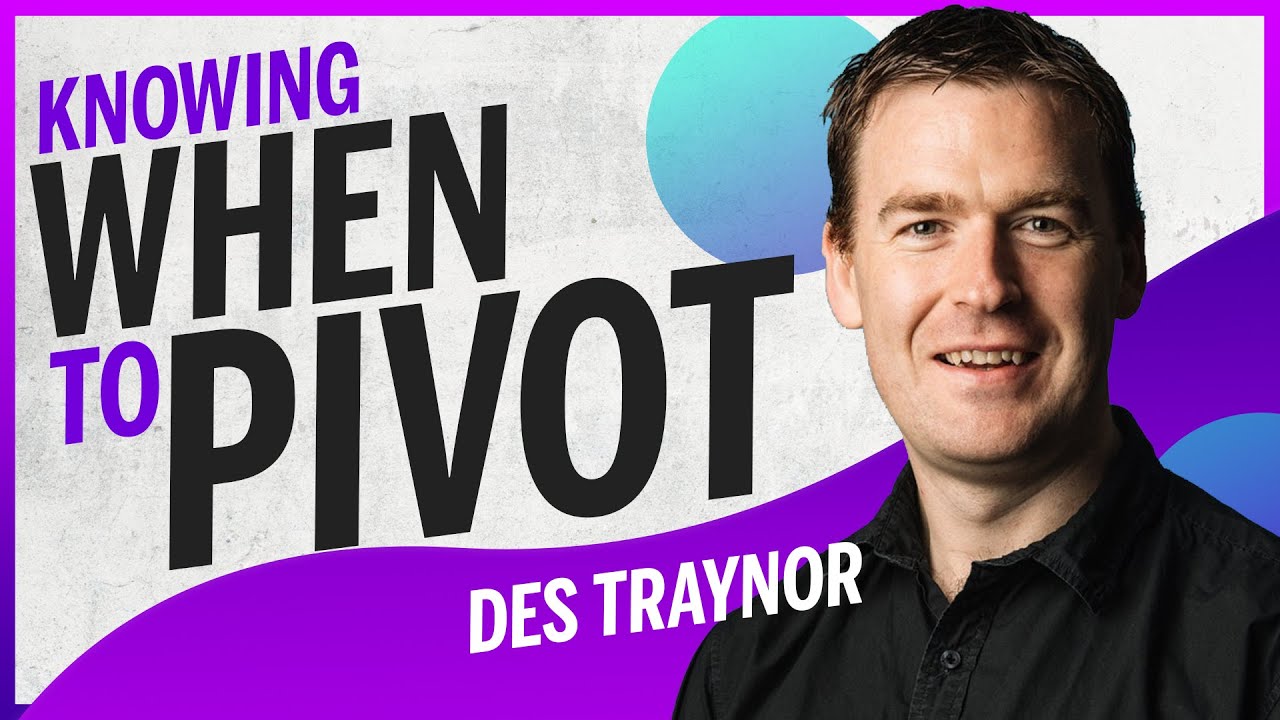
Des Traynor, co-founder of Intercom, explains how a simple in-product message to users sparked a pivot from error-tracking to a customer-communication platform. Intercom scaled from four people to 600 employees and $50M ARR in three years by treating content as a growth engine and offering one unified channel across sales, marketing, and support, rather than competing on narrow features.
Chapters
All right, everyone. Today we have Dez, a trainer from Intercom. We've actually had Karen Peacock on the show before.
That's right.
So Intercom, good friends. I'm actually going to talk about event sponsorships in a little bit because you guys have sponsored our conference before and you guys are pretty heavy on that. But can you tell everyone that maybe doesn't know Intercom kind of what you guys do and how you— I guess your story, how you started it?
Certainly. So Intercom helps internet businesses communicate with their customers. We are probably most known for being a messenger that you'll see inside software, on mobile apps, and also on websites. We started Intercom because we had the problem ourselves. We actually had a different product called Exceptional, and Exceptional was a Ruby on Rails error tracker, real boring shit. And we had thousands of customers, and we had never really met any of them, and we had no easy way to talk to them. This was like in 2009, so There was no Stripe, there was no good supporting software for B2B SaaS in general. And I said there was no Stripe because the only record we had of our paying customers was actually a PayPal subscription log where we had to log in and download an XML file, transfer the XML through an XSLT transform into a regular spreadsheet so that we could open up a spreadsheet, paste that spreadsheet into a different tool. We then sync that against our activity logs to see who was actually using the product and paying for it because we didn't want to mail people who weren't using it and get feedback from them, so it was a waste of time.
Yeah.
So we'd go from there to like get our final list of people we wanted to talk to, send them out an email through like Mailchimp or Campaign Monitor or something like that from back then, and then get like 300 replies in our inbox in a really unstructured way. And it was a bit of a mess. And the core idea here was just like talking to our users was so hard and so important and there was no good tooling for it. So it felt like there was an opportunity there. So one day inside the Exceptional tool, we had this little speech bubble pop up. And it said something like, hi, we're the team behind Exceptional. What should we work on next? Or something like that. And we got like thousands of replies instead of the maybe tens or hundreds of replies we would've gotten to the previous email attempts. Because it turns out talking to somebody while they're using a tool gets you better feedback than emailing them 3 days later.
Mm-hmm.
And all the replies were all the same thing, nothing to do with Exceptional. And everything to do with, this thing is cool. How did you send this little message to me? And we're like, oh, it's weird how it turned out that the thing we built inside of our product seemed to be more attractive to our customers than the product itself.
Instant product-market fit.
So it seemed. And the realization for us was like every single internet business, we thought it maybe might have been just us because we're in Ireland, we weren't in Silicon Valley, we were quite divorced from our users. There was literally a street in San San Francisco where we had more customers than we did in all of Ireland. But actually, it turns out everyone has this problem. And we started working on making this little tool better. And as it got better, we realized that not only does everyone have this problem, it's a big problem and it's a problem people are willing to pay to solve. So, we sold the other product, Exceptional. It went on to become a part of Rackspace. And then from there, we had this effectively lump of JavaScript. that would help people connect to their users. Now we needed to build a whole company around it.
Yeah.
So, uh, so that became our kind of focus for like 2011. We, uh, we worked hard trying to basically make a company around the idea that you should talk to customers while they're using your product. And, uh, and we launched at the end of 2011 and, uh, came out of beta in January 2012. We were just 4 people. Today we're like 600 people with like 5 offices, like over 30,000 customers. It's obviously Hit some sort of extreme product-market fit along the way. Um, but yeah, it was, uh, it definitely had an interesting development. Got it.
Okay, what kind of numbers can you share around the business? You gave customers, I think, uh, over 30,000 customers.
I don't know what the actual latest public figure is, but it's over 30. Uh, revenue-wise, we haven't shared anything recently. I can tell you that like, um, a few years ago we announced that we went from 1 million ARR to 50 million ARR in 3 years.
I remember that.
Very fast. Yeah, that's probably the most recent I think we've shared on that. I guess we power, like, we've tracked, I think, 1.5 billion people across the internet. We power like half a billion conversations a month.
Yep.
And generally speaking, the way to think about Intercom is like businesses talk to customers through Intercom. So the numbers we care about are like end users, which is how many people have experienced Intercom in the wild, businesses, which is who's paying us, and then conversations that they have along the way. They're the 3, like, non-vanity metrics that we kind of think are important to the success of the business.
Got it. And how do you separate yourself from your competitors? Because you have competitors that are moving very quickly, right? So how are you guys different?
I think that we have always had this belief that you need to offer your customers a single way to talk to a business and that any version of the world where it's like, this is the sales bot, come talk to the sales bot, but if you really want to talk to a human, go over here and use this other tool. I think it creates a really warped customer experience when you're like, you know, the age-old experience here is businesses are so willing to talk to you right up until you start using their product, and then they just want to minimize the cost and never talk to you again, right? We have invested in sort of saying, in this belief, which is that we are here to make internet business Personal, which means we're as personal at the start of relationship as we are at the end. It's the same tool from sales through to marketing, through to onboarding, through to support. And the customer record, obviously there's other business advantages. We have a single customer record for everything that ever happened to Eric as he signed up for Intercom or whatever. But I think we've had this belief that we will serve all the communications. And I think a lot of the copycats would take a very specific slice.
Yeah.
and they'll say, we're gonna generate leads, or we're gonna do website chat, or whatever. But like, that narrative quickly falls apart when the very second they log in, the Messenger's no longer there, 'cause it turns out you don't really care about your customers, you actually just care about leads. Or like, when you reach out to a lead and they reply through a different tool, or, you know, it's— I think you need to have this consistent, singular way of talking to customers. I think that's what actually breeds the loyalty and sense. Like, we'll often see messages like, whenever I sign into a product and see Intercom, I know that they care. That's because that's actually what the representation is. It's like people who actually care about their customers tend to use Intercom. People who care about hacking a number or juicing a number, maybe they use a different tool.
So you guys, excuse me, you guys are the all-in-one basically?
Yeah, for a certain segment of the market, we are literally all-in-one. And then for people, maybe for larger businesses, what we offer is oftentimes we're like the first line for most conversations. And then yes, if something has to get super formal, it might go to Salesforce to record a deal. Might go to Zendesk to record a formal ticket or Service Cloud or something like that. But yeah, for a lot of startups, we are like, we're like the single way they talk.
That's literally what we do with our software. Literally, it's all-in-one. It's the CRM, it's everything. It's been amazing. Actually, a lot of people tell me that too. They use it as all-in-one. So what's been working for you guys in terms of growth? I actually want to start with events. So why so many events? I think literally you guys have the biggest booths everywhere I go. Like, you guys are everywhere.
So the way I—
Fast doctor.
Yeah, for sure. The way I'd think about this is content is actually our thing and content has many mediums or media, I guess. So like I gave a presentation earlier, that presentation will be a blog post and it will be a podcast and it will probably be a booklet or a book over time as well. And it's all because we've sort of believed that like Intercom carries or embodies a lot of these specific ideas. Like one of them is like You know, you need to stick around for your customers after they sign up. And we have a whole product around that called Product Tours. We have a blog post about that, and we have a conference talk, and we have Ruby code that executes those things as well.
Mm-hmm.
And it's the same idea represented in many forms. Same as, like, talk to the right customer at the right time in the right place. We have, like, there's, like, lines of Rails that will— or Ruby that will execute that. There's a blog post, there's a conference talk, there's a book, and there's also us coming to the right place to talk to the right people. about the right thing. And, uh, so I think we've— we start with this idea of like core concepts and core ideas, and we look for ways in which we can deploy them. And sometimes that's an event, and we'll host an event, or we'll attend an event, or sponsor an event. We ran a world tour 2 years in a row a while ago, uh, and we also like, we'll, uh, you know, we'll find any means we can to sort of share it. And so that's— I think a lot of it stems from just content.
And then, you know, we're here ultimately because Do you expect, like, an event like this, do you expect to ROI on it immediately, or is it like over a period of time?
Definitely not immediately for 2 reasons. One is that we know that Intercom is often, for larger companies, it's a slower sell because people don't overnight change their help desk. People will overnight change their live chat for sales type tool. The reason they'll do that is because the history and legacy of those things doesn't matter. It's like yesterday's customers are yesterday's news in that world.
Yeah.
But we know that, like, generally speaking, when we talk to larger businesses, the conversation we have isn't about, like, conversion rates or live chat channels. It's much more about, like, here's how to think about your company as being customer-centric and customer-focused, and here's what that might look like. And here's the sort of companies like yours have experienced effects like this: increase in loyalty, increase in LTV, decrease in churn, whatever, right? So, surprise, surprise, somebody who takes a business card today doesn't sign up tomorrow. There's a lot more going on. The second thing is obviously we don't realize LTV until quite a long time. Intercom customers tend to stick around for a long time. So, I would say the first point at which we'd probably look at the ROI of something like this might be maybe 3 months. That would kind of give most businesses a chance to have a conversation with us, have internal conversations, go to contract, etc. That's probably the first checkpoint we'd have, but I wouldn't say we'd be done calculating until maybe 9 months. Got it.
So you're sitting on a mountain of data right now. Actually, I was interviewing Michael Litt from Vidyard a little earlier, and he gave a lot of video statistics, right? So around kind of conversational chat statistics, what can you share that you think would be interesting for everyone? Trending, etc.?
I'm not up on my conversational stats, I have to admit. We're not in the data game in that we don't sell data or look at data. The things I'd say that we see most is we have this product called AnswerBot. And what AnswerBot does is it looks at your most common questions and finds your highest-rated answers. And what we've seen is, for starters, there's a direct relationship between product complexity and AnswerBot being valuable. The more complex the product, the denser the questions get and often the self-similarity of the questions is quite high. The other thing we see is shocking results around, like we have customers who have reduced 25% of their entire customer support queries by answering like 11 questions. And what's really interesting is AnswerBot was able to tell them that that was what would happen in advance. It was like, if we can come up with a standard answer to these 11 clusters, we will reduce your conversation costs, right? So I think like the biggest probably repurposable insight is that in any non-trivial sort of SaaS product, I'd wager that there are like double-digit percentage amount of your conversations that are not value-add, not brand building or relationship building.
For sure.
They're transactional, simple requests that you are probably wasting human capital on. And you're also wasting your customers' time because No human's going to reply immediately to everything. So when we measure the success of AnswerBot, we look at both how many teammate errors did we save and how much of your customer support team time did we save, but also how many customer errors did we save. Because we're able to give the answer in 0 seconds, or we can actually at times predict the question before it even comes in, because we can answer that quickly, we get this beautiful fluidity of behavior. So the very second they think of something, they get the answer immediately and they keep going versus file a ticket, close the tab, go back to whatever else they're doing, which is the other behavior that we're trying to push away. So I think probably like the repurposable insight there is just this idea of like there's a fat head and a long tail, and that fat head is definitely worth solving when you analyze your conversational clusters.
Got it. What is— so this will go in another direction— what do you think is the biggest marketing fail you guys have had? Because I remember sometimes I'd see newspapers, sometimes I'd see like everything's really well done. Anything that just went up in flames?
I'd say like loads of little things, and then I'll give you one big example at the end. Like, it's hard to measure, say like we did newspaper at SaaStr, I think is how we refer to it. Like, it's hard to work out whether that was worth it or not. And it's hard to work it out because we know the SaaStr sponsorship was worth it. We'll probably know the SaaStock one's worth it.
Yeah.
But it's hard to measure the ROI down to the actual brand assets that we hand out on the stand.
Yeah.
I could definitely say like, there is a fixed cost to doing any of these things, whether it's the book or the newspaper or whatever. And sometimes that can get quite high if you venture into a domain you don't know, like newspaper production, it turns out, is more complicated than you'd realize.
Yeah.
Shock horror. And so, I think in those areas, I think there's no version of events where we can claim victory, and I could make some reasoned arguments as to why it didn't work. But regardless, we don't have to full set of information.
Yeah.
I think we've had like, for our second world tour, we had like a kickoff event in Dublin where like honestly the content wasn't ready. Thankfully, we didn't charge in, we gave all the money to charity. But like it was a real sort of smack in the head of like, shit, that was not good. And like that felt like a big fail because it's live and you can't do it, you can't like, the same way you can update a landing page pretty quickly, you can't rerun an event. Right? You get your iteration cycle is years, you know. So that was a challenge. And then like I think for a long time we were pretty slow to react to this thing called marketing in general. I'll give the biggest example of an absolute bang your head off a wall failure for me was we launched a product called Acquire in 2000 and I think '14 or '15.
I remember.
Yeah. And basically we had this beautiful landing page, this really well-curated signup flow. Everything. And for like a good 5 hours, we thought we had pulled this launch off to perfection. And then I got one message in which said, hey, Des, current customer here. How do I sign up for Acquire? And I'm like, oh, we had not yet worked out, we had not designed an onboarding path for our existing customers because somehow we'd left that aside in the middle of all the thinking. I went to look at the docs to see if there's an easy way to do this. Turns out we hadn't documented it either. And I think that was a time when we were obsessed with the new and the sort of shiny and the like, let's just do amazing things for the public, not realizing we had like tens of thousands of people inside our product who also we should have been thinking about.
Duh.
Totally. But like, I think that's what happens when you— like at the time, everything we thought about marketing, we didn't understand the function of customer marketing. We just thought about marketing as being this thing that you do to the world. To get people into your product. We never realized we had to market to our own customers. So that was a mistake that probably cost us months of work and probably, I don't know, I can't estimate the revenue from back then, but let's say it was at least hundreds of thousands, if not more, of what should have been instant hit, turned out to be something where we went from celebrating a launch to literally putting the champagne back on ice and scrambling to try and make this work. Yeah.
current Des right now would tell maybe early days that Intercom CEO Des, knowing everything that you know now?
Sure. Well, I'm not the CEO, I'll clarify that. I'm the Chief Strategy Officer.
Co-founder.
Yeah, co-founder. Co-founder is good. Do you mean like what would I say from a point of view of like—
Your experience.
Yeah, to try and help that person kind of move faster, perform better? When you're hiring in areas you don't understand, you need to do like not just twice the due diligence that you might on an area like— so, I know how to hire designers, let's say, right?
Mm-hmm.
I can look at work and I can talk to them or whatever. And you might think, well, you're trying to hire a marketer, you should do like twice the work. I actually think the ratio is more like 10 to 15 times the work. And I think like I've learned the hard way that you shouldn't be trying to make senior hires in roles until you really feel like you could have a good go at that role yourself. You know, like, you really need to not be able to be, you know, you need to have an opinion about what you actually think, how you think this should happen. So, how should Intercom be marketed or sold, or how should financing work, or whatever the hell, right? Like, you really need to, like, know enough about it to have an opinion, know enough about it to not be, like, blinded by a resume in some sense, and know enough about it to be able to, like, back this and support and give the right support and context to somebody when they start in that role.
Mm-hmm.
I think that was probably like, if I could like tweak any dial, I think that's probably what it would be. It would be like, get me better at the areas I don't understand so that I can make better moves there.
So, 10 to 15x more time on research?
On research on things you don't understand, but you might get the illusion of thinking you understand because you read a few blog posts. Like if I told you you need to hire like an SVP of growth tomorrow, you might go and read, well, growth is probably a bad example for you, but like you might go and read like A few blog posts and talk to your friend, and your friend's going, you know, hey, I heard blah blah's got a great Grow function, you should talk to them. And you might be like, all right, I've read the blog post, I've read half a book, I talked to my friend, and I talked to one Grow leader. Now I'm good to go. I would say you're now good to start your research.
Yeah.
And that's the difference. It's that order of magnitude. Yeah.
Okay, love it. Uh, what is one tool you'd recommend that is not Intercom to everyone? So it could be like a Peloton bike, or it Maybe an app, something like that.
That's a good question and not one I expected. I would say the tool I find most rewarding in my life is Strava, the running app.
I gotta add you.
Oh, you should, yeah. And likewise. And the reason I like Strava is like, I'm not like, I'm not an exercise fanatic or anything like that, but every social network I use is basically people posting Scorpy shit, nasty shit, coming up with the best hot take to take down some company, uh, and then everyone else retweeting and being like, yeah, we took that person down, oh, isn't that guy an idiot, or whatever, right?
Yeah.
And, and it's all this vicious cycle of like negative feedback. And then in the middle of it all, there is Strava, where I do something healthy that I can't lie about, I can't pretend to have done, I have to actually do it.
Yeah.
Uh, because Strava will know.
Yeah.
And all my friends say, good on you. And then I load the Strava app and I scroll, I see all my friends doing healthy shit that's good too.
And you're liking it too.
And I like that. And then I'm inspired to go and do that. And it's like the only, probably the only positive feedback cycle in my life, uh, true technology, if you know what I mean, where like I'm just like, I just genuinely think this encourages good behavior and it's a good thing for the world. And sadly, that's probably why it's not like a Twitter-sized success or whatever, because like, you know, it turns out the demand for it is like lower. But that's probably like— and I know it's not like, ooh, I've got some obscure tool you've never heard of, TypeAnswer. But like, that's probably the one where I'm like, yes, I actually think this is a force for good in the middle of a sea of maybe not forces for good or forces of debatable good.
I never thought of it that way. That's helpful. What's your screen name for everyone? Just dead string it on there? Yeah, yeah.
Okay.
Add me too, Eric Siu. Okay. Final question. What is one must-read book you recommend to everyone?
I'll give you 2.
Sure.
There's a short book. Which is— let me give you the long book first. The long book is How Will You Measure Your Life by Clay Christensen.
Mm-hmm.
And I think that book is one that kind of had a personal and professional effect on me. It's a really, really, really good book. He basically— Clay Christensen is the father of a load of business theories, most of which are true, some of which are debatable, but he applies them all to his personal life and talks about how things like, oh, like raising kids or getting married or settling down or picking your career or planning your education Are all like, they're all huge decisions that are worthy of some analysis, the same way you might analyze decisions you make in your professional life. And I think the challenge a lot of people do is because a lot of these decisions like who you love or like what you want in life, they can feel so gut and intuition-based that you tend to not necessarily like think them through. And that's— Fine when it works out well, but oftentimes you can find yourself going down a slippery slope of marginal gains. And I think that book is a good kind of slap around the head that kind of says, yo, that extra drink or that junk food habit or this thing you're doing or those negative tweets or whatever, they're actually a road to a bad place. And you don't realize it because it feels like one tiny step. And I think that that's the kind of the core, I'd say, thrust of the book. But I have to say I was quite affected by that book. I thought it was really, really powerful. The other one is a book by Paul Arden. And he wrote a couple of books. One of them was Whatever You Think, Think the Opposite. But I can't remember the one I actually want to recommend, which is his bestselling book. It's got some grandiose title like You Can Do Anything You Want or something like that, right? But it's a really short book. really punchy. It's like really nicely illustrated. And, uh, and I swear to God, I'll come back to you with the name of it so you can add it to the show notes.
Yep.
But, uh, it's a, it's, it's a beautiful short book for like just reminding people, uh, that they actually have more potential in them than they realize. And, uh, and it sounds like a classic self-help book, but it— and it is in some sense. Thank you. It's Not How Good You Are, It's How Good You Want to Be. Thank you very much, sir. Uh, that's the book I'm trying to recommend. It's Not How Good You Are, It's How Good You Want to Be.
Yeah.
And it's a reminder of the ability of potential, ambition, and desire, and how you can actually— you can bend the world around what you want if you're willing to like kind of will it into existence or work hard enough on it. And I felt like it's such a short read that the ROI of it's quite high for most people.
Love it. Well, Dez, this has been really good. What's the best way for people to find you online?
Just Dez Traynor. People often mistake it as Destroyer, but it's just D-E-Z-T-R-A-Y-N-O-R.
I love that. All right, everyone, let's give Dez a hand.
Thank you.









