How Jake Tran Made ONE Simple Tweak To Get To 1M YouTube Subscribers
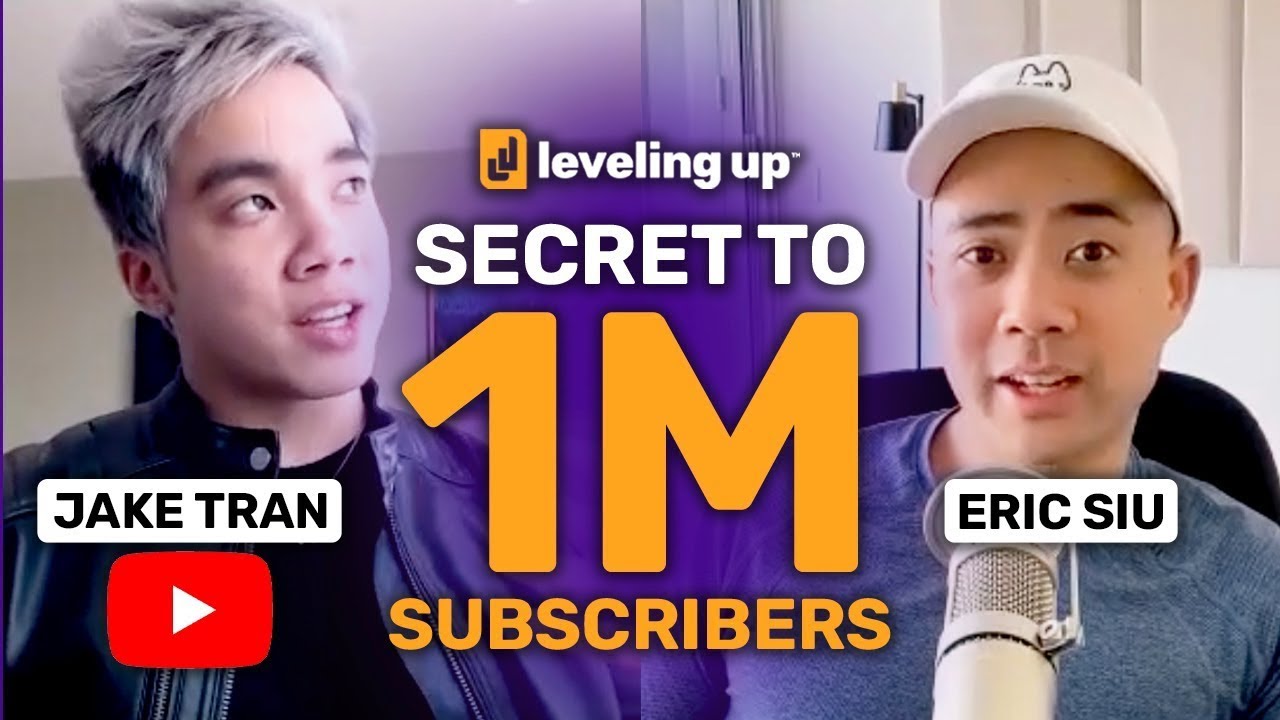
Jake Tran discusses how he reached 1 million YouTube subscribers by focusing on money, power, and crime topics and applying Blue Ocean Strategy to find an underserved niche. He spends five days per video on research and editing, monetizes through AdSense and sponsorships, and shares his workflow and long-term business strategy.
Chapters
A lot of people go into it thinking that, you know, if I just put out content, if I just stay consistent, then I'll just eventually blow up. But no matter how many times you put out the same bad video, it's still the same bad video. So I believe it's a combination of consistency, but also continuously innovating and trying out new, new video formats, trying out new video styles and seeing what catches on.
All right, everyone. Today we've got Jake Tran, who I had the pleasure of hanging out with last week in Miami. And so, Jake, I mean, the way I look at you is you do business essays on YouTube. That's what you define in your Twitter. I don't know if it's your Twitter or someone else's Twitter, but Jake's almost got a million subs. And I think depending on when you listen to this, could be way more by then. And I've kind of followed his growth over time, and his videos are really well done. And not only that, Jake is kind of, um, he's kind of becoming the modern-day Renaissance man. I mean, he's doing all this stuff while he's traveling. So we're gonna dive into how he does all this. Um, and yeah, Jake, do you think I missed anything with your intro?
No, usually the elevator pitch I give is I run the number 1 business channel for documentaries on money, power, and crime.
Interesting. So why did you start with money, power, and crime?
So it's a long story with the YouTube channel, but For that angle, I really got inspired by the book 48 Laws of Power by Robert Greene. And in that book, he talks about how the pursuit of power kind of pervades our lives everywhere we look. And yet, you know, talking about power openly is such a taboo subject. And that's what he kind of wanted to solve with his book. And I was really inspired by that, and I really loved the book. So I've kind of angled my channel around that kind of concept, like looking at Everything from like the power angle, like the money angle, which usually involves crime. So yeah.
Awesome. You know what? Have you read The 50th Law before?
Not yet. Not yet.
The 50th Law is a collab that he did with 50 Cent. It's okay. I think 48 Laws is better. And he has that— I just bought his new book Mastery from another friend that recommended it. But anyway, I'm sure you'll like that one. So look, you know, I want to start off with your YouTube story, your YouTube journey, because YouTube's always been— it's a slog for most people. And I think they just give up too early. And I think you had a story like that. So do you want to talk about your story and kind of your ascent? Because I think people will get a lot from that experience.
Yeah. So, you know, a lot of people see the success stories of someone who just starts a YouTube channel and blows up right away. I was definitely not that. It took me from 0 to 100K subscribers, it took me 4 years in total with 2 different channels, like trying out 2 different channels until it really took off. A good example of this is like Graham Stephan, who blew up like relatively quickly, but for him, he had all this experience built up as a real estate investor and agent already, so he had something to talk about already. For people like me who watched YouTube as a kid and really wanted to be a YouTuber, I started my first channel when I was probably 16 or 17 maybe, and I didn't have any life experience back then. My brain wasn't fully developed, so it took me a lot longer and it was totally worth it. That's why I usually say I got a degree in YouTube because it took a total of 4 years to get to 100K. You get the plaque too, so that's my degree. Um, but yeah, so all I watched throughout high school, middle school was YouTube, so that was my main form of entertainment. So at the time, I was really into tech channels in high school like Linus Tech Tips, Marques Brownlee. And I just fell in love with the idea that you could do something creative, just have fun on camera, playing around with products, getting free stuff, and make a living out of it. So I just really fell in love with that idea. So at the time, I was doing taekwondo. I was an instructor and a competitor, and that was my only form of expertise. So logically, I wanted to do a taekwondo channel. And I grew that to like 5K subs in 1 to 2 years, which in the grand scheme of things is pretty bad. So I gave up on it. I went the traditional route of studying computer science, became a web developer. And once I got the job that I thought I always wanted, like it was remote front-end web dev, I just got super bored really fast. So I went back into YouTube and after a few months of going at it, I was making what, like $100 a month from YouTube. So I literally just quit my job. If I did it full-time, it was, it would have paid me like $80K a year when I was like 19. So that was a big commitment to quit that job. So I quit it. I was living with my parents at the time, so I could have— I didn't have many expenses, so I was good on that, on that front. But it took me like another year of doing this channel until it really took off. And during that first year of this channel, I was really struggling because at the time I was watching Graham Stephan, so I was kind of making videos similar to him. But because I was kind of just copying him, I wasn't giving anyone some inherent reason to watch my videos over his, which is, uh, which is what I see a lot of people do when they first start out on YouTube, which is okay. But you have to like move past that where, you know, you start off, you're inspired by the YouTubers you watch, so you try to copy them, but you don't give people a reason to watch your videos over theirs. So you don't grow. So a year in, I knew I had to change something. So I read the book Blue Ocean Strategy, and I basically— it teaches you how to go into any crowded niche, any crowded industry, and carve out your own little blue ocean to where you're not competing anymore because you created your own little sub-niche where there's no competition. So I basically just followed an exercise in that book, basically the strategy I have for this channel right now where there's no real competitors, at least when I started. Now, now little copycasters popping up here and there, but yeah, that's how I finally like broke through. And finally started growing. So.
Got it. And so can you give us a breakdown? I mean, so Graham Stephan, for those that don't know, so the way that works is he mostly talks about investing. They're usually 10 to 15 minute videos and he'll give breakdowns of like his stock portfolio or like, you know, he'll go through articles and all that. Um, and so, you know, that's, you initially tried to kind of, um, imitate that a little bit, right? And then now, I mean, you have your own formula. So what does that formula look like? And then, um, can you just kind of walk us us through how like you're different because blue ocean basically, just so everyone knows, blue ocean is a lot less competitive. A red ocean is where like people are killing each other. It's too competitive.
Yeah, there's blood in the ocean. So I basically, I read that book and I basically looked at all the different niches on YouTube that I liked. And the 3 main ones were, you know, the personal finance, make money online niche, and the edutainment niche. Channels like Polymatter, Wendover Productions, Chris Guzzott, Channels like that where it's like B-roll or animation plus voiceover. And then the third niche that I really liked at the time was video essays where people break down movies, like why the Joker is the greatest villain ever written or whatever. And I basically just took the stuff that I liked from each of those niches. I threw away the stuff I didn't like from each of those niches. And, uh, with all those different attributes of these niches, I looked at the ones that I liked but could improve on. So that's why it's basically a combination of these 3 sub-niches that make up my channel today. That's part of the reason why I'm on camera at the end of the videos, because I liked the personal touch, the personal connection you build when people are on camera, like in the Graham Stephan style. But I also liked the cinematic aspect of the video essays, plus the production value of The edutainment niche. So it was just a giant mix of all these things.
Yeah, it's hard for people to— so just, I just want people to understand how this might look. And I recommend just typing Jake Tran into YouTube so you can, you know, when you get home or whatever. But, you know, the way your videos are done, they're typically, it seems like 15 to 25 minutes or so. And then to your point, they're video essays. Your face doesn't pop up till later. So there's a lot of B-roll, you're kind of narrating, right? And, um, so I guess, you know, that's what makes it different because there's not a lot of people doing that. And now you see there's copycats, which I haven't seen quite yet. But, um, you know, for you, the production, how long is it typically taking for you to kind of make the sausage?
From start to finish, like probably like 5 days.
Wow. Yeah. Okay. And that's like how many hours per day are you putting in there?
It's hard to say because it's creative work and you can't do creative work for like 8 hours straight. Yeah, like you just get burnt out. So, um, it's really hard to say. Like, it depends. A few hours to 8 hours a day. I don't know.
Okay. Yeah, so I mean, my point of asking the question too, just so everyone knows, like MrBeast has a good saying about like forget about the views and all that, like the subscribers. It's just about making a damn good video. And so, um, you just by asking that question, you can tell like hours and hours goes into it. Like Jake isn't half-assing it when he's doing this, right? And so I guess when you started to do this, when did you start just To reap the rewards? Because some people are probably thinking like, you know, oh man, I have to put like 15, 20, 25 hours plus into a video. Like, how long did it take to start seeing it go up?
Yeah, so I had that dilemma at first too when I started doing this style of video. Like, why should I put in 10, 15 hours into a video that's only going to get whatever, 100, 500 views? And the problem with that is, you know, if you never make a good video to start start, then you're never going to get the views. So, I probably made like 4 or 5 videos of this new style before it, uh, I hit on one that took off. And the one that took off was called Why Graham Stephan Is Killing the YouTube Algorithm. When I switched to this style, I went from like a few hundred views to like 2,000 views, 3,000 views, which is better but not crazy. So, once I launched that video, I shared it with Graham on on Instagram and he just really, really loved it and was super impressed. And he shared it on his Instagram with a swipe up. And from there, within a few weeks, it climbed up to 100K views. So that was the initial, the initial snowball that got things rolling. From there, subsequent videos got less views, but now it was in like the tens of thousands of views. And I kind of just kept iterating. At the start, I wasn't doing like money, power, crime. But it kind of just iterated towards that as I studied more and found things I'm interested in. And yeah, after that video, I think the next video that really took me into the direction of the channel today was after I watched a documentary on war profiteering. So I made a video on the viciously profitable business of war. I thought no one was going to be interested in that because who is interested in war profiteering? Yeah.
I am.
I just thought it was cool. And yeah, that video did super well. So I kind of just kept doing that, the absurd business of banking, etc., until I kind of got to this point of focusing on purely money, power, crime.
Yeah. And so walk us through your research process. You don't need to go super in-depth here, but also it takes time to have to read this stuff and pull up like the research, right?
So yeah, there's literally no easy way around it. Aggressive Googling will Reading books and articles, YouTube videos, documentaries. Um, yeah, just basically searching wherever I can to find like the best stories.
There you go. I mean, look, at the end of the day, there's no shortcut around making a damn good video. Um, I do like how like you made, uh, you made a video about someone and you shared it with them. There's kind of that push. Do you think that that led to like a push that kind of just stayed there for the videos? Um, or is it like you just kept making really good videos afterwards?
Yeah, so I would say it jumped up, then it went down like halfway, but it's still like halfway, 50% better than before.
Yeah.
So it was still a massive, massive boost.
So the initial push helped a lot.
So yeah, that's good. Yeah, I would say a lot.
Got it.
But for some people, they grow, they grow super gradually. Like Marques Brownlee, he talks about it all the time, how he never had like an explosion moment. It was always very gradual.
Interesting. Yeah, I mean, this stuff takes time to compound and like some people take it, says it takes 3 years to get going. Some people maybe it's 5 years to build like an audience or build a business. And so I do want to talk about that too in a second. But tell us what not to do. Tell us what to do to fail at YouTube.
You know, I think a lot of us go into it with the, I call it like the kind of Gary Vee mindset. It's not, I'm not bashing on Gary Vee. I like him. But a lot of people go into it thinking that, you know, if I just put out content, if I just stay consistent, then I'll just eventually blow up. But no matter how many times you put out the same bad video, it's still the same bad video. So I believe it's a combination of consistency, but also continuously innovating and trying out new, new video formats, trying out new video styles, and seeing what catches on. Because no matter how many times you put out the same video, It's not going to do any better because today it's a lot more competitive. Like back when Gary Vee started, he just posted the same wine videos over and over and over again, and he eventually blew up, which worked for him. But today there's a lot more competition. So you really have to give people— you really have to be strategic about it and give people a reason to watch your videos over someone else's. So I would say like the number one mistake would be just putting out content. And thinking that it will eventually blow up.
Got it. And then walk us through kind of the economics of a YouTuber. Just, I'm sure people are wondering that question. Yeah.
So the number one revenue stream people think about is AdSense, where YouTube plays ads on your videos. And that can be really lucrative depending on your niche. So some niches can't be monetized, like music, because you're doing covers of copyrighted songs, or some niches are really touchy. That you can't get monetized on. And some niches are more profitable than others because advertisers are willing to pay more for those niches versus other niches. So for example, any video related to courses, like make money online courses that people can put ads on, those get super, super high ad rates because they're selling like a $1,000 course and they have super high profit margins. So they're willing to get like $100 cost per acquisition or $300 cost per acquisition. So they're willing to pay a lot more. Other niches pay less. So you kind of just have to balance it out. I know people who get a fraction of my views, but since their CPM, cost per 1,000 views, is so high, they still make a lot of money with like a tiny amount of views just because their audience is so concentrated. The CPM is so high and they do more like affiliate marketing to their super hyper-concentrated audience. So they make a lot of money just from a very little amount of views. So there's different ways to go about it. For me, I think my CPM is like pretty, pretty good, above average, not crazy low. And I balance it out with a lot of views too. So that's one. The other one is sponsor spots. Every video of mine is sponsored because I view it as if it's not sponsored, then that's wasted real estate that could have been sponsored or promoting something else. So those are the 2 biggest.
Got it. And so for you, I mean, you have, you've kind of gone beyond just the sponsorships and the AdSense stuff, right? Walk us through kind of the business model for you and kind of what your long-term vision is. Yeah.
So the newest thing I've done is the YouTube join button where next to the subscribe button, there's a join button and you can pay $5 a month to get, in my case, it's a much longer documentary on stuff that I normally kind of talk about on on the public channel because it's like too controversial. So the video is not monetized and you pay $5 a month and you get one of those videos a week. The next one that's about to come out, I'm very excited for. It's on Jeffrey Epstein.
Nice.
Because I definitely cannot post that publicly. So, uh, the way I'm approaching this is most people who do like a join button or Patreon, it's more of a donation offer. Like you want to support this creator I don't believe in relying on the generosity of others for your business. I think that's like a losing formula. So I really wanted to approach this differently where the value they get like way exceeds the $5 a month. And I think it does right now. The documentaries are very good. I put a lot of work into them and there's like inherent value because I literally be able to post these, uh, on the main channel. It just wouldn't be worth it. Uh, so that's how I'm approaching that. And in the future, so my front-end monetization is pretty like very solid with the AdSense sponsor spots, etc. I have a little bit on the back end now with the $5 a month thing. Um, so the plan is to kind of like max out the back-end monetization with some bigger offer that costs more, but obviously still delivering more value than what it costs. So I'm still deciding on that right now. I haven't finalized it yet, but that's like the focus for this year.
Got it. Love that. And so, um, and just another question around your, your videos, um, how many videos are you cranking out per week? Is it just one? Is it like, you know, what does the cadence look like?
Um, right now, uh, it's 4, but sometimes I have delays. Sometimes I have delays. And it's a grind. It's a grind.
I would say. Yeah. So do you think you're going to continue down that pace for the rest of this year or?
Yeah.
Damn. I'm just doing the math right now. Let's just say each video takes about 15 hours or so. Let's say 20 hours. It's 80 hours right there in addition to all the other stuff you're doing. And plus everyone should know too. I mean, Jake, you're doing all this while you're traveling, right?
Yeah. So I literally live out of my backpack and my carry-on right now. I don't even have a big suitcase. It's like a carry-on that fits in the overhead bin.
Crazy.
And yeah, I found that the, you know, 99-whatever percent of humanity has been spent nomading. Like, this culture of having a house, a lot of possessions, etc., is a fairly new thing in the grand scheme of things. Like, consumerism, it only really popped up in the 1900s. So I found that the closer you get to like the ideal of what our brains evolved for, the more content you feel with life, the more happy you feel. And that's what I found with minimalism and traveling all the time, seeing different places, is that I don't really have anything to lose anymore. I don't have a house to lose, I don't have a car to lose. I have money to lose, but none of these tangible things that hold you down. And I found it like super rewarding. And really good. That's the same reason why I do martial arts, combat sports, because it's a very visceral, primal thing. You get to release a lot of violent energy. And again, it takes you— it puts you in that ideal state that our brains evolved for. And I found a lot of inner peace doing all this stuff.
Fascinating. So let's go into that a little bit. Talk to us about kind of your You're becoming this Renaissance man. Like, how are you doing? You're traveling the world right now. You're trying all these new things. I'm looking at your Instagram, like you're playing the guitar, you're doing taekwondo, you're meeting all these people. Tell us, tell us kind of what the— how you're planning to become the modern-day Renaissance man.
Well, I've always just loved learning in general. And I think like learning is probably the greatest superpower you can have because if you love learning, if you're good at learning, if you're a fast learner, then you can learn anything, like any skill you want. And if you look at like the greatest Renaissance men throughout history, da Vinci, Benjamin Franklin, etc., they were able to achieve like competence, they were able to innovate in all these different fields when there was no internet. Like they had to like go out and find books and like talk to people in the real world. And, you know, today we're so lucky to have all the stuff available to us all online. And I don't know, I feel like we kind of owe it to them to like achieve more than they did when they had nothing and we have everything. So that's one reason, and another reason is I just find it cool. It's so much fun to learn all these new things all the time. Yeah, so I started out with taekwondo, graphic design, then video editing, web development, shooting guns. Now it's jiu-jitsu. Had my first Muay Thai class a few weeks back. So fun. And yeah, I just find it so rewarding in like every way.
Got it.
So yeah, just continue learning whatever I'm passionate about.
So how does that work when you're traveling? So do you like, let's say you're, you're, um, let's say you're going to, you know, London or something or Dubai or something, right? Um, do you just look at like who teaches in the area? Are you like Yelping it or something?
Oh yeah, yeah, yeah. So unfortunately there's not too many martial arts schools around London, which is very disappointing to me. So this traveling thing, I don't expect it to last like forever. I'm just gonna keep nomading until I get bored. Ideally, like my ideal lifestyle, if I like settle down and stop nomading, would be to have like coaches or classes stretched out throughout the day, kind of like my own university. But of stuff I actually want to do and learn. So like an hour of this, then an hour of that, etc. So while I'm traveling in this phase of my life, it's a lot harder, obviously. Um, so yeah, right now it's mainly just like working out every day consistently while I'm traveling, which is really nice so I don't get fat while I travel. And working and doing stuff that I can do at home in my hotel room, like learning stuff like But yeah, you know what I mean?
A lot of people, they want to become YouTubers because they want to become famous, right? And so for you, you know, your face pops up towards the end and not— I'm just wondering, because you don't show your face that much, like how many people notice you when you're out and about?
Yeah, so it's actually a surprising amount for how little I show my face. Yeah, it just shows like the people who do watch, like they're very into it. Which is pretty awesome.
That's actually a good one. The ones that know you, those are the ones that retained. They thought you had a good video.
Exactly, exactly. So very good fans. Uh, I love all of them. Everything— everyone I've met in real life has been like super chill. So it happens like probably 1 out of every 2 times I'm in a crowded place. Um, recently it happened in Miami at Sexy Fish, the new restaurant.
Oh yeah, yeah, yeah, yeah.
Yeah, like one of the guys working there Yeah, stuff like that.
Amazing.
It's pretty cool. It's pretty cool.
Cool, man. Usually I ask questions about favorite tools and all that. Yeah, what's your favorite business tool? Let's start there.
Favorite business tool. I do all my messaging on Skype.
Interesting.
No Slack. Yeah, I just keep it simple. I use Loom a lot.
Okay.
Loom.com. You can screen record and just uploads automatically. Super convenient. I love that thing. Such a genius business. I use the Adobe Suite for everything. And yeah.
Okay. And how about your favorite YouTube channel that's not yours?
Favorite YouTube channel that's not mine? Definitely Lemme Know. It's spelled kind of weird, but you pronounce it like let me know, but Lemme Know. And super big fan of him. He does these mystery videos where it's completely animated, custom animated, really cool aesthetic. Incredible music selection, great writing, keeps you in suspense. Huge fan.
Huh, I'm gonna add that right now. Um, and then favorite business book?
Favorite business book, probably the one that got me started. Uh, when I was studying computer science, I was very academic back then, not very business-minded at all. Uh, I even considered like doing a master's degree in computer science, and I was like very deep into it. Basically, very nerdy, very academic. And one day my friend recommends me this book, Millionaire Fastlane by MJ DeMarco.
Hmm.
And I listened to the audiobook in one day and it basically just turned my world around. And I came in the next day completely uninterested in college, going from like a complete academic to like, screw this, I want to drop out already. Why am I doing this? Why didn't anyone tell me about this different world that existed? So that book had the most profound impact on my life.
Millionaire Fastlane, was that what it was?
Yeah. By MJ DeMarco.
Fascinating. All right, Jake, well, this has been great. What's the best way for people to find you online?
YouTube, search Jake Tran, should be the first result, I hope. And on Instagram, JakeTran.io. I'm thinking about getting on Twitter.
I don't know. I think that's a good idea. Um, so anyway, everyone make sure you check out Jake Tran on the tubes, Instagram, and hopefully soon on Twitter. So Jake, thanks so much. I have an account.
I have an account. I just don't—
I see it. You have like 58 followers on there.
Yeah.
Yeah. All right, everyone go follow Jake on Twitter as well. All right, catch you all later.
Thanks, guys.
Not doing enough Spaces, not doing enough podcasts, not doing enough content in general, whether it's on YouTube or pushing our email list more. I think we could have done more there. And this is coming from a marketer that doesn't really like to push that hard, but I think we could have done more there.









