How One 4-Minute Podcast Mention Generated $29 Million in Revenue
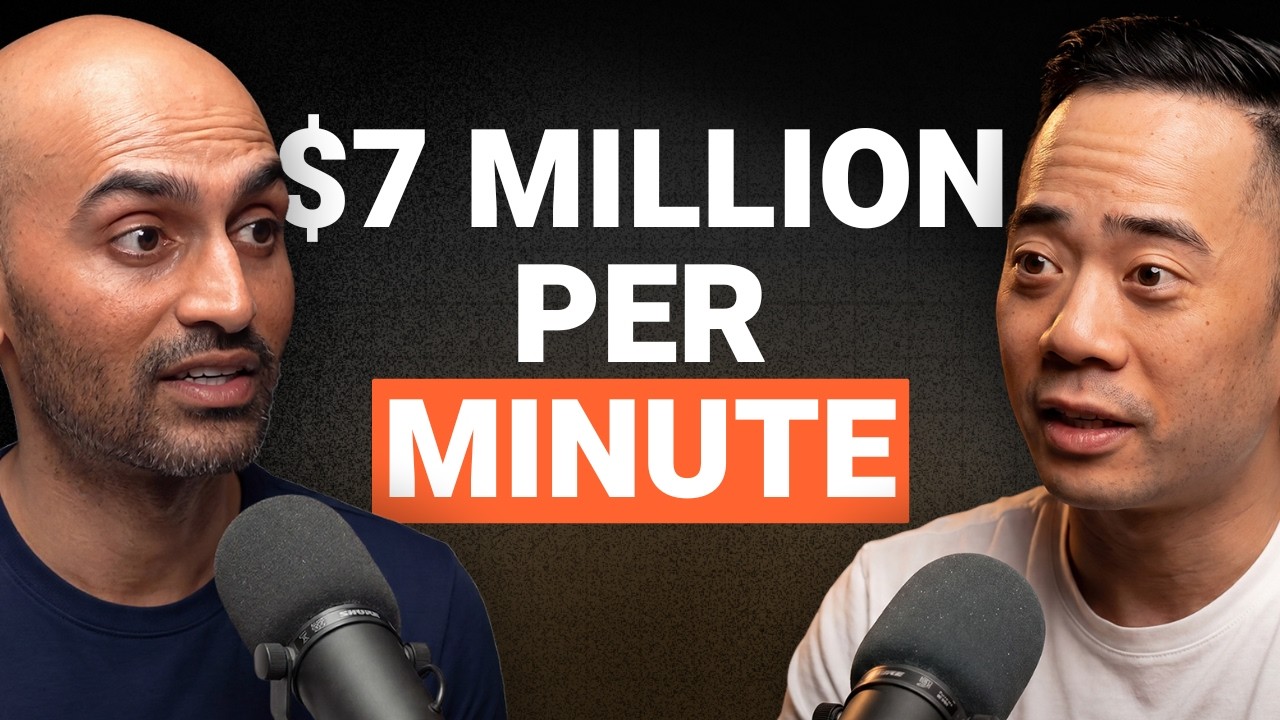
Eric Siu and Neil Patel discuss how a 4-minute podcast mention generated $29 million in revenue, along with AI strategy, token costs, and which marketing channels still work in 2026: direct mail, email, live events, and SEO.
Chapters
AI is cool and all that, but there's actually a bottleneck. Like, most companies are failing with AI if they don't really touch this. So you can see, Neil, my good friend here, Gary Tan, said this is the actual bottleneck. The models are actually smart enough already. What is missing is a company-specific context locked in senior people's heads. So whoever cracks knowledge extraction at the company level unlocks the rest. As you work on this, please consider using GBrain. So that's his That's his product, right? So, but what really he's calling out here, what Gary Tan's calling out here, is that Neil, for example, myself, we started with our organizations. You started since the beginning. I came in a little later for my organization and I took it over. But point is, you and I, we have the most context. But not only that, your CEO, for example, or other executives at your company, they know the most and they can see more of the battlefield than most people. So how do you translate all that context into one area that maybe some shared context that other people can access? Because if they can pick that up, you're able to move a lot faster, right? So I think if you can extract knowledge at the company level and safely where there's appropriate permissioning and all that, I think you're going to be able to move a lot faster. And that's why, Neil, you see so many people right now building this whole company memory or company brain stuff. I think everyone's trying to crack it right now. And there's a lot of horizontal solutions, but anyway, I think it's something that most people should look at if they want to be able to move faster.
Yes, so that was his company. Did he end up raising money for his company through Y Combinator?
No, he didn't, because it's open source.
Oh, cool, so he's not— he's just giving it away.
He's giving it away, correct.
He's probably already rich from all the Y Combinator money. So is Paul Graham. People are like, ah, does Paul Graham have a lot of money? I'm like, it's not disclosed, but I bet you he has over a billion bucks. Yeah.
What is it? Airbnb, Dropbox, like, uh, what else is there?
There's so many, dude. And there's so many companies that we haven't heard of that are in B2B that are just worth a killing and were in Y Combinator.
Yeah. Anyway, it was a good model for them. But anyway, just make sure that you pay attention to that. If you don't, I think most companies will fall behind on that side. So, so, okay. I think, uh, Neil, you'll, you'll like this piece because we've kind of talked about this a little bit. I'm curious because I'm in these AI chats as well. Now you see executives talking about how people are starting to rationalize their token cost, right? So if you look at this over here, so this is the founder of Lindy. So pull the trigger today and switch to 100% of Lindy traffic to DeepSeek V4, churning from Anthropic models, right? So the Claude models. This saves us millions of dollars, and we're actually seeing an increase in performance on many core use cases. This has been transformative for the business. And then, so Chamath here, He tweets this, he says, if chapter 1 of AI was all about broad open-ended experimentation, chapter 2 may well be about realism and rationalizing the cost of chapter 1 and what is sustainable moving forward. And I think you're seeing that with your clients. I'm seeing that with my clients as well, where they're just spending an arm and a leg. You see Microsoft like, oh, we got to cut. Uber's like, you know, oh, we got to cut down, right? Like, it's not to say this stuff isn't productive, but you can't just spend and spend and spend. And so Sam Altman even said earlier this week, this is the first time they're seeing people tighten their belts.
Yes. And I think it's going to continue because these things are just so expensive. Anthropic signed a deal with SpaceX. I think it's like $15 billion a year, I believe it is, for compute.
I think they're paying them $1.52 billion a month, something like that.
So, yeah. Okay. So call it around $19-ish billion a year or whatever. That's going to cause SpaceX stock to be even worth more once they IPO.
I'm still not buying it.
But we got an email from Claude, you know, a little bit ago, or Anthropic, which is the parent company name, and our account manager there for our enterprise suite was helping us figure out how we can end up reducing costs and integrate them more. So I think they're already on top of it because they're seeing pressure from organizations, and we've been talking about this for a bit. This stuff is great. But there's a cost-benefit analysis. If you can get 5x more done, but 5x more done increases revenue by 3%, but your costs go up another 15%, is it worth it or not? And you have to make the calculation.
Yeah. So what I would say is this, I think the fact that they moved to DeepSeek, I think DeepSeek, you can pay for it or you can host it locally. I have Quinn on my computers over here. So there is a trade-off to all this. Obviously, my team can tell immediately when they get degraded to a lower level and then they start complaining. But I would also say that Cognition today, you should take a look at this, Neil. This just occurred to me right now. Cognition came out with a new way of measuring your token effectiveness. Okay, so check this out. There's a new AI productivity guarantee, and I think we're going to see a lot more of this. So I'm pulling this up right now. So Cognition says AI should earn its keep. Introducing the AI productivity guarantee. If Devin, which is their product, delivers less engineering value than you're paying for, Cognition will fund your usage until it does, up to $10 million.
Okay. Wow.
That's a good guarantee, man. That's a good offer. So it's time the AI industry for the AI industry to stop maximizing tokens and start maximizing productive output, which is what we've been saying for a while. Like, it's not just about token maxing, it's about output maxing, right? So we built a system to estimate whether an agent's output was actually productive, and if so, how long a human engineer would have taken to do the same work, validated on real engineers' time estimates working in enterprise code bases. So they do a blog post on this, but I think you gotta go in this direction if you want to stay alive. Because these other open-source models are catching up too quickly.
Yeah, and I think these guys, I don't know which models, but companies are not only becoming more careful, we're hearing now from companies globally because we've all heard the US versus China thing, and a lot of US companies are saying, oh yeah, we want US-backed or US-built or whatnot. We got to be careful with the Chinese products. I'm just repeating what I'm hearing. We're now seeing a lot of companies when it comes to some of these AI models, whether it's for their engineers or whether it's for the marketers, a lot of them will be like, oh, these Chinese models, these ones are a fraction of the cost. Let's just try them out. Who cares if it was created by China or someone else? They're like, let's just save the money. And I believe whoever is going to have a good enough model that is cheap enough to help with marketers in the end, It's a lot of it's going to come down to price. It's like my team is on Microsoft. Why are we not on Google? I remember when we made the switch to Microsoft, so many people in the organization, this was years ago, was pinging me. They're like, Neil, we don't want to do this. Come on. Can you convince some of the others? I stayed on G Suite because my email is neil@neilpatel.com. My team has an NP Digital email, so they all had to switch. I didn't switch, so I didn't have the problem. I let the company do what was best for the company financially. And you know what? The team got used to Outlook and they use it. And that happens for a lot of stuff. You know, when I go speak at some of these Fortune 500 companies, I ask them, what LLM models do you use? A lot of them are Microsoft's models. And I say, why? They're like, it's included. Same with people who are on Google's G Suite, like Gemini. It's included. It's easier. It's cheaper. And companies are here to turn a profit, especially publicly traded ones. Why wouldn't they want to save money?
Yeah, I mean, my take on all this stuff is, you know, I think it's cool to play with the open source models. It's cool to play with the frontier models. You have to figure out what works for you. And I think this output maxing thing is just going to become a lot bigger. And if you can, by the way, if you're a services company and you're figuring out how, because we talked to a company this week and the only thing they're focused on, Neil, was actually output maxing. They're like, dude, we're spending so much on tokens now. How can you help us optimize that? So we've said this, I think a week or two ago, like, That, that's going to become a service. And by the way, a lot of things that we never would have thought would become services are going to start to become services. So that's why services is not going anywhere. Like, I think agencies, as long as you're on top of this stuff, you're going to be good for a very long time. Quick break. One of our ClickFlow users just told me that they're saving 90+ hours a month on content alone. ClickFlow is our AI SEO product that actually does the work, not just here's what you should do.
It does it.
It creates content in your voice, It helps you with other areas such as finding the right internal links and creating FAQs. We spent years making it, perfecting it with our clients, so it doesn't just sound like AI slop. You can get a 14-day free trial at clickflow.com. If you're serious about AI SEO, you should check it out. Back to the show. So maybe the last episode we can do here, Neil, is on this piece over here. Oh, this one's cool. So, Neil, there's a— do you want to hear about the podcast mention that drove $29 million in revenue?
Yes.
Okay, so this is from Chamath. He got an email. So, hi, J Cal, Chamath from the All-In Podcast. 55 days ago, you had a 4-minute conversation about EAs and Athena. So Athena helps source executive assistants. Since then, we have closed $29 million in new revenue, seen a negative 53% decrease. So a 53% decrease in blended CAC, cost of acquiring a customer. And placed 683 Athena executive partners, 683 new jobs. And so I'm sure he probably has a stake in this company, maybe not. But all that to say is whether you think about a mention on Joe Rogan, for example, or the All-In podcast where you have a lot of executives listening to it, or you even think about— what's the reason? Oh, Jacob's partner, Abud, on Andrew Huberman's podcast. It's a matter of not just finding the reach, but finding the relevant audience, and then you should be able to crush it. Because now I think that peptide company, by the way, they're going to crush it.
Yeah, I saw this Athena one and I was like, all right, it didn't say it explicitly, but I'm assuming they were mentioned on the All-In podcast and from there it drove the revenue.
Correct. So I had listened to that episode and that's what prompted me to kind of sign up again and see how it goes. But yeah. And speaking of these executive assistants, so David Sacks, another member of the All-In Podcast, I'm going full all-in right now, Neil. So David Sacks, Apollo's chief economist, zero evidence of AI-related job losses, what we talked about earlier. So I just want to pull up this data and then we can move to the final topic here. So zero evidence of AI job-related losses. The chart below shows the weekly ADP employment data, and there's zero evidence of job losses because of AI. Instead, many firms are hiring AI implementation experts, and the data center buildout is putting upward pressure on salaries for AI experts and on prices of semiconductors, equipment, and energy. The bottom line is that AI spending boom is stoking both employment and inflation. Wow.
Okay.
As a result, nonfarm payrolls for May could come in significantly higher than 95,000 expected by the consensus. It is Jevons paradox playing out in real time. Cheaper technology is creating more demand and more jobs. Look at this over here. This is the weekly employment starting from, I guess, last July leading up to now. Pretty crazy, huh?
The one thing I would say about the AI jobs, you are seeing a lot of narratives about people losing their job because of AI and companies like Atlassian, Block, which is Jack Dorsey's company, saying that they're laying off people because of AI. I don't believe it. I believe a lot of these guys are laying people off because they're not getting into the growth numbers they want or their stock price went down. Not because we're more AI efficient. And at the same time, from a marketing angle, imagine going to all your shareholders and using the message, marketing message of we're laying off employees because we're not growing as fast as we thought and we're not hitting numbers. So we're going to go and cut costs. Like it's just going to hurt your numbers even more. It's easier to use the AI narrative and spin your marketing message than it is to just say the truth.
I would just also say one more thing around this. I think this proves that we talked about short-term job displacement. I think it's going to happen in some areas, but I think you're going to see more task losses versus job losses. So a lot of tasks that we had to do before, we're no longer going to have to do because we can just have the agents handling it. And I think, again, it's task losses before job losses. I think that's going to be how it goes for the next couple years. And final thing, Neil, because we've been talking about so much about AI, I feel like we should talk about some boring channels that still win in 2026. So these are some boring channels in marketing that still win in 2026. I'll start with number 1 over here, direct mail, meaning mail that you— physical mail that you get. If I mail you, Neil, if I give you a UPS, if I FedEx something to you, you're damn right you're going to open that thing, right? It doesn't matter what it is, you're going to open it because it seems like it's important to you. So direct mail, what's old is now new again.
Yes. Number 2, email and SMS. I'll combine them because some people just do SMS, some people just do email, some people do both. It works. You know, emails are still getting opened, they're still getting clicked. It's a very effective channel. I don't know why people wouldn't be leveraging email and SMS. They'll be like, oh, AI is going to just summarize the emails. We're still seeing it work. I saw an interesting stat published by HighLevel. Out of the emails they send, their emails get a click rate of roughly 6%, extremely high. You know, people wouldn't be clicking 6% of the time if emails didn't work.
Yep. Last one we'll go with here before we take off here and let Neil go to bed. Live events. Dinners are not going anywhere. Conferences are not going anywhere. In fact, they're going to become more valuable. Relationships are not going anywhere as long as humans are around. And I think they're going to It's going to be harder and harder to come up with relationships because a lot of the young people we talk to right now, the reason why they're going to college is because they know it's going to be harder and harder to form relationships and they want to form those relationships. So whether you can create dinners, happy hours, things like that, you can go to events, you can be that super connector, that's going to go a long way. So that being said, go ahead, Neil.
That said, number 4, last one. You guys all know this channel, it's SEO. People still evaluate it by clicks. I'm telling you, If you look at your data and you do brand recall studies and you survey people on how they found you, even if you're getting less clicks, if you can rank in the organic listings and you can start ranking and being mentioned in the AI overviews, even if you're not getting the clicks, people are seeing your brand. And if you go and look and ask them how they heard about you, you'll start seeing a lot of revenues coming from people seeing you on Google, but not actually clicking on over to your website. because you're being mentioned in the AIO reviews.
Do you, by the way, last 12 months, do you think you're getting net new lead, net more leads or net less leads or the same?
Net less leads, net higher quality leads substantially.
Yes. Yes. That's so weird, but yes.
But it's not weird because what would happen before is someone would do a search, they see 10 blue links, they may click on 4 or 5 of them, fill out their information. Now people are going to traditional search, And you have to remember in traditional search, there's AI overviews, there's AI mode, or they're going to ChatGPT, they're asking all their questions, the LLMs are identifying which agencies that they should contact. So they're going and reaching out to less, but the leads are much more qualified.
Yes, I'm just saying it's weird for you and me because we come from the past, right? Where it's like, I'm just not used to it is all I have to say. Anyway, thank you all for listening. Hope you enjoyed it. Please don't forget to rate, review, and subscribe, and we will see you tomorrow.









