How This Guy MADE $11M Selling NFTs
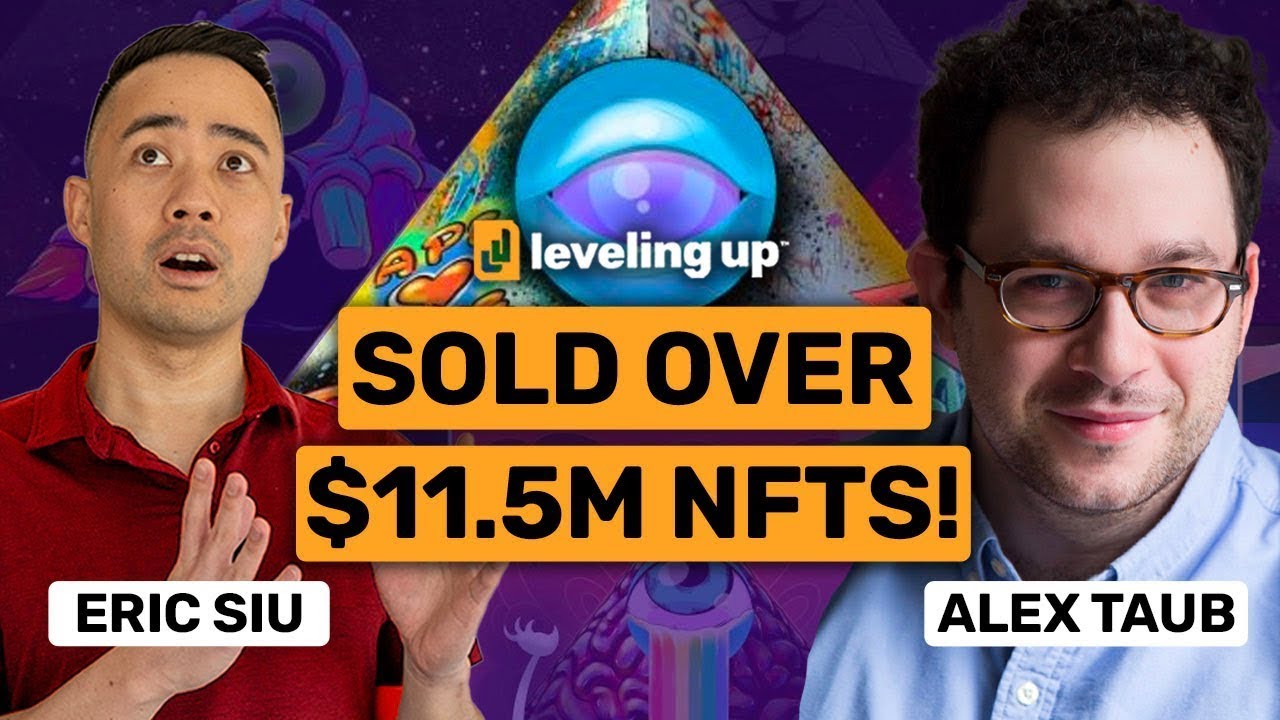
Alex Taub, co-founder of Upstream, talks about building a DAO platform and his Illuminati NFT project that generated $11M. He explains Upstream's model, which takes 2% on contributions, and how the platform reached $1.8M-$2M in treasuries by early 2022.
Chapters
A big part of our stuff is like, you know, the events we've been doing around education on crypto, how to set up your wallet, what is this, what is that, continuing to do that and build this like media arm, and then also have like the best-in-class sort of DAO product.
All right everyone, today we've got Alex Taub, who is the founder of Upstream, or co-founder of Upstream, and then also Founder of Illuminati NFT.
And I'm also co-founder of Illuminati.
Okay, got it. I was thinking about that, but I was— I went for founder.
2 more people. There's one other person on Upstream and 2 people on Illuminati.
Perfect. So co-founder of both. Um, and, and so I actually met Alex at, um, a Bored Ape Yacht Club dinner. So I, I mean, you know, you've heard on this podcast, Neil Knight will talk about the power of kind of networking. And, uh, this ape has been probably the most handy NFT that I've had in terms of being connected with amazing people. There you go. There's Alex's ape for those of you that can see it. on, um, on video. But Alex is great. I mean, he's accomplished in the tech world, and, um, you know, I could tell immediately, um, you know, just meeting founders that are into NFTs, it's, it's, um, you know, it's becoming more popular, but it's still kind of rare at the time. So Alex, how's it going?
Going well, thanks for having me. Also, we're both Floridians as well. You forgot to mention that.
We are now, that's right. And Alex, where are you from originally?
Uh, New York, uh, Manhattan, uh, born and raised in New York City.
There you go, everyone. I mean, I'm from LA originally. Everyone, you gotta come to Florida. I don't get to shill it too much on the pod, but here we are shilling it. So Alex, let's start off with your background a little bit first, 'cause it goes beyond Upstream and Illuminati. So tell us what your story is and then we'll jump into the 2 things you're working on right now.
Yeah, sure. So born and raised in New York, always interested in tech. Right outta school, I joined a company called Aviary. It was a photo editing company. They basically built a photo editing API. So anytime you uploaded a photo on any website, you'd probably be using Aviary's editing software. Everyone like Photobucket, Flickr, Twitter, Squarespace, Mailchimp, everyone used this editing. You basically would integrate an editing button into your app. So I did partnerships and business development there from 2010 to 2012. The company ended up getting acquired after I left by Adobe. But in 2012, I joined a company called Dwolla. It was a payment startup based in Iowa. And Dwolla was one of the first forays into crypto. So when I joined, Bitcoin was about $5. My co-founder, Michael Schoenfeld, and I, we joined together. We wanted to work on something together. We didn't have any great ideas at the time, so we ended up joining Bitcoin. My co-founder was mining, and it was just an interesting thing, so we joined. Dwolla was one of the ways you got money into Bitcoin. It was sort of like Coinbase before Coinbase existed. So you'd fund your Dwolla account, move it to BitInstant, Bitstamp, Mt. Gox, all those fun places. That was a wild ride. Sort of saw, you know, when it went to like $50, we thought we were all rich. Little did we know. And then was there from 2012 to 2014, and then left and started a company with Michael called SocialRank, social media analytics company. It was basically one of the best Twitter and Instagram like audience segmentation tools. Now you'd probably call it like a creator tool. At the time it was just like, you know, Twitter analytics, Instagram analytics. Ended up after Cambridge Analytica scandal sort of went supernova, we realized it just wasn't like a long-term business here. We just couldn't control the data. So we ended up putting it on autopilot for a while, started thinking of new ideas, ended up selling it in 2019. And our customers were like the NBA, the NFL, Netflix, Samsung, L'Oréal, The Rock, Ellen DeGeneres. It was a pretty awesome, awesome group of customers. We're doing like, you know, almost $100K in MRR. But so we ended up selling it and we went all in on Upstream. And the high level of what Upstream is, is, you know, when we started it was, you know, what would a sort of a next-gen professional network look like? What would a Groups product for professionals look like? You know, we just, we didn't feel like there was, you know, Discord was getting really popular and it just didn't feel like there was a, uh, and like Discord at the time was just for gamers. We didn't feel like there was a Discord for professionals. So we built it. And you started right in the beginning of like COVID is when it started taking off and, you know, virtual communities. And it was like, what would LinkedIn groups look like if it started today? And like, it looked like professional communities. And then when COVID started, it looked like virtual events and sort of these like 30-minute power events where like the first 15 minutes you sort of listen to someone speak, the last 15 minutes you like break out into one-on-ones and meet people. Anyway, long story short is really took off during COVID 'Cause it was like, hey, come join my business development team.
You're like, All right.
Maybe I will, maybe I won't. I don't know. I don't have really any sense of pressure or any sense of urgency to do it. But if I say, hey, come and join my business development community because next week I have the VP of business development for Airbnb coming to speak, it just creates more of a sense of urgency. And it's like, okay, yeah, actually I do want to come. That ended up taking off. And then I could stop here, but it sort of leads into what we're doing now. I don't know if you want me to keep going.
No, no. Keep it going.
Yeah. All right. So, well, one of the most popular communities on Upstream— so we have everything from like the Future of Work community, Miami Tech community, Business Development community, et cetera. One of the most popular communities obviously is the NFT community. So I started with a guy named Drew Austin. He runs a fund called Red Beard Ventures. Great guy. We ended up starting with NBA Top Shot, did a few events on Upstream about NBA Top Shot in like December, January 2021. And then we're like, all right, let's meet every Friday at 1 o'clock and let's just like shoot the shit on like stuff. So we ended up doing that. And the long and short of it is like, if you came every Friday, and we've done about a year now of doing it, if you came every Friday, you absolutely crushed it. We talked about Apes when they were minting. We were executives at Zedon. We've had Gutter Cat. We've had Pixel Vault. I mean, blue chips right now that if you came and you listened, you did really well, at least financially. I don't know how you did personally, but at least financially you did well. So what we ended up doing was, well, What ended up happening was in the summer, I caught up with a friend. Well, now she's a friend, but at the time we were just meeting. I was giving her my backstory and telling her how we were early in crypto and all this stuff. And she was like, sort of silly question, but like, why aren't you guys doing anything in blockchain and crypto now? You know, I was like, that's not the stupidest question I've heard. Let me think about it. And my co-founder and I went to the drawing board a little bit and we said, okay, what is the community Web3? What is the community blockchain play? Very quickly, it was pretty obvious that it was DAOs. It was, you know, and for those that aren't familiar with DAOs and what DAOs are, you know, they stand for decentralized autonomous organization. But the best way to understand it is imagine you pool money together with a bunch of friends or people you don't know, and then you make proposals on how to use that money and you vote on it. And that's really it. And then you take action based on the vote. So imagine you and 9 friends put $100 in a bank account, now you have $1,000, and then you make proposals on what to do with that money. It's essentially what a DAO is. So we started to dig into DAOs and try to understand the landscape of DAOs. And what we realized was starting a DAO— so we tried to start and join as many DAOs as we could. We found that starting a DAO was really difficult. It was sort of like building a website in the 1990s. You could do it. It was just complicated and probably need to hire someone to do it for you. So there's like, you know, unless you know Solidity and you're a competent developer or could teach yourself Solidity, like it's just not easy to sort of launch a smart contract. And then the second thing is even once you started the DAO, actually running the DAO, that experience was very fragmented. You'd be using a bunch of different tools, like something like Aragon for governance and Snapshot for voting and JuiceBox for treasury and Collabland for token gating and Discord for community communication. I'm just, became a very fragmented experience. So we just felt like there was this really big opportunity to build a low or no-code, full-stack DAO in a box. So we built it, launched it mid-November, and it's been growing really fast. It's been pretty exciting. Cool.
Yeah. So can you share— I mean, so Upstream, I mean, how do you guys— I mean, how does it work exactly? How do you guys price and all that? And then we can jump into the DAO in a box.
Yeah. So Upstream, the general product is free. Startup community is free. We take 2% on all contributions into the— we don't call them DAOs, we call them collectives very deliberately. We feel like the word DAO is a little bit loaded, taking a sort of playbook out of like Dapper Labs where they never use the word NFT, they talk about collectibles. We also found out recently that Dapper Labs has their own DAO. thing that they're working on, and they call them collectives as well. So I feel like we're in good company, but we did come up with it before we knew about it. And anyway, long story short is we take 2% on all contributions into the collective. So you put in $100, we take $2 out of that, but it's an ongoing thing. It's just when you contribute into the collective DAO.
Got it. So it sounds like— and correct me if I'm wrong here— so Upstream is for forming collectives. It's also For collective discovery as well, right?
Yeah, you know, it's— that's an interesting question. You know, we noticed a few things since starting. There's a handful of DAOs now. We're pretty— we— you can't just like create one and launch one in 2 seconds. We're pretty hands-on with like vetting, making sure we know what they're doing, etc. We're noticing 2 types of experiences that people want. One is like a group chat with a wallet type of experience. So it's like, hey, I've got like 10 friends, we're in a group chat together, we want to pool money together, sort of like a little bit of an investment club. And then the second Is like NFT projects that have like, let's say you have, you know, flaming flamingos or fuzzy flamingos and you sell $1 million worth of fuzzy flamingos and you say, hey, 10% of the mint is going to go into the community DAO. And then like to actually execute on that is pretty tricky or using a bunch of different things. So now you'd be able to like bring over the treasury and let everyone just vote with their NFT. So there's like some interesting things here where we're basically building a lot of like the, the infrastructure, um, and tooling for, for these type of communities. So those are the 2 really interesting ones. So that, that's what we're seeing in terms of like, uh, of use cases right now.
Got it. Yeah, I mean, in the crypto world right now, I think the, the buzzword is community. It's suddenly this popular word. And so, um, it's because you guys are like a community, uh, product, I guess What can you share around the business right now in terms of how it's growing, whatever you're comfortable sharing?
Yeah, of course. I think the reason why we're in a really good position here with the DAO stuff is, first of all, there's no leader in the space. There's a few companies that have come out trying to sort of, uh, take a chomp and try to, you know, hey, I raised a bunch of money and we're going to be the next big thing. But the thing is, like, that's not how to do it. You have to have the usage, you know what I mean? Like, OpenSea's OpenSea because they have, you know, $5 billion this past month. You know, Dapper Labs is Dapper Labs because they onboarded, you know, everyone into crypto. Coinbase is Coinbase because they have got millions of people, and obviously they also raised a ton of money. But the leader in the DAO space is not based on how much money you've raised, but it's based on actual usage. The fact that there's no leader in the space is really interesting, and I think us coming from it from a community angle— because I think a lot of the other players out there are coming in from more of like a DeFi crypto angle, which is fine, it's great. And by the way, this space is so big, there's gonna be so many winners. But coming from it from a community angle, I think is something really special. And I think is actually the winning formula. So in terms of our usage right now, I mean, right now internally, our goal was when we launched in mid-November, our expectations were like, okay, we think this is exciting, but let's temper our expectations. The goal is to have $100K in the treasuries by the end of the year. We ended up having about $600K in the treasury. By the end of January, we had $1.8 million. February is not done. Also, it's funny, we had $1.8 million by the end of January. Also, Ethereum split in half in the middle of the month. We would've been up 600% in the month instead of 300%. That being said, we're over $2 million. I don't know the exact number. It really depends on the value of the money being the ETH. I think we're going to start looking at it in ETH because the number keeps going up. It just depends on what ETH is worth. On any given day. Um, but, uh, it's growing, it's growing really quick. And, uh, we also have a lot of, uh, DAOs like waiting to be brought on. We're only allowing basically 1 or 2 DAOs a week, uh, to come on. Um, and, and that's gonna start scaling up very soon.
Got it. And when you say treasury, is that your guys' treasury or treasury in aggregate?
Uh, I'm saying treasury across, uh, all, all the, the collectives.
Okay, cool. Yeah, so that's pretty significant.
Yeah, no, like imagine you have 10 people who join your little investment club and each one puts in 2 ETH, you know, that's, that's 20 ETH and you go from there.
Got it.
Cool.
So I mean, this might lead into Illuminati a little bit, but usually because this is a marketing podcast, my question is, is how are you marketing Upstream right now? And then, you know, feel free to do what you want with this question.
Yeah. Um, you know, we have some news coming out in the next few weeks and, uh, right now the big goal is to make everything as self-serve as possible. But like, there's some pretty big news coming out. We've got some, some good things coming through. The next phase for us is getting everything like sort of that you don't need to talk to us if you want to launch the DAO. And once that happens, we want to blow it out of the water. We want to go make a blitz, not just from like press and announcements, but just like across the board, everything from when you're searching how to start a DAO, wanting to like get that user experience that like, it's just really easy to do it. Like, The reason why NBA Top Shot took off and the whole NFT space took off in general is because it was just very familiar. It was very accessible. That's the big goal right now is making this stuff accessible and easy to use. That also means not only just doing Ethereum. One of the things I want to do, and it's probably not going to be out by the time this comes out, but it's partner with something like a MoonPay and let you come in with USD and convert it into Ethereum. There's a lot of plays like that that could be really interesting. So a big part of our stuff is like, you know, the events we've been doing around education on crypto, how to set up your wallet, what is this, what is that, um, continuing to do that and build this like media arm, and then also have like the best-in-class sort of DAO product. That's how we're sort of approaching the marketing side of the world.
Got it. I love that. Yeah, you guys have been doing with the, the events and all that, you bring in influencers. So that, for lack of a better word, I mean, that's collaborations, and then you're getting cool people that are, you know, people that are interesting in the crypto space doing DAOs too, to get them to use Upstream. Um, so that's, that's smart. And then also, I guess, um, you know, I get poo-poo, you know, from, from launching an NFT project, what they're like, you know, what about the business or whatever, right? So I'm curious, like, why Illuminati while you're running this business? Because, um, it's literally the same question I get. So go for it.
Yeah, no, it's a great question. Um, and it's, it's something that, like— so the backstory was we were starting to work on the DAO product internally. I was thinking of like, what can I do? Like, I've been doing community my whole life. Like, what can I do to sort of like show the power of it? Um, and I've been thinking, I've, you know, I've been spending the whole year buying NFTs for fun and sometimes for money, um, or for profit, um, but most times just for fun. And, uh, and anyway, I, I was like, I want to be on the other side of the table. I want to like, you know, everyone's telling me it's like an exhilarating experience launching your own NFT project. It's like very different than launching a startup. So I wanted to be on the other side. I teamed up with my buddy Caesar. He brought in his good friend who goes by Process Gray, who's an unbelievable designer. And I was thinking about the concept of a DAO and the concept of, wouldn't it be really cool if you had a project where a lot of the mint money went into a DAO for the community to actually do things? And that's what sort of led to, you know, this sort of amazing project. So, and I was like, oh, we can use and be a great example of how to use the DAO stuff on Upstream. But this is like totally separate. And this is like a project I can do with different friends. We ended up coming up with the concept where like 50% of the mint's going to go into the DAO and 50% is going to go to operations and the team and just sort of like, you know, sort of run away with it and try to like, you know, make something really interesting, honestly. So I'm not a designer. I'm not a super creative person. I'm— my responsibility as the sort of the co-founder and involvement is really the DAO stuff. That's, that's my bread and butter. So it's very intertwined with the stuff we're doing at Upstream. It's just separate. But in terms of process and Caesar, like they're working on like lore and the whole big ecosystem. We have all this stuff coming. We try to keep it a little secretive. I'm definitely the most like loose lips on the team, but like they have built like their world building right now. Um, and this is like, hey, you own one of these, you're in for a ride. Like, I saw some and I got read into some of this stuff recently, and it was just like, whoa, like you've built like a whole like universe, uh, that is like— people don't even have any clue yet. Like, this is like— obviously the core NFT that everyone bought is important, but there's like so much coming that is super exciting that I I just like, I want to say everything, but I can't say anything. But yeah, it's a fun project that is going to be so much more. I mean, like right now we're hiring a full-time person to like basically run— we're calling it a GM because everyone's joking, GM.
Yeah.
But it's also like, it's sort of like a project operational manager to get everything running. you know, on schedule, because this could be massive. This could be something that is just an unbelievable machine. So, uh, we want to do it right. And, um, but it's a lot of fun, honestly. It's just a lot of fun.
Yep. Ultimately, I think there's a key thing here. I mean, for the business owners listening to this right now, it's like, I work on the NFT project off hours, and like, really, we only have, um, we have one person on payroll for it, but other than that, I don't involve anybody else, and the rest is like all mercenaries, right? And Um, so I'm guessing like, you know, people are probably wondering like, okay, Alex, like what's the time commitment? Like, you know, how much do you need to invest to build an NFT project while you're running a business? Like, how do you answer those?
It's a great question. I, I put up a lot of the money to like get going. You know, we— it was me, Gray, and Caesar to start. Then we brought it— we found, uh, these awesome— this awesome dev shop called Nifty Labs. They go by Neo and Free Gas on the Discord. They're awesome. I would say use them, but like, don't take them away from us. Like, they also work with other people, but they're— I look at them as like part of the founding team. And then there was CJ and Scott who did like websites and graphic stuff. And then there's Bruce, where everyone in the Discord calls Puzzle Daddy, and he does a lot of like the lore and the puzzles. And then there was Sydney, she goes by Allsy, and she does everything from Twitter to Discord to sort of all comms, communication, everything. She's, uh, she's amazing. Um, and it's just like, so we had an amazing team. I definitely put up some money to start. There was some money that cost with the whitelist, you know, the whitelist or allowlist that everyone's calling it now. Um, there was, you know, we paid the devs, but we also had them part of the team. Um, There was definitely some costs upfront to get going. I mean, listen, I'm one of those people that like, if I'm awake, I'm working to some degree besides spending time with my wife and kids. And, you know, I would say mostly nights and weekends is when I would work on it. I found a good balance. You know, we have the stuff I need to focus on for Illuminati is very much in line with Upstream stuff. It's like we are— I am dogfooding my own stuff. So I don't look at it as a conflict. Um, but that's because it's my specific duties and role is the DAO inside of the Illuminati NFT.
That's funny.
And that was very purposeful.
Yeah, I, I justify it the same way, right? So we own a marketing agency, it's like, well, this is the future of marketing, right? Like, you, you gotta understand how it works. So, um, you know, it is what it is. And you guys have traded— I'm looking at OpenSea right now— so 4,300 ETH, that's about $11.5 million in volume. Um, that doesn't include the initial mint sale, so Just FYI, I mean, this is, this is what I mean. They're not in it for the money, but this is the power of it, is what I want to say.
Yeah. And also 50% of it's still sitting in a DAO. Like, basically, um, we're finalizing this week and next week basically the, um, the structure, and soon people getting a DAO token and be able to sort of come in and, and get all the fun stuff. So yeah, um, you know, a lot, like 50% of the stuff is going back to the Yep, I love that.
And so like there's the whole roadmap, like there's something else to be said too. Like I mentioned this, like we're working towards our launch this weekend. It's like, um, there's something to be said about an NFT project where it has people with operating experience. Like that goes so far, and I think people just don't have any idea. So if you're listening to this, you're a business owner and you launch a project, I think you, in my opinion, you have a huge leg up over the competition.
Yeah, I would agree. I think it's, it's one of those tricky things where I buy a lot of NFTs. I, I think every time that I've sold an NFT, like in the beginning, and the team was like a legit team, I've always regretted it because honestly the mint is just the starting— it's like the starting line. A lot of people think mint is the finish line. It's really the starting line. And like the good teams, the operational, like they know how to execute and they will execute. Um, so it's just like, I don't know, I, I sort of see it as, as a good way, like if you could find out who the team are. Like whether they're doxxed or whether they have like some background of like having successful projects, it goes a long way. I mean, listen, you would still miss things like the Bored Apes because no one knew who those people were. They were not doxxed initially. And, um, anyway, so I just think that, uh, having a fully doxxed team, you know, for the most part is, is, uh, is an advantage.
Yep.
It also puts our, like, ourselves on the line. Like, I don't want to disappoint people. So I'm going to keep working on it.
Oh my God, that's huge. I mean, yeah, you look like an idiot if your reputation is on the line if you screw it up. Um, so, uh, Alex, one thing you did really interesting— we're, um, so I had a dinner at Art Basel and then, um, you came up and you brought up a little red bag. And like, so do you want to talk about what happened there and like, um, kind of the results that you saw? Because I think that's an interesting marketing thing.
Yeah, do you want to talk about that? So, uh, Gray, uh, he Made these pins and then he got them made. And then that's how we actually launched it at NFT NYC. We just started giving out these pins to people. Um, and it was like these Illuminati pins and people put them on their shirts and their hats and it just started. And, and a lot of— we had these little red, red baggies. Um, actually you could see them in the corner over there. I have like a few right, right, right there.
Yep.
On the, on the, on the next to the thing. We ended up giving it out to a few people. And a lot of those people started tweeting out like, hey, I think I was inducted into a secret society, and just started creating a lot of the lore. We also had the Twitter handle @Truth on Twitter, and having that handle also gave us a lot of legitimacy. I've been sitting on that handle for like 8 years, so it was, uh, you know, pretty awesome. We ultimately had this like really interesting like marketing rollout where we gave people a physical product and they tweeted about it and it just started becoming like a wildfire.
Got it. And yeah, I mean, you guys— so did you guys sell out immediately or did it take some time?
So we did this like interesting rollout plan where there was like 3 phases and then the public mint. Um, now if I could do it over, I probably would tighten it up. It was about a month-long period where it was like phase 1 was 1 week, phase 2 was 1 week, phase 3 was another week. Oh, well, actually, sorry, phase 3 was only like 8 hours. And that's because we, we, we smartened up. So phase 1 was that we, we allowlisted a bunch of, um, projects, um, Bored Apes, Punks, Cool Cats, etc. There's like 8 projects. And then we also gave like a random 23-minute period where we opened up the doors that anyone can mint, but we didn't give anyone a heads up on it. Or maybe we did the first one, the second one we didn't. We ended up through phase 1 selling like 1,500 out of the 8,128. Then at phase 2, we ended up selling another like 1,500 or 2,000. So we ended up being at like 50%-ish. I know, like 40% after phase 2. The problem was, is we gave people like a week to mint and they're just like, there was no FOMO, there was no urgency. So there's like a trickle of sales, like every day, every day, a few more. Um, and then what we did was smartened up. It was actually Caesar's idea and he's like, all right, Phase 3 is, is the, the, the get yourself on the allow list is now, but you can only mint 8 hours on January 2nd or January 3rd from noon to 8 PM. And at 8 PM, we're gonna do a public sale. And then that just created the momentum to like, hey, here's a short period of time, find your way in. And that just started to explode. And so much so that at 7 o'clock We were on like, or no, like 5 or 6 o'clock, we were on path to sell out before the public mint. And this is why now I regret it, but at the time I thought this was a sound idea, is at the time we were like, we want to have a public sale. It's only fair to have a public sale. So we ended up cutting off the mint with like 1,200 left. And we only allowed people to mint 2 at a time, 2 or maybe 3. Sorry, it was 2 originally and then 3. So it was 3 total. And the reason why it was a mistake was because it sold out in 13 seconds after the public sale. The problem though is like, those weren't humans. So we only had like 60 for sale, 70 for sale when, when, when it was like 6,000-something sales. And then when we got to 8,128, we had like 1,000 for sale and I think we should have just let it sell out the way it was going to sell out and apologize that there was no public sale. But I think, because I think we would have had more diamond hand holders if we would have done that. I think like we missed out on that, um, and it's fine. Like we've gotten most of like the non-diamond out of the community, but I think, um, we could have done a better job. On that.
No loss.
Yeah, it's a good lesson to know. Like, honestly, I think people are like, oh, we need to have a public sale to be fair. And at the end of the day, as long as you have a way to get on that, that like allow list in a fair way, I think that's fine. I think, um, you know, taking that like the guilt of like whatever, because it's you— it's right, at least right now, until you can find a way to get the bots out of the game, it's usually bots to some degree.
Interesting. Well, that's fascinating. All right, so a couple more questions, 2 more questions from my side. Um, so this is completely flipping out of NFTs for a second. So favorite, uh, favorite business tool not called Upstream?
Probably my iPhone.
Okay. All right. No, that opens things up quite a bit.
Uh, no, I would say Twitter.
Okay.
Twitter DMs. Twitter is like, like probably the best professional network.
I agree. I've said that quite a bit on this podcast. And favorite business book?
You know, I have a lot of favorite business books, but I'd say the one that had the most impact on me in the recent history was actually Peter Thiel's Zero to One. Now, whatever people think about personally, the person, whatever, but the book really expands your mind in terms of like how to approach starting a business. And, um, I read it when we were in between Social Rank and Upstream, before we had the idea of Upstream, and it really just got me thinking bigger. Um, so I would recommend just checking it out. It's just a— it's a really— I mean, the guy knows what he's doing. Got it. Very clearly.
Here's another one for you. Okay, final one. Uh, favorite NFT that's not Illuminati NFT and not Apes?
You know, probably Zed.
Horses.
Horse racing. Yeah. I honestly think play-to-earn and gaming is the way to— if you want to make 1,000x this year, that's how you do it. Because think about it, Axie Infinity, massive company. It's a shitty game. It's like Pong. It's a Pong. It's the Pong play-to-earn. Pong's fun, but it's very basic. That's not to knock them or anything, I'm sure they're great. I don't know them, but I'm sure they're great people and they work really hard. But like, it's very like— I just think there's going to be a lot of complex play-to-earn games coming out, um, that are really cool and that people can make money on. And it's just going to be like this massive, uh, gold rush this year.
Yeah.
That's my, my bet for 2022 is like the thing— the catalyst this year are going to be play-to-earn games and Coinbase NFTs.
Yeah. By the way, we've had Jiho on this podcast before too, so check out that podcast. Um, it's, you know, it's— and by the way, this is not financial advice for anybody here. Um, it is what it is.
Do your own research.
Yep, do your own research. So Alex, this has been great. What's the best way for people to find you online?
I'm AJT on Twitter. That's probably the best way. My DMs are open, always happy to chat with people. Um, and, uh, yeah, and check out Illuminati NFT, uh, if you wanna— you know, we actually released something called this Golden Apple that anyone can mint for free, just as an intro to NFTs. So check that out and then check out Upstream. I mean, if you're interested in starting a DAO or learning more, just go to upstreamapp.com and hit me up. Cool. All right.
This is the future, everyone. Alex, thanks so much for doing this.
Thanks for having me, man.









