How to Actually Move the Needle with AI
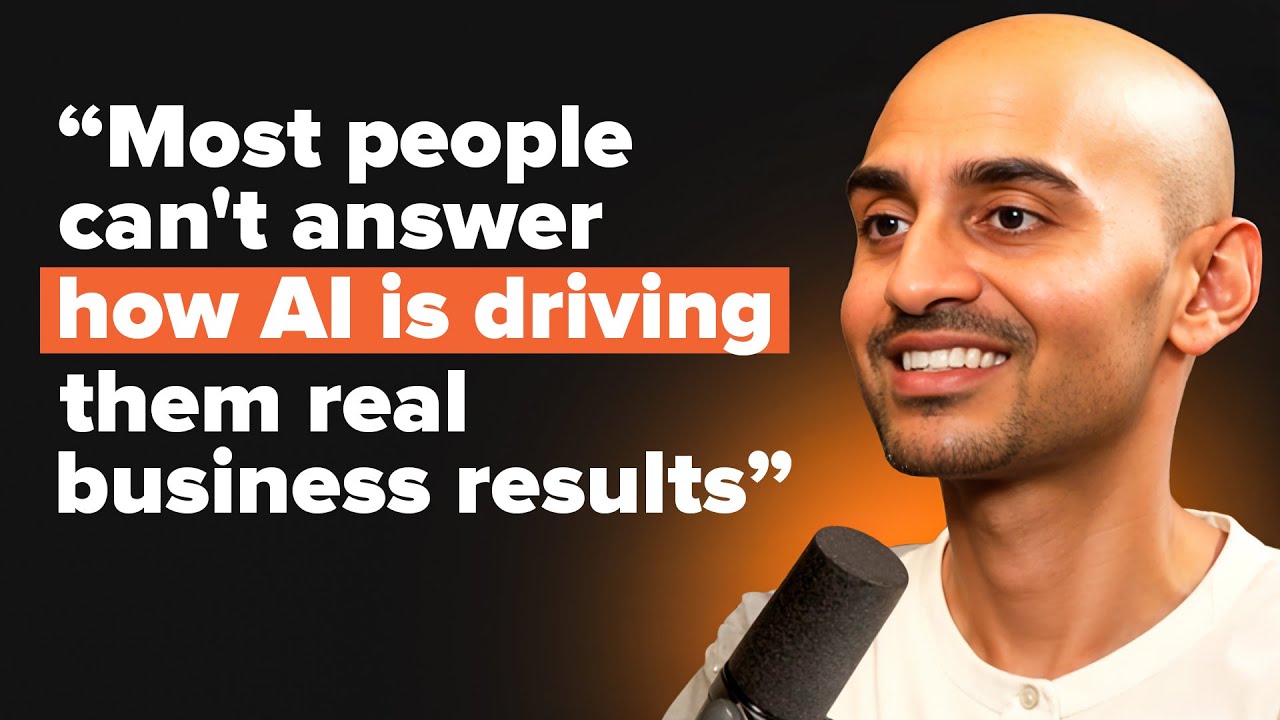
Eric Siu and a co-host argue that AI adoption only matters when tied to concrete business outcomes like revenue or sign-ups, not efficiency alone. They cover legal risks in AI-generated content, SEO industry disruption, and why agencies need measurable ROI and accountability, not just AI-only roles.
Chapters
You want to know a big problem that I see with AI? I was at a corporate event, you know, the other day, and I was speaking to a whole room of marketers.
How many people?
In person? 150, 200.
That's a lot.
And they just work for one company, so you can assume this company is extremely large. And this is just their US-based marketers. They're in a lot of countries. All right, this isn't a company that generates like a billion in revenue. I'm talking about You know, tens and tens and tens and tens of billions of dollars each year in revenue. Their profit is probably well into the billions. I don't know how much, but let's call it $5+ billion, maybe even more per year in profit.
Do they have a giant tower in San Francisco?
No comment.
It's so obvious.
No, no, no, no, no. There's a lot of large corporations.
Yeah, yeah, yeah, yeah. No, I'm just, I'm just, I'm joking. I'm joking.
Go ahead. But I know who you're talking about. You're talking about Salesforce and I'm not saying it is them or it's not them. But I was talking to a group of marketers and my speech, I signed some documents, so there's only so much I can talk about. My speech was to talk about how they can, I can encourage their team and internal resources to leverage AI to be more efficient. And it was things like, why should they leverage AI? How can they do it for different teams like content or data and analytics? And, you know, the list goes on and on. And they have some people that I met up with that just specialize in data and I mean AI for marketing, and their job is to help everyone else within that team adapt AI. And one of them asked me a question, and he asked a question of like, hey, how can I get a position within the organization where I just have an AI role and I just help everyone globally? Like, this would be a really cool role. I want to, you know, climb the ranks and all this kind of good stuff, which people want when they work for a company. And I was telling him about one big mistake that people lack, because even when I was talking to the audience, they were asking questions. Everyone's all about, oh, how do you think about agents? How do you think about workflow versus agents? You know, how do we help our clients, our customers succeed, right? Not just us succeed. And how can we use AI to help with that? And constantly when they're asking questions and when I'm talking to them, and this was a period over a few hours, I quickly realized Everyone's using AI because they are supposed to be using AI, and especially in Silicon Valley, it's being pushed very heavily. And you already know I was in San Francisco, so this was a tech company, of course. But when you think about it, and I was talking to them, I was like, most of you guys use AI because you need to use AI and people are telling you to, but how's this actually impacting your signups, your profitability, or reducing costs, increasing your LTV of customer? And very few people can tell me how they use AI to do any of those things. I'm not saying they aren't using AI, they just create all these use cases and busywork for themselves. And I'm not saying AI can't help make things more efficient, but it doesn't matter if you're more efficient or not. If you're just working on shit that doesn't improve the bottom line, who cares? And you had an Instagram post that I saw the other day saying, I'm looking for AI people, I'll pay you up to $4,000 if you refer. I believe that was you.
Yeah. That was me.
And which I thought was really cool. And I know you and I are on the same page, dude. We want people to enable or leverage the latest technologies, but do you really give a shit if someone uses AI for all this cool stuff and you make no— get no extra leads, no extra revenue, save no extra money? Like, do you really care at the end of the day?
No. And so I think what matters to me and Neil's point, if I'm understanding this correctly too, is don't just use AI to AI or just because people are mandating it. You have to understand the why behind it. Like, why does your organization want you to do it? They want you to be more productive, not just to use it. And I think, by the way, when I've worked at larger companies before, I never really tried to understand the business or understand the bottom line. Like, to me, it was just, my job was a means to an end, right? Like, I wanted to go work on projects on the side. So, I think that's largely what's happening. That's the disconnect that's happening right now because you and I have been entrepreneurs for so long.
No, I disagree with this. I've seen you work for corporations like Treehouse where you helped drive sales.
That was a small startup though.
Yes, but when you worked for them, you thought about driving users and doing it profitably. You did not just say, I'm a marketer, I need to just drive signups and more usage. You did think about unit economics and making sure you weren't losing the company money.
You want to know why I cared though? Because the previous companies I worked with were big companies with hundreds, thousands of people, right? I didn't care at those companies because I felt like I was just a cog in the wheel. At Treehouse, because it was this much smaller team and a startup, I cared a lot more. And I, you know, sometimes I feel like it's cheesy when people say, oh, the mission, the startup. I actually did care about that. So I, and also like, sure, the equity, but the equity is like, who cares? It's like a fart in the wind, right? At the end of the day. But I think the key thing is that the— it goes back to that one word, Neil. I think it's just the why. And people are asking the wrong questions. And by the way, when I say we're hiring AI-forward people, to me, Neil, it's just like, if I'm interviewing you right now, now I just kind of start off with like, one, how did you prepare for this call? You'd be surprised at how little people prepare for a call. I might just end it right there. The second booby trap I have is, So tell me right now, like, what's the most innovative thing you're doing with AI right now? Right. And by the way, like, some people will tell me all these things that they're doing to drive traffic and conversions. And some people would just tell me something they're using for their diet, for example. Right. That's not what I'm looking for. I'm looking for people to know how to answer a question that ties in with business results. And a lot of people fail at that still.
Yes. And I do agree with you. It goes back to the why and people don't ask the right questions. They don't understand the business and they're just like, oh, I'm in a role in marketing. So if they're in charge of community management, they're like, yeah, I got to manage a community. Why do you need to manage community? Oh, to create goodwill so people like the brand. But why does that matter? Oh, because if people like the brand, it generates more signups, more revenue, reduces churn, whatever it may be. Like, oh, that's all right. That's correct. Okay. So what are you doing that actually moves those metrics? Responding to a comment for the sake of responding to a comment doesn't necessarily move it. There's some things that could move it, some things that won't, like someone could be really upset and then you save them and then people, other people on the internet end up seeing it, creates a ton of goodwill. But you got to figure out why are you doing your job and what can you do that actually has an impact on the business? And when something's publicly traded, that was a funny part about me doing a speech. I'm like, look, I know you guys are doing all this work. I know your numbers. You're publicly traded. I can just go look them up.
Yeah.
If a company, if your financials aren't crushing it, you're not growing like at 30, 40% a year or 20% or whatever, I think the market usually wants 20+ percent. I don't know what they're really growing at, but generally the stock market's been down for the last 3 years. It's like, cool, you're doing all this stuff. What's really impacting the numbers? Yep.
And by the way, this is, this is interesting because we're hiring more SEOs right now. And basically we have people do this quick SEO assessment. It's like, you're just, it's a write-up and it's 2, 3 pages or something like that. And I'm looking at those. So I had ChatGPT-03 score these people. All right. I was like, okay, we're doing assessment. We want to understand how AI-forward they are, how strong they are with SEO. This one guy works at a very large company that has probably 5,000+ employees, and he scored a 9 out of 10, and everyone else scored like 7s and 5s, right? And so the one-line verdict on this guy is forward-thinking strategist who already thinks in the post-AI overview world, an A-player, right? So he clearly explains AIO, chat-based search will cannibalize clicks, blah, blah, blah, and tying it with CRO training, but he also sees a lot of this stuff is going to go down over time, right? And so that to me is, with a quick analysis, I'm like, whoa, okay, that's better than these other people because they're not, they're scared to even talk about this stuff. And by the way, You know what I know? You want to know something interesting that's kind of related to this? This guy was getting paid $250,000 a year as an SEO. His entire team and him, they just got cut last week, right? And so I think what's going to happen to a lot of SEOs is I think a lot of SEOs are getting fired right now. And I think a lot of SEOs are scared. So we can choose when we want to talk to this, talk about this topic, but SEOs are getting fired left and right right now.
But— Well, let's talk about it now. But one quick comment before we switch topics. So Why SEOs are getting fired, because I didn't know about that. We're actually seeing— do they work for agency or a company?
Company.
Oh, okay. We're still seeing companies hire SEO. I'm assuming you are too because you're getting leads. But going back to the event I was at, you know, they're also pushing everyone to be a vibe coder. And I know you've done a lot of vibe coding. I'm assuming you've done at least some.
Yeah, no, I'm shaking my head because I think a lot of it's baloney. And I think to your point, a lot of this is like slop and busywork and people acting like they're doing shit and they're not.
Yeah, and I'm just like, I bet you a lot of you guys are using AI, and if you measured your productivity, I bet you some of you are more productive and quite a few of you are less productive because you're just doing a lot of random shit that doesn't impact the business. Like, cool, you got more done, but you got more done that has nothing to do with moving the numbers. Who cares?
I guarantee you, I do think for you and I, I'll just speak for myself, I do think I'm a lot more efficient as a strategist now. I think I'm way smarter because of AI, not because of me, right? But I'll be like walking to the office and the things I strategize on, like a tax lawyer, or like I'm talking about other things, like literally, like I might do like a different partnership agreement, like these addendums and these amendments and all these things that might cost thousands of dollars and weeks. I just do them quickly now. And when I do it with other people, we just knock it out. We just sign it right there and we're done. Right? Not saying you guys should do that. That's not legal advice. But even the way I go about planning for family stuff and things like that, it's basically my in-pocket strategist. And because you and I are basically sitting atop and kind of operating the business, We can drive those types of results, but I think it's important if you're also leading, you can't just dictate and say, oh yeah, you should be using AI. You're going to have to have standards and guidelines. Otherwise, people are just going to do stuff like this.
Dude, and in some of our contracts, like we're going through a contract with a very, very large corporation, very old company as well. I don't mean in a bad way. They've just been around for ages. They're publicly traded. And straight up, we were about to sign the contract and last minute they had a change. And the change straight up says, and we're seeing this more and more, if you use any AI tools, you need to let us know ahead of time. And if you do use them, you are going to be responsible for any copyright infringement, right? So we would have to take on that liability.
Yeah.
Which I think that is a very reasonable request. If we want to use these tools, we ourselves as an agency need to make sure that we're not screwing over our client. Um, but yeah, they, they requested that and we'll go back and forth and make sure it all looks fine before it gets signed, but it'll push it into next month.
But yeah, you know, my cousin, I saw my cousin yesterday. So she works for like a big law firm, right? And they don't allow the use of AI right now because it hallucinates, right? And so the one, I think they're going up against another firm during a case. And then the other firm, they brought up like, you know, they cited like false cases that don't exist, right? And then their firm was like, hey, you cited these cases, but these cases don't actually exist, right? And they're like, oh, so they got in trouble for that. And so this kind of reinforces the need for a human in the loop. If you're in B2B, here's the LinkedIn account-based marketing sucks, but it doesn't have to. With Karrot, it allows you to create personalized ads towards your customers and also personalized landing pages that align with the ads. So you're gonna have higher conversions and influence pipeline reporting to prove that your ABM works. So if you wanna learn more, just go to karrot.ai and you can join the waitlist. Again, it's karrot.ai, and we'll see you on the other side. But I think going back to what I said too, if you're going to create these AI standards of excellence, there's got to be a way to hold people accountable. Otherwise, it can get out of whack pretty quickly because again, you see the Fiverr CEO doing it, you see the Box CEO, the Shopify CEO, everyone's doing all these things right now. But I think we've lost sight of the fact, and it wasn't until maybe this conversation, Neil, where I realized that you, myself, or other operators, we're incentivized to care the most about the bottom line and we can drive the most change quickly, whereas other people are never going to care as much. And so they're just going to do whatever.
Dude, we're on the same page. And speaking of AI hallucinating, when I was at the event, one of the guys just specializes in AI for the organization, helping everyone adapt it. And I was telling him like, yeah, I've used ChatGPT and other LLMs, and sometimes I create charts and they're just off. And like, I'm inputting the data correctly. Had a few people on my team. He's like, oh yeah, you need to adjust how you're doing it. You can actually create this checker thing that verifies everything. And then Reviews it, and in my head I'm like, but why, dude? I just inputted data. It's pretty black and white. You create a graph, it's either the output is correct or it's not correct. If we try different prompts and just messing up on it when the data's accurate, so whatever. At this point it's like, move on. He's like, no, no, you're going to end up fixing it. I'm like, dude, I could just have a human do it faster. It doesn't mean AI is bad, but it goes back to your point where sometimes it hallucinates and it's not accurate. And going the length of having to double, triple check everything, it's very important and people tend to forget it. Just like you saw that Chicago newspaper scandal where the guy who's in charge of the column for the top books of the week or month or whatever it is, used AI. And I think 3 or 4 of the top 10 weren't even real books.
Wow. So he got in trouble for that. He get fired?
I don't know if he got fired, but if I was him, I would've resigned myself because I—
That's a fireable offense.
Yeah.
Yeah. Okay. Well, anyway, I mean, okay, going back to the SEOs are getting fired left and right. So, you know, what's interesting, the SEOs that I'm talking to right now, these people, so, okay, one guy, his entire staff got laid off and I'm like, hey, look, man, like I know you got, you're getting paid $250,000 because this space is changing so quickly right now. I don't know if you're going to get paid $250,000 right now. Just, it might depend on the company too, right? Some companies will gladly shell that out. But then the other thing is I talked to an agency guy and he's like, yeah, my entire team got let go and I got repositioned into this position over here where I'm not managing people anymore. Right? I'm like, why did Team Get Luck go? He's like, oh, SEO is not working anymore. And then there's a big agency that you and I know, I'm not going to name names, but I kind of mentioned that I talked to a handful of directors there. I'm like, why are you guys all looking to leave? Right? He's like, well, we haven't been closing more SEO deals. One, 2, SEO is changing. And then 3, they're making layoffs. So we're scared. Right? So look, I get it. People want to have a job for safety at the end of the day, but if something's changing, you better be able to adapt. Because I think this is going to continue unless you prove yourself to be ahead.
Of the game. We're seeing SEOs are still highly in demand as long as they've adapted.
Yes.
There's a lot of SEOs that are just like, you build links, you optimize your site, you create tons of content, you try to rank number 1 on Google, and that's it. We're not seeing those SEOs do well. And even when we pitch SEO, it's not just, hey, let's rank you on Google. The ones who are like, hey, AI overviews are important. You want to make sure that you're mentioned there. AI mode is here to stay. You got to make sure that whether it's AI mode on Google or ChatGPT or Perplexity or Claude or wherever it may be, you're continually being top of mind and being mentioned inside it because that not only builds trust, but that's building your brand, right? They call it rule of 7, as you know, in marketing, although it's closer to 11 now these days where people have to interact and see a brand 11+ times before they engage and purchase. Same with social media. If you're SEO and you're not optimizing your social content to rank, You're making a big mistake. You're posting content, but why wouldn't you want to get the traffic from everyone searching? Dude, Zuck talked about it the other day. There's over a billion users a month that are using their AI technology. A lot of their AI technology happens when you just do a search on Instagram or Facebook or any of these places.
Dude, you just, as you said that, I was like, yeah, optimizing for LLMs where you can. I had to do the search on ChatGPT again. I was like, what's the best marketing podcast? Marketing School number 1 again. So I feel good right now. But by the way, guys, the SEO 101 game is still citations at the end of the day, right? So how many times are you getting mentioned? How many reviews are happening? To me, a link is still a citation too. Like all those things are still in place. So a trick question I like to ask people now is like, so what do you think about AEO and GEO? Like how do you optimize for these? And if they start answering me like with a bunch of things that sound complex, they're just done because it's really not that complex at the moment.
I just finished up a lunch meeting and we were talking about our podcast. You go to Avra? No, I went to the Maybourne.
Nice.
So was at the Maybourne eating lunch with someone and we were talking about marketing and podcasts and they were talking to Grok and Grok ended up mentioning our podcast and they're like, oh cool, I'm going to start listening to it. I'm like, great, thanks. It is important. And they're like, do you generate any revenue from any of these kind of things? Because they're asking like, why do you keep doing it? I was like, I've been doing it for a long time. It keeps you top of mind. It's great for brand awareness and it can drive revenue, but it's a long-term play and it's people interact and engage with you multiple times. I've told you this, you've had direct experiences closing revenue because of marketing school.
Mm-hmm.
I've mentioned to you, I really haven't. But when I talk to Nick on my sales team, he always tells me, I, because I've asked him, I'm like, do we generate business from marketing? He's like, He's like, not that I can pinpoint, but he's like, when I talk to people, a lot of our customers do listen to the podcast.
It's, I see it as a multi-touch thing. I think you can't really attribute to one thing, right? Like for example, when I bought that vacuum cleaner, it still hasn't come yet, but it was like Twitter and then I went to Wired and then like, you know what I mean? Like, and then there's a bunch of other, like the cookies, right? The cookies I told you to buy, like you can't attribute it to anything. Did you get it?
Did, did this just came in my inbox. I ordered it when we were together.
Yeah, they have to like hand-make it all.
Look, literally got this at 2:12.
Amazing. Amazing.
Like, oh, okay.
But okay, so, but my point is like, I found these cookies on Twitter and then I bought them on using the Shop app and then I told Neil about it and he bought it. So, but you can't attribute that, right? So my point is, I think, so when I listen to podcasts, I feel like I'm building a relationship with these people. It's one-sided, right? And so people do like the fact now that we're sharing experiences and I feel like people have gotten to know us well. And because like, like when I went to— when I came out from the gym, like a guy approached me and this guy's— this guy's amazing. I'm gonna do a podcast with him sometime soon, but he's like, dude, I love all your stuff, blah, blah, blah. And it's like, it feels like they know you on that side and it feels like at least on one side it's a very familiar friend. So.
Yes. Yeah. And this is all attributable to just being out there a lot and getting your brand out there.
And by the way, like I do, the thing I think that's good about this podcast is it forces us to be accountable because at any given time, if we want to be lazy, we can't really be lazy.
So, all right, so we all know that, and this will be new for me as well because I've never asked Eric this. We all know that building a brand and being out there for a long period of time does wonders. All right, so let's go to Karat for a minute, right? Karat is Eric's ABM software, uh, account-based marketing, and it's been out for how long now? 6 months?
It's, uh, December.
So roughly 6 months. We're in June. So call it, if you include December to now, you've, you've gone half a year.
Mm-hmm.
So if you've been out for 6 months, you first got traction from a LinkedIn post. I forgot what the LinkedIn post is, but you had like 1,000 or 2,000 comments. It was something crazy like that.
Yeah.
And that was how you got your initial traction.
Mm-hmm.
You still push it. We push it when we naturally talk about it on this podcast. We don't push it intentionally. We're just randomly talking about it. You talk about it when you're presenting, like on stage at YPO, at the marketing event in Miami.
Yep.
How much of the inquiries that you're getting right now from Carrot, this is just out of curiosity, are coming because of brand awareness, would you say now versus like SEO or the podcast or just running a promotion or ad? Because you talk to a lot of the people, how much do you think is attributed because of the brand?
Neil, read this off. I'm going to share my screen over here. Okay. So column K is how did you hear about us?
Okay. So what's the green versus the non-green?
Green is just like conditional formatting for bigger companies.
Okay, so YouTube, LinkedIn, YouTube, Eric podcast, YouTube video, YouTube, YouTube, YouTube, YouTube, YouTube, Google, Single Grain, YouTube, YouTuber, that means someone else, self, I don't know what self is, LinkedIn referral, YouTube podcast, subscriber of email list is what it looks like. It's kind of—
Subscriber of Eric, I think.
Subscriber of Eric's newsletter, email, same thing. Google, YouTube, LinkedIn, LinkedIn, YouTube, YouTube, dude, Leveling Up podcast, 4 more YouTubes in a row, LinkedIn, YouTube, Leveling Up, YouTube, one of your podcasts. That means they listen to more, so that's great. 3 more YouTubes in a row, Google, Eric's Leveling Up. I'm assuming that means the podcast. And last one is YouTube.
But by the way, YouTube is a lot of podcasts.
You doing your own podcast or are you talking about interviewing on other people's podcasts?
No, me, me. Me doing either solo episodes or, and I don't really do interviews anymore at the moment. So, and then sometimes they come from like, sometimes we'll have a, even though our Marketing School channel is very small right now, it's sometimes it does well.
So. Oh, so it is mainly solo videos. It's not you going on other people's podcasts?
Correct. Yeah.
Yeah, but that's some brand awareness. I haven't watched all your YouTube videos. I started watching some of them because I know you started doing it in the same studio that we were talking about.
Do you like how my style looks like yours?
It works. Here's the interesting thing. I started using a studio, Eric copied my style, then I copied Eric by going to the same studio that he used because it was a better deal and closer. So my new style is a copy of his, which was a copy of mine.
But yeah, we iterate off each other and it's not like we get mad at each other for it. Like we, we, it's, we're fine. You know, it's, it's some people get like, oh, they try to hold the, the, the, It's like when you go to middle school and someone doesn't want to reveal the rock band that they listen to, we don't do that stuff, right? And by the way, we want to give a shout out to the studio we use. It's in Century City. It's called Visible Audio Studios. I think it's a great studio and I hope that they get even more business from this.
Yeah, and I asked Eric, because Eric asked me, he's like, where do you film? And I told him like, dude, just ask AJ. It was somewhere in Hollywood. I'm like, it's far. And he found a closer place. And he was just like, he filmed. I was like, oh dude, this looks good. I was like, where'd you film? And he's just like, here's the place's name. And I sent it to AJ and then he ended up calling up and figuring it out. But yeah, that's the thing we share. And you know what? Eric and I genuinely are competitors. He has an agency called Single Grain. I have an agency called NP Digital. But the thing is, is our market's big enough. It's like just a massive punch bowl and it's big enough for everyone to get fed.
There's so much business when agencies are smaller and they're, they're, they're scared to share information. There's no point in doing that, right? You know what's weird too, Neil? I think I talked about this with another friend, like a lot of— because you've worked in SaaS, I've worked in SaaS. For whatever reason, a lot of agency people have these huge egos. And I'm like, where does that come from? Like, where do you get like— versus like a lot of SaaS founders, you know, most of them I would say are generally nice people. But for whatever reason, the agency world, the egos are so big. So if you have an agency, don't do that. You might as well be humble, share the information, and just understand that there's business available for everyone. And sometimes when you refer business out, you can get business back too. So just understand that you can each help yourselves make the pies bigger.
Yes. And that is the right way to run a business and sharing and meeting up with other founders who are in the same space. It'll actually get you further than being like, oh, I can't reveal any of my secrets to them. They're going to copy me. And that's why Eric and I are in groups with other agency owners. They're not really formal groups, but we more so keep up to date with them. We share tactics and strategies and what's happening. Things are up or down. It just all helps us grow.
Yep. So that is it for today, guys. Please don't forget to rate, review, subscribe. And that being said, we will see you tomorrow.









