How to Create a Product Your Customers NEED (with Steli Efti from Close.com)
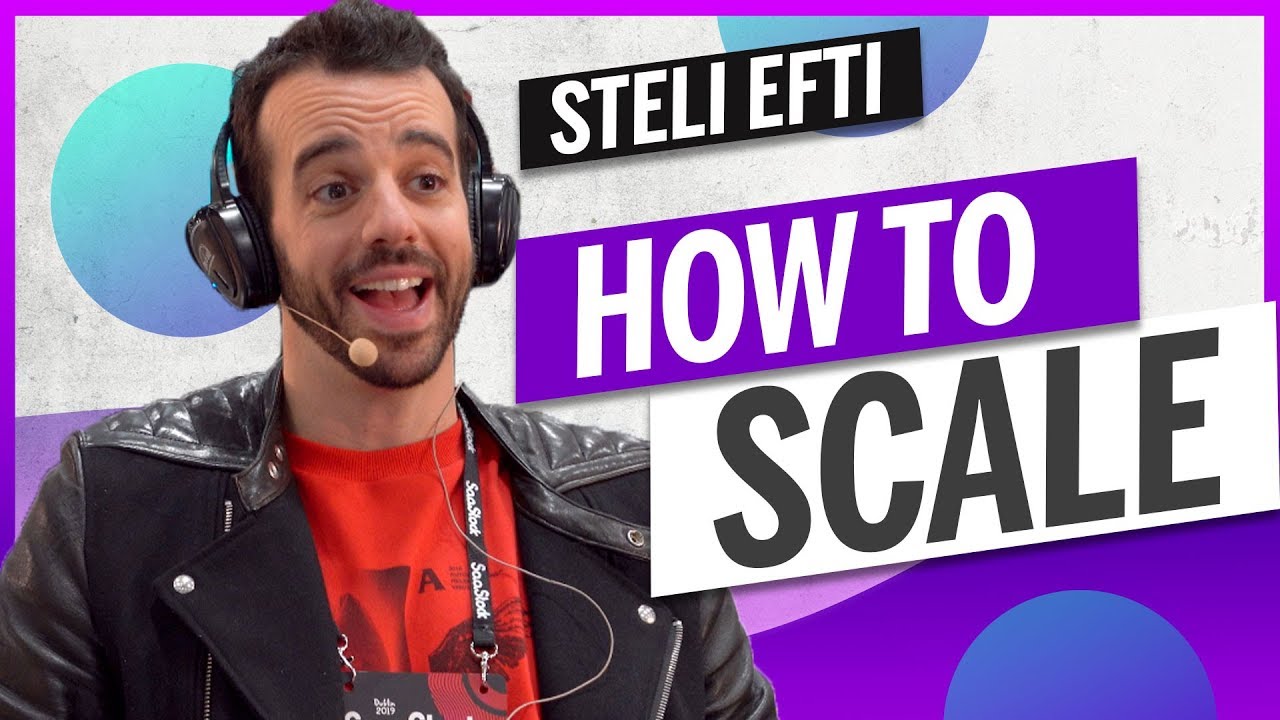
Steli Efti, founder of Close.com, talks about finding product-market fit through constant customer conversations. He explains how Close built revenue through pricing strategy and why ongoing customer development matters more than launching and forgetting.
Chapters
This is Deli Efti from Close.com, no longer Close.io, correct?
Correct.
How much did that domain cost you, by the way?
A lot of money.
Yeah?
But a lot less money than it was quoted to us 5 years ago.
$1 million?
It was less.
Okay.
But originally, we— I think we started negotiating for that domain 5 and a half years ago.
Yeah.
And the original price was like $1.8 or something.
Yeah.
It ended up being a lot less.
Good for you. All right. So tell everyone, I've had you on the podcast like 3, 4 years ago, and we know each other from online. We met the first time last year here.
Yeah, that's true.
And so tell everyone who you are and kind of what you do at Close.com.
Yes. So my name is Steli Efti. I'm originally from Greece, grew up in Germany, and then 12 years ago I moved to the US, to the Bay Area at first, did a couple of startups there, and now I live in New York. I work at a company called Close, close.com. We used to be close.io. And what we do is very simple. We help small and medium-sized teams sell more, close more deals, drive more revenue. We have an inside sales CRM. And kind of most of our customers are actually SaaS companies. So we specialize in really empowering SaaS sales teams to be more productive and to close more deals.
Love it. And last time we talked, God, I don't even remember what the revenues were, but How, what kind of numbers can you share on the business today and how do you guys make money?
We make money in a subscription way. I mean, we actually tripled revenues this year. So originally we just had subscription revenue. This year we actually introduced usage revenue. So on top of what we charge at a monthly subscription per user per month, we now charge for telephony. So you can do SMS, you can do calls using Close. And then we this year started doing professional services. So we have some very large clients. And so they pay us for consulting, they pay us for integrations, they pay us for all kinds of premium support. And yeah, we don't publish any numbers, but it's in the double-digit millions.
Got it. Double-digit millions. So 8 figures?
Yes.
Got it. Okay, cool. So I've used Close in the past. We had a defunct senior living website and we actually used it for dialing and it's still the best CRM I've ever used. Um, so everyone check it out. I have no affiliation to Steli, um, besides the fact that he's cool. And you also have a podcast too. What is the podcast?
The podcast is called The Startup Chat.
And then it's with?
Uh, Hiten Shah, the one and only, the living legend. Um, so if you go to thestartupchat.com, uh, you can check it out and subscribe to it twice a week, 20 minutes, Tuesday and Thursdays. Uh, it's us talking, sometimes tactical, and sometimes we get off the rails and talk about anything we want, like Religion in startups, or how the death of our parents affected us as entrepreneurs.
Love it. So how long, I mean, how long have you been working on Close?
We, that's a good question. We launched Close in January 2013. We had started working on it as an internal tool in, I want to say maybe a year prior. Um, and a year prior to that, we had started the corporation that kind of pivoted to Close. It was called Elastic Sales and was like an outsourced sales team on demand. We did sales consulting and we worked for SaaS companies in the Bay Area that had raised venture capital.
And then now you're back into services again, but it's helping them manage the service, correct? It's a managed service basically.
It is just for our largest clients. So we don't do outsourced sales. We don't consult. Just if you're a really, really large customer of Close and you need a lot of help with optimal integration, when you need a lot of help with all kinds of like sales operations, To get the most out of the tool instead of you having to hire a consultant. We offer that work for you.
So why should people use Close versus like the other CRMs out there?
Yeah. So I think it depends on the priorities that you have, right? So if your priorities are sales productivity, you have a small sales team. The number one concern that you have is when I hire a new salesperson, how quickly can I get them onboarded and how quickly can I get them productive? If your number one concern is empowering your sales reps to communicate more and communicate better, and that is your number one priority, we probably have the best. We are the number one in the world for teams that are, let's say, less than 400 reps. Now, if you hit a certain size, if you have this massive organization and integrations are important and forecasting and legal and this, that, and the other, you're just at an enterprise level. We can't, we can't really service you anymore. We're not a good tool. And on the flip side, if you're super small and scrappy and it's just, let's say you're a freelancer and all you want to do is you have maybe just 4 or 5 deals a year you're working on. You try to visualize that beautifully. There's simpler tools. I mean, a whiteboard could do it, but you could do it simpler than using Close. So Close is really the middle sweet spot. You have a team that's more than 2 or 3 or 4 people. You're fast growing. You're hiring lots of people. You communicate a lot. That's where our customers tell us, We're the best tool.
Got it. I remember, so I was doing a podcast with my buddy Neil, and we were talking about how long it takes for a business to become successful or get to product-market fit, right? So how long did it take you guys? You said started 2013?
Yeah.
How long did it take you to get to product-market fit? What's the magic number?
You know, this is an unfair— this is in general the problem when you look at other people's companies' stories and you try to compare it with yours. When we launched Close, You know, we pretty much had product-market fit by some definition from month 1. The reason for that though was not that we were so brilliant, it was that we had like 2 years of customer development time. And that happened internally. Like, we had done sales campaigns for 200 different companies. We had this massive sales floor full of sales reps doing different campaigns, selling to different companies, different markets. And our engineering team was in the middle of that room developing the software for Yep. So by the time we launched the product, we had already like 1.5, 2 years of development of it. We had a unique vision and point of view. We had tested and proven it in many different use cases, and we had a little bit of a reputation and a name in the Bay Area. So when we launched Close, a lot of startups wanted to see what kind of tool we had, and we hit a nerve right from the get-go. Now, a lot of things were fucked up about the tool. Like, we launched a CRM, in January 2013 that was promising you that you would close more deals with no reporting. There was no reporting in Close. We're like, well, we're going to close a lot more deals. We can't tell you how many more deals. You know, it's a secret. We didn't have reporting built yet. Right. And so people would buy it and be like, this is amazing. I love the CRM. For the first time I can just do my job. And then a month or two later it'd be like, it'd be really nice if we had reporting. I'm hiring all these people. I don't know what anybody's doing. And then a month later they would cancel, right? So our churn was really high in the earliest, but we were not stressed about that because we, I mean, we were working on repairing.
How high was high?
I don't even remember if I'm honest with you. I don't know. I couldn't even tell, but high. It was too many, but it was good kind of churn. It's the kind of churn where companies say, I love your product. I bought it although it's broken. I used it although it's broken. It pains my soul to leave, but the moment you fix this, I'll be back. That's not the biggest issue in the world. That's a good problem to have. And that was the problem that we had, but we didn't launch something, announce it to the world and nobody cared. And then had to go and hustle and be like, why does nobody want to buy our software? And everybody's just going like, eh, we don't care. We hit a nerve right from the get-go, but it's because of our unique circumstances. We didn't just work on our CRM and launch it. We had kind of 2 years of building something for ourselves.
Mm-hmm.
And figuring it out basically before we enter the market.
Yeah, I think this is really important. Not enough people talk about it because it's boring, but last maybe 2 months I spent 40 to 50 hours on customer development, right? Can you define what customer development is and any resources that you use to get better at it? Because it's necessary, but people tend to skip it and they just build whatever they think is right.
Yeah, so customer development is the simple idea of talking to your customers or talking to your potential customers As you're developing your idea or your product in order to get the feedback and the insights needed to do something they truly want, to build something people want and want to pay money for, right? And the— I think the problem with customer development is that it's not just talk to some people, right? Talk to some people, I could talk to my mom. She tells me everything I do is brilliant.
Yeah.
You know, and then I can just come back and be like, oh, well, I talked to 3 people and they liked it. There's a pyramid of validation, right? There's a hierarchy of validation. If I tell you, Eric, I have an idea to build a cool tool that does XYZ, and you go, you know what, Steli, that sounds cool. That's nice, but it's not validation. Now, if I tell you, you know what, Eric, here's how much I would charge for it. Would you pay for this? Would you? Because you're the type of person I think I want to build this for. Would you give me this amount of money for the tool? If you say yes, That's much better. It's still not good, but it's much better than just saying your idea is nice.
Right.
And now if I say, well, then hand me over your money, I'll put it as a deposit down and you'll be the first to access my product. If you give me money for something that doesn't even exist yet, now we're onto something. That's very strong validation. So you don't want to just get positive feedback, positive verbal feedback as a signal for what I'm doing is good. You want to get much more committed feedback and insights. And then ideally, you'd actually observe and see what people do with the thing that you're building or thinking about. The other thing that people really miss on customer development, I was screaming at people earlier.
I heard that. I was like, dude, what's wrong with you?
How would you not? I made sure everybody at SaaStock heard me. But one thing that I was screaming at people is that there is not such a thing as product-market fit as a destination. It is a moment in time. It's a snapshot. You're there, the next moment you've lost it again, right? You have to re-earn it. So customer development is another of those things where people think we will do it in the beginning. We have to talk to customers, so we will do it in the beginning. But once we have a little bit of traction, we can stop talking to customers.
It never stops.
It never stops because your customers change, the market changes, your competition changes, your company's changing. So you constantly have to do customer development. It never ever ends.
Have you read The Mom Test before?
I've heard the title. I've not read the book.
It's so good. You literally just talked about mom, right? So literally, if you guys get it on audiobook, it is— that's basically how to do customer development. I think it should be required reading for everyone.
Beautiful.
So how are you guys growing today? What's working really well for you guys?
So for us—
You speak a lot, right?
I do. I do speak loudly and a lot. Yes. So for us, what's working— what has been working from day one and still continues to work for us really, really well is content marketing. Again, the way we did it, like if I had to restart again today, I would do things very differently because the world is a different place. When we launched our blog in January 2013, almost nobody was writing about startup sales, SaaS sales, or sales in general. Most of the blogs that had anything to do with selling were super outdated and kind of shitty or written just for search engines.
Yeah.
And so we stepped into the market writing content passionately with a strong point of view, pretty, you know, pretty modern framework. And we had a lot of knowledge that was super up to date and super compelling. So we were able to get a lot of traction. Then it was easy for us to get distribution for that content. We would get on Hacker News, on the front page of Hacker News for every fucking blog post we posted. We would get all these like benefits. I would guest post for all these big TechCrunch, all these big publications that had large audiences at the time.
Yeah.
And so from day one, we got tons tons of traffic and very, very high converting traffic. Quora was a big thing. I would like take most of the blog posts that we had and I would then go to Quora and look for people that asked the question that I answered with the blog post. I would edit the blog post and post an answer on Quora. We got massive traffic from Quora, super well converting. A lot of these things are not there anymore. It's much harder, much more competitive today on the content marketing side. But because we've been doing it for so many years with a massive and very, very deep content library, we get a ton of traffic and we have very high authority from Google for certain things. So content and kind of organic inbound is still our number one growth engine today.
Yeah.
We're now starting to expand it. So partnerships is something we used to be really very much against. Like, we're like, well, we can't do a million things. Partnerships takes a lot of time, a lot of resources. We're a small team. We'll just say categorically no to everything and everybody. But now we're doing it more and more and very successfully and we see We've now broadened our customer base so deeply that a lot of our customers want to bring us more customers. So we do, we've started to develop a partnership program, an affiliate program, and I was always so skeptical. This is one of those areas where I always thought, ah, an affiliate program, will this really work for us? A partnership program, is this not just some bullshit? And thankfully, this is one of the many times that I've been wrong because we've just started doing it with a small group of partners and it's been working really well.
Once you have the right people, it just— It's more so at your stage, it's when you have a problem, it's who, right? Who can I hire?
Yes.
So your podcast, I mean, there's— I'm going to talk about this tomorrow during my talk, but there's not many podcasts in the world. There's over a billion blogs. What has podcasting done for you? Because I feel like that's just such a white space right now, and you and I both have podcasts.
Yes, we do. Podcasting has been very interesting to me, probably very different from I'm curious from your experience because the format that we chose, Hiten and I chose to do our podcast is one where it is only the two of us talking. Like we never have any guests. The amount of emails I reject every day of people pitching guests for the show.
It's like, do you even listen to my podcast?
They clearly don't. They don't. They just email every podcast owner and be like, oh, this person that I rap is really compelling. So we're very unique in the sense that we don't interview anybody. And it's basically an ongoing conversation Hiten Shah and I have had for 4 and a half years. We record once a week for 1 hour. We do 3 to 4 recordings per session. That's it. We do zero prep work. We jump on the call and it's literally, what are we talking about today? What are we doing today, Pinky? What do we always do, Brain? Whatever the other way around.
Taking over the world.
Taking over the fucking world. So we have optimized the podcast actually in a way that really suits our lives and our priorities. And the number one thing that it's done is that podcasting has created a much deeper, more intimate relationship with our audience.
Mm-hmm.
So I get a lot of, a lot of people say a lot of nice things to me, right? Just like you probably. And so a lot of people come up to me, especially when I'm at conferences, stuff like that, and say that they really appreciated the video content, the talks, the blog posts, the ebooks, like they say that they've got some kind of value out of the content that I created. But nobody, nobody responds stronger to me than podcast listeners. Like they freak out, right? And they will tell me, they also through the emails that we've gotten through the year, they seem to be the ones that get both the most value from our advice, but also the ones that feel the closest to us.
Yep. Right?
Because they, you know, you tend to with podcasts, When you have a podcast that you really like, you tend to develop these habits.
It's intimate.
Right? It's super— first of all, it's like this fucking thing, like it's my voice deeply in your ear, right? So it's like very intimate versus just watching it.
Yeah.
And then people develop habits. Every time they go to the gym, they listen to our podcast. Every time they go and do whatever the home chores or they, whatever they, they work out, they do, they go on a run and they develop these close habits that now are part of their lives. You become part of their life. They actually get upset when they're like, I want to go on a run and there's no podcast. I cannot go on a run. I need my podcast to go on a run. And this is unlike any other medium. Nobody's always reading your blog posts when they're whatever, you know, when they're at the gym or when they're having breakfast. Nobody's like that deeply building habits around the content format. So one thing that's cool to see is like just how close the audience is.
Yeah.
And then also branding-wise, like a podcast audience for us, it's probably the highest quality audience we have. The blog is much larger in terms of just the amount of readership, but the people that listen to the podcast, I'm always amazed at the type of people that listen to our podcast.
Yep.
Anytime I reach out to somebody, like I did this recently where we were hiring a director of marketing and I would reach out to CMOs and VPs of marketing at multi-billion dollar companies to get their advice. And we had, I had a response rate of, 87% or something.
Wow. And what did it say?
And like half, probably half or a little bit over half of the people that would respond, like I would just email them, hey, I'm trying to hire a director of marketing. I want to ask you for advice. Can I jump on a 20-minute call with you?
Right?
These are people I've never talked to before. Like I said, CMOs of the biggest SaaS companies you can think of. And A, I was surprised how many responded and then how many of them Like about half of them were like, yes, of course I'm going to jump on a call with you. I love your podcast. I've seen you there. I heard about you. I'm a fan. I'm like, what? You're listening to my podcast? That makes no fucking sense to me.
Yeah.
So the— and I'll just— we have like, we surveyed our audience multiple times, the amount of, you know, super senior executives, the quality of those executives, the amount of investors, just the quality of the audience is really, really high. So it's been distinctly different medium for content than our blog, our YouTube channel, and kind of everything else we've And anybody can do it, right?
Like you and I do it.
Yes.
And you and I, we're just average Joes. Yes.
I mean, we are as average as they— I mean, especially me, as average as they come. As average as they come.
Yeah.
All you have to do is be curious, be interested, share what you know, share what you're learning, and some people will find value in that.
Yeah. Rather than trying to be interesting, be interested, right? Yes. Yes.
Yes. Yes.
That's right. So, I mean, for our side, it's like sales cycles are much shorter and the LTV of a Podcast customer is just way longer because they like you. They're intimate, right?
Yes.
Yeah.
Podcast listeners that are like our customers, the type of customer that is with us that wants to cancel at some point, if it's a podcast listener, they never cancel without sending an email and apologizing and trying to figure out if there's a way we can stop this because they just feel like they feel like they know you. They feel like you've given them a lot. It's a much closer relationship, which is really, really beautiful.
Intimacy at scale.
Intimacy at Scale. Yeah.
So aside from Close.com, what is one tool you'd recommend to everyone to use? It could be like an Oura Ring or it could be like an app.
An app or a tool that I would recommend everybody to use. I don't know. This is tough. I'm not that into— I mean, I would say Headspace, any kind of mindfulness and meditation app is definitely dope. Most people have a hard time sitting there for 10 minutes, not thinking or meditating in complete silence, those apps are really actually useful. And you just listen to somebody with a cool British voice for 10 minutes and relax.
Or your voice.
My not so British voice, yeah. So, Headspace, not Mindspace. Headspace is cool. Brain.fm for those that need it, it's a cool little tool where they have like these brainwave sounds that you can listen to after like 3 or 4 minutes, they help you focus, they help you get in the zone. That can be really cool. I like Notion. I take a ton of notes.
Oh, I love Notion.
I love Notion.
Do you pay for it?
Yes, of course.
I pay for everything I use, I think. Oh my God, Notion is so good. Get Notion. Anyway, and then final question is one must-read book you'd recommend to everyone.
Wherever You Go, There You Are. It's a book by Jon Kabat-Zinn, Wherever You Go, There You Are. It's a mindfulness meditation book, but don't freak out. It's— there's no— this is the least fluffy book on mindfulness meditation ever. It is written by somebody that brought mindfulness meditation to MIT and then brought it to the US, to the medical field. And it's written in these super short 2-page chapters. It's like essays, little essays, 2-page essays that are beautifully written. Like, even if you don't care about mindfulness meditation, you cannot read a page of that book and not feel slightly better. Like, I just love reading that book and gifting it. So it's a It's one of my favorites.
Awesome. Well, Steli, this has been great. What's the best way for people to find you online?
Send me an email, steli@close.com, if you have a question. If you want my books, if you want any of my stuff, follow me @Steli on Twitter. And again, for those that love podcasts, thestartupchat.com, check it out.
All right. So next up we have Des Traynor from Intercom. But everyone, let's give Steli a hand.
Thank you so much. There you go. There you go.
All right.
Was this, uh,









