How to Encourage Growth in Someone (or When to Fire Them)
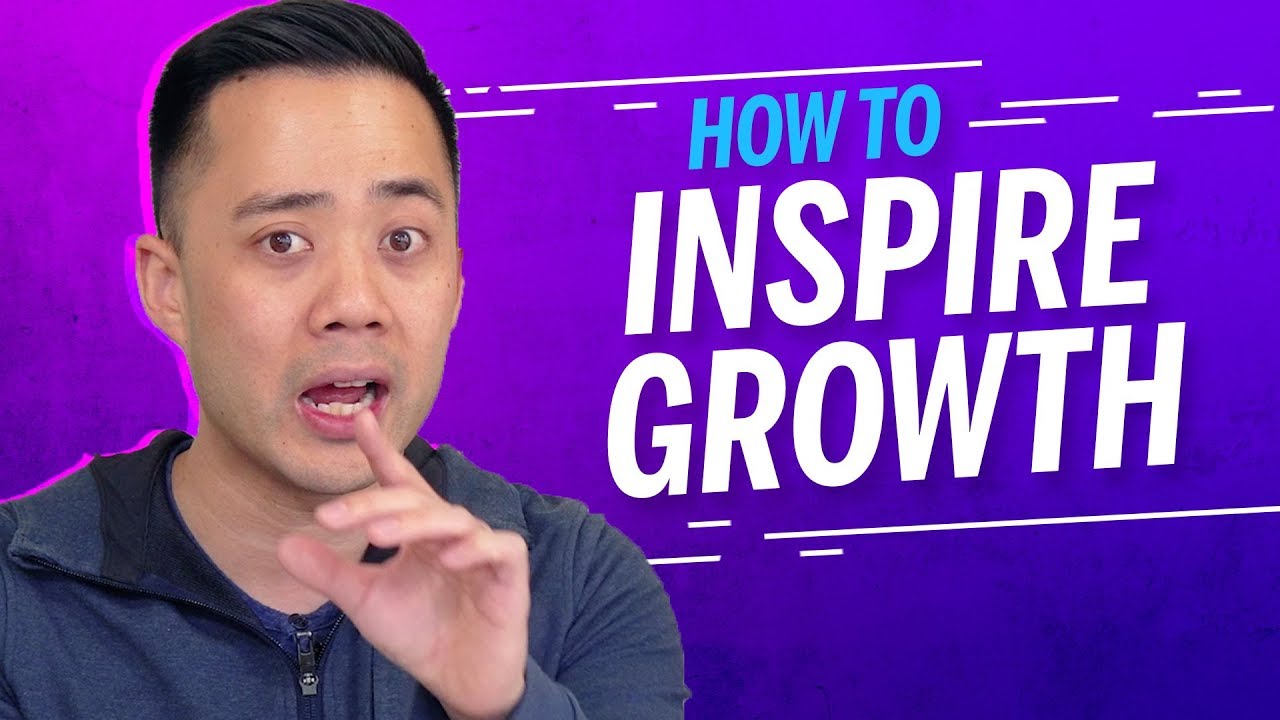
This content was created by Eric Siu. This content was uploaded by Eric Siu. This is a YouTube video titled "How to Encourage Growth in Someone (or When to Fire Them)" (published 2019-09-23). It is a solo talk/monologue by a single speaker (labeled SPEAKER A) offering management and leadership advice on when to "top someone off" (reposition or transition an underperforming employee) and how to handle performance issues fairly. The speaker outlines three signs a company is failing (overreliance on one platform like Google, employees leaving, and the leader losing motivation) and describes turnaround strategies used at Single Grain: diversify channels (move into paid media), invest in recruiting and company culture, be direct with expectations, and consider mindful transitions (a concept credited to Bob Glaser of Acceleration Partners). The clip is instructional, aimed at business and personal growth audiences, and includes calls to subscribe and engage.
Chapters
In this clip, we are going to talk about when to top someone off. What does that mean? I will explain after you subscribe and hit the bell button. If you're coming from YouTube, whatever other channel you're coming from, if you enjoy these clips on— if you're enjoying content on kind of business growth and personal growth, this is it for you. So don't forget to do that. All right, so what does that mean exactly to top someone off? Have you ever worked with someone before? Let's say you work with someone for a couple of years or so and you know, things have been going well. They started really strong in the beginning. And then they started to kind of peter off. You know, you can, you can tell that that person is kind of starting to hit a wall. And, um, at the end of the day, you know, let's say that person is really nice. Um, it becomes very difficult to say, oh man, the business is kind of slowing down, but like that person's been loyal to us. If you find that person not scaling as quickly with the company, let's say the company's growing like this, right? And that person's growing like this. Well, you gotta have a conversation with the person and say, hey, look, You know, um, you know, the business is trying to go here and, um, we really need you to, to kind of hit numbers and, um, you know, what can I do to help you? Right? That's the best way to help the person. And, you know, let's say 3 months later, 1 quarter goes by again and, you know, numbers aren't hit and you really like this person. You have a conversation with them again. Hey, look, um, we had the conversation, you know, last quarter. Um, and it looks like numbers are kind of, we're having issues again. What can I do to support you? Right? Another quarter goes by. And then what happens is this ends up becoming a vicious cycle. Okay? That person starts getting uncomfortable. You're the, you know, they're not as friendly with you anymore. They're not the same friend that you thought you had. And then what happens now is like you start to become frustrated. And when I say you, that was definitely me. Like I, there's situations in the past where I haven't had the heart to move on from people quickly. But when you do that, you're actually hurting the company because the company is based on performance. At the end of the day, you're, again, you're not here to make friends. You're here to hit numbers, you're here to hit results. And if you aren't able to consistently grow, it's one thing to say like, um, if the company's like growing at like, you know, uh, 20, 40, 60%, uh, year over year and you're complaining about not hitting like 500% growth, like that might be a little unreasonable. But if the company is actually legit struggling and the growth is slowing down, then you, you do, it's on you as a leader to call that out and say, look, you know, in the beginning we did really well, but we're kind of struggling right now. So you have to call that out as a leader, um, because if you don't, what happens is you affect everyone else in the company because everyone here has to be held accountable. If that person struggles, let's say the third quarter comes by, right? And maybe the second quarter you say, look, if we aren't able to hit numbers the next quarter, unfortunately we're going to have to make a change, right? But you have to be really direct there so expectations are set. What you don't want to do is say, oh, you know, everything's sunshine and rainbows, and then all of a sudden you blindside the person and say, hey, you're fired. That's not fair. And what's going to happen there is because you didn't, you didn't, you weren't being honest with the person, that person's going to blow up on you. And what's going to happen is you'll probably get some negative Glassdoor reviews and you know, things are not going to look as good, right? Um, because when things are negative for a person, they tend to spread way further than something being positive. So you want to make sure that you're being fair and your expectations are set and you're being honest. Okay? So when I say topping off, what I mean is when some people hit a wall, it's, it's time to say, hey, you know, I think you, you've done a, you've done a really good job, but there's a couple options that you have here, right? You can reposition the person, okay, which might not go over well. The other option is, I actually got this from Bob Glaser from Acceleration Partners. He talks about the concept of saying, hey, you know what, this is a mindful transition, meaning I will help you find something else, okay? And you can start looking for another thing right now and we'll pay you at the same time. I like, I like that because you take care of the other person that's been with you for a while. And at the same time, like, you know, they're gonna, they're probably gonna be happier at the next role, right? Because what you don't want is like you keep harping on this person and you just keep beating this person up and eventually it's just like, dude, there's just so much resentment and you don't want to do that. What you want to do is you want to make a list of like, you know, what are all your frustrations with the role right now? Like, you know, numbers aren't being hit. Like what else? Like what else do you need this other next person to hit? Um, to take things off your plate, right? Because as a leader of the company, or let's say as a manager, your job is to figure out like how to continue to get resources as the company grows To grow the company faster. That's because that's what you're trying to do. You're hiring people to help grow the company. And if, if, if things are slowing down, you've got to make a call there. If people stick around and, you know, other people are, they're playing at this level and this person, you know, they've maybe been here in the past and now they're starting to play at this level, there's going to be resentment here. Okay? People respect you for making this move. It's easy to say, it's easier when you don't have a culture fit and someone's being toxic in the company. It's easier to make a call there. It's not easy. When someone's, when someone's like, uh, you know, done a good job in the past, they're actually good people. Um, it's very hard to make that decision, but you have to make the tough decisions. That's your job to do as a manager or a leader of the company. I made mistakes in the past where I just let someone sit for the longest time. They're resentful at the end, like I'm not happy. Um, and you know, that relationship goes sour and, um, at the end of the day, it's not their fault. It's my fault for not making a call faster. Um, and this all comes back to the, the, the video around, uh, kind of, we talked about recruiting as one of the first steps. If you don't have a good recruiting process, you don't have a good culture, things will start to fall apart. So you have to kind of build the foundation for the long term. Otherwise the house is shaky and might fall apart. All right, so in this clip we are going to talk about 3 signs that your company is going to fail and how to save it. So with Single Grain, the company that I took over, uh, it was a failing company and I almost made it failed completely. It was failing, almost completely dead, and then I almost made it almost completely, completely dead. All right, so what happened was our business relied on Google. So here's what you got to know. Never ever build your company on one platform. Never rely on just one platform. Okay? Because the work that we were doing previously for one of the companies, this is Single Grain, right? It was previously just an SEO company. Now we do a lot of different things, but it was an SEO company and a lot of the work that we're doing was a lot of link building work. And what was, what was happening was a lot of the work that we were doing was no longer effective. So that's why the original 4 partners, which I'm still friends with now, they hopped out and I decided to stay in. But when I joined, the company was kind of on its way down because of Google making things very difficult, right? The one lesson I learned from that is don't put all your eggs into one channel. You have to diversify, otherwise you're going to go through a lot of pain, right? This is the same thing for Zynga in the early days. They built a lot of their apps on the Facebook, in the Facebook ecosystem. A lot of people depended on Facebook's organic growth to help them continue to catapult up, right? A lot of these media companies, Upworthy for example, they depended on Facebook. So when that happens, when let's say Facebook decides to make a tweak or Google decides to make a tweak, everything starts going in the wrong direction, that's a sign that the company is about to fail, right? The second thing that basically told me, oh man, this thing is gonna fail, was when I first joined Single Grain after I took over a year into it, Employees started dropping like flies. A lot of people started leaving, right? And what I learned from that was, because I read a lot of books and I talked to a lot of entrepreneurs, like, you just got to let your people do, you know, do their thing. You hired them, they're smart, let them do their thing. So I took that as I'm just going to not come to work and see what happens. Literally I did that and then I basically, everything started to fall apart and I'm not blaming the people, I'm blaming myself. Um, but when people start to leave, that's a sign of no confidence. Um, and that is a sign that your company is going to fail. The 3rd sign that your company is going to fail is if you don't feel like doing it anymore. Like when you wake up in the morning, you're kind of just dreading it. That is a big sign that the company is going to fail because if you are the leader, you're in trouble because you are the one that's driving the vision. You're driving everything forward and it doesn't seem like there's any direction anymore. When you start to become unmotivated, that means you are losing sight of the vision and you are the keeper of the vision. So that means the company is going to fail. So those are just 3 signs that your company is failing. Now what do you do to save it? Well, I'll just talk about it from my context. You just keep going. You try different things, you keep going, you try different things. You realize you did things wrong, okay? And you realize if you're gonna build a great company, you gotta build a great culture, and that's the fundamental building blocks of building a great company for long term, because it's the people, no matter if you're a product business or you're a service business, you wanna keep it going for a long time, you gotta have a great culture. So, Investing in those things, investing in your people, right? The culture, but also the people too, that's gonna help move your company in the right direction, right? And so that's exactly what I did. I mean, things weren't working out, and I was like, man, okay, we gotta try hiring really amazing people, and also making it a really amazing place for them to work. And also, we're gonna try other things too, because if SEO was no longer working, let's go ahead and focus on paid media, which is what we did. We focused on paid media, and the revenue started going higher and higher and higher, And we were originally referring some of the revenue out and we're collecting referrals and we're just like, okay, let's take it all in-house. Kept going higher and higher and higher and it just keeps building and now it is what it is today and you keep going because when I started, I could have given up once we dropped to one employee. I didn't give up. I could have given up when our blog traffic, when I first joined, was only about 3,000 to 4,000 visits a month. Now it's, you know, overall visits approaches over 250,000 visits a month, right? Same thing with our podcast too, only $9 a month after the first year. So for me, it's like there's no sexy tactic here. It's we kept going, we kept trying different things. We knew to invest in our people. We knew to be hands-on when we needed to be hands-on. And then that led to, uh, led to success in terms of saving this company, turning this entire company around when we originally had 5 partners and instead, you know, it was only, um, initially it was me starting it back up and then getting amazing people around me to help build it. If you agree with me or disagree with me, let me know in the comments. On whether you think this is true or not. Should you top off people? Um, am I completely wrong? And don't forget to check out the next video because we've got goodies for you there. And, and, and if you're on YouTube, hit the subscribe and the bell button because it helps us grow. And if you're on another platform, well, don't forget, just subscribe and you'll get more stuff like this. So, and rate, review, and subscribe. Don't forget. Um, that is it. And don't forget to eat your Cheerios and see you tomorrow. Bye.









