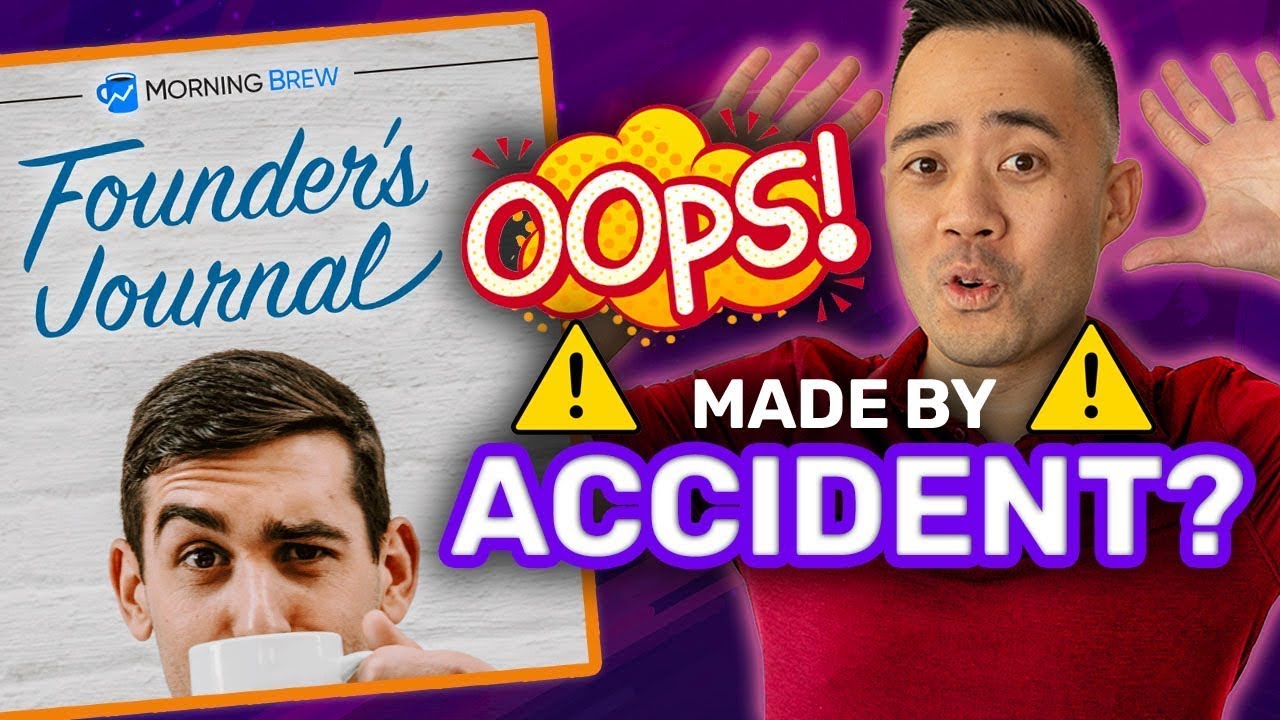
Alex Lieberman from Morning Brew talks about launching Founder's Journal, a 15-minute podcast he releases three times a week. He explains his journaling-by-speaking method, how the show tracked his shift from CEO to executive chairman, and how he discussed a company sale without leaking confidential details.
Chapters
A thought I had to myself is I've always understood the value of journaling. I have a lot of friends who journal. I have a lot of journals myself, just very unfilled ones. And I was like, I really want to build this habit because I think it's the best way for me to process thoughts and emotions.
Your podcast, The Founder's Journal. So can you talk about that one a little bit and then talk about how it's doing?
Yeah.
And we'll go from there.
Yeah. So similar to The Brew, Founder's Journal happened by accident. It was, you know, we were a few months into the pandemic. I had a fair bit of time because Austin had already kind of like assumed some of the operational responsibilities. And a thought I had to myself is I've always understood the value of journaling. I have a lot of friends who journal. I have a lot of journals myself, just very unfilled ones. And I was like, I really want to build this habit because I think it's the best way for me to process thoughts and emotions. And the issue is, is I've tried journaling and it's the classic, like, if it's too big of a step or a hurdle, you don't build the habit. And so I've always done it for like a week and then it goes away. And so I said to myself, what if I journal by talking? Because it's easier to just talk. I like talking. And what if I do it in a way where I hold myself accountable to other people? So that if I don't journal for a day, I'm letting down other people, not just myself. And so that's how it started was I literally just started on, which is crazy that this, this application still exists on Macs, but I opened up Photo Booth one day, which is wild that Photo Booth is still a thing. I remember like in middle school taking like the multicolor pictures and I just recorded myself talking about the biggest thing that happened in my day running the Brew. And over time I would say it's evolved, right? Because naturally, like it's a story of my growth. That has happened with my trajectory. So I started it when I was running the business, then we sold while I, I was at some point in doing Founders Journal, then I stepped into the executive chairman role. And so with that, you can see like some of the episodes just track that evolution, right? So after leaving the CEO role, there are episodes about me feeling lost, me having imposter syndrome, me trying to think about what's next. Before we sold, or before I moved into a new role, It was very much about like managing specific employees. But overall, the podcast is 3 days a week. It's 15 minutes an episode, and it's basically every episode you should get a new way of thinking that helps you grow as a leader and a professional. And the reason it's 15 minutes is I find that most podcasts are far too long. I give a lot of credit to the Tim Ferriss and the Joe Rogans of the world. But I don't think people would want to hear me speak for 3 hours. And so 15 minutes feels palatable to me.
I love it. Yeah. So here's the thing, like, as you're going through the transaction, right, there's a lot of things that you can't really reveal. And maybe you probably don't even want the public to know that you're selling, right? So how do you kind of, you know, teach without giving out too much?
Yeah, that was the hardest thing is because when we were going through the transaction, first of all, it was like, an 11 or 12-month process because we started the conversation in December of 2019. The deal happened in October of 2020. Pandemic started in March of 2020. And so there was very much this emotional journey with the deal where it was looking very likely in January and February. March of 2020 happened and it All of the conversations ended. Then a few months later, they started back up. So it was very much like there was a whiplashing feeling around deal conversations. But also, I, you know, I'd never been through a deal before, but it was basically a full-time job. Like, it was, it was basically a full-time job in diligence, in negotiations, talking to lawyers. And so there was so much great content there. And so what I was either doing is I was finding lessons in the conversations around the deal that did not specifically call out that it was a deal. So everything from like how to negotiate to the value of having a strong legal team.
Yeah.
Like there were episodes where I talked about lessons that could be applied to many things, not just a deal. And I kind of followed the same rule with Founders Journal as I do with just like communication in our business. Which is like, I think most things should be talked about in a business. And the things I don't think should be talked about are specific personnel, like individual people, unless they've given permission to do so. And things that have not happened yet where public information about it could prevent the thing from happening. So transactions obviously are the big one there. And so that's my philosophy about like founders, what they should talk about in their business. And it's the same philosophy for Founders Journal.