How to Market Your Brand Like the Fastest Growing Company | EP 6.1
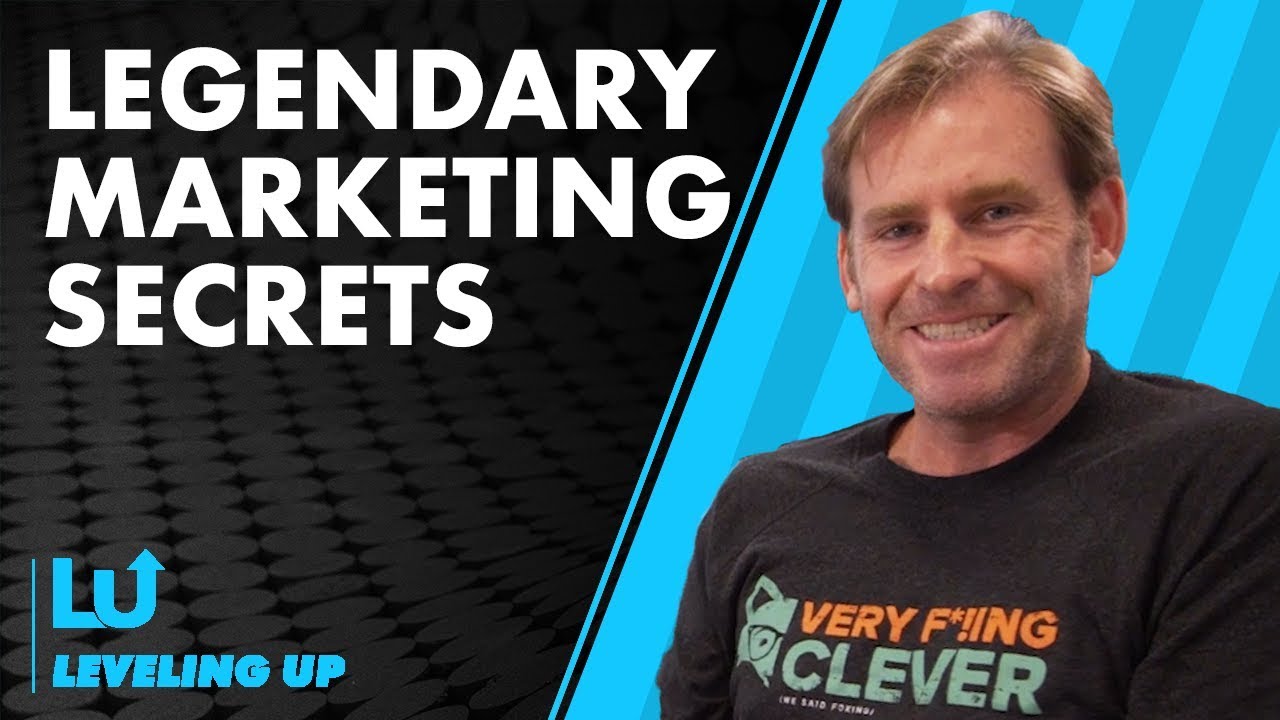
In this interview, Aaron North, the marketing lead at Ultra Mobile, shares how he leveraged his agency background and a six‑year stint as Director of Advertising and Communications at Taco Bell to drive rapid growth for Ultra Mobile and its online‑only spin‑off, Mint. He explains the importance of taking calculated risks, adopting a fail‑fast, fail‑smart, fail‑cheap mindset, and focusing on the biggest customer pain points rather than generic prioritization frameworks like ICE. Aaron outlines Ultra Mobile’s core value proposition—affordable international calling for immigrant customers—and details product innovations such as a data‑saving video toggle. He describes Mint as a domestic‑only, online‑first brand that complements Ultra Mobile without audience overlap. Marketing tactics discussed include performance‑media (search, CPC), influencer campaigns, and leveraging third‑party validation to cut through a commoditized wireless market. Aaron also talks about operating with limited budgets against larger competitors, emphasizing creativity, strong customer insights, and continuous learning through industry publications (Adweek, Ad Age, WSJ CMO) and peer networks. He recommends the book "Purple Cow" for challenging conventions and concludes with advice to embrace measured risk and constant testing to sustain growth.
Chapters
Okay, so today we're gonna learn about how a business can go from $100,000 in revenue to $114 million in revenue and appear on the Inc. 5000 list. Not just on, you know, the Inc. 5000, any ranking, they're actually number 1. So how you can actually get to number 1. We're gonna learn from the co-founder and chief strategy officer, Rizwan, on why he decided to start the business, how he navigates the waters in terms of working with the same 5 partners for 10 years. We're gonna learn from the marketing lead, Aaron, what he's doing in terms of marketing for Ultra right now and the different brands that they're spinning off. So lots to take away here. Hope you enjoy it and we'll see you inside. All right everybody, today we have Aaron North from Ultra Mobile and we're gonna talk about what Ultra Mobile is, what he does at Ultra Mobile, and just learn a lot more about the company. So Aaron, I mean, first, like, we can get started. I mean, tell us a little bit about kind of who you are and what you do.
Yeah, well, I'm a traditional marketer raised through the stakes of all the various agencies here in Southern California. Spent about a decade doing agency work, advertising, promotion, marketing agencies. Then made the leap to client side about 7 years ago and kicked off my client side career with Taco Bell. Spent almost 6 years there in charge of all advertising, communications, packaging, point of sale. Big job, fun job. And then was actually recruited to come here at Ultra Mobile and help grow our base business, Ultra. And launch a new business, which is an online disruptor called MintSim.
Awesome. So what does client-side mean?
Well, I mean, simply it's you're no longer on the agency side. So you are at the place where the products and services are being made versus a vendor built to support those clients.
Yeah, so Taco Bell sounds really interesting. I think people can learn a lot from these brands. And so what was your role at Taco Bell and kind of, you know, What was like the difference switching over there?
Yeah, I was the Director of Advertising and Communications, and it was an exciting job. It was a fantastic job. What we did was we worked with the product development team, and the product development team were constantly coming up with all these fun innovations. We worked with them and consumer insights to develop the strategies of how we were going to launch these products, the communication strategies. And then my team helped write those strategies, work with our agency to create all the creative and advertising campaigns. We worked with the in-house shop to do all the packaging, all the point-of-sale materials, all the training materials, etc., etc. So it was really, if it was something that had paid media around it, it came through our team. And it was all about building 360-degree communication plans to launch new products. And Taco Bell is a new product machine. They launch something new every 4 to 6 weeks. So, you know, you think you've got a robust annual calendar, plus you're also always testing new products in test markets. So on a given year, we would launch anywhere between 20 and 25 new products with a full suite of communications.
Got it. There's a lot of words that I wanna try to distill here in a second, but I think we talked about a couple months ago when we connected, there's a specific key phrase you use when you talk about measuring things at Taco Bell or coming up with new products. Do you know of any frameworks that you can, I guess, Teach people here?
Well, I mean, we always looked at macroeconomic trends first, right? Or macro eating trends.
What does that mean?
Like where people, okay, so for example, Taco Bell was not selling breakfast. We know obviously people eat breakfast every day, but when you look at the market and you see what people are demanding for breakfast, they need speed, convenience, something that's easy to eat in the car because they're multitasking. You know that people are typically running late, so you need to build products that not only are delicious, but also satisfy these need states that people have. One of the big innovations for us was the Breakfast Crunchwrap, right? So it was everything you wanted in breakfast, plus a hash brown, all wrapped up in a tortilla and grilled so it's easy to eat on the road. And that product was the flagship product at launch.
So, I mean, you learned a lot at Taco Bell in terms of, you know, brand marketing, things like that. How has that carried over into what you do at Ultra?
Yeah, I think one of the most important lessons I learned from Taco Bell was actually like, it's okay to take risk. So many companies are risk-averse today. They're so trying to be safe and politically correct that in fact what happens with their marketing is it ends up being the edges aren't sharp anymore. They're so rounded that you really don't communicate anything and it's not really breakthrough. So one of the things we were really good at was taking calculated risk. And being okay with failure. So we always had the saying, if you're gonna fail, fail fast, fail smart, and fail cheap. So don't have this thing go on forever, make sure you learn from it, and don't put all your eggs in one basket from a spend standpoint. Diversify that out.
Mm-hmm.
But test new things. We were always taking 10% of our budget and trying new stuff with it. And a lot of times, That 10% paid off like jackpots because you had a small investment in something that was high risk, high reward, and it would pay out, and you would have all the benefits of that without enveloping your entire program in this risk.
Got it. So here's a key takeaway. I mean, when it comes to marketing, or you can call it growth hacking, whatever you wanna call it, marketers do use a framework called the ICE framework, which is impact, confidence, and ease, and you score each of those on a scale of 1 to 10, and you average them across the board. When you're doing tests like this, it shows you, should you be taking, it shows you how you should prioritize each risk. That's just one way you can go about doing it, and I'm sure Aaron has their own way of doing it, so curious to know, I mean, is that how, something like what you guys do, or?
Yeah, what we do is, I mean, I don't use the ICE method, I'm familiar with it, but what I like to do is I look at the biggest pain points in the purchasing process and figure out how to rectify the biggest pain points. Because you get constant feedback with social media, We have a very robust customer care center, and we get customers talking to us all the time. You have to listen to the customer, or the potential customer. And then if you see people asking the same questions over and over again, you know you have an opportunity for clarity. If you see a purchase hurdle, in this case it was like this fear of trying it.
Mm-hmm.
We looked and we said, look, this is the largest hurdle we have right now, so how do we knock down that hurdle? And if we knock it down, What is the impact on the business? So that's what— that's the way I really approach it because if you think about our business, it's new, it's young, it's growing. We want to eliminate all the rejection points we can while still maintaining a profitable business.
Got it. This is really simple, right? So takeaway is just look at the data, whether— for example, the videos that we're doing right now, YouTube, you look at the audience retention. For them, you're looking at the customer feedback. Okay, take it one step further. You've solved one point, now go to the next one. You just keep optimizing from there.
Is that right? Absolutely. And, you know, It's easy to get hung up on maybe a loud customer, somebody who's very vocal in the social space, but they may only represent a small fraction of what the larger issue is. So we look at the data and we look at the mass volume, right?
Right.
Like, if we see lots of people talking about one particular thing, then we will focus our efforts there because you get the best yield when you have limited resources. We're in a startup scale-up, right? You've got limited resources, where do you deploy? My philosophy is deploy against the biggest opportunities.
Got it. So Ultra Mobile, I mean, can you give people an example of, like, what kind of people would be using it? And then I think we could talk about Mint for a second too.
Yeah, Ultra is— so Ultra is very much built for the international customer. And what that means is that's people who are immigrants to the U.S. who are still calling abroad. So Ultra's unique position, when we think about the 3 pillars, it's, you know, innovation, International and value, right? So if you think about the Ultra brand, we're constantly trying to add value in the wireless segment, but our special sauce, if you will, is the international approach.
So if I come in from China, I just buy an Ultra Mobile card and I'm good to go?
Yeah, you put in an Ultra Mobile SIM into your phone, fires right up, and now you have unlimited calling back to China. So we have a variety of plans, just like many other wireless providers. We have everything from as low as $19 All the way up to $49, which will get you unlimited data. But the real special sauce is that with all of our plans, you can call up to 120 countries internationally, and 60+ of those countries right now are free. Wow.
Ultra Mobile, there's one segment there, and then you guys started Mint recently, which is what the t-shirt is that you're wearing right now. It says, we said foxy. Very foxy clever. Check out the shirt. I need to have one of those.
Oh, we got one for you.
Oh, cool. So why Mint? What's the difference?
If you think about the portfolio of products that Ultra has, you have Ultra, which is very much focused on the international immigrant community, and it's sold through 7,500 indirect wireless retail locations. That is this segment here. We wanted to create a product that was complementary but had no— like, there was no crossover between the audiences. So what we've done is we've built A heart-of-the-market, general market product that is exclusively available online. So it's domestic only, it's built for an online shopper, and it's really built to satisfy the needs of the core US customer.
So what are some key branding lessons you can take in from Taco Bell that carry over into what you're doing today?
Yeah, well, I mean, it's very interesting in my mind how commoditized the wireless marketplace is. Like, if you think about it, I could take your phone right now Swap out the SIM, and unless you knew what the EON was, which is the little name in the upper left, you could not tell the difference between the service you're on now and our service. That is by definition what a commodity is. So the biggest lesson for me is building and establishing a strong brand right from the start so that way you can start to have things that separate you from your competitors. For example, Ultra, we're constantly looking at ways to do new innovation that doesn't cost the customer anything. One of the things we heard from customers was they want the— they run out of data. We're always running out of data. We're all big data consumers. So what we allowed them to do was have a toggle that when they're watching video, they can toggle their speed down so that way videos are coming in just slightly outpacing the viewing speed, which is really important because what Facebook does is Facebook wants to get that video on your phone as fast as possible. So you're using your data, it'll download the entire video behind the scenes, you may only watch 5 seconds, yet you've consumed all that data. So we built this switch and we allow the customer to toggle slow, toggle fast, to hopefully let them save more data. Costs them nothing. Just an innovation we put out. So we're constantly looking at things like that to try and separate ourselves as we build value within the brand.
From a marketing perspective, I mean, what kind of struggles are you facing right now with Well, there's always pressure on price.
I mean, if you look, I think this is a really fantastic time to be a customer or a consumer in wireless because prices continue to drop, value continues to go up. So what we're looking to do is how do we remain competitive while remaining profitable and, you know, making sure that the customer has the right value equation for the service.
Got it. And what's working for you in terms of marketing nowadays?
Mint, we are very much what I like to call performance media driven. So these are all the things you would typically find with an online brand, whether it's search, cost per click, all these conversion-based tactics. So we are deploying all those. We are also doing influencers. So we've just launched several influencer campaigns with a young product that is newly launched. I mean, this is sort of like Marketing 101, but independent third-party validation carries lots of weight.
Yes.
Because everybody knows the brand is going to beat its chest and tell you how great its offer and service and pricing is. However, you know, that's tainted. We have a perspective on our product. So having independent third parties validate that, we've found is incredibly effective to not only amplifying our message, but making our message more effective when it's out in the marketplace.
Got it. In terms of kind of how you go about getting better as a marketer, as a leader at this company, how do you keep improving?
Well, I mean, we never stop learning. One of the things is I'm constantly reading industry pubs and seeing—
Like what?
Adweek, Ad Age, Ad Freak. Believe it or not, I also really like the Wall Street Journal and their CMO section.
Yes, I love it too.
I find it's very rich with big, almost like the macro trends. That's where you'll find big movers and shakers doing big things. I mean, it's really interesting their take because they are such a business-focused publication to how they look at marketing and their basic view on marketing, in my opinion, is they look at the business side of it and what strategies, tactics, techniques, and tools the big guys are using and what's the impact of those tools. And I mean, those are the main sources I have. And then of course, I'm always talking within my peer networks and understanding what things people are using and are having or not having success with. One of the things that's really great is, you know, coming from Taco Bell, they have big budgets. So I got visibility to a lot of early types of technologies and platforms that were coming out.
How big are those budgets? You don't have to give me an exact number. I'm just wondering, like a Taco Bell versus like an Ultra, for example.
Well, I'll put it to you this way. McDonald's, who is the largest player in the QSR segment, spends $1 billion a year on advertising. True, we had absolute— in absolute dollars, we had big budgets, but we were competing against people with budgets 4x and 5x ours, which made that incredibly competitive and difficult. So the same thing is true here. Like, while our budgets are in absolute dollars smaller, we're still fighting against these big guys with more. We just— the thing I always take away is, how do you get more creative? How do you get more interesting? How do you keep the edges sharp so that way you cut through?
Yeah.
And that's really the trick to doing great marketing is having one, a strong insight, a great understanding of your customer base and what they're looking for, but then doing things that people want to engage with. Like, why do I share? Why do I care?
Right.
That's really what we're solving for.
I love that. Why do I share? Why do I care? Think about that. So what's one book that you'd recommend to everyone? Could be marketing, could be just fiction, nonfiction, just what pops into your head?
Purple Cow.
Purple Cow.
The thing I love about that book too is some of the great, just sort of like convention-challenging questions. I remember in that book there's one instance where they say supermarkets have express checkout lines.
Mm-hmm.
Okay, so you're gonna take extra great care of these people who have, you know, very few items 'cause you're trying to get them through the store quickly. I'm like, yeah, of course, that makes sense. Low volume, you just crank 'em out. Seth said in that book, he's like, those are your worst customers. They're the people buying the smallest amounts, and yet you're gonna give them special service? Why don't you have a line dedicated to the people who have 2 shopping carts full of groceries? Those are your best customers. Wouldn't you want to take care of them?
Right.
And I'm going, all right, how do, how do we miss that as a marketer? So really trying to bring that type of thinking here and think about what can we do to promote the best type of customer we want, and how do we make sure that customer is Taking care of the best because they're the ones that are doing the thing we want the most.
Is there anything else that you'd like to add that you'd like to share with the audience?
Yeah, I would say don't be afraid to challenge convention and don't be afraid of failing. Like, that is, that is the crux of so many wins and so many success stories I've had in my life and in my work history. I think that has been the cornerstone of growth for me, honestly. Like, and I'm very— I'm not reckless with the risk we take. We take very measured risks, so even today with smaller budgets, we are constantly testing things. And a lot of times they don't work.
Mm-hmm.
So I think, you know, my note to the people out there would be, if you're going to do something that's risky and you're going to calculate it, make sure either your management team or your supervisor team or whomever your partners are in the endeavor understand that this may not perform. I think if you set expectations appropriately, You know, it's much easier to take risk, and we do that here. I do that here really well because I know, hey, this is a very small expenditure, but if we learn something very valuable, we can amplify that quickly. And if you're not testing things all the time, you're not growing and you're not trying new marketing techniques because everybody's like, oh, I want to do whatever the best practice was.
Right.
Well, it's only a best practice until somebody comes up With a new practice that beats it. So you should be constantly trying to find that new practice.
Love it. Aaron, thanks so much for doing this.
Thank you.









