How to Pitch Your First High Ticket Sale
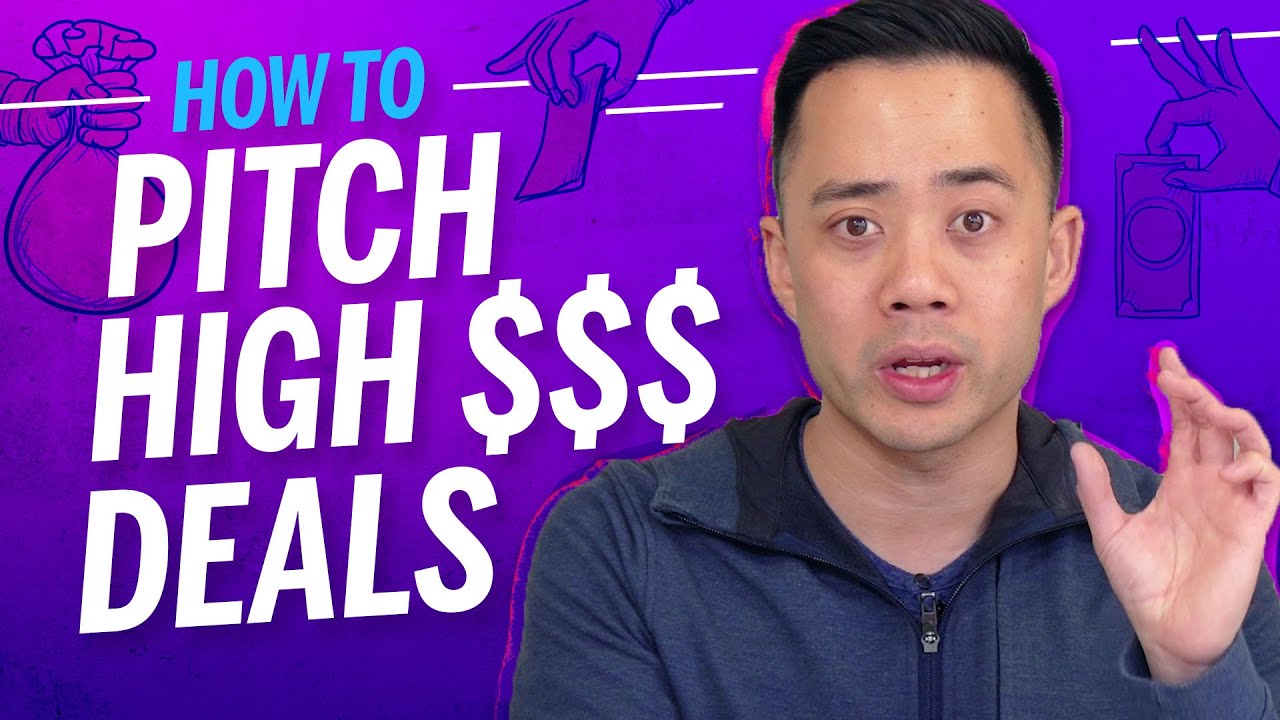
Eric Siu walks through landing your first high-ticket client. Niche your service, ask diagnostic questions before pitching, offer three pricing tiers, and bring testimonials and case studies. Enterprise sales take time, so build the relationship first.
Chapters
In this clip, we're going to talk about how to pitch your first high ticket sale. But before we do, don't forget to subscribe and hit the bell button if you're coming from YouTube. But whatever channel you're coming from, if you want to grow, this is a channel for you, both for business and personal. So let's talk about it. High ticket. What does that mean exactly? So it can mean a lot of different things to a lot of different people. So if you're coming from the United States, maybe high ticket might be, you know, $1 million. And if you're coming from other countries, maybe it might be high ticket, might be $1,000 a month or $10,000 a month. So it It's all relative, but I think if we all have an understanding of what we know as high ticket, that's what we're trying to do. Because at the end of the day, it's a very psychological thing. If you want to be able to pitch someone at high ticket prices to get a high ticket sale, what you have to take into account is that you cannot be everything to everyone. So if you are, let's say you go to, uh, in America we have Jack in the Box. I used to go to Jack in the Box. Chicken sandwiches were great. Teriyaki bowls were not so great, but I still ate them. At Jack in the Box, I would pull up, And you know, you would see an overwhelming amount of stuff. There's a spicy Jack, there's the jumbo Jack, there's milkshakes, there's chili cheese fries, there's tacos too, right? There's everything. It's just overwhelming. And so when you pull up and it's just like, God, I don't know what to order. It is just too overwhelming. And I pay— what do I pay? I pay commodity prices because, well, you know, at the end of the day, when you try to be everything to everyone, you become a commodity. So you cannot be a commodity. The first thing you need to do is— is you need to specialize. I was talking with a friend recently and, you know, for his agency, they are kind of deciding between, you know, do they want to go high ticket only focusing on one or two niches, or do they want to go kind of, you know, take on all the little clients, right? And the best course of action in my opinion, if you want to go high ticket, is obviously you have to niche down. What I mean by niching down is even if you're a product or a service, it doesn't matter. Like if you focus in on a certain industry or vertical, great. And you can focus up to maybe like maybe a little more than that. You can go up to 3 to 4 even though that's, that's quite a bit, but it's generally acceptable even if you're in the, I would say if you're in the services world, it's acceptable for you to kind of focus on up to 3 to 4 of these different industries. So for us on the agency side, we focus specifically on SaaS, we focus on e-commerce, we focus on education, and we threw in blockchain too. Okay. We threw in blockchain. And on the software side with ClickFlow, we focus on enterprise e-commerce. Like that's what we're focused on. Um, there might be some other things that come in there, but like that's kind of our, our, what we're laser targeted on. Um, you know, large websites where we know that we can help them. So when you focus, you find that you're solving that particular vertical's, their specific problems. But if you try to become everything to everyone, it's too overwhelming. Like one second you're taking on a ballet client, you've got taco trucks, okay? Then you know, you're working with car washes. So that's kind of all over the place and you have to learn all these industries and it's like you have to relearn, retrain every single time. It's overwhelming for your team. It's overwhelming for you. And people don't trust you because you're the one that's starting out. If you were looking to buy like a sports car, would you rather just go to anybody on the street, any car salesman, or would you rather go to someone that specializes, understands the sports cars that you are interested in? You want to go with a specialist, right? So that's how you can command higher prices. And that's how these, these, these surgeons, the surgeons that focus in a certain area, let's say brain surgeons, they make way more than kind of the general surgeons, right? So if you specialize, that's going to allow you to charge higher ticket prices and get that higher ticket sale at the end of the day. When you get in the pitch, okay, they know that you're specialized already. Now the key thing here is this, tailoring your pitch to exactly what they need. So it's first what you have to do in part of the sales process, asking questions like, what are you trying to accomplish? What do you need exactly? Versus saying, oh, look at our deck, here's all this stuff, here's our capabilities, here's what we can do, here's all our logos. Who cares? Nobody cares about that. Okay? Okay, maybe they care a little bit. They care that you specialize a little bit. They care a little bit there. But at the end of the day, if you can at least bring some insights that are unique to their business, that's going to take you a long way. That's how you pitch them, right? And when you're pitching them and you're engaging them at the same time, you don't want them to just watch your deck at the same time. You're just going through a deck, right? You're asking questions. Hey, so what are you, you know, what are you guys doing around this? What are you guys doing around this? What are you guys doing around this? And you're building a relationship that way. Um, as part of the pitch too, you can do this before or after. I recommend after usually, but it's also taking them out, building a relationship with them. Where it's not just, you know, your walls are up, you're just doing business. Because at the end of the day, the way you do business with people is you play the long game. Okay? You play the long game with people. Um, and when they move on to another company, they're going to remember you. So you're playing a relationships game. It doesn't matter if your product or service, you got to think about building relationships with people for the long term. Okay? Now when you pitch them also, what I like to do is I like to give them 3 different options. I like to give them options around a small, medium, and large. Now the largest price, Maybe they might not take that. Maybe you've got, maybe you're trying to charge $100,000 a month at the, at the high end. And then maybe in the middle end, maybe you're charging, you know, let's say $30,000 or $40,000 a month. And then the low end, maybe you're charging $10,000 a month. The idea here is that you're giving people a menu of options, 3 options, and you're giving them, so they get to choose first and foremost, right? They get to choose what they want. Sometimes they might want to change things up. That's fine. But the fact that you anchor at a high level, sometimes people just want to take the highest one. Like sometimes, You don't expect people to buy the highest offer, but they do buy it. And usually you want to expect them to buy kind of the middle. You want them to buy the middle tier. So you have your small, your medium, and your large. And then that way people feel like they have choice when they're looking at something and they're not overwhelmed. They're not just being like, oh, they do everything. You guys are specialized. You give them 3 very simple kind of options and then you make sure that the pitch is tailored to them. You're engaging them, you're building a relationship with them afterwards, and it's not just completely transactional. Like each time you see them, Take them out. Like what, this is what I do with some of our clients. Like I become friends with them, I help them with other things that they need, and that's what builds a long-term relationship. That's how you pitch a high-ticket sale. Not only that, when you do things like this, you're able to get more and more high-ticket clients. You get more and more high-ticket sales. It becomes much easier that way when you think, when you think about building a relationship and you think about adding value. And I'm not saying be fake about it. I'm genuinely saying add value first, build a relationship before you even try to go all in with the sale, right? Because at a certain point they're just gonna be like, okay, tell me what you got. Because I remember what happened, what we've been doing is we've been talking with people and we've been getting, giving value. We've been doing these videos with them and we add value. It's like we actually tailor the videos to them, giving them some tips here and there. And at the very end they're just like, okay, what can I do to help you? Because you helped me with this. Like I didn't know what this call was supposed to be about, but you know, what do you, what can I do to assist you? Right? And that becomes a long-term type of thing. So, You know, think about it too. Like when it comes to high ticket, when you're pitching a high ticket sale, it takes time to close a deal. I was just talking with someone earlier this week on the enterprise side for software. They're generally, you have to go through procurement, has to go all the way up to the CFO. If you're doing an enterprise software sale type of thing, it might take a year or even longer than that to get the deal done. You got to understand your buyer too. How, what is their buying process? How long does it usually take? And you kind of have to play the game. Okay? You can't get impatient, you can't get flustered. So what I like to do is we talk about high ticket sales here, but if you look at your customer or your client portfolio, look at it as a stock portfolio. You might have, you know, maybe 5 to 10% in there that are actually like, if you hit it, it's going to be a home run. And the vast majority of your other portfolio, it's kind of well balanced, it's lower risk, and they're paying you kind of consistently. Um, and you might have to go for a couple of high ticket ones. And then eventually once you're overwhelmed with clients, You gotta increase your prices, bring it up. So you bring everyone up, right? And that's how you charge more and more and more. And everyone becomes kind of, eventually in like a year or 2, everyone that you thought was high ticket in the beginning, everyone's paying that price. Plus you have a couple outliers that are paying way more money and that's how you make the big bucks. All right, so I want to go a little deeper on this topic, so check this out. All right, so we're going to talk about 5 things your agency needs to do before pitching your first corporate client. We all want the big clients, right? We want the Amazons of the world. We want the Facebooks. We want the Apples of the world, right? Whoever you want as a corporate client, they're corporate corporations. Reasons because they've done really well and they've become really big, right? So we all like aspire to work with the big clients. So how do you do that? Well, I'll keep it really simple for you. Number one, you need to have testimonials. You have to have some kind of validation on the work that you've done. So on our site on Single Grain, for example, we have different testimonials from people saying, I love working with Single Grain because they're fun, because they innovate, whatever it is. People like to be able to see that. Now the second thing that you need, you have the testimonials first, but then you also have to have case studies too. So you go a little more in depth. With the case studies. Case studies will talk about, hey, here's the problem, here's the solution, and here what the results were. People can see how you think about things, what kind of challenges you solved, and what kind of results that you bring to the table. And are these the kind of results that they want to see? Now, number 3, this seems like a very duh statement, but you gotta have some kind of validation, whether it's— if you're on the— most businesses are on the web nowadays. You gotta have a website, right? If you don't have a website, maybe you're offline business. Maybe you have to have some kind of things that demonstrate professionalism. So it could be brochures, for example, Um, it could be like a magazine, whatever it is exactly that whatever business that you're in, you have to make sure that you have, have that, that kind of validation that you're a real business. When I was, uh, kind of starting off freelancing and I used my Gmail account, people were like, are you legit? Like, what's your website? No website first. And then second, I was emailing them from a Gmail account. 2 things, right? So that shows immediately people's spidey senses kind of kick off and they're like, well, I'm not really sure if this person's legit. So it seems like a duh statement, but Kind of have to make sure, especially when you're starting out an agency, that you get this stuff established and it doesn't look like dookie. Okay? Can't look like dookie. Number 4, I talk about this all the time. You have to build a great team around you. So if you're just starting out in the beginning, maybe your team, maybe these are virtual people, but people want to know the people that they're working with, right? For example, when people ask who's going to be working on my account, okay, well there's this person, there's that person. This person has managed $20 million in spend. This person has managed a couple hundred thousand. This person has worked with your kind of business before. They want to have that kind of validation, that kind of confidence that they can trust you to do the work that is required. The 5th thing is a well-designed deck. If you're going to be pitching people in the beginning, set something up maybe using Canva for example, right? Or if you want to build in your proposal and your presentation in together in the same one, we use something called Quiller and we have a well-designed deck that way. We have our branding assets in there. So when you have that, again, these 3 things are demonstrating, demonstrating professionalism, right? You have your website, you have an email address and you have your deck and then they can see all the other things that I talked about such as your team, case studies, testimonials that shows you're legit and corporate clients there, they work differently, right? There's a lot of red tape around there. There's certain things that they expect to see. You've got to have these things ready. I'm not saying you need to have these for smaller clients because smaller clients, they don't care about this, especially the small businesses. They're not worried about this stuff, right? They're worried more about the relationship, but if you're working with much bigger clients, They're going to expect this kind of stuff and this, the stuff that you're presenting is going to go through a couple of different departments. It might even go through legal as well. So you've got to make sure that you're buttoned up and you look good as well. So let me know what you think of the client, what you think of the clients, what you think of the comments in terms of how you can pitch to get a high ticket sale. Who are you planning to pitch to get that next high ticket sale? What you think a high ticket sale is. And if you want more videos like this one, check it out. Check it out next over there. That way. If you're watching on video, go that way. Okay. And if you're listening, don't forget to rate, review, and subscribe. It helps us grow. If you're on YouTube, hit the bell button and we'll see you tomorrow.









