How to Scale a Saas Business by Outsourcing Sales, with Close.io CEO Steli Efti
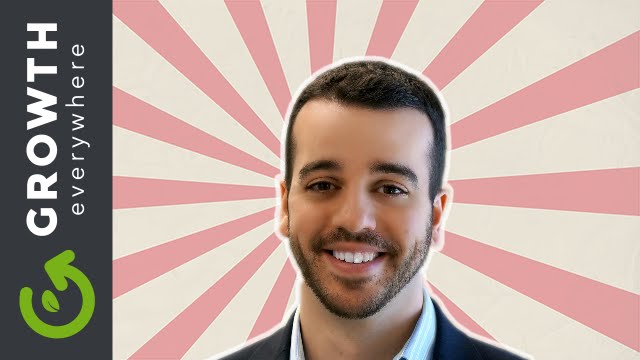
Steli Efti, CEO of Close.io, built an outsourced sales agency serving 200+ startups before turning its internal tool into a CRM. He argues outsourcing only works with a repeatable process in place, and that the biggest sales lever is follow-up: treat silence as busy, not rejection.
Chapters
In business, follow-up is truly where winning happens.
Do you want to impact the world and still turn a profit? Then you're in the right place. Welcome to Growth Everywhere. This is the show where you'll find real conversations with real entrepreneurs. They'll share everything from their biggest struggle to the exact strategies they use on a daily basis. So if you're ready for a value-packed interview, listen on. Here's your host, Eric Siu.
How many of you have experienced making a bad hire or had bad hires on your team? I personally lost over $840,000 on just one bad hire alone. So that's why I'm doing a free class called the Five Secrets to Avoiding Bad Hires That Can Cost You $50,000 Plus Each. All you need to do is to text bad hire, spell it out B A D. That's double 3, triple 4, and you'll be registered. I'll see you there. Hi everyone. Welcome to this week's edition of Growth Everywhere where we interview entrepreneurs and bring you business and personal growth tips. Today we have Steli Efti from Close.io, which is a sales platform that helps you close more deals. Steli, how are you doing today?
Hey, I'm doing amazing, Eric. Thanks for having me.
Thanks for being on the show. So I guess let's kick things off by hearing a little more about your background and then we'll go from there.
Awesome. So, yeah, so originally I'm from Greece. I grew up in Germany and by the time I was 17, 18 years old, I decided to drop out of high school and start my entrepreneurial career. I've been an entrepreneur my whole life. I'm totally unemployable. I have zero credentials. Nobody would ever hire me. So I did a few small businesses, very non-technical businesses back in Europe. And did fairly well with those and then now almost 8 years ago I decided to sell everything I had. I bought a one-way ticket to Silicon Valley, San Francisco because I wanted to build a technology startup and I felt like this would be the place to be to make that happen. That first business failed and it was very, very painful and I didn't let go of that idea of business for way too long and then after that failure, you know, I'm very grateful that The next business I started is what actually morphed into, with a few pivots and twists and turns, ended up being what we're running today with Close.io and being very successful. So yeah, that's kind of my background on how I got here. Okay, great.
And Close.io, can you talk a little bit about Close.io itself and also some notable clients you guys have? Yeah, absolutely.
So Close.io is very much what sales software should be from our perspective. So we're all sales guys. The way we actually developed Close.io was never intended to be a product that would be public and other companies would be able to use. We developed Close.io as an internal sales tool, and we for a very long time referred to it as our internal secret sauce. So we were running a business called Elastic Sales, and Elastic Sales was an outsourced sales business for venture-backed startups in Silicon Valley. So we would do sales for B2B startups. In Silicon Valley, and we did that for over 200 venture-backed companies, and so we had this large infrastructure of people, we were doing all kinds of complex sales cycles, selling all kinds of different products and services to different audiences, and from day one when we started that outsourced sales business, we knew we hated sales software that was out there, we wanted to build something we would actually like using, and more importantly than just liking the software, we wanted to build software that would help us outcompete the market and sell better and close more deals. how we started building Close.io. It was very much an internal product, building something we wanted to use as salespeople. Eventually the product got so good that our salespeople would show it to other salespeople and they would start calling us and emailing us and wanting to buy the product, and in January 2013 we released it. And what Close.io is, is you could call it a CRM, we don't like that term that much, but it's a full-fledged CRM that has communication at the core of the application, so we allow you to make and receive calls right out of the app and to send and receive emails right out of the app and track, as a matter of fact, all email communication you do. It doesn't matter if you use Close.io to send those sales emails or use any other system. So we really empower you to communicate more and better, and the CRM tracks everything based on the activity so you don't have to do the boring manual data entry stuff that you have to do with other systems and can focus on what you should be doing, which is selling and closing deals. That's it in a nutshell in terms of how we started building it, why we built it, and what it is in just a few sentences.
Got it. Okay. Now who would be some notable clients that you guys have right now?
Yeah, that's a great question. So we're not disclosing all of the clients. We have many, many companies out there, but some companies that the audience might recognize are businesses like Foursquare, for instance, that are using us with their SMB team. We have lots and lots of other businesses. Maybe one I know that Jason Lemkin was on the show and his co-founder in— I'm now missing the name of the company that he sold to Adobe. Can you help me out, Eric?
EchoSign.
EchoSign, exactly. Thank you for that. So his co-founder in EchoSign was a customer just until recently. He built a business that they just sold to AOL for hundreds of millions, and he had lots and lots of experience using Salesforce and with this company that was very successful, he decided to go with Close.io, and there's many other examples. Most of our customers are SaaS businesses, software startups around the world, but there's some big ones and there's some small ones.
Okay, got it. Now I wanted to get your opinion here. You talked about Elastic Sales being the outside sales department, and I've tried a few of these outsourced sales departments myself, 2 of them actually, and to be honest, they sucked really bad. So what's your opinion on outsourced sales departments?
Yeah, it's a great question and one I'm actually being asked a lot. So my honest opinion is that it can work and it can work really, really well, but most companies try to outsource parts of their sales process or even the entire sales process way too early. And what I mean by that is a lot of times I see founders and companies that say, we can't figure out how to do lead gen, so we're going to outsource the lead gen part of our business, or we can't figure out how to sell it to this specific market, so we're going to outsource that problem to somebody else. That's a very bad idea. It's kind of like saying I'm going to call this web development firm, this iOS firm that develops apps and I'm going to tell them, hey, I can't figure out how to build a cool social app that has millions of users, can you just do that for me and send me a bill and I'll pay you? It's not going to work, right? So there is a fundamental stage at which it makes sense to think about outsourcing either part or even all of the things that you do on the sales side. And that timing is when you figure things out, when you know the process and it's kind of working and you're like, well, it's working, we know how to do it, we have all the actual know-how and knowledge internally, but is this actually what we should be doing with our own resources? This is something that could easily be outsourced and either done at a cheaper rate or done maybe with slight improvements in efficiency. That's a good timing. question to ask and that's a good timing to outsource something, but when you're still very early and you're still trying to figure things out and you don't have a repeatable and predictable process, to try to outsource that and have another company fix these issues for your business is typically a very bad idea.
So it sounds like the process needs to be set down first and I mean if you're a startup, it almost sounds like the CEO needs to be doing the work first and once you have the process documented, you know something is working. Then you can outsource it, right?
Yeah, it doesn't even have to be like a process— like people make this much harder on themselves. It doesn't have to be perfect. It doesn't have to be fully documented even. It doesn't have to be even at the best performance rate possible. It just has to kind of work in a predictable, repeatable fashion. If you know how to go to certain resources and generate leads that you then have proven to be valuable and leads that can be converted and you've done it a couple of times and you've taught somebody in your company to do it and they did it with some kind of a result, that's good enough. Even if you just verbally can tell someone what to do, that's good enough. Now give it to somebody and have them document it, have them drive efficiencies and see ways of how to even improve this and make it better, that's all good. But you need to have somewhat of an idea of is this kind of working because if you're not even there at that point where you're like, well, I kind of know how this is working, then you cannot give this work to anyone else.
Okay. Now with this outsourced sales department, just one more question on the subject.
Sure.
So if people— if someone's looking to start with an outsourced sales department, I mean, let's just talk about Elastic Sales. What is the most— when people come to you, what's the most realistic number in terms of qualified appointments people are asking for? What's a good target number to ask for from an outsourced sales department?
Yeah. So just to clarify, we're not running the services business anymore. So Elastic Sales is not taking any customers on board. We actually stopped taking customers last year. All of our successful clients and customers, what we did is the teams that were working internally at Elastic Sales for them, they actually hired them out of our business, and now we have all these awesome businesses that have like VPs of sales and directors of sales that are all ex-Elastic people, so we don't do this business anymore.
Oh, totally get it. I'm just wondering from outside sales department because I'm just interested in the topic itself, but I totally understand.
But to give you an idea of like what should somebody ask or demand in terms of performance, I don't know, I mean it really depends on your market, your product, what you're doing. There's not a number that's universally true for everyone, but one tip that I would give you is no matter what kind of targets you set, the number one piece of advice that I give you once you've decided that you want to work with an outsourced firm is to be as hands-on as possible. And I can tell you this from experience from the other side, there were 2 kinds of customers that we had at Elastic Sales. The hands-on and hands-off types of customers. Our favorite people were the hands-off customers, right, because they give us money, they give us a task and then they left us alone and didn't bother us anymore. We love these customers from a personal standpoint. The ones that were super hands-on, wanted to have 12 calls a day, wanted to work out of our own office, wanted to meet for lunch every day, wanted to be involved in every little tiny bit were very inconvenient customers of ours. They burdened us. But ultimately, results speak for themselves and by far the number one defining factor for success or failure and how much value a customer would get out of Elastic Sales was how hands-on were they. Now this was inconvenient for us, but it was actually helping the campaign be successful, us be successful, and the customer be successful. So if you outsource it, don't outsource it with thinking, I'm just going to give this work or this challenge to someone. Pay them money and don't have to worry about it anymore. See it as an extension to your team and see it still as your responsibility to manage the process, be very involved, understand everything that's going on so you can fix problems immediately and they don't run for months and months and you waste all this time and money and resources. Be very hands-on. That's my number one piece of advice.
Okay. Now Close.io, now how is this different? There's Inside Sales which plugs into Salesforce. There's all these different sales tools out there, right? How does Close.io differ from those other tools? Because I know everyone talks about all their cool features, just wondering.
Right, I think that's a fair question. I think that, I mean honestly, everything we do in some form or fashion you could possibly find somewhere, right? You can Frankenstein your way into a solution that does exactly what Close.io does. I think that the core difference is that our customers are telling us that they are closing more deals and making more sales when they use us, and the reason for that is that the app is fast, it's simple, People love the UI, it's very intuitive. The other reason is that we are the only ones that built a CRM with communication in mind. So in our world, the traditional CRM market, the way they thought about things was that they really built databases. It's a contact database, and the salesperson was the one deemed to be responsible to keep the contact database up to date. So you log into your CRM and you You do manual data entry, you update data fields, it's just a database. That in itself is not helping anyone close more deals or do a better job or rise to the top in sales. It's not really a sales tool at all. It's a reporting analytics tool and a data tool for the corporation, and the salesperson was the one that management deemed responsible to actually keep track and keep this up to date. So we were, I think, the first CRM in the market To truly think about this completely differently and say, what is sales at its core? And in our opinion, sales is all about communication. It's result-driven communication. That's what sales is. So we knew if we want to build sales software, it needs to be communication software. It needs to empower people to communicate better and communicate more to drive better results. And it needs to go away from, you know, laborious manual data entry and towards a platform that actually empowers the sales individual to do their job better and win. So once you take that philosophical kind of foundation and you look at the way we built the product, it makes total sense that we have arrived where we are today and where others are. I think inside sales is a great tool if you use a very large complex system like Salesforce and you're like, well, we need to do some calling or we have some call center setup, but it's not ultimately empowering the individual to make and receive calls really quickly and really efficiently while doing a million other things and kind of be a complete communication suite that is part of the CRM, not a plugin, not an add-on, but actually at the core of the experience.
Got it, okay, great. So it just sounds like it makes— data entry has always been a pain in the butt for salespeople and it sounds like Close.io makes things easier and it also facilitates communication as well, which is great.
That's one thing that I want to add to that is So that's how we started. So we said, you know, instead of people doing things like making calls and sending emails and then going back to the CRM and reporting about them, we're going to give them software to make these things like send emails, make calls, and we record all that. The software actually keeps track of everything. Because we did that, what we realized eventually after a few months of having more and more customers was that we had not just a lot more data than a typical CRM, but the data was also a lot more accurate because it didn't rely on humans telling the software what happened.
Right.
The software kept track of the behavior of the humans, so the data was a lot more accurate. So what we were able to build and empowered and enabled to build based on that was a search engine in Close.io that's probably the most powerful search in the entire CRM world. In Close.io today, what you can do, and I'll just give you one example that you can't do anywhere else, in Close.io today if you're a user, you can just log in and type in the search box Show me all active opportunities where the last thing that happened is that they received an email from me, they opened it, but they haven't replied. This has been longer than 2 weeks ago, and I at least had 2 calls with them prior to that that were longer than 10 minutes. That's a question that you might have, and this is very specific just to give you the sense of the power. That's a question no other CRM could ever possibly answer, and Close.io can give you an answer within a second and show you a list of all the leads that hit that criteria, you can click one button and send all of them an email or give them all a call. And so we've really, you know, in a backwards way, we really empower salespeople to access massive amounts of data in a simpler and more useful way than they ever were able to do. And we didn't intend to do that, we just gave them all the tools to communicate better, and we realized because we do that we have a lot more data and we can give people access to better data. So that's a massive benefit that people don't see. on day 1. It takes usually 3, 6, 9 months of usage and of the team growing before you actually start asking these very specific questions, but then that's the second wow that we generate where our customers come back and say, holy cow, this is incredible. I never imagined you would be able to do that and this is a game changer for how we run our business.
Got it. That's great. I'll have to test this out for myself, but here's a scenario, right? I imagine your sales team is reaching out to people. Perhaps you're also reaching out to people that are using the Salesforces of the world and all that. So walk me through how you would try to close someone that— get someone off of a Salesforce or something like that.
So here's the most surprising fact probably for you. We don't do any outbound sales at this point.
Wow.
Yeah, and this is what most people tell us when we tell them about that, partially because people think of us as outbound sales experts, which we definitely are. We've done outbound sales for over 200 venture-backed startups, so we know a thing or two about it. But with Close.io, what happened was that when we launched— mind you, we launched that business and we thought of it as a tiny little experiment that would take years and years, and the services business, Elastic Sales, was really where our focus was. The software started growing very organically, and we were like, okay, this is cool, this is growing even before we have to invest tons of resources into it. Let's see what the software can do and the small team of people that works on it can do on their own. And what we realized was that there was just so much demand for it and people loved it so much that from day one we were just growing really well just purely on inbound leads. And when we started devoting more resources and really focusing on Close.io, we said, well, before we start doing outbound, let's actually really improve and perfect the inbound funnel because this seems to be working really well for our business. And up to this day, I'm surprised myself, we've been— the growth has been phenomenal. So good just based on the inbound leads and the growth that we're seeing there, that we haven't gotten around to start the outbound engine yet. So we've been tweaking and improving and growing the inbound system because it just works really, really well for our business. So when it comes to the question, how would you approach somebody who's currently using a system like Salesforce, call them or email them and convince them to switch, that's a question that's excellent and I don't have the answer yet. I know that this is typically a really hard thing to do. Most of our customers at Close are either companies that are selecting their first CRM, that's probably like 30% of our customers, and 70% of our customers are actually customers that were using a system like Salesforce and got to the point of frustration where they couldn't take it anymore and they decided to switch and then they found us. So I think that once we start the outbound sales engine, it's going to be a very long-term game. Because many of the people that we could approach probably need to use us, but we're not going to get them to immediately switch because I think there's a lot of cost involved with switching. So it's probably going to be— our outbound campaign is going to be one that's going to probably be focused on larger customers and has longer sales cycles just because of the timing component of getting somebody to switch a system even if it's not working that great. Okay.
Now you talked a little bit of— we actually talked a little bit about this beforehand, but I know you can't give exact numbers, but what is— What do revenues and users look like today? Just any type of ballpark.
Yeah, so it's in the thousands. As you said, we don't disclose the concrete numbers, but we're definitely— if you look at— if you're really into SaaS and growth numbers of SaaS companies and you look at the market of some of the best examples you see out there that have raised tens and tens and tens of millions and have large teams and are really growing incredibly well, We are a tiny team, and Close.io is a bootstrapped piece of software, but we are on par with some of the best SaaS companies in terms of the growth. So we're growing really fast, we are beyond the 7 figures in terms of the revenue that we drive, and we hope to continue that and accelerate that even into the future. So we are a significantly big business, we are probably in the top, I don't know, 5-10% of SaaS businesses in terms of growth. If you take SaaS businesses our size, we're probably one of the only ones. I'm not aware of any I don't know anyone else that is like a 6-person team bootstrap that has those numbers after year 2. And we're profitable. So those are kind of just giving you a flavor of the success and stage of the business.
That's fantastic. So, you know, you moved from— you moved over, bought a one-way ticket over to San Francisco. I mean, you know, what is your background that allowed you to eventually start a business, you know, the business didn't work out, and then parlay into something like this, and then eventually start building software? I mean, do you have like an engineering background?
Oh no, I don't. As I said, I dropped out of high school, so I don't have any background or any necessary skills. Ignorance is probably one of my biggest assets because I didn't know how hard it would be, to be totally honest. I've always been into— I've always had a passion for business and entrepreneurship. I'm very passionate about communication and language, so sales was always something that I did, and I grew a couple of sales teams very large in my prior businesses. So that's kind of a core skill set I have, but it's all self-taught. I haven't studied anything in particular.
Got it. Okay, that's really inspirational. I mean, what was going through your mind? I mean, I'm trying to put myself in your shoes. Buying a one-way ticket, it's something I've thought about in the past, but it's like you buy a one-way ticket, do you have a plan or anything, or do you just kind of go with the flow?
I was fairly clueless, to be honest. So my whole thinking was this. And this is not just because I was so adventurous. It was probably a level of ignorance, a level of adventure, and a level of confidence, maybe overconfidence more than competence. So I thought, I'll take a one-way ticket. I'll show up. It's the US. I speak a little English. I'll figure things out. I'll figure out how to get a visa and how to meet people and do things and let's just see what happens. But to be honest, underlying on that very unconcrete plan was a confidence that I believed in myself, I believed in the idea I had and I thought I will make it happen. There's nobody that can stop me. And I thought I would make it happen and I made it happen in some ways but in other ways it was much harder than I thought. It was much harder than I thought. It's like so many other things. If I knew how hard it would have been, I don't know if I would have done it or not. I hope so but it's one of these things where ignorance is truly bliss. If you don't know what you're getting yourself into, it's sometimes a really good thing because you would never start otherwise and entrepreneurship is A prime example, startups are so hard. If you really knew how hard it would be, oftentimes we wouldn't even get started. So I was just excited to live the American dream, to come to Silicon Valley, to the legend of the Valley, to surround myself with brilliance and be the stupidest person in the room. And I was just very inspired and motivated by that vision and thought the coolest way to do this is to just come here.
Yeah.
and just jump into cold water and figure it out. And that's the route I took.
Now, can you give me an example of— you talk a lot about some hard things you experienced. Can you give me one example of a hard thing you had to experience when moving over?
Yeah, I mean, a ton of them. So, how hard it was to get a visa. I grew up as an immigrant kid, a Greek immigrant kid in Germany, in a very traditional, very conservative part of Germany. So, I thought I knew how it is to be an immigrant. But being an immigrant in a culture that you truly know and you've grown up in and being an immigrant in a culture you don't know and having to fight to be able to stay in a country, those were experiences I've never had before. So that was really tough. It was tough to be that far away from all friends, all family, all people I know. I thought I'm very independent, it doesn't really matter to me, but it did. It was really hard to be somewhere where you don't have family and friends, you don't have that support network at all. It was hard to go through the financial struggles of trying to raise money for a startup without knowing how to play the game. I didn't know how to raise money from VCs. All the VCs and investors I was meeting up with weren't giving me that frank of feedback. They all told me, no, this is really nice. It's not the right stage. Stay in touch. And I was struggling to improve what I was doing and I knew what I was doing isn't working, but nobody is telling me what to fix and how to fix this, and I was too stupid to figure it out on my own. So I struggled. The first startup, I was raising money for 2 years and we raised like less than $100K, which is crazy. The second startup I did, we went through YC and 2 months later we had over $1.5 million raised in just a few weeks. So the difference there was really strong and I struggled with fundraising, struggled with visa, struggled with the culture in France. I mean, I could talk for hours about my struggles. I don't want to depress anyone, but yeah, those are some examples of things that were much harder than I anticipated them because I thought, yeah, it's going to be hard, but whatever. I'm strong. I'm confident. I'll figure it out, and I did. I just didn't do it as smoothly and as fast as I imagined I would. Got it.
Okay. Well, you know, we'll circle back around to this in a second, but I do have a few questions around some of the inbound stuff you put up. Just for clarification, my interpretation of you saying inbound is you produce a lot of content, you're out there speaking a lot, and I think that drives a lot of inbound leads. Is that correct?
That is correct. So this is people finding us, finding our website, either through word of mouth or through reading our blog or Twitter, watching our videos, and then coming to our site and signing up on their own. Okay, perfect.
So let's talk about one of the pieces of content that you put out there, and one of the things is I noticed you wrote something about how to train sales reps to make calls from day 1. Can you walk me through that?
Oh yeah, so this was a big challenge— not a challenge, but a big objection that we had when we were running Elastic Sales was that companies would tell us, well, we want to work with you, but how in the world will your salespeople know how to sell a very complex technical product? I mean, we were selling EHR systems to doctors, we were selling non-relational databases to CTOs, very tough products. Very technical products, very technical and very specialized audiences. So our customers would say, how in the world could you ever train anybody to know enough to be knowledgeable when they talk to clients? It's going to take months, we cannot pay for that. And we had a simple process or a simple hack that really made it possible to have a sales rep make calls from day one and do it in a very high-quality and high-integrity way. And that was that, that we did 2 things. We focused on the 20% of the knowledge that's required 80% of the time, right. There are certain questions that customers ask on the first call again and again and again and again, and we developed a kind of what are the top 20, top 30 questions people ask you. We developed a list and we wrote down the answers, we synced up with our clients and said what are the best answers to those questions. So we trained our salespeople on like a 2-page document that had 10, 15, 20 questions That's it. That would cover a pretty big base. 80% of the time people would ask questions that we were somewhat prepared for. The other 20% of the time where people ask you for the rest of the 80% of the knowledge, what we train our salespeople to do is to respond in a very simple and authentic way. When a client or prospect asked a question that the sales rep didn't have an answer to, they would just say, you know what, Eric, this is a great question. Honestly, I don't have the perfect answer for you, but I'll find out and I'll get you the right answer. I don't want to give you false information, so let me get the right answer from the internal expert. That was step 1. Step 2, to make this even better, was to then say to the client or the prospect, but before I do that, let me ask you, Eric, what would be the ideal answer to you? Like, you asked me about this feature, what do you want me to say? What would be the ideal scenario? What do you want this feature to do and why? Why is this important? Why is this relevant? So that when the salesperson would go back to the client and ask them, hey, somebody asked, can you do X, Y, and Z? They're not just staying at the surface level, but they can actually explain what is the use case, why does the customer care, what's the context around this, so that we could get both the right answers, but also already an understanding, can we sell them, can we close them, what do they So kind of understanding the customer a lot better. That's it, you train your people, if even the only thing they say is, I don't know the answer to that question, I'll get it back to you, in an ideal world, what would you want the answer to be and why? That's all you need to get somebody empowered to make calls very early on, and when somebody asks very, very simple questions like, where are you guys located? Or I don't know, how long have you been in business? Something that seems too stupid to say I need to ask somebody, we train our people to say, you know what? To be honest, it's crazy that I don't know, but this is my very first day on the job. I'll find out for you and make sure I give you the right answer. Let me ask you, why is this important? Is it a trust question? Do you want to make sure that you work with companies that are local or companies that have been established? And that basic training would empower salespeople to make calls from day one, do a really good job, nobody ever complains. As a matter of fact, Eric, I was just talking to somebody this morning about Close.io that asked some Very technical question about a thing that I knew that we just updated and I didn't have the answer. I'm the founder CEO, I didn't know, so I just told them, you know what, this is an excellent question, I don't have the answer, I'll get back to you, and it was fine. People totally appreciate that level of honesty and it empowers you to get salespeople ramped up and productive really, really quickly.
Got it. Now it sounds like at the very heart of it, it's just— and I might have read this somewhere else a few weeks ago, but it's just asking why.
It's asking why, why, and why and then getting them to talk more and Absolutely, I think that the most important thing, the most important skill that you want to cultivate in salespeople is the art of listening, active listening, right, not just hearing you but actually listen to you and have an internal desire to reach understanding. So not just stay at the surface level but really go deep. If somebody tells me, oh, we really need the ability to send, I don't know, bulk email, I'm not just going to say, oh yeah, we have this ability in Close.io. I'm going to go, well, I'm curious, what do you mean by bulk email specifically? Well, I mean newsletters. It could be newsletters, it could be drip emails, it could be— there are so many things that could be tagged as bulk email that I really can't just take that at the surface and think I understand what they mean. I need to ask, what do you mean by bulk email? And once they say, well, newsletter, you know, I want to send emails HTML to many people, that's again too early. Too many salespeople would jump in right now and say, well, we can do it, or we can't do it. I'm going to still stay on my path to true understanding and go, well, tell me a little bit more about it. Do you want to send a newsletter? Are you sending the newsletter monthly? Why would you not use something else, or what do you use right now? Why would you want this to be part of your sales software as opposed to something else? Like, I'm going to go and I'm going to follow up with questions, the whys if you want, until I get to a point where I go, oh, I actually truly get it. I know who they are, I know why they care about this. I know what the context is of why they want to use it and how they want to use it. So now that I truly know, I can actually tell you yes, no, here's how we do things, here's a workaround if we don't have it yet. But too many people too quickly move on when they haven't yet reached a level of true understanding.
Got it. Okay, that makes perfect sense and I really encourage everyone, and we can talk about this after, but everyone should go check out Steli's Steli's stuff, I mean, you know, if you just look at the— I think if you just Google your name pretty much, you'll be able to find all the great content that you're putting out. But moving on from that one, you also put out a piece of content that said, you know, how to manage a sales team's morale when your reps have lost faith. And that's a really interesting one. So can you talk about that?
Yeah, I think that one thing that too many people underestimate is The importance in sales of having high morale. I mean, startups run on morale and sales teams are the same way. Like if people feel low, if people are lacking confidence, if people are confused or bitter or disappointed or feel rejected, they're not going to be able to perform at optimal levels. They're not going to be able to do their job well. Salespeople need to feel great, be in a great state, feel empowered. Truly empowered and truly believe in what they do. So a lot of times what happens is, especially in startups, is you have a sales team, the sales team tries something new or goes after a specific market or customer, and then they see failure or rejection or something doesn't work. And then what happens is very critical— morale drips and they start selling themselves on the idea that this isn't working. And once a salesperson believes something isn't working, they will prove it right.
Right.
They will make sure that it's not working because of their actions, so it's going to become a self-fulfilling prophecy and you're dead in the water. There's no improvement in scripts, strategy, or tactics that will change anything if your sales team doesn't believe they can actually accomplish the outcomes. So one cool, really cool example that I shared in that story that I want to share with you, with the listeners, is that I was visiting one of our customers in Berlin. It's a startup that has a fairly large sales team because they're selling to all countries in Europe, so they have localized sales teams, people speaking French calling the French market, people speaking Spanish calling the Spanish market, all from their Berlin office. So when you walk into the sales floor, they have this massive sales team and it's cool, they have these hubs of different countries and everybody speaks a different language. It's a pretty impressive kind of an experience. And one really cool story they had and insight and lesson was that they had launched a few new markets And one in particular of those new markets wasn't working, I think it was France, and the performance there was much worse than any other country that they were trying to sell to. And what happened is after a few weeks of that, the French sales team started being convinced that this product is just not working for the French market, and they started trying to convince the founders and the sales team and the other people in the company that France is just not a good market, this isn't working there. And here's what they did, they did something genius. What they did was they actually decided to split up the sales teams, so it's not just like the French team, the Spanish team, the German team, but split up the sales teams and take the best performing salespeople and put them in a different team that's maybe not as well performing. And they took one of their best salespeople that was calling into the UK market and put him on the French team. Now that person was still calling the UK market, still speaking English, and the French team was still calling the French market, speaking French, but just by proximity, by listening to this person day in, day out crushing it, one other salesperson from the French team started seeing some results, closed some deals. Once that happened, another person from the French team started doing that, and eventually everybody in the French team started performing at the exact same level as all the other teams And it fixed the problem. And all it was was being exposed to that level of success and having morale pick up again and then seeing one little success story and then starting believing again and then the entire team started rallying and all of a sudden they accomplished something they thought just a few days before that was impossible. So that's a powerful story to show that morale is really critical, you need to manage it, you need to resell your sales team every single day that what you're doing truly matters and is awesome. You need to make sure that everybody is sold themselves first. First you have to be sold on your idea and your product, then you can effectively sell others. So that's super crucial. This is I think one of the best stories of how a company actually improved performance, not by changing tactics, scripts, technology, nothing, just by fixing the morale issue and the belief system that was stopping that team from performing well.
Got it. Okay, it sounds like once you start putting the real heavy hitters in front of the other people that have lower morale, it seems like it will bring morale back up and people will start picking it back up. You actually said in another piece, you said that 80% of the hustle is in the follow-up. And speaking from personal experience, when it comes to follow-up, when I don't have a tool like Boomerang or something like that that will send me reminders I will forget no matter what, right? So what are some— how do sales reps get follow-up right?
So I think that the most important thing about that is to understand that what most human beings do is that when they have a good interaction with somebody, a phone call, a meeting, whatever it is, and they follow up to see if they can move the conversation forward and they don't hear back, Most human beings will maybe after the first, after the second, the third time they follow up, they will make up a story. They will tell themselves, oh, I think they're not interested. I think they thought our product was stupid. I don't think this person likes me. How arrogant of them not to reply. They'll come up with some story of why the person has stopped communicating back to them. That's the biggest problem. Just stop being fucking mind readers. Stop making up stories. You're not a story writer. You're not a mind reader. Here's the assumption I want you to have when somebody doesn't reply to your emails. The assumption I have always and you should always have is this person is busy. Their lives doesn't revolve around me or my product. Their priorities might have changed. I just need to be persistent to give them a chance at the right time. to respond. Probably right now they're busy with something else, so I'll keep in touch to give that person the power to actually make a good decision when the time is right. I always just assume people are busy. That's why I keep following up. And when somebody tells me no, that's it, deal done. I respect that. I can deal with nos. I can deal with yeses. What I can't deal with is the ambiguity of a maybe or the ambiguity of silence. So my goal is to generate Outcomes, yes or no, good or bad, are both good because they're clear results. Ambiguity and I don't know exactly what happened and we haven't heard from them and it's kind of in a limbo state, that's what's killing startups, businesses, and individual salespeople's performance. So the number one thing is philosophically to not feel— to not make up stories, to not feel bad, oh my God, they think I'm needy, or oh my God, I'm going to really be annoying, I don't want to be annoying. Well, get over yourself, right? You're not in the business of being liked. This is not like a— A tournament for who's the most likable person. This is business. I'd rather have 7 people hate me and 3 people love me and do business with me than have 10 people that are equally indifferent about me. So this is not a popularity contest. You're here to drive results. When somebody tells me to fuck off or to stop emailing them, I always respect that. But if they don't respond, if they don't communicate to me and we had an initial good conversation, I'll take it as my responsibility to keep following up until they have a chance to reply. And that alone, that mind shift is moving mountains. Now when it comes to tools, if you want I can give some examples and give some recommendations, but more important than the tools is to really have the right mindset to understand that in business, follow-up is truly where winning happens. And the billionaires I've interacted with, the biggest investors, the most successful CEOs all have an incredible appreciation for follow-up because it's so rare. So when you do follow up and follow through more heavily than others, you're always going to get business and get opportunities that others would think are impossible. So I can't overstate how important it is to have a strong follow-up game if you want to win in sales or in business in general.
I love it. Couldn't agree more. And let's get one example. What's one tool people could use to help with follow-ups?
So obviously Close.io is awesome. Besides us, I'm going to tell you, and funny enough, we're actually, you know, some of our team are using them and they're actually also customers of Close.io, but here's a really brilliant tool even independently from that— FollowUp.cc. FollowUp.cc is kind of the simplest lightweight tool to get your follow-up to the next level. You just sign up there, what happens is you import a couple of emails as contacts into your Gmail or Outlook or whatever you have, and then every time you write an email you can BCC, FollowUp.cc, and you can just select an email that's like 1 day at Follow Up CC or 1 week or whatever it is. The cool thing is that once you do that, in 1 day or 1 week, Follow Up CC is going to basically reply to the original email thread with a little box that said you wanted to be reminded. You can snooze it to get another follow-up or you can now in the original email thread just go 1 email above and reply and follow up with somebody. You don't have to open any software, you don't have to download any app. It just lives natively and beautifully within your email and within your actual email threads. So I think it's a super simple tool that I would recommend everyone try out because it's going to help you get your follow-up hustle to the next level.
Okay, great. In addition to that, Follow Up.cc is great. We talked about Boomerang if you use Gmail. There's also SaneBox as well. So a ton of different tools out there that you can use. You know, definitely the best one, right? Anyway, but moving on. So, what is one piece of advice you'd give to your 25-year-old self?
That's a good question. One piece of advice I would give to my 25-year-old self. I think that there's so much that I would want to tell my 25-year-old self, but if there was only one thing I could tell, Myself, it would probably be to, you know, just to worry less about big ambitious goals and incredible insurmountable challenges that I want to set up for myself and having an ambition that drives me to a point where I built these castles in the sky that then are Too difficult for me to get started with. And instead of that, really focus on process and try to break down things in a— what is it that I can do every day that if I do it for the rest of this year, every single day, I'm going to fucking crush it? Like my biggest problem with 25 was I was pretty good at sales but it was very inconsistent. I had like brilliant weeks where I would crush it and I had shitty weeks where I would just be depressed, lethargic, couldn't really get out of bed, couldn't really do— I was canceling all my meetings, canceling all my opportunities. So I had great weeks and bad weeks and I lacked the most important thing in life in my opinion to really get to greatness which is consistency. So I've learned to value consistency a lot more than large lofty goals and to really focus on what can I do every single day and just do it every fucking single day that if I do that long enough, I'll crush it. So instead of myself saying— to give you a personal example— instead of saying I want to lose this amount of weight, I just make a goal I'm going to run this amount of miles every day or I'm going to eat for breakfast this kind of breakfast every day, just like a small tiny thing that's more process-oriented, more consistency-oriented versus massive goals that then are very hard to actually execute on and once you've accomplished them, what do you do? Once you've accomplished the goal of losing all this weight, what do you do then? You don't have a goal anymore. So you start eating on your old habits versus having kind of a consistent process-oriented approach to things. That was the biggest thing where I was wasting time and wasn't accomplishing the things I wanted to, so that's probably the thing that I would talk about to myself. Love it.
What's one must-read book you'd recommend to the audience?
Well, The Ultimate Startup Guide to Online Sales. So I've written a book and I'm going to release a new book. We wrote a book about outbound sales for startups and I'm releasing a book about inbound sales for startups and we'll combine both and make the ultimate sales guide for startups. That's definitely— if you're in sales and startups, that's definitely something that I would look up to and your readers can send me an email to steli@close.io and get a massive discount if they want that book. Beyond that, one book that we would give— one book that I see is very underappreciated in the startup community and we used to buy for every single new hire we made was The PayPal Wars, and PayPal Wars is an awesome book because of a multitude of reasons. Number one, it's really well written, so it's kind of a story, it's very compelling, it's a page-turner, it's very entertaining, so it's easy to read. Number two, it's kind of a little bit of like internet and entrepreneurship history, right, because PayPal is a very significant company in Silicon Valley, but the reason why I like it the best is because it wasn't written by a founder or by some kind of a reporter or journalist or writer, it was written by an early employee. It was written by employee number 30 or 40 or something like that and it's written by a very unique perspective— somebody that came in and was like, I don't know what's going on here. People don't even know that I was hired. There's no office. There's no desk for me. Somebody had to figure out where's my job and somebody that had kind of that employee perspective to what was going on in this crazy startup and all the ups and downs and actually ultimately played a pretty important role in the success of PayPal but was not a founder, was not a CEO, didn't even have any kind of fancy title. So I love that and I think it's an important book for people that want to start working at a startup to really get an inside perspective of what it is to be an early employee of a startup. So I love that book. I recommend it and I consistently find that even the most well-read kind of startup entrepreneurship people I know have not read that book yet. So that's the one I recommend.
The PayPal Wars. I've actually never heard of that one. I need to check it out. Okay, great. So Steli, what's the best way for people to find you online?
So I have an unusual name, so if you type in Steli Efti, you'll find tons of stuff about me. If you want to connect with me, probably the 2 best ways are just email— send me an email at steli@close.io— or just hit me up on Twitter. I'm @Steli on Twitter, and ask your questions, give feedback, make a comment, let's connect. If I can help anyone that's interested in startups and entrepreneurship, it's my honor and pleasure, so I love to do that. And the one group That I cannot say no to is people that are into entrepreneurship and startups. I can never say no to. I'll always take time to help if I can.
Perfect. Steli, thanks so much for joining us. Everyone, this is Steli from Close.io. Make sure you check it out if you are starting up your sales team or if you need something to move over to that is frankly better than what else is out there. So Steli, thanks again.
Hey Eric, thank you so much.
All right. Thanks. How many of you have experienced making a bad hire? Or had bad hires on your team? I personally lost over $840,000 on just one bad hire alone. So that's why I'm doing a free class called the 5 Secrets to Avoiding Bad Hires That Can Cost You $50,000+ Each. All you need to do is to text BADHIRE, spell it out, B-A-D-H-I-R-E, to 33444. That's double 3, triple 4. And you'll be registered. I'll see you there.
Thanks for listening to this episode of Growth Everywhere. If you loved what you heard, be sure to head back to growtheverywhere.com for today's show notes and a ton of additional resources. But before you go, hit the subscribe button to avoid missing out on next week's value-packed interview. Enjoy the rest of your week, and remember to take action. And continue growing.









