How to Scale Your Business with Growth Expert Andy Johns Shares
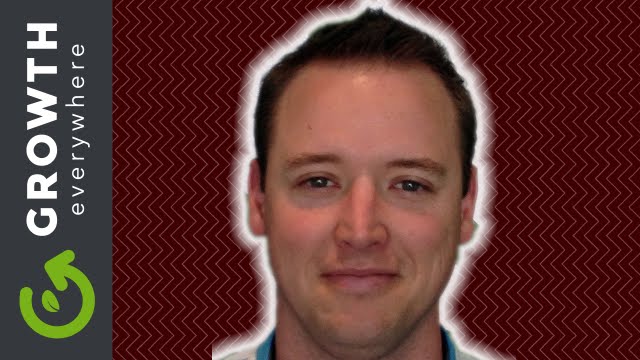
Andy Johns, who led growth at Facebook, Twitter, and Quora, explains why sustainable scaling requires mastering conversion, email, and paid acquisition rather than chasing viral tricks. He shares how a two-week Twitter experiment added 60-70K daily sign-ups, and why building a cross-functional growth team internally beats hiring agencies.
Chapters
Hi everyone, welcome to this week's edition of Growth Everywhere where we interview successful entrepreneurs and bring you tips on business and also personal growth as well. This week's guest is Andy Johns who was on the user growth team at Facebook, Twitter, and Quora. He's also the entrepreneur in residence at Greylock Ventures, right?
That's right, that's right. Thanks for having me, Eric.
Yep, thanks for coming. Can you give us a little background on, you know, your background on kind of what you're doing at Greylock Ventures right now?
Yeah, at Greylock, I'm an entrepreneur in residence. More specifically, I'm sort of a made-up title, first of its kind. We're calling it the Growth Strategist in Residence. It's kind of a play on the traditional entrepreneur in residence role where With the traditional EIR role, they sort of bring in someone that they think is talented and interesting who has some plans of sort of starting their own company, and then they just basically give you office space and allow you to incubate that idea. And then when you're ready to sort of build and launch something, they'll probably participate as an investor in what you're doing. This one is a bit of a take on that because I can do some work in terms of checking out other investments, considering building my own company, but also I spend a lot of time with Greylock portfolio companies, just helping them understand how to grow faster, how to grow more sustainably, and drive additional engagement for the users. So it's very much so a hybrid experience where I effectively just get to do what I want day in and day out. A big portion of that is growth-related stuff.
Got it, cool. Yeah, so it's first of its kind. So I wanted to ask you, I mean, you have a new title, Growth Strategist in Residence or whatever it is. What's your take on this new— or I guess it's kind of fading away now. What's your take on the growth hacker term?
You know, it's— I think there's pros and cons to it. I think that one of the benefits is that more people, namely entrepreneurs, are startup employees and startup investors are paying more attention to the topic of growth, right? In the past, I think there was this notion of if you build it, they will come sort of mentality where if you just make something that's pretty or shiny, it will grow. But that's just false. Growth in many ways for successful companies like Facebook is— it's really— it's not like the hackerish sort of clever stuff. It's just doing business fundamentals really well and having Having a group of people who owns sort of owning the fundamental part of it, right?
Uh-huh.
Can you do conversion rate optimization well? Can you be really good at email marketing? Can you be really, really good at paid acquisition, right? That's just— it's really just business fundamentals, which the growth hacker stuff doesn't speak to. It's more like a catchy phrase where there's sort of this notion that someone who's clever enough can figure out how to grow anything. Which, I mean, you don't want to just grow anything. You want to grow products that are really great, at which point it's less about doing something clever or really, really tactical, and it's more of this adding fuel on the fire approach to taking something that's already really good and scaling it out in a way that isn't spammy, right? So I think there's definitely some pros, primarily that people are paying attention to.
Yeah.
to it and more companies are becoming more sophisticated in terms of understanding how they grow and being able to improve the growth rates. But one of the other negatives is I think the growth hacker notion implies that it's an individual, which is also a shortcoming of the term. It's not like growth at Facebook was taken care of by one person. By the time I left in July of 2010, There were about 40 of us. None of us were hackers. We were just sort of individual contributors who were responsible for owning one thing in terms of everything that could be growth-related and just doing that really well. I think probably the biggest shortcoming of the growth hacker terminology is the implication that it's done by an individual when you want the opposite. You want the entire DNA of your company to sort of be growth-centric. Who doesn't want every employee at your company to understand how you grow and succeed?
Totally agree with that. Yeah, and you know, I kind of had this struggle when I was working at a startup. When I led the marketing team or the growth team, it was very hard to convince everyone to get into the mindset of growth because all the devs, all the designers wanted to work on the cool stuff, right? So how do you convince everyone to get into the mindset that growth is the main thing?
Yeah, so in order to sort of like shape that DNA and get everyone interested because You know, it's art. Some of it is definitely art, and I've learned that over time where I've worked with dozens of companies on this, and some were culturally just very open and willing to it, and others weren't for various reasons. But in those cases where you need to build momentum and get more people to be interested and concerned with growth, the approach is you sort of have to start with a small team. And with that small team, the best thing that they can do is figure out the easiest, quickest wins that are so just like mind-blowingly beneficial to sort of the bottom line success of the business to where it's impossible to ignore the value that this small group of people has just created for your business. So with Twitter, for example, one of the challenges I had was Similar to what you mentioned, was sort of getting everyone to think more about this and understand why it was important. And one of the first things that I worked on with one other designer and one other engineer took about 1, maybe 2 weeks of total work, but it increased our total daily signups by almost 30%.
Wow.
Which at that point was 60,000 to 70,000 more users a day. So it was like a massive significant win. And we were also able to show that the value of all these new incremental users was on par with everyone else who had signed up before them. So we were still qualitatively bringing in the same value of users as well, despite having this big new inflow. And that was the sort of victory that sort of perked the ears of the executive staff who basically looked at us and said, okay, what do you need to do more of this? I said, well, we need more people, more resources to focus on it primarily. And then from there, with more people, we were able to produce more results on a more regular basis. And we presented those results every week with the executive staff. And over time, you sort of— you bring this data-driven discussion around growth into the mainstream discussions that happen at the company, such as every Friday when you have your sort of end-of-the-week all-hands meeting. That was one of the core components that was discussed in front of everybody at the company every week, which was, what does growth look like, and why is it changing, and what have we done to do that? So it really starts with a small group, and it starts with find an easy win that's non-controversial but adds loads of value.
Got it. Totally makes sense. And can you— are you able to share what you did exactly for Twitter to get those 60,000 more users?
No, no, I can't. But in general, it was conversion rate optimization 101, which was look at data around where people tend to experience the most issues when trying to go through the basic funnels on your site. And once we found out what the primary issues were, we hacked together an interim solution that removed a lot of that friction. And yeah. That was it.
Cool. Yeah, I mean, that's what it is at a very high level. It's just you do the basic stuff, you keep testing over and over, and then you see what tends to stick and you keep iterating from there. You know, it's not that— it's not super duper complicated, right? That's what I'm getting the feel for right here.
Right, right. It really isn't. And that's part of the challenge, as it sounds like you found out before, is how do you get people to understand not only why is this important, but why is it kind of sexy, right? Why would you want to do it? If you spend a year or 2 working on improving growth or engagement for something, you become more data-driven, you become better at prioritizing and estimating the impact of something. In short, it's business education, right?
Yeah.
You learn about how to figure out what matters most. and how to move really quickly and efficiently in improving what matters most. And after you do that for a while, you kind of walk away with this sense that, hey, I can be successful no matter where I go. And that's, for me, what was most valuable about my experience at Facebook was after 2 years I felt like, you know, this is the best business education I could ask for, in particular around high-growth, high-potential startups. And no matter what startup I go to now, I'm going to have a really good compass In terms of like being able to find out what matters and do that thing extremely well.
Yeah, and you have that. I mean, it's really unique for someone to have worked on the growth team for these massive products. You know, you're talking Twitter, Facebook, and Quora. So yeah, I think, I think you have— you're probably the guy to ask like all these questions. But, you know, you talked about being very data-driven and looking at the numbers all the time. And there's people in the, you know, in the Valley that talk about that one key metric. You know, Twitter, it might be Getting— or is it Facebook, you know, getting to 7 friends, whatever. How do you figure out that one key metric?
Sort of the magic number, right? It's a blend of things. I mean, at first, you're just not going to have enough data points to do this sort of sophisticated statistical analysis to figure out something like Facebook's sort of, you know, the magic number of getting users to add 10 friends within 7 days.
Mm-hmm.
So you just won't have enough data points to get strong confidence on your correlation analysis to sort of prove what of all the new things— what of all the things that a new user can do in our product sort of predicts that level of engagement. It will just fall short. And so at first, if you're young and it's a nascent, newly launched startup and you don't have a couple million users, a lot of it's got to be driven by really hands-on heavy interaction with your initial user base personally and building relationships with them, conducting user studies on-site. But even that sort of falls short because with conducting user studies on-site, I have this theory that is kind of around like— Heisenberg's uncertainty principle, this principle in the hard sciences, in that if you attempt to measure something, the process of actually sort of measurement, being involved in the measurement process, actually changes the results. So the classic case study there is with the uncertainty principle is if you shine light through a microscope, you're sort of exciting or accelerating these subatomic particles. And so you're not actually viewing the natural state of it because the process of sort of measuring it or viewing it is changing its behavior.
Yeah.
And so I think when you bring people on site and you walk them through a guided tour, say, okay, sign up, now do this, now do this, there's still— like, it's not a perfect measurement system, right? So what I recommend for everyone is whether you have 10 million users or 10, Is do a dump of the raw logs of, like, say, 20 new users who eventually became really hooked and 20 new users who haven't used your product at all.
Mm-hmm.
And go line by line through the session logs and by hand recreate the process that these users went through to sort of manually piece together, like, you know, what did this person's sort of first couple of sessions look like? who's now using it all the time versus this person who is not. And you'll find some really interesting things that way. And that's certainly one part of it, is doing that very manual, hands-on qualitative analysis, just trying to figure out like what's the magic number around what matters most.
Mm-hmm.
Later on, once you've got at least a couple million users who, for example, have registered for your product and gone through a new user flow, you can then engage someone who's a really talented data scientist or statistician and pose them the question and say like, we want to do linear regressions on all the things that a new user could do to see which one of those events, whether it's adding a friend or uploading a profile picture or joining a group or liking a page, whatever it is, which of those things tends to predict that person being really hooked later on, you know, 3 months later. And then they'll come back with correlation data that says these things are really strongly correlated, these things are not. And based on these things that are really strongly correlated, let's set up some new experiments to try and see if we get more new users to do this, if 3 months later it proves to be causal.
Right.
And so you really got these 2 sort of complementary camps of very hands-on qualitative analysis that could be as fundamental as doing raw log analysis, and then the higher-level broad strokes statistical analysis to see if the two come together and make sense. It's a lot of work.
Yeah, no, it totally is. And the thing is you can't do something like this with Google Analytics. You got to have like a personal analytics tool that you guys build, right? Is that what you guys did?
Yeah. I mean, for all these companies, I've been fortunate that they operated at a scale that was large enough to afford them the ability to build custom tools in-house to do this sort of analysis. But even at Quora, it started early enough and it was small enough to where we were using mixed panels, things of that nature, and eventually sort of moved away from it. But today, there are more and more tools, whether you're leveraging Redshift from Amazon or just anything that's Amazon-related really, or you're using products off the shelf like Looker, you can really start to do more of the sophisticated analysis. Earlier, much earlier than you used to have to even 5 years ago.
Should you be though?
It's a tough question. If you're a product where 30% of your users who have ever, say, registered for it are still using it, and you're growing the top of the funnel in terms of new users at 2% or 3% a week, for sure, right? I think that's enough engagement and enough growth to sort of warrant like, hey, we've got something really interesting here, and we've gotten to this point almost entirely organically.
Mm-hmm.
Now, if we want to do growth, what we're basically doing is pouring fuel on the fire to accelerate this growth even more.
Mm-hmm.
And in order to do that, we need to have a baseline set of analyses that sort of gives us a direction to look in. Right, I would say absolutely. Now if you're retaining, if your 30-day retention after signup is 5 or 10%, that's too low, right? There's still something that's wrong in terms of core engagement.
Right.
And yeah, maybe it will be helpful to do the statistical analysis but probably not. At that point, like, you're just going to have to figure out, you know, is this— have we built something that is meant for Regular usage or not.
Now we're talking, I mean, you know, when we're talking right now, we're talking about massive, massive products, you know, millions and billions of users, right? You know, we have people in the audience that are smaller to mid-sized business companies. So how do they go about training themselves? 'Cause a lot of them will be like, oh, you know, I'm not a numbers person, blah, blah, blah. But it's really not that hard, right? So how should they go about like learning this stuff?
Yeah, I mean, anyone could do this as long as you've got at least like a, you know, 3rd grade level of arithmetic ability, right?
Yeah.
I'm not using calculus for any of this. It's addition, subtraction, multiplication, division. So from a pure math perspective, like, it doesn't have to be that intense. I mean, I studied political science in college from a liberal arts university at UCLA. It's not like I'm deeply technical. So it's more a question of like, can you think in simple terms and be really rigorous around prioritization?
Yeah.
And a lot of that is actually like figuring out the simple nature of actually how you grow. If it takes you a couple paragraphs to explain how your blog grows or how your startup grows or how your small business grows, You're probably doing it wrong. You haven't thought enough about or actually done enough research to be able to explain it. It could be as simple as just saying, well, 80% of my blog traffic is SEO and so I basically grow by writing more content and the type of content I need to write is XYZ.
Right.
It could be that simple. And then the thing that you want to grow above and beyond sort of your rate of traffic which is probably proportional to or dependent on the proportion at which you grow your content, right? Really simple.
Yup.
I write more, I get more traffic. But let's say you're trying to optimize for the growth rate of email addresses that you capture so that later on down the road you can remarket to all those email addresses to let them know that, hey, I've got this $29.99 ebook you may want to buy.
Uh-huh.
Then it's just— it could be as simple as conversion rate optimization around figuring out when's the most appropriate and effective way in which I can capture somebody's email address. Is it on the first time they visit my site? Is it after they've read a full article and in order to sort of write a comment, I ask for them to give me their email address? Whatever it may be, you just need to be in that experimenter's mindset where you're like, okay, I know these 2 things that are the most important. How do I just increase the yield of those?
And you know, Chamath brought up a good point in the past. You were part of Chamath's team at Facebook. He was the VP of Growth, right? He said, you know, they did everything at Facebook to dispel gut feeling. There's a lot of disputes, right? A lot of startups, people say, hey, I like the button here. I like this color here, blah, blah, blah. You know, did you— were you guys able to kind of bring that mindset over to like Twitter and Quora where it's like Screw gut feeling, it's all about data?
Yeah, I mean, it was— yeah, so in general you can call that like the clash of science and religion, right? At least that's the analogy I use from a startup perspective because what's interesting around consumer startups is like this clash of science and religion exists at consumer startups and consumer startups only, right? Not really enterprise or SaaS, right? Or at least not with as much vigor. I think it's because of the nature of a consumer startup, right? It's based on idealism. I feel that there are ineffective ways for people to communicate with one another on the planet today. And so I have this principled system in which I'm going to build some product that makes it easier for people to communicate. And then boom, Snapchat pops out of nowhere. It's not like they built— Evan and Bobby built Snapchat based on Excel spreadsheets, right?
Mm-hmm.
But then what ends up happening is like you can get these truly emergent amazing products that reach hundreds of millions of people. And I'm convinced that that can primarily, if not only, come from that artistic, that religious sort of process of I have an ideal and I build something from that. But then as those things, some of them tend to take off because they actually honed in on something that was right in the absence of sort of empirical evidence.
Right.
It takes off like Twitter did and then they have to become fundamentally sound in what they do. They just have to, right? Or else you can fail. Look at the MySpaces of the world.
Right.
Or the Friendsters, right? And fundamentally sound can mean technical infrastructure so that you can keep the site up and handle load and serve pages lightning quick, or that it's a simple dev environment for people to just ship stuff and get things done.
Mm-hmm.
Or it can also mean bringing in that data-driven discussion to be able to say, okay, we got to this point based on ideals, but if we look under the hood and really try and more deeply scientifically understand what's going on, we're going to find some interesting things. Some of our ideals or our belief systems may actually be proven wrong by the numbers at scale.
Right.
I think that's generally, generally true. There has to become this really nice balance between the two. Numbers science doesn't come in to sort of just beat religion over the head and say it has no place here anymore.
Uh-huh.
But it needs to serve as a complement, or at least as a gut check.
Mm-hmm.
Or in those instances where you lick your finger, stick it in the air, and sort of say like, I think, I feel, you can be disproven. And that's a good thing. The challenge though is that sort of the religion side may see that as like a personal blow, right? Like, you're using data to show you're smarter than me when that's not the case. Like, sure, there could be some jerk who uses data in that way.
Yeah.
But what you've got to do from a culture standpoint is learn how to navigate the two, make the two work, and to never let terrible ideas have a long shelf life. And that's where data is wonderful, right? Because you can really quickly say like, well, actually This opinion we have is complete, complete crap. It's false. It's way off the mark. And let's move on from here, right? Right.
I love data. So it almost sounds like, you know, start with gut feelings, start with religion first, and then let data help refine it, help data— let data like keep you on track, right?
Yeah, I mean, it's— you mature. And in the same way that I had some gut feeling that said, you know what, I should work at startups.
Yeah.
And there's some data I can look at about how big and meaningful startups are, but yeah, I should just work there because I sort of have this capitalistic element to me. I like solving hard problems. I like working on fun stuff and I just go and work at startups. And then over time, I've started to replace that gut feel With more experience and more evidence of like what does a good startup actually look like, what does a bad one look like. And it's— so I think it's just the ebb and flow. Like, you definitely can't survive without both, but if you go down the path of rejecting an empirical approach to understanding your business for too long, you're going to really suffer some serious consequences.
Right.
And like in that Twitter example, there was nothing that would have stopped them from 2 years prior to me getting there doing the analysis and figuring out, hey, we're preventing large swaths of people from ever even using our product. Let's fix this. They would have had a lot more users, but they didn't. So it's all about, again, focus and do you understand what matters.
Yeah. You know what, let's backtrack a little bit and talk about your path because there's probably some people in the audience that would like to follow like your path. Your path is almost It's a little like, you know, I came from an agency background too. I've worked for a startup and now you're kind of going into entrepreneur route too. So how do people, like, let's say they start out at an agency, so how did you transition from going from a big agency, you know, iProspect, to starting at Facebook?
Yeah, you know, some of it was luck. I mean, it's— the other was, I guess, tenacity and aggressiveness. I mean, the whole reason I got into Silicon Valley In the first place was because the first startup I worked at, which was based down in Los Angeles, went under and all 200 of us were laid off in one month, right? Just completely liquidated. It was an ugly, ugly process.
Mm-hmm.
And I packed up everything I had into a U-Haul, all like my piece of crap 2000 Hyundai Accent. Like just dents all over it. Like I had— I didn't have much, you know. I was a young struggling out of college, fresh out of college sort of new grad, right? Worked at the startup, that was fun. It collapsed and I was like, well, I'm off to Silicon Valley.
Mm-hmm.
Where I temporarily moved in with my brother because I needed a place to stay, right?
Mm-hmm.
And when I got up here, the bit of startup experience I had sort of led me to the digital agency And I worked at iProspect. But in parallel to that, yeah, I worked my 9 to 5 and I tried to do the best job I could doing internet marketing for some of our large clients like Walmart and stuff, right? And that was a good experience. But on nights and weekends, I was trolling TechCrunch finding startups that as I saw them come out with a new round of financing and I looked at them and I was like, oh, they could probably use some SEO advice or whatever.
Mm-hmm.
I would cold email the founders of these startups and say, hey, I saw what you're doing. Congrats on the funding. I bet you could use some help on X, Y, and Z because it's going to help you grow, right? And I didn't get responses the majority of the time, but other times I did and ended up landing about half a dozen random consulting gigs with various startups. And that was enough to sort of differentiate myself or add a bit of peppering to my resume to show that like, hey, I wasn't just trying to do the 9 to 5 or that I wasn't just average at this. And it turns out that Facebook, from a hiring perspective, they weren't always looking for the most senior experienced person who had 15 years of SEO background. They were looking for somebody of a particular mindset and a mold more so than anything else.
Yeah.
And it was because I was doing this growth-related work outside of my 9 to 5 that I then all of a sudden stood out as something interesting, as like this sort of raw asset or talent that they could bring in and say like, hey, You're actually not nearly good enough yet to do this job, but we're going to give you this job anyhow. And then we're going to resource constrain you and put you under a lot of stress and expectations, and then you'll figure it out. So the first 6 months was hard.
Uh-huh.
I mean, there were some ridiculously talented people there. We were growing pretty fast and we were really starting to do this, and so things were just getting crazy. It wasn't until about 6 months into it that I kind of figured it out. Sort of hit my stride a little bit better and then things just improved from there.
Nice. So it sounds like it always comes down to tenacity, right? You gotta just keep pushing for it and it almost ties back to the Facebook growth mindset, right? It's like you gotta just keep pushing, it doesn't matter like— am I getting— that's the vibe I'm getting from this.
Yeah, yeah. I mean, think of it from like— this is kind of nerdy but I think of it from like a physics standpoint, right? Where if, if you take like a jar or something, right, and, and you sort of heat up that jar, you like increase the activity of the particles that are in there, and you increase the probability of these random collisions happening, right? The more you excite that system.
Mm-hmm.
And when you work inside of a particular industry, in this case the startup world for me, like it was the same thing. Like you had to You had to work really hard to sort of increase the probability that some random collision would happen that gave you the opportunity for success. And for me, I had tons of luck in stumbling into the Facebook role.
Uh-huh.
And it was sink or swim. And for the first 6 months, I basically like sunk, right?
Uh-huh.
But then like I finally keyed into it and really started to do a lot better job and that's what really turned me on to like this whole growth thing, right? I really deeply started to understand it. And from there, I've just been able to sort of accelerate past that. So I think so much of people's success is partly determined by the timing at which they're able to sort of join something that becomes really successful.
Uh-huh.
Like in that whole story of how Eric Schmidt Yeah. Was telling Sheryl Sandberg, like, when you see a rocket ship, like, you know, and you're given a seat on that, take the damn seat and get on the rocket ship. She goes over to Facebook. I know a lot of people who their current outcomes professionally are 100x greater than they were 3 years ago because they found the opportunity, that random collision which gave them the opportunity to like do something great and they matured along with the businesses that they joined. And so I think it's about like working really hard in non-traditional ways to get your foot in the door at those things that are really compelling and interesting. And then if you can accelerate your own personal development and ability along with those companies, there's amazing things that comes out of that.
Would you say what you just described right there is the recipe to having that Facebook Yeah, yeah.
I think just— I mean, it's what I learned at Facebook and I'm really, really thankful for it. But I think it just applies outside of that. There are plenty of companies where that's been the case. Yeah.
So you talked about getting on a rocket ship. You actually got on 3 rocket ships. So when do you decide— when is it time to go?
Yeah, the time to go, it's interesting. I mean, my sort of definition of the time to go I think is much different than kind of the traditional stuff you would read of like, oh, you feel bored or uninspired or blah, blah, blah. For me, Facebook was basically where I learned, right? And because everyone around me was so good and I learned a bunch and one of the things I learned was Oh, I understand more and more how this thing grows. But the thing that stood out to me in my mind was that it seemed incomplete that more consumer internet companies didn't have a similar team doing similar work over there because I saw how useful and effective it was at Facebook. And what stood out to me was that enterprise companies sort of have a sales team, right? And they drive distribution, generally speaking.
Yep.
Sales, business development. And then ecommerce companies have internet marketing teams. Internet marketing teams work really close with sort of the data side of the business and they figure out how to be more effective marketers, right? But then for traditional consumer companies, there wasn't that same entity approach to, hey, this team owns distribution and scale, right? It was usually just sort of disparately spread all over the place and you had 50 different metrics sort of somewhat explaining whether or not you're doing a good job.
Right.
Facebook created something really unique there. For me, that's what stood out. When I thought about my career, the mental model I used was an economics one where I thought that if I go and try and learn to be a developer at this point and try and write code just as good as some of the Facebook developers, like, just a huge fail.
Uh-huh.
It just wasn't going to happen. Frankly, I just wasn't interested in that. I didn't think that that's where my heart was, nor was it where my intrinsic abilities were. Instead, I was like, well, I got to find this thing that I'm interested in that aligns with my strengths but then also has an economy around it in the sense that Someday there's going to be tremendous demand for this skill set but very little real supply of that and I want to own that supply. That's a position of leverage. And for me, the thing that I settled on was, well, the position of leverage that made the most sense for my future potential was how can I be one of the best people on the planet in terms of understanding end-to-end comprehensively from either 1 million to a billion users, how do you grow something? Team building, analytics, experimentation, organization building, the whole thing, right? And that seemed like a tremendously powerful thing because the thesis or the hypothesis I had was that more consumer internet companies needed to have growth teams and no one was stepping up to the plate to do that.
Uh-huh.
That's what I wanted to do.
Yeah.
And that's been my sole objective since then, since I made up my mind about that in 2009. And going back to your original question, like, when's the right time to leave? I think the right time to leave for some people, but for not enough, is really dependent on like when is the right time to make a decision that can Mm-hmm. And what I wanted to do was this much bigger picture other than saying, hey, I worked at Facebook for 4 years and I had 4 years of stock. I wanted to be able to say 5 years from now, I'm considered one of the best people on the planet figuring out how to grow something. And I'm just really good at it and people want to work with me on that. And so that's why I decided to leave. Because I saw this opportunity to go to Twitter, which from my external analysis, I was like, this thing can grow a lot faster than it currently is.
Mm-hmm.
And I wanted to say, you know what, if I'm going to make this bet, I'm not going to do it by going to some random no-name startup that really doesn't justify the risk. I was going to take a real bet. And so I went to one of our biggest competitors, which some people were Pretty unhappy about. Chamath was awesome. He basically patted me on the back and said, like, I have more respect for you now than I ever did, because I think he understood why.
Yeah, he's great.
And he's the sort of person who appreciates other people who take bets.
Oh yeah.
And that's why I decided to leave. I was like, you know what, I'm making a decision based on what I think is best for my long-term outcome, not what's best for the amount of stock I have 2 years from now. And that's why I did it. And pretty much every decision I've made since then so far has been a really sort of thought-out process of— if I can feel myself on a certain trajectory and if my end state is I want to be a CEO, I'm going to make a decision based on what makes me as good as possible at what I do so that even if I spend a year with the company, they say like— Worth it, right?
Yeah.
Even if he was only here for 12 months, but totally worth it. Wish we could have had him longer. And at some point I know that that's gonna change and I'm gonna want to sort of plant my roots and stay longer because I know that I'm right there at that thing that's getting me to the long-term outcome I want.
Yeah, no, I think what you're doing is great and it's— you were able to articulate, I guess, what I've been doing. I just I wasn't able to ever articulate it. So that's kind of like mind-blowing to me that someone was able to just like spit it out there like that. Cool. So, you know, you talk a lot about experimenting and there's some stuff that you've written on Quora regarding, you know, Facebook tactics you've shared. You know, you were the SEO lead at Facebook. So can you share like, you know, one success and one failure for any 3 of those companies that you shared publicly? Yeah, yeah.
Yeah, I can't get too detailed about it but I think there's some really interesting sort of core principles I learned along the way. So for example, one of those things is a huge, huge part of doing SEO for something at massive scale is less about actual SEO and more about conversion rate optimization, right?
Yeah.
Because chances are if you're gaining significant portions of traffic from organic search for something at massive scale, it's because the product itself grows in such a way to where the more the product grows, the more it naturally just gets more traffic, right? So with LinkedIn, as it registers a new user, that's a new profile that gets indexable in search engines and then could potentially yield new incremental SEO traffic.
Mm-hmm.
So it's sort of inherently baked into the intrinsics of the product that as it grows, other traffic acquisition channels grow along with it.
Mm-hmm.
There's certainly optimizing around the margins of that to sort of increase the average yield of traffic per page, but then you're effectively sort of casting this really wide net where a big part of what you're trying to do is optimize conversion rates without negatively impacting Yeah. And so there's just tons of work to be done around that. And what I see a lot of companies doing wrong along that vein is not thinking in that direction. They're more so still thinking local style SEO to be applied to high-scale sites where they're like, what should our link— our sort of link building or link buying campaign be? And I'm like, none of that.
Yeah.
Your SEO strategy is build a really good product that continues to scale and then the yielding of that is the conversion optimization you do on top of it. That's a big part of it, really big part.
Right. And you wrote— I mean, there's a really good quote that I actually use to pitch clients sometimes. It's really about getting— having that ocean of content indexable to search engines, making it easy for them to find. And I think that's a really good way to put SEO, you know, people will come up and say, hey, you know, we'd like to work with you guys. Let's do some, you know, let's do some link building. We have, you know, 10 keywords right here. And it's just like, no, it doesn't work like that anymore. And it's really important that, you know, companies in the Valley and everywhere understand that the game doesn't work that way anymore. You know, Google's gotten a lot smarter.
Yeah.
So on and so forth. So it's great that you put it that way. Cool. So I mean, what's— what You guys had growth teams full of like 40 people, maybe even more, maybe less, but what kind of hiring criteria did you guys use?
I wrote an answer on Quora about this about a week ago and I was happy to do it because somebody asked the core question, how do you hire for growth? And now there's not only individuals sort of marketing themselves like, I'm a growth person, and you've got to kind of weed through that and see who's actually good or who isn't. But now there's growth hacking agencies that are popping up, which I'm like, okay, some of them may be actually good, some of them maybe not so much because you're still getting back to the agency model where the agency— you need this as company DNA. An agency is not company DNA. They're going to think about the problem the wrong way or they're going to try and create a solution for you that maybe worked for another business that actually doesn't apply. So there's also all sorts of like risk there. So what I wrote in this Quora answer of how do you hire for growth, I was like, without a doubt, hire internally. Without a doubt. Like that is the best thing you can do. That was— where did Facebook's growth team come from? It's like Grab the smartest people we can, put a really good leader in charge of it, let everyone know how important this is, resource constrain them and say, go figure it out.
Yup.
And that's what we did, right? And like, it can't be this passive process where you're like, sure, write a $150,000 check for this growth hacking agency to tell us what to do.
Uh-huh.
Over the next 12 months. You're just going to— in most cases, you're going to just waste— either waste your money or not realize the amount of gains you could have had you otherwise fostered this internally.
Uh-huh.
And so to hire for it, I think a huge part of hiring for growth actually happens in the process in which you say this person meets or exceeds sort of this technical or talent bar that we are aiming for for anyone who joins our company. So Allow them to join. And then you find those people who have a disposition towards understanding how important the fundamentals of growth are and then you put them on it.
Uh-huh.
And the lead engineer I had on the core side, he never officially worked on growth but he'd done— he'd run a bunch of experiments when he worked at Google previously on Like really sophisticated stuff on re-ranking of search quality and the search results. And so he had all the sort of raw material you would want. Very, very technical. Could touch any part of the stack. Was numbers-driven. Had a very intuitive understanding of why optimization was important. And then that's perfect raw material. Just point him towards the problem and say, okay, You're now part of this, right? And he was amazing. Best, like one of the best engineers I've worked with on this stuff without question.
Got it. So it sounds like there has to be people with sort of an entrepreneurial flair.
Yeah.
Everyone on the team.
Yeah, and I mean, if by entrepreneur, like some part creative, some part just get shit done, you know, it's, I think it's probably more part get shit done.
Yeah.
And they're not gonna be obsessed with like new flashy feature development because, you know, maybe it'll get them a lot of recognition and they'll be in an article on TechCrunch. Like, yeah, that's the person that you're trying to pull over. I don't care how good of an engineer or designer they are, they got the wrong mentality.
Right, totally agree with that a thousand times. So a few more questions here. I'm gonna try to wrap things up here. So, you know, on a growth team, how's it built up? How is it built up? You said you had some devs on it. I want to kind of get an idea of how it's built up for like these big companies.
Yeah, it's a bit different depending on if you're web-first versus mobile-first, but in general, the building block is you want a team that is adequately staffed so that they can do full-cycle development in the absence of having to depend or rely on anybody else at the company because you want to give them the leeway to just get stuff done as quickly as possible. And one of the biggest roadblocks to them getting stuff done as fast as possible is you make them dependent on another team.
Yeah.
So whatever you do, you've got to staff it with the appropriate people to do full cycle stuff on their own. For a traditional sort of web, like say Quora or LinkedIn or Facebook or Twitter or even a Foursquare, any of those things, like I would— it will start with, I guess you can call it the product manager who is really a GM, right? More of a general manager than a product manager because they're sort of owning profit and loss of users, not profit and loss of revenue and sort of like the traditional GM title like, if I'm a GM at eBay, I own the P&L for some major vertical of products or something.
Interesting.
In this case, the PM that you're trying to staff it with is a PM in the traditional sense in that they can do project management really well, they can drive discussions around what are our priorities, and they can just facilitate. But then they have this GM mindset where they're driven towards results because it's profit and loss of active users. Right. Yeah. And they need to be able to drive that. So that's one. Hire your GM, right? And for a very early startup, it should just be one of the founders. And then from a development standpoint, ideally you have somebody who's full stack, maybe skews more towards backend systems, but is comfortable touching anything in building just about everything, someone who's like one of your most talented people. From a designer standpoint, you don't want someone who's like a pixel-perfect Photoshop junkie. You want somebody who can touch front-end code, which is basically just a front-end dev who is biased towards like, build this, ship this, see if it works, and then we can polish it later, right?
Right.
And then somebody on the data side. Yeah, it sort of depends on what your— the state of your data is internally, but once you scale to say 20, 30 people, you're going to want to have somebody who's more data infrastructure, contributing to the build-out of internal logging and all the systems that you use that enables easy analysis. And then you've just got more of the raw statistician who can pull the data out of the infrastructure and then play with it and And present it in a way where it's actionable. I mean, with those components in place, you can do a lot.
Yeah. No, I'm really envious of like the resources that you had in place, because I think a lot of startups, they really can't speak to this, because a lot of the growth people startups have, it's typically, it might just be one person, you know, and they're having to beg the devs and designers for all this stuff. And really, when numbers aren't hit, they get— they're the first to get blamed, and then they're first to get canned. So it really sucks. You really do need the resources. So that's— I really like how you gave that structure out there. Hopefully, you know, a lot of startup founders will see this segment and realize that, hey, you want to make more money, you want to get more users, you better build like a really big team that can get shit done. Cool. So last 2 questions here. Any productivity tactics that you can share with our audience?
Productivity tactics. I mean, in terms of tools, I love Asana. I use Asana with whatever growth teams I work on.
Facebook lover, huh? Yeah.
It's really matured over the last year or so and it's just really effective for like just simple task management. And for something that's like build A/B test, launch A/B test, measure A/B test, it's just really simple. In terms of prioritization, like I just do really basic stuff in Excel. Roadmaps, they're managed in Excel. The priorities are then ported over to Asana for just quick communication and task management.
Hmm.
Otherwise, probably the most important productivity hack I guess is at least being growth-centric. It doesn't belong on your roadmap of things to do within the next, say, month if you can estimate the value of it and that estimate shows that it's a worthwhile thing to do. So the productivity hack is don't have a list of 100 things. Like maybe first come up with that list of 100 things and then narrow it down to 10 that actually matter and then put the other 90 on the back burner and deal with those later.
So 10 important things for the month, is that what you're saying?
Yeah, you know, or whatever that's your timeframe is. You just want to be in sort of like constant deploy mode where you're not necessarily saying we'll work for 3 weeks and then spend 1 week sort of recapping. You're just ongoing, right? And so if you've got a list of 10 high priority things based on your estimates as to how much value you think you'll get from those, as you check one off the list, well, what's the new 10th one, right? Bring that right back on.
Got it.
A nonstop, always highly prioritized roadmap of a small list of things that seem to be very valuable.
Oh, I like that. Cool. So the laundry list still kind of has its use, but just kind of in the, in the back.
Yeah, for brainstorming. That's it.
So final question here. What's one actionable piece of advice that you can share with our audience of entrepreneurs? Something they can probably execute on in the next 24 hours.
I mean, the most basic, and maybe, you know, a lot of people sort of reading this will be like, well, no duh. But I think it's— I've met with a bunch of companies at this point where they're saying we want to do growth, and the first thing I ask them is, okay, can you explain where your growth comes from today? You know, and 9 out of 10 times they can't.
Huh.
Like, you should be in a position to where From the hip, you should be able to rattle off like 35% from here, 10% from there, 20% from there. You should just know that stuff. And in the absence of having just the benchmark data on the proportion of traffic we get by source is this, the conversion rate by source is this, the proportion of growth by source is this, and the retention rate of those sources is this. Without that, It's really hard to prioritize correctly.
Mm-hmm.
So the number one piece of advice is start with that, right? Is can you tell everyone at the company what percent of your growth comes from what source of traffic and how is that changing from one week to the next or one month to the next? And if you have that, then the first thing you should do is look for the channels driving you the most value today. And see if you can get more yield out of them. That's low-hanging fruit 101, right? So I mean, that's one of the most basic tips. If you're looking for a specific hack, I mean, one of the bad things that I see is especially as there are more and more sort of really effective sort of like paid acquisition channels like Facebook. Facebook mobile ads, awesome.
I agree.
But it's almost leading to the abandonment of entrepreneurs trying to figure out how to build an audience organically from scratch by hand. And there's a lot of marketplace businesses right now which Those are super hot, right? Ubers, Lyfts, always like give me something and I'll give you that supply of— and they just make that magic happen.
Yeah.
And I see a lot of them that are trying to like build it with Facebook ads or whatever. I'm like, oh no, no, no, no. You're missing out on really, really important mechanics of building these things that have to start very organically by hand, right? Quora was really young and sort of in private beta mode still. It was friends and family style, sort of everyone, here's your invitation, help us write a lot of content. Like it wasn't driven by Facebook ads.
Huh, I like that. No, that's actually— I actually never knew that before.
It's really important stuff. It's like everyone had to make fundamental contributions to its growth by hand. But from that, we learned an awful lot about our users and the product that you wouldn't otherwise learn had you pumped $1 million of Facebook ads into it and just grown by 1 million installs within a month or 2. The really amazing defensible businesses such as marketplaces that exist today all share that same attribute, right? They started very local, hyperlocal, you know, a particular city, a particular demographic, a certain interest group, and they built it by hand. And that taught them a lot about what they actually needed to build for everyone else at scale.
Right.
And then they could really specifically describe in crazy detail how they were successful. And then because they had that infinite— that intimate detail, they could sort of have a reproducible growth model when they then said, okay, let's expand this outwards.
Right.
So as much as I love the automated sort of data-driven stuff, like, that's fuel on the fire, right, in a lot of cases. Just don't shy away from doing the manual work.
Right. And it sounds like— so to distill it down for our audience, You know, number one, you gotta know your numbers. Number two, you gotta do the shit that doesn't scale, right? Whether it's cranking out like a bunch of blog posts if it makes sense and then engaging with your audience, building a brand there. That's what you gotta do even if it takes you a long time, right? So Andy, thanks so much for doing this and, you know, hopefully we'll have you join us again sometime soon.
Yeah, you bet. Thanks, Eric. I appreciate it.
Thank you.
Thanks.









