How to Set Up A Podcast Studio (Podcast Gear Guide)
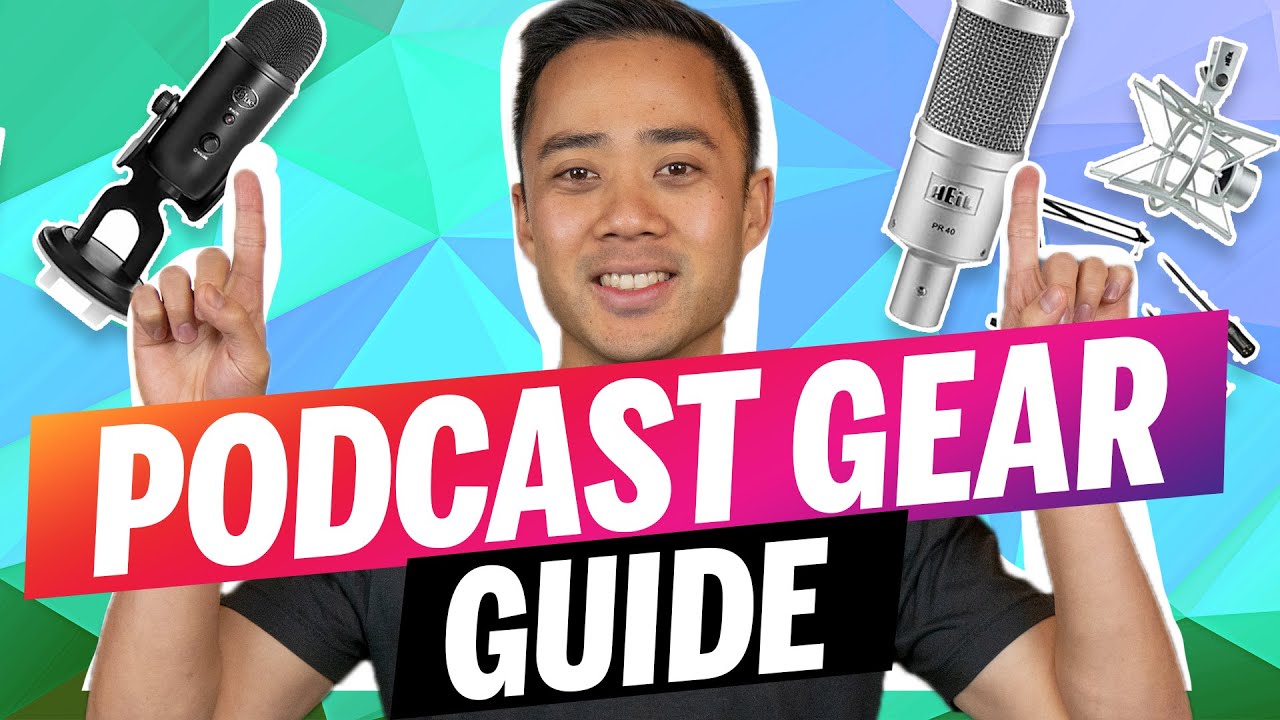
A veteran podcaster breaks down gear for starting and scaling a podcast studio. Start with a Blue Yeti microphone, then upgrade to a Heil PR-40, Scarlett mixer, and headphones once you hit 50-100k downloads monthly. Use Zencastr or Skype with Ecamm Recorder to record, and Anchor or Libsyn to host.
Chapters
Okay, so in this clip, we are going to talk about how to set up a podcast studio. We're gonna talk about starter, standard, professional. But before we go into it, if you enjoy tips on marketing and sales, don't forget to subscribe, whatever platform that you are on. So, look, I've been doing 2 podcasts for a long time. I've got Growth Everywhere, which gets about 100,000 downloads a month, and then Marketing School, which gets about 1.1 million downloads a month. So I've been doing this podcast thing for about 5 years now. It's kind of evolved over time. Now everyone's doing a podcast right now. Luminary is out there. They're trying to do the Netflix of podcasts, kind of struggling, but you know, they've got that. They got $100 million in backing. You got Spotify, which actually has a $500 million podcasting budget, and they've already spent about $350 to $400 million on acquiring podcast companies. So podcasting is getting bigger and bigger. It's been a slow kind of growth over time, and now it's in, it's in your cars. It's very easy to play on your phone too. You got your AirPods in there. So Okay, how do you actually get started with setting up a podcast studio? So, when I first started with the Growth Everywhere podcast, I had spiky hair, and then we had, I had a backdrop, but then my backdrop wasn't fully like covered, and like the lighting was weird too. And my struggle with like, I used to do my podcast, it was like video-based too, right? So, the first thing I'll say is don't make it video-based, 'cause it puts a lot of onus on you. You gotta wake up in the morning, you gotta do your hair, and then you gotta put on, I put on a Single Grain shirt every single time, which is the company One of the companies that I have, and then so what happened was that just takes too much effort. I'll say, look, people don't care about two talking heads for the most part. Okay, give them a good audio experience. So the number one most important thing is your microphone. In the very beginning, I invested in a Blue Yeti. You don't have to spend too much money on getting a microphone. Okay, so get a microphone. The sound quality is the most important thing. I've had people complain about the sound quality in mass. It's like you sound like you're recording in a restroom. Da da da. I found afterwards when when I improved my microphone. The retention was actually longer, and actually, believe it or not, my growth rate started to increase in terms of my listenership, okay? You don't need like a studio or anything like that. You just need to have a Blue Yeti, be in a quiet area, and I would say if you have a little extra money, maybe you pay like, you know, $10 or $20 for a little pop filter, stick it on top of your microphone, and the pop filter, why it's called that, think of it this way, right? When you keep spitting into your mic, which I do all the time, people can hear kind of that crackle noise, right? You want it, again, to be an amazing experience, 'cause imagine this, you are trying to get more clients, and a Fortune 500 CEO is listening to you, and you're pfft, pfft, pfft all the time, like, how does that sound? It sounds disgusting, right? So, you wanna make sure that you sound professional, and maybe they wanna work with you later. Literally, we've had people that came to us saying they binge-watched lessons all weekend, and then all of a sudden they listened to us, or they started working with us, right? So, the microphone, maybe get a pop filter, and then what I would say afterwards is make sure you have a recording software too. So you can use Zencastr. What I still use, because I'm just used to it from a process standpoint, is I use Skype, And I use a software called Ecamm Recorder, okay? That's E-C-A-M-M Recorder. And that way, if any audio file goes beyond 5 minutes, it's automatically gonna start recording, so then it becomes a podcast interview, right? So, you gotta think about hosting too. Spotify just bought Anchor, so A-N-C-H-O-R, okay? You can use Anchor. We use Libsyn, that's L-I-B-S-Y-N. Libsyn, we've been, it's been our kind of choice. I think we pay like $20 a month for it or whatever. You can pay a little more money if you wanna add ads to it, you wanna stitch in ads, you can definitely do that. Um. So you gotta have hosting, you gotta have software that can kind of control it, then you have to have a good mic, maybe a pop filter as well. From a scheduling standpoint, ideally maybe you're using something like Calendly, right? Or you're using something like ScheduleOnce. But anyway, the point is you can send people a link. It's like, hey, if you wanna schedule a podcast interview with us, maybe it's 30 minutes or 60 minutes, here is the scheduling link. You click it, they can just book a time with you, and it automatically goes in your calendar. It's gonna save you a lot of time. And then the final, final thing I'll add is maybe you can add TextExpander, okay? So TextExpander allows me to give them the link for booking a podcast with me, but also I'm going to give them a link to show them the interview flow so they can prepare ahead of time, um, so they can, they know that they need to be wired in when they, when they talk to us. So then there's not a lot of background noise. They need to have a good microphone. All these little things make it an amazing experience for your listener because it's not about you. It's not about your guest, whoever it is. It's about the listener. How much value are you adding to the listener at the end of the day? Now, if you wanna go kind of standard and premium, I'm gonna kind of lump these together. You wanna go standard and premium? Well, the microphone I have is the Heil PR 40. That mic is about $400 or so, but it's worth it. The sound quality is very crisp, it's professional sounding. I also got a boom stand too, so I can like, you know, move the mic around, look professional and everything. There's also a Scarlett mixer, you can have 2 or you can have 4 in there. Right now, Neil and I, when we do Marketing School, we have 2 Heil PR 40s. We have the mixer in there and then we also have like little headphones too. So it's all professional now. And when we want to go live, we have cameras too. We have a, like a nice Sony, Sony camera and then we have a stand and everything. We have lighting because we're not only going on the podcast, but we're going live on the YouTube channel. So we're getting the most bang out of our buck when we're doing the recordings because we're spending, you know, think of it like, you know, Neil spends time to come over to me, my office, and then we record for about 2 hours or so. So that's basically 2 hours of his time, 2 hours of my time, that's 4 hours. And he got a beautiful Noah from my team, that was another 2 hours too, that's 6 hours. So how do we make the most of that time? That's how I think about it. And then we also use Wirecast to help with the simulcasting, the streaming. So there's a lot of different bells and whistles that we have. We have a nicer mic, we have the boom stand, we also have the pop filter too, we have the software. You're gonna spend a couple thousand dollars for this setup and the time it takes, so When you are ready to get to this level, maybe when you're getting, let's say you're getting 50,000 to 100,000 downloads a month, maybe you start spending this amount of money. But if you're starting out, man, just get a Blue Yeti and then the first things I talked about and you're gonna be good to go. You don't wanna overwhelm yourself with too much. Have a Blue Yeti, okay? Have the recording software, have the hosting, and then the other stuff, like even the other stuff I added in the middle, maybe that goes to standard. Maybe you don't need a text expander. Maybe you don't need a calendar thing. Just get that going in the beginning and then you're gonna be fine. Okay? Record the first 5 episodes, keep it going once you feel good about it, uh, and then you can start to grow the podcast faster and faster and faster. Let me know what you plan on doing with your podcast, what the name of your podcast is, why you haven't started yet if you haven't. And also don't forget to rate, review, and subscribe no matter what platform you're on. It's super helpful to us. Uh, and that being said, goodbye.









