How to Turn a Hobby Into a Legit Company | Kevin Espiritu
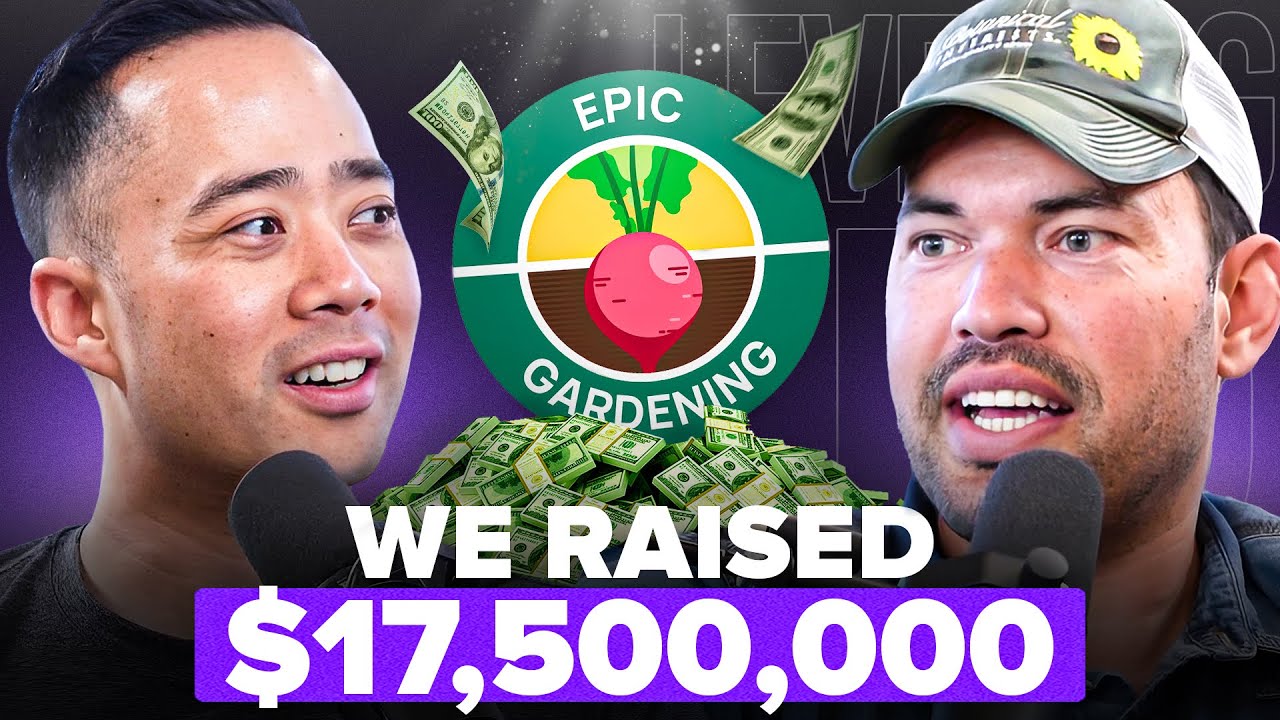
In this interview, Kevin Espiritu, founder of Epic Gardening, discusses how he uses mental models and first‑principles thinking—drawn from physics, probability, game theory, and books like Poor Charlie's Almanac—to solve business problems and stay unstuck. He reflects on his learning habits, moving from reading hundreds of books in his 20s to consuming real‑time content on YouTube, Twitter, and blogs, emphasizing the need to test ideas against reality. Kevin explains the purpose of his personal YouTube channel as a creative outlet beyond gardening, describing his ego‑driven goal of reaching a $100K silver plaque and his desire to experiment with non‑gardening topics. He critiques the current short‑form video craze, noting a generational backlash and his strategy of using Shorts as a testing ground before promoting the best to YouTube long‑form, while stressing the value of long‑form content for building parasocial relationships. The conversation also covers his personal health journey, including weight gain during the pandemic, completing the 75‑Hard challenge, focusing on gut health, running, and leveraging his garden for nutrition. Kevin shares his self‑presentation style—often calling himself a gardener—and discusses different “flex levels” when describing his work. The interview wraps with a plug for Leveling Up Founders and directions for finding Kevin online.
Chapters
We went through the whole bidding process for buying the company. So I was like, what's a small thing I can do to show that I'm different than the other buyers? I'll just wear the hat 24/7 in every piece of content that I make.
How wearing a hat won me the biggest deal of my life.
Yeah. I run a business called Epic Gardening, and it's been a crazy ride of like being a blogger to being a YouTuber and then a podcaster, then like an e-com, and then kind of building a whole team around it.
So did he tell you like why the hat helped you win that deal?
I think it's because—
Kevin, how are we doing?
We're doing well, man.
Thanks for doing this. Everyone, this is Kevin Espiritu. So I met Kevin in person at an investors conference and he does a— he's got this amazing business called Epic Gardening, right? And he does a whole host of things. So this could be a wide-ranging conversation. But Kevin, what did I miss in that intro? Please add.
That's pretty much it. I mean, I run a business called Epic Gardening, which I started I think technically in 2013, but full-time 2016. And it's been a crazy ride of like being a blogger to being a YouTuber and then a podcaster, then like an e-com.
Yeah.
And then kind of building a whole team around it and making acquisitions and all that. So it's— that's it.
What, what kind of numbers can you share around the business? Like there's— you got the YouTube, all the things, whatever you're comfortable sharing.
Sure. Yeah. So on YouTube, we're somewhere around 2.8 million on our main channel and then the— we have 5 total channels, 3, 3 are over 100K.
Yeah.
One of them is like a creator that we've grown. He was actually my initial garden assistant and we like built a whole little mini content universe for him. One of them is my own story of my homestead. So there's Epic Gardening and then I created a sub-brand called Epic Homesteading because I wanted a place to kind of just like fuck around at my house and make whatever content I wanted. And that started to do well. And then I think on every platform besides Facebook, we are the biggest account. that exclusively talks about gardening. And then business-wise, I could share some, some revenue stuff. Like I raised some money for the business in 2021. So before that point, the trajectory of revenue was 2016, I did $18,000 total. When I quit my job to do this, it was like 6 months of the year. I did $18,000, which I was pretty stoked about.
2016?
2016. Yep. And then 2017 was $72,000. 2018 was $220,000. 2019 was $550,000. 2020 was $2.8 million and 2021 was $7.3 million. And then we raised some capital and now we've made some acquisitions. We do tens of millions a year.
Got it.
Okay.
How, how much— I guess why did you guys decide to raise? How much did you guys raise?
We raised $17.5 million. Okay. And the reason why was because in this world of like creator-operator, creator-entrepreneur, I had already figured out creating content and like building an awesome audience of people who really cared about what we were doing and it was helping their life. And then I plugged in product, not really on accident, but like without knowing how big of an opportunity it might become. And so I did that from 2019, 2020, 2021 through the pandemic. And by the time it got to 2021, I was on me and 4 contractors and we had done those numbers, which was like a woefully understaffed team. And I was beyond my level of operating knowledge. And so bringing on some partners helped a lot.
Got it. So I'm imagining you're super profitable back then.
Yeah. Yeah. I mean, we're not not profitable now, but back then it was, it was almost cheat code because you're not paying for paid ads, right? We were charging for shipping at the time. We don't charge as much now. And so your margins were just insane back then.
Yeah. And the other thing too, I think you're, you know, people think raising money is bad. I don't think it's bad or good. It just is because I'm assuming you got to take some chips off the table too.
Took some chips off the table. Yeah. Which is helpful just to allow you to focus instead of being constantly in a state of like stress, panic all the time as a founder. But yeah, and I thought the same thing. I never thought I would raise any capital for the business because it's It felt like it was me, right? Like your business is your child, especially when you're a creator and you're the face of it too.
Yeah.
But yeah, in our space, it just made sense to partner up.
Yeah. Okay. So the botanical interests. Okay, so talk about this deal.
Yeah, this one was crazy because the first seed pack I ever bought at a nursery, like with my brother way back when I was starting to grow, was one of their seed packs because it's this white packet with like hand-drawn illustrations and it just stands out compared to the rest of the ones on the shelf. So I just picked it not knowing anything.
Yeah.
And then lo and behold, like 12 years later, we now own Botanical Interest. It's just a crazy story. But we went out and met them and the founder was a founder, husband and wife founder. And the husband's like, oh, like, I know you. Like, let me grab a photo with you. Like, I've got a couple of friends who are fans of your stuff. And I was like, okay, I think like we got a shot here. Like, we might be able to get this. So he gave me the hat. Yeah.
And the same hat you're wearing right now. The same.
I have like 17 of these hats now, but it might have been the same hat. Yeah, but I remember thinking to myself, like, this is probably going to be a competitive process. Like, I know there's like 5 to 7 other people trying to purchase Botanical Interest, so I'll just wear the hat 24/7 in every piece of content that, that I make.
Yeah.
Until this deal is either won or lost. And I did. Like, it's— there's— you can look from like all of 2022, I'm wearing the hat and everything. I kind of still do. And then we went through the whole bidding process for buying the company. We were definitely not the highest bid, like verified fact by like a significant amount, like a meaningful amount for the founders' take-home on the sale. We were not the highest.
Yeah.
And they still went with us. And so we go out to do like the whole celebration, closing party, that sort of thing. And Curtis, who's one of the founders, he's like, you don't know how much wearing the hat made a difference.
Wow.
And I was like, I knew it.
Yeah.
Like, I was like, I knew that would be— that would make the difference because I love the brand. Like, I was, I was already a fan of the brand. So I was like, what's a small thing I can do to show that I'm different? than the other buyers who frankly probably would have just gutted the entire team and like done some roll-up type thing. Yeah. You know, and I was also not going to do that. So I think that helped.
But how wearing a hat won me the biggest deal of my life. Yeah.
Yeah. I know. I texted my investors after. I was like, I want more equity back. Like, give me more, you know, because we saved quite a bit of money compared to what we would have had to go up to.
So, so what was the angle there? I mean, get them to integrate with you guys like the seeds, like you guys weren't doing any— I don't know much about gardening, right?
No, no. So the product lines we had at the time and we still have are— it was raised by beds. So like something, a container to grow plants in. And then we had seed starting trays. So trays to start the seeds that we weren't offering, right. And we were purchasing from a local vendor connection that I had, very small player. And we were like, well, we need to get into other categories. And seed is a fantastic category to be in. It's, you know, it's something, it's one of the few things you actually do have to purchase every year as a gardener. And not only do you have to, but you want to like these catalogs sit at your doorstep in the wintertime. You're like thumbing through the catalogs, you're circling all the seeds you want, you're making lists, you're like planting spreadsheets out and all this kind of stuff. It's like the most fun activity for a gardener, but we just weren't offering the seeds. And it's a very difficult business to build from scratch in any fast way at all because regulatory stuff, you know, the different connections you might have to have. And so we're like, we, we think we, we should try to source, source a business like this. So that was the basic logic.
Are you able to share kind of what scale they were at?
They were roughly at our scale. So we were somewhere in the mid-teens of tens of millions of revenue and they were roughly in the same spot. Their team was larger because they were literally like testing, sourcing, manufacturing, growing, and like creating seed packets in this facility. But yeah, revenue-wise, we're roughly the same.
So did you structure it like the role in equity or was it like upfront and earnout?
They were, they were out. They were ready to go. Yeah, they were like ready to retire.
So it was like upfront.
Yeah. Yeah, they were ready to— there was— you always do some sort of like holdback structure or something like that. But yeah, for the most part they were, they were just ready to be done. Yeah.
You still talk to them?
Sometimes. Sometimes. Yeah. Yeah. If I have a question, like I remember asking him a couple of weeks ago about some random password that I forgot, you know, but they're friendly still.
So did he tell you like why the hat helped you win that deal?
I think it's because, look, like if you're a founder-operator and they built that company over 28 years, you know, and so your legacy is being passed on. And out of the people that were in the running to want to purchase it, obviously you have other equity, private equity companies and you have other seed companies who— does another seed company need the staff? No. And if you're a founder and you want to take care of your team, like you want to go to someone who is going to try to do right by—
And they're excited.
The team. Yeah, exactly. And they're into it. I would feel the same way. Like I was like, what play would work on me? Because that's what will work on me.
Yeah, yeah, that's poker play.
Yeah.
Yeah. So with private equity, I mean, with TCG, what is the expected outcome? Did they kind of outline to you, hey, like, we're aiming for this?
Like, yeah, I mean, I think nothing, nothing more than like the standard return a private equity company might want, which is in like 2 to 3x range, is kind of what everyone underwrites, I think.
Yeah. Okay. And how did you get into guarding in the first place? Because what, you're 6'2, right?
6'3, 6'4, something like that.
Yeah.
So I don't see many 6'3, 6'4 gardeners. So like, how did you get into it?
Well, there's not a lot of young gardeners in general now. Hopefully there are more now. I got into it almost as like a desperation act to get off the computer. So I went to college, I went to University of California, Santa Barbara, got an accounting degree. I was playing online poker during that time. Yeah, because I'm of the age where Chris Moneymaker won the World Series in 2004. I was about 16, 17 when that happened, and that got all of us starting to play poker.
That's all we did in high school.
That's all we did, right? Yeah, because we're about the same age, right? And so it's all we did. So the second I turned 18, I put $100 on— I think it was pokerroom.net at the time, which is one of the OG sites. And I played limit poker, got decent at that. And then when no limit came out, I played full tables, then I played 6-max, then I played heads up. Then I was like VPNing into crazy sites to like play French people because they were worse, you know?
Yeah.
And Long story short, during college I was doing well in poker, watching my friends sort of study for the accounting exams and just going, I'm making more than that now. And I never really craved to be an accountant. So after school I played poker for a little bit, but I quit after about 6 months or so.
Yeah.
There was just nothing there for me afterwards. I had no clue what to do next. So I did some like small little business things, but I also started playing a ton of video games because if you play poker on the internet, it's very similar to video games. You just don't make money if you play video games.
Yeah.
Unless you're really good.
Yeah.
So I got so obsessed with it that I was playing like 8 to 10 hours a day. And so I started gardening with my brother one summer just to be out of the house, just to just have a hobby that existed.
Because I imagine you're probably on tilt like all the time.
Oh yeah, especially if you're playing, you know, if you're playing poker and you're winning, losing, and you can't have that emotional control. Like, I broke—
You can have winner's tilt too.
Yeah, you can. You can just be like on a total high. Yeah. Yeah.
Okay, so, okay, you start, you start gardening, and then how does it start to become a thing?
So I started gardening, and at the time the little fledgling business I had was designing and building WordPress websites for like a local dentist, a local plumber, that kind of thing. And that was going okay. Like the first client I ever had, I think I charged $800 to do a site. I didn't take any money upfront. It was a guy who made like letterman jackets in San Diego and we got on the local news, we being my site, not— I had nothing to do with what I'm about to share, but he was just like doing drugs and not delivering the letterman jackets. And so my website gets on this news thing and I'm like, dude, this was just a terrible experience. Like I got maybe $400 of the total $800. So I just wasn't doing that well and I wasn't figuring stuff out. And yeah, I mean, the, the blog was a way of— I built the blog as a way of showing that I could build a website, right? So I'd go to like a local client and be like, look, like, here's my little gardening blog. It's doing well on, on Google. Like, I know this skill set. So it's like a digital business card.
Yeah. And so what was the inflection point? When did this thing start to take off?
It took a long time because From 2013 when I registered the domain to 2016, it was never the full-time thing. I was always doing other things. And when I came out of the only real job I had as an adult, which was at Scribe Media, I was the second employee there. I learned a ton and then I came back to Epic and 2016 was the first year I went full-time. So I think when I quit it, I was probably making like $400 a month on the blog and YouTube. I don't even think YouTube was making any money then.
So how did you know to go all in on this $400 a month thing?
Yeah, I don't think I knew or didn't know. I think I just was going to do it and was going to see if it could work because my logic was if I can get it to 400, I can probably get it to 2 or 3,000. And that's about as much as I spend. So theoretically, I could be that way forever and I'd be free, you know?
And plus you had an SEO background too, and now a writer background, right?
Yeah, writing, SEO. Like I had the tools to build a website and market it and grow it. And then I had the interest in gardening.
Right.
You know, got it.
And then so one interesting— I think this kind of ties in with gardening too. We can take a little side quest here. So right now, like you're, you're carving wood, right? So how do you have to define all these new habits?
That's— I mean, I think that's like a— it's a strength and a weakness, right? Like all your, all your great strengths become a weakness at some point. And so for me, like this insatiable curiosity about how, how all things work, I'll get into a little side hobby or a side quest And then this whole carving wood thing came. One of the guys on my team, his name is Jacques. He's one of our creators. He got into it and he texted me and he was like, I just spent 4 hours carving wood. Like, he made a spoon, you know?
Yeah.
And you can buy a spoon, but he made a spoon.
Yeah.
And I'm like, okay, cool. Let me grab some, some of these like carving knives and this wood. I sit down with him. I spent 4 hours making a spoon. Didn't look at my phone.
Yeah.
I was just chatting, which is— and then I left with the spoon, which was terrible spoon, but I left and I was like, I feel so good right now. Like, what's going on? You know? And so to me, it's just, it's like a way to to get away from the business a little bit and just like have a thing that's pointless in a way. Yeah, there's no point besides just doing it.
It feels meditative. Yeah. Yeah. Like this is like your version of like walking in the woods or just sitting there and doing nothing.
Yeah. You got to have something like that, right? Because I used to think like playing video games or like watching Netflix or going out to eat or this or that was a way to de-stress. But yeah, it's really not like it's still stimulation for the brain. Like You have to have a present moment activity that like generally involves your body or hands or something with no, no outcome.
Yeah. And plus, like, I don't know if you're this way, maybe just like a mid-30s thing now, but I get a lot of anxiety just looking at my phone. And so like if the first hour of my day is like I have 1 hour of screen time, I already feel like a complete failure. Yeah. And I just feel like I'm— my brain's scrambled. How are you with that?
I'm okay at it. I think because of the nature of creating on the internet and like being on YouTube, being on Instagram, being on TikTok, etc., how part of how I built those platforms was just responding to every comment no matter what. So up until like 2019, I think I responded to every comment on every platform. So I got really used to like multithreading.
Yeah.
And then when you played poker back in the day, like, I don't know if you played online.
Yeah.
But I would play 10, 12 tables at a time and you're making like many decisions per minute on those tables. So my brain can handle it. But I think when you get to your mid-30s, Just because you can handle it doesn't mean you like should or want to.
Right.
And so I kind of feel the same way these days.
I wanted to take a second to talk about today's sponsor, Ahrefs. Ahrefs is my favorite SEO tool. In fact, we use it at my ad agency, Single Grain, for internal uses and also for clients. And we've been using it for years and years. And the cool thing is they have a great academy that you can go to if you're looking to just learn SEO. And they have a free offering if you just search for ahrefs.com/webmasteracademy. Or dash tools. My favorite feature with Ahrefs, it's a sneaky feature here, but I'm just looking at zapier.com. And what I'm doing is I'm looking at, oh wow, they got 10 million visits in the last, I don't know, 6 months or so compared to the previous 6 months. Well, okay, how are they doing it? I can look at their site structure. So if I click on site structure, I can see that their blog has driven the vast majority of it. And it was a 5 million, a plus 5 million change, right? So basically what I can do is I can look at the pages that are driving that traffic. And now I have a sense for what they're doing in terms of strategy. So I can look at competitors. I can also look at our own stuff too, to figure out how we can optimize our own website. So you can just check out Ahrefs Webmaster Tools. That's completely free. Or you can go to the Ahrefs Academy. That's also free as well to learn more. And that being said, back to the video.
6 years of commenting. So I want to come over to YouTube because again, you have a 2.8 million sub channel, 350, 350.
Yeah. And the other 2 are sub 10K. They're sort of starting out. And you just started a new channel and then boom, I see a couple hundred thousand views on one video. On the personal channel.
Yeah. So what is this? What's like your formula? Because now it's just a formula. It's not even a secret. Like, what is it that works for you?
It's— I think it's channel dependent. So like on the, on the main channel, Epic Gardening, a lot of it is just educational how-to videos that, that play over many, many, many years. So like some of the early stuff still does really well. How to prune basil so it grows forever. Pruning tomatoes 101, everything you need to know, right? Like that's going to be searched for many, many years. And yeah, your ability to host, your ability to explain the information, that all helps a lot. it's a search-based strategy, which is kind of like oldish school YouTube. The new channels, Epic Homesteading specifically, it's more of like a for the fans type channel and it plays in recommends. It's really like I'm not titling something based on SEO. I'll title something like, I can't believe this happened, you know? And then the thumb will have like my chicken flying the coop or something like that.
Right.
So it's, it's, it's interesting based on what, what Right. What channel it is, like the strategy is different.
I think it's also a combination and correct me if I'm wrong, but it's, it's one, you know, the game of YouTube, but also there just isn't a lot of content being created around gardening even today, right?
Yeah. I mean, I would say there, there is, but it's just a smaller space than fitness or certainly food. Like I just came from this big food blog conference and it's like 97 food bloggers and like me, someone who does a Disney thing and somebody does a country thing. Like it's such a huge world, you know, gardening is not that, not that big.
And how does that YouTube engine help with your business? Like, what do you have a sense for how much percent it drives?
Yeah. So we try to, we try to crack this because if you could fully crack attribution, you'd probably be like the richest person on the internet, right? But we know that direct attributed revenue from all the organic platforms that we have is somewhere in the 8 to 10% range. But that's like the lowest you could possibly track. It's like the 1-day click, 24-hour window, like all that kind of stuff. So you got to imagine if you've got direct traffic coming in from like sources that are harder to track, like where else are they going to hear about us from, you know? And we don't spend a ton of money on paid ads, so it's a good chunk.
Got it.
So what are the kind of distribution engines for you guys right now? YouTube, SEO?
Yeah. So the blog is really how the whole thing started. The blog is a tank now because we've grown it many, many times over the years. We also have made a couple blog acquisitions and folded them into our blog and then YouTube, the short-form platforms, which I would consider like Instagram, TikTok, Facebook to some degree, and even YouTube Shorts. We don't use that too much. Those to me all function as like top-of-funnel organic reach for more organic content. So like, I kind of want you to see that stuff, go like, oh, I might want to grow some herbs or something, and then go to YouTube. And then from there you might go, I want to grow herbs with a system that we offer, and then you might go buy it.
Got it.
Yeah.
And so it seems like you use TikTok, Instagram Reels, but how come you don't touch YouTube Shorts?
I do use it, but the way I use it right now, at least, is of the 4 Shorts platforms that exist, TikTok to me seems the most, the most throwaway in the sense of like its impact is not super strong. And so I'll test every piece of short form on TikTok. If it does well there, I'll escalate it to IG where we have a more dedicated and like long-term fan base, and then I'll put it on Facebook. If those also do well, now I have 3 data points. This is what I call like a cross-platform banger.
Yeah.
And if I have a cross-platform banger, it'll go to YouTube because YouTube is the most precious audience that I think we have.
CPB, cross-platform.
CPB strategy. Yeah, you heard it here first.
Yeah. So, okay, we can jump around here, but you just mentioned the word, the phrase blog acquisition. So can you speak more to that? Because I think a lot of people would like to learn.
Yeah.
So the early— the earliest one I did was 2017. I was writing almost exclusively about edible stuff and hydroponics. So edible gardening, hydroponics. I wanted to get into some houseplant stuff because I was starting to grow houseplants a lot at that point in time. Like there was a big houseplant craze and the mid-late 2010s.
Yeah.
And so I found this website that I was using just to research potential articles to write. And then I was like, this is a pretty decent site, but it looked old, like it looked unmaintained. I'm talking like early 2000s style level design. So I did a WHOIS search on it and I did a little SEO research. It was getting like 30,000, 35,000 hits a month. I do a WHOIS search. It's some like Indian guy and he was a VC in India. I find his Twitter. And I go, hey, do you own this site? He's like, oh yeah, I actually forgot about that site. I'm like, would you, would you ever want to sell it? And he's like, yeah, I'll sell it to you for $10 an article, which there was 90 articles, so $900. And I was doing the math.
He's not the writer, right? It's just one of his sites.
He may have been. I have no idea.
A VC that just—
Yeah. I mean, who knows what VC meant back then? I have no idea. But it probably just some like AdSense project that he did back in the day, right? But anyway, so I bought it for, for $900. Just at $900 on the ad rev, you would earn just on display ads at a 1-to-1, like assuming no traffic increase. I was like, this thing pays off in like 4 months. So it's just like an auto buy.
Yeah.
So I bought it. I'd spent like a couple of days transferring all the articles over, 301 redirecting them. I think just because my domain authority was higher, the rankings were better. Right. And so then we—
Oh, so you moved the articles over?
I rewrote them from scratch and just redirected Got it. The URL to URL, right? And yeah, it contributed like 80,000, 90,000 hits a month to the blog at a higher, you know, RPM. And so it paid off in like 2 months.
Yeah, you don't hear many people talking about— so you hear people buying blogs and they have the strong domain authority, they might have some articles, but buying the blog just for the content, not many people do that. So that's the first one that you did. It starts adding, what, 80,000, 90,000 visitors per month? Yeah, that's a lot.
Yeah, it was a ton. Right. And it was, it was, it gave me an entire category within my major category of gardening of houseplants. Right. Then I could partner those with the YouTube videos that I was making at the time. And then we've made, we made a much larger blog acquisition last year where I was hiring for a director of search role because I was really, I was already hands-off on the blog, but I needed someone who was really good at SEO because it was such a tank for us. Yeah. And this guy messaged me, this guy Jason. He's like, hey, look, I'm interested in the job, but I have been building a gardening website over the last like 15 to 18 months. And he was crushing, like just crushing traffic. And I had to make sure it was all legit and all that stuff. And I was like, well, instead of just working here, you kind of can't be our director of SEO and be running a gardening blog that isn't ours, right? So what if we purchased your blog and hired you? So we did that. And we were roughly 1-to-1 traffic. So we were probably at 10 million uniques a year. He was probably at 10 million. And we just completed about 6 months ago folding those blogs together. It was very difficult. But what ended up happening was it's the same thing, just at a bigger scale. So say our average position was like anywhere from like 10 to 11 across all of our keyword positions. The addition of his redirects on our higher domain authority plus the additional content itself, our average position is like 7 to 8 now. Wow.
Just for everyone, what Kevin's talking about, average position is average like ranking per keyword.
Yeah, search ranking position.
Yeah, that's pretty significant.
It was crazy. And then the wilder thing too is we're on— we use an ad network like Mediavine, we use Raptiv, and he was in a larger tier than we were because his traffic was like just slightly higher than ours. So by virtue of purchasing his site, our RPM almost doubled on our site. So if you think about that, as far as like the payback of the acquisition, it was just crazy. Yeah, it was, it was another sort of slam dunk play.
That's interesting. So why didn't he just decide to continue on his? Like, why, why did he He didn't tap out, but why did he?
Yeah, I mean, he tapped in, I guess you could say. So he got to realize some exit value, right? And he got equity in Epic, which is great.
Oh, cool.
Yeah, we gave him some equity in Epic. And then also he was just never going to do the commerce piece of the business, which is like 95% of our revenue. And so he's like, I'd rather be on the team that I think is going to win long term. Yeah, got it.
So how did you— whatever you can reveal here, how did you structure this from just In case someone wants to do the same thing?
I think this is where it gets the most interesting, right? Because I can't say the exact details of his particular deal, but we were able to structure it in a way that was favorable for both of us. Like he has, he has a payout, but he has additional monies coming in. And then because we were employing him, we could bake some of the deal into like a salary structure as well.
Right.
But you could probably try to do like full-on seller financing for some of these if a blog owner is like willing to make that bet, you know.
So you gave him an upfront And then some equity. Yeah.
Upfront, some equity, salary, some, some overtime. It was, it was kind of a mix of all the ways that you could do it.
Is he happy?
Yeah, he loves it. Yeah, he's really happy.
That's great. This is like an acquihire. That's, that is a slam dunk deal.
It's like a one-off acquihire, you know?
Yeah. How did you— and he was the only employee, right? How, how did you— I don't want to say how you sourced this, but how did you go about finding this deal?
He came to me. Yeah. On this particular one, he came to me because we— I've been in SEO for such a long time that we knew each other from just various circles or forums or whatever. You know, there's only so many gardening SEOs. There's not that many, right? And so Epic was already a pretty sizable gardening blog at the time. And so I think he just was plugged into who was in the space. Got it.
Where do you think SEO is going, by the way? I mean, you know, the big update this week, right? There's a ton of sites getting deindexed.
Clapped.
Yeah.
Getting clapped.
Yeah.
Yeah. I don't know, man. I mean, I remember when, when OpenAI first came out with ChatGPT, I was like, what's your, what's your position, Jason, on using AI? And he's like, yeah, it's just not for me. And I felt the same way. I was like, I think I don't think it's at a point where it would even make sense to use it at all to help the writing. And we've never used it. And we also never— we didn't get hit by the helpful content update. Yeah, we haven't gotten hit in this. We just don't use it. But I don't know, man. I mean, Google's rolling out Search Generative Experience. They're doing all that kind of stuff. I don't even think they know where it's going, to be honest.
Yeah. Well, again, you guys are what, 20 million visitors per month, per year, or—
We're probably tracking to like The goal this year is like 40, 45. Okay. Like 30-ish probably this, this past year.
Yeah. Got it. And so I like that. So your site purely, there's no AI-assisted content, there's no programmatic SEO, there's none of that.
There's, there's zero, which who knows, maybe we're leaving something on the table, but I'd rather just not take the chance.
Better safe than sorry.
Yeah, exactly.
So you guys are averaging like around like 3.7 million visitors per month.
Yeah. Seasonally curved though, because it's gardening, so it's very seasonal.
So down during wintertime. Okay. And how big is email for you guys? I mean, 3.7%.
Pretty big. Yeah, yeah, yeah. Email's pretty big. My biggest mistake probably early on with the blog is I just didn't care about email because I was on YouTube and podcasts and stuff.
Yeah.
So when I started doing e-com in 2019, that's when I started doing email because you're auto-capturing it from Shopify, you know?
Got it. And what is that? What percentage of your revenue comes from email, you think?
From email directly? I don't know off the top of my head.
The reason I ask that is because like so many people don't respect email and in some cases sometimes it's like 20 to 40% of their business comes from email. It should be.
Yeah, I think it should be for like a, for just like a standard D2C style business. You really would want it to be upwards of 20% for sure.
Yeah.
For us it started out near zero and now our list is pretty large and we drive a considerable amount from it.
Yeah. Got it. And how well do your visitors convert to email? Like, do you have a sense?
It's tough because the site started with a blog, right? And so when I started e-com, I ran that on a subdomain. So shop.epicgardening.com, which is on Shopify. So you effectively have 2 different funnels to gain emails and you also have 2 different sort of intents. Like if you're coming in cold from SEO on how to prune your hydrangeas versus like you're landing on the store, it's a very different thing. But we're getting like I think right now it's like 2 to 4% opt-in on the blog, something like that. But we're testing opt-ins like all the time to try to come up with something.
That's where I'm going with this. So like our— the survival site that I have, so we haven't changed the offer in years. It's just like a target, right? And so for you guys, you said it sounds like you're testing the offer all the time, right? Because you got to keep the conversion rate high. 2 to 4% is pretty good. It's decent cold traffic. So how often are you testing the offers and like what are some examples of the offers?
So on the commerce side, we'll just test really basic things like 5% versus 10% off your first order or free shipping on your first order instead of there being a free shipping threshold. On the blog, we are testing right now like rolling monthly giveaways because we have a whole suite of products that we develop now. Right. And so let's say we have a new launch coming out in April and we're going to test just giving out a fully built-out kit of that particular product.
Mm-hmm.
$2,000-ish value. The problem is like that opt-in rate is higher, but the incentive of a giveaway makes the average subscriber lower, right? And so it's always a trade-off, but that's what we're working on right now.
Got it. By the way, Neil and I have an agency owners group called the Agency Owners Association. All you have to do, just go to marketingschool.io/agency. Once again, it's marketingschool.io/agency to learn more. And now back to the show.
You know, at lunch we talked about this concept of creator operators, right? So what percentage of your time goes towards creating versus your business?
These days it's a lot more towards creating again, which is great. And creating these days is content and product. So I spend a lot of time testing product, ideating on product, researching, etc., because that is really how the business works now. I mean, 90+% of our revenue is coming from product, right? And then I would say in the early 2022, 2023, it was a lot more on pure ops because I was having to hire up and we were making acquisitions. We purchased a seed company, which was like a very large acquisition, and it took up so much time, just like the people management, the operations. But we hired a president probably about 9 months ago now who has taken so much of that off, back off my plate, and I can go back to kind of the stuff that I used to do.
Got it. So, okay, this is interesting. So obviously if we're talking about scaling here, you know, you've picked up some, some cash from private equity. They want you to grow. This president, like, what's the prototype here? Like, you know, do they have like this crazy gardening background?
And like, no, he's, he's really into gardening now. Yeah, but he didn't have like a wild gardening background. But he was at Procter Gamble back in the day. He was at Amazon. He launched Amazon Pantry when it was— I think that that's different than Fresh, but he launched Pantry for a while and then he was the ex-chief growth officer at GameStop before and during the wild rise.
Yeah.
So he has some cool stories from that. But yeah, he's just seen a lot of different environments and he wanted an opportunity to work at something a little bit smaller, which is funny because for me, like, our scale of business is the biggest thing I've ever built. For him, it's a smaller opportunity. Yeah.
So, so like he really— I mean, you guys kind of went from this— it was like this blog, almost like this media property over into creating your own products. Right. And then he has a lot of experience doing that. So even though he doesn't have like 1-to-1 gardening experience, he does have a lot of experience like Building products and building products, scaling teams.
Yeah, because I can handle the gardening product side and we have a, we have a product development team who's directly experienced in the garden space. And so yeah, we needed someone who was like the operations guru.
Got it. How did you find the guy?
Oh man, we just went on like a crazy search. Like we used recruiters and networks and talked to like tons and tons of people. Yeah, it's just hard to find that type of fit, you know.
Executive search firm?
Yeah, we used, we used one of those.
Yeah. So was that the one that worked out?
That was the one that worked out. Yeah. We used like 2. We tried like 2 or 3 and then we finally came up with one that worked.
You pay a fat percentage on those, but it's worth it at the end of the day.
That's what I've learned. Whether you're recruiting or whether you're hiring, like paying the X percent more. But if you know for a fact you're getting a 10x talent, it's obviously free.
Did you feel that like this is a 10x, this is like an F? Yes.
Yeah. Yeah, I felt that.
Yeah. Got it. And let's go back to— so, you know, obviously private equity, you know, they're putting money in, but they want the investment to, to work out, right? So how have they been helpful to you?
Well, I mean, so the Chernin Group are our investors and they've got the exact background of the type of company I was already on the path to building, right? It's this content-to-commerce sort of model. And so for, for me, you look at like MeatEater, one of their investments, Barstool Sports, Food52, Hodinkee. It's all these properties that were built by like a passionate founder who either started to transition into commerce or via, you know, their, their help started to transition to commerce. I was like, there's no better partner that understands the space of taking media and bringing it to like a completely built-out end-to-end commerce business.
Got it. Yeah. And so what have they helped you with? The executive recruiting process? Like what else have they—
Yeah, I mean, I think the biggest The biggest help is, is like the speed at which you can learn as a founder by having people helping you with all these different things that I'm not exposed to that type of world. Like, I grew up in San Diego, I was playing poker, you know, I was doing SEO by myself, you know what I mean?
Yeah, yeah, yeah.
And so the world of people with all these like very, very high-level skills that you can learn from really quickly was super helpful. And I think just doing the acquisition, like the major acquisition we made, which was of this company, Botanical Interests, our seed company. Yeah, I could not— like, not only did I not have the capital to do it, but I couldn't have even done the diligence myself. Like, it's just so complex.
Do they help you? I mean, do you just like email them and you're like, hey, I need help structuring this, or hey, I need this?
You can. Yeah. I mean, if you, if you need to, you can, or you can, you can bounce off. You have a board now, right? And you got board advisors and stuff. You just ask them. Yeah.
Got it. And how many people are on your board?
It's only 3 right now.
You?
Yeah, me and 2 of the other directors. Yeah, but we need to, we need to build it out a little bit more.
Interesting. So let's go back to— I want to jump around here. So poker, why should everyone consider playing poker?
Man, these days I don't even know if they should. But back in the day, because you played, right? Like you remember the glory days of poker. It was kind of easy.
I think we're both degens. Yeah, I was multi-tabling.
Yeah, it was kind of— it was definitely easier back then. But the beauty, I think, of poker is it's like a microcosm of business for sure, because you have real stakes, like you have a buy-in, you're playing, there's a game type. So there's rules to the game type of thing going on. And then it's a game of imperfect information. Like, you know what you have. And I know, let's say I'm playing you heads up, like, I know your personality over 100 hands. I'll start to understand, like, oh, I can tell he's acting faster on the flop, turn, and river. He's— and he's also losing. He might be more mad right now.
He might be upset. Pattern recognition.
You know what I mean? So you start recognizing weird patterns. Like, I remember playing 6-max tables, so 6 people to a table, no-limit hold'em. And over— let's say you're playing a table for a couple of hours, you can tell just by how quickly someone does or doesn't react and how, you know, they've been doing over the last hour. or 2, whether— where their emotional state. And they're nothing more than an avatar and a pattern of clicking. And you can actually pinpoint that to like how they're actually feeling. Yeah. So I don't know, it teaches you a lot about decision-making with real stakes in real time, which is kind of what business is.
Yeah. Maybe, maybe I should rephrase the question like, why should all entrepreneurs play poker? Because there's actually more entrepreneurs now playing poker. I don't know if you've seen that trend.
I don't know. I have, because when I quit poker, I like straight up quit. I barely ever played ever since. And that was 20—
2010.
Yeah. So I don't even know what the scene is like these days.
Because business is the best game.
It is. It is. Yeah, it's better. I'm definitely better at business than I, than I was at poker for sure.
How much, how much do you think you were making a year playing poker? We're both in college, right?
So yeah, I think the— I think if I summed up everything I ever made from poker, it was probably $200,000 to $250,000 total. So not like certainly like killing it for college and I was able to pay for school and stuff, but I was I know friends who are making millions. It was crazy.
So we're like the same. We're like pretty good, but we're not like top 1% of the 1%.
I was not top 1%. And you know what it was for me? I'm curious what it was for you. My emotional control of going on tilt if I was losing.
Yeah.
And I was too, too passive when I was winning, so I wasn't going for it when I was winning. And I was— I would get mad when I lost. And that was mostly why I didn't have as big of an edge as I could.
Yeah, I think this is a downward spiral. Yeah, it's like learning to control your emotions. Definitely for me. And doing too many things at once too. So I might have tournaments going while I had cash games going at the same time and I might be playing PLO in another one.
Oh yeah, I couldn't do that. Yeah, I could only play one type of game at once for sure.
Yeah. So I just find it interesting. There's a lot more VCs playing now. There's a lot more entrepreneurs playing. There's like these underground games in LA, right? Actually, my neighbor where I live, I hear chips shuffling all the time. Like yesterday I was walking back to my house, I'm like, this guy just— these guys just play poker all day.
You got to hop in on one of those secret games.
I'm going to knock it in one day and say, hey, I'm in. Yeah, just buy in. Yeah, actually, there's some pretty crazy games that happen there from what I heard. But anyway, how about— so you're— I mean, look, you've gotten into mold toxicity. Talk about that.
Yeah, well, dude, I got into like the esoteric health side of Twitter, now X, and it's pretty wild. Like the people on there, I don't understand what's going on in their minds, but they're going into this world of like everything that was ever recommended when they were a child is like default bad, right? So like every single thing that modern medicine says is terrible. So I definitely don't think that's that great. But the mold stuff does seem to be a real thing. It does seem to be a problem. It seems like 1/5 of people don't have the gene— either it's on or off, I forgot which one— to, to like adequately clear mycotoxins from their body. And by the way, I'm like not a doctor. I'm just like very early at learning this. But I think I did the test and I have the gene.
And so you can't filter it.
Where I can't get it out of my body as quickly as 4/5 of people, because 1 in 5 is like, that's a lot of people. That's 20% of all people. And I started looking at it and then I was doing blood tests and this and that just for different reasons. And it all started to line up that I'm like, you know, I remember when I was first building Epic, I was renting this place and it was leaking all the time. And I would have to take naps like once a day. And I was never a napper before. I'm like, why am I so out of it? And that's gone in waves. Like, I think it kind of maps to stress and, you know, all the stuff that kind of comes with being an entrepreneur. But I started looking, I was like, it can't just be that. Like, there's got to be some biological thing going on. So I don't know if I have it or not, but I had a fridge leaking for a while and I think that might be something to do with it. I don't know. I'm just looking into it.
So what test did you, did you run?
It's called the HLA gene test, I think.
Okay.
Yeah, the gene's called HLA.
Okay. And it just says like what, like you're too high on it, too low?
I think it says if you— if it's active or not. I forgot. I honestly forgot. But there's, there's like a whole panel I got. It was like 20 different tests and they all lined up. I did like a urine mycotoxin test, so I like peed in a cup.
Yeah.
And I had one particular mycotoxin was like 10 times the normal range, which as far as I understand it, would not happen if I could clear it quickly, you know?
This is all interesting. It all kind of ties together because, look, we go from gardening to wood carving to mold toxicity, right? It's like, I, I don't want to even call it a distraction, but I'll just use it as a word because it's like it is distracting yourself from distractions in real life. And so I guess what I'm really wondering is when you start getting into gardening or carving wood, like how many hours are you spending per day or per week on this stuff?
Doing that stuff? I mean, I might just like make a couple carvings on the weekend. You know, like, especially if there's a friend who wants to join, because then you're just having a conversation with a friend. You're just like, it's just whittling, basically. Gardening is tough because I got into gardening, like I said, to get off the computer and stop playing video games.
Yeah.
Never thought it'd become a thing.
Yeah.
But then fell in love with it, but then built a business based on it, which means that the act of gardening is now work and it's no longer play.
Yeah.
And so—
Does it feel that way? It feels like you're having fun.
I am having fun, but it's a different type of fun than just like someone who watches us, right? Someone who watches us might just be gardening with their family on the weekends, and that's how they engage with it. And it's the way I engage with the whittling now, right? So I had to come up with yet another thing to kind of make sure that I still had a hobby like that.
Got it. So your home, do you have like a shitload of plants? Like, what's— Oh yeah.
Yeah. I mean, all the content still comes out of the house.
Yeah.
So I bought a place in 2020, like in May. So right before the crazy run-up of real estate. It was a third of an acre, small-ass house, but about 12,000 square feet of just like an empty lot. Yeah. And so over the, the 3 years that have come after that, I built it out.
Yeah.
And yeah, that's where the story of Epic Homesteading came. I started that channel, I think, right when I bought the house and did like a house tour as my first video.
Yeah.
Started with like 30,000 subs and then boom, here we go with the story. So yeah, all the content comes from the house. What does—
I don't even know what homesteading means.
A lot of people don't. I mean, I'm trying to, I'm trying to kind of redefine it as to mean like being a producer of something that you consume instead of just consuming everything, you know. So at my place, like, I have 25 fruit trees, I have, uh, about 7,000 gallons worth of rainwater capture, and just in a normal suburban home. And I live in San Diego.
Yeah.
So rain's actually—
How big is your place?
The house is only on a third of an acre.
Okay.
So it's like 12,000 square foot lot. It's not, it's not that big. And that's kind of the point. I want to show that you do this stuff in like a normal person's house.
Got it. Yeah. So, okay, like let's say for example, I'm lazy. So how, how should a lazy person think about gardening if they want to get into it?
Lazy person gardening, I would say just grow like fruit trees then.
Yeah.
You know, because once they get set up, they just produce every year. You do a little bit of pruning like once or twice a year, and that's pretty much all you have to do. Yeah.
I'm just like, what about all the pests? What about all this? What about that? Yeah.
Yeah. I mean, I would say grow like here in L.A., just grow citrus. You'd be fine. Yeah, just grow like 2 of your favorite citrus trees.
Why citrus?
Because it grows really well in California, number one. And I don't know anyone who doesn't like it.
Yeah.
And it doesn't have too many pests that you have to deal with.
Yeah. I'm like, does the like sourness like repel the pests or whatever?
No. Like there's actually a really bad citrus disease called citrus greening. It's like wiped out all of Florida's citrus. There's a A little bug called the Asian citrus psyllid, which creates this disease called—
The Asian one?
Yeah, it's an Asian one. Yeah. Yet another.
We don't do—
yeah.
We do a lot of bad ones. We're not doing that well with the diseases, us Asians, you know? But it creates a disease called huanglongbing.
Okay.
Which is also called citrus greening. And it like destroys citrus trees and there's no cure.
Yeah.
And so Florida citrus is like totally wiped out. Like if you try to go buy a citrus tree online, you will only be able to get it from a place close to where you already are. You won't be able to ship it in. Or out, usually just because this disease is so pervasive.
My God. Okay.
There's a war for citrus right now. No one knows about it. No.
Yeah. Maybe that's why it's so hard to order oranges in Florida.
Yeah. I lived there for 2 years. Yeah, yeah, yeah, yeah.
That's interesting.
This message is brought to you by Single Grain. Single Grain is a marketing agency ran by yours truly. Single Grain does paid media, SEO, creative, conversion rate optimization, and has worked with a handful of companies. such as Uber, Amazon, Airbnb, Salesforce, to startups, venture-backed startups, a lot of different companies. And ultimately, our mission is to do innovative marketing that drives customers. If you want to learn more, just go to singlegrain.com. Again, it's single grain, grain like wheat, and we'll see you on the other side.
What else should people know about gardening? I'm fascinated because it's like learning tennis or learning like pickleball or something, right? What else would I not know?
About gardening itself?
High level.
High level. I mean, I would say—
If I wanted to get into it, right? Like you just said, for example, like you should have a citrus tree. Like, what's a beginner's way of getting into it?
A beginner's way would be picking the thing you really love to eat the most. Like, what is a vegetable that you enjoy?
Vegetable?
Broccoli. Broccoli. Okay.
Broccoli is a good one. But then just, just grow that in the first year. Because what I noticed is there's plants that are easier and harder to grow. Like radishes are super easy to grow or turnips are super easy to grow. But like, I don't know a lot of people who are obsessed with radishes and turnips.
Yeah.
You know, so pick something you like to eat and just grow that in a pot.
Yeah.
For the first season and just see if you enjoy it.
The reason I'm asking you this question too is like, how do you translate this into like now you're like, okay, now I'm acquiring other businesses. Now I'm, you know what I mean? Like, how can people practice the learning muscle of gardening and then carried over into business.
You know what? There's so many weird connections, I think, between gardening or the natural world and the world of business. Like just, just the whole idea of compounding, right? Like because when it's— when a seed comes out of the ground, there's something called cotyledons. They're the 2 leaves that come out first and they don't look like other leaves. So if you were to grow a cucumber, what's a leaf that most people know? Most people know what like a strawberry leaf looks like, right? Like strawberry leaf comes out. The first 2 don't look like strawberry leaves because they were actually in the seed at the outset of planting. Like, they were already inside. And then the next 2 that come are the actual strawberry leaves or the cucumber leaves or the bean leaves or whatever it is.
Mm-hmm.
And then from there, what's happening is, is the, the plant is taking in sunlight, it's photosynthesizing, generating chlorophyll, generating energy, using resources from the roots to create more leafy growth, to take more of that energy in, to redo that whole process. And then eventually it'll produce usually like what botanically is called a fruit. So like a tomato would be a fruit on the plant. But to me, it's crazy to watch because it's very much similar to how like a blog might grow. You know, you write one article and then you try to get a little traffic to it and someone might link to that, which might give you more traffic. Right. And it just compounds in the same way.
Yeah.
So there's a lot of different weird parallels. I think when I walk out in the garden, I go like, oh, that kind of reminds me of this. theory from business.
You know, same thing with poker too. I mean, same thing with everything, I guess.
Everything you can relate, right? The interconnectedness of all things.
Yeah. At lunch you made a good— so maybe explain this analogy around asparagus and long-term thinking.
Yeah.
Asparagus is— you got to have some patience for that one. So asparagus is a plant that grows from what are called crowns, and you plant the crowns underground and they'll put up asparagus spears like the thing you see at the grocery store. But in the first year, if you let that spear grow, it grows into an asparagus fern. So the leaf part of, of the asparagus plant, which then of course generates energy. And as the asparagus dies back for the season, it'll develop underground. Like a lot of that energy is really being shunted underground. It's developing that network underground. So the next year, more spears come up. And if you don't harvest those and let those generate energy, it'll do the same thing. So by year 3 or so, enough spears have come up that you can take some. And so you kind of have to let it compound for a couple of years before you can really start harvesting without damaging the plant. But if you do that, asparagus is a plant that grows for like 30 years. And so it's, it's a very interesting parable. And you think about this in like the whole creator-operator world of people, I'm sure you know, who are making good money year to year, but they're taking out 80% of profits from the business and they're not reinvesting. And then like year 4 comes along and some weird algorithm thing happens or whatever, something catastrophic.
Wipeout.
And they're just gone, right? And they've got no way to build back. They just have to restart on something else. something else.
Yeah. Yeah. What does Warren Buffett say? Never interrupt compounding unnecessarily. Or maybe Charlie Munger.
I think it was Munger that said it, but it's right. It's definitely right. Yeah. If you can avoid it.
What's your relation? So like, you know, we're at this investor conference, like what's— how are you a student of investing in general?
Yeah. So I got into that because around 2014, 2015 when I was— I'd raised money to do like this relationship app startup and it just didn't work out. And I was kind of down in the dumps and trying to figure out like, why is everything I'm doing just like not making it? You know, I can do enough to survive, but I'm not like killing it. And so I started studying mental models back then. I don't know if you remember, there's this blog called Farnam Street. Yeah, yeah, yeah, yeah. That's like, I think right around the time that Shane Parrish started Farnam Street. So I started reading that. I started reading this guy Eric Jorgensen's Medium page called Evergreen Library.
Oh, I didn't even know he had a Medium.
He had a Medium way back in the day, and that's how I met Eric. And then I came And I kind of got into all these mental models, and I bought Poor Charlie's Almanac, and I read that. And then I started trying to go like, okay, well, what are all the models in biology? What are all the models in physics? What are all the models in electromagnetism, whatever? And then I was just going, well, how does that relate to what I'm trying to do? And it helped me start to think from the ground up, like Elon will say, like first principles thinking type stuff. And I started to go, oh, that's why that wasn't working. Oh, I wasn't solving the right problem, right? And so to me, Not so much like getting into it because of investing, even though we were at that conference. Yeah, because I was more of an operator at that conference and most people were investors. But, but you can obviously, you can use the same principles to build a business too.
Yeah, that's the way you got unstuck was you just, you started to study first mental models and then you started studying models across all these different disciplines— physics, math, everything. Why go into physics, math? Like So the— I figured like the mental models would be good enough on their own, right?
Yeah, well, they all come from those, those fields, right? So like physics is a great one to study because it's pretty much the baseline science of our universe. And so there's nothing really underneath it unless I guess you get into metaphysics, but I wasn't doing that. So yeah, if you learn, if you learn some of those basic physics principles, then it helps you sort of reason. Or just like from poker days, right? Like probability theory is, I think, very helpful.
Game theory.
Game theory is super helpful. The Pareto principle, or then like the interpersonal ones, like there's one called Hanlon's Razor, I think. Right. Never attribute to malice what could be equally explained by stupidity.
Yeah.
Yeah.
Stupidity.
Yeah. So then it gives you a level of grace when you're dealing with other people. You're like, they're probably not being a dick. They're probably just like dumb or something, or like they're not thinking. I don't know.
Right.
Or they might be having a bad day or something.
Yeah.
And then that allows you to then respond better to that person and then your outcome is better, right? And so I don't know, they seem like an organizing function to make you better at, at life in general.
They're all little operating frameworks. Do you have the Farnam Street books? The Mental Model books?
I bought his critical thinking book or Clear Thinking. I think that just came out.
How is that one?
I haven't read it yet. Okay.
Unless you know what I mean. What's weird is like we start to hear all these book recommendations on podcasts and then the books keep stacking up. And so like now I'm out of library space, so I have to get more like ladders.
I'm deep on books because I think I think a lot of, a lot of my friends wrote books this year.
Yeah.
So I have like 5 of my friends' books. Isn't that weird?
It's like in the last 2, 3 years or so, Noah has a book. You know, everyone's working. Cody's— Cody has a book coming out.
Yeah, I just got Noah's book. I have— I've yet to read that one. Eric put out his second book because he did the Naval Almanac.
Then the Balaji one.
Then he did the Balaji one. I think he's working on an Elon one.
Oh, is he?
I think. I'm not sure, but I think he might be.
That's, that's such a good angle.
It's a great—
Yeah, for people that will never write a book. Just do it for them.
Just write their book, write their story. Yeah. And that one was cool because you saw him build the Naval book basically on Twitter in public.
That did well.
Did really well. I think he just sold his millionth copy like a couple of months ago.
Really? Oh, that's major. And now he's running Scribe.
Now he's running Scribe. It's a very weird full circle moment, right?
Yeah. Yeah. So speaking of books, what's— I'm curious, what's in your learning stack?
You know, this might be a weird take, but I haven't read too many books in the last few years just because I'm building. And I felt like I spent a lot of my 20s— the flaw I think I had in my 20s is I thought you could read about the world, build a full model of how the world works, and then go into the world and then just like instantly know everything to do. And so I spent probably the post-poker time of my early 20s reading like hundreds of books, personal development, you know, science fiction, all this sort of stuff. And then I realized like I just wasn't doing shit with my life. I just wasn't actually doing— taking actions. And so I hard switched and my like early 30s to just like doing stuff and not reading at least books. I mean, I'm on Twitter, I'm reading blog articles, I'm reading like sort of more real-time information stuff, but I haven't, I haven't read a ton in the last year or so.
Got it. Yeah. I mean, to your point, you can't really build pattern recognition by reading other people's experiences. You actually have to go do it yourself.
Yeah. And plus, like when you have enough of these models or enough of this wisdom from others, you do have to like fact-check it against the world because like Unless it's an immutable fact of the universe, like the gravitational constant or whatever, all these theories, etc., have like a half-life with which they work, right? So like the business book from, you know, the early 2010s may still be valid today, but it may not. And, you know, just resting on that and just act— you have to test it against the real world, right?
Yeah, got it. So you're mostly on like the Twitters of the world and maybe like YouTube and stuff?
YouTube is, is the university of life for sure. Yeah. I mean, I've learned incredible, incredible amounts on YouTube. And usually it's from those videos that are like 4,000 views.
Yeah.
You know, with someone that's like maybe not that great at actually presenting on YouTube, but they're the one person who knows the thing.
Yeah.
So yeah, YouTube, Twitter, just talking to people. Yeah. What's working right now? What's not? What are you feeling? You know?
You know, Jeff Bezos talks about how he putters in the morning, which is where he just kind of sits around for maybe an hour or 2.
Yeah.
You know, how, how many hours a day do you think you spend like puttering or just maybe learning on YouTube or something like that?
I would say if I'm not working and not like working out or hanging out with my girlfriend or family, I'm kind of amputtering. I'm kind of like reading about this one thing that seems interesting or like going down a weird rabbit hole and then like going, oh wow, I could actually apply that in this way to this thing. Yeah. In this part of the business with that person, you know, and then you try it and it works or it doesn't work and you're always just refining.
Yeah. So you're looking for ideas to take action on?
Pretty much all the time.
Yeah. Got it. So let's move back to YouTube for a second and we can work towards wrapping here. So you, you have a new YouTube channel on top of all your other YouTube channels. Can you explain what you're talking about there?
Oh yeah. Yeah. The personal channel was made because I think probably for 2 core reasons. One, the ego of can I make a channel that people enjoy and they get value from that isn't about gardening, right? So like, can I do this in another field? I just wanted to see if I could do it. And the goal maybe is, say, get, get a silver plaque for $100K.
Yeah.
And then the secondary purpose was I talk about gardening like a lot, you know? So having a conversation with you on something like this is like pretty rare for me, or just making content in general about things that I'm interested in that aren't gardening. So I just needed a dumping ground mentally.
Yeah.
For all those ideas. And I can't not want to put something out. I think it's just innate within me. Like even when I was a kid, my cousin and I, we were on GeoCities. We had like a— Oh yeah, yeah. We had like a—
Tripod.
Yeah, tripod.
Yeah, yeah, yeah.
Like CJB, all those things. We had a, we had a, a thing on how to draw anime.
No.
When I was like 10. And we didn't know how to draw anime.
Yeah.
We were like looking at a book, learning how to draw anime, and then like scanning our pictures and putting up like how to draw anime eyes. And that was like when we were 10. So I think I've always had that like need to create stuff and like put it out into the world. And so the, the personal channel is just my avenue to do that. Yeah, about whatever the hell I want.
I think it's a good takeaway because when I was like around the same age, 9 or 10, I was making like MP3 websites and I started making EverQuest websites because I was playing EverQuest. But it's like the need— you just have to go out there and create. Like, again, it comes down to like you don't develop pattern recognition by reading.
No, no. And plus, like the people I meet that, that are doing pretty well with some sort of business in general, but a lot of the times it's a business that has some interface with the internet. is they're all sort of game-minded in their nature, whether it's poker or a lot of competitive video game people end up doing well. A lot of traders end up doing well.
Yeah.
And I think it's just the need to play. Like, it's fun to just play. Yes. You know, especially once you reach a point where you've done well and, you know, at least for me, I'm a gardener, right? Like, I don't have some crazy expensive lifestyle.
So how you introduce yourself sometimes? I'm a gardener.
I tend to troll a little bit and just say I'm a gardener. Yeah. Yeah. Because what's the whole thing like if you have to flex and then you failed, right? Just what's the most sort of baseline? Like, what would you say if someone asked you what you were up to?
I'm a podcaster.
Yeah, yeah, yeah. You like pick the least cool thing that you do, right? Yeah.
Like, well, and what? I don't know. Yeah. Marketing.
Yeah.
But you know who else does this? Syed does this. So we'll always be observing. So he has, you know, the WordPress holding company and people walk up to him.
So like, what do you do?
And I remember like a prominent CMO walked up to him at one of my events and he said, oh, I'm a blogger. And the guy like rolled his eyes, like walked away.
Yeah.
And then he's like, yeah, you don't even know who you're talking to.
I know. Yeah. So there's a weird, like, level 1 flex would be to say exactly what you are, right? So he'd be like, oh, I actually own this insanely huge WordPress holding company. Level 2 would be to denigrate yourself basically and let them walk away. And then you still feel cooler because you did that. Yeah, right. And then level 3 would probably just to somehow become Buddha and like detach from all of that, right? And I don't think I'm at that level yet.
So you're level 2 right now?
I might be level 2. Maybe I'm sometimes level 1.
So what is the interaction? You tell people you're a gardener. What do you usually get?
I, I would usually say something like, oh, like I teach people how to grow plants is usually what I would say. Yeah. And if they want to follow up, then I'll say, yeah, like we make YouTube videos, we make podcasts, we make blog articles and stuff. Yeah, because it's boring to me to talk about what I do to others. I'd rather hear like what they're up to.
Yeah, same here.
Yeah.
And on the way to lunch, you talked about how you don't do any Shorts at all, right? For your main channel.
We were just basically saying that some Longs is like, that's where it's at.
And I think people are overindexing on Shorts. Yeah, it's, it's almost become like an addictive drug.
There's been— I think there's like a revolt on Shorts that is either here Or coming.
I—
my theory is that it's actually here right now because I think Gen Z is aware of— they're very media literate compared to, let's say, boomers or even millennials because they grew up effectively— they grew up with the internet and they grew up with basically like Web 1 to Web 2. Gen Alpha grew up with Web 2, like they were born after Twitter, after Facebook, you know, after YouTube.
Right.
But they're all so savvy now. And they're the primary consumers of this media. Right. And so they're seeing through it in a way that, like, I don't know, boomers on Facebook can't even tell if it's AI or not, you know?
Yeah.
And Gen Z is seeing through it. And I think everyone on earth is probably fatiguing a bit from the short form. And they're also seeing all the patterns of how they get hooked. Yeah, right. So they're getting a little bit meta about it. But yeah, I agree. Like, we put Shorts on TikTok first. If they do well, we put them on IG and Facebook. If those do well, the best of the best will go to YouTube.
Right.
Because the YouTube audience is just so valuable.
Yeah.
So I don't want to like just spam Shorts on that.
It sounds like what's old is new again. It's like everything goes back to long form. Everything goes back to long-term relationship building.
I think everything. Yeah. Because the longer you spend with a creator, the more of a parasocial relationship you build with them. And I have that with other creators, right? Like if I watch some, some YouTuber for a long time, I feel like I know them even though I'm a YouTuber. And I know that when people come up to me and think they know me, I know they don't know me. know me, right? And I know they think they do. And so I'm both types of people depending on, you know, which side of the interaction I'm on.
Got it. Yeah. Last thing. So we talked about kind of pre-show, you as an entrepreneur, how are you optimizing for your health?
Man, for a while I was not, and that was the problem. And I would just be like on the computer or making content or at the warehouse shipping product, etc., and then just like eating whatever could get to me. So I could keep doing that. And I think I'm 6'4 and I think maybe around the time of the pandemic or slightly before when Epic really started to kick into high gear, I was probably about 220, 225 pounds. Last year, January 2023, I was like almost 260.
Wow.
And I can hide it on a big frame. It doesn't mean it's good for you though. And so I started dropping weight. I did the 75 Hard challenge with my girlfriend. Dropped like 20 pounds. And now I'm getting into more of the like internal health stuff, like gut health, food quality, which is ironic as a gardener. Like when I eat from the garden, it's exceptionally healthy food. The problem is if I don't, right? And so yeah, you go outside. Yeah, just go get a pizza or go get a burrito or something like that. And then I also realized, I don't know if this is something you dealt with at all in your journey as the, the desire to kind of mute the stress via like eating bad food. Like everyone has those types of vices, right? Or like playing video games or something like that. For me, it was the food. And so it just showed up on my face. And unfortunately, as a YouTuber, you have a permanent record of how you look at every point in time.
Yeah.
So I know like from like 2021-ish to 2023 early, I know I just look like bloated and stressed and I can tell at least. And I go, wow, that's just frozen forever. Some of my biggest banger videos are when I'm in that state of being or And it's just like frozen forever in that state, which is kind of annoying.
But yeah.
Yeah.
Got it. Wait, so what are you doing exactly?
So I've been starting to run. I run like 2 or 3 times a week. I have been doing like massage protocol stuff. I've been doing some of the blood testing work. And then it's just like, for me, it's the diet. The diet is the heart— has always been the most challenging part for me. And so I'm just cooking more. My girlfriend's cooking more. I'm cooking more.
Yeah.
Like all organic food.
Well, the beauty is I could live in summer. I could live probably nearly exclusively off the garden because I have chickens, right? Because it's hard to grow protein. It's hard to grow fat unless you have chickens.
Are you slaughtering them? No. Okay.
No, just the eggs. Okay. Yeah, just the eggs. Because we'll get like 8 or 9 eggs a day in summer.
I was like, damn.
So if you're eating 8 or 9 eggs a day, like you're in a good— you're in a good spot protein-wise.
Yeah. Got it. Okay. Well, I got to visit your farm. That will be the next conversation.
Yeah. You can do a podcast down at the farm.
Yeah, that would be cool. Yeah, I'm going to take you up on that. This message is brought to you by brought to you by Leveling Up Founders.
And Leveling Up Founders is an invite-only event for founders. It happens once a year, usually during August. And past attendees include people such as Ali Abdaal, Cody Sanchez, Neil Patel, Vanessa Lau, and the list goes on and on. And ultimately, it comes down to the quality of the group of the people. We try to keep the group high caliber. That's why it's invite only. So if you are a founder at the top of your game, you can go to levelingup.com/founders To learn more about it and you can apply and we'll see you on the other side.
So Kevin, this has been good. Great. What's the best way for people to find you online?
Just search Epic Gardening if you're into it, or if you want to see the personal stuff, you can just search my name on YouTube.
Kevin Espiritu, thank you so much.
Thanks, man.









