In this informal podcast, Eric Siu and Neil Patel compare the innovation trajectories of major tech firms, arguing that Apple’s revenue and product pipeline have plateaued while companies like Nvidia, Google, and Meta are accelerating with AI. They cite flat Apple revenue ($394 B in 2022‑24) versus Nvidia’s projected $130 B in 2025 and a 50 % stock rise for Apple despite stagnant earnings. The conversation shifts to AI’s impact on workforce decisions: Microsoft’s 7,000‑person layoff, the rise of AI‑enforced efficiency bonuses, and the practice of not replacing departing staff. They discuss interview tactics that demand live AI demos to verify candidates’ prompt‑engineering skills. Eric shares a vision of AI‑driven performance coaching that automatically tracks high‑leverage tasks, aligns managers and contributors, and surfaces weekly reports. Neil adds examples of using AI to audit marketing‑team alignment and suggests workflow automations (ElevenLabs, Lindy, Zapier) to collect weekly accomplishments. A side‑track highlights the Matic robotic cleaner as a consumer AI product discovered via a tweet and Wired review. The hosts also debate management philosophies, contrasting Jensen Huang’s anti‑one‑on‑one stance with Mark Zuckerberg’s delegation‑heavy style, concluding that there is no universal “right” management approach. Throughout, they emphasize hiring A‑players, focusing on high‑leverage work, and maintaining executive oversight without micromanagement.
Chapters
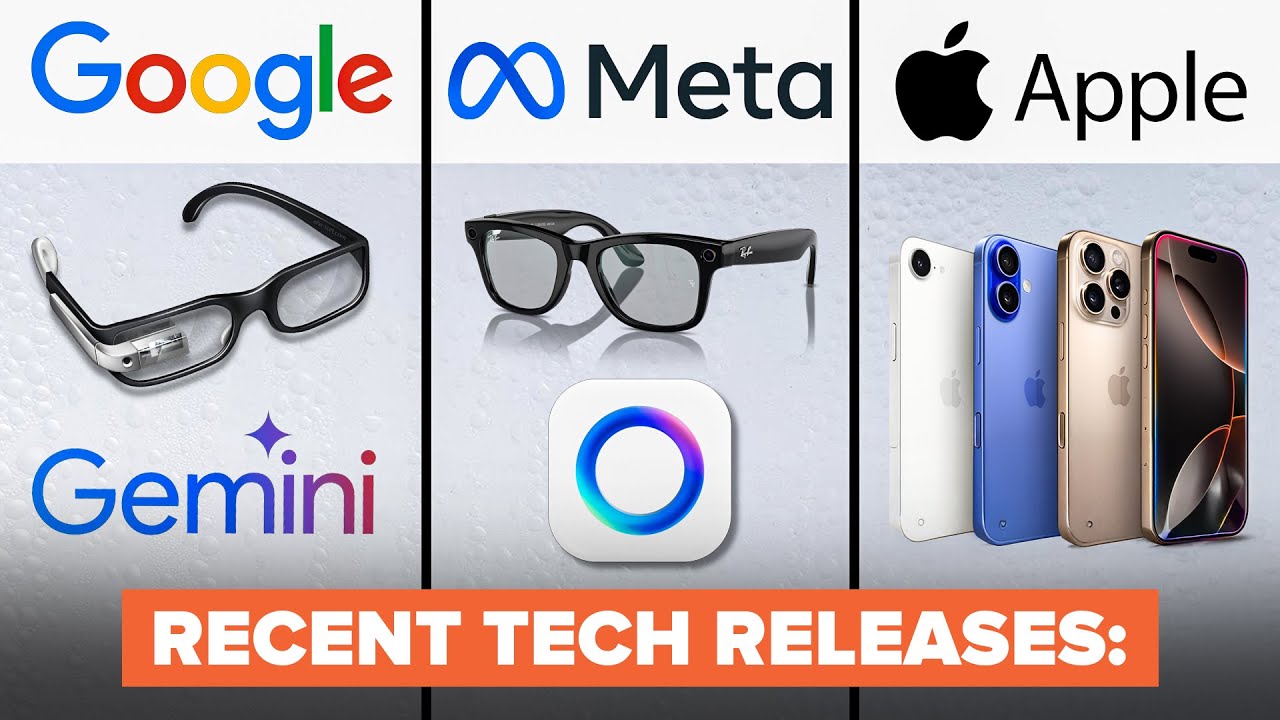
When you look at Google, when you look at Microsoft right now, when you look at Apple, Nvidia, I feel like Apple on the innovation curve is kind of going down while the other ones are, are going up, right? When it comes to this AI stuff, are you pulling up the stock? I, I would say Nvidia's innovating. I think Google's still doing well, right? Um, Google has its new glasses coming out. I think Meta's doing a good job with their glasses as well. I think the one that's not innovating as much that will still continue to print cash for a while is probably Apple. I feel like Apple on the innovation curve is kind of going down while the other ones are, are going up, right? When it comes to this AI stuff, are you pulling up the stock?
Dude, no, check this out. I actually texted someone on this. Okay. Uh, here's Apple's revenue in 2022. Uh, it's $394.33 billion. So $394. What do you think their revenue is in 2024?
Higher.
$391.
Okay.
Pretty much flat for '22, '23, and '24. All 3 years have pretty much been flat years.
Now look at Nvidia.
I agree. But before I look at Nvidia, what do you think has happened to Apple stock in the last 3 years?
Grown.
By how much?
50%.
2022. I'm just picking a middle point, like around June, $140-ish.
Uh-huh.
Right now, $211. So call it $210.
Okay.
Right.
Yeah.
So, so 50%.
That's 50%. Yeah.
50%.
Yeah. Yeah.
Like 50% with flat revenue.
Uh-huh.
And profit hasn't drastically increased or anything like that.
And plus they lost that lawsuit to Epic.
Yes, but they're trying to still fight them. But going back to, you wanted me to look up Nvidia. By the way, that was the silliest thing I ever did. You know, I believed Nvidia wouldn't keep going up and I thought it was the right time. Oh, that's foolish.
I could have told you just leave it there for 5 more years.
I was just really dumb on that one. You don't call them all, you know, but you look at Nvidia—
Well, you trade. It's a little different.
But you look at Nvidia, oh my God, you know, it's skyrocketed. Um, but what do you want to look at? Their numbers?
No, just how much, um, the revenue growth last 3 years. Yeah, the blue revenue growth, right?
Annual 2023, $26 billion. What do you think 2025 is? Their, their years end at different cycles.
Annual?
Uh-huh. $26.
What do you think? $25?
Uh, in 2020— in 2023, they had $26 billion in total.
Yeah.
2025, what did they do for the whole year?
I'm saying 5x.
Uh, yeah, $130 billion.
Yeah.
So yeah, it's kind of crazy. Yeah, that's spot on. They do more profit right now if you just look at net income, not EBITDA, because net income is true cash flow. They do their net income of $72 billion, which is more than what they did in revenue in 2024. I'm talking about profit. Drop it to the bottom line after paying interest payments and all that kind of stuff. $72 billion.
You know what we should talk about? So, so Microsoft just cut 7,000 people because AI is that damn good, right? And I saw someone on LinkedIn post yesterday, we should unionize. I'm like, like what? Like, so anyway, that aside, but I think what's worth bringing up is these private CEO conversations around AI and their people, right? So I kind of just mentioned earlier I was on a call And then everyone's like, you know, one person's building AI technology, let's just say in the fitness space, right? Um, one person took from another, another idea where it's like, oh, they have an AI enforcer team where it's like, let's find AI efficiencies, but let's also bonus people on cutting other people, right? Which is, you know, it is what it is.
Yeah.
Um, and then the other one's like, he's like, huh, you don't want to go with AI? Okay, gone. Right. So $6 million in payroll cut. That's annual payroll, right? Um, and so I think it's, it's just, that's an example. I, I think it's worth us bringing up some, some stories. Um, and we're not gonna name names or anything, but I, the, the reality is that it's either you shape up or you ship out.
Yes. But going back to the Microsoft example, when they laid people off, they typically lay off bottom performers and people from divisions that aren't making money.
Mm-hmm.
AI is definitely gonna impact roles in corporations. That's a given. Uh, but companies at the same time tend to use whatever excuse they can to cut. And a lot of the— one of the most common excuses that large corporations have used over the years is bad economy. When the economy gets bad, they're like, oh, things aren't going well. We need to cut. And if you look at a lot of the big tech companies during the last few economic downturns, whether you want to call them recessions or not, but just when people are feeling the pain.
Yeah.
They're making more revenue and more profit and their balance sheets are massive and they're doing stock buybacks. It's what they say to be, to make, you know, to use as an excuse for it to be acceptable for them to just cut.
When we talk to people behind the scenes now, I'm, I'm kind of speaking for both of us right now. I don't even know how it is for you, but it is like, let's not necessarily add more headcount. I'm, we're not looking to decrease headcount, but let's not necessarily add headcount. That's kind of the word things are right now. Eventually, I think in the next 1 or 2 years or so, it's more so, okay, who's gonna need to go? Um, but that, that's where we sit right now. And so what, what kind of blows my mind right now when I'm, cuz I'm talking to a lot of COO candidates or GM candidates right now, when I ask them, like when, when I start the conversation, usually it's, it's how did you prepare for this conversation? I love that question. Right. Um, it just shows how much research in them. The second one is, so what are you doing with AI right now? Oh yeah. You know, not, not really much right now. I'm kind of waiting to see what happens. It's like, oh yeah, you're just done right there. Um, but one of my favorite questions, by the way, is tell me about a time when you worked your hardest. Some people have answered me in the past, 40 hours a week. And I'm not saying you need to work 80 hours a week, but like when you tell me the hardest you've ever worked is 40 hours a week, done.
Yeah.
So, so, and, and then it's like, so how many hours was it? Like some people are like 100, 120 hours. I'm like, oh, please don't, don't do that here. Like, I love that. But, um, these questions tell us so much. Anyway, I digress a little bit. Let's, let's bring it back to the, the conversations, the AI piece. Yeah.
Yeah. Um, but before we go to the, there's one interview, uh, that I ended up doing, like call it a few months ago.
Uh-huh.
Where I was interviewing a product marketer. So someone whose job is to market a product, market new features. Um, you know, in marketing people only think about driving traffic, but when you have more features, how can you market them to existing customers to generate more revenue and adoption? And they were telling me how they're using AI to come up with sketches and ideas and campaigns. And I was like, oh cool, for what? They're like, oh, for a friend's project and some side projects. And they're telling me all these examples they're doing. This is over Zoom. And I was like, oh cool, do you mind showing me some of this stuff? And I'm like, here, you can screen share. And they paused for a little bit. They couldn't end up sharing anything. They had, they couldn't come up with an excuse. So I came up with an excuse from them. I'm like, oh, is it sensitive data and stuff that you can't share? They're like, yeah, yeah, it's sensitive.
Yeah, yeah, yeah.
And I'm like, Yeah, that, that doesn't work for the stuff that you were trying and testing on your own that had nothing to do with other companies. Um, and definitely didn't hire them. But I love actually having, having people show me examples when they're talking about AI and marketing. And if they can't show me examples, I don't want to hear 'em. I want to see 'em.
Yeah.
Because then I can judge how good your prompts really are and how good you are using these tools.
What Neil's actually talking about is once you start to peel the onion, 1, 2, by the 3rd time they usually, they usually broken. Right.
Yes.
So you're, you're basically, you're, um, dressing them down, right? And just slowly. And you can tell when someone talks in very long-winded stories and whatever, I'm just like, can you just show me an example? And then it quickly falls apart. And that's when I end the interview. So now I have no qualms ending the interview very early. It's like, hey man, I just wanna be very honest. Like, I think you're a great person, but this is just not the right fit here. And that's it. And I'm sure you do the same thing too.
Yeah. And I'm, I'm, I'm, Actually, I usually don't cut it short.
You don't?
Usually when I do interviews, other people are on there with me. And I know this is going to sound bad and I probably shouldn't say this, but I'll just, I'll, I'll try to find a reason to turn off video.
Yeah.
And then I'll work in the background and I let someone else take over the interview.
Why don't you just say you got to go?
I could, but I don't want to hurt their feeling and I feel really bad.
Wow. At that moment, you feel like hurting someone's feelings?
Yes.
What the hell? Of all places, that's the easiest place to leave.
I know, but sometimes I don't want to say it. Like sometimes I'm— in some instances I'm very confrontational, in other instances I'm not. Um, it's just like, dude, when we talk to other entrepreneurs, going back to your question on what are we hearing behind the scenes, most of the people that I'm talking to, we all believe in a similar concept that you said. It's like, we're not just hiring as much. We're hiring still really good, amazing A-players when we can find them. But in general, we're not hiring as much and we're just focusing on how not only can we use technology, but how can we do more with what we have? And that has nothing to do with AI just because things are bad right now. And then the second thing that we all know is when you have a decent amount of headcount, you naturally get attrition. So when people talk about how AI is going to change marketing and it can change, you know, headcount and all this kind of stuff, You don't necessarily need to fire. People naturally leave a company no matter how good you are.
You just don't replace them.
You don't replace them. And that's the example with Amazon. You look at Amazon and their fulfillment centers during COVID they boomed and then things started slowing down because the COVID rush was over. So like, oh, is Amazon going to lay off a lot of people? Well, in their service centers, they look at how long someone lasts in general for a job. They're like, oh, we don't really need to do anything by this time. All these people are gonna leave. We're good. And then they look at how much they would've had to pay in severance, and then they do a math, uh, calculation of what one's cheaper.
Dude, speaking of AI, okay, you're gonna like this. Do you have a, do you have a robotic cleaner at your home?
Like a Roomba? No, I haven't found any that are good yet.
No, no, no, no, no, no, no. See, see, I, I bought this when I was on a plane. Um, so, so some, some guy tweeted this, right? And then Wired reviewed it and it's like the best robotic cleaner cuz it maps out your entire home. And so I, I went to the website, Apple Pay was there. I instantly just clicked Apple Pay. $1,200 robot over here. Is it really good? It's arriving in like a week or two, but like it'll tackle crumbs. It'll know not to like suck away like a, like a dog or something. It knows to avoid like maybe poop, for example. Um, but you can see it knows exactly what to do and it maps everything out. It's called Matic. Yeah.
It knows to not get the toys.
Yeah. It knows not to get the toys. It struggles with Legos though.
It can do spills too. Yeah. Same thing. Or you have to switch up the—
Dude, I don't even have it yet. It's coming. Like, like just—
Dude, you gotta let me know if it's legit.
I'll let you know. This is the first time I've ever gotten something cuz I've never trusted like a Roomba or anything else. Like my friends love their Roombas and all that. But this is the first time in my life I'm like, saw the Wired interview, someone tweeted it, saw the Wired interview, instantly bought. And that's— this is why you never know how attribution works. Because I saw a tweet and I went to Wired. How do you know where I bought from?
If you told me it was amazing right now, I would have just bought it if you said it doesn't—
Exactly. So attribution, it's so hard to get down.
It's so hard.
Yeah.
So because I'm OCD, I have a cleaner 7-day memory.
That's why I'm saying this would be perfect. Like, you would buy like 3 of these.
My house isn't that big, but my new one—
Your new one, you're gonna buy 3 of them. Yeah. Anyway, it's called the Matic, guys. I, I'm not affiliated at all. Um, but this is interesting because Wade Foster of Zapier, he said that the real use case for AI is not replacing jobs. It goes back to what I was saying earlier about new work. Um, so he said this, he said, a common refrain is that AI will replace human jobs. I think this is a misnomer based on what we've seen at Zapier. While some AI use cases replace human tasks, Far more AI use cases are doing things humans couldn't or wouldn't do because of cost, tediousness, or time constraints. So he's like, I'm bullish on innovation in a whole host of areas that would have been considered niche in the past. I'll give you one example here. So I think a week ago I told you we have this thing where like Noah might say, okay, here are the top 3 things I got done yesterday. Here's the number one thing I got done. So we have a coach in there that's actively checking like how you're doing, right? And the thing is this, after a week of having this in there where it's like, oh, Neil, um, your number one task isn't that high leverage. Like, here's what you should do instead. And it actually looks at the last 30 days and it keeps coaching you. If you keep making the same mistake, it'll call you out in public and then it'll do like a leaderboard at the end, like who's been consistent with it, who's scoring the highest and who needs like the most help. And so that becomes a performance question, uh, conversation, by the way, if you're not performing that well. A week later, everyone's stuff has gotten so much better. It's like all high leverage stuff because you want your people working on high leverage stuff. And I'm like, I couldn't have done that before cuz you would've had someone like you or me needing to enforce and check. Like nobody has time for that, but now the AI does. And then I used the, the prompt I gave you earlier. I just kept refining the prompt. It's getting better and better.
It's kind of similar to something that I do manually in marketing. So what I like doing is you take our marketing team, I ask them, what do you work on just in general? What do you work on that helps us improve our goals of more leads, more revenue, more upsells, lower retention?
Mm-hmm.
And they create a list and they send it to me. Separately, I ask the manager to create a list and I say, you have all these people that work for you. What are they doing to help really improve our business? And then you can see where there's a disconnect.
Yep.
And then you start digging in where there is a disconnect. 'Cause that usually tells you there's something wrong with either your manager or the people in those, in that role. If you trust the manager, there's usually something wrong within those roles.
Yeah.
Then you dig in with their, with the people that there's a disconnect. The manager stuff should align with the people.
Yeah.
When it doesn't, there's something wrong and you need to dig in. 'Cause there's either, you either need to fix what they're doing.
Yeah.
Or train 'em better.
Yeah.
Um, which I would put those at the same thing. Or if you can't, just replace. Um, or eliminate. It's usually one of those 3 things.
Dude, this is awesome. Okay, get this. So you take your voice in ElevenLabs, you use something like Lindy or N8N, and then what it'll do at the end of every week, let's say it calls me, hey Eric, what are the things that you're doing that are leading to help with marketing? It calls both the manager and that person and it fills it out in a spreadsheet. And then you use whatever model to just detect if it's actually high leverage and if they're aligned or not. And then you get a report on Sunday or something like that.
Yeah.
And then it becomes much more automated. Right.
That's true.
Yeah.
So I like it.
This is a form of new work.
Yeah.
That you like, you, you, you're probably doing this sporadically. Uh-huh. But imagine now it's, it's on every single time. And I'm not saying you and I should be taskmasters or whatever. Yeah. But at the end of the day, we care the most.
Yes. And I'm not trying to do this cuz I wanna fire people. I'm trying to do this to figure out if they're making—
Or micromanage or control them. Like nobody wants to do that.
No. And I just wanna make sure people are working on stuff that helps the business grow. If not, cool. I'll help you. You were hired for a reason. I'll help you shift your priorities so then that way you're more beneficial to the company. And if you're more beneficial to the company, you're likely to do better. You're likely to get more raises and promotions. It creates a win-win.
Yeah.
And people want to be valuable.
That's a great idea. I'm, I'm actually gonna try that cuz Lindy has a phone call thing and you can use your voice. Like, so it, it stole Elon's voice and it was like that one of the, the, the things is like, what are the, the, the 5 things you accomplished this week? So it just calls everyone. You can call the entire company doing that.
Really?
Yeah.
That's pretty cool. I don't know what kind of issues I'm gonna have legally from that.
You try it on your exec team first.
My exec team, I don't even have.
No, your exec team's too good. Yeah, yeah, you wouldn't want to do it on them. By the way, speaking of exec team, I just want to call out, I listened to this Mark Zuckerberg interview that he did with the Stripe co-founder. The Jony Ive one was pretty good too on design, but just the management styles of Mark Zuckerberg and Jensen Huang. So Jensen Huang's like He doesn't believe in one-on-ones. He doesn't need to do one-on-ones. He thinks best practices are a way to mediocrity. And then for Mark Zuckerberg, he doesn't believe in delegation, right? Um, and he also doesn't really believe in one-on-ones cuz he's, both these guys' executive teams are really good. But my point of saying this is that there's no right management style. Like, I remember I interviewed like a CEO candidate yesterday and then we had read a lot of the same management books and he was spewing a lot of this stuff to me. I'm like, bro, like I've read every, the problem with, with me is I've read everything that you've read, right? And what I've learned being a little older now at 38 is like, there's no right or wrong. Like best practices are usually a way to not, like you, you end up being like everyone else. I'm like, yeah, you gotta learn what works for you. And what I've learned is these are the things that work for me. And so Jensen might criticize publicly, right? It's just, but that's what works for him. And Neil was actually ahead of the game cuz I would always tell him about these new books I was reading and he's like, yeah, don't care. I'm just gonna do it my way. Right. And so he's, to, to Neil's credit, he's always done it his way. I've just learned a little later that I gotta do what works for me.
But go, you mentioned the Stripe founder. What does the Stripe founder do?
So the Stripe founder was interviewing Mark Zuckerberg at their user conference.
Ah, okay.
Yeah. Yeah. And so Zuck's like, dude, I, like, I'm gonna drop into whatever I want to drop into. And if I delegate it, that means someone else is like, no, like if everything rolls up to me as a founder, I'm gonna drop into whatever I want to drop into. And that's kind of how we are now.
Yeah. Yeah.
You've always been like that, but I'm, that's, this is how I am now.
So my favorite call with some of my executives, and we have a great relationship, so they're transparent. I'm like, oh, how's your day? How's, how's everything? And they're honest. Like, I'll tell them like, oh, it's a shit day. You know, I'm dealing with this and dealing with that. A lot of putting fires and fixing this. And, uh, some of my executive teams, I was talking to someone, they're like, oh, how's your day? They're like, dude, just sorry for getting back to you late. It's just been a shit day. A lot of problems to deal with. Excuse my language for anyone listening.
Yeah.
And I was like, did we lose any revenue? No, no, it's not that. It's just people not doing exactly what we want. The client wanted this, they did that, but they could have done A, B, or B, C, and D that would have produced even better results. And it doesn't matter that the client didn't know and didn't request it. We should be going above and beyond for our customers to get a better experience. That is how you grow agency. Because he's like, you do better than what they expect. You will then get more referrals. And he's like, I'm going to fix this if I have to, I have to fly. And I'm like, dude, you're having a baby soon. You know, I'm like, you don't need to fly. And I'm like, anything you need me to worry about? He's like, nope. He's like, move on. I was like, cool. Don't need to hear the rest. I know you'll take care of it. And typically, if they weren't having a baby, I wouldn't ask the details. I would have been like, loss of any revenue? And they would have said yes or no. And if they said yes, I would have dug in. If they said If they said yes, I would have said, what can we learn from it? And how do we repeat the— avoid making this mistake again and better satisfy our customers? If they said no, I would have just been like, cool, you'll deal with it. I'm on to the next thing.
Yeah.
But the only reason I do that is I know they care about the company like me, and they'll fix things.
These are your executives.
These are my executives. And even a lot of the people on our team, they really do genuinely care about the customers.
Yeah.
It's not about what are you getting paid for? It's more about what is a client expecting? How can you give them everything they're expecting and more? If you just give them what they're expecting, in my opinion, some people look at that as like, we hit the KPIs, we did amazing work.
That's base level.
Exactly. I look at that as average. I'm like, the client signed up for us to accomplish X. If you accomplish X, to me, that is not you did an amazing job. That means you did an average job. If you do also Y and Z, that's when you did an excellent job. We should strive for achieving X as a default, but also achieving Y at least, and maybe Z if we can pull it off.
Yeah. Because that's what makes us remarkable.
Yes.
It's not remarkable to be average. And so you want to do remarkable work, right? And then by the way, today's remarkable is tomorrow's average. So you have to keep pushing the pace.
Yes.
And again, this goes back to, this is why your executive team, needs to be strong or your founder has to keep pushing. That's how you keep things remarkable.
Yes.
Because once you disappear, I've seen this 1,000 times. The moment I try to disappear, oh my God, everything crumbles.
No, it doesn't work out.
Yeah. Yeah. You, you, I don't think you've ever tried to disappear. Like, I don't, just knowing you for 14, 15 years, you've always been involved. I don't think you've really disappeared. You know, the moments where, the moments where it hasn't worked out is like when you try to launch courses and things like that, when you had somebody else doing it and you kind of expected it to just grow.
Yeah, I, I also disappear in my own company, NP Digital. And, uh, to be very specific, we have so many different divisions and regions. I disappear on certain regions and divisions because when some of them are just doing really well and growing super fast, even in bad times, and we have regions like that right now, I tend to just not meddle. And I tend to be like, look, you may be doing things differently than I would, But if you're growing 50+% year over year on a decent baseline of numbers and your churn for your division is like 5% or something extremely low, I'm like, eh, I don't want to meddle. You have leaders who are doing really well, and then I go and just go focus on something else that needs help. But then sometimes I had to go back to the ones that were doing really well cuz maybe something changed in their government or their economy or in that division. where I had to go in and work on improving or fixing something.
I just look at this all as spinning plates, right? So you might have a lot of spinning plates and they start to become wobbly. So the moment they start to become wobbly, that's when you get involved.
Yes.
That's all it is. That's it for today. Please don't forget to rate, review, subscribe, and we'll see you tomorrow.









