Is real estate a good investment?, $50M or $1B offer?, Cameo’s fall: $1B to $600K, and more
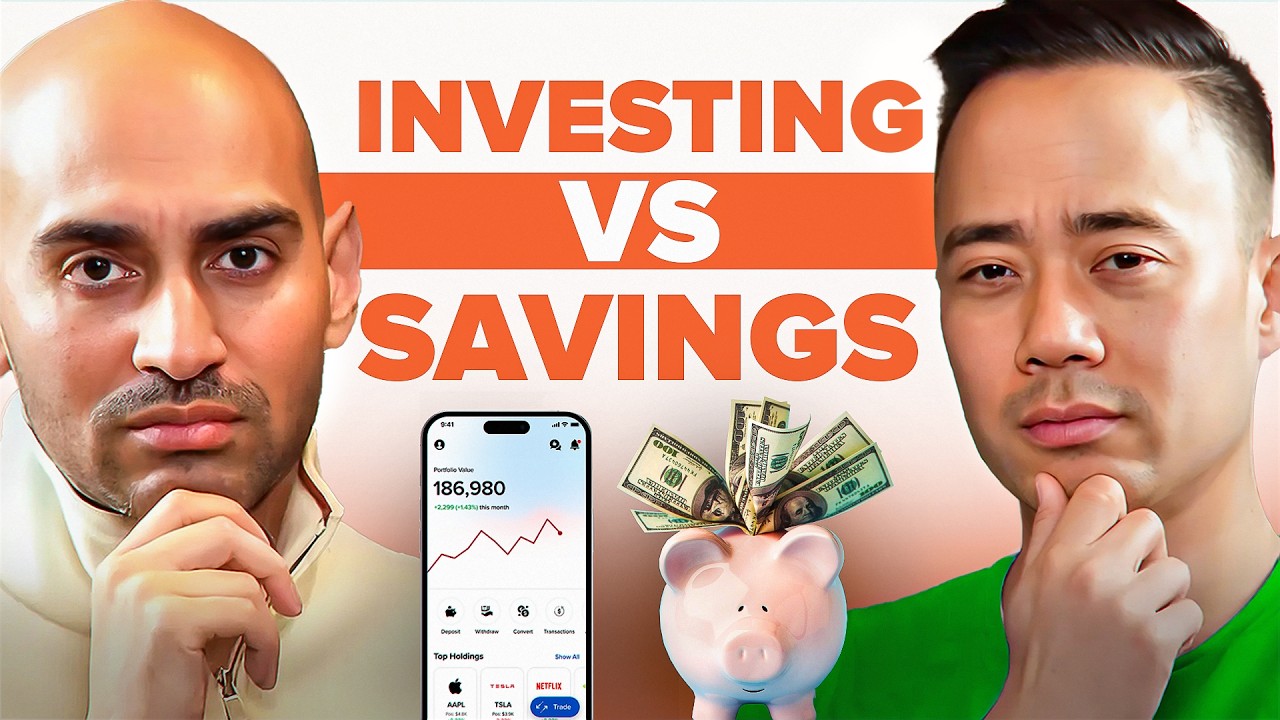
This content was created by Eric Siu. This content was uploaded by Eric Siu. This is a YouTube episode titled "Is real estate a good investment?, $50M or $1B offer?, Cameo’s fall: $1B to $600K, and more" (published 2024-09-09). The excerpt is an English conversational episode featuring Eric Siu and Neil Patel discussing investing and entrepreneurship topics — whether to invest in real estate vs. businesses, hurdle rates and long-term growth (technology and Bitcoin), depreciation, mistakes in real estate investing, trade-offs around raising capital and optionality, startup valuations and the Cameo case, and practical issues like hiring and offshore recruiting. The hosts also promote their Agency Owners Association (marketingschool.io/agency) and related hiring resources. Several other figures are mentioned (Ken, Mark Moss, Jason Lemkin, Matt Paulson) as examples or sources.
Chapters
When I was talking to Ken, I saw I was you know how you and I have talked about how like when we've seen our investments in the past, like the best investment has been our business. So I made that point, Ken. I was like, "Hey, should everyone invest in real estate?" Because that's kind of what we've been sold growing up. Like you know, our parents are always like, "Yeah, you should buy a house. You should do this blah blah blah blah blah," right? And for many people, the house is the most expensive thing that they own. And he and then he was like, so I was like, you know, for us, from what you've seen, and then I also brought up our friend, our mutual friend Steve. I was like. You know, we're just really locked in on our business now. And then Ken was like, "I'm going to challenge you on that." And he was like, "The reason you should have a business is so you can buy real estate." And his reasoning for that is like, you know, all the tax, all the tax benefits you get, everything. I'm just like, man, but I don't want to think about this stuff. You know what I mean? So I think this is something worth us exploring again.
So he's saying have a business, make money, and then go buy real estate to save on taxes.
I think his point was, and I did thank you for for talking about that. It's like he had a friend that had an exit for a two billion. $2 billion, right? I think at that point, yes, okay, deploy into your savings account. I look at real estate as a savings account that you don't want to touch, right? I think maybe that's what he means. But, you know, at least for us right now, I just don't think it makes sense.
And I look at the depreciation that you get in real estate, you get great depreciation from just buying businesses as well. I get so many wealth advisors who pitch me like, hey, have you looked in real estate? And have you looked at, you know, more stocks and all this kind of stuff? Have you thought about diversifying outside of technology? I'm like, no, I like technology. Like, oh, well, you got Crushed. I think it was 2002. Like you got crushed in 2002 or two thousand not 2001 was a good year, 2002. And I was just like, yeah, but 2023 wasn't too bad, and 2024 is looking out great. He's like, yeah, but you're only in tech. And I'm like, yeah, I like the focus. And going back to the business, I understand it. It's not that a business or real estate or anything one or the other is a better investment or worse investment. The question is, is what are you better at? And if you're better at one thing and you understand it, you're more likely to do better at that than something else. I bought a lot of real estate and lost money. And people always say, if you buy real estate in good neighborhoods, I bought a lot of real estate in Beverly Hills, California, which is a great neighborhood. I've lost a lot of money in real estate. And it doesn't matter that if you listen to the folks or what they say or these tips, sure, if I hold it for the long haul, yeah, I would've made money. But I just don't like real estate and I haven't had the best luck versus running internet companies.
You know, Mark Moss brought this up. So he basically said, this is kind of a related note, but what do you think the hurdle rate is that you have to clear annually based on all the inflation stuff going on?
I don't know, but let's call it 10+%.
Yes. Okay. So he said, I think it was 10%. So like, You know, you have like 3% for like he mentioned, like one thing is 3%, the other thing is 2%, and then you have 10% and it adds up to 15%. So that's the hurdle rate. I forgot the 3 things that he said, which is interesting. And he's like, so my point here is like he said, Eric, there's only 2 things that have grown faster than 15% in the last 20 years or so. What do you think those things are?
Real estate and technology.
Technology and Bitcoin. Technology and Bitcoin, right? And he brought up a good point because, you know, there's a difference between investing and savings. When he considers those two, like real estate and Bitcoin, as savings, where you put money into it and you don't want to look at it again and you expect it to appreciate over a long period of time, right? I think that's a good heuristic to look at it. And I know we're not an investing podcast, but, you know, this is the benefit of being a marketer and going to speak at these things. You get all these additional insights. So we're trying to share these insights with you.
I'm a big believer to stick to what you know. And I've always enjoyed investing in stuff that I understand. I remember when I was younger, and I think you were similar, we would just go buy websites on random stuff like hosting or casinos, and optimize them for SEO and conversions and just make money. Like you had a retirement home website or a gun website, right? It's just like, they all make money.
Gun website still does well. But like, I think it's the problem with us in the past is one, we want results tomorrow, or yesterday, I should say, we want results too quickly. And we weren't willing to wait for the results. And we were so— we're too optimized for the revenue more than anything. That's what I would say. So.
The quickly is my biggest issue. That's why I don't hold the real estate. Because people told me like, you know, if you just hold this real estate for another few years, you'll make like 10%, 15%. I'm like, But my returns in technology are way better than this, especially my own business. It's not hard to clip way more than even 20% returns a year. So I'd rather take the loss and just redeploy it and go get better returns.
I gotta take a minute to tell you about the Agency Owners Association. This is a peer group for agency owners. Think YPO or EO, but for agency owners. And I just wanted to read you a couple of testimonials. So this first one comes from Carrie, and we asked her, what do you like most about the group? She said, having a group of people to discuss and bounce ideas. The leads are great too. Yes, we share leads in this group as well. This one from Aliyan, he says, the ability to really post whatever I want and need and the group responds. Great experienced members. Getting a lot of insights from conversations with other members. Getting a lot of value from sessions from Eric. Getting advice from others as well. And so if you want to grow your agency faster and you want a peer group to do so, just go to marketingschool.io/agency. This is a group that both Neil and I created, and our hope here is to create a vibrant community of agency owners and do a lot more with it in the future. So again, marketingschool.io/agency, and we'll see you inside. I want to pull this up over here. So you pulled up one of my older ones. So can you see this post okay?
Yes. Early investment I made in a public company wanted to buy them for $50— it's hard for me to read, but go for it.
I'll read it.
I'll read it.
That's good. So this is Jason Lemkin. So again, he founded EchoSign, sold it to Adobe. He said, so he's a VC. So, an early investment I made, a public company wanted to buy them early for $50 million. The startup hadn't raised much money. They said no. Years later, they sold for $1 billion. Wow. Just one note. The founders made about the same they would have years earlier in the first deal. Because you figure when you sell for a billion, the founders probably own like 5% or something like that.
Yeah.
So, I think it's food for thought, right? It's, we talk about trade-offs and this is a good example of trade-offs.
Dude, I know so many people who raise a ton of money. I'm in Brazil here. There's a company that raised money at a $4.5 billion valuation, public, right? I'm not saying anything I'm not supposed to. And they raised this money in 2021. All right, the market was at all-time highs. They raised it from sovereign wealth funds. They took some chips off the table, is my guess, what it sounded like. And they raised, call it, a few hundred million dollars in the latest round. Well, now they have more competition. They have people who— not just more competition, but they also have people who have released competitor products to them and are charging like half the amount for the same thing. And they're still growing, but their growth rate's slowing down. And from my understanding, and I could be wrong, but what I heard from someone was When they raised money, it was 3 times higher than a buyout offer that they had. So call it a 1 and change or 1.5, right? So if they were at $1.5 billion valuation, they should have just sold that thing. Because now, I know hindsight's 20/20, you have slower growth, bad economy, you're burning a lot of money, although they are profitable, but their growth has just slowed down and they have tons of competition who's just undercutting their pricing for the same exact product. It's going to be hard to get the multiples that you once were, and you've just raised a ton of money.
Yep. So I mean, nowadays, it used to be like the wisdom 4+ years ago is like raise as much as you can, right? Now it's like, no, hold off as long as you can because then what happens is you have more optionality.
Yes. And it's so funny, dude. Someone asked me the other day, why didn't I— why haven't I raised money yet? And we've had a lot of term sheets. Well, the problem is the moment I raise money, my optionality just goes out the window. I have to think of someone else. And I'm not trying to be selfish. I don't mind thinking of others. And I do with my current team and my co-founder. But still, if you have someone else on your cap table with preference in which they get their money out first, it really changes the dynamics.
And in some cases, you don't have control anymore. You can't do the things you want to— like, you— the way— the reason you've gotten to where you are is because, like, you've done things you might want— you wanted to. But also at the same time, like, there is— sometimes it is helpful to have, like, other perspective and potentially a board, which I think you eventually will have down the road.
Well, I've raised money in the past from previous companies and I've had good investors. Yeah, not the current one. But I've had bad luck when I've raised money and I've had good luck when I've raised no money. My biggest corporations have been the ones I raised no money for. The ones that I raised money for did not work out. And the ones I bootstrapped have done really well.
Yep. Yep. All right. So, okay, we talked about that one. But Neil, this is one that you revived over here. Ironically enough, I know the founder and I've met him a couple times. So he's also, you know, in YPO. And so this story over here, let me just share my screen. All right, can you see this? Okay, so this tweet's from Matt Paulson. He says, surprised this business can't cash flow when it's mostly just taking a cut off creator payments. So this is from Fortune magazine. It says, Cameo went from $1 billion unicorn with major investors to a $600,000 court settlement it can't afford to pay. And so what's our initial take on this, Neil?
Well, I have no idea how this happened. So Cameo is a startup where you can have like a celebrity say something like happy birthday or whatnot.
Yeah. So, okay, let me give you an example. Thank you for calling that out. So you can have Kevin O'Leary, you can pay him like $1,000 or something and he'll say something, right? For example, I know Acquire, which is a company we both put a little money into. They had the guy from Silicon Valley, Russ Hanneman, right? The guy that like, you know, the doors close like, you know, we need doors that close like this, not like this, right? And so, they kept paying him to do all these videos. And it was cool to have like Brett Favre, the quarterback, or like Kevin O'Leary or any of these people. But anyway, you're paying these one-off payments to creators and it shot up really high during 2020, 2021. And I thought it was a cool business. But in the back of my mind, I was always like, man, it's not really— there's so many one-offs and there's such micropayments. They're not big payments at the end of the day. And they're only taking a small cut of it. It's hard to make the numbers work at the end of the day. That's what it really is.
So Cameo, it's not that their valuation isn't as high or it could be lower, could be higher. I don't know based on that article. It just means they don't have tons of cash in the bank account, but their assets are still worth something. What? Who knows?
Yeah. I mean, there's a response to the tweet over here. So the valuation, I kind of agree that the valuation was a little high. Not a little high, it was a lot high. But this guy said they only processed $132 million in their best year. If they managed to pull 100 basis points on $132 million, I don't even know how they kept the doors open, let alone get a $1 billion valuation. So I think going back to your last point, this might be a case where they raised a lot. If we just Google it real quick, fundraising, let's just look at how much.
I think Cameo charges more than 100 basis points.
They raised over $191 million over 5 rounds.
Um, uh, Cameo takes 25%.
Okay, but still it's hard to make the numbers work.
How much have they raised?
Uh, $141— oh, $191.
Wow. So if they're doing $130 million in revenue, they're taking—
$33.
Uh, $133?
So $132 million times 25% is $33 million.
Oh, okay. Yeah. So the $33 million is what they did in revenue for their best year. I don't know how someone gave them a billion-dollar revenue for something that does $33 million a year in revenue.
Well, billion valuation, you mean?
Yeah, $1 billion valuation. That's kind of crazy to think about.
Yeah. I mean, but keep in mind, every— also guys, keep in mind the time, like 2020, 2021, everything was up. Everything was crazy. Like I know a lot of relatives, we'll just put it this way, that like were giving me stock tips. Advice, like stock tips, stock advice.
So Cameo, let's say they do $60 million in revenue now. Maybe they're making, you know, I don't know, call it 20-ish percent on average because some celebrities may want more. I'm taking a guess because they probably negotiate. So maybe they're doing $12 million in revenue. I'm taking a wild guess here. That sucks.
The number one challenge for businesses is hiring, and more specifically, the number one thing I get asked for all the time is, Eric, where can I go find an amazing marketer? And the reality is right now, when you think about the world, we have inflation. That also means wage inflation right now. And it means that when it comes to hiring talent, you can't spend as much as you would've in the last couple years because it's just become too cost prohibitive. And so we've partnered with one of the best offshore recruiting firms when it comes to marketing. They've been a great asset for us, and I believe that they will be a great asset for you. All you have to do is go to marketingschool.io/hire. Again, it's marketingschool.io/hire to learn more. You can fill out the form there and we're going to place you with the best marketing hires that we can help you find. Neil, you actually have an episode over here or a topic on your business is only worth what someone is willing to pay, which I think is related to this.
Dude, it's so funny how people think their businesses are worth so much. You know, I was dealing with, A company, and I won't go into the details, we're looking at it, we negotiated a price, they agreed upon it, they agreed upon the multiple, and all of a sudden their EBITDA is down by roughly half. Well, it doesn't matter if you think it's worth the same amount. Just because you had a bad year and you think that, oh, my previous years were good, but the last 2 I've struggled, so I'm worth what I used to be worth. Well, That's up to you. The reality is people buy based on what they can see, not what the future predicts, right? And you really see that in this market. And a lot of marketers are going and buying companies now, not just from a business aspect, because a lot of marketers are like, oh, you have a lot of traffic and leads, you haven't done CRO, you're not getting that many, that much revenue, we can optimize for conversions and really boost the numbers. So you're seeing a lot of marketers acquire stuff for traffic acquisition purposes, but the sellers a lot of times just believe their companies are worth their arm and a leg. And it goes back to you're worth what people believe you're worth based on, you know, market conditions, not anything else. On a quick side note, you should lower your monitor just a little bit. There you go.
Yeah. All right. Oh, you have your iPad flat, huh? Yeah. I mean, you know, I think also talking about like, you know, I'm at this real estate investor thing, you know, people love doing deals and all that. I think it's important to understand what your buy box is. Like what do you actually want to swing at, right? So, you know, for Warren Buffett, he's like, you can just wait for the fat pitch. You can wait forever and just swing when the timing's right, right? So I think you need to understand what is actually synergistic for you, what's actually complementary to what you're trying to do. Let's say you're an agency. What are the upsides to doing this deal? And also, what are the downsides? I'll tell you before, like, I made the mistake in the past of not doing enough due diligence. And if you don't do enough due diligence, sure, you might get the deal done quickly, but you're going to pay for that at the end of the day.
Dude, totally. And, you know, time— you just have to be patient. And I think it was you who ended up telling me Warren Buffett or Berkshire Hathaway is the biggest holder of treasuries, right?
Yep.
Out of any corporation?
Yep. That is it for today. Please don't forget to rate, review, subscribe, and visit marketingschool.io/agency to apply for the Agency Owners Association. So we're changing it to application only now. And if you're qualified, we'll give you a call. And yeah, we will go from there. We will see you guys tomorrow. Bye.









