It's No Longer About Senior vs Junior - It's About Good With AI vs Bad With AI
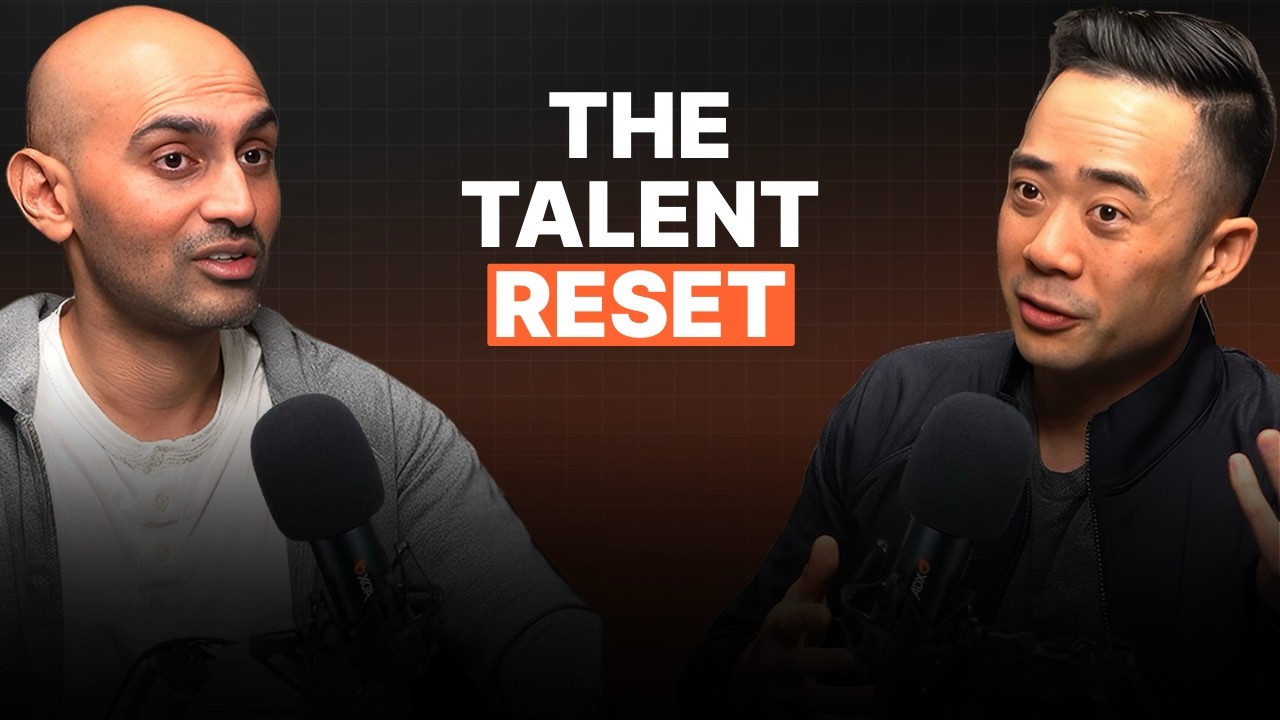
Eric Siu and Neil Patel argue that the future workforce divides not on experience level but on AI competence. They introduce a framework: workers are either dead weight, slop cannons, steady hands, or turbo brains, depending on judgment and AI skill. The real edge comes from pairing strong judgment with tools like Claude and ClickFlow.
Chapters
So we're not looking to fire people, right? Neither of us are. But Naval says this, so it's not about junior versus senior, it's about good with AI versus not good with AI. So I'm going to repeat that. It's not about junior versus senior, it's about good with AI versus not good with AI. And so when I look at, for example, let's just change this. Let's just change this quote. It's not about junior versus senior, it's about good with internet versus not good with internet. So if you use that quote for today, good with internet versus not good with internet, Of course, you're gonna want the people that are good with internet, right? Just because they're with the times. And now I look at this as kind of no different with that in terms of philosophy there. And so I think what is going to happen is there's gonna be some temporary job displacement in the next couple years, but I think net-net, most humans are going to be okay with jobs in the future. And not only that, all of these humans are gonna have agents helping them, right? We're already starting to see that with our organization. So At the same time though, I will say, Neil, I do get a lot of text messages at least once a week, okay, from one founder saying, like, one founder messaged me this week. He's like, oh yeah, we're going to cut 20%. This stuff is so crazy. I'm like, why are you cutting 20%? He's like, I don't know. I just don't need them, right? I'm like, he's like, I actually wanted to cut 40%. I'm like, that's a lot of people, right? And you saw Jack Dorsey from Block cut 4,000. So I am a proponent of helping our people get there. And I say that, right? Like, We want to help everyone, like we want to bring everyone to drink the water, but we also can't force you to drink the water too. And so, you've heard me say this before, like I want to shake people to help them wake up, right? And I would say the good thing is I think people are starting to wake up now at my company. I don't know, how about yours?
Yeah, I think they've been awake on this stuff for a while. It's just, I think awake's the wrong word. I think you're starting to see more excitement within organizations. Forget the waking up. I think just people are more excited. with everything that's happening and they're starting to really adapt it because they're seeing everyone else talk about it and adapt it and no one wants to be left behind. But I have 2 comments to make. The first is when your friend just said he's going to remove 20%, when you think about his company, I bet you if you just forget AI, he probably didn't need a lot of those 20% anyways. And sure, AI is probably saving him some money, but I don't think AI is the only cause for firing this 20%. Would you agree with that?
I can't comment. I don't know.
Yeah. Okay. But typically in organizations, when we see people cutting, people like using AI as a main reason. For publicly traded companies, at least, it is the best explanation because it makes you look better. And if you look at Block stock, it went up. It's a great marketing angle. If you use a narrative that we overhired and we didn't need all these people because we didn't grow into it, Your stock's going to plummet because it shows that you're not hitting numbers. And if you look at Block and a lot of other stocks, Block is not having the growth that they once had. You can see it in their quarterly earnings. I can actually pull up their growth. If you look at Block stock, it did go up quite a bit. I think it was like 20%, 25%, but their annual growth rate, if you look at quarter over quarter, is 3.65%. So they're not growing into all these people that they ended up needing. So you just end up cutting. But AI is a better narrative if you want a stock to go up versus your stock to go down. The second thing, my favorite AI quote is actually one that Eric came up with. AI brings out the best in you or the worst in you. And I'll give a prime example that Eric can relate to and everyone can understand here. Everyone's worked with lazy people. I have a really close friend. I've told him this. Eric, you know one of my really close friends that I'm talking about who's somewhat lazy. You agree with the statement when I say he's lazy, right?
Mm-hmm.
And I've told him this, by the way, so I'm not trying to say this behind his back. I'm not going to mention his name because that would be rude, but I have told him this many times in his face, and I actually had a conversation with him about this. No joke, 2 days ago.
Wow.
So a mutual friend, uh, not of Eric's, but of mine and his, hired him to work on their restaurant business. And I was talking to that guy and they're like, yeah, I'm working with him for a few months. I'm not going to pay him after that. I was like, so what happened? He's like, dude, he just keeps giving me ChatGPT outputs. I was like, what do you mean? He's just like, We're trying to get more traffic and more business to our local restaurant. Luckily, we only gave him one location. I'm speaking as a person who owns a restaurant, and I'm repeating pretty much what he said, or I'm paraphrasing. And he's just like, every time he does work, gives me stuff, you could just tell it's done by ChatGPT. There's no creative strategy. There's no real input from someone who claims that they've worked within this industry. It just seems like mediocre, average outputs. And his viewpoint is if we optimize for the average, we're never going to win. Everyone's doing the average because they all have access to these tools. And I personally agree with that. And in this case, AI is bringing the worst of that person. It's taking the person who doesn't want to do work in the first place and making them more lazy. And when I confronted the person and I told them and I gave them feedback, What do you think their response was, Eric?
Whatever. They were offended and whatever.
They weren't too offended, but they were with whatever. He's spot on with that. Eric knows them well too. And when he said whatever, he's like, well, everyone's using AI, so what else do they expect? Actually, you can actually consider that somewhat offended as well, right? They're, instead of taking the feedback and trying to improve, I'm not saying the client's right or wrong. That's open to people's opinions. I have my own opinion. You guys probably obviously know where my opinion is on this. this based on how I'm talking. But his opinion is that everyone's using AI. What else do they expect? Right? And my feedback to him is I'm like, yes, but if everyone's using AI, they're getting similar outputs. How's he supposed to beat his competition when they're all using, doing the same stuff as you? They need something more than that. They need something better than that.
Beat AI, beat Claude.
Yes, exactly. And dude, even going back to beat Claude, Claude, the company who created it, and Eric talked about this earlier, they're telling people to delete Claude because they know if everyone's just using Claude to do the work, it's not the best and it doesn't mean you're going to beat the competition. It doesn't mean Claude sucks. Their own company's telling you to beat Claude. But to beat Claude, you need Claude combined with a human who's amazing. It's not just a human who's amazing. You need Claude combined with that. In other words, you need an amazing human with AI. And, you know, I was talking, or if you look at what Eric's been doing and talking about the examples he's been giving today, right? He's showcasing how he's growing faster with AI, but Eric has a lot of experience in marketing, so he's doing better when you combine both. I spend a lot of my time on M&A, finance. So, you know, I shared my screen today showcasing what I'm doing with AI to make better decisions on where to spend resources and where not to, to figure out what's going to maximize my ROI for time spent. And Claude's been able to help me, you know, create these reports that I can share internally. No joke, not in minutes, but call it in 10, 15 minutes, which is really fast and way faster it would be for me to use Excel Or talk to someone on my team and have me help out here, right? And these are just small examples. Eric and I are also using AI in many other ways. But when we look at our A players, an A player doesn't necessarily mean someone who has tons of industry experience. A player means someone who's going to grind it out, figure things out, learn, put in the hours. They could be junior, they could be senior. But when people have the right mentality and then you give them AI, The outputs are just so much better and amazing. It's because they're not lazy. You give people who are motivated and willing to crank it out and learn and, you know, think with the strategic hat, AI makes them so much better. It levels them up by multiples. The lazy people, they just get lazier and they just produce crap outputs.
Quick break. Look, I know what you're thinking. Another AI content tool. Great. More garbage content on the internet. And I thought the same thing. That's why we spent years building ClickFlow differently. Here's actual feedback from a user. It's sophisticated, grounded in real language, authoritative, but not academic. You've hit the sweet spot. That's not AI slop. That's content that you would actually publish. ClickFlow also helps with things such as internal linking, building FAQs, and reporting on the content performance. If you're skeptical, you can just go to clickflow.com and try it for free for 14 days. And if it sucks, just cancel. But I don't think you will. Back to the show.
Okay, so this is a—
I'm going to close it out with this one, okay? Because I have to go to a webinar and I have to pee and I have to prepare and all that, okay? So here's how I'm going to close it out on this piece. So take a look at this screen over here. These are the people that will not only survive in the workforce, but they will also thrive, okay? So you want to think about the people that will not only survive, but they will thrive. What we just talked about here, the people who will get fired in this AI world, okay? And this is— if you think you're part of this, you should probably think about how you can survive and thrive. So let's talk about this first. People who do not have good judgment and do not use it—
Eric, do you want to explain the image for anyone who's listening to the audio version?
Yeah, that's what I'm doing right now. Neil just broke my clip. I had a really good clip going.
No, no, but we should start with does not have a good judgment. I'm looking at a 4x4.
I was doing that right now. Okay, okay.
All right, all right.
So I'm going to explain it.
Okay.
This 2x2 chart we've gone through before. Okay, so these are the people that will not survive in this AI world. These are the people that will unfortunately be fired. Okay, so the people who do not use AI and who do not have good judgment, they are considered on this 2x2 dead weight. Okay, this is on the bottom left of this 2x2. Now let's say they do not have good judgment, okay, but they use AI, they become slop cannons. So the person that Neil just referred to, he is in effect a slop cannon because he does not have good judgment. He's like, everyone's using AI, we should just use AI. Well, if everyone's doing that, then everyone's doing the same work and there's no differentiator, and thus you should get paid nothing, okay? Because it is a tie with everything else, okay? All right. Now, in today's world, so the people that Neil likes at his company, people I like at my company, these are people who have good judgment. Maybe they don't use AI, but maybe they're very willing to learn and they're very all in. They just need some direction. Okay, great. These people will definitely survive. Now, the people that will thrive are the people that have good judgment and they use AI at the same time because then they become turbo brains, right? So we want everyone to become turbo brains. We want to give them the resources at our companies to do so. But also, if you have someone at your company, I just— I'll be honest, on my end at least, the more— if people are willing and they're capable, great. But the people that aren't willing and aren't capable and they give a lot of excuses, they won't last very long because it's becoming more and more unacceptable and the AI's taking more and more away of their jobs because they do not want to use AI and they don't have good judgment.
Totally agree. And the key here, I know Eric has to end up going, is to help the people who have good judgment go from steady hands to turbo brains. So you got to educate and teach them. An example for this is, you know, I showed the Claude code doing financial projections. We started teaching our financial team and having internal people who teach them how to use Claude code to do a lot of these financial projections. Also, they break down the errors that it creates because trust me, it's not perfect on the first run, sometimes not even the second run, and sometimes the numbers are off. Third, how to fix the errors and not just double-check it. And fourth, eventually NetSuite and accounting solutions and finance solutions will have it built in so they don't need to use Claude Code. Maybe NetSuite partners with Claude Code and builds it in, you know, natively in it so it makes things easier. And that is actually where AI is going. We're not going to be using Claude Code and ChatGPT for all this stuff. The software solutions we're paying for will adapt and just have this all built in and do it automatically. So that way you don't even have to spend the 10, 15 minutes or do any prompts. You just tick some boxes.
All right guys, well, I hope you enjoyed this. I need to go run to a webinar. Neil's going to go to bed. So hope you all enjoyed it and we'll catch you next time.









