Jensen Huang’s New Plan for Employees Is INSANE
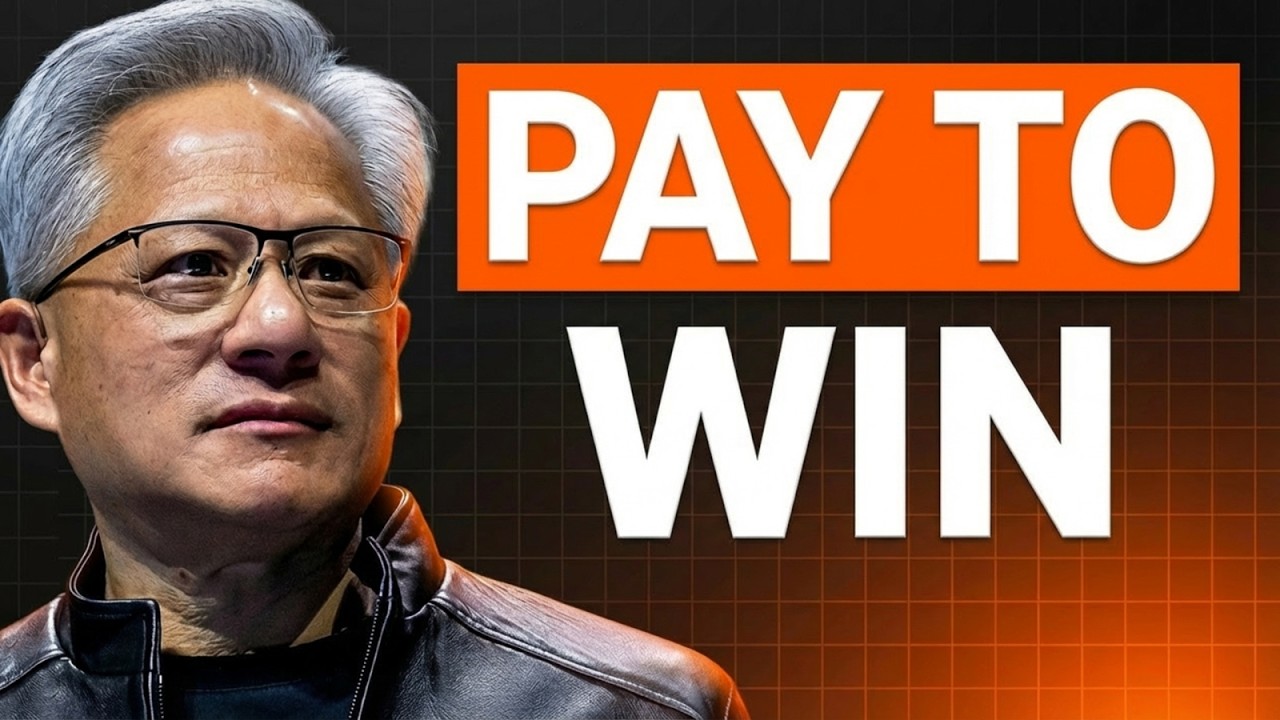
Jensen Huang says high-earning engineers should spend roughly half their salary on AI token usage. Eric Siu and Neil Patel break down the cost pressures pushing companies toward on-premise AI hardware, and share seven SEO strategies for 2026, from outreach to existing linkers to repurposing content on TikTok.
Chapters
So Jensen Huang from NVIDIA said that he would be deeply alarmed if a $500,000 engineer was not spending $250,000 worth of tokens. He said he would be deeply alarmed. And Neil and I were just talking about this pre-show, and I think there's some nuances around this that we wanted to talk about. So Neil gave his reaction, and I think we can talk about this because I think people need to better understand, I think, what Jensen's trying to say.
Yeah, what he's trying to say is he wants people to use AI to do their jobs more efficiently. And Eric and I were talking about him like, yes, him saying that also benefits him. because it generates his companies more money. But even outside of that fact, I do agree with him. I don't think they need to spend $250,000 worth. And I'm not saying he's necessarily saying they should be spending $250,000 worth, although I got the inclination from what he was saying is he wants them to spend the money. I was telling Eric, I'm all for them using AI very heavily, but a lot of it should be through open source because there's a lot of amazing open source models. And maybe it costs you $30,000 instead of $250,000 and you still get the same result because you're using a lot of it through open source instead of paying, you know, the Anthropics of the world. I do believe if the pitch is, hey, AI will make you more efficient and save you more money in marketing or whatever you want to do, well, at the same time, why don't I just try to use other models that are cheaper and cut costs even more? You know, internally, that's what I would do.
Yeah. So what I would say is this, when He says, when Jensen says, oh, I want everyone to be spending $250K, or my $500K software engineer just spent $250K worth of tokens, it's exactly that. He wants them to spend worth of tokens. So if you do open source, maybe 80 to 90%, and maybe you're running it on your local infrastructure, and then maybe 10 to 20% on either the premium tokens, that can still add up to $250K worth of tokens, right?
Yeah.
Because if you do the math that way, so that's what he's saying, because the efficiencies you gain from it, it's no different. The analogy he gave was like, You know, it's equivalent to like a designer that doesn't want to use, or architect that doesn't want to use CAD tools, right? These design tools. Or it's equivalent to not using the internet today. So I do believe directionally he's correct. And obviously, like, what Neil and I were just talking about was he's such a great salesman. He's like, I'll be deeply alarmed if he's not using these tokens over here. And he's like, and he, I heard him in the Lex Fridman interview. He's like, yeah, you know, every computer now, every computer is intelligence factory. I'm like, oh man, I need to go buy more computers now, right?
Yeah.
So, but everything, It's like, 'cause he, he, Nvidia is like deeply embedded in the supply chain for everything now, right?
Yes.
So I just, I think he's a genius salesperson, but I do think people should be spending half their salary worth of tokens. And if you're non-engineered listening to this right now, I still think you should be spending a good chunk. 'Cause Neil, I was looking at my cost the other day. I spent on 3.5 billion tokens this month myself. What do you think my spend was on Anthropic?
6 grand.
Close. Very close. Why'd you guess 6? It was $5.6. Why'd you guess 6?
Because you told me you were at $5,600 a few days ago, so I assumed this month you'd be at 6 grand with the remaining days off.
Yeah, $5.6. But in my mind, like, and Neil and I have talked about this on the phone, it's like, we're gonna need to buy more infrastructure for our companies just 'cause it's untenable. If I'm spending this much, I can, once people get to like even half the level that like I'm spending right now, it's, you can't afford it. So you need at least 80%, 70, 80% is open source on local infrastructure.
So we— I don't have the numbers in front of me, but I know internally we've been looking at our costs for AI for our engineers and our product team. The cost has been exploding. It is becoming a massive cost center. I agree, it's amazing tech. It produces tons of efficiencies, but it's not as simple as like, oh, you don't need as many engineers, these tokens. These tokens are extremely expensive as well.
Yeah.
And what we're trying to do internally is figure out what we can do through open source to drastically reduce our costs there. Because what we're finding in many cases, dude, we can spend easily the amount of tokens that it would cost for an engineer, and we're not necessarily getting the efficiencies as 2 or 3 engineers.
I think you need both. You need both.
And it doesn't mean tokens are— using AI is the wrong approach. It just more means that we need to fine-tune how our costs are structured. So then that way we're seeing the benefits of it. 'Cause right now the people who are seeing the benefits from us are like Cursor and Anthropic and not us internally from a cost savings perspective.
You see the news with Cursor, how they launched this new thing, right? And then basically the KIMI, like the open source people in China, are that there's—
dude, you're just saving— They tweeted out about it.
Yeah, they tweeted out. Exactly, that's where I saw it. They tweeted out, but—
And why do you think they did that? They have to save on the tokens.
Yes.
'Cause if you look at Cursor's business model, majority of their money, was going to Anthropic. They were collecting money in from a corporate, from clients, and a lot of it was going out right in cost to Anthropic.
Yeah, and I think their $2 billion revenue is slowing down now in my mind, 'cause a lot of people are kind of coming off of Cursor. So they need to figure out a way.
No, dude, you haven't seen the reports then.
No, I haven't.
They're raising money at a $40 billion valuation. Their growth is accelerating like crazy.
I'm like, so I'm a Cursor, I'm still a Cursor user. You don't use Cursor, do you? My team does. I'm struggling to find a reason to keep it. And then when I was talking to my CTO, same thing for him. He's like struggling to find a reason to keep it because Anthropic is shipping so quickly now that you can And use a lot of stuff that you used to use Cursor for, you just do it directly with Claude 'cause they're so fast. What revenue reports are you seeing? They've raised in a new round.
Okay. To give you perspective, they surpassed $2 billion in revenue according to Bloomberg, and their revenue run rate doubled in 3 months. So they went from $1 billion to $2 billion in revenue run rate in 3 months.
And this is recent?
This is from March.
Wow. Okay.
March 2nd. So less than a month ago.
Yeah. So I don't know how they're accelerating, but they are, and good for them. And I hope they don't die. It's enterprise. They're going more and more enterprise. That's fair. You know who else is going enterprise?
Wait, one last thing on Cursor first. Cursor was last valued at $29.3 billion when it raised $2.3 billion in funding, and that was in November. But it looks like they're supposedly raising at a $40+ billion valuation now.
They're going to need to do something very novel, maybe make their own models or something. Like, you know who has their own models now? Fin from Intercom. They released their own model yesterday, and it's a better— it's a vertical model now. And I think vertical models are going to do well. Like if you have one that is dedicated for like medical care, for example.
Yeah, medical care, address marketing or whatever it may be.
And they talk about this. This is institutional AI versus individual AI. Individual AI is you might be using a more generalized model, but institutional is you're focused on a certain area and then you're just, you know, releasing that model out there, which is what Fin is doing, so.
Yes, yeah.
Quick break. One of our ClickFlow users just told me that they're saving 90+ hours a month on content alone. ClickFlow is our AI SEO product that actually does the work, not just here's what you should do. It does it. It creates content in your voice. It helps you with other areas. Such as finding the right internal links and creating FAQs. We spent years making it, perfecting it with our clients, so it doesn't just sound like AI slop. You can get a 14-day free trial at clickflow.com. If you're serious about AI SEO, you should check it out. Back to the show.
All right, so the next one that we are actually going to talk about is let's go with SEO marketing trends for 2026, which actually is not on this sheet, but I will start because we'll make it in a listicle. And I'll update Eric when he comes back. So an SEO trend that we're seeing in 2026 is, or trend number one is companies are going back to a lot of the sites that are linking to them. And when you think about SEO and you're getting link text like someone saying best CRM software or best teeth whitening product, we're also seeing them hit up those companies and making sure they're mentioning their company name and product name on that page. Because if someone linked to you, it's much easier for you to get them to also mention your company than it is for you to convince a random site to mention your company. And remember, just because someone links to you, it doesn't mean they actually mention your product name specifically and talk about the pros and the cons. So hitting up the sites that already link to you to adjust their content, to now mention your company name more specifically and go more in depth, it's an easy way to not only do better in the SEO perspective, but also do better from a GEO perspective. So Eric, just for a heads up, he came back peeing. He actually peed pretty quickly. That's how I roll. It's like too much information, but we're talking about, SEO trends for 2026.
Okay.
The first one I gave, and you can go with number 2, was how people are hitting up all the people who are linking to them and then getting them to start mentioning their product names because not all links have a mention, right? A link can just be like best teeth whitening, but it doesn't actually mention your company name and doesn't go into like why it's good and go in detail. So we're seeing a lot of people go back to the people who are linking to them, ask them to include the mentions and go more in depth because if someone already linked to you, they're more willing to update this stuff versus hitting up a random site.
Cool. Number 2, I'll just go with what I just said. I think a lot of people are going to be doing SEO via API, just like I'm using the way I'm using a lot of software now. Ramp just came out with a command line interface, right, where you can assign cards to people, cut costs where you want to cut costs, or do like an agentic whatever you want. Like you could just query whatever you want and it'll build it for you. Literally yesterday I was just querying like more APIs. I was like, oh hey, what's happening with Mixpanel over here? And then connect it with my Stripe data and then look at the traffic over here and then show me the flow and then chart it all out, right? And it's doing all that. So when you can combine that with something like an API to help do the work for you, but you still need a human in the loop. I think that changes how we do things, and you're going to do things a lot faster.
Number 3, we're seeing more companies invest in branding. When we see a Google Trends line of a corporate brand going up and to the right, we typically see increase in search rankings, almost always for non-branded keywords. So in other words, if your brand name becomes more and more popular within your industry, Google starts ranking you higher for non-branded terms. So we're seeing a lot of companies spend money on branded type campaigns to help their SEO indirectly.
I'll say on our side, we have an SEO agent called Oracle. And Oracle, we had it score our not only our SEO, but our AEO too. So it scored our own website and the way we do SEO. So we might score like, I don't know, you know, 80, 85 on SEO, but it scores us like a 30 on AEO. And the reason for that is because it's a lot of stuff about structured data, right? Do you have the 3 key points at the very top about what you're talking about? Do you have an FAQ? at the bottom, right? Are you citing what you're talking about? Like all the AEO things that help with structured mentions on LLMs, that needs to be taken into account. So I don't think enough people are doing an AEO audit. And so that's what I would say, that at the same time you're doing SEO, need to have an AEO checklist as well.
Number 5, we're seeing a lot of our customers, including ourselves, write a lot more content manually. We're using AI still in the writing process for research, for ideation, For expansion, for content updates. So refreshing content, but we're still focusing and doubling down on EEAT, which comes down to a lot of human-written stuff. My recommendation to all of you is consider doing more human-written content. We're finding that the results are much better.
Last one from my side, number 6. If you have proprietary data, if you have interesting charts and things like that, whether it's a survey or whatever, those are always going to perform well because people like to link to those. They like to talk about those. And guess what? When you share that type of stuff to LinkedIn, LinkedIn is now getting cited more on LLMs, right? And so you kind of kill, I don't want to say you kill, but you hit many stones with one. I guess you kill many birds with one stone. That's fine. We'll just leave it at that. Yeah.
I'll top it off with number 7. We're starting with our customers to publish content on more sites and more platforms where their ideal customers don't live. So you may be wondering why the heck would you repurpose content and publish on a platform where their customers don't live. I'll use TikTok as an example. Google has a data deal with TikTok. If your ideal customers, let's say you sell enterprise aviation, okay, aviation solutions for $100 million. I'm making up a number. You're not going to find a customer on TikTok for this, but someone may end up finding a customer through Google. If you publish content on TikTok, even though your ideal customers are not on TikTok, But then Google has a deal with TikTok. They're pulling from TikTok for their algorithm. You being there on TikTok when your competitors aren't helps you. And it's one other factor in Google's algorithm. You being there makes it more likely for Google or gives you a better chance for Google to pull from you and your brand. So even though your customers aren't on TikTok, that content is being pulled in by Google where your customers are. And now you have another channel that you're leveraging that your competitors aren't that gives you a leg up on them.
All right. So since we're just talking about SEO, AEO, we might as well talk about how Facebook or Meta is changing a little bit now too. So John Collison, co-founder of Stripe, said that businesses can now sell within an ad or browsing session on Facebook powered by the Agentic Commerce Protocol, ACP, and Stripe, which I just saw recently too. I think you can do that with OpenAI as well. So people are starting to make use of this Agentic Commerce Protocol, kind of similar to how I'm talking about people using APIs more, right? Like this is kind of the world that we're going into. So this skips The website checkout experience, it actually skips Shopify because Shopify was— they were taking a cut because they're taking cut of the payments right now. Stripe just goes direct. So I thought that was interesting.
But I'm a little confused on this. What's different from this than selling directly on TikTok or Instagram and then just purchasing right on there or selling on Amazon and then purchasing right on there?
I don't think it is. But so— but this is enabling it for like Meta and OpenAI, for example, like you couldn't do that before. But with Agentic Commerce Protocol, you can just Purchase directly from the ad server.
Oh, I thought it may have been something different, like you're saying agents are buying on your behalf and consumers aren't seeing it.
No, but I think this is going in that direction because it enables it. Yeah.
Yeah. Yeah. The Meta stuff, I think we all knew that was going to end up coming out. ChatGPT was talking about this a while ago where you can start purchasing within ChatGPT. So I think we saw a lot of this coming.
That was through ACP too, which is Stripe.
But I think you're going to start seeing this outside of just this because through AMP technology, you can purchase through email now too. So you no longer have to go to a website to do the checkout. You can just do the checkout within your email that you're getting from an e-commerce or D2C site. I think you're going to start doing this, you're going to start seeing this on multiple channels. The reason being is we typically see conversions better because you're keeping people on platform. A business owner or a CMO or someone in marketing, do you really care if someone visits your website or checkout or somewhere else? You just want the sale and the revenue.
Dude, I buy random stuff. I buy like random organic, like, you know, shorts. It's like, this is way healthier for you. I just click buy. Right? Do you buy stuff on Instagram?
Yes, but usually under a certain dollar price point. So when things are like $10, $20, $30, sure.
$100?
No.
No? I don't click and buy for $100. Too fast.
But if it's like $10, $20, maybe once every few months I'll do a $10, $20 purchase like that.
I just buy whatever it looks like. The Groons, the gummy bears, I just buy that randomly because it looks cool.
What is it called? Groons.
It's like the green gummy bears, the vitamins. Dude, your kids would love it. G-R— hey, don't worry, Uncle Eric's gonna buy a bunch for the kids and then they'll like me for that.
Gruns?
G-R-U-N-S.
Oh, G, Gruns. There's also Grooms.
Yeah. You see it? They do well.
Superfood gummy. 60 ingredients, 21 vitamins and minerals, 6 grams probiotic and they're very delicious.
Dude, you know who we should talk about real quick? The David Beckham brand, the IM8 one, they— if you look at— so it's the letter I, M, and the number 8. Okay, look at their checkout process. So I think they sell their stuff. It's like, it's like an AG1 competitor. Okay, so they have these powders, and I think they sell it for $240 a pop or something like that. But the way they do it, it's like Russell Brunson, how he bundles a bunch of stuff. So they bundle like a course and it's like a challenge and all that. So it's like $240 and they make the numbers work that way.
Do you see—
do you have the site pulled up?
No, but I'm just almost done buying groons.
Okay. Oh, I see. It's like, so this is me seeing it on Instagram, hearing it on a podcast, and then telling Neil to buy it. So it's word of mouth. Like, you can't really attribute this.
It's so expensive though. $57, $62 including shipping.
How many did you get?
28 count.
Okay. Get it.
But I bought it for my kids' health.
Your kids will like it.
So I bought it.
Yeah. Okay. Well, let me talk about— let me pull up because Neil ended up buying something during this podcast. So, I'm on the website right now. So this is the David Beckham, one drink and you'll feel it, right? Look, he has a— they have a scratcher.
Look at that.
It's like the wheel, but it's like a— you get 30% off the scratcher. So I've talked to their CEO, really smart guy, Danny. And by the way, Danny, to his credit, he is for the YPO Fest. There's like a little music festival happening. He's giving away a bunch of these. So appreciate that, Danny.
Is he partnered with him?
Yeah, he's partnered with David Beckham. Yeah. So you got David Beckham. And they're doing like, he made this public. They're doing like $120 million really quickly on this.
Yeah, because David Beckham has a big audience.
Yeah. Well, here's the thing too. When you look at the Ultimate Essentials, if I go to the checkout, you see this checkout over here.
So this is like another AG1.
Yeah, it's an AG1. But here's the thing. When you say 90-day supply here, so $78 a month, okay, which it's bundled, you get billed $235 every 12 weeks. Here's what you get, Neil. Exclusive access to 90-day IM8 transformation program. So you get a course, okay? Then you get a 90-day money-back guarantee, maximum savings, lowest price per serving, okay? Exclusive access to Superpower 100 biomarkers blood test at $49. Share with family and friends, free mystery gift, free daily ultimate mixer, free shipping, cancel or pause anytime. So this to me is just a bundle, okay? But if you do a 30-day supply, it's $89 a month. But this is such a— for $11 and you just do a commitment, this is a better deal. Yes. So that's pretty cool. And I think this is how— there's a part of reason why they're growing so quickly too, because they have a really nice offer. I won't buy it. Why not? You don't like powders?
I do protein powder. I do vegan protein powder.
From where? Oh, okay. Yeah, yeah, yeah.
I like it. It tastes like hot cocoa. I've learned I take it so often because I don't eat that much meat. Like, we're gonna go to lunch after and I'm just going to order us avocado sushi.
Maybe guacamole and chips.
Maybe guacamole and chips, but most likely I'm just gonna do the avocado roll with jalapeños and macadamia nuts.
Dude, we should— but okay, the thing is, you drink the, um, like, remember you told me to drink the Oreo protein powder before?
Oreo?
The Oreo one, the Ghost powder. Remember that?
Tastes delicious, but so bad for you.
So bad for you because of that flavor. Yeah. Yeah. But I don't—
so I don't drink Ghost. I only drink Legion because it's clean and it's good for you.
Yeah.
And it's expensive, but it's worth it.
Yeah. But why won't you buy this?
I'm happy with Legion. What I found is if I put roughly 6 ounces of water and I mix a scoop in, it tastes like hot cocoa.
Okay. Yeah.
But it's a cold version.
Yeah.
So I kind of like the taste of hot cocoa.
I just think this is a great checkout page because look, they got the bundle here, right? It's a good deal. You have 16,000 reviews here, 750 customer purchases, 22 million servings. Okay. There's a lot of trust signals here. And then you have— here's a transformation program. You have all these influencer health influencers here, right? And so I'm like, I'd be stupid not to buy this.
Did you buy it?
No. Are you gonna buy it? Because he gave me a bunch. I have a bunch at home.
But what does it give you? It's just like vitamins and minerals?
It's like an AG1 competitor. Yeah, it's like a good tasting vitamin minerals drink.
Yeah. Got it. That's what it is.
So I, I have it already at home. Yeah. And I, I take vitamins too, cuz yeah, Yaniv bought me a bunch. Yeah. Anyway guys, that is it for today. Uh, please don't forget to rate, review, subscribe, and we'll see you tomorrow.









