Klarna's Aggressive Use of AI to Cut on Marketing and Agencies
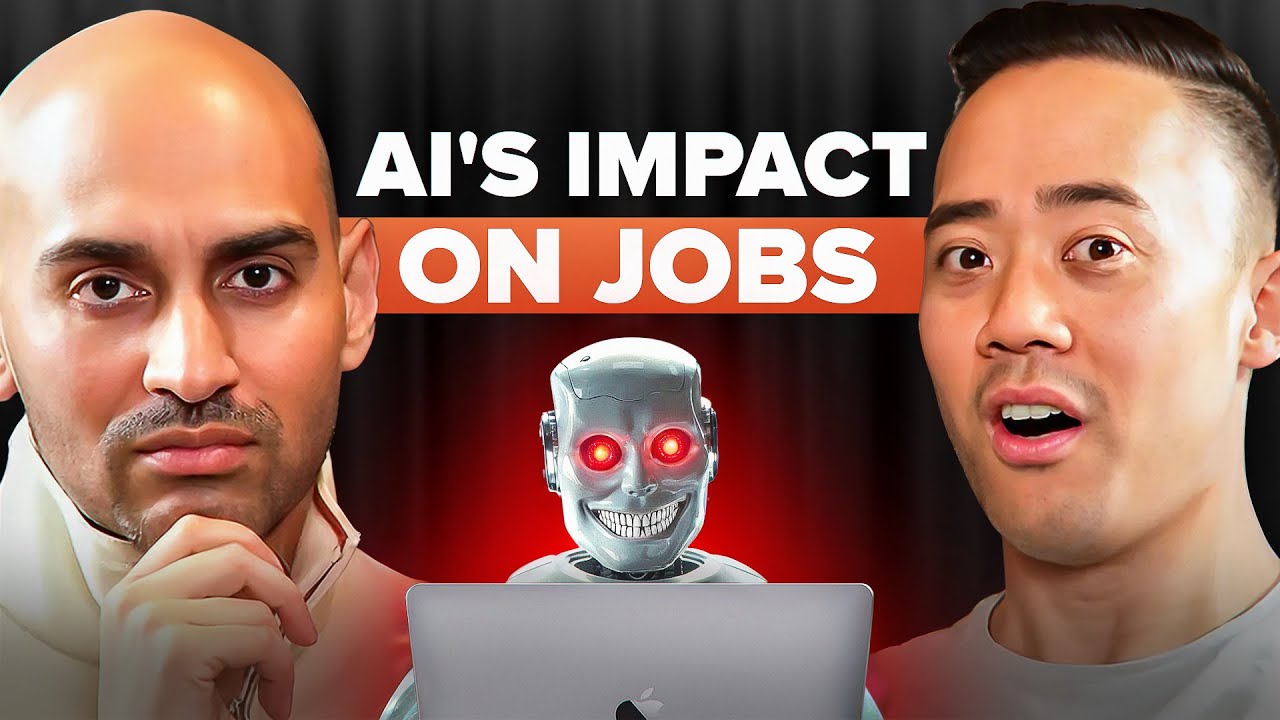
In this episode of the Marketers Brief podcast, Eric Siu and Neil Patel discuss a range of current marketing and AI developments. They start by examining Klarna’s aggressive move to replace its Salesforce stack with a custom generative‑AI solution, aiming to slash marketing and agency spend after previously saving $40 million in customer‑service costs with a conversational agent. The conversation then shifts to Google’s rollout of ads within AI‑generated search overviews, noting the competitive pressure from services like Perplexity. They address the talent crunch in marketing, promoting an offshore recruiting partner as a solution to wage inflation. The hosts debate the efficacy of “fake” podcasts as a growth hack, concluding authenticity wins. They explore OpenAI’s new Business Development Representative demo, speculating on AI’s impact on sales and customer‑service roles over the next few years. A broader discussion follows on the perceived decline of the SaaS era, product‑led growth, and the shift toward AI‑driven software commoditization. They also compare building B2B versus B2C media companies, emphasizing niche audiences, newsletter‑driven funnels, and diversified revenue streams. Finally, they touch on influencer vetting after a high‑profile scandal, suggesting AI tools will help brands assess risk. Throughout, they repeatedly promote their agency‑owner workshops and offshore hiring service via marketingschool.io links. The episode blends industry news, opinion, and promotional calls to action.
Chapters
This article from Ad Age talks about how Klarna is using AI to cut marketing and agency costs. And so just a couple months ago, we talked about how Klarna said, hey, they save $40 million in customer service costs because of their conversational agent. And now they're going deeper. They're cutting— they cut their Salesforce instance, I believe. And oh, there's a paywall, so I can't actually read this. But at least you can see Shaq over here. So, but okay, CMO David Sandstorm joins the Marketers Brief podcast to explain the fintech company's generative AI strategy and recent moves into traditional banking. So I think what we can talk about high level here is that Klarna is trying to be the first mover here to say, hey, like, we don't need to pay all these hundreds of thousands of dollars or millions of dollars a year to Salesforce. We can just develop our own out-of-the-box solution. Right. And, you know, time will tell to see what happens here. I think, I think we're going to see more of this, but I don't think it's as easy as they're making it seem.
I don't think so either. But again, you're spot on, which time will tell.
Yep. Agency owners, if you want to grow faster, my partner Neil Patel and I, we are hosting live agency owner workshops in Beverly Hills, and you're going to learn how to get more clients. You're going to learn how to take yourself out of the day-to-day. You're going to learn how to recruit the right people, and you're going to be hanging out with like-minded people such as yourself. So if you want to learn more, just go to marketingschool.io/agency. Again, it's marketingschool.io/agency, and we'll see you on the other side.
Google rolls out AI ads within— or they, they're talking about Google brings ads to AI overviews as it expands AI's role in search. I'm going to say, have you seen all that stuff about the AI overview ads?
I've heard about it, but go on.
So as you know, when you search, they're rolling out AI overviews to many more countries. It's their version of AI. And you do a search, you get a text-based response. Now the problem is, how's Google going to monetize that? Because it's taking up a lot of room above the fold. So what are they doing now? In essence, they're integrating ads.
Yep. I mean, It makes— I mean, this just makes like a— the only comment I have here is it makes sense. They need to make more money. They need to leverage AI. So I don't know if there's any takeaway for people here, but they need to compete with Perplexity as well because Perplexity is launching ads. So they're trying to maybe get ahead of it. Because as far as I know, Perplexity ads aren't out yet.
I don't think they're trying to get ahead of Perplexity. I think it's more so they want to make sure they're not missing out on ad revenue and decreasing their earnings.
Well, yeah, which is— that's kind of what I was trying to establish first. But I also think they don't want to fall behind competitors too. And so like they have this, so why wouldn't they just launch it? But I don't, I just don't think this is like amazing news or anything. It's like, oh, okay, cool, they're launching this.
Yeah, and one format is like carousels. So you can get carousels of sponsored ads within the AOR views and you can just keep going left and right and click and, you know, it can end up making Google more money. Marketers, gives you another opportunity to place an ad. And at the same time, Google is also customizing search. They're starting with categories like recipes where what they're doing is, They're rolling out AI-organized search results pages in which the results page is customized based on you and what they think that you will like. And with recipes, it's a little bit easier. I think this is going to be very complex to roll out for certain things unless they have tons and tons of data on you, which they may. But yeah, no, this is quite interesting on what they're doing here.
They definitely do. There's actually a video on YouTube. I'm pretty sure you haven't watched it either, but it's like, It's a video on how someone did like a 45-minute video as an SEO talking about how Chrome actually, they actually harvest like a lot of data and help with, to help with their ad serving, right? And so to your point, they do have the data at the end of the day.
They have the data. The question that I have is what will they be able to do legally and not legally? And every country is going to be different because of the laws.
Yep. The number one challenge for businesses is hiring. And more specifically, the number one thing I get asked for all the time is, Eric, where can I go find an amazing marketer? And the reality is right now, when you think about the world, we have inflation. That also means wage inflation right now. And it means that when it comes to hiring talent, you can't spend as much as you would have in the last couple of years because it's just become too cost prohibitive. And so we've partnered with one of the best offshore recruiting firms when it comes to marketing. They've been a great asset for us, and I believe that they will be a great asset All you have to do is go to marketingschool.io/hire. Again, it's marketingschool.io/hire to learn more. You can fill out the form there and we're going to place you with the best marketing hires that we can help you find. Should you do fake podcasts? So this person Lily over here says, new thing I've discovered to hack growth, recording fake podcasts. People tend to pay attention when it looks like you are on a podcast. So I rented a studio and told stories about Breezy and it's working. So she got I think she has a smaller Instagram account, but 29K views is actually significant for hers. And then 208 people shared it, 86 people saved it. And then this tweet got 153K views. So my opinion on this one, so I've seen people like, it's— I don't know if you've recorded fake podcasts before, but I've tested it.
No.
The problem is when I do fake podcasts, I get more and more intense and it doesn't feel like me anymore. It's just like, remember when you used to record YouTube videos, you're like yelling at the video?
Yeah.
It just doesn't feel natural to me. And people can tell when it's not natural, at least for me, when I do the fake podcast. I'd rather do a real podcast like this where we're actually talking to each other and we're feeding off of each other's energy. So I'm personally not a fan of fake podcasts. I've tested it. And I will tell you the reach is lower than like us doing this.
Yeah, dude, I'm with you. If it's not authentic, it just doesn't do well. And at the end of the day, why spend a lot of time doing marketing techniques that aren't really long-term and aren't really going to drive tons of results in the Yep.
Dude, by the way, so talking about AI again, OpenAI's new BDRs might help you close more revenue. So I don't know if you saw this demo. This demo was done with Kieran and Kip from HubSpot, which we're doing a podcast with them, I think in a couple of weeks, with Marketing Against the Grain, check out their podcast. But we— so when I saw them, they're actually doing a demo with— because OpenAI just did a release this week. And basically, it's like, hey, why don't you act like a BDR for HubSpot? And then why don't you try to close me on, you know, on HubSpot? And it actually did a pretty good job of it. It talked— Yeah. where they're going back and forth. He was trying to trap the AI a little bit, but the AI adapted really well. And then Kieran jumped in and was like, hey, ask the AI to pitch you but rap. And it actually did a good job with the rapping too. It was probably like 8 or 9 out of 10. So my whole thing here is that we talk about these changes over time, right? I'm like, okay, this is getting pretty close. And so I think in the next 2 to 5 years, I think we'll really get there. Because here's the thing. If customer service gets— a lot of customer service jobs are lost, what happens next? I think a lot of sales jobs are next. Not that they're lost, but I think the best of the best customer service reps will stay, best of the best sales reps will stay, and the other people will probably have to reskill, which is— it'll be okay long term because we've seen this before with the industrial age.
And it also depends on what you're selling. If you're selling something that's $100, $1,000, sure, has a higher chance of replacing you.
If you're selling something for $1 million plus, you'll still need a human in the loop. But you know what's interesting? You just mentioned $100, $50. Usually the math doesn't work out to sell, have a salesperson for $100. Now it works out.
Yes. Yeah. Well, it depends what they're going to charge for this.
Yeah. Yeah. Well, like for the most part, you're going to see a lot more like lower dollar products having salespeople now.
Totally agree with you. And if OpenAI is too expensive, someone will create a cheaper solution and they'll end up rolling it out. But I think it was Jason Lemkin who ended up talking about with SaaS how you need a product that's a minimum dollar amount.
$3,000, I think.
Yeah, something like that.
Minimum. to make the math pan out for a salesperson.
Yeah.
And that's an old school post. I'm surprised you remember that. I'm surprised I remember the number. But this post over here, and then we'll flip it over to you. This guy, Jason Yanowitz, sorry. He founded Blockworks. Blockworks is a crypto media company. And so, he's saying, seeing lots of new media companies right now. So, the prompt here is basically, should you start a B2B media company or a B2C media company? So, here's what he says. Seeing a lot of new media companies right now.
Love it.
However, be careful. Be careful building generalized media. B2C media is a graveyard. So you have HuffPo, so Huffington Post, you have BuzzFeed, Vice. Oh my God, Vice. They got that. That was like they raised a ton of money, right? Complex, Mashable, Quartz. Right. And I used to read some of these publications. I don't know about you. He says you build for everyone and you build for no one. Instead, study B2B media. So he's like, okay, look at the information, which I subscribe to, tech newsletter. It's great. Morning Brew's B2B business Axios, which was one of our clients, they sold for like $553 million. And then there's other ones like FreightWaves or industry dive, right? So he says, create hyper-niche content for a very specific audience. Use social as top of your funnel, but your follower count doesn't matter. Your own audience is all that matters. Newsletter subscribers and podcast downloads. Then think about what your product— what product you can build at the bottom of the funnel. Events, data research, advisory, etc. Godspeed to all the media operators there. Now, I would argue that we kind of have a marketing media company. Like we've built our own, we have this together, right? And then down funnel, we have consulting, we have services, right? That's kind of what we focus on selling. And then maybe occasionally there's events or like a community or whatever, but mostly it's consulting and services. So go ahead.
I do think it's easier to build a B2B media company. It's just a lot less competitive. B2C does work out. It is a graveyard, but if you can create a Fox or a CNN or something like that, you'll do really well. It's just extremely hard and extremely competitive and extremely costly because not only do these guys have reach, They have reach on multiple platforms like television in multiple languages, and it just makes it harder and harder to compete. But on the flip side, in B2B, you can do well, but you need to pick the right article, I mean, not article, industry. And you got to be very specific. So for example, I was talking with Chris from Search Engine Land or Third Door Media years and years ago, and we were discussing, you know, how things are working out for them. And he gave some really good insights. If you look at Search Engine Land, you can consider it a B2B publication and a media company, but it doesn't do nearly as well as our MarTech media company because MarTech, the people that show up to the events are the right type of customers that can spend an arm and a leg. While with Search Engine Land, it's a lot of people just looking to learn marketing that aren't necessarily going to spend dollars.
Yep.
So it's not enough to just create a B2B media company in a vertical like marketing, because both of them are. You got to make sure it's really tailored to your exact customer profile that is going to be spending money.
Yep, agree with that. I'm trying to think of good examples for this one. So one thing, one that comes to mind recently, this is not exactly what we're looking for, but 20VC, right? So Harry Stebbings, he's got a VC podcast, and he gets He gets deal flow from it and he gets the best VCs to come talk and he gets the right attention there. Right. And then startup founders want to listen to that stuff and then boom, that's how he gets his deal flow. And maybe that's how he also gets investors too, because he's just asking like top-tier people questions. I think that's one way of going about it. What are some other examples of this?
B2B media.
Yeah. You know, there's another one called Flashes and Flames. They focus just on like the agency business or the media.
Oh, Hormozi. He's done a good job of building up a community of people who want to start businesses and he pushes them to school.
Yep. Yeah. That's— so he has 2 funnels, right? He has the school funnel for, you know, new business owners. And then he has a funnel for people that are doing over $1 million a year, I believe, in profit.
I have no idea. I know the school one. I don't know about the second one.
Yeah. This one's interesting. This is from actually the founder of The Information because we just talked about The Information. So he says the SaaS era is over. Software is a business tool, not a business model. So SaaS is dead. You know, number one, LTVs are far from infinite. You don't acquire customers onto your SaaS platform once and they pay— they will pay you forever. There's continuous pricing and competitive pressure. 2, software is getting more and more commoditized. Hello, AI. As it gets easier and easier to roll your own software, build replacements to all that SaaS, guess what? The software gets less and less valuable. The code depreciates. 3rd part, last one, SaaS is hard to sell well. The PLG, the product-led growth story, doesn't work. Never really did. Now really doesn't. And even if you have Even if you have massively margin-expanding story on how great your software is, unless there is a clear line item for it, it is hard to sell. And even when you do sell it, guess what? You don't get paid that much frequently as percentage of value created. Last part here. If you can build software today— sorry, I got a time limit here. If you can build software today that allows you to operate basically any real-world business 20% to 30% better than it operated today, use that leverage and take over those businesses. Take the win, get the growth, use the margin expansion to dominate your competitors in the actual business. What do you think about this?
I disagree with the third point. I could name tons of examples of product-led growth. Dropbox, SEMrush, Canva is massive, but the list goes on and on. Mailchimp sold for what, $11 or $13 billion or something like that? There's a lot of software companies that are still doing well today with product-led growth. Another example of this was Midjourney. I consider them SaaS, right? You go in there, it helps you create images. You're paying for software.
Is it SaaS or are you paying usage?
On usage. I don't know if that one is—
I think you might be paying. No, no, you could be right. It might be a combination of both.
But either way, Midjourney, even though it's leveraging AI technology, is considered SaaS. You look at HubSpot, it's an amazing product-led growth software company that is still growing. Yes, sure, they're adding AI and stuff like that, but there's countless examples of software companies that have done extremely well from product-led growth. I actually think product-led growth is the way to go when SaaS becomes— is becoming more and more competitive. For example, with Ubersuggest, we just undercut a lot of people and just say we're just going to give the majority away for free.
Yeah. What I've been saying is in the next 5 to 10 years, it's not really resources that will be a constraint as much as it was before. It's going to be creativity that's going to be the constraint. I do agree with point 2. It's becoming more because it's again, you are now a frontend developer. So am I. Once I get you to use Replit, you're like, okay, this is really cool. And literally, you'll figure it out within like 5 minutes. And so I, to your point, like it is getting, I do believe it's getting more competitive and there's downward pressure being applied. And I do think there's an opportunity where you can, some people can go out there and maybe buy other businesses, whatever that, if maybe if you're starting out, go ahead, go do that. But if you have a current business right now, just optimize your current business. So, yeah.
On a side note, did you see the TikTok influencer Mr. Prada got arrested for second-degree murder?
I don't even know who that is. Who's that?
I don't know who it is either. But we started getting companies hitting us up saying, hey, we want to be more careful vetting all of our influencers that we're choosing and selecting and start analyzing their past posting and their character quite a bit more before selecting influencers.
So what's the backstory with this guy?
I have no idea. But what it's doing is it's causing a ripple effect in marketing in which large corporations are becoming very picky on who they're selecting as influencers now. Yeah, it's not just about the ROI. They don't want to be associated with a brand that could be negative and then it negatively impact their corporation or their earnings.
I mean, that makes all the sense in the world and there'll probably be AI features where you can vet these people at scale, right? And so, so yeah.
And a great example of this, something that backfired, not saying it's right or wrong, was the Budweiser campaign, right? It really tanked a lot of their sales the moment they leveraged influencers.
All right. That's a good place to end. So that is it for today. Please don't forget to rate, review, and subscribe, and, uh, go to marketingschool.io/agency if you want to learn more about the Agency Owners Association, where Neil and I will help you get more clients and, uh, grow your agency. Goodbye. Thank you.









