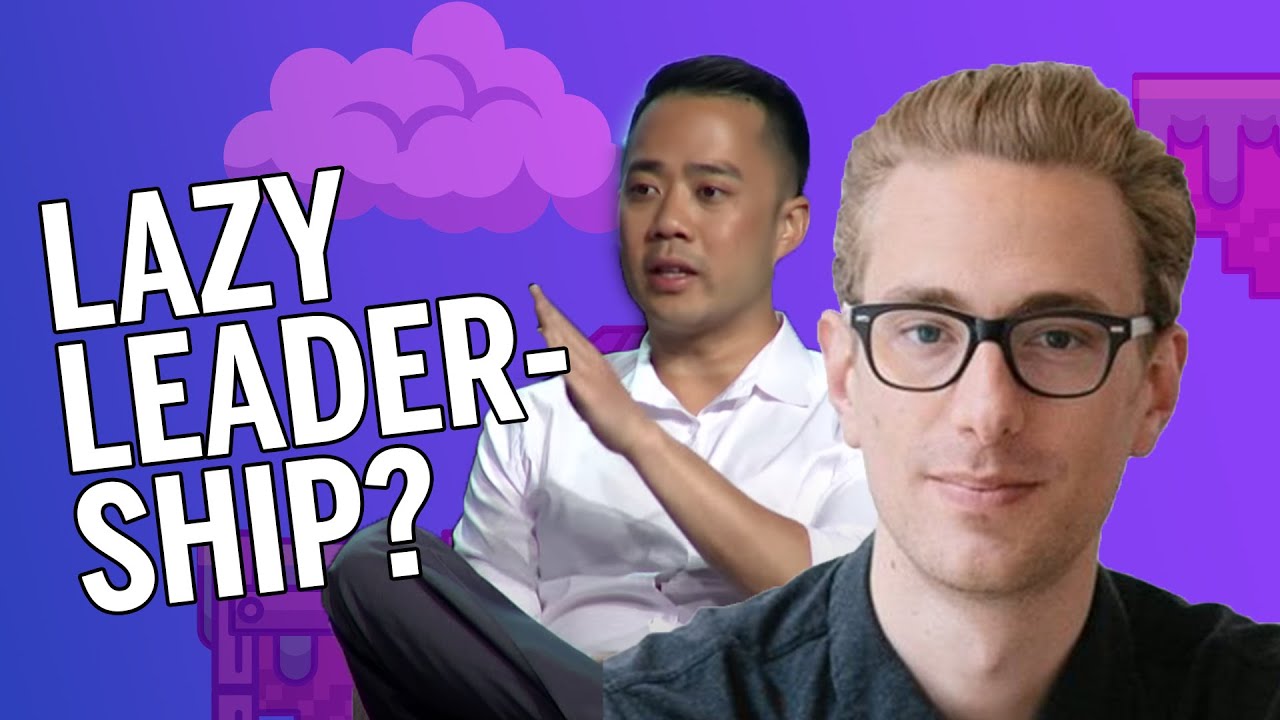
In this interview, Andrew Wilkinson recounts his entrepreneurial journey from founding the design agency MetaLab to building a portfolio of over 25 wholly owned companies and 80 minority stakes under Tiny Capital. He explains how early success came from positioning himself as a high‑end agency, serving startups like Slack, Coinbase, and Shopify, and how a mentor’s advice led him to sell a business and learn investing. Inspired by Warren Buffett, Wilkinson adopted a "lazy leadership" approach: aggressive delegation, hiring CEOs to run each company, and focusing on a few core CEO responsibilities (KPIs, culture, strategy). He outlines his acquisition criteria—simple, low‑complexity businesses with predictable margins, fair pricing, and ethical founders—and describes a decentralized operating model where each company operates independently without forced synergies. Wilkinson emphasizes building a "launchpad" business that provides personal freedom and a financial bedrock, recommending entrepreneurs start with high‑margin, simple ventures that generate $100‑200k personal income before scaling. He also touches on his views about subscription podcasts and the potential of a book on lazy leadership. Contact info is provided (Twitter @AWilkinson, tinycapital.com).
Chapters
Right, so if you're a CEO and you're on the phone doing sales all day, you're failing as a CEO. The goal, I think, of a CEO is to basically delegate away almost everything except for a few core things. That's what are the KPIs to use to track the business, so monitoring the business, understanding the health of the business, setting the culture, right, so saying what do we believe and what are our values and ensuring that those things stay true. And then defining the strategy. I started saving money, and the way to save money, the way to make a bit of extra money, was to do freelance design work. And I realized that if I pretended to be an agency instead of some 19-year-old kid in his parents' basement, I could charge more and win more work. And so I came up with the name Meta Lab. I designed a super slick-looking website that made me look like this huge agency. And what I would do is I'd go through TechCrunch and I would see any companies that had raised money, and then I would just email the founder the next day and I'd say, hey, can I help you with your marketing site? Can I help you design your web app? Is there anything I can do? And I found this really interesting niche working with Silicon Valley startups to up their game on marketing and product. And back then, no one was really paying attention to design. And so it was a huge opportunity And because I was based in Canada, I could run really profitably, where if I'd been in San Francisco, I would have had kind of a crappy business with low margins. And so through that, I ended up working with Slack and Coinbase and Shopify and Tumblr and all sorts of amazing businesses, and then getting customers like Facebook, Apple, Amazon, Google, all the big Fortune 500s. So before I knew it, I was making good money and I didn't really know what to do with the money. Like, it just kept piling up. And so I went, okay, well, I guess I'd like to start businesses. I'll just keep starting more stuff. So I started all these businesses and I don't know what I'm doing, right? I don't know how to hire any help. I don't know how to hire executives. I'm running them all within this weird agency where, you know, our hair is on fire. We're trying to serve clients, but we're also trying to build all these products. And I'm really pretty miserable, and so is my business partner. And so we go to a mentor, and the mentor says, look, why don't you just sell one of the businesses? That'll give you a bit of a chance to chill out, take a breather, figure out what you want to do. And so we end up selling the Shopify business, and for the first time ever, we have cash. Before that, we'd always just constantly built new businesses and reinvested, and I realized, okay, I'm going to have to learn more about this investing thing. And like I said, I was never interested in investing. To me, it's this boring thing. I have no interest. But I go, okay, well, I'll pick up a book about stocks. And I remember everyone always said Warren Buffett is the world's greatest investor. So I was like, okay, I'll read about Warren Buffett. And when I read about Buffett, I was just like, oh my God, this is amazing. Here's the 4th wealthiest guy in the world. He owns like 100 businesses. But he doesn't actually run any of them. He hires CEOs to run all of them and he leaves them to do their thing and he sits in his office reading all day. And I was like, this is amazing. I want to duplicate this. And so what me and my business partner Chris ended up doing over the next couple of years was hire CEOs to run all of the businesses. And then we started acquiring businesses instead of starting them and we generally bought from founders of bootstrap businesses. So they're already profitable. The founder had been in for 5 or 10 years, and usually they were just like, man, I really want to pass the baton to someone else. I want to sell, but I love my business and I love my culture and I love my team. And if I sell to private equity, they're just going to jam me into a bigger company, or they're going to flip the business in 2 years. They're going to, you know, my team's going to hate me. And so we started doing this thing where we'd basically go to a founder and say, You can stay, you can go. We're going to buy all of it or 80%. You can stay in, totally up to you. And we're going to get a deal done in a month. And on the day the deal closes, your staff's going to wake up and nothing will have changed. And it turned out there was a lot of people that that really resonated with. And so we've now been doing that for 7 years and we own 25— we have 25 wholly owned companies. And then we also have about 80 minority investments. Ranging from everything from tiny little startups to companies like SpaceX. Yeah, so I think of a launchpad business as the business that gives you freedom. So to me, the point of entrepreneurship is to have freedom, right? Yeah, it's to do cool stuff and innovate and all this other stuff. But at the end of the day, the sort of person who becomes an entrepreneur is usually doing it because they want the freedom to control their own day and work on the things they care about. And so A lot of people go out and they start a first business and it's like a venture-backed startup or something like that. And I think that's probably the wrong move. I think that's like going to the gym and trying to deadlift 300 pounds on day one, right? It's not that you can't build up to that, but I personally don't think it's the right move. I think that the best thing to do is try and start a business that can make you $100,000 to $200,000 a year. In personal income. And it doesn't matter if it can scale past that. It's about building your bedrock so that you have a foundation. And so that if you— once you have that business, you can try new things, fail at those new things, and not have a big cost of failure. So you can always have that bedrock. And it could be something as simple as a consulting business or services business that you can eventually automate. It could be a simple digital good you sell. It could be A course. I mean, anything that's high margin and simple.
And what kind of businesses are you looking for in terms of size criteria and all that? And then we'll start with that.
So, I mean, the number one thing is that we want a business that's simple. And we want a business that's not reliant on a middleman. So what I mean by that is simple-wise, I go, is this a business that requires a ton of people? and a lot of complexity and a lot of kind of culture and operational excellence? Or is this a business where, you know, some founder kind of runs it 4 hours a day in their spare time, and it's very, very simple as a business model? So we're looking for businesses that are kind of predictable and simple, doing something that's conventional. We're not looking for AR/VR companies, drone racing, anything that requires crazy R&D or a big team. And then on the flip side, we wouldn't do anything that required a huge sales force. So we don't want a business with 300 people. We just have no interest in that kind of complexity. We also are looking for a business that's available at a fair price, right? We don't have any problem writing a big check. It's just got to be a fair price based on where the business is at today. That's the biggest hurdle. A lot of people think their business is worth some crazy number because some venture fund startup got a crazy valuation or something.
Mm-hmm.
And then we're also looking for somebody who's a good person. Right. I want to be— I want to know that the person I'm dealing with is ethical and straightforward. And I think that's the number one screen. If we have any questions about the person or the quality of the business or what they do, we just won't touch it. It was so— it was so hard. People would even say, where do I work? Right? Do I work at Flow? Is it Meta Lab? Does Meta Lab own Flow? You know, do I? And then sometimes we pull them on to client work. It was a disaster, and I would say, you know, there's a term synergy, right?
Mm-hmm.
Where people get kind of looped into this idea that by getting all this stuff together, you can save all this money and you can combine forces, and it seems really elegant. In reality, I've just found every person who works at a business needs to know the business that they work for, the mission of that business, have one goal, and the problem is we had like 10 goals. It was like, start all these new businesses, maintain the existing ones, serve clients, grow. Sometimes I'd pull designers from, you know, my software business into a pitch meeting. It was a disaster, and it was obvious very quickly. So I always think people need to be split off, and I think that's why the decentralized model we have works well, is people who work at Dribbble, they don't even know people who work at the other businesses.
Mm-hmm.
And Zach is never forced to talk to the other CEOs. If he wants to, he can email the other CEOs and work with them, but we'll never say, you know, you guys need to use Flow for project management, for instance, right? We just don't specify anything like that.
Got it. So I think the key takeaway I'm hearing is if you were to go back in time, it would be as quickly as possible, split everything into its own thing. It's everyone works for— each person works for one entity.
Yeah, totally.
Got it. Okay. And I do want to talk about, you've written 2 things, one on Joe Rogan being ripped off, and then I think the other one was about Howard Stern with the DuckTales cartoon in it. So can you talk a little bit about what subscription podcasts are and why you feel so strongly about them?
Sure. So a couple of years ago, a friend of mine had a, at the time, kind of small podcast and he'd been—
I do want to touch upon lazy leadership. So what does that mean?
Yeah, so I think it's about embracing really aggressive delegation and realizing that your job as CEO is not actually to do any work. And so saying like, where are we going? You know, what are we going to do this year? All that kind of stuff. There's other pieces around HR and executive selection and other stuff, but at the end of the day, a CEO's job is not to be pulling on the oars themselves, right? They're there to be the to bang the drum and set the pace and stuff. And I see a lot of CEOs who just live these miserable lives doing things they don't enjoy because they think they need to be a Sherpa for all the problems of the company. I think the biggest realization I had was that if there's something I hate, there's often something that somebody else will love doing, right? So like, if I hate— I hated doing sales because I hated traveling. I realized there's people who love traveling and they get pumped up to go to sales meetings. So I hired them, incentivized them, and I started making more money and I was happier, right? So lazy leadership means embracing laziness, embracing delegation, making your life enjoyable, and still achieving all of the goals of the business.
That's such a good book title. You should make a book out of that.
I was thinking about— I know I've thought about that, but the question is like, is a book— does a book still move the needle or are you better off just tweeting?
That's a fair point as well. All right. Well, Andrew, this has been really, really good. What is the best way for people to find you online?
Just on Twitter, @AWilkinson, or they can check out our site, tinycapital.com. And yeah, just tweet at me. I've got open DMs. So if anyone's interested in selling a business or has a question, just tweet at me.