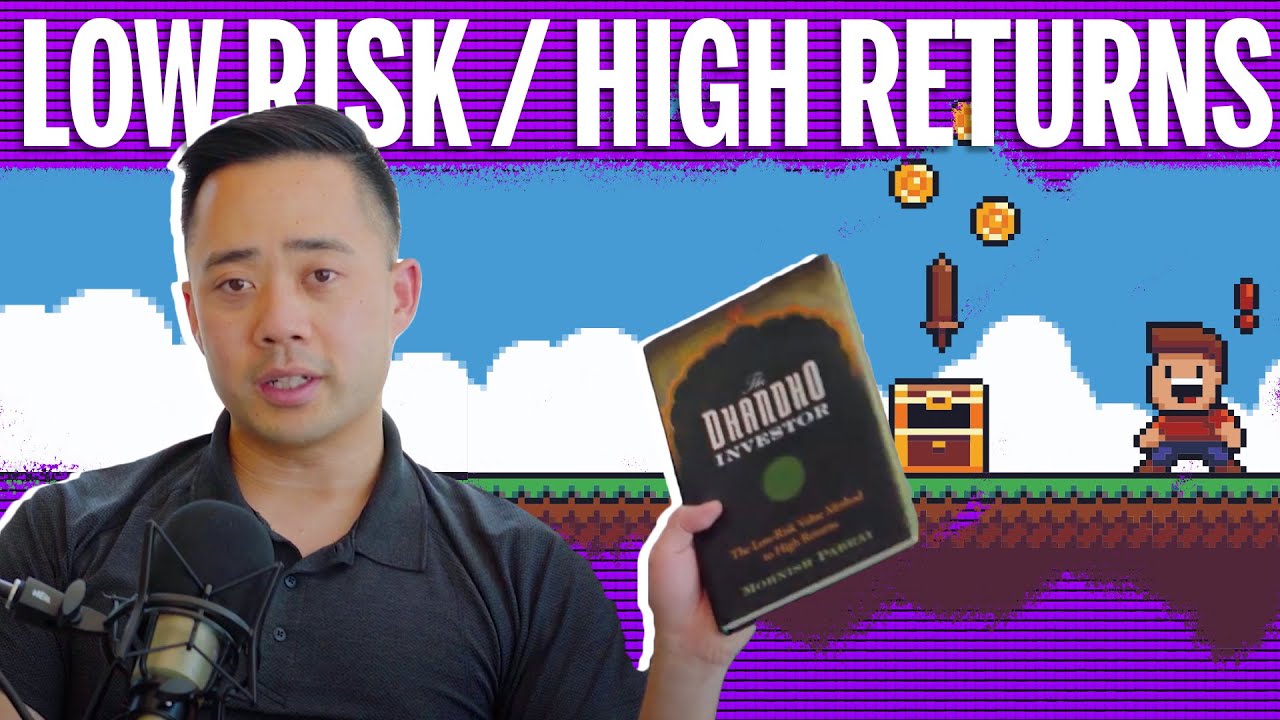
Mohnish Pabrai's Dhandho investing philosophy targets low-risk, high-return opportunities. The Patel motel story shows how Indian immigrants bought cheap government-backed motels with family labor to build an empire. The speaker bought Single Grain for $2 with unlimited upside and minimal downside, and argues that repeatedly seeking 10x-return deals with limited downside can yield 30-40% annual returns.
Chapters
All right, so today we are going to talk about this book, The Dhandho Investor. And what does that mean? Oh, Eric, I'm not Asian, I'm not Indian, don't say these words to me. Well, you know what? Dhandho, what that means is endeavors that create wealth. So now you're interested, right? You have— I'm sure you want to do some endeavors that create wealth. Well, you can start by not partying too much. Here's what it says: it's the, the low-risk value method to high return. So I want to share a couple stories from this This book. It's a great book. I read it once and then one of my friends Syed recommended it again. I'm like, oh, I should probably read it again. In the '70s, the Patels from India, they— a lot of them came over to America because they had— basically what was going on is they established a foothold. I believe it was a country in Africa, but a guy took over and he was a native and he decided, you know, anybody that wasn't born in Africa or wasn't a native of the country had to go. And so a lot of these Patels, they lost their businesses because the government seized the businesses. And so they had to start anew in America. And a lot of these people, maybe they only had like, you know, a couple hundred, couple thousand dollars in their bank account. They came to America with not much and they came with their family and they took odd jobs initially. And what happened was they started saving up money. And at the time in the '70s, there was a, there was a, you know, something going on with the markets and the markets were tanking. And so a lot of people were not staying in motels anymore. So, you know, if you're a Patel at the time, you were looking at, you were working really hard, maybe you're bagging groceries, doing odd jobs, but you saved as much money as you could. And then you will read the newspaper and you'll say, oh my God, these motels are really cheap. And you could potentially even get a loan from the government. The government would help support, support you. And the deal was, if you're a Patel, you're like, you know what, If the government decides to take back my business, if it's a failing business, I'm just gonna go back to doing odd jobs because I have no assets to begin with. So you really have nothing much to lose. So in the book, it's repeated over and over, you know, heads, I win, tails, I don't lose much. By the way, the Bachells, they own about over 50% of motels in America now. And they were successful because they— their labor was their family. They cut all the other costs. You know, the other operating costs and it was just their family and they're, they're wearing multiple hats. And so they, their margins were very high and they had great businesses and they just repeated the same thing over and over and they would go out and buy other motels. And so they get bigger and bigger motels. And so, um, that is the, that's known as the Patel Dhandho. Actually even in India, my Indian friends tell me Patels are just in general very rich people in India. They're even here as well. My podcast co-host Neil Patel, that's another one. Original founder of Single Grain, Sujan Patel. So there's a lot of Patels, right? This is a great book. I think that the concept here is, if you look at how— let's use Single Grain as an example. I was able to buy that agency for $2 out of pocket, and I set a contingency where if the company failed, I would owe nothing. And so that is very much a duh type of investing thing because my upside was Unlimited. My downside was very low, right? If the company failed, I would owe nothing and I would lose $2 out of my pocket besides the time that I put in. Sure. But worst case scenario, I'll learn a lot. So the deal is here, if you find things where it's like, oh, you know what, I think my upside is like 10x and my downside is not much. That's what you want to look for, right? So, you know, in the book they'll talk about doing discounted free cash flow analysis. Um, and it'll basically, from a mathematical standpoint, they'll be able to tell you, hey, like, this is what it's actually worth. Like 80% chance you're successful, maybe 10% chance you fail, 10% chance it's a roaring success. You know, you do the deal and you try to look for as many of these deals as possible. And so if you find 100 of these deals, most of the time you're going to be successful, right? You have to rely on your hard work. You have to rely on what you know about the markets and you just put in the work and you're good to go. And you're, you look at it as a stock return and oftentimes you might be getting, you know, 30%, 40% return every year. And then when you sell the company, you get even more in addition to all the other benefits you get from meeting people, you know, having clout from having a business. There's just a lot that you can do. Richard Branson was listed in this book as well. And then there were— there's a host of other examples. So it's a really easy read. You know, I like it when there's stories. I like it when there's numbers and they share very specific examples of How you can achieve, you know, you know, certain levels of wealth. So The Dundo Investor, everyone, it's a great book. And I think it's a great concept to understand that even when you're running a marketing campaign, how can you make it something where, again, heads I win, tails I don't lose much, right? And that's how you should be looking at life. Heads I win, tails I don't lose much. So that is it for today. I hope you enjoyed this. Let me know what you think in the comments. Please rate, review, and subscribe. It helps us grow, and we'll see you tomorrow.