Modern Dating Is Impossible - Here’s The Playbook | Dr. Orion Taraban
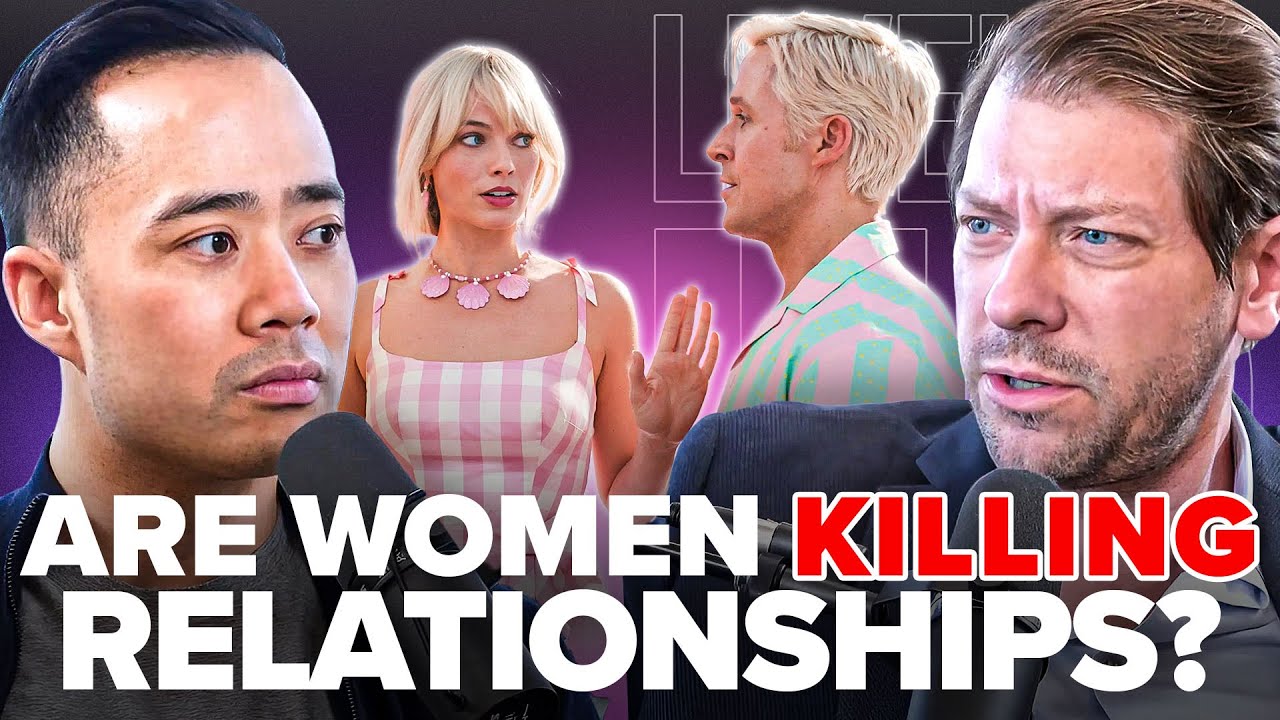
Psychologist Dr. Orion Taraban explains why modern dating is collapsing: one in three men under 30 report no sex in the past year. He argues online dating created a buyer-seller dynamic that widened the gap between what men and women want, and that the gig economy has made traditional marriage feel obsolete.
Chapters
What do you think the problem is with dating today?
Well, it definitely is a problem because this episode is with Dr.
Orion Taraban. He's got a YouTube channel called Psych Hacks, gets over 5 million views a month, and I believe he's just going to get bigger. We talk about man's greatest enemy, we talk about women's greatest enemies, we talk about relationships in the context of successful people.
Relationships are in a decline.
Fewer people getting married, fewer people So have you thought about how this problem can be solved? Well, it's a whole host of things. We talk about the business of Dr. Orion Taraban as well and how he plans to, to grow.
The success of the channel has been fantastic. There's not a lot of folks who are licensed professionals who do what I do.
Your YouTube channel, that leads to inquiries. How much do you charge for these calls?
Well, it keeps going up.
You're gonna learn a lot from this conversation. So without further ado, let's get into it.
All right.
I know you're My name's Orion, but I'm gonna call you Dr. Taraban still. So, Dr. Taraban, how we doing today?
Oh, we're going. I'm doing well. Thanks for having me on, Eric. This has been great. Yeah, you have a really nice space here.
Well, thank you. This is my friend's— shout out Ryan from Upkeep. So, you know, I'm gonna— I've done the nice introduction already by the time people see this, but can you tell us a little bit about who you are and what you're known for? And we're gonna jump right into it.
Sure. I'm a psychologist in private practice. I've worked for 8 years in the field of men's mental health in particular. So my private practice was exclusively men. I've since started a YouTube channel called Psych Hacks that has garnered some popularity in recent years, and I now do consultations with both men and women from all over the world on a variety of issues.
Got it. And Psych Hacks, by the way, just some numbers on that. So how many views are you getting per month right now?
About 5 million a month at this point.
And that's a combination of, like, shorts and longs?
It is, but the Shorts on my channel don't perform nearly as well as the long-form episodes.
Yeah, we'll go into that in a little bit. But first, I think it's a good place to start would be we're going to talk about relationships quite a bit, but I want to talk about relationships. Maybe we'll start it off in the context of relationships for successful, quote, or slash career-oriented people. So what do you think the problem is with dating today? I'll just throw that at you right now.
Well, it definitely is a problem because we see that there are fewer people getting married. There are fewer people having children, which generally but not always happens in the context of marriage. But there are also fewer people entering into even casual relationships. Like, according to the General Social Survey, about 1 in 3 men have not had any sex in the last 12 months, which has tripled from the rate 10 years ago. So 1 in 3 men under 30 are functionally invisible in the sexual marketplace. That's a very sensitive time in the game of mating and dating. between 20 and 30. Right. So we know that relationships are in a decline, which is actually kind of strange because it seems like it has never been easier with the uses of certain technologies to get into relationships. So it's a little counterintuitive. Right. So there's a number of reasons why this is happening. Okay. You focused specifically on successful individuals, and that is on some level part of the issue. So one dimension of this is that women increasingly are using their 20s to not prioritize getting into long-term relationships. On the whole, they're either prioritizing, let's say, fun, hedonistic pleasure like travel or short-term relationships, or their education and their career.
Okay.
And this delays them seeking and finding long-term relationships until later in life. And this is potentially problematic for a number of reasons. First of all, the game of mating and dating shifts significantly at age 30. Age 30 is basically when the average man's sexual marketplace value exceeds the average woman's sexual marketplace value for the very first time, and it will never reverse after that point. So in their 20s, women enjoy a relative advantage in the game of mating and dating. And that advantage comes with certain privileges that, if they're exploited, make it easier to secure relationships on their terms. But if they wait until after 30, when the balance of power kind of shifts, they find that it might be surprisingly difficult to secure relationships on their terms. Now that the men become increasingly powerful after that point, they are able to more secure relationships on their terms. Does that make sense?
Makes total sense. And so when you think about, I mean, maybe the last 20, 30 years or so, you know, a lot more women have been going into the workplace and they've been making equal or more money than men, which I think is a great thing. But there's also a tradeoff there.
There's a huge tradeoff, which is I think that most women will only seriously consider a long-term relationship if they stand, if they perceive that they will significantly benefit. I think that if it's kind of a wash, it's actually a loss because they foreclose on future opportunities that might be better. And if it's not going to improve their life, it's just like an automatic no-go for the vast majority of women. But what that means as women become more successful, both in terms of their educational attainment and their income and their lifestyles, it's harder for men to offer them a significantly better offer. And a lot of women I think understandably might prefer to be single and unpartnered than to be partnered with a man that they perceive to be a liability.
Right. And I think you had a quote around how— I'm paraphrasing here, but how women should look at men as jobs, or maybe not should, but men do.
They do.
Okay.
Whether they should or not, women generally treat men the way men treat jobs. Which is, on some level, they are going to enter into a relationship with their perceived best option. And that's a tricky thing because what constitutes a person's perceived best option changes from individual to individual and across time. Like, for example, some people at one stage of their career might just prioritize earning potential. Like, that's the most important thing. They don't care if they have to work long hours. They don't have to— they don't care if they have to commute. They don't care if they don't have a lot of influence in the company. They just want to make bank. But that might change later on in life. Maybe they have children, they want more flexibility, they want to make work fewer hours. So the overall best option for employment changes over the course of a career. Same thing for a relationship. That also is part of the reason why it's so hard to stay together in the long term is because people's individual goals shift significantly over the course of their relationships, and it's hard for one person to evolve in tandem with that set of shifting priorities. Does that make sense?
Makes sense. So, so, okay. If we back up a second. So women are making— starting to make a lot more money, equal or more than a lot of men. Yeah, right. So that decreases their dating pool. Now, men, on the other hand, in their 30s, I mean, they're kind of forgoing relationships too because they now have optionality. So what are we to do?
Yeah. And that's also part of why women don't want to get into relationships when they're young. It's like if you are a fairly attractive young woman in today's day and age, especially if you can leverage technologies like Instagram, you might have hundreds or thousands of men liking your photos, sliding into your DMs. It's going to be hard for any one man in her actual purview to say, I'm better than all of these thousands of men who are reaching out to you and might reach out to you into the indefinite future. So a lot of women, I think, rationally decide it's not the time for me to commit because I'm getting this flood of optionality. And that basically changes For guys, like men often inappropriately believe that women are just sort of like more attractive than men, or they just inherently enjoy greater optionality than men. Like, no one will enjoy greater optionality than a young, beautiful woman, right? But if you are a rich, famous man, you have comparable optionality. But many men never get to explore that optionality because they commit to a woman in their early— their late 20s or their early 30s before they really come into into their own. Most men aren't even, quote, husband material until they're 35.
Yeah. So, I mean, still, what are people to do? It seems like everything's just broken now. I mean, you kind of mentioned that, you know, online dating actually decreases the likelihood of a relationship starting. So let's go into that a little bit.
Yeah, this is sort of counterintuitive. You would think that with online dating, it should be easier than ever to get into a relationship. Okay. To understand why this phenomenon occurs, you have to kind of appreciate the underlying assumption of the transaction in the sexual marketplace, which is at base, men are attempting to exchange resources for sexual opportunity and women are attempting to exchange their sexual opportunity for resources. And I'm using resources in the most, like, broad sense possible. It's not necessarily money, though it certainly could be.
Yeah.
It could also be attention. It could be emotional validation. It could be instrumental support. It could be children. It could be commitment. It could be time, all kinds of things. It's resources like everything except sex. So men try to change— exchange everything except sex for sex and vice versa. Okay.
You gave a really good analogy here, the Ken and Barbie doll analogy, and I think it applies here.
Oh, sure. So in a gross oversimplification of the issue, men typically want the Barbie doll, and that's kind of what pisses women off the most when they feel objectified, right? They want to be seen and appreciated for the person inside of the body. And women tend to want all the shit the Ken doll comes with. And on some level, the Ken doll is a cipher. It's almost like they can dispense with the doll entirely and they just sort of want the clothes and the little accessories that come with the doll.
Yeah.
Does that make sense?
Yeah, totally. And I think the catch-22 here that's tied in with all this is that men want— they want chastity, right? They want— they want— they want a clean mind. They want a clean body at the end of the day.
Sometimes.
Most of the time.
Well, what I say is that Female chastity is something that is very ambivalently valued by men. It is very highly valued in a potential wife, and it is a frustrating obstruction in a potential lover. And women have to navigate that confusing ambivalence that men exhibit towards their chastity.
Yeah. And so I think it's like the catch-22 I'm talking about here is like, if, okay, you want, let's say, You're a woman and you want to be valued by a guy. Well, like, you don't really have— you need experience, right? But then, like, if you gained experience with sex, then, like, you're also giving up your chastity, right?
Yes. I think, to be honest, it might be more important for men to have the experience than for women to have the experience. But who are they going to have the experiences with? You understand?
Yeah.
It's tricky. This is because Women tend to choose competent men over incompetent men. And often women sort of assume that men are just supposed to know what to do with them, which is certainly not the case. You, you ladies don't come with an instruction manual.
Yeah.
You know what I'm saying? So it takes a long time for a man to be a confident, competent lover and partner, which leads to the sort of uncomfortable conclusion that men kind of have to practice.
Yeah. Makes total sense. By the way, like when you think about your content, who do you— are you helping more men? Are you helping more women? What do you think it is?
Most of my audience is men. Yeah, but I try to put the episodes on PsycHacks to be beneficial to both men and women. And this, I think, is different from some of the other content creators in the space that cater exclusively to men. I don't— I think that women have to be part of the solution. Like, I don't think that any solution that only serves men and doesn't serve women is likely going to be a solution on the population level. We have to include women as part of the solution.
We shouldn't be fighting each other.
No, certainly not. But that's what's happening.
Yeah.
And let me answer your question about the online dating. Okay. So why it tends to lead to the decrease. Like I said, men are attempting to exchange resources for sexual opportunity. Women are attempting to exchange sexual opportunity for resources. Okay. So Let's look at what happens when a guy sits down with a dating app. Within his subjective experience, it's one of him and an infinite sea of women. Okay, so what he's basically thinking is, I'm in high demand relative to an inexhaustible supply, which means, rationally speaking, there's going to be a woman out there in that sea of infinite optionality who is willing to transact her sexual opportunity more cheaply. And he's correct. There will be a woman out there. And so what that does in his perception is it drives down the perceived cost of the sexual opportunity. And that leads to the fuckboy phenomenon, which is that men are increasingly emboldened to just say, hey, are you going to put out? Because I know that there's somebody else out there who will. And he's right.
Yeah.
Okay. By the same token, What's a woman thinking in her subjective experience? She sits down with the app. It's one of her and an infinite sea of men. So she thinks that she's in high demand with an infinite supply. So in that case, it's a seller's market. Before it was a buyer's market. In this case, it's a seller's market. So she thinks that she should be able to transact her sexual opportunity for the most resources as possible because she believes correctly that in that sea of infinite optionality, there's a man who's willing to pay more. to take her on a better date and to provide more commitments. That's why women, like almost across the board on the apps, write on their profile, I'm looking for a serious, committed relationship, which is sort of like the gendered equivalent of a guy saying, I'm just looking to fuck.
Or I'm looking for a generous man.
Could be that.
Yeah.
But the point is, is that the market value of a serious, committed relationship, all things being equal, is exceedingly greater than the market value for any given sexual opportunity. So it's not a symmetrical request in terms of the economics. The sex is cheaper than the commitment, but because of their subjective experience, men and women are both doing the rational thing on dating apps. But what that is leading to is a larger and larger gap between the valuation of the same thing, the sexual opportunity, to the point where it's becoming increasingly difficult, if not impossible, for them to actually negotiate and form a relationship with each other because the guy thinks he should get more for less and the woman thinks she should give less for more.
Right. So have you thought about how this problem can be solved?
Well, you might want to get off the apps or at least use apps for certain purposes and not others. So I've been thinking a lot about this and I don't know if there are any pure solutions to this problem. I think there are only tradeoffs. One of the things that I was thinking about— how old are you, Eric?
37.
Okay, so I'm 41. So we're close to the same age. Maybe you remember this. I remember when I was young in this country, there was a lot of talk in the mainstream media about how the nature of business and the professional world was changing. People didn't work for one company anymore. There were no pensions that were given. Companies didn't take care of their employees like they used to. by the same token, employees were disloyal and they were just mercenaries. They would hop from company to company just looking for the best deal. No one had any kind of professional loyalty anymore. Do you remember something along those lines?
Yeah.
Okay. Nowadays, it's almost unheard of that one person is going to stay with one company for the rest of their career, or it's unheard of that a company will offer the kinds of pensions and benefits that they offered even 30 or 40 years ago.
Right.
I think according to the most recent statistic I read, a person will have 12 different jobs in the course of his or her career. But I expect that's even greater in the advent of the gig economy. The gig economy has created, has disrupted a lot of industries. It's created some problems, but it's also created greater optionality and has solved others. Do you understand? It's like it's not a net, it's not a complete positive or a complete negative. We could probably argue whether it's a net positive or negative, but that's what we're dealing with.
There's tradeoffs.
There's tradeoffs, right? So I think Realistically speaking, we're going to be heading in the direction of, let's say, gig relationships.
Oh, go on.
Well, we have to understand that we don't have a lot of good models for relationships. Like, on some level, it's marriage or hooking up or nothing at all. And that doesn't work for a lot of people. And the way that we kind of approach marriage In, in this culture is— I call it a hyper-conflated idea because we want lots of different things. We want a legal contract, we want a religious commitment, we want cohabitation, we want co-parenting, we want a passionate lover, we want a best friend. And other people might want a therapist or a mommy or a daddy or a personal chef or a maid, all kinds of things, right? And that's just really, really hard to deliver all of those things indefinitely to one person for the remainder of your life. And I don't I don't think that's necessarily what we should be doing. I don't think that's how it was 100 or 200 years ago. We didn't put that pressure that our spouse was going to be an entire village of people. Do you understand? So it could be that we can grow up a little bit, mature, and be able to say, hey, there's an opportunity here, which is with the kind of dissolution of traditional relationships, maybe we can construct new versions of relationships that serve the needs and desires of the actual individuals involved in them, as opposed to just trying to fit the individuals into this one-size-fits-all template of relationships.
I think I understand what you're saying. I mean, there's multiple jobs to be done, just like in a workplace. But what do you do about the mother of your children?
What do you mean?
So like, let's say you are, okay, a man. A lot of people aren't going to like that I say this, but like, there are a lot of— at the end of the day, a lot of entrepreneurs that I know You could say maybe 50% or more end up having some type of affair, right? At least the ones that I've met over the years.
The ones that admit to them. It's probably even higher than that.
You're absolutely right. And people are not going to like me saying this, but it's true. And so it's like, okay, well, the mother of your children probably wants you to stay loyal, doesn't want you to, like, mess around. But, you know, unfortunately, I think a lot of guys want to mess around, right?
Well, sure. That's part of the reason why they worked so hard and delayed their gratification, became high status and successful, whether they're conscious of it or not. It's like I once read an article, I think it was in Time magazine or some, you know, well-circulated periodical. And the author, a female author, was expressing her dumbfoundedness over why so many, like, presidents and magnates and successful men cheat. And it's like she totally didn't get it. It's like the men became successful in order not necessarily to cheat, but in order to have access to more and more attractive reproductive opportunities. And on some level, that's why I often recommend that men try to hold off making that long-term commitment as late as possible, because they're generally, all things being equal, unless they fuck things up, they're going to have more and more attractive opportunities with women as they age, as they increase their status, their prestige, and their wealth. Okay.
Yeah.
And then they can make a determination as to Well, do I want— can I— I can choose my best possible option, or I can enjoy my optionality, just like those young women did when that man potentially 15 years ago asked that girl to be his girlfriend and she said, no, I'm just not ready to have a relationship yet. It's kind of for the same reason.
Yeah. It's tricky.
Look, marriage is many things to many people. But I will say that in some cultures, it's just sort of expected that men have mistresses. In France, in the Far East, often. I'm not saying it's right or wrong. I'm not making a moral determination. I'm saying that it happens. And in some cultures, there is an attitude of tolerance around that. As long as everyone kind of knows their place and understands the privileges and responsibilities of afforded to each.
Yeah. So do you think the concept of monogamy is maybe outdated?
Some people are wired for monogamy. Other people, not so much. There's a concept of being monogamish that I think— I don't— I didn't invent that word. I think that might have come from maybe Esther Perel, but don't quote me on that. Monogamish is the idea that I can be 90-95% sexually exclusive, but attempting to be 100% is probably going to lead to too much temptation over a long enough timeline, and it will lead to lying, cheating, and the dissolution of the relationship. So why even do that if I know that I can't deal with that over a long enough timeline? Why put my neck in the noose? So I will give you this. 90, 95%, you'll— I'm not going to embarrass you. I'm going to be safe. I'm going to be responsible. But don't begrudge the 5%. And the fact of the matter is, though they might not publicly admit it, if your 95% as a man is significantly better than 100% from the other men that woman could potentially transact with, She's not going to like the idea, but she's probably not going to cut off her nose to spite her face.
Man, if only this concept could be taught to everybody, I think the world would be a safer place. Yeah, but the—
it's tough though, because we have this idea that it's like it has to be all or nothing. No, you have to have— like in any relationship that isn't sexually exclusive is somehow exploitative or abusive or immature. And I don't think that's necessarily true. Obviously, it can be, but I don't think it's necessarily true.
You know what's interesting? I mean, I have a theory here, and maybe you've seen enough with the work that you've done, which I want to talk about in a second, too. But when I think about a lot of my Asian entrepreneur friends, their wives are just like, just don't embarrass me.
Just don't do anything.
Yes. And then I remember, you know, I have a relative. Let's just say it's like, as long as you don't bring a kid home, just don't do that. person brought a kid home. But point is, I think with Asian cultures, it seems like it's more tolerable. I remember watching a video with a guy walking around Japan saying, hey, like, is prostitution like okay? And then like 99% of girls like, yeah, I don't like it, but yeah.
I think I saw that.
Yeah.
My rule of thumb, though, the France example kind of contradicts that. What I'm about to say is it's the cultures that haven't historically been steeped in Judeo-Christian religion. So either Christianity or Islam in particular. they tend to have a more, let's say, honest tolerance for almost like human nature. And they have a— and I think part of what makes that kind of monogamish or asymmetrical relationship difficult in the West is that the primary value in the West is equality and egalitarianism. Whereas in the East, you have more of a Confucianist thing that even if it's not completely practiced today, it's like in the culture, it's in the tradition, which is people are not equal. But there are responsibilities and privileges owed and expected of each person in that unequal relationship. And as long as everybody kind of honors those responsibilities and expectations, there is social harmony. But we don't want to pretend that everybody is the same and everyone is equal.
I do want to come back to us talking about how, yeah, like there are multiple jobs to be done, right? So in Where do you see the future of relationships going? Like, what kind of roles do you see splitting up? Like, because you're saying, okay, for example, if I'm married to somebody, I want them to be the mother of my children, right? What else do I want them to do? I'm trying to visualize what kind of jobs do I want to separate out, and maybe I'll have like a, almost like an organization helping me with my needs.
Well, just think about it like this. It's like the number of single mothers in this country has gone up significantly in the last 50 years. And it's very disproportionate by race. Like right now, I think almost 30% of births from white women are not in marriage, but it's closer to 70% for some other demographics. Okay. This is, I think, unfortunate because I think we can all appreciate that it's generally best for both the mother and the child for there to be an active father in the raising of that child. That's one potential role. But if that woman also expects the man to live with him and to make a certain amount of money and to be a passionate, exciting lover and to etc., etc., etc., it's like a lot of women say, if I can't have all of that, I'd rather have nothing, which might be worse for them and for the children. Why not create some sort of arrangement where the man can be involved in the raising of his child, but doesn't necessarily tie him to that woman in all those other respects if that's not what he's looking for. Like, there has to be some space between all or nothing because too many people are either left alone with outcomes that don't really serve them, or they're in relationships Like quietly suffering on some level. Like just marriages that don't fall apart aren't necessarily successful. A lot of people are living lives of quiet desperation within those marriages, do you see? And that doesn't serve those individuals either. This might be their one and only life on this planet. And they're just saying, well, I guess I'll never have sex again.
Yeah.
And they're 30.
Yeah. I mean, everything you're saying is logical, but—
Oh, thank you.
Also, people aren't logical.
No, they're, they're not. You're right.
So anyway, I don't think anything can be done about that, but—
But they're often rational. So like, I think sometimes if you can present that this other option might be more beneficial as a net to certain people, they'll take it. I think that the issue is that as a culture, we don't have a compelling, conventionally accepted alternative to the all or nothing of marriage or singledom. And I think that's part of the issue. And I think we're actually approaching the moment in our collective history where we might be willing to consider some of the alternatives to the everything or nothing because things are falling apart.
Right.
And some people on the, let's say, on the right who are more traditionalists, they want to go back to the way things were. And I don't think that's going to happen. You can't put the genie back in the bottle. So we can't build things back exactly the way they were. We're not going to go back to that very peculiar 1950s vision of marriage and domestication. But when things are falling apart, we don't have to let them fall apart entirely. We can— sometimes when they crack, they loosen them up so we can kind of rearrange things and potentially make relationships for that work for people in the future. There will always be a place for the traditional monogamous religious marriage. Right? Like, we're not getting— I'm not saying get rid of that. I'm saying there has to be something for the other people.
Right. I feel like you've thought about this a little bit. So I guess my question for you would be, Orion, how do you like if you wanted to splinter responsibilities off or your desires off in a relationship? What would that look like in an ideal world for you?
For me personally? I'm somebody who needs a long leash and a lot of space. So I get along best with women who are emotionally stable, who are independent, who are self-sufficient, and who are, let's say, either more securely attached. If a woman is looking to have a lot of together, I'd rather also have fewer interactions at higher quality than more interactions at lower quality. Like, I really am scared of ending up in the situation where the both of us are just like sitting on the couch and she's on her phone and I'm watching the TV and we're not interacting with each other, but we have this like togetherness, you see? So I need a lot of space. I don't know if I can live with a woman, to be honest. I've tried to do that in the past.
Yeah.
It's extremely difficult. Like, there's a, there's a reason why people tend to not live with their parents. Like, you can love somebody More when you don't live with them, right?
You know, 100,000%. Yeah. Are you an only child?
No, I have a younger sister.
I'm an only child. I'm like, yeah, I can't imagine. It's tough sometimes saying, yeah, you're going to live in the same house with me.
Some people are easier to love at a bit of a remove.
Yeah, 100,000%. By the way, Neil and I have an agency owners group called the Agency Owners Association. All you have to do, just go to marketingschool.io/agency. Once again, it's marketingschool.io/agency. And now back to the show. You actually have an interesting quote here. So you say all men pay, but the more attracted they are to you, the bigger the discount you get.
Yeah. The more women like you, the greater the discount. Correct. Yeah. So like I said earlier, men generally are trying to transact resources for the sexual opportunity. So when a woman is attracted to a man, when she wants that particular man to access her in that way, she will remove as many obstacles or obstructions to that relationship as possible, which basically means she's going to be available. She's not going to be difficult. She's going to work with the logistics that work for him. She's going to come to him on his time, like she's going to do as much as she can to make it easy for her to fit into that man's life.
Right.
So that on the whole makes that relationship less expensive for that man because he's not going out of his way, he's not paying more than he needs to in terms of time and effort, etc., etc., which also on the whole makes it more likely that he will move forward with that relationship because no one, man or woman, will want to pay more for the same good than they absolutely have to. Do you understand? On the flip side of that, if a woman doesn't really like you, like you're not potentially her best option, but she considered entering into a relationship with you, she's going to want more. And on some level, that's rational because she's sort of— whether she's conscious of it or not, she's expecting to be compensated for the opportunity cost of not spending her time and giving a relationship to men that she might prefer. So the guys that women like less end up paying more. They have to do more. They have to give the commitment. They have to go out of their way. They have to make grander gestures. In fact, this is one of the main ways that men throughout history have secured access to women that might have been a little bit more attractive than they could otherwise get, is that they give them marriage. Which is something that a lot of women really want. And a lot of the more attractive men who have a lot of optionality won't give them. So that's how a man who's less attractive is able to kind of level the playing field with more attractive men. The less attractive men can offer something that they're not willing to do, namely exclusive commitment.
You said— I mean, you said something that sparked this thought around Which is something you talked about, the concept of the adoree versus the adorer. And I remember something my dad told me. It's like, you know, you want to find someone that likes you more than you like them, right? But I feel like that's the reverse of what you're saying. Like, as a man, you want to be the adorer.
Well, no, I think that as a man, you want to be the adored. And I made an episode about why it's even better for women to be the adorers in this dynamic.
Oh, so you guys are saying the same thing.
Yes. In point of fact, men and women, most people want to be the adorer. They often don't admit that, but almost everybody wants to be in the adorer position because it's only the adorer who has the experience of being with the one they love. The adored, on the other hand, has the experience of being loved by the one they're with, which isn't nearly as emotionally compelling. When you're with the one that you love, there's like no better victory in the world as to secure the relationship with the one that you love. And it's intrinsically rewarding because of all the positive emotions that come with it. But it's also the seat of all emotionality. So that person is waiting on tenterhooks for the text back, and that person is overjoyed when they get to see the person, but also disappointed when they can't. Whereas the adored generally doesn't have as much of an emotional experience. So it's not as compelling for a lot of people. It's hard to just be adored. And some people want very small gaps in their attraction. Other people are more comfortable with large gaps in their attraction. Right.
Hmm.
But in general, I think it's better for men to be the adored because I think more than men do, women go to relationships for that emotional dimension. And if it's not there, they're going to be more likely to leave than men are. Men, if they don't feel anything, they might still stay out of a sense of duty or obligation. But I think that's harder for women to do in the absence of the positive emotionality to keep them in a relationship.
I'm curious. I mean, like all the videos you've done, it's clear that even the way you speak to— you've really thought through these things, right?
So I'm not just talking about some opinion that I casually had one day. I've thought about this for many years. This reflects my best possible thinking on the subject.
So you're— I'm thinking like you've worked with thousands of people, right? So I'm just wondering, what are the, what are the common problems and patterns you've seen over and over? Where do we, where do we keep shooting ourselves in the foot?
Well, when I do consultations with women, universally the question is, how do I get married? Like, how do I get this particular man to marry me? How do I— they're all in their 30s, the ones that I've done consultations with. So that is what women are looking for when they hire me. Men are looking for a few different things. Younger guys are trying to find ways of getting access to women, either overcoming their approach anxiety or being able to access women that they're legitimately attracted to.
Yeah.
Like they have some optionality, but they're not— it's not with the women that they would prefer.
Right.
So we talk about that. Other guys are already married or in long-term relationships and they're like, I have this really dysfunctional dynamic with my woman. Can you help me fix this or not? Yeah. And increasingly I'm doing consultations with older guys who are divorced and who are reentering the dating market after 20 or 30 years, which I got a lot of sympathy for. It would be really hard to just jump right into the sexual marketplace if you haven't dated in 2 decades.
Yeah. Unless you have a lot of resources.
Well, these guys generally do. My compensation rate is fairly high, so I generally do consultations with, with fairly successful and established folks.
Got it. So, but what about the younger ones? The younger ones that are reaching out to you, if your rates are pretty high, how are they affording you?
Well, I live in the Bay Area, so they're generally Working in tech.
Okay, got it, got it. That's it. Okay, so, so the women want marriage, so the women want commitment. Uh, the younger guys, they— it sounds like they're looking for some action.
Yeah, they're looking for— yeah, they're looking for action.
Yeah.
Um, and then the older guys are looking for peace.
Yes, that's what we all want.
You would think.
Well, I think in the back of our mind, we all— we— I think as men, we like, we like the trouble, like we like the fun of things, the thrill. But we really want peace.
Yeah. If people wanted peace, they should work to be peaceful.
Go on.
That's— well, that's just not what people are working towards. They're working usually towards getting what they want, which is something else entirely.
Yeah. Which, you know, I think you did a good explanation of this, but can you define again what the red pill is? Because I feel like there's so many definitions of it and there's a negative connotation around it.
It can be like my content has been described in that way. I don't have a problem with that per se. I think If you ask 5 people what the red pill means, you'll get 5 different answers. And I definitely don't think it's pejorative, though there are content creators in that space who can be very extreme. I wonder, though, to be honest, to what extent they actually believe some of the things that they say, if they're just doing it for views.
Oh, for sure. The second piece.
Yeah. I don't know. I haven't met a lot of those folks personally, so I can't speak to it. To my mind, the red pill is understanding what works, how to actually attract women, and how to have harmonious, effortless relationships with them. It's not what you think should work. It's not potentially what you want to work. It's what actually works. And I think that this— you can think of the red pill as sort of like a practical set of strategies within a specific worldview that says, if you want this, this is how you can operate most effectively in this space. Does that make sense?
It does make sense. And so why do you think— why do you think successful women date mediocre men?
Do they?
I think the ones that I know, you know, some do date higher. But it seems like if a woman's making like $1 million, $2 million a year or so, it's gonna be really hard for her. Yeah.
I mean, we also talk about that. So one of the primary drivers of female selection, especially for a long-term partner, is hypergamy, is that women generally want men who are older, taller, stronger, richer, higher status, etc. If a woman's making $2 million a year, her hypergamous pool of potential mates is very, very small. If you go with what I said earlier, it's not even that the guy needs to be making $2 million because on some level she might need to significantly be benefited from that relationship, which means maybe even $5 million or more. And a lot of those guys are either already taken or they're not interested in settling down. Now, there's another way of approaching it. So why might these successful women get involved with, as you put them, mediocre men? Well, it's using the law of marginal utility. So some women are able to arrive at this state and the kind of economic realities begin to mute their hypergamous tendencies. And if you have $2 million, the marginal utility of another $100,000 is very, very small.
Yeah.
So So that diminishes proportionally in a woman's selection criteria, and she might therefore prioritize other things that a woman that didn't enjoy her financial success would not. Does that make sense?
Yeah. I've actually seen this in a couple of scenarios where the guy becomes a stay-at-home dad and then the woman holds all the cards and the woman's actually put into their, their masculine, which I find Is my mom was put into that before. She's like, yeah, I would rather be feminine. But when I'm put into my masculine, I'm just like upset the whole time. It's, it's interesting to see.
Yeah. And I've also seen that myself. And they often behave, these women, like the kind of men that we typically revile in our culture, which is that they'll get the man to stay at home and take care of the kids. And once they reach a certain age, they cut him loose, which is generally what most women find most despicable in certain men, is that once they become successful and after the woman has raised his children, after she has devoted her youth and her fertility and the best years of her life to him, then he divorces and goes off with the 23-year-old secretary or whatever it is. But women can do that as well. Yeah, I think it's actually a function of power as opposed to really a gendered bias.
Yeah. Brad here actually had a good question. So the question is, so let's say this— not gender doesn't come into play here, but if you're a successful person, how much should your partner make?
Oh, well, I don't know. I mean, can you define success?
Let's go with the— let's go with $1 million.
So you make $1 million a year. How much should your partner make?
Yeah.
I don't— I don't know, man. I think it depends on what your goals are.
Well, I mean, my answer is, who cares? So.
Well, there's— I think there might be a reason to care. Like, one of the things that It just speaks to the point that we were just discussing. According to the family lawyers that I've talked to, the women who are most litigious in the divorce process are housewives, because these women forewent so much economic opportunity, potentially. At least that's what Their argument is in order to clean the house and raise the kids or what have you, that they feel justifiably entitled to as much of that man's resources in the divorce procedure as possible. And I think you can make an argument for that. Sure. Sometimes when a woman has her own means, there's not that— it's sometimes easier to have a relationship. There is this vibe in the red pill space in particular, especially among the tradcons, where they just want the 1950s housewife. And that can be great for some people.
And what does tradcon mean again?
Like a traditional conservative. We want to go back to the wholesome way things were. And I think that might work for some people, but I do think it creates this liability. Sometimes it's easier to negotiate with somebody who's on more equal footing than you. So I don't know if there's a rule of thumb of how much your partner should make in order to get into, let's say, a long-term relationship with them. I think it depends on your goals.
Yeah, well, there you have it. Sorry, it depends, Brad.
So truthful but not satisfying. Sorry.
Yeah. And why do you think it is that most marriages fail?
Well, I think most marriages fail. Oh, this is going to be a good one. For a number of reasons. One touches on something that I said earlier, which is that marriage has become too many things. In my opinion, marriage is fundamentally a very humble institution. It was not designed to support being married to a co-parent who's also your best friend and also your passionate, your mistress or your passionate lover who is also your therapist and etc., etc. And we have this all-or-nothing mentality where we expect our partner to be exceptional in all of these different fields. And just like a chain is only as strong as its weakest link, sometimes with men, it's often they step out of the relationship and they break that sexual exclusivity and everything else gets thrown out the window, which I think might be appropriate in some cases, but is generally not in the best interests of everyone involved. It's like, why not potentially get rid of that weak link and see if there's enough strength in the rest of the chain? So that's one reason, is that we want our partners to be too many people. And that has to do with the fact that we don't really live in communities anymore and we don't have an extended kinship network nearby. And so it's like the nuclear family is now an entire village. And that's not something that is very sustainable. Another thing to keep in mind is that the value of a partner changes over time as our goals evolve. And it all— the value of a partner also changes as a function of them giving us what they— what we want. This is a really difficult reality emotionally for people to deal with. But think about it like this. When is a plumber more valuable to you Before he fixes your sink or after he fixes your sink?
Before.
Yeah, before. No one continues to pay the plumber after he fixes the sink. Like, you'll pay him once for the job, but then it's like you don't want him to stick around. You're not going to keep paying him. And on some level, he became less valuable to you because he did what you wanted. That's really tough to deeply, emotionally appreciate, that it's the natural tendency for people to value those less as a consequence of discharging our expectations and desires.
Interesting.
And that's, of course, what we want in a relationship. We want someone to give us what we want, but then once we have it, we want them less. Oh, shit.
Well, also expectations rise too.
That could be. Now, the counterargument is people might say, no, Ryan, that's just being very, you know, mercenary about the whole thing. People can have gratitude for the good that you've done. It's like, yeah, to an extent. To an extent. Like, the game doesn't run on gratitude. Like, you can't bank on something that you did 20 years ago. To keep a relationship together. Well, you kind of.
Yeah.
So it's like the way that relationships work is people constantly have new needs and wants and they're constantly expecting their partners to fulfill them. And if they don't for too long, then the relationship becomes inappropriately expensive, especially relative to other potential optionality that person has.
So then it sounds like the solution to have a successful marriage might be to negotiate this stuff upfront and be very clear about what your wants and Unfortunately not. No.
Because a lot of the things that are transacted in an intimate relationship don't lend themselves well to that kind of explicit negotiation. Like, you can't negotiate desire. I know some guys who, when they hear about how many sexless marriages there are out there, they get really afraid and they try to actually create like a legal document where it's like, we— I'm entitled to 2 sexual intercourses a week and 3 blowjobs every fortnight. And it's like, it doesn't work that way. Because even if the woman were to discharge that duty, like, as a formality, she could just starfish on the bed and kind of destroy the man's legitimate desire to exercise that clause. Do you understand? Men don't actually want just a woman to have sex with him. They want a woman to enthusiastically want to have sex with him.
Right.
And you can't negotiate enthusiasm, right? That's like, imagine you signed a contract with your employer. One of the clauses, you have to be enthusiastic about showing up to work every day. It's like, fuck that. Yeah, that wouldn't be possible.
Yeah.
So that's why, unfortunately, it's very difficult to negotiate some of these things explicitly.
We're all screwed.
Well, it's that you have to negotiate them inexplicitly. So one of the reasons I think that sometimes people can be rubbed the wrong way when I talk in this way is it violates a social convention of speaking about relationships in this way. We would like to pretend on some level that it's just like love and altruism and positive emotions for why people get into relationships with each other. And that's not really true. Yeah. And so you're not supposed to talk about these things so explicitly, but on some level, whether we're aware of it or not, These are the things that are operating underneath the surface. So there are ways of negotiating indirectly with subtlety and tact, and that's what's more required in an intimate relationship.
What are some of those ways?
Well, I talk a lot about that. The fundamental game of human relationships is negotiation. And what's fascinating about this game is that no 2 games are the same. Even if they're played by the same players. Like if we were to talk today, our conversation would be different than our talk tomorrow. You know what I'm saying? And on some level, we can't predict how this negotiation is going to go ahead of time. We just have to respond on a moment-to-moment basis to the new stimuli that are coming out as a response to what you're attempting. So you can't make like prescriptions and say, this is how you negotiate. You can't follow a script. You can't just say, use this strategy. It always works. That's a lie. Certain things will work more often than others on more people, but nothing will work on everybody all the time. And as soon as somebody figures out, like, kind of your game, the game changes and that strategy isn't going to work anymore. So unfortunately, I can't tell you, like, what to do.
Yeah.
But in my forthcoming book, I talk about a number of those strategies that might be useful at different moments, at different games. Yeah.
Well, let's talk about that book real quick. This is a good segue into it.
Sure.
What are some of those games? What is the book about?
Well, the book is called The Value of Others, and it's understanding relationships through the lens of behavioral psychology. So I'm sorry, through the lens of behavioral economics. Behavioral economics. So one of the fundamental premises of the book is that people enter into relationships with their perceived best options. Kind of hard to argue with that. It's like if somebody could get a better deal with a more attractive option, they would take it.
What if you always think there's always going to be a better option?
Well, then you don't commit, which is a big issue in today's society. Right. And so in that case, the perceived best option is out there in the sea of illusory infinite potential, which I talk about in the book as well. But if you accept that, that sounds reasonable, that people enter into relationships with their perceived best option, then that means that at the heart of all relationships is the perception of value. And perception is a psychological phenomenon. It's not objective. People perceive reality very, very differently. And so you have to understand how people perceive to make sense of relationships. And there's also the transaction of value, which is subject to certain economic truths and realities. So you also have to understand the, the, the way that people negotiate and deal in value to understand relationships. If you have the psychological and the economic, you can understand almost everything about relationships. Got it.
So this book seems like it's intended to help both sides.
Oh yeah.
Win.
Oh, because I'm not— on some level, a game that can be won once and for all is bad game. Can you imagine if like one day men won or one day women won? It's like that was—
yeah, the game would be over. It gets boring.
Well, it'd not get boring. No one could play anymore. Like once somebody wins, the game is over. So no one can't— no one can ever win. once and for all, because we want the game to go on for as long as possible.
Infinite game.
We want an infinite game, and that game will continue to evolve and the rules will change. Some of the laws will basically stay the same, but we want a game that can't be won. And also on some level, a game that is hard to lose because we want the players to kind of engage with the game as long as possible, especially because this game, the game of mating and dating, is connected to life. and the perpetuation of our species. Like, we don't want any side to win. We want the game, life, to go on for as long as possible.
It seems like the game is pretty broken right now.
Yeah, but again, that's also the opportunity, right?
Right.
Every crisis is an opportunity.
Right. What I mean, there are a couple of content creators in your space, a couple of psychologists out there. What are some things that other people say that you just disagree with?
Hmm. You know, to be honest, I don't I don't follow a lot of content on social media.
That's fine.
I don't have Twitter or Facebook on my phone. Like, I publish Shorts, but I actually don't touch those platforms myself. I have somebody kind of put them out there.
Right.
And when I, I watch maybe 1 or 2 folks on YouTube in the space, and I mostly agree with what they have to say, which is why I like to follow them. And the rest of the stuff I watch on YouTube are like ASMR videos or people you know, getting hurt in slightly funny ways.
I love it. I like the honesty. What do you think man's greatest enemy is?
So you're referring to one of the episodes I did. So with respect to the sexual marketplace, his greatest enemy is cowardice. And a lot of men are becoming increasingly afraid of women for a number of reasons. They're becoming increasingly afraid because of the MeToo movement, and they're afraid of being perceived as sexual predators. They're afraid of being recorded and embarrassed and canceled as a result of their sexual attraction to women. And to be fair, men can be unintentionally creepy or weird about communicating that sexual intent to women.
Mm-hmm.
In my experience, having approached thousands of women in real life, I I've never had a woman take offense at that, but I think it has to do with the way that you approach a woman as opposed to like what exactly you say or do. Right. Okay. So there's that, is that men are afraid of approaching and they're also, I think, increasingly afraid of taking a leadership role in their relationships.
What do you mean?
because of the way that they've been raised in our culture, men are raised to think that a marriage or a relationship should be an equal partnership, like the 50/50 relationship.
Men were raised that way.
Women were raised that way too.
Got both sides.
Yeah. And I think that when men try to exercise that, they're trying to give women what they think that women want. When they are like deferential, it's like, oh, it doesn't really matter to me. What do you want to do? Or let's, let's discuss this. A lot of women actually want a man who is leading the relationship on some level because they want to be able to look up to that man. They'll feel safe to the extent that they're confident in his competence to direct the relationship. Not all women, but a lot of women. And when men are afraid of stepping into that legitimate authority or leadership, not because they're necessarily men, but because they are competent and they have experience and they know what they're doing, they can have better outcomes.
I think it goes back to the thing you said around how, you know, the ideal situation would be if the women looks up, looks at the man like it's their job. Because they're looking up at that point. And it sounds like in that scenario, the man is able to lead better.
Yeah. The problem comes, in my opinion, where the argument is the man should just be in charge by virtue of the fact that he's a man. Like, if I were a woman, I would probably have a problem with that. That would be hard for me to deal with. I think one of the ways to kind of approach this is to understand that, like, the person who knows should lead. And it behooves a man to know on some level a woman isn't going to choose a man who is incompetent. Do you understand?
Right.
So men are incentivized by women's sexual selection criteria to be competent, to be confident, to develop their leadership potential. And it's by virtue of those developed traits or characteristics that a man can legitimately be in the position of leadership, not just because he has a penis.
Right. So what do people say? I'm sure people leave comments like, oh my God, you know, Ryan, that's, that's sexist.
You know, how is that sexist?
Whatever comments they leave, I'm sure they leave a bunch of comments for you, right? So how do you typically respond to these people that are just like, that's a bunch of baloney?
Oh, I mean, you don't respond. Yeah, the best response is no response in the vast majority of cases. To be fair, The enormous proportion of my response has been very, very positive. I would say it's 99%. That's really high.
I thought it'd be like 90%.
No, it's very high. Yeah. At least according to YouTube, the proportion of likes to dislikes is always 98% or greater.
Oh, that's super high.
And I get emails from men and women every day and direct messages on various platforms of people, very heartfelt messages Thanking me for the content that I've put out over the years.
I don't think you're saying, like, to your point, it's like not just because a man has a penis or whatever. It's more so like, hey, this is how it is. Like, you know, women do want someone that is perceived as stronger to them. And, you know, if that's the reason, then like, that's what you're going to— that's what you should be looking for, a leader.
Yeah. Yeah. And that can be tough because sometimes women give off the vibe or they speak with their words that that's not what they're looking for.
Brad has a great question. So, so, so it's, if women want to be led, why do they fight back so much?
All right. That's a good question. So the reason why a woman might fight back against a man's attempt to lead the relationship is she's not yet sure you can do it. So if she was already very sure, she wouldn't be fighting you. But the vast majority of— in the vast majority of cases, a woman isn't sure yet. And so she's going to test the dude to see if he actually has the traits and the capabilities to lead the relationship. You can think of it like taking a car for a test drive. When you take a car for a test drive, a couple of things are true. One, you're a fairly motivated buyer. People do not test drive for fun. They don't just say, I got nothing else to do. I guess I'll go down to the Honda dealership. You know what I'm saying? People test drive cars. It doesn't necessarily mean they're going to buy that car, but they are definitely in the market to buy a car. And this is on their shortlist. Do you understand? So a woman testing you is actually a very good sign because it exhibits that she is highly interested in moving forward with the transaction. Does that make sense? But think about how you treat a car when you're test driving it. You don't treat a car that you're test driving Well, you slam on the brakes, you honk the horn, you zip around corners, you kick the tires.
I treat it pretty well.
No, come on. No, you don't. Well, you shouldn't do that. The point is you want to stress the car as much as possible to reveal any kind of latent defects or problems before you fucking sign the contract.
The actual car. Yeah. Okay.
Yes. Does that make sense? Yes, yes, yes. Now, as soon as you sign the contract, no one treats their car better than a new car owner. Right. So, like, you might be treating that car like trash when you first show up to the dealership. And if you sign the contract, you're going to be driving real slow and gingerly out of that parking lot.
So don't—
be careful.
Right.
So, like, the, the point of testing is to determine whether there are any issues that would make the woman not confident about moving forward with the relationship. Does that make sense? Great.
You know what's interesting? I'm just thinking about some anecdotes. So I lived in Miami for a couple of years and some people I'd be like, hey, I don't think this is going to work. You know, I'm looking for peace, right? She's like, well, that's not fun if you want peace in a relationship because like a little psycho, right?
Peace is not fun. Peace is not exciting. You're right.
Yeah. Yeah.
So here's what I suggest. Like there's— there are big differences in strategy between if you're going for a short-term relationship or casual sex or a long-term relationship or a partnership. If especially if you're a guy, if you're a guy and you're just looking to get laid, you need to err on the side of being too bold. What do you mean? You need to be a little bit larger than life. Most guys are wallpaper, and the guy who stands out, it's easier for the woman to see him. which makes him more attractive. Think about it the way it is in most animal species. It's the peacock, not the peahen, who has the bright, ostentatious plumage. And that's a sign of his, let's say, genetic fitness or his physical health, which translates into his reproductive opportunity. Does that make sense?
Yeah.
So it's like when men are a little too bold, they stand out. express confidence. They express a willingness to, let's say, break some of the tacit social conventions. Like, you're a stranger. I'm not supposed to talk to you. I'm just supposed to kind of leave you alone. There is a little bit of a violation when you broach another stranger's privacy.
Right.
Which suggests that you're confident and you're willing to break the rules a little bit.
Party guy.
So boldness works for short-term relationships. It communicates, I want to do this, I'm motivated. And women respond emotionally to boldness. Like, it gives them tingles. Like, they feel something. If it's a man that they're not attracted to at all and he's bold, they'll feel something. They'll feel disgust, but they will feel something. You know what I'm saying?
Yeah.
If you can make a woman feel something, you can generally move her in the direction of a sexual relationship.
Mm-hmm.
On the other hand, if you're a man and you're looking for a long-term relationship, you should err on the side of being too boring. A lot of guys are trying to vet for their wives like they're on a reality TV show and they're taking them out to Michelin-star restaurants and hot air balloon rides and mini golf, and they're trying to do these fun dates. It's like, unless you do those things on a regular, like on a normal Tuesday, Don't do those things with a woman you're vetting for a long-term relationship. Like, what do you normally do on an average Tuesday? Invite her to do that.
Sweetgreen.
What's— what's that?
It's just salads.
Exactly. It's like if your Tuesday night ritual is you go to this salad restaurant and it's like, invite her to come along because you will have far more average Tuesdays in your long-term relationship than exciting Dates.
You're trying to give her a preview of your life.
Yeah. And you kind of want to give her every reason to leave.
Oh.
Now, before, it's like, it's not going to be all fun and games. Do you still want me?
Yeah.
We might just have salad on Tuesday. Are you sure? Like that Miami girl, she would be like, no thanks.
Oh, no, no, no. She sends me memes of like, you know what's nice? 10 grand. I'm like, dude, I'm like, dude, you are never gonna find the one.
Well, she's not looking to find the one.
No, she is. She sends me, uh—
She says she is.
She sends audio messages of her crying sometimes that she doesn't have the one. I'm like, well, I told you why already. So—
Well, yeah, that's not a very good strategy for finding a long-term—
Nope.
Mate.
This message is brought to you by Single Grain. Single Grain is a marketing agency ran by yours truly. Single Grain does paid media and SEO, creative, conversion rate optimization, and has worked with a handful of companies such as Uber, Amazon, Airbnb, Salesforce, to startups, venture-backed startups, a lot of different companies. And ultimately our mission is to do innovative marketing that drives customers. If you want to learn more, just go to singlegrain.com. Again, it's Single Grain, grain like wheat, and we'll see you on the other side. Let's flip to the other side then. What's women's greatest enemy?
Oh, in the context of sexual marketplace, it's pride. Everything that a woman wants in her relationship is probably on the other side of pride. So what does that mean? This is especially relevant in the context of, let's say, ideological feminism, which says that— that teaches women that they're just not supposed to behave in this way relative to men. And unfortunately, a lot of the things that ideological feminism prescribes are the things that men most want from women in sexual relationships. And so it makes it harder for those men who might be authentically, legitimately attractive to those women to transact that relationship.
What are those things, by the way? Ideological feminism?
Well, one of the— What are some of the things that—
The things that they want in ideological feminism?
That it would be inappropriate for a woman to be— to do domestic chores, for instance, or that it's somehow less than if she just wants to be a wife and a mother. Like the, the belief of ideological feminism is a woman is a boss bitch and she should be able to have everything, which just— it just isn't true. Like nobody can have everything. Because getting anything requires generally giving up other things, if anything, just time and opportunity. When you choose one path, you foreclose many other paths, and it's very difficult to have everything.
Tradeoffs again.
It's tradeoffs. And unfortunately, like I said earlier, a lot of women do things, in my opinion, in the wrong order in that they prioritize, let's say, their career in their 20s And then once they become financially established, they turn around to saying, okay, now I want to have kids and a long-term partner at 35 when it's much more difficult to get that. On the other hand, if they were to prioritize potentially getting a husband from 20 to 25, and when they reach 35, they feel like they've missed out on being an employee, they could probably reenter the job market.
Yeah.
But at 35, if they've been an employee their whole adult lives and they feel like now they are missing out on motherhood, it's, it's harder. This is not a value judgment. That's just like the reality of the situation. It is what it is.
Got it. And how does this connect with pride?
To suggest to some women that they can't have everything is heard as a lack of faith or support or caring. Or potentially that you're antagonistic or a bad faith actor who is misogynistic and oppressive.
Yeah. Have you been called that?
I've been called misogynistic once, but it's the issue with the feminism thing. And I've talked to some women about this is like, to my mind, you should try as much as possible to keep politics out of your house and certainly out of your bedroom. There's a lot of women out there who kind of believe that they're carrying the banner for all women in the context of their private, intimate relationships. And they were never asked to do that. It's too heavy of a mantle for any one individual woman to carry, and they don't need to die on that hill. Like, they are not securing a victory for womanhood by treating the man that they're in a relationship in certain ways.
So based on what you said about ideological feminism, Do you think that has mostly backfired?
Well, so there's different phases of feminism, right? Yeah. We could say we're on fourth wave or progressive feminism. And I do think that that has gone a little too far and has backfired for the vast majority of women. Correct. But some of the earlier phases of feminism make a lot of sense to me. And I don't have a problem with.
What are those things in early feminism?
Oh, so, I mean, for example, Virginia Woolf, who is probably the only author I've read who's used the term patriarchy that hasn't, like, made me want to roll my eyes. She has a— she's— she makes a lot of excellent points. And one of them is functionally that if a woman is to be a writer, she needs her own money. and a room of her own, which is absolutely fucking true. Like, there's no way a woman is going to write a novel if she's just cleaning the house and raising kids all day. So the fact of the matter is, is that until women became a full, fully enfranchised economic and political entity in society, they could not really secure equal footing with men. That's absolutely true. However, not every woman is going to write the Great American Novel. Do you understand? It's like not every woman is going to be Marie Curie or Virginia Woolf. So you need those things to do those things. But those things may not be what every woman can do or will do or wants to do. So that's part of the issue.
Understood. You mentioned the word equal footing. I mean, the way I look at things is equal opportunity is good, but like you said, there are no solutions, only trade-offs.
So yeah, I'm all for equal opportunity. I don't have a problem with that.
Yeah. You have, you have an interesting definition for successful men. So what is the definition of a successful man?
Can you help me with this? I have a definition for success, but what's the—
people want more shit from you.
Ah, yes. So Here's the thing. So the one of the— another fundamental premise in my book about the behavioral economics of relationships is that relationships are the medium in which value is transacted. People go to relate— people go to other people because they want things from them. That's why people are both a problem and a solution. They're a solution if they have the things we want and are willing to give them to us. And they're a problem if they don't have the things we want, or they have them and they won't give it to us. And it's actually hard to tell who's who. So that's why people are a problem until they prove otherwise. Okay, so this also helps to explain why some people seem to be awash in optionality when it comes to relationships of all kinds, whether it's professional relationships or friendships or sexual relationships, and other people— are just hapless and luckless. The people who are awash in relationships are not the good people. They're not the virtuous people. They're not even the loving people. They're the people that other people want things from. If you have more of what more people want, you will never be alone.
You will—
these people will have to deal with you on some level, and they may even compete for the opportunity. to deal with you. So the, the reality of life on this planet is if you want to have relations with other people, you need to have things that other people want. That's the secret.
Yeah. And we all want something from each other at the end of the day.
Sure. And there's nothing wrong with that. And I think we need to also grow up and mature and accept the fact that, yes, we have wants and needs and that we can transact for them maturely in our adult relationships. And the flip side of that, that's really antithetical, is just thinking that you are intrinsically valuable. Like, just for being who you are, you deserve to be loved. You deserve to be— you deserve a job. You deserve a ring. You deserve— it's like, no, no one deserves anything on some level. Like, people, men and women, aren't owed shit from life.
Right.
So you have to earn it. And how do you, how do you earn the optionality? By cultivating value that other people want. That's the other part of it, man, because you do a lot of marketing and sales, right?
Yep.
Like you're— in order for a business to be successful, it can't just do something. It has to do something that their customers want, right? Any business that has the arrogance to say, well, They— my customers should want to buy this and they're wrong for not buying this is going to go bankrupt very quickly. But there's a lot of people in the sexual marketplace who behave that way. No, men should want this or women should want what I have. And it's like, no, if they should, they'd be banging on your door. You know, they clearly shouldn't because they're not there demanding a relationship with you.
I think one key thing to hone in on, too, is Transactions aren't necessarily— to be transactional isn't necessarily a good or bad thing. It kind of just is. And I think there's a negative connotation around, oh, this person's too transactional.
Oh yeah, because that's what I'm saying is that like we— the type of relationship dictates how explicit we want to be or have to be with respect to the transactionality. In a professional relationship, we expect that it's going to be transparent and explicit. It's all going to be written down in black and white in a contract. But we would think that somebody psychotic if they approach their friendships that way. That doesn't necessarily mean that there's not the transaction of value. It just means that it has to be approached and negotiated more tacitly and indirectly.
Right. Makes complete sense. You also said that the fastest way to lose a woman is to make them the center of your universe.
It's true, because when a man does that, he puts her effectively in the adored role. He puts her on a pedestal. And when a woman is on the pedestal, it robs her of the opportunity to have that emotional experience that comes from being the adorer. It robs her of the experience of being with the one that she loves. And that's a hard place for a lot of women to be. Some women will feel comfortable there, but a lot of women won't. And generally, What happens is, like I said earlier, women want all the shit the Ken doll comes with, right? And so this is actually why the best dating app in the world right now is Instagram.
I was going to ask you about that.
I'm taking a little bit of a detour here, but this is how it works. The best dating app in the world right now is Instagram because you can functionally create a curated peephole into your lifestyle.
So nowadays, If a guy—
men, if you like a woman, go up and don't ask for her number. Exchange Instagram handles.
No.
And what she's going to do is she's going to snoop on you. And if you've played your cards right, she's going to look at your pictures and she's— and they will have created an emotionally compelling narrative of your lifestyle. And she's going to imagine what it might feel like to be next to you in those pictures, having those experiences. And that's what sells women on the possibility of a relationship. It's a lifestyle proposal. It's like all the shit the Ken doll comes with. Yeah, right. And that's if she resonates with that lifestyle, which doesn't necessarily need to be bankrolled by a huge bank account. Like, you can have emotionally compelling lifestyles without spending any money. It's harder.
How so?
Well, I guarantee that there is a guy right now who is unemployed, living in his parents' basement, who's going to have sex tonight.
Go on.
He might be a musician.
Yeah.
You know what I'm saying?
Yeah, yeah.
And he might be that kind of like emo, misunderstood artist that a certain type of woman is going to find irresistible. Do you understand? So he doesn't give her anything materially, but he's able to evoke a certain emotional responsiveness in that woman. And he does this by being moody or artistic or misunderstood. Does that make sense?
Yeah. You know what's interesting? So when you said Instagram is the best dating app, I was like, yeah, it is absolutely the best dating app for women. But when you put it in your context where it's like, yeah, well, the men, you're curating a lifestyle like that makes sense too.
It's so much easier for women because it's such a visual medium. And for better or for worse, it's so much easier to just be visibly attractive as a woman than to demonstrate that you're competent or interesting with pictures.
Right.
So, and that also creates this discrepancy where a lot of these beautiful women have hundreds of thousands of followers. Like if a guy has 5,000 followers on Instagram, it's a huge deal. Yeah, it's a huge deal.
Yeah. What do you— I'm curious, what do you curate on your feed?
I don't. I don't do that. Yeah, I don't. I guess I could, but I I don't have the time.
Got it. Here, I'm going to move on to the business of Orion Taravan in a second, but—
Oh, sure.
Here's a good line. Why do men date strippers, prostitutes, etc.?
Well, I think I know where you're getting at, but I'm going to answer the question that you actually asked. So why do men spend, let's say, spend time or date strippers or Call girls. My attitude around actual prostitution has changed as I've matured and become more successful. I used to believe, and I'm— and this is definitely still the case, that the men who used prostitutes just couldn't get sex otherwise. And there are certainly men who use those services for that reason. However, the more successful a man becomes, the more expensive traditional dating becomes for him. Prostitution, even high-priced call girls, become cheaper than going out with a normal woman. Why? Okay. Like, let's say a guy is a corporate lawyer who bills at $1,200 an hour. Which is a fairly average rate for a partner in major markets. If he's going to ask out a girl, maybe he has to spend an hour driving to the bar and then he has to spend another hour or 2 talking to her. And he might not even really care at all about what this woman is saying, but he knows that he has to go through the ritual to— and then buy her drinks and buy her dinner. And then run the risk of not even being able to get laid that night.
Might take a couple.
It might.
Yeah.
So in terms of the opportunity cost, because if this guy is really successful, there could be a lot of other women that he could have been spending that evening with between the drinks and the travel and the dinners, but really the time that evening, which could very well not have ended in sex, might have cost that man Thousands of dollars.
Yeah. And the time.
Whereas, well, especially the time spent and the opportunity that could have been spent with somebody else that could have led to a satisfying sexual encounter, if that's what he was looking for. On the flip side, you could pay $1,000 for a prostitute. She comes right over, you're guaranteed to have the sexual encounter, then she leaves. It's like that dude is saving money. I don't personally use prostitutes, but I can understand why guys use them.
Yep. So it's interesting. So the way you answered this one is why do people— basically the way you answered this one was why do men pay for prostitutes? But I wanted to ask, because this came from one of the videos that you did, why do men end up dating strippers and prostitutes?
Maybe the question you want to ask is why do men sometimes end up falling in love with these women?
Yes. Why do men fall in love with prostitutes and strippers?
Yeah, this one's kind of Wild for— especially for a lot of women who appreciate. But like every month I do consultations with guys who legitimately fall in love with escorts and strippers. And the most people just have this knee-jerk judgmentalism about this, like, oh, those guys are just somehow emotionally damaged or psychologically immature, which I'm sure happens in this dynamic that I'm describing. But I think that it's unfair to say that's the only reason for all cases. One of the reasons why men will fall in love with women who do this is because those women, they know what a man wants. Both— they know what a man wants sexually, both physically and emotionally. Like, and there's, there's a stronger emotional component to sex than a lot of guys realize or are willing to admit. It's not just that an escort will necessarily do all kinds of things sexually that other women might not, but they are trained in making that man feel like he is the best that she's ever had, which is part of what he's paying for on some level, to be praiseful and enthusiastic about his prowess. So the combination of those 2 things, the escort or the stripper doing things for him sexually that other women won't and potentially making him feel in the context of the bedroom in ways that other women won't— men fall in love with those women all the time because they're getting something that they can't get anywhere else.
Where So with all the people that you do these consults with, like, I'm just curious, where do those relationships end up going? Do they end up lasting from what you've seen?
Oh, no, they don't last. Yeah, they don't last. And sometimes the men are heartbroken, but I can understand why they fall in love based on what I just told you.
Yep. Makes sense. There's a lot more I can go down here, but I do want to talk about the, the business of Orion Taraban. So right now it seems like your YouTube channel, the 5 million views, it seems to— that leads to inquiries and that leads to one-on-one consults that people pay for. How does the business model work?
Well, I think it's going to be changing soon, but my— because my hands are very, very full. So there is ad revenue that's generated from the YouTube, but I also don't do product placements or corporate sponsorships, even though I get reached out by companies of all caliber 20 times a day. I'm not saying I'm above being a shill, I just want to make sure that I would potentially be shilling something I really believe in for a lot of money. Like, I would be a— I would not be a cheap shill, let's put it that way.
Yeah.
And it's also kind of a pain. I have to learn more about doing this. And I think I—
it—
I— my message sometimes I think it's more credible because I don't do those corporate sponsorships, which can also generate value for the channel in other ways.
And how much do you charge And you can say, I don't want to answer. How much do you charge for these calls?
Well, it keeps going up. So right now, an hour-long consultation is $500.
Okay.
And I'm booked up a month in advance.
Got it.
When I was at $300, I was, I was receiving 100 inquiries a day.
Wow.
So the, the, the option from where I was sitting was either create a 6-month waitlist or raise my rates.
Right.
like neither one is fair to certain demographics. But to my mind, because I'd rather be working less.
Yeah.
I decided to raise my rates and I'm probably going to keep raising my rates because it's becoming increasingly expensive for me to do a consultation. If I can spend 1 hour, I can either help 1 person, which could be a really important thing for that person, you know what I'm saying? But I could also use that hour to create something that might help 10,000 people, right?
I see where you're going.
Do you understand? Like, it takes me about an hour to create an episode.
Yeah.
And if I'm using that hour in this way, I'm not using that hour in this way. Yeah. So not just in terms of the raw income, but in terms of the influence and the mission of what I'm here to do, which is actually to try to help as many people as possible, it is becoming increasingly difficult to sell my piecemeal that way. Right.
And you're doing like 20 calls a week or something?
Yeah, about there.
Yeah.
And I— but by the same token, I really enjoy engaging with, let's say, the end user of my services and it serves as inspiration for my content. Like the things that I talk about are problems that I see and hear people dealing with every day. That's how I know that these episodes are relevant. It's not just me sitting in in some apartment somewhere dreaming up more content about relationships. I deal with people who are suffering and struggling with these particular reasons, and I try to offer actionable solutions to those problems.
Got it.
So there's the channel. I'm devoting almost every spare moment that I can besides the consultations and the content creation to finishing my book, which I hope will be out in the next couple of months. And that will also potentially create more passive income, which will free up more of my time to take a look at other revenue opportunities.
Got it. So you might potentially do like group coaching in the future. You might do— I mean, you might even start an agency in the future where you have a bunch of people helping you or practice. It's not an agency, it's a practice.
Oh, I thought about that. Like one of the things that I get requests from every day is people saying, hey, I live in Tennessee, I live in Florida. I love your stuff. I'm looking for— and I know you're not taking clients anymore or patients. Do you know any therapists in my state who are aware of some of the things that you're talking about and have a specialty with working with men? And unfortunately, I don't.
Yeah.
And one of the reasons is it will take a lot of time to develop a directory and actually interview and vet people that I can legitimately endorse.
Right.
And I don't have the incentive to do that right now. with everything else that's going on. But maybe one day in the future.
Got it.
I also might create like an online course or more of a community.
Yep.
A structured community.
Yep.
So those just require time and time is my biggest bottleneck right now.
Yeah. Because you're very much— you're in it right now. It sounds like you're enjoying it, but you're— I love it. Yeah.
Yeah, man. It's like between Between everything I'm doing, and then I have to eat, and I have to go to the gym and attend to my personal life. Yeah, and I'm just tapped out.
Your your content, by the way, really started to hit maybe around a year ago or so. I just started seeing your stuff everywhere. About a year, right? And what what does that cadence look like for you right now? How much time are you spending on content per week? How much money are you spending per month on content?
I don't spend almost any money on content.
I ask that question all the time because people have teams. Some people don't spend. It's just different. Oh well.
I am very fortunate to be working with maybe 3 or 4 individuals who do things that I used to do better than me and who seem to actually want to do those things. A lot of those things I find tedious and I'd rather deal with the content, which is the heart of what I'm excited about.
Right.
So I used to like create Shorts myself through editing. I have somebody who does that. Yeah, I used to create thumbnails myself. I have somebody who does that now. And I would say, like, it's, it's a, it's a very reasonable price because I'm also, you know, these folks, one person is in India, another person is in Pakistan, another person is in Nigeria. They do great work. And I think I compensate them well for their markets.
Yeah.
But like the overhead is very small. I'm just a guy with— I'm just a guy with a camera and I'm, I'm creating value with my words and ideas, you know?
And it's only going to get better too, because it's just the beginning.
I hope so.
Well, I think it's great already. So what is the vision with the business? What's like the 10-year vision? Where do you want it to be? How do you see it going?
So let me talk about why I started PsycHacks to begin with. So I started PSYCH-Hacks about 2 and a half years ago because I had been working in private practice for a number of years and I felt like I was fairly effective. I felt like the people that I was working with were improving their lives and getting what they wanted, and that was very satisfying. The issue on some level was there were 30 people in the world that I was helping every year. And let's say that that's no small thing. If you can actually instrumentally improve the lives of 30 people, that is a big deal, right? So let's not minimize helping 30 people. But my sense of it was that these 30 people weren't different essentially from most people, you know what I'm saying? So if the same ideas or interventions might help these 30, they might help 30 million. And I thought it was something of a shame if to the extent that these things were helping people to just limit it to these 30 people. And in therapy, it's, it's hard because on some level you're not allowed to talk about what you do. Right. And so you could be the best therapist in the world and only 30 people know. And that's kind of a shame, to be honest. Especially in a space where people who don't have those sort of professional licensings and accountabilities can just turn on a camera and say whatever the fuck they want.
Yeah.
And that may or may not be true and it may or may not be good for the majority of people. Right. So on some level, being a professional hampers me in the social space because I'm not as free to talk in ways that people who aren't psychologists can't— can. Does that make sense?
Yeah. Well, I would also say, well, my counterargument, I guess, would be that You know, because of your experience, you have better stories to share. And this has nothing to do with your professional piece, but the way you articulate yourself is— I think that helps a lot. Like, the people that articulate themselves well, they seem to grow a lot faster.
I have a very strong command of language, and I also have rehearsed a lot of these explanations a bunch. Not like at home in front of the mirror, but I have seen the same problem clinically hundreds of times. And so I've refined the response to it over hundreds of iterations. And that's what generally gets put on the channel.
Got it.
So I started this— it might sound a little quixotic or idealistic, but to try to reduce the amount of unnecessary suffering in the world because people are suffering in a myriad of different ways all over the world. And generally people suffer due to ignorance. If people knew better, they would do better. So to the extent that there's any kind of enlightening information in what I put out there, it should help people to understand. And when people understand, they don't suffer as much.
Makes, makes a lot of sense. So it seems like the goal would be— the 10-year goal would be just help as many people as possible.
Yeah. And to potentially— I also maybe more selfishly wanted a seat at the table. I'm— I started Psych Hacks during the COVID shutdowns, and I was living in San Francisco, and it was a very isolating experience for me. And then I actually moved to Napa, which was like, it's a beautiful place. But as someone in their late 30s, I felt like I was in a retirement community.
Right.
So I have like, there's one person I know in Napa.
So, and you're still there right now?
Yes.
Got it.
So I wanted— I was seeing people. I knew that there were people out there that I was intellectually excited by and that I emotionally resonated with because I could read their books or experience their content. And I was like, I want to talk to those people. The great thing about having like a fairly successful social media channel is that like we can sit down and have an interesting conversation on the pretext that we're going to record it.
Yeah.
Like, if the podcast wasn't happening, I doubt you would have called me up, Eric, and said, hey, you want to just like have a beer and talk about relationships? But now here we can talk about relationships under the pretext or the pretense that— not the pretense, but the pretext that we're doing this for the channel. And so we kind of kill two birds with one stone. And now I get to meet you and I get to have this interesting conversation about something I actually care about. And so it gets me involved with like the people I've been able to meet as a consequence of of the success of the channel has been fantastic.
Yeah.
It's gotten me access to the people who jive with what I'm putting out there, as opposed to just the people who are around me by accident.
Yeah.
A lot of them could care less about the things that I think about. That's one of the great opportunities inherent in the social media technologies, which is that if the— if your friends and family and your neighbors are into your thing, it's like by some fortunate coincidence. So there's this technological opportunity to be able to, like, basically stand up and say, this is what I'm into. And people from all over the world can listen to that and say, I'm fucking into that too. And you can, you can come together. It's really amazing.
And so what have you learned about the importance of attention in the last 2 years? Is it more valuable than money?
They've said that. I've heard that said, that attention is I'm sure there's a pithy way of putting it, but it's like it's the— it's a more valuable currency than money.
Some people say attention is the new oil, it's the new gold, whatever. But I mean, even the things you're saying, like, yeah, I've also heard that people like buy personalities.
They don't buy products anymore. Like a personality might be a new brand. Let's put it that way. I think that might be true too.
Well, that's what I'm saying. Like any psych offering that you have to help people, people will just buy because there aren't many There's not many psych influencers out there.
No, there's, there's not. I mean, there's a lot of people who deal with pop psychology, let's put it that way. But there's not a lot of folks who are licensed professionals who do what I do.
Right.
Because it also requires a host of skills. Like one of the— so I actually have worn 3 main professional hats in my life. I have been a psychologist and a therapist, but I've also been an actor.
Oh, I didn't know that.
Yeah, I got my start as an actor. Yeah, a theater actor in New York City.
Cool.
I went to Tisch and was in a conservatory for my undergraduate, and I've also been a teacher for 20 years. And those combination of things, I think, make me really good at YouTube in particular. You need to be able to exude to the camera. You need to understand how to engage an audience, and that's part of being an actor. You also have to learn how to package potentially complex information in a way that sometimes remedial intelligences can understand. That's being a teacher. You have to teach at everybody's level.
Yeah.
And so one of the challenges of being a good teacher who has to deal with a myriad of skill levels in his or her classroom is how can I say something that's true on as many different levels as possible? And I try to do that with my work. Like, if you— if this is your level of understanding, what I'm saying is true, but it's still true if this is your level of understanding. Like, there are different levels of comprehension that people can have.
Right.
And information or knowledge that simultaneously can satisfy as many different levels of comprehension, that's wisdom, that's powerful, and that's what I aspire to.
Got it. I love that. Speaking of love, this will be the last part before we close out here. Why does I love you— oh, so can the phrase I love you mean different things?
Yeah, I'm thinking of doing an episode about this. Where's this question coming from? Can I ask you that?
From one of your episodes.
Did I do an episode about this already? I've done so many episodes now. Geez. So yes, so I'll speak from my own experience. I have been told I love you many times in my life, and I do believe that some of those times when I was told I love you really meant I love you. But I would say that the majority of times it did not mean that. I love you can mean a lot of different things. I love you can mean don't leave me. I love you can mean don't be mad at me. I love you can mean tell me you love me. I love you can mean, like, forgive me. And I think that is a little sneaky. Because we have been trained to think and believe that love is like the supreme good, which it very well might be. But a lot of these things that look and sound like love are not love in actuality. But when they appear under the guise of love, it's harder to insist that, no, I actually want an apology. Or I can love you, but I don't want to be in this relationship anymore because it's toxic or dysfunctional. Or if you have a need, I'd like you to be willing to directly ask me as opposed to trying to indirectly manipulate me into doing what you want. So, but if you just say, well, I love you and that should be enough, or that's What's greater than that? Like, it obscures and mystifies all of these real human needs and desires that don't get satisfied or fulfilled.
Manipulation.
Well, everything is sort of manipulation, dude.
That's fair.
I mean, part of, part of what I do as a teacher is manipulation. It's like Inception. I have to go into your mind and basically put a new idea in there. Yeah, manipulation has a negative connotation, but it just means to handle skillfully.
I like that too.
Like to manipulate, you know, surgical tools.
Right, right. And so what is your definition of true love?
So I've thought a lot about love because I've been very confused by love in my life for some of those reasons. Like people would say that they loved me, but it didn't feel like they loved me. And it took me a while to figure out, oh, what they really meant was don't leave me, or what they really meant was don't be angry. Oh, okay. Now I get it now. So love is a really misunderstood concept. Let's just take what Jesus famously said about love in some respects. In one respect, he said that we should love our enemies. Like using a conventional definition of love, how the fuck is that possible? Like if we consider love to be a suite of positive emotional experiences. How can we love our enemies? It is not possible to authentically feel positively about somebody who wants to kill you. Like, if you are feeling that way, you're psychotic. That is not the healthy, normal, organic response to that kind of dynamic or information. And yet Jesus says that it's possible to love your enemies, which might mean, in my opinion, that love has nothing to do with the positive experience of emotionality. like the experience of positive emotions. Otherwise it wouldn't be possible to love your enemies, right? So love has all these different components to it. And so one of the things I did was I went through all of the different dimensions of love and I said, if this has another name, it's not love. Like, for example, there's a whole definition of love that's like passion, that's romance, that's excitement, that's lust, that is sensuality. Like, all of those things have different names. You can have those things without love, and you can have love without those things. Therefore, love cannot be those things. Do you understand?
Mm-hmm.
I also went and said, okay, well, there's also the love that's like companionate and gentle and kind and loyal. It's like, but all of those words have different names, and you can be those things without love, and you can have love without those things. So like, love cannot be those things. And so I continued to subtract all these things that go by other names from our cultural definition of love. And the thing that I ended up with at the end that doesn't have another name, that seems to be the necessary and sufficient condition of love, is that it's the humiliated self exalted. Like, we don't even have one word for it, but love is almost like a positive embarrassment. It's the willingness to sacrifice anything for the good of the loved one, even if it means my own happiness, even if that means my own life, even if that means my wealth. It's like it's— I'm well, I'm bashing myself for the good of the other if necessary.
Like you do for your kids if you had kids.
Potentially, though, parents should be careful about that because that can just create this guilt reaction in their kids if they're being perceived as being martyring. Another way to think about it is that it's like The Giving Tree. Do you remember that book by Shel Silverstein?
I don't think we read that in high school.
Maybe. It's definitely not a high school book. It's more like an elementary school book. Definitely didn't read it. A boy grows up and there's the Giving Tree. And, you know, throughout the boy's life, he comes to the tree for things. First, he's hungry, so the tree gives him his fruit. Then he needs to build a house. And so he cuts down the limbs to build the house. Then he needs a place to sit, so he cuts out the trunk. Basically, the end of its life, The Giving Tree is a stump. But that's the end result of love. The end result of love is to be thoroughly and exhaustively used by the loved one. Like, you can see that in the love of Jesus when, if you believe the Christian mythology, he sacrificed his life for the good of humanity. It's like that is the ultimate consequence of love. What that also means, if you— is why love generally Doesn't work in relationships. This is tough because if you believe that love only wants the best for the loved one, then the lover can only legitimately want a relationship with the loved one if he or she is the best possible thing for the loved one, which he or she probably isn't. They're probably not. Most people are not the best option for That's a sad thought. But the fact of the matter is, it actually opens the door because you don't need a relationship to love. You can love without a relationship. If you only needed a relationship to love, it would be sadder because there's a lot of people who don't have relationships.
To love is to be used.
Yeah, it is. To be used exhaustively. Like, on some level, You want to leave it all on the field. Whatever you have, like it's all Disney bucks. It only works in the park. So you you need to spend the things here while you can because they have no value anywhere else.
This message is brought to you by Leveling Up Founders, and Leveling Up Founders is an invite-only event for founders. Happens once a year, usually during August, and past attendees include people such as Ali Abdal, Cody Sanchez, Neil Patel, Vanessa Lau, and the The list goes on and on. And ultimately, it comes down to the quality of the group of the people. We try to keep the group high caliber. That's why it's invite only. So if you are a founder at the top of your game, you can go to levelingup.com/founders to learn more about it. And you can apply, and we'll see you on the other side. Well, look, I can go on forever, but I think this is a nice part 1.
So this was great, Eric. This was a really interesting conversation. You clearly did your research. Thanks for looking into some of my work. That's very Sweet. And of course, yes, great questions. Thanks for listening.
Appreciate it. What's the best way for people to find you, find you online, Dr. Orion Taraban?
Oh yeah, the best way would be through YouTube, through Psych Hacks, my channel. You can also find me through my website, oriontarabanpsyd.com, though my name is kind of hard to spell. So just go to Psych Hacks and there are links to my website there if you want to learn more about my services.
And grab the book when it comes out, everyone.
I can't wait for this book to come out. I literally I can honestly say I've never read a book quite like this. It's— I'm very excited about it.
I'll make sure to pick one up. Thanks so much.
You're welcome.









