MrBeast goes corporate, How Costco sells $9000 exercise equipment for $100, and more
This content was created by Eric Siu. This content was uploaded by Eric Siu. This is a YouTube episode titled "MrBeast goes corporate, How Costco sells $9000 exercise equipment for $100, and more" (published 2024-08-27) featuring a conversational discussion between Eric Siu and Neil Patel. They cover multiple business and marketing topics: the MrBeast HR/PR controversy and the tradeoff of professionalizing creative organizations, founder-led decision making versus bureaucracy, P&L discipline and agency M&A due diligence (utilization, cutting costs), critiques of four-day workweek proposals, Costco liquidation bargains, promotion of the Agency Owners Association and Single Grain (Eric’s agency), and how the word “AI” has become overused in marketing. The format is an informal podcast-style/talk conversation with marketing advice, anecdotes, and promotional mentions.
Chapters
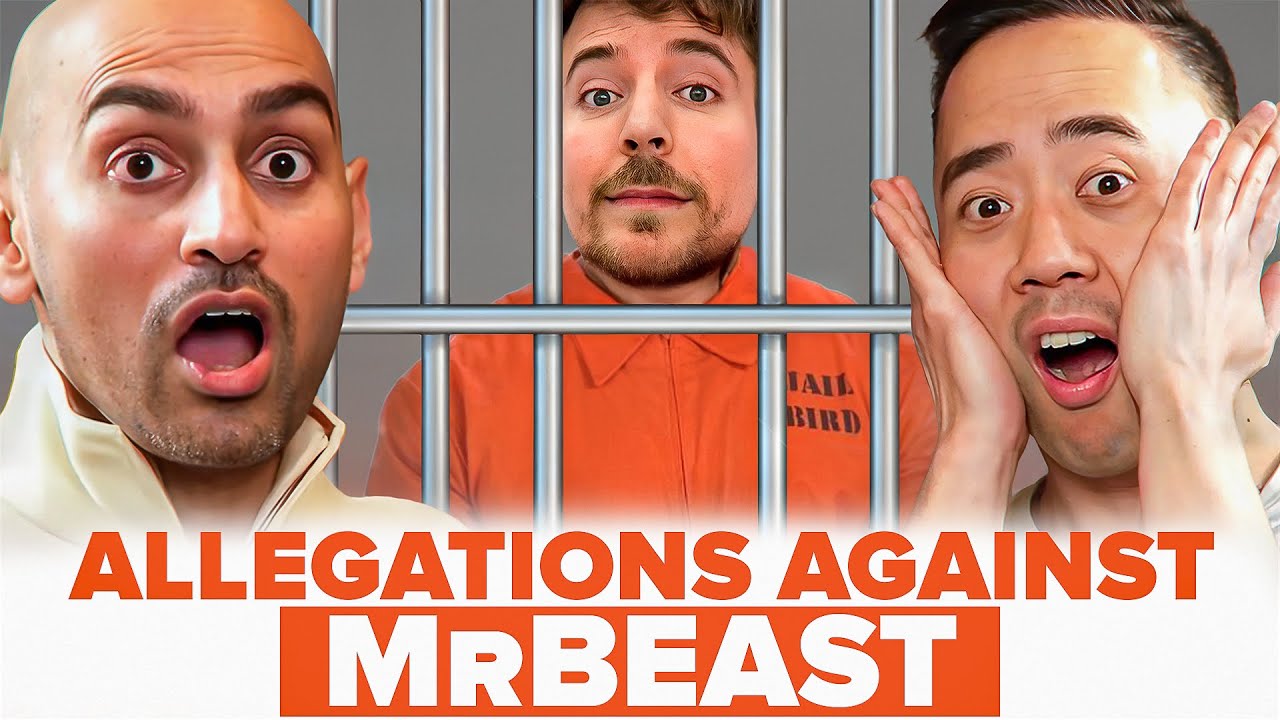
So Matt Paulson tweets this. I don't know if you met Matt, but the day MrBeast has to become a real grown-up company is the day that the channel has peaked. The suits will ruin the creative magic. So here's what happened. I'm not gonna go into too much detail here, but—
No, go into the detail.
There was an issue. So MrBeast had someone employed that was a—
Some harassment or something.
Trans female, I believe. I think, yeah.
Some kid harassment or something like that.
Yeah, and then so that person, that employee was one of his good friends before, but was basically Basically like sending, I think, um, like was harassing like little boys or something like that, right? Um, I could be wrong on this. You guys can, you know, crucify me in the comments. But, um, basically this person's name is Ava Tyson. And, um, so MrBeast then sends this message over. It looks very professional. It looks like it's written by a law firm, right? So it says company confidential, do not distribute. That's when you know it's super professional.
Well, he did state online that he hired a company to investigate the situation.
Yes. So I'm gonna kind of go simple here. So he's like, okay, you know, we hired a top-tier law firm, Quinn Emanuel, to do a full investigation. Um, okay, so this— to start off, we will be instituting— we'll be instituting hiring a new chief human resources officer. We will do mandatory training. We'll do listening sessions. Okay, we'll do anonymous reporting and we'll do external review. Um, so look, they've got over 300 million YouTube subscribers. I think it is important to professionalize it a little bit. Um, but Matt Paulson's point is like, once you start bringing in the suits, the creative magic's gonna be gone because MrBeast had so much creative freedom.
Um, growth will slow down too.
But when lawyers come, come in, they're gonna be like, hey, you, they're gonna put guardrails around things, right? Because when you build a large organization, you're gonna wanna put guardrails around things, which is why you see a lot of big companies eventually become bureaucracies. Yeah.
Because people don't wanna lose what they have.
Yeah. You wanna protect once you become big, right? But oftentimes that's a mistake. And by the way, in that book, J. Paul Getty's like, you, you don't wanna do it even though he built You know, the world's kind of largest oil operation. He's like, yeah, you know, you don't want the bureaucracy. You don't want to become like a government. A lot of companies do that. You want to prevent that as much as you can. I think Amazon's done a pretty good job of preventing that. I think, um, yeah, Amazon would be a good example. Apple used to— Steve Jobs used to call Apple the world's largest startup.
You know, here's an interesting example. So I remember my co-founder Mike telling me this around 6 months ago. Our head of marketing, Salo, gets on the phone with our CEO, my co-founder, Mike, Sarah, who runs our SMB division, and a few other people, maybe Colin and a few other people on our team. So Salo's just like, hey, I got this cool marketing experiment I want to run. I want to start doing some Instagram ads to webinars. I think this is what we can acquire signups for. This is the return I think it can produce, but it's still early, so I don't have any real return data. And I'm asking for a budget of $15,000 or $20,000 or $10,000 or something small like that. And just a one-off as an experiment. So then Mike's like, the CEO's like, oh, I don't know, this seems interesting. You know, Sarah, you're a little bit above your numbers for the year. Do you want this on your books? Sarah's like, well, I don't know. I don't want to mess up my numbers in case if it doesn't work. And then a few other people and pretty much it goes down the list and everyone's a little bit hesitant.
Nobody wants to put it on their P&L.
Yeah, because they don't want an expense and they don't want to take a risk. So then they pose a question to my co-founder Mike on the call. Our CEO's also named Mike, different person, but my co-founder's—
Co-founder.
Yeah, my co-founder's name's Mike Camo. So they pose it to him. He's just like, how much are we talking? He's like, $10,000, $15,000? He's like, do whatever you want, just try it out. If it works, great. If not, whatever.
Yeah.
Right? There was no bureaucracy or anything. It was just like, sure dude, you want to try the experiment? If it works, great. If not, whatever. We take a 10 to 20% hit.
You weren't on the call?
I wasn't on the call. I was probably traveling. And it just shows you, you know, like we have over 1,000 people.
Imagine how long that would have taken. It probably wouldn't have happened.
It wouldn't have happened if my co-founder wasn't on the call.
Yeah. And that goes back to the working businessman.
I don't think the experiment worked out. I'm 99% sure it doesn't work out because I don't see us running ads anymore.
But most experiments don't work anyway. Totally agree.
But what's funny about it is you're spot on. The moment organizations get really bloated, well, not really bloated, but more so big headcount-wise, people really run things through a P&L. And like, I'll have people tell me like, well, if we do this, it can affect our numbers and we may not hit it. Like, we're right on the edge. I'm like, who the heck cares?
Yeah. But the thing is like, that's why founder blood is so important. Because founders, like, you know what it took to build everything up and you know what risk-taking looks like. And so you're more, you're more okay with the whole idea of risk because starting a company in the first place is so risky. All right.
But based on what I said, do you think I run a business by a P&L?
No.
I never have. I do have people in place.
You're super on top of the numbers though.
Yes, I do keep track of the P&L, but I don't really care if we hit it or off a little bit, assuming it's because of choices. If we choose to miss because of extra investment, I don't care. If we choose to Not if we miss because we tried our best and the team just failed on execution. I'm not as happy in that situation.
Yeah.
But you accept if everyone tried their best. What's funny though is I believe most founders are like me. So we've been doing a lot of M&A and we reach out to so many companies. In a bad economy like this, what do you think most founders don't do? They don't run their business on a P&L basis. So when shit gets bad and they lose revenue, what do they forget to do?
You're asking me?
Yeah.
They forget to cut.
Exactly, they forget to cut. So their numbers are bad and we talked to so many agencies that are like, yeah, we're in negative profit or not negative profit, we're just losing money, we're not making any money. So then we go to these people, this is like the best time to buy it. Well, we'll give you extra really high multiple compared to what you normally would get in this bad economy. And then you give them a hard out because we're just looking at his business, like, huh, if you actually cost controlled, you could have, instead of being negative, you could have made $2 million in profit and poor management.
Yep.
So it's just like, it's good to, I think all businesses should know how to operate a P&L and stick to a number and know how to hit a number if they need to, or get close enough as possible with whatever circumstances you have to deal with. That doesn't mean you should always run to one, Or operate to one. But it is a great time to buy right now because the economy sucks and most people don't operate to P&L. So everything's cheaper from that aspect.
And a lot of agencies, when we ask them, like we have our agency community, right, Agency Owners Association, a lot of people are struggling with leads. I think 99% of them are struggling with leads. Yeah. So if you, if you got lead flow and you got a good operation, then now's a good time to figure out, you can either— there's a lot of different ways to buy, right? If you don't have the capital, you can do equity swaps.
There's a lot of different ways to And my favorite part is like when you buy these companies or even before when you're doing diligence, what's your utilization? Oh, it's pretty much full. Everyone's at capacity. So you're telling me you have 5 extra people than you did last year, but you have 15% less revenue and everyone is at capacity. I wonder how, and you're pricing your contracts correctly. It just means people are getting lazy and they're not actually performing.
Yep.
So then you go in there once you buy, because we've bought some by now, or we already have, and you start looking at things. You're like, oh yeah, everyone says they're really busy, but when you're in there—
All the time. And what do they say? We need more people.
Yes.
All the time. We need more people.
And then you look into it, it's like, oh yeah, you're really busy. You're working 2.5 hours a day. You're like, oh, exactly. Because then you start implementing things like time tracking, not clock in, clock out tracking, but more so how much people are spending Per project, actually getting work done, you're like, wow, you're not really doing much.
What's your target utilization rate?
I don't know.
I should tell them. Ours is 70, 80%, right? But even then, oh my God. Yeah, no, no, we need more resources. And by the way, going back to the Getty book, 'cause it's fresh on my mind, he's like, you know, your company, the people at your company are always going to ask for more resources. And your job is to be as frugal as possible and tell them no.
Dude, they all want more resources. But what we found is, Most of our leadership are executives who've been in our space for a long time. None of them ask for more resources. We typically have that issue with the younger generation. Yep.
Yeah, because nobody wants to work. Everybody wants to get paid, but nobody wants to work.
You know, my favorite is this. One time someone pitched me, they're like, Neil, we need Fridays off. Okay, why? Well, if we have Fridays off, we'll be able to recharge And we'll have a 3-day weekend.
Why don't we give 7 days off then?
No, and we'll do better. I was like, okay, what about the clients? Well, the clients will still pay the same and they expect the same work. Okay, what about the pay? Because people now get an extra day off. Oh no, no, everyone will get paid the same. All right, so the clients get less work done because there's less days in a week. And remember, we track utilization so we know when our people are efficient or not. The people get paid the same. So now I gotta hire more to make up for that in a business that already has low margins. So then I make what, no money to negative money, and then I gotta make it work? I'm like, this is not logical. You cannot do this.
Yeah. I mean, go find a company that does that. I'll tell you, like a lot of the 4-day work week companies, they talk about the experiments that have worked in Europe, but I think in American culture, it's probably gonna be tougher to roll that out. I think at least, Right now, you know, over the next 5 years, that's not gonna become a big thing. Maybe it will over the, you know, the next decade or two.
No, I do not see a 4-day workweek becoming popular.
Yeah, I just don't think it's happening in the next 5 years. We might have a different take on it. I just, I don't, I don't know what's gonna— we don't know how the world's gonna look in 10 years. I just—
That's true. With AI, things can change. But I would say for the majority of jobs where people are still working, people want them working 5 days a week.
I just, I mean, like, again, it comes down to purpose. If you enjoy what you do, it's hard. Like, not everybody can find Like, not everybody thinks they can find what they enjoy, but if you can, like you're incredibly lucky. Why would you not?
Yeah, and culturally, some countries are probably more open to four-day work weeks. Like France takes off for this pretty much whole month.
The entire European Union.
Yes, that's true. UK, which isn't in the EU, is still working strong during these months.
Yeah. I gotta take a minute to tell you about the Agency Owners Association. This is a peer group for agency owners. Think YPO or EO, but for agency owners, and I just wanted to read you a couple of testimonials. So this first one comes from Carrie, and we asked her, what do you like most about the group? She said, having a group of people to discuss and bounce ideas. The leads are great too. Yes, we share leads in this group as well. This one from Aliyan, he says, the ability to really post whatever I want and need, and the group responds. Great experienced members. Getting a lot of insights from conversations with other members. Getting a lot of value from sessions from Eric. Getting advice from And so if you want to grow your agency faster and you want a peer group to do so, just go to marketingschool.io/agency. This is a group that both Neil and I created. And our hope here is to create a vibrant community of agency owners and do a lot more with it in the future. So again, marketingschool.io/agency, and we'll see you inside. Can we talk about how Costco sells $9,000 exercise equipment for $100?
Yes. I'm curious on what is this? Is this their membership where you walk around?
No. So, so, okay. This guy Shannon Jean tweets this, who has solved the problem of selling exercise equipment Again, Costco selling $9,000 exercise equipment for $100. So Costco has a liquidation auction, continues— it continues to basically give this product away. So here are some numbers: $8,490 worth sold for $302. Okay, $7,000 worth of equipment sold for $100. $9,500 worth sold for $402. So here's a screenshot over here. You guys can see it on YouTube. But they have a section over here where you can do liquidation auctions and you can buy like these, these super expensive—
Costco.com?
Yeah, it's— I think it's just search for, uh, is it used or brand new stuff? It's used Costco liquidation auctions. Um, and maybe some of it's not, but so he says, I know there's a reason, uh, quote unquote soft market that they're selling so cheap, but I can't help but also think that the person who solves for where to sell is going to make a killing. Your thoughts? If you— so basically You search for Costco liquidation deals and you're going to be able to find these things at a massive discount because people are just bidding on this stuff. And I don't think a lot of people know about this. And so that's why it's selling for so cheap. So me telling you guys about this right now, yeah, you're welcome.
This is going to be like one of your other Instagram clips on the mall. Yeah.
All over. The mall did really well.
Yeah. This will do well too. Yeah. Yeah. Yeah. Uh, dude, with Costco, I know how you can get $9,000 worth of equipment for $100. How? You just don't buy it and you just walk their stores. You'll get so many steps in. It's like exercising. That's true.
You know, in Italy, when I was there, I was eating like an asshole every day and I lost 5 pounds. It's because I was taking 15,000 steps a day and the food's cleaner, way cleaner.
I was about to say, it's not just because of how much you ate. Yes, you get more steps in, but the big one is their food is actually way cleaner. And B, their portion size, if you actually look, is very small compared to American portion size.
I had some fat portions.
Probably ordered them. But generally speaking, their portion size is smaller than you'd get like at an American restaurant.
Yeah. All right. Quick note. This is about my company. It's called Single Grain. And Single Grain is an ad agency where we're focused on driving innovation. We'll talk about a couple of new strategies. And if you need help with marketing, great. If not, here are a couple of new strategies that you should try out. One is programmatic CRO. So we are doing programmatic conversion rate optimization on our site. So it's building products that will automatically optimize your site to increase conversion rates. We're also auto-optimizing, auto-updating for from an SEO standpoint. And we're constantly thinking about what else we can do in terms of enriching the visitors that are hitting your website and also tailoring custom messages for them using AI. And so there's a handful of things that we're doing from a marketing standpoint, and our mission is just to drive more innovation. So if you want to learn more, just go to singlegrain.com, grain like rice. So singlegrain.com to learn more, and we'll see you inside. You know what, this is a good one over here. Why don't you talk about using the word— is using the word AI in your marketing dead?
Dude, so it was funny. We looked at companies early on that were using AI in their marketing and there's a good group of us that share a lot of data. And no joke, everyone in the group, call it a year, year and a half ago when they put AI in their headlines and their marketing materials, they saw a boost in conversion anywhere from, call it like 7, 8% low single digits or high single digits, all the way up to, we saw people boosting conversion rates in the 20+ percentile. And I'm not talking about 1 or 2 sites, I'm talking about like 15+ sites, all running tests and all seeing positive results. Now fast forward to today, a lot of the same sites reran experiments, A/B tests, using the word AI in the headline, or in their copy versus not using it literally has little to no impact on conversions anymore. Even if they use AI technology or there's something cool about it, it's just, it's gotten so overplayed anymore. People are, what we're getting from the data at least, and I'm putting words in their mouth, I'm assuming people are burnt on hearing the word AI.
Yeah, I'm kind of tired of it myself. I think, so a couple months ago, so we're putting, we're doing this global marketing summit, those of you that are interested in Miami, We had some good speakers coming. But so one of my co-champions was like, you know, we need to have AI in everything. Everyone's so interested. I'm just like, it's kind of played out now, you know?
Yeah.
If you are just talking about AI by that point, it actually shows that you're behind the times. You know what I mean? It actually makes you look bad. And so it's better off to just talk about the things that are working like usual because AI will be like the internet in the future. We don't just say the internet every day. Oh, I'm going to go on the internet today. You don't say that. You might have said that like when I was 9 years old, maybe I said that. Yeah, just like, oh, I'm gonna go use you some AI right now. No, no, it's just gonna be built into what we do.
Yes, it's like Eric talking about this LinkedIn video that he put up earlier on this podcast with him and Jason Cohen, and he talked about this app that he used to slice and dice, and it was AI.
Yeah, I don't think I said AI.
Yeah, but it was AI-driven. It was AI-driven. Yeah, and the point I'm trying to make here is You talk about AI without saying it, but more so showing how you can use it to solve problems, whether it's the product name or the steps. That's what people want to know. No one cares that, oh, this is AI. They just want to know how to get stuff done as efficiently as possible and getting the best results at the same time.
People just care about what you can do for them. They don't care how you're going to do it. Just what can you do for me?
And the cost and the results.
Yes, yes, yes, yes, yes. All right, guys, that is it for today. Please go to marketingschool.io/agency to learn more about the Agency Owners Association. And please don't forget to rate, review, subscribe. It helps us grow. Please, uh, help us balance out the, uh, the people that don't like the new format. Tell us you like the new format. All right, we'll see you guys later.









