MrBeast made me cry and How Prime saved Amazon
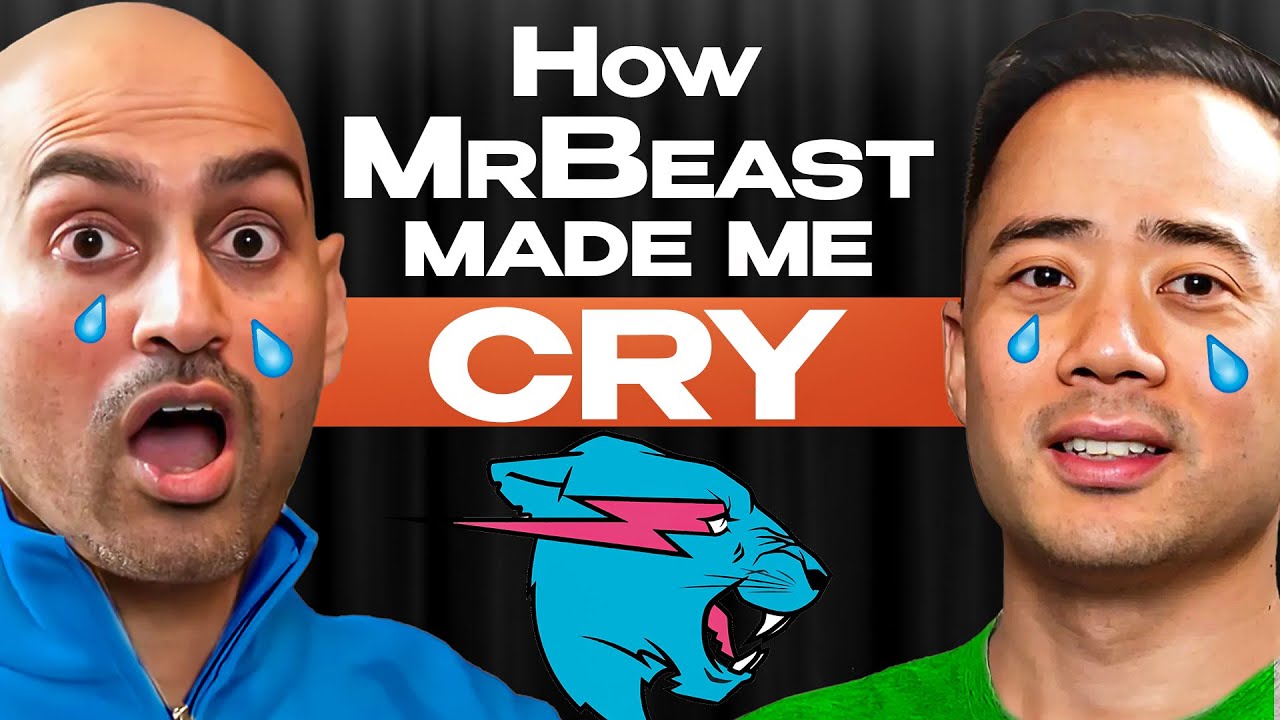
Eric and Neil break down MrBeast's new "1 to 100" challenge where contestants aged 1-100 compete in boxes for four days and a $250,000 prize, plus how Amazon Prime started in 2002 when the company faced slowing growth and bet on free two-day shipping.
Chapters
Did you also see MrBeast's new content format? His new video this past weekend?
I didn't see his new video, but you told me about a new format a few episodes ago where he was doing a longer format, less craziness, less choppiness, like, you know, ADD type of attention span.
Yeah.
Is that what you're talking about?
So he's gone even harder now. So he made his first 40-minute video. So MrBeast makes this 40-minute video and I actually teared up a couple of times watching it 'cause there's a storyline to it, right? It's basically 1 through 100.
Wait, wait, wait, back up. Talk about, I want to know why you cried. What was the video about?
Like, break everything down. I'm literally telling you right now. No, you said 1 to 100.
I want to know what the video is about.
Yeah, exactly. It's about people ages 1 to 100. And if you like step out of the box, like everyone gets their own box, right? If you step out, you're eliminated. The last person standing, they will get $250,000. And he throws in like a bunch of wrenches along the way. You know, people like pair up with each other, people vote each other out and stuff like that.
Actual wrenches?
No, not wrenches, not actual wrenches. It's like, he's like, oh, guys, if you guys don't pick the next 10 people to eliminate, I'm going to eliminate 30 of you. And so nobody picks anybody, right? So he eliminates 30 people. So the trick to this game is, or the catch to it is, everyone has to vote on the winner at the end. So at the very end, as people are getting eliminated, I start crying, or not crying, I start tearing up. I guess that's crying. The old people, there's people up to 100 years old there, right? And then when the old person gets eliminated, it's just so sad, right? Or there's like little kids or like someone's mom is dying from, you know, some disease or something and they want to use that money to take care of them. So everyone has a story, right? And then there's some people that are nasty too, where it's like they just want the money for themselves. And so there's a storyline and you get to see the characters develop. And so there's emotion tied to it. And at the very end, there's only 5 people left. And then They couldn't— there's like, you guys have 1 hour to decide on who the winner is, right? And nobody could decide, like, who should win, who should win. And at the very end, people just voted like top 1 through 5, and they just combined the ratings. And then, um, people, you know, rank 5 walked out, rank 4 walked out, rank 3 walked out, and then all the way to rank 1. And then, um, that person won $250,000.
Wow.
But there's, there's a lot more to it.
And they— how long did they have to stand or stay in a box?
4 days.
When you mean a box, you're talking about a room or like a cardboard box?
It's like this with a bed in it.
Oh, okay.
Yeah.
And it's not like dirty conditions or anything like that?
No, no, no. And then like, you know, MrBeast is staying engaged. He's feeding them, obviously.
Um, is that like a jail cell?
It's kind of, but it's like a clear jail cell. You can see each other. And he did this little, uh, he threw in this other wrench over here where he blocked everyone's, um, um, cage basically. And he's like, okay guys, I'm going to offer you $250,000 right now. Here's the catch. Only one person can leave and you're not going to know who leaves, right? So anybody can say, hey, like you can say, I want the $250K. And if you step outside and nobody else steps outside in 10 minutes, you win the $250K. And so one guy steps out immediately. He's like, guys, I'm stepping out. I'm trying to win the $250K. Nobody else step out. And basically there's only 2 seconds left and someone else stepped out. And so they both got eliminated. And they didn't win anything.
But why'd the other person step out?
That's stupid. Because he's like, oh, I feel like winning. And so he stepped out. He eliminated the other guy.
But you wouldn't win because—
Yeah. And the other guy was just like, dude, are you stupid? Like, I literally have been saying the whole time, like, I'm gonna step out. And he like wanted to kill him. So yeah.
Dude, that sucks. Now, do they get paid to do this other than the winner?
No, I don't think they do. I think, I think, um, okay, so MrBeast will like, like the, the 4 runners-up, right? He paid them $10,000 each and he'll like try to throw in these side prizes and stuff. Um, but my take on it is he doesn't pay everyone or like he doesn't announce it. Like if I were him, if you're giving out so much money, I might try to allocate like $5,000 per person. Yeah. You have to, I think you should do that.
So. He probably pays people something to do this.
I think it's $2,500 or $5,000 just to get them to play.
Which isn't bad.
That's a lot of money for 4 days. Especially the older people. Like, I feel so bad. They're like 96-year-old. He's like in this, you know, the walker thing. It's like, it's tough to watch.
Dude, I can't watch it. Based on what you're saying, I'm gonna feel bad for all these people.
You should watch it with your kids.
No, I can't.
Because the kids eliminate themselves immediately.
Why?
Because they're so like—
ADD?
Yeah. Yeah, I didn't say that. You said it. I was like, I should not say that, but you said it.
You're talking about little kids, right? Like 3 years old.
The 1-year-old just walked out immediately.
Yeah, they don't know any better. Like, if—
oh yeah, of course.
You can't have like a 3-year-old just sit there and be like, you got to stay in this room for 4 days. It doesn't work.
Yep.
Anyone who has kids knows that one. Yeah.
So I'm keen to see where this— he's actually doing a good job. And just to parlay this one more thing, um, he signed a deal with Amazon Prime, and so he's gonna do a, a game show with them very similar to this. So he's kind of practicing his chops right now, and he wants to make it the biggest prize pool ever. And so I'm like, oh, you seem like you have potential here.
This seems really cool. I've never— I never have seen—
You watch TV? You should watch it later. Yeah.
Amazon Prime actually has decent shows. After they acquired MGM, I felt that the content started getting better. And if you see some of the new shows, it'll be like Amazon Prime MGM or something like that. They combine the logo.
All right, real quick, I need to tell you about the group that Neil and I created called the Agency Owners Association. And this is a group that's similar to entrepreneurial organizations such as YPO or EO. By the way, Neil and I are both in YPO, but we thought it'd be really cool if we're able to create a group that's dedicated to agency owners to helping them scale. So you could be at 6 figures, 7 figures, 8 figures. We have different groups for different levels. All you have to do is go to marketingschool.io/agency. Again, that's marketingschool.io/agency, and you can go there to apply. And I will tell you right now, what we're doing is there's an online community. We do calls every now and then. There's stuff that we share in there that we don't share publicly. And you can, at least with the online community, you can cancel at any time. So you can go there to learn more about it. And that being said, back to the video. Oh, do you want the Amazon Prime story? Let me give you the Prime origin story. This, this leads up well to it. Okay. So this book I've been reading, I told you to read it, right? Working Backwards.
No.
Okay.
Okay. I'll check it out.
It's a great— okay. It's basically, I'm pretty sure, pretty sure I told you about it. So the chief of staff for Jeff Bezos, and then this other guy who worked for the Amazon digital division, um, for 15 years, They wrote this book. It's basically all of Amazon's processes and how they do things, right? The origin of Amazon Prime was— this was like 2002, 2003, and they were growing really quickly, right? This was after the dot-com crash. Here's the problem. They were growing really quickly. This was like November, so it's— October, actually. It's leading up into Christmas, which is like their busiest season, right? Jeff Bezos is like, we need to create a new offering, right? But everyone's like, dude, Their numbers are going up. Everything's looking good. But what most people didn't see is that their growth rate year on year was was decelerating. Each month, year on year was decelerating, right? And it's because a lot of these online retailers were catching up with Amazon, right? You can you can yawn. You're about to yawn. You should yawn.
I'm good.
Okay. So then they're like, okay. So what we need to create like a low price offering. Like what is it going to be? We need to keep an create an offering that's going to keep people in. And eventually they land on this free two day shipping thing, right? To people engaged. Like they tried to, they were thinking about a lot of different offerings and people were struggling with this. Right. And Jeff Bezos was like, we need to launch this by February, by my next investor update, we need to launch this. Right. My next shareholder update. Um, they launch it, but you, the biggest lesson I learned from this one, this Amazon Prime story was they needed to do something because their business was decelerating. But the other thing is this bet, this is the type of bet where you don't know if it's going to pay off for 5 to 7 years or so. And you have to have a lot of guts to launch something like this. Nobody knew how this would go. And even like you launch it, a year later goes by, you don't know how it's going, right? And so their philosophy at Amazon is instead of having like an indefinite or indefinite no philosophy where people just say no to new things, it's more of an indefinite yes philosophy. Because when you think about companies like Nokia, for example, or when you think about companies like, you know, Microsoft was struggling for a little bit, right? They missed mobile. And for Amazon, they just didn't want to miss stuff. And so a lot of stuff they'll launch. And then this whole thing was like waiting 5 to 7 years when you're a big company like that is it takes balls. All right. So I wanted to take a second to tell you about Leveling Up Founders. This is an event/mastermind for people doing 7, 8, 9 figures. These are founders that are doing that amount. And we've been doing this event for a couple of years now. We've had amazing speakers, but more than anything, it's about the people. What I mean by that is like-minded people want to hang out with like-minded people, and this is the best spot to connect with people of a certain caliber. And we vet every single person that comes through. So if people are— even though they make a lot of money, but their character, we don't really align with that, we're not necessarily going to let them in. We did this event in Beverly Hills, and it's happening in the beginning of August. All you have to do to learn more about it is just go to levelingup.com/founders. Again, it's levelingup.com/founders if you want to hang out with amazing people. Neil, my podcast co-host, is going to be there. I'm going to be there. People like Syed Balkhi, he will be there as well. And again, It's going to be a great time. levelingup.com/founders to learn more, and we'll see you inside.
Totally agree. But you want to know the funny thing about Microsoft? When they were struggling for quite a bit, their financials weren't struggling. The market just didn't like their vision and their belief of where they were going.
And they're going through that, uh, that whole antitrust—
A long time ago. Antitrust, monopoly, splitting them apart. And they were fine with that in the— at the end of the day. But the big issue with Microsoft was Once they shifted leaders, they're already big and printing tons of cash. They were just not valued that highly based on their profit. And a large reason was, is Wall Street didn't believe in the vision. If you look at Wall Street, Microsoft right now, their earnings and their P/E ratio isn't bad.
What is it?
I think it's close to 30. I could be wrong. The last time I checked—
Oh, that's not insane.
For their company, their size. Yeah. P/E 37, that's, that's a good P/E ratio. That's a high P/E ratio. What do you think Apple is?
I'm looking at Facebook now. You go look at Apple.
If you look at Apple, it's 26. So, but the reason Microsoft has performed better, a lot of it is because people buy into the vision, what they're doing with the cloud, what they did with AI. Like, these are the things that have really shifted Microsoft and making them a powerhouse.
Yep. It makes sense. I mean, um, you know, things take time. I mean, you think about like in 2022, when Meta dropped all the way down to like $90 or something like that. Um, and their PE was like 14.
I should have bought it.
Me too. I was just gonna ask you, did you, did you go there? Like, when it went low, what were you thinking? It's like, oh, I guess this is the—
No. So what I was waiting, I was gonna buy Meta, not at that moment. I was— so Meta crashed a few years ago because of the Apple iOS changes.
Right.
It really hurt their ad revenue.
And people are like, what's this guy doing betting on the metaverse?
Exactly.
Yeah.
And I still say, what the heck is this guy doing betting on the metaverse? That's just my opinion though. Um, when you look at Meta, Google is also going to release some changes, which is going to affect their revenue, right? What they're doing with cookies and tracking and all this kind of stuff on Android devices. Google hasn't released a lot of this stuff yet. But it will have— it should have an impact on their revenue in a negative way. And, but they kept delaying that date on when they were going to release it. So what I was hoping is, is Apple goes out, Google does it pretty quick, which they never ended up doing. They just delayed it again. And then boom, a one-two punch, the revenue gets hit even harder. And then I was going to go buy the stock.
This is what happens when you try to time the market. So Neil and I, we should have just bought it.
We should have called it a day.
Yeah, but you know what, I don't live in regret because I'm okay.
I could just go and, you know, buy more businesses and I'll make more money. Yeah, I'll make double my money on the bottom.
You know how often my parents bug me about buying a house? And I'm just like, okay, my mom was like, you know, if you buy a house, uh, let's say round numbers, right? You buy a house for $2 million and then, you know, in 20 years it becomes $10 million. I was like, Mom, let's do the math on this, right? And then it turns out I was like, Mom, what's the cap rate on that? What's the return on that basically, right? In the next, uh, over the next 20 years, 5%. I'm like, what are we doing, Mom? Why don't I just put it into a CD and I don't have to worry about this crap, right? Um, it's better to focus on what you actually understand. Yes. Yeah.
You and I are on the same page, but the problem that you end up facing is, is not everyone—
No, they're talking their book. Yeah.
Just look at me in real estate. I went through so many homes and stuff like that. And now I live in a tiny home. And I'm like, oh, this is great.
Not for long.
We'll see what I can end up swinging. But hopefully I can stay here for a few more years.
So that is it for today. I mean, let us know what you think and go to marketingschool.io/agency to learn more about the Agency Owners Association. Please don't forget to rate, review, subscribe. You know, we meet in person for this. We've got Brad from recordeditpodcast.com. And yeah, we'll catch you in the next episode.









