NFT Marketing 101 | Cryptoys CEO on Raising $23.6M from a16z | Partnering up with Mattel!
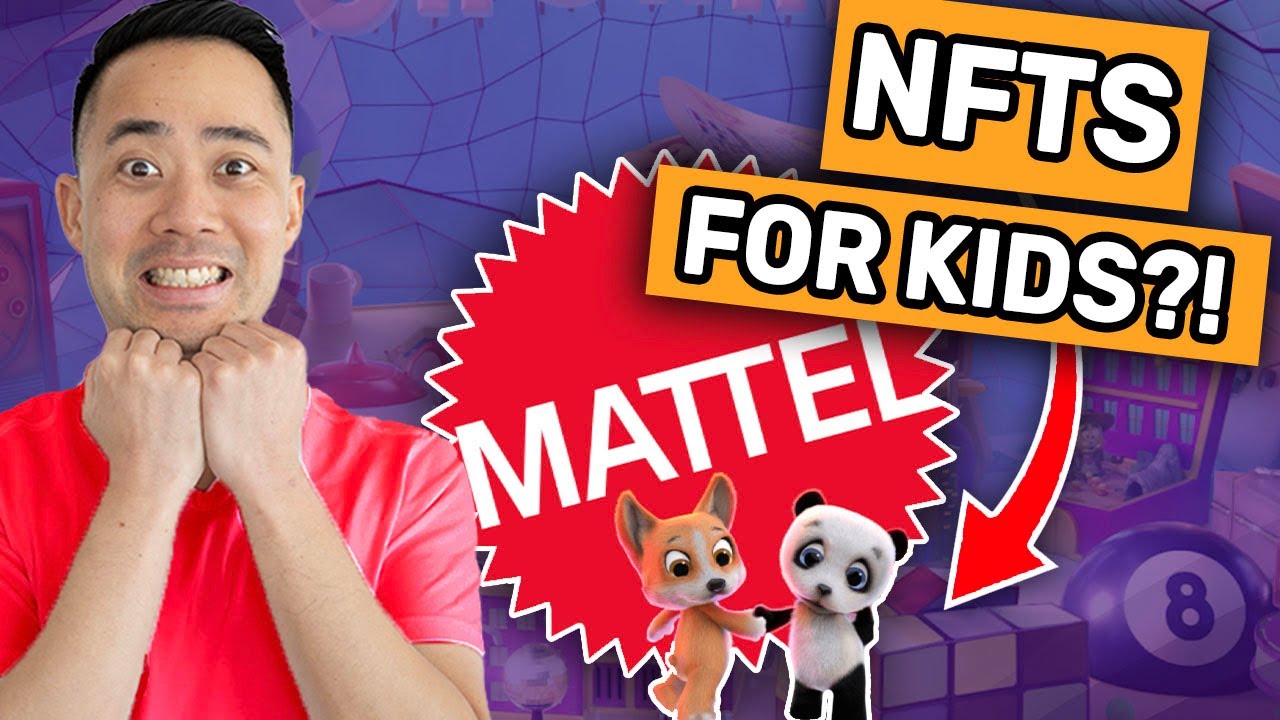
Will Weinraub, CEO of Cryptoys, raised $23.6 million from Andreessen Horowitz for his NFT-based digital toy company. He built Cryptoys from a side project for his daughter and just partnered with Mattel. Weinraub says storytelling is the most critical skill for founders and emphasizes hiring mission-aligned people over those just chasing money.
Chapters
Doodles' art and Pharrell's music, that's chocolate and peanut butter. I mean, that is the perfect match. Like, when I saw that trailer that they put out for Doodles 2 and it's got their animation style and Pharrell's music, I was just like, I just had— I was like ear-to-ear grin because it's just so perfect. It just hits so well. So.
All right, everyone. Today we got a special, special episode. I jumped ahead, Creators of Web3, but we got a special episode of Creators of Web3. We have friend of, well, friend from JPEG Morgan, Will Weinraub. Obviously, Will and I are— Will Lee and I are here every single week. And those of you that can see the video, Will's actually got a JPEG Morgan mug. So I had actually met Will close to a year ago now, actually, at a JPEG Morgan lunch, and then hit it off. I just they've done some really amazing things with Cryptoys. As of last week, this was made more public last week, they raised over $20 million from Andreessen Horowitz and a handful of others, which we're going to let Will Weinraub talk about. I'm just going to call you Weinraub. And then there's just a handful of things that are going on, and then we'll go into our typical talking about trends and reacting to the news a little bit and giving our insight. But this is actually, Will, you're actually our first guest on the pod. Um, so, you know, this is continuing to, to ramp up. So very excited to have you. And then, um, I might even cross-share this to, to Marketing School as well. Um, so Will, welcome to the show. How are you, man?
Oh, doing great. Thank you guys so much for having me. I'm really excited to be here and chop it up with y'all.
Cool, man. Yeah, so I, I'm sure, uh, Will Lee from our side is gonna have a ton of questions, but I just wanna start off first with, um, maybe a kind of a brief introduction on, on who you are and what the story of Cryptoys is.
Sure. Yeah, so, um, Born and raised in Miami. Got started in tech when I was around 12, 13 years old. I'm 37. So back when I was 12, 13 years old, that was the middle of the AOL kind of heyday. You know, you get your 1,000 Hours of America Online via CD-ROM in the mail. And that was my foray into the internet and, you know, started learning kind of how to make websites on platforms like GeoCities, AngelFire, Tripod, these kind of mid-'90s hosting sites. And that's kind of how I learned how to code. And that was like when the entrepreneur bug bit me. I was making these little crappy websites for $99 a pop for people on GeoCities and knew like, hey, this internet thing, making money on the internet, this is a thing and I want to keep doing this. And I just did little side jobs here and there in tech and did some e-commerce consulting, helping people I knew in the Miami Beach area get their brick-and-mortar businesses online and how to sell products online. And then I went off to Florida State University, came out of Florida State, started my first venture-backed company that was called Live Ninja that was based out of Wynwood. And that we raised some money from Comcast Ventures, Citi Ventures, and a few others, scaled that company to roughly about 20 people. And then we sold that company to IDT Telecom in 2017. And I had my earnout with IDT, worked there for a little bit, and then also started a side project for my daughter called Cryptoys, this little passion project. It just was a little kind of rinky-dink kind of project for her that started to take a life of its own. And that side project started just as like nights and weekends, a little passion project with her in 2018, right when NFTs were starting to just kind of bubble up with CryptoKitties. And that's kind of how I, how I dive deep into the space, just making a little bit of progress since then, basically.
I can see Willy wanting to ask a bunch of questions. I know there's a lot of relatability here, so Will, I'll let you chime in. Go for it.
Oh my goodness. Just so you guys know how, how this whole conversation came about, when I saw the article of Cryptoys raising over $20 million, I was I was just like, what is this? And then from there onwards, when I read you guys are doing toys, you guys are doing entertainment, you guys are doing gaming inspired by your daughter and creating this massive toy NFT company. I was just like blown away because you guys have backing and partnership with Mattel. You guys are backed by a16z. And I'm like, by the way, disclaimer, we have a project called The Littles. This started, we minted out November 25th of last year. 10K PFP project inspired by my daughter as well.
Amazing.
And we are in the same 3 pillars as well. So merch, collectibles, we're doing entertainment. So we have an official partnership with Time Studio to create animation series featuring the littles and my daughter, which is incredible. And then we're also doing gaming as well, partnered with CyberKongz, Cool Cats, SubDucks, and KaijuKingz to start off creating this interoperable, hub where everyone can create shared experiences together. So for me, I'm like, wow, in this field and in this NFT world, it is so new that there is no playbook that you can follow. So whatever you're doing, you don't know whether it is right or not right, or whether people would find it receptive. And so when I saw that article and you raising, I was so blown away and I was so, so happy because I'm like, Finally, someone has done that. There is a blueprint that I can follow. And then I followed you on Twitter and then I saw Eric and you were connected and I'm like, Eric, let's get this guy on the pod so I can have all the questions that I can ask him. And so anyways, big, big disclaimer for you.
Well, thank you. Very flattering to hear all that. And thank you. I'm humbled. And yeah, it's been a fun journey so far. Again, inspired by my daughter and her love for toys and some of these trends that I saw it starting in 2018 and then the trends of intersecting with NFTs. But remember, I had this as a side project and we were building it out. Nobody cared about NFTs really in 2018 outside of the real dorks like us. You know what I mean? CryptoKitties was really it. It was kind of CryptoPunks and CryptoKitties is really the 2 main brands that people would point to. But again, I was just fascinated with the idea. of digital ownership and even more so digital scarcity. The concept of digital scarcity I thought was so interesting. And my daughter was obsessed with these toys called LOL Surprise dolls and Hatchimals, which were basically this billion-dollar segment of the toy industry called blind bags and surprise unboxings that were predicated on collectibility and scarcity. And I thought, oh my goodness, here's my daughter spending hundreds, if not thousands of dollars of her parents' money on these things that just sit in a bin somewhere. We can now do the digital version of these things. thanks to NFTs. And, you know, I saw a Fred Wilson blog post that he was investing in this new company called Dapper Labs. You know, they were the makers of CryptoKitties. And, you know, when Fred Wilson writes a blog post and says he thinks that something is the future, you should pay attention. And, you know, when Fred wrote that post, I was like, okay, I really want to dive deeper into the space and that intersection of digital ownership and collectibility, and then doing something for my daughter that would excite her. I was just like, okay, I'm going to go down this rabbit hole. And in 2018, again, nobody really cared about it. So I remember going around Miami, you know, because I'm pretty well connected in the scene in Miami because I'm born and raised there. And basically, you know, showing people, you know, they're like, hey, Will, you just sold Live Ninja. Like, what's your next move? And I'm like, well, you know, let me show you this Digital Panda, you know, that I'm working on. And they're like, uh-huh. I'm like, it lives on the blockchain. And they're like, okay, yeah, sure it does. Like, looked at me like I'm completely insane. Um, so I, you know, you just kind of keep pounding the pavement. A couple years down the line, you know, in 2020 is when Top Shot, you know, really had its moment and NFTs were starting to break into mainstream, or at least the concept of digital collectibles.
So, um, well, I want to, um, I, I have a question just out of curiosity. I was actually at, um, I was at an investor conference, um, about a month ago or so in Missouri, of all places. Um, and, um, One of the guys, he— I forgot what his name is. You probably know who this guy is. Um, he founded a company called Moon Pals, and he has— he, he had founded all these other companies, right? And it's the same type of story. Like, his daughter really likes, like, you know, dolls or whatever, and then, like, he creates this company called Moon Pals. They raise a bunch of money too, right? You guys raised about $23.6, something around that range, correct?
Uh, yeah, that's the A round. We raised a seed round before that. So in total, across the 2 raises, actually close to $30 million.
Got it. So, I mean, I'm just guessing right now, like, your valuation has to be over $100 million, right? Um, something like that. And so, like, it— for, for you guys, because, you know, often I think what you and Will are doing, like, you have people that have actually built businesses before, they understand how to operate. But also, this is kind of a disclaimer for, for everyone that's listening, you have to put in work, right? Like, when I, when I went to NFT NYC last week, it's like, we want to build a game, you know, we want to build, we want to build IP, we want to do this. I'm like, bro, like, you can't just say like you're gonna be a game developer the next day. Like, it's— you just can't say that, right? Like, it's almost like irresponsible. And so like everyone's promising all that in the roadmap, but I feel like for you two, um, it's actually like you're all in on this, this is serious, and then like you have to grow into that valuation too and do much better than that too, right? So I guess what is the— what is the plan for you guys? I want people to get an idea of like, um, what it's gonna take if they wanna do something similar.
Yeah, so I think So we have these 3 pillars, which is toys, gaming, and entertainment. And, you know, for us, we really want to make a huge impact. You know, we really want to onboard the next million, 10 million, 100 million people into Web3 and into the space in a seamless way, in a frictionless way. And, you know, to do that, you need these multiple pillars because, you know, some, some person can discover you by buying a crypto. They see somebody tweet about it, they buy the NFT, and they're like, oh, I can play games with it. Oh cool, and there's this animated series. Other people might find you on a streaming service and be like, oh, I love these characters, I want to buy the toy which could allow me to play the game. Another person might see the game on Twitch and be like, okay, how do I play the game? I need the toy to play the game, and now I'm interested in the film and in the animated series, right? So you really need to cast a wide net to really kind of bring as many people on as possible and starting to be less niche. At the same time, you have to be realistic. You can't execute on all of those things. at the scale that you want simultaneously. So you really need to know what your core strengths are as an organization and then build around that. Our team is phenomenal at certain things. We're amazing at art and animation and Unity development and smart contracts and marketing and partnerships and things like that. And then there are things that we have proficiency at, like building Unity-based games, but at the scale that we want to build them at, we also need to augment ourselves with partners as well. And then additionally, on the animated series side, The animated series that you saw, the trailer that we just released yesterday, Genesis, right? That was a, you know, a minute and 45 seconds, but we had to do it at a quality that we really wanted to hit, this level of animation quality. That takes a lot, a lot of time, a lot of money and resources and attention. To do that at scale and to produce an animated series, we need a specific partner to really churn out a lot of animation. So I think it's important that you recognize the scales that you're going after, figure out what your core proficiencies are, Focus on that 100% internally, and then augment yourself with the right partners to really help build out your vision. The Mattel partnership, I think, is a big piece of that. If we're going after the toy industry, we need to align ourselves with the best partners in the toy industry, and there's no better partner that you could align yourself with than Mattel. And then we have some other announcements that we want to make on the gaming side. Hopefully you'll see that in the next few months as well. On the entertainment side, some big announcements. So you can't do everything or else you're trying to boil the ocean. You really got to focus on what your core proficiencies are, but also stay true to the vision and get yourself the right partner so you could try to execute that vision as best as possible.
Got it. One more question for me, and I'll turn it over to Willy. So with Mattel, obviously partnering up with one of the biggest toy companies out there is great for you guys, right? I'm trying to think from their perspective too, what's in it for them, right? If I'm a project and I want to get into the hands of a Mattel or whatever, what's in it for them? What are they getting out of it? How do you even How did you even get that going? Right, so handful of questions.
Sure, you know, we got connected through Mattel by mutual connections. You know, people said, hey, Will's trying to build a digital toy company. Well, I know a legacy toy company that you need to talk to that might be interested in this stuff. And, you know, we chatted with them, we actually chatted with a number of toy companies, and it was clear like Mattel right off the bat just had that ethos of like leaning in innovation. Some brands and big companies are actually shying away from Web3 and NFTs for lots of reasons. Like some will say, oh, it's— I hear that it's bad for the environment and blockchain is bad for the environment. There's all these like little nuances that people will point to. Some are just fabricated and bends of the truth, but there are certain companies that lean into innovation, even if it means disrupting some of their own business model. Right. So Mattel is a great example of that. They make physical toys, but they also see digital as a big part of the future. So they want to make sure they're a part of that conversation and not fighting against that wave of change. So when it comes to why this partnership makes sense without trying to give out too much of the product announcements that we're going to make over the next few months here, you have— and I think Mags tweeted out something fantastic and this was coming from her own accord. Mags is one of our investors. This is a great example of a Web3 partnership where the legacy company is coming in with brand expert— with like industry expertise. They've been at this for 20, 30 years plus, right? They know about merchandising, they know about marketing, they know all the ins and outs of licensing deals. They've done this, right? And then you have this new age Web3 company that's really tapped into NFT and Web3 culture, that knows about digital innovation, that knows how to build this stuff from scratch, from the ground up. And you have this kind of perfect partnership between like legacy experience and industry, like deep-rooted industry knowledge, and then like the forefront of like thinking about Web3 innovation and NFT innovation and digital experiences. And you kind of meld that together to create a very symbiotic relationship and partnership. So, you know, we're focused on building the digital side of their company or helping a lot of the digital stuff that they're doing, like, you know, building digital toys alongside Mattel and taking some of their iconic IP and bringing it into the space in a very thoughtful way, you know, not in a in a way that you see a lot of these brands just dive in kind of haphazardly. We're doing it in a very meticulous way with them.
Got it. So just to clarify for everyone, it sounds like it is kind of like a quid pro quo, like, you know, they're helping you and you're also helping them get into this space, right? So there is a mutual benefit there. Willy, what do you got from your side?
I actually have 2 questions without, you know, sharing the farm with everyone. During your whole entire pitch or your raise, what was The most difficult part of that journey for you? And the second question, what was the biggest strength that allowed you to push through that people were like, wow, I see something in this guy?
Hmm. Well, I can only assume certain things because I can't speak for them. I guess I'll talk about the difficult part first. You know, you have to You have to convince people of something that doesn't exist and to believe in an entirely new market and possibilities for that market that has never really been proven before. You're talking about a digital toy company, right? Built from the ground up as NFT native. And what does playing with digital toys look like? If I asked 9 out of 10 investors, how do you play with digital toys? They're not really going to know the answer to that question. You have to really kind of drum up the imagination and really paint the picture for them. So that I think that's the hardest part is you're really kind of crafting something with a blank sheet of paper. Oftentimes that could work. Sometimes it's to your detriment because VCs and investors like comparables. They like to be able to make comparisons and they like to say, what's our total addressable market on something? And really the TAM has yet to exist on something like this. You have to kind of really articulate what the kind of Venn diagram looks like of a new TAM. Right, and how that could be, you know, part of this new total addressable market. What was the successful parts of the pitch? Again, I hate to speak for other folks. One thing that I will tell you is that I'm extremely passionate about this. I don't prepare as far as like script my pitches. I don't— I have a deck, but the deck is like a set list, like, you know, like somebody has a set list of what they're going to perform on stage, you just— I know my cues and I just talk. And I think you could get the sense that like I'm a really mission-driven entrepreneur and I'm just— I believe so much in what we're building that I will will it into existence, you know, somehow, some way. And it seems that that enthusiasm and energy, if the person on the other end of the call or of the meeting is receptive to this type of innovation and disruptive thinking, Those are the type of people that you want to align with. So I just speak really passionately whenever I'm on a pitch. I bring my energy because I bring my truth, and then whoever aligns with that seems to be folks that I want to work with and vice versa. So I would say that would be it, because I don't want to speak for investors and other folks and their perspectives, but I just, from my perspective, you could see I'm a pretty energetic guy and I actually tend to talk pretty loud, which is why I got this microphone so that I don't need to talk as loud anymore. I could actually, you know, just speak at a normal—
I actually don't think you're loud at all.
Yeah.
In person.
I'm in person. Yeah, for sure. Well, you and me are usually, you know, getting together over a drink and a nice meal and I have to— you always put together these epic dinners and meals. I have to behave myself and not to get kicked out of the restaurant. But But yeah, no, I just like bring the passion and my truth, you know, where the chips fall, they fall.
I find so, so much inspiration. I was having goosebumps hearing you talk because I can relate so, so closely to your journey. And literally this is exactly what we are going through. And I'm like, wow, it can happen as long as you believe. And I think something that's going on really for us is, is the source of energy and the passion really derives from our family and, and something so, so personal to us that it doesn't even matter. Like, you just want to do a freaking good job because you want this— you want your daughter to be proud of what you are creating.
Yeah, I actually start to tear up a little bit because just last night— again, this is very timely because, uh, last night we did this origin story. This was like a big release for us, you know, because we worked hard on this, this this piece of content. And, you know, I was up here in the studio, my daughter and my wife and my sons were downstairs watching the Twitch stream. And they were like, they were geeking out because like, even though it's on Apple TV, they still see like their dad on the TV talking about the thing and we're premiering the short. And it was just such a moment where I was like tucking her in bed at night after this like really kind of exciting evening. And she was like, Dad, I'm so proud of you. I'm so proud of everything that you're doing. And like, that was such a moment. She's 9 years old, you know what I mean? And you're doing it for her, uh, you know, because really she's the inspiration for the company. I'm doing it for, for my kids and also for her, her friends and, and that generation and for other players and gamers and collectors around the world. But it's really her, uh, you know, her energy and what I visualize when I do this stuff. So, uh, it was just the moment for me that kind of— it kind of reinforces why I love this job and I love it so much. It's just like it starts organically with the connection you have with your family. And you don't need any more motivation than that. Before, my previous company, we were mission-driven to start, but then we had to go through a pivot and we turned it from a B2C company into a B2B company because we had to. And you lose the mission. You lose— it becomes just a business. And there's so many businesses and ways to make money these days. And if it becomes just a transactional thing, don't wake up in the same way to go to work, you know? And like, if you told me today, if you guys both told me like, hey, Will, listen, I saw the crystal ball, you're going to be working on Cryptoys for the rest of your life, I would be ecstatic about that. I would be totally happy. If you told me this is my life's work, is building out this company, I'm good. And I kind of carry that to work every single day.
Just to to draw some more parallels to our listeners as well. I think like from my own journey, I've been doing businesses for the last 10 years. And to your point, it was rather opportunist. There's so many different ways of making money. And I've always heard of this quote that as long as you're doing something that you love, you're not working another day. And I've been always trying to find that, something that I'm like truly proud of, to share with my friends, my family, and just be on this mountain hill and just yell, this is something that we're doing, come and have a look.
Right.
In the last 10 years, never have I found that, not until it was The Littles, which is the project I was inspired by my daughter. And I think that source of passion is something that I've never ever experienced. And the reason why I share this story is because it sometimes does take that long. To find that thing. And, and it is very, very lucky that we're in a position that we can find something that we're truly passionate in and that we can go all in regardless of the results, regardless of any type of expectation. It doesn't really matter because this is something that you truly, truly genuinely want to see and believe in. So just want to share with other people, if you guys are on the same journey, you know what, just keep paving away. Brick by brick, showing up every single day. And I think that's what it takes.
I think something really important to call out here, just observing, is, you know, look, at the end of the day, if you're going to try to pitch anything, really, whether it's a business or whether you're trying to win over a spouse or something like that, right? It's about the story that you tell. It's about the narrative that you weave. And so just being practical for the audience here, there's actually a really good book on how to tell stories because most people suck at telling stories called Storyworthy. And like that's, Will, that's Really what you're saying, right? Like you told a really good story, like the passion came out and like you just flowed out of you, right? You didn't need to like plan all this stuff out.
I would say that actually that is the number one most important trait for any entrepreneur is to be a good storyteller. Because if you are a good storyteller, you can make things happen. You can create things for yourself and your company and your people around you. Storytelling plays a part in product design. It plays a part in marketing. It plays a part in recruiting. It plays a part in raising capital. If you become a good storyteller and you know how to captivate people, you can really achieve anything as an entrepreneur and as a CEO and a leader of the company. I cannot— you hit the nail on the head, Eric. I cannot recommend something that you should practice more so than telling a good story. The most powerful thing that someone can say, imagine you're at a dinner table and you're just sitting around a bunch of people. If someone leans in and says, I want to tell you guys a story. Automatically, you shut up, you listen, right? That's some of the most powerful words you can say is, let me tell you a quick story. Let me tell you a story. That's— we're trained. We're like, it's like, it's like in us innately, like from like tribal days. Like we want stories around the campfire. We want to be inspired. We want to tell each other stories. And if you can tell those stories and it comes out of you as part of your DNA, it's part of the truth of who you are. Uh, you're unstoppable, right? I think, you know, just keep practicing that craft and, you know, it'll pay dividends.
I feel like we, we were like best friends already, Will. Like, the fact that like this is exactly, you know what, um, this is exactly what I believe in as well. I'm like, wow, I resonate so, so much with that. Uh, literally on the same journey. Uh, storytelling is one of, you know what, actually my wife, she always calls me out. She's like, you're full of fluff. Because all you do is just tell stories. And I'm like, it's a skill. It's like literally being able to paint a vision out there that people don't see. And yet people can, as you share the story, people can start adding color to this story of yours. Yeah. To show them that future.
Storytelling, you know, it's interchangeable for just being a good communicator, right? For being a good communicator, you need to be able to articulate something in a certain sequence, a beginning, a climax, an end, right? A conclusion to the story. You need to do that in every aspect. So sometimes people think of storytelling like I'm telling you a fabrication that couldn't be further from the truth. When you're telling a story, you're just setting up a narrative that makes sense for people to digest. So like when you are trying to recruit a key employee or a key team member for your company, you need to craft a story in a sense that makes sense for them. And again, not crafting and fabrication. Crafting it is like, you're coming in new to this. You don't know anything about CryptoToys. You don't know anything about Onchain Studios. Let me tell you why this exists, why what we're doing is important, and how we think you could be a huge part of it. There's a whole order of operations of telling that versus saying like, okay, here's the job. You interested? Right? There's just certain things to do there. So I couldn't, you know, I completely echo what you guys are saying, that storytelling is a huge piece. And I haven't seen that book, Eric, but if you're recommending it, I'm sure it's fantastic.
It's a great book and you can audiobook it. It's fine. The other thing too is like, once you close people with your story, you have to continue to retain them, right? You have to continue to tell stories to retain them. I think people forget that part too.
Yeah, recruiting is a big piece. And I think like if, if, if, you know, a lot of your audience is entrepreneurs, you know, you know, I think we've been pretty successful in recruiting and bringing on great talent. And I think the reason we've been doing so is because we recognized very quickly that we work for them. They don't work for us. You know, when you're trying to bring on somebody to work with you, I mean, their time is incredibly valuable and they know that like, okay, I'm considering if I'm sitting down and talking to this person that I'm going to be spending a year, 2, 3 years with this company. And I think as any entrepreneur, if you're doing hiring, you need to recognize right away, okay, I might only be able to have this person or work with this person for the next 2 to 3 years. So then you have to understand what are you going to provide to them that unlocks the next stage of their career, right? That's really, really important. And a lot of entrepreneurs lose sight of that. So whenever I sit down with a key recruit or somebody I really want to hire, I want to understand what is their career goals. I acknowledge right off the bat that they might only be at Onchain Studios for 2 years on average, right? I would love for that. I tell them right off the bat, I would love for this to be a 10-year journey. I'd love to work with you for the remainder of my career. That would be amazing. But at the same time, I recognize I'm realistic that you might only be here for a couple of years. What could this tenure do for you? What do you ideally want to get out of this? You know, you know, role, and let me see if I can construct the role around what you want to achieve. And if you can do that, then you obviously have the, the ears and the attention of the person that you want to bring in. And then you have to honestly and truthfully construct that role in such a way that they love working with you and are continuing to get the value that they seek so that they can unlock the next stage of that career, whether that's continuing to work with you or another startup, or whether it's Disney or— or illumination or whatnot. You need to really recognize what this person wants to get out of the relationship and give it to them if you want that person on your team.
Again, it's what's in it for them, right? Rather than trying to be interested or interesting to be interested, right? Actually, there's a follow-up on this one, and then I think we can work towards changing gears because there's a couple of things that I want to talk about. It's good to get everyone's feedback here. There's a phrase that, that really caught my attention recently. Um, there's a guy that's speaking at our, our next event. His name's Alex Hormozi. And, um, actually one of our team members brought this up, um, you know, talking about when you're— when you work with people, you're looking to work with gold medalists, right? Like people that have been there, done that. It's a little harder in Web3 because, you know, it's very new, but you still— you can hire experienced people, right? So recruiting is obviously one of the top jobs of, of the CEO. So how have you been recruiting the best, right? I want people that maybe get an idea of how to go about doing so? Yeah.
I mean, first it goes back to that is once you get that call, remember that you're asking them what they really want to achieve out of it. And then for us, we're asking for recommendations. We lean on our partners, we lean on our investors, we lean on our networks and our friends and say, hey, we have this role out there. Anybody come to mind? There are certain roles that we look for certain experience and expertise with. And then there are certain roles where we really like to bet on people early. you know, and give people a shot, you know, because, you know, they're hungry and they really want to, you know, prove themselves and make a name in the industry. So it really depends on the, on the role. But then, yeah, it's just really understanding when you're in the room with that person, whether it's a physical room or a virtual room, you need to understand what they're trying to get out of this if you really want that person to work with you alongside you. And, you know, this is a competitive industry and a lot of people are competing for talent out there. And people have a lot of choice and you really need to be captivating and inspiring. And just like the same reason that we're excited to come to work every single day, you have to ask yourself and be truthful, can, can we provide something that would make this person excited to come to work every single day? And you, you need to be able to figure out if you can truthfully articulate that first to yourself. Here's this candidate. If I was them, would I be just super jazzed to come to work every single day? with this company and with this team? And if you truly recognize that and believe that, then you can have that conversation and show what they can get out of the role. But I think so many entrepreneurs have that backwards and they feel like they're in some position of power when they're interviewing someone. Okay, you want this job? Well, here's the requirements of the job, right? And that could maybe work for a very small percentage of the people that you interview, but if you want someone to stick around and really work with you, and especially when times get really, really tough and you need someone literally with you at 11:30 at night rolling up their sleeves to help you get something done for the next day, you need that alignment. Alignment is so important or else they won't be there for you in those waiting hours when you really need someone to work alongside you. So that's just how I think about it, more as a partnership than an employee-employer relationship.
That's so good. And to add to that, like a big part of how we find talent is really identifying our values. And I think that's exactly what you're saying, is making sure that it's the right people that believe in the same thing, that are family-driven, that wants to make a difference, wants to see being able to create a digital inclusive brand that's fun, that's exciting, um, bringing more smiles to the world. And I think that as long as the values align, that's first and foremost the most important thing. Uh, otherwise everything goes out the trash. And that's my 100%.
Yeah, there's a great blog post. I forgot who wrote it, uh, uh, VC a few years back, and said focus on hiring, especially early on in a startup, you got to hire missionaries, not mercenaries, right? You need people that are mission aligned with what you're doing because again, they're the ones that'll really stick it out when the going gets tough. A mercenary is someone that you look at the, the, you know, their resume or their LinkedIn, it's like Salesforce, Microsoft, Twitter, Facebook. Like, it's literally like you kind of see the tracks. They're at each role for like one to two years and move on to the next thing. If you see that, you probably likely are interviewing a mercenary. And then there's nothing wrong with that. You might need a you might need a a VP of something or a C-level executive that can come in for a year and get the organization in shape. But then realize really quickly you hired a mercenary. They're off to the next one, you know, pretty quickly, right? But if you need someone that's going to be with you for a long tenure and someone to really stick it out and be able to articulate on your behalf to other folks in the world what you stand for, you really need to find a missionary. So you really need to be aware of who you're interviewing and what style of candidate they are.
100%. All right. Well, Will, I want to get to some rapid-fire topics real quick and I'll just rip one off the bat here. So a lot of bailouts and liquidations going on right now with— we got Celsius, Three Arrows Capital, BlockFi, I actually just saw a tweet in one of these NFT chats I'm in saying FTX walked away from Celsius after looking at their balance sheet. But I think what's also interesting here with the bailouts and liquidations is you have Goldman and FTX looking to come in and clean up and pick up assets for very cheap. So what are you guys' thoughts on all the stuff that's going on right now as it relates to this?
First off, I am taking all my fiat cryptocurrency off of all exchanges because at the end of the day, you just don't know whether or not it's— what's going to happen, right? When it comes down to it, you just don't know. So I just want to protect the capital. So for those that are hearing, put it on your MetaMask, take it off the exchanges because there are no governments that's going to be there to help you out.
Yeah. It is a little bit unprecedented times regarding some of the stuff that's happening with some of these liquidations. I think you're going to see a redistribution and a concentration around some key players. I mean, FTX is one that continues to pop up as they're on the— looks like they're on the better side of things. I don't know. Hopefully this podcast ages well, but at least at this moment on June 30th, 2022, at least they look like they're making pretty aggressive moves. I saw that there was a rumor that they were looking to acquire Robinhood. Which is super interesting. So it's going to be interesting to shake out, but I agree with what Will Lee said here is you should probably, at least until this all shakes out, get your money off the exchanges and onto your ledgers and MetaMasks and things like that, just to be safe. We don't know how this is all going to play out. This is definitely unprecedented times because of the macro climate that's happening across the world. and the domino effect that's coming from that. But it's going to be fairly fascinating to at least follow the news over the next few months.
I think that, look, it sucks, right? Some people are losing money right now, but at the same time, I think people need scar tissue, people need discipline, right? There's been a lack of discipline, which is why— look, when you decide to take on all this leverage and not think about when you 3x, 5x, 20x, 100x leverage, what do you think is going to happen? That's when the disciplined ones like the Goldman Sachs or the FTXs of the world— I mean, FTX's burn is really low. They have a couple hundred employees versus like 20,000, 30,000, maybe 10,000, 15,000 employees versus like a Coinbase. Obviously, they're different sizes, but even Coinbase themselves, a month ago or so, they added a term saying, hey, look, if we go bankrupt, chances are you're not going to get— They added that. They slipped that term in there. Then they cut 20% of staff. I think it's just really Chris Dixon, who's an investor at Andreessen Horowitz, he actually wrote a post about Um, how like, you know, during times like this, what really matters is, is, you know, preserving your cash and just continuing to, to build, right? Um, but, you know, I'll use a little Warren Buffett quote because he's sitting over there. Um, you know, only when the tide goes out you can see who's swimming— you can only then you can see when people are swimming naked, right? So, um, that's that. Um, how about— keen to get your guys' thoughts on this because this actually ties more in with kind of, um, uh, what you guys are trying to do long term, right? So Doodles partnering with, with Pharrell as Chief Brand Officer, any thoughts on this?
I love the dudes. I mean, I'm such a fan of that brand. Uh, I think they're absolutely crushing it. Uh, you know, Jordan, Evan, Julian, that whole team, uh, I'm just big fans of. Uh, I think that their vision on how they kind of want to bring in more folks definitely aligns with what we're trying to do as well. Um, so I just love seeing brands like that that have mass appeal. and world-class operators and executors like they have on their team. I'm just super bullish on Doodles. And then you talk about adding Pharrell as the chief brand officer to that group. I mean, Doodles art and Pharrell's music, that's chocolate and peanut butter. I mean, that is the perfect match. Like when I saw that trailer that they put out for Doodles 2 and it's got their animation style and Pharrell's music, I was just like, oh, I just had, I was like, ear-to-ear grin because it's just so perfect. It just hits so well. So I think they crushed it. And Pharrell is such a, you know, he's a tastemaker, you know what I mean? Like, he's, he's behind so much of what is considered culture these days. And to have Pharrell on your board and in a C-level seat, I think is absolutely fantastic. So super bullish. I love this news and I'm really excited to see what the dude's doing.
I feel exactly the same. I think like this is something that I'm like, wow, the joy and the happiness that Pharrell brings to the world completely matches with Doodles. Like the song Happy is one of my favorite songs by Pharrell. And I'm like, this is so good.
Right.
And the way that Doodles are innovating and really leading the pack by exploring what is possible with NFTs. A lot of people don't understand the implications of what they're trying to do. And yet it is okay because these guys are visionaries and they're pioneers. So it's not for you to understand. It's for the next on-ramp. Like, how are we building for the future, but not for the present? And I think that is something that a lot of people are missing is NFTs go way beyond just JPEGs and current utility. Like, it's way, way beyond that. We were just at a dinner with Eric and we met with Lily, and Lily coined the term for me was NFT 2.0, the real-life applications of it. And I think Doodles is doing exactly that, but then it does take a lot longer to play out, of course, right? So really, really excited to see what they're doing. And even with their Doodles do drop, that's actually going on right now is super innovative. The way that they're doing it with such minimizing— such way to minimize the gas and to actually find true market equilibrium through their auction, I was pretty blown away by it because it's not rocket science, but at the same time, they're doing it in a way that makes so much sense that a lot of other top-tier projects are not able to do. And for that, I'm like, wow. Great job for Doodles. Super bullish as well.
I think, look, if you look at World of Women, they've basically partnered up with Eva Longoria. I don't think it's been anything really official yet, but Doodles, Pharrell makes a lot of sense. And also, talking about gold medalists, Alexis Ohanian, they backed them. I think when you look at Doodles, they're constantly looking at hiring the best of the best, people that have been there, done that. Do I necessarily agree with the Billboard CEO hire? Not sure, right? Like, we'll see what happens. I think there's an angle that they're attacking and there's a reason for that. So we'll see what manifests in the next 2 to 3 years or so. But, um, I mean, it— this is what it— like, everything comes down to every single problem that you're facing is a people problem. Like, you— like, who, right? Who, who can actually do it? Once you get a certain size, you raise some money, like, who can actually do it? Not trying to figure out how to do everything. Um, so that's what it is. Um, next one, I think, um, Will, you added this one in, uh, Will Lee. I think you added this one in on Solana pushing mobile. Was that you?
Yes. I am so, so excited for this because I'm like, they just revealed their Android smartphone releasing in early 2023. And this is basically a Solana mobile stack software kit allowing you to develop Android apps, games, and decentralized app store out there. And for them, I feel like this is such a smart, smart move and really leading the pack. Because ultimately, as we were seeing, you know, BAYC, when they created their game and trying to launch that on the Apple iOS Store, big, big problems back and forth. And, you know, I don't really think that this would be solved in the next couple of years. So we definitely need another kind of platform that really supports uh, Web3 and really is native to Web3, because that's kind of like what would power the future.
I hate it. I, I mean, so sorry. Well, I'll pass it over to you after. I mean, I, I think it's probably helpful to have some contrasting thoughts here. So, um, I think from a business perspective, like, you know, Amazon's tried their Fire Phone before, and, you know, there's been a handful of these, um, these false starts with phones. And like, I think, um, there's a time and place for it, but I, I think they need to lock down on their product first before they start to branch out into all this other shit. shit. Um, pardon my, pardon my French. Um, like, I, I think, and you can tell I'm passionate about this, it's like you only have so many resources in the very beginning. And Solana still goes down quite a bit. Um, and I'm a Solana fan, right? Like, don't get me wrong, like, I, I hold Solana. Um, but, you know, it's the core thing is the core thing. And, um, if you can't even get the core thing right and now you're trying to branch into this other stuff, um, I don't, I don't know if that's necessarily sending the right message. So that, that gives me kind of, um, you know, hesitation because— and I'll use Warren Buffett and we'll use Bill Gates as an example. Love, love or hate these people, I, I love them, right? But, you know, back in the day when they, they had initially met, um, reporters went up to Bill Gates, went up to Warren Buffett, they're like, what's the number one secret to success? And they both wrote one word on a piece of paper, they both flipped it over, and it said focus, right? And so, um, I don't, I don't necessarily— I think it's, it's probably some— someone's gonna do it right long term. I don't necessarily feel that it's Solana, so I'm very I'm actually bearish on this news. So go for it, Wynerub.
I don't really have too much of an opinion on this because again, this news came out during NFT NYC and I was frankly immersed on a bunch of different stuff. So I guess I'll use this to be the listener that doesn't know about the news so much. So basically it's a fork of Android, I guess, that they're doing. They've partnered up with some hardware, you know, Cloudera, I guess is the name of the manufacturer that's helping them build it. And it's a fork of Android. And I like the idea at a high level of a Web3 native mobile device. That's kind of interesting to me. At the same time, I have skepticism around, like you said, there's some focus issues. Solana's does have reliability issues, as we know at the moment. But at the same time, just curious who's going to want to buy this device and if there's a big enough market for something like this. I mean, iPhone is by far the dominant platform. Android also obviously is huge as well. I just don't see as much of a TAM to sustain an effort like this. You know what I mean? And that's just at least my thought at a high level as I read this. I'm like, are they going to sell enough of these devices to really be able to justify the cost of a hardware team, uh, and to, to really put more effort behind this? That's just at least my thoughts. And again, this is someone that has not dived deep. I'm just reading the headlines real quick as you brought up the topic. Yeah, but that— my first digestion, I guess that's what—
I think that's fair. So the 2 things here, right? Like, I love how, like, uh, Will's saying, like, look, I'm, I'm like, I don't know that— like, I don't know is a great thing. Like, I'm just looking into this at a high level. Um, and so I actually forgot the second thing I was going to say, but Will, we actually want to give you the, the Will's choice on the final topic before we, we close it out here. So is there a topic you would like, or do you want me to give you a list of what we have left? You choose.
Uh, yeah, well, let's, let's listen to— let's hear the list and then—
Okay, we have, uh, we have Shopify adding NFT-gated features, we have Rap Icons and Bored Ape Yacht Club, we have MicroStrategy buys 480 more Bitcoin, and we have Axie Infinity is back, and I'm air quoting.
Okay, awesome.
I, I—
let's do the Shopify one just because I think in general It ties into a theme that I like to talk about, which is the kind of consumerization of NFTs and kind of destigmatizing them a little bit. I think now, you know, I really like this news, obviously for Shopify, because it, you know, Shopify is something, you know, is one of the leaders obviously in the industry of e-commerce. A lot of people and entrepreneurs and, you know, Eric, you have experience here, they sell content. on these sites, right? There's ebooks and courses and videos. And I really like the idea of a leader like Shopify embracing digital goods and collectibles and tokenization of digital assets. The fact that they're leaning into this, I think it will be a big deal for making this more normalized and not just NFTs that we think about, PFPs and gaming projects and assets, but things that you buy from people, service-related that are scarce, right? If Eric only wanted to sell 10 videos and there's only 10 videos that exist, he could do that through Shopify. So I like the idea of that at a high level. It's really going to be about execution and marketing and all that, but it goes to this bigger trend of we're so early to NFTs. I know it's a meme, we're still early. It's so true because we're still talking about PFPs. And I really believe that PFPs, when you look back 20, 30 years from now, will be inning 1 of this whole thing. Exactly. It'll be so small on the whole graph. Digital collectibles and digital assets, I think, are the bigger idea here. As we live more and more of our life digitally, obviously digital ownership and digital assets are going to be more and more important. And I love the idea of an e-commerce leader leaning into this. eBay also made an announcement that they were doing some marketplace stuff. It's going to become so unavoidable. Right now, I think we're still at the phase of like, NFTs, the main consumers are like, NFTs, I kind of hear about that. Oh, are those the cartoon cats that I see? It's kind of like back to your Chris Dixon piece, things start off looking like a toy usually at the onset of these innovations. But I think sooner rather than later, you're going to see this turning point of just the consumer mentality that they have around digital assets. And we're going to start talking about them less as NFTs and more about just purely digital assets that we have true ownership and liquidity of if we need liquidity on these kinds of things. So I think that news represents this greater trend that I think will be really massively important for the entire widespread adoption of Web3.
And to add to that, what they're doing is so brilliant because when it comes down to NFTs, to your point, people are not gonna— in the future, they're not gonna be like, hey, this is my NFT, but rather it's a technology, underlying technology.
Right.
And it's an access token. And that's exactly what they're doing with adding NFT-gated features where it gives you access to limited amount of drops if you hold a specific token. And during NFT NYC, they partnered up with Doodles, Cool Cats, World of Women to really really allow this experience to, to be firsthand experienced by a lot of users and to really work it out. And something that I really, really like about Shopify doing this is because they really dive into the grassroots of the community. Like even with our projects, we were in talks with Shopify and, and really trying to, like, they were trying to understand what were some of our pain points and to help us solve those problems. And of course you attack like them as a company, they would obviously want to attack the biggest of the pie first to make sure that, hey, you know what, this is solved for. And then they're going to be able to literally dominate the market with merch and whatnot, all utilizing the shop experience.
So look, all I'll say is, you know, Shopify, they're launching like 100+ new features and they launched— they're launching B2B on Shopify, token-gated commerce we talked about. I think we're all in support of that. Twitter shopping as well. And then also Tap to pay on iPhone, and there's all these other functions that they're adding, right? Here's the other thing. Um, their stock is actually down 80%, 78% in the last year or so, right? Um, they actually just— they actually just did a 10-for-1 stock split.
Yeah.
Um, it just like fell more. So I'm very bullish on the founder. Um, I mean, he's a gamer, played a lot of StarCraft. Um, and so I think the NFT, uh, gated commerce, like, that's one piece of it. I just think they're gonna continue to, um, make it easy for people to, to on-ramp, right, for, uh, just creating a business in general and also adding NFTs to it. Um, I think NFTs are just going to be a part of, of, uh, commerce moving forward. So I think we're all in agreement here. So, uh, that's, that's the episode for today. But Will, uh, Weinraub, what is the best way for people to find out more about Cryptoys? Because it's an amazing story.
Before, before I get to that, I want to just hit on something you said. Number one, I think just inspired me to think about something like when you talk about NFTs, and I think we're moving from NFTs to digital assets, it's like kind of like, you know, you're early to a space when you talk in these like protocol acronyms.
Yep.
Instead, right? It's like going back and saying like TCP/IP. Exactly right. Or like, you know, SMTP or HTTP, right? And we're not talking about websites, we're talking about HTTP. So we're going to be moving into that, uh, I think pretty soon. That's a signal how early we are. The other thing is that you just hit on— there is a direct correlation between people that played StarCraft and strategy games like that, I think, to successful entrepreneurs or that entrepreneurial mindset. Uh, at the end of the day, we're just a bunch of, uh, You know, people looking for harvesting minerals and Vespene gas to continue to build.
This is StarCraft. I actually tweeted about this a while ago. Like, it's resource management, it's resource allocation.
I love StarCraft. I had so many hours, LAN games, LAN games all day long with StarCraft. And then, yeah, for Cryptoys, you can find us at cryptoys.com to learn more about the project. Twitter is @Cryptoys, so pretty simple. I'm @WillWeinraub on Twitter, W-I-L-L-W-E-I-N-R-A-U-B. And yeah, The website and the Twitter, and then obviously the Discord for, you know, we usually drop the first bits of info before it hits Twitter into Discord and other alpha there. So I think those would be the best places to check it out.
Amazing. Well, Will, thanks so much for doing this. Really appreciate you coming on and you're a great first guest. And yeah, everyone go check out Cryptoys.
Thank you so much, guys. Appreciate it.









