OpenAI Just Took A BIG Hit (They're Losing Ground FAST)
Eric Siu and Neil Patel examine how companies are using AI to reshape business models. IKEA's chatbot resolved 57% of support inquiries and sparked a design consultancy that made €1 billion in its first year. A medical-tech company generated 4,500 ad creatives monthly, scaling revenue from $1.5M to $20M in three months, showing creative production is now the growth bottleneck.
Chapters
So here's how AI generated IKEA's new $1 billion business line. So have you heard about this?
Uh-uh.
No? See, so IKEA deployed an AI chatbot named Billy, okay? You know Billy, right?
Yeah.
To handle level 1 customer service inquiries. It reportedly resolved around 57% of those engagements without human escalation. Most companies would have celebrated the labor savings and stopped right there. Cost takeout, right? But the more interesting move, Neil, was to study the 43% of cases Billy could not resolve, okay? Could not resolve. Those unresolved inquiries pointed to customer demand looking for interior design help because you don't want to do it, I don't want to do it, you don't want to do it either, right?
Yeah.
IKEA responded by spinning up a design consultancy, reskilling customer service employees powered by AI, and creating a new revenue stream that generated roughly €1 billion in new revenue in its first year. So automation plus augmentation equals exponential growth.
Isn't that interesting?
That's awesome.
Isn't that interesting? Yeah, that's interesting.
It's like AI finds all the edge use cases of things, right? And then it's like, oh, well, I have all this labor over here. Instead of sacking them, why don't we reskill them to do something else and maybe even pay them more?
And I love that because, you know, you mentioned it head on. A lot of companies are thinking about, hey, how do I just sack employees and save expenses? And the right methodology is, How can you start thinking about how you can reuse those people, train them on new things, and actually create more new revenue streams for the business? That's a win-win situation.
Do you remember in elementary school they would say recycle, reduce, reuse, and close the loop?
Yeah.
Right? So like this is the same thing.
Captain Planet.
Oh yeah, that's Captain Planet. That's right. That's Captain Planet. That's right. Only we would know that because we're older now. But yeah, that's cool. I think this is, I think that the main takeaway for everyone here is, sure, like Neil, you and I, like I was just in another meeting this week, it's like, oh yeah, we're cutting 50%, we're cutting 40%. Like we're hearing that over and over, but maybe before you do that, think about, because humans are amazing, right? Maybe think about the things that your other, your other, because your business is a problem-solving machine. What other problems can your business solve if you had this labor already? And then absolutely, if you need to, like last resort, maybe you think about cutting, right? Because we might talk about a lot, but None of us take any pleasure in having to cut people. It's just people's livelihoods. So.
Dude, I met up with the company a few days ago, 2 days ago in Canada, and we were talking about AI and how it can just make things more efficient. So this company is in the medical space specifically, like think like Hims Hers, right? So similar type of business where prescription drugs, medical advice, telemedicine, all that kind of stuff. They have AI cranking out 4,500 creatives per month. It helped them scale the business from $1.5 million a month within a few months to guess how much? Technically they're doing $1.5 million and that took them years to build up. And in a few months with 4,500 creatives per month and 3 months later, what do you think they got the MRR to?
$50 million.
Crazy. It's a high number. It wasn't as big as 50, but close enough. It was a little bit more than 20. So to go from $1.5 million to $20+ million in a matter of 3 months.
$12 to $240.
That's ridiculous.
I know, yeah.
Yeah. And it was all because 4,500 new creatives per month. And that was the goal. Because you know this, dude, once you can crack the nut and you can get your ROI to be, you know, high enough, You can scale really fast and they were able to scale their own ads. Then you can give all those ads and the stuff that's working to affiliates, which a lot of companies don't think about, but it's still an extremely powerful marketing tool and channel. And then you get all the affiliates to start pushing you as well. And then now you're growing faster on both ends and it's much more profitable.
That's right, Noah. You need more creative for your business because at a certain point creative is the limiting factor. It's not even the ad optimization anymore, it's the creative.
Yeah, dude, everyone keeps telling me, it's like, oh yeah, you know, we're focusing on our campaign structures, we're focusing on our bid management. And I was just saying that to you, dude, when I meet so many people at conferences, even corporations, and I'm giving speeches on like, you know, using AI in your SEO and your paid advertising, making it more efficient, and they're telling me like how they restructure their campaigns or they're running tests on, hey, should we not bid for our brand name or should we bid for our brand name? Bidding for your brand name, assuming you're a big company, can cost you a lot of money because if you don't bid, typically you control the organic listings and then you should only be bidding when your other competitors are bidding for your name. And in theory, large corporations trademark their name so that you can't have other companies bidding on your name and including your name in the actual ad copy. So you have an advantage there. But when I always talk to companies about paid ads, I always tell them there's 2 main levers you have over the competition and people don't get it. And when I say they don't get it, they don't really execute on it. One is creative. You talked about that. And I would bucket in creative with landing pages and the flow and the whole experience because your creative is not just about the images, it's also about the messaging and you need to make sure the messaging flows. But that is just one thing. And if you can test tons of variations of that, you'll eventually figure out how to get more leverage. The second thing is your first-party data. What you upload to the system drastically impacts the output. If you have more data than the competition, it can help learn way better and figure out what people to target. If you're a brand new business with very little data, you are not going to perform as well compared to established business, at least from, you know, a targeting perspective versus someone who can upload 200,000 data points and just be like, here you go, find more people like these existing 200,000 customers. And out of these 200,000 customers, these 10,000 are really our ideal customer profile.
So you're talking about ads right now, right? And I think something that's interesting because ads have largely been auction-based for a long time, right? So I think an interesting thought here is when you think about the future of pricing, the future of pricing might be auction-based too. And what I mean by that is this. So Let's use Ubersuggest, let's use AnswerThePublic, or let's use ClickFlow as an example. Okay, so let's assume all of these, all of our tools have APIs on them. So the argument here is that API pricing is going to look a lot more like ad auctions in the agent-first future. Okay, so let's say, you know, I'm using your API a lot, okay, but a lot of other people are demanding it as well, maybe might just be auction-based. Okay, so because you might have like a .md file, the agents can call it and they'll say, okay, let's see who the highest bidder is, because they're bidding at such a high frequency. So then it's like, okay, you want to use our API instead of getting rate limited? You say, no, just pay more and we won't rate limit you.
Yes.
That's interesting, right?
It is really interesting.
Quick break. One of our ClickFlow users just told me that they're saving 90+ hours a month on content alone. ClickFlow is our AI SEO product that actually does the work, not just here's what you should do. It does it. It creates content in your voice. It helps you with other areas such as finding the right internal links and creating FAQs. We spent years making it, perfecting it with our clients so it doesn't just sound like AI slop. You can get a 14-day free trial at clickflow.com. If you're serious about AI SEO, you should check it out. Back to the show.
By the way, I, I'm curious on your take on this and I'll tell you what I think is going to end up happening. I had a discussion with around like 6 or 7 other marketers yesterday on where we think ads are going to go within these LLMs, I'm not talking about just ChatGPT, ChatGPT, Perplexity, Google, et cetera.
Gemini.
Yeah, the list goes on and on. Where do you think ads are going to go?
Like how they're going to look?
Not how they're going to look, or let me rephrase that. Well, actually, I don't know how to state the question, but more so when I was talking to people, a lot of people think that ads are going to look like similar to how they look today, but instead, There's just different formats of them. So you may see, you know, more interactive ads or videos explaining things because of AI, and then maybe you convince them and do— because some people do educational-based ads. So instead of sending a text-based article, maybe AI creates a video for the customer if they're looking to reduce their wrinkles, and it pitches their product, and it does that in real time. I think we're going to start seeing more of that over time, but I think what we're really going to see is all the platforms copy Instagram and TikTok.
Hmm.
If you think about Instagram and TikTok, now they're just trying to keep you on platform and do every single transaction there. I know in the past Google has tested trying to collect mortgage leads or travel or insurance or whatever it may be for certain industries and just keep them on google.com. But I believe you're going to start seeing more and more of that. Let's take banking for example. If you're on ChatGPT or if you're on Google or Gemini, and you're looking up the best bank accounts for you, the banks with the best mortgage rates and credit cards based on your income and where you are in life and how old you are and your credit. If you're a bank, do you really care if they visit your website to sign up or they just sign up right there and then on the LLM? Because the LLM will pass you all the data, right?
Yeah.
To create the bank account, you're still collecting their name, their email, their social, all the stuff that you need. So you can still target the person, you have all their information, But if the conversions are 15 to 20% higher because they're still on the platform, so it's cheaper for you, wouldn't you just want more conversions to keep them on the platform versus them going to your website? They can log in on your website. Who cares? Let them sign up wherever. Money's money.
So I think the future of ads is one, you're going to have more in-app conversions because you're already seeing it with the Stripe API. I forgot what they were calling it, but they partnered up with Stripe, Shopify, and Google had partnered up to do that, right? Oh, okay.
Agentic Commerce.
Yeah. Agentic Commerce. ACP, Agentic Commerce Platform. That's what it was. Okay, so that's gonna happen. But I think you're gonna have a lot of things happening. We had talked about dynamic movies in the past, right? You might watch an Indian movie, I might watch a Chinese movie or whatever.
Yes.
But it's the same movie, but it's being personalized. I think that's gonna happen with ads because Google has all of your data already. They have YouTube, they have everything. So maybe you're watching a YouTube video, and then all of a sudden, it's like, instead of, you know how like, when people watch soccer games or basketball games, like the ads are dynamic, right? It's gonna be dynamic, but it's gonna be a lot more tasteful. That's coming down the road, I think. And I think hardcore, you're going to see way more agentic ads because the agents, the speed of agents right now is growing parabolic. So we're going to see a lot.
Yeah, and when you think about ads, the best example of more of what you're going to see is kind of like YouTube TV. Because if I watch CNBC, which I do through YouTube TV, and someone else watches CNBC through YouTube TV, we're going to see different ads because they understand or they have data on us and they can do much better targeting. But in addition to that, what Eric and I are talking about is, On the fly, they're going to modify the ad copy and the videos to adjust to the individual so it's more personalized and that should help conversions go up as well.
Yep.
And on another note, I also was having a debate with people on what they think is going to be the winners in the AI space when it comes to these LLMs.
Who are you debating?
I was debating some people that work at financial companies and they're publicly traded, they're large. Interesting. So what is quantified as a winner? Win being like, who's going to be the leaders? Just like how Google's the leader in search. They say, you know, Meta's the leader in social media, whether people agree with it or not. The data shows they are the leader, at least by revenue.
Yep.
I believe when it comes to enterprise, I don't think Claude is going to be the winner. I actually think of in the long run, it'll be Google or Microsoft in the long run, not short run. I'm not talking about the next year. I'm talking about—
5 years?
Within 5, I would say, yeah, within 5 years, You know, for sure within 10, I believe Gemini and Microsoft are going to be the leaders within enterprise. For consumer, I think it's going to vary based on generation. I think the younger generation is going to use Gemini way more than ChatGPT, and we're already seeing this. Did I give you the example of Ari and Jaden, my sister's kids, and how they don't use ChatGPT?
Keaton's kids?
Yeah.
No. Oh yeah, you did. You told me this a while back. Yeah, they don't— they laugh at you when you're like a boomer if you use ChatGPT.
Yeah, because they're like, why would you pay $20 a month? They're like, if we use our homework for ChatGPT, it cuts you off after a while.
Well, did you see the thing I shared to my Instagram where the guy's like, what a— pardon my language, but I shared a meme to like one of those skits, right? And the guy's like, you use ChatGPT? And he starts dancing. What a complete dumbass. So that is kind of how I feel about people who just use ChatGPT now.
Uh-huh.
And then— Sorry, I don't feel like you're a dumbass. I just feel like it's behind the times.
Yeah, I think Claude is doing some really cool stuff.
Yeah.
I think Claude will take a big bite out of enterprise, but I think really quickly Microsoft and Google will catch up. When I say quickly, I'm talking about within a year or 2 years. And what they'll do is they'll just say, here you go, you already pay us for our corporate suite, it's free. And companies are going to be like, I could use Claude, which has been great, but this is costing me $5 million a year as a big company. Google's just offering this stuff first for free. I'll take the free, and they can afford the losses.
Yeah, I think so. There's a couple things here. I think Anthropic right now has all the— like, they have the mindshare, they have all the momentum right now. They've surpassed OpenAI's revenue.
Yes.
Yeah, you saw that, right? And so it used to be OpenAI had all the mindshare. ChatGPT, ChatGPT.
Yeah, $30 billion run rate.
Yeah, it's insane. And it was just a couple months ago, it was like, what, $9 billion? It went from $6 to $9 to $30 billion, okay? So I think there's going to be a lot of players, but to your point, I think who's going to win long-term, I would pick Google over Microsoft because Google actually has the models and they have the— remember we talked about the entire stack? They have the TPUs, they have everything, right? And they have all the data too. So I'm like, I would pick Google and then I like Anthropic over OpenAI just from an execution standpoint.
Microsoft has the majority of the penetration for enterprise.
They have the mindshare too when it comes to enterprise. Maybe, but they're getting screwed over by OpenAI right now. They're fighting, who knows what's going to happen.
But forget if they get screwed over. I don't actually think Microsoft will get screwed over by OpenAI, and here's why. They got contracts. So no matter what happens, they'll just sue and they'll figure out how to get their money. And they made a statement too. I don't know if you saw it publicly. I think it was Satya or someone on their team. They're like, hey, we're not worried about getting litigious. We have our contracts, everything's in writing. We're not worried about it on our end. We feel very secure. Did you see this?
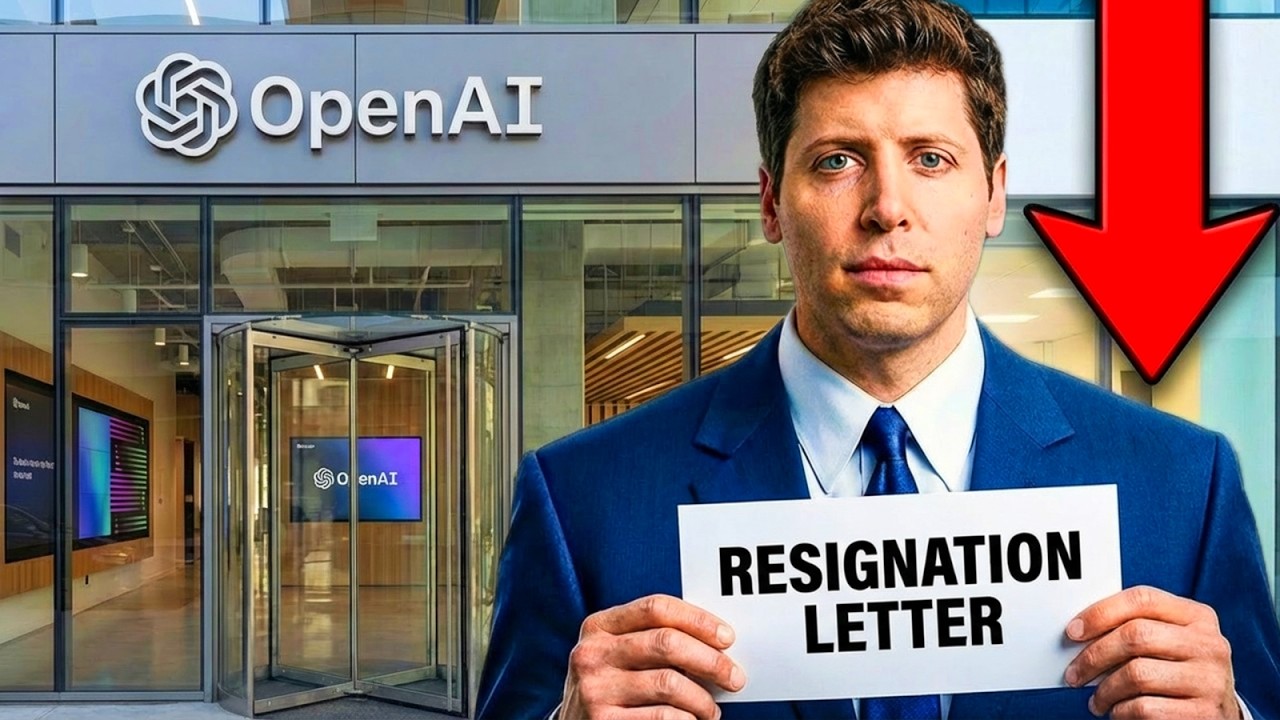
I didn't read this full article, but the Sam Altman on New York Times and people are just about how it is working with him and all that. And like, you know, obviously he's getting sued by Elon right now. And then like, you know, there's all these, and then there's like the employee that like supposedly like offed himself. Like, so anyway, there's a lot around there where I'm just like, eh, OpenAI as a company is a little shaky right now. But—
I think if Sam goes, I bet you Brett Taylor will take it over.
Which is good. From Sierra?
Yeah.
Yeah.
I bet you he'll, they'll just buy Brett Taylor's company. He'll take it over. He's an amazing operator.
He's strong.
He's a strong operator. He was supposed to be the CEO of Salesforce.
He's on Facebook's board, right?
Is he on Facebook's board?
He was, he was on Facebook's board.
Twitter, I know he was on Twitter's board.
Yeah. So he really strong investor, very strong operator.
Came from Google.
Yeah.
Did really well there. I think they bought his company.
He did Maps, I think.
Uh, something like that. I know Salesforce bought one of his companies.
Yeah.
Uh, and he was supposed to be the CEO and then he decided to go do his own thing.
Yeah. Sierra, which is, they're growing quickly. I think they're doing $175 or something like that. So that is it for today. Please don't forget to rate, review, subscribe, and we'll see See you tomorrow. Bye.









