Our 10M Subscriber Secret Formula | Ryan Hashemi
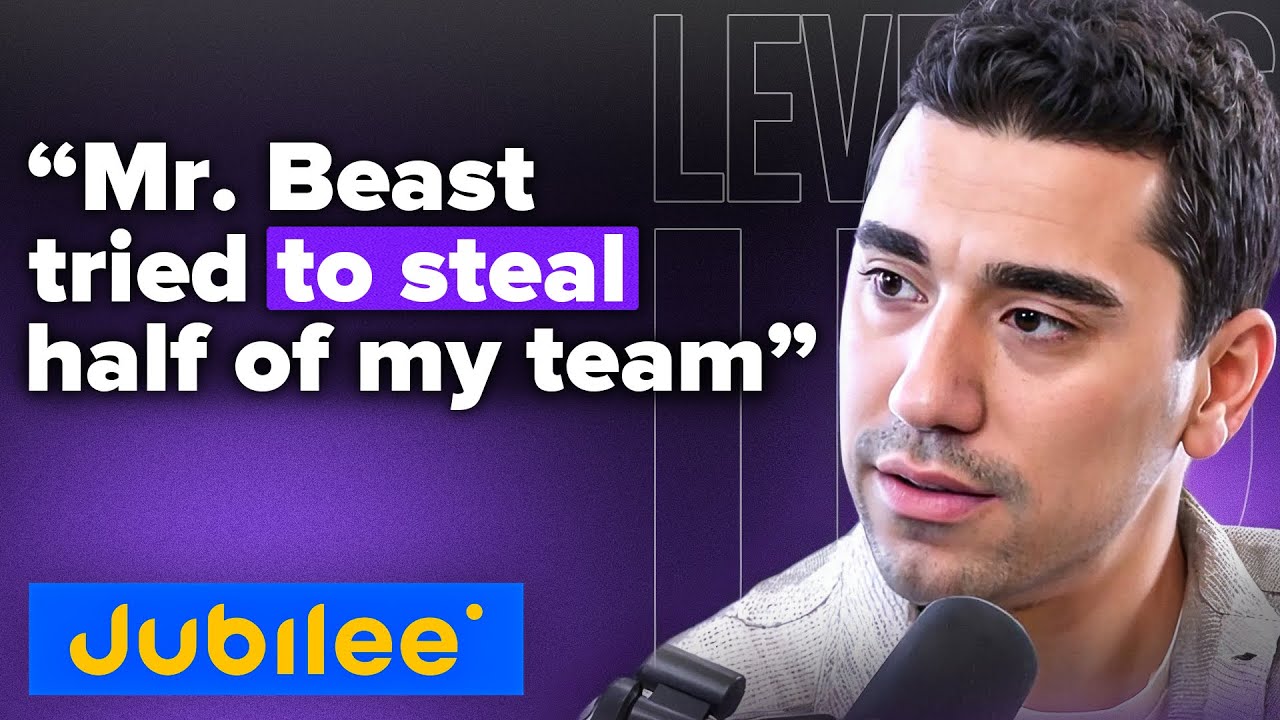
Ryan Hashemi built a 10M subscriber audience by asking unexpected questions like Nardwuar and getting guests to promote episodes through their YouTube community tabs. He argues long-form content drives revenue while short-form clips mostly build awareness, and says the best creators hire operators to handle the business side.
Chapters
So why do you think Jubilee was so successful? I mean, 5 billion views.
So the idea was, okay, how do we build something like Disney for digital? I built the business of Jubilee, large media company, 10 million subscribers, 8-figure-a-year business.
How did you guys make money?
It was majority— that was a big part of our business, pretty profitable. As far as what makes it successful—
The secret formula.
The secret formula, yeah. I mean—
MrBeast tried to poach half your team.
Yeah, yeah. Getting good talent is really hard. the best hires we've ever made. And this is what I recommend to most people is we hired—
Why do you think Jubilee was so successful? I mean, 5 billion views and then I think you said 10 million subs, but I think it's 14 million with like all the things combined.
Yeah, because we also have so 14 million followers total. But because, you know, we're on Snapchat, like we have shows on Snapchat, we have Facebook, you know, TikTok, etc. But we have 2— so 2 brands. One is the Jubilee main brand and the other is Nectar, which is our— we spun off our love content and that lives on, on YouTube as well. So combined on YouTube, it's 10 million subscribers. Jubilee main channel has about 9. But yeah, as far as what makes it successful.
Yeah, the secret formula.
The secret formula. Yeah. I mean, it's, I think, easier in retrospect, like To be frank, we didn't exactly know what we were doing, but there were, there were hunches we had on what would make really strong content. To start, we were mission-oriented, right? About how do we bring people together? How do we try to understand people way deeper than, you know, at a shallow— from a shallow perspective and people who are different than us? So the idea was like, how— there's 2 things, 2 theses we had. One is We were looking at a lot of our friends who were creators, who were, you know, YouTubers, and the vast majority of them were either burnt out or just kind of fell out of favor or just kind of dying as a— from a relevance perspective. So the idea was, okay, how do we build something like Disney for digital where it's not really about us? It's about the concepts, the ideas, the stories.
Yeah.
that we invite people into. So we were one of the first to really think about formats, not about YouTubers or, you know, talent or whatever it is. So I'd say, I'd say that from a longevity perspective is sort of the baseline. It's like what we were creating is way— was way bigger than like who we were behind the scenes. It's about the, the formats, the concepts that can live forever without us. So that's like baseline. And then the rest came down to understanding like what gets people so compelled to want to watch content and stay like for the whole thing. And at that point, it, you know, it can really be narrowed down into like stakes, like high stakes is very important for us. Emotional stakes. If you think about what people— what draws people in to click into a video, and what keeps people watching for a long time in a video, it's all emotion. So we spent a lot of time on, and I still do today, of like emotion mapping and like how do we elicit a strong emotion as quickly as possible? So a lot of— I would say a lot of what we've— what we did was develop formats that were kind of like social experiments that have this like, you know, sometimes cringe factor and like, how is this going to play out? And oh, I can't believe they even did that. And that were novel for the time on YouTube. So people were just really compelled to watch and see how they would play out.
What would be like an example of eliciting an emotional response really quickly?
Yeah. So I'd say from a packaging perspective, like, and by packaging I mean like thumbnail and title, I would say, you know, one of the more viral videos we've made So I'll do playful and then I'll do a little bit more serious. So one of the more interesting shows we have is called Versus One, where we wanted to sort of explore modern dating, like put it under a magnifying glass.
Mm-hmm.
So the idea was like, okay, people are kind of pissed with Tinder, Bumble, etc. How do we explore that? And the idea was like, okay, well, what if we bring Tinder to life essentially, and you have a contestant or whatever you want to call them and have just the Tinder experience, but in real life where they are swiping people to their face and having to explain their rationale behind like why they, why they swipe them. And so what we did is we have this like visual of a huge stack, like a huge line of, let's call it, you know, females standing up against this guy who's got his hand up ready to, like, swipe left or right. And instantly, you know, it's called like Tinder in real life or, you know, 30 vs. 1 dating app in real life. That is like the clear, super clear visual representation of like what's going to happen here. And it also looks and feels epic. You're like, holy crap, like he's going to be— what's he going to be like? His hands ready to swipe them. He's got this giant line of, of people up, up in front of his face. And then immediately in the, in like the hook, we got this upbeat, you know, upbeat sort of like tense music going. We've got the girls walking out and the guys like literally like, holy. And he's like, like, you know, you could see him like sweating bullets. And so you've got that, you build the stakes.
Yeah.
And then you, and you sort of structure the format so that stakes continue where we also are alluding to the fact that the girls are going to rate him like whether they want to even, you know, date Oh, it goes both ways. It goes both ways. So it's— I think it's just— and this is now, I think, the biggest lesson of all from Jubilee, because we've made— I'd say the vast majority of the shows we've made have failed. And one of the biggest lessons that my takeaway was, it doesn't really matter how good of an idea you think you have. It truly matters how crystal clear that idea is as quickly as possible. Like, how simple can you present a concept from a packaging, a thumbnail and title perspective? And then like immediately in the hook, like why someone has to watch.
Because you can only hold them for so long.
You can only hold it for so long. I mean, everyone, you should just assume that everyone's looking for a reason to leave. And so how do you combat that by giving them plenty of reasons to stay? Then it starts with the click. And, you know, ends with the payoff at the end. So designing it for there to be a payoff in the end. So that was one, you know, the more playful thing. Then we have Middle Ground, which is our more serious, super empathy-focused show. It's like our one of our most viral videos as well. We went to, we went to Jerusalem and we filmed like, you know, Palestinians and Israelis coming together. Can they see eye to eye? Super, like, emotionally powerful, high stakes, like You know, like, I can't believe they did that kind of, kind of thing. And so every— in everything we do, that's the goal is like, you know, this is going to be like, I have to watch this, it's going to be crazy. So hopefully that's helpful.
So for each video that you do, and then I want to come to the business side in a second too. For each video that you do, how much time, like if you look at it from a— looking at it from a percentage basis, how much time goes into the creative ideation versus production?
Yeah. I would say so. And this is something we can talk about now, but like prior, I borrowed a little bit from like tech experience. I sort of brought this like hackathon model where it's like, you know, in a very short period of time, how do we generate a ton of ideas and test them rapidly? So actually, I would say Even though ideas are super important collectively, I think the ideation piece probably accounts for like 20%, maybe. Yeah, 20%, because we would also develop the ideas even further. But then it moves very quickly into testing the idea as simply and as cheaply as possible. So we have this like, you know, we make these MVPs truly like a tech sort of model, like do the hackathon, end with an MVP that can be made in a day or two. Does it feel like something's there? If so, move it to pilot. And once it's been greenlit and moved, moved into pilot is when all the pre-production work starts. And that's actually, I would say, the vast majority of the work.
Mm-hmm.
So for us being format-driven, a lot of the investment is in casting. Like, who are the people you're bringing in? Do they have great stories? Are they articulate? Is this going to be a good blend of people, like from a diversity of thought perspective? So casting is super important and pre-production and like show structure and all that stuff is super important.
Oh, got it. Yeah.
I mean, this is a lot. The creative piece is a lot bigger because you guys are doing formats and each format doesn't just go once. It's like a season.
It is a season. Exactly.
Yeah.
And we are— for most of our shows, we're like on season 7 or 8, right? Yeah. And so I think the important thing is to, you know, this is what I continue to recommend to everyone I work with is like, just, just because you've cracked a format does not mean like you're, you're set. Like you shouldn't rest on your laurels and be like, okay, cool. Like I figured out what the world wants. Formats die. Like, you know, As we were talking about beforehand, like even MrBeast is like, oh, I got to change how I am thinking about storytelling and what these videos look like. And massive sort of tide shifts happen. And so you have to constantly experiment as well. And that's what I was saying is like the vast majority of the things we tried at Jubilee failed. The 20%, 30%, maybe less of the shows that we piloted, like there was a point in time we were piloting a new show every like 3 and a half weeks, brand new show. And 80, you know, vast majority of them failed. Yeah, it's just the one or two that popped that really like made all the difference. Yeah. If we weren't experimenting that much, I don't, I don't think Jubilee would be what it is today.
Would you say like 90% failure rate on shows? It's almost like running a CRO shop.
It's close. 80 to 90%. Yeah, for sure.
For sure. That's so interesting. That's like hitting a set in poker. That's like running an online marketing experiment. It's all like 10% usually that ends up working out.
That's true. Yeah. Yeah. For us, we were always like, how do we— and we never got there, but we would always be talking about like batting averages. We'd be like, okay, what's a real like, you know, batting .200 or batting .300? Like, that's the best we can ask for. Yeah, but we just need— we would always talk about in like baseball terms, like just need as many at-bats as possible.
Yeah.
To see what sticks.
It's very much like that. And like with all the short stuff, it's just like that's just number of at-bats that you get because you just don't know what's going to hit. Yeah, yeah, yeah. MrBeast tried to poach half your team. So what happened there?
Yeah, yeah. So we were talking about this a little bit beforehand, but like in this space, talent is really the biggest bottleneck in scaling out content distribution. Like getting good talent is really hard. And so when you look at teams that are doing things right, oftentimes the first, you know, your first reaction is like, well, let's just, you know, grab from that team. And it's not like we haven't done anything similar where we'll look at people or folks who are doing things that we respect and see if they want to work with us. But yeah, he definitely— there was like an all-out— getting a DM from, from MrBeast's Instagram is like not nothing. And so he just sent up like hit up all of our creative team. It's like, hey, you want to, you want to hop on a chat? So he's— he was successful with, I think, either 2, definitely 2, maybe 3, pulling folks from, from our team. And yeah, I mean, a lot of folks actually, I think he would have been more successful if, if moving to North Carolina was not a requirement.
Hmm.
But yeah, it— because he's so format-oriented, because he's all about virality, And now creating like an impact. And that's kind of was our whole ethos. So having great storytellers that are primed to think about strong formats and storytelling on digital is a leg up. And I think that's what he wanted was, was pulling people from our team for that reason.
Yeah. I mean, obviously usually people look to pull like 1 or 2 badasses from a company, but he's looking to pull all of your people.
Yeah. I mean, I don't know if— I don't know if he was going to hire all of them, but he definitely wanted to talk to all of them. Right. And maybe sniff out his favorites. But he— yeah, the, the people he did take were good, were good people.
So yeah. So what is the secret then, I guess, for you guys? Because, like, you know, you mentioned a couple of keywords here. So creative storytelling and everything, and it's not easy. And talking about going viral, like there's, there's a whole formula to all this and you figured it out, right? So what is it that made your people special? Like, did you train them up? Like, what did you do?
Yeah. So we tried a few things where it's like, What type of characteristics are we looking for? Like, what experience should they have? And honestly, the best hires we've ever made, and this is what I recommend to most people, is we hired— so like film school grads who were amazing narrative, like story— Storytellers that had absolutely no experience with digital. In fact, some of our best creatives, like like didn't really even watch YouTube at all. Like, you know, I'd be talking to them about like examples and they just like never seen any of them. And so taking someone who's a really strong creative storyteller, ideator, etc., and teaching them the sort of sandbox rules of digital is far more successful and far easier than getting like someone— there's like a million YouTube strategists and like people who are obsessed with YouTube, it's way harder to do the reverse of like getting someone who gets digital but trying to teach them storytelling. So it takes a little bit of work, but by far the best success we've had is just amazing creatives, storytellers who frankly don't even know anything about digital.
So where do you find these storytellers from? Right? Because, you know, what's interesting to me, going back to MrBeast for a second, it's he's reversing now in terms of like the super fast cuts and everything. It's like now it's a longer drawn-out video. There's There's storytelling, there's character building and everything. But where do you go to find these storytellers? Right? Because it's like, it's like I think everyone's starting to warm up to the fact that like, that's what real marketing is.
Yeah, it's true. It is true. I think it's very— so film school is where most of our, of our, you know, hires came from. But it's not as simple as that. Like our creative director, who's— I'm still working with him to help vet creative talent, it's like obsessing over their portfolio. So vetting creatives by just looking at what they've made and how much like heart and soul went into their, into their pieces, how much were you moved by their piece? Like, were they effective in storytelling historically and with what they've made? So generally it's like once we have 1 or 2 really talented storytellers, then it becomes actually all about actually who they know and who they recommend. So I'd say your first like 1 or 2 is the hardest. And that's like turning over every rock, going to like, you know, all the film schools. And I mean, it could be anywhere, but all the film schools in L.A. and talking to professors, students, who do they recommend? And then just obsessing over their portfolio and seeing who's made stories that actually move you. Right.
Who's been there, done that.
Who's been there, done that, at least on storytelling. And then my job is to train them on the digital aspect. So you're a great storyteller. How do you package that up to crush it on YouTube or crush it on TikTok? So that's how we do it.
Yeah. So what I'm hearing here is you're hiring people that have been there, done that with storytelling, and then training them on the facets around how YouTube works, how digital works and everything. So then you don't have to train them from scratch on storytelling because that's arguably harder to do.
Way harder. Yeah. I like, in fact, we were testing this at some point. It's like, well, maybe we should just hire like a creative who we don't, you know, like their portfolio isn't anything special, but they're just like obsessed with YouTube and they get it and they like are a huge consumer. And it just, it almost never worked.
Yeah. Because the people that are obsessed with YouTube, it's like, yes, average view duration, 30-second retention, the click-through rates and everything. But that's not storytelling.
It's not. You're right. Yeah, exactly. It's— yeah, it's just way easier to be like, okay, you can tell a really good story. Well, this is what— like, this is the sort of framework to sort of, you know, the lens to sort of put that through as far as YouTube goes. So yeah, that worked way better for us.
Yeah. I wanted to take a second to talk about today's sponsor, Ahrefs. Ahrefs is my favorite SEO tool. In fact, we use it at at my ad agency, Single Grain, for internal uses and also for clients. And we've been using it for years and years. And the cool thing is they have a great academy that you can go to if you're looking to just learn SEO. And they have a free offering if you just search for ahrefs.com/webmaster-tools. My favorite feature with Ahrefs, it's a sneaky feature here, but I'm just looking at zapier.com. And what I'm doing is I'm looking at, oh wow, they got 10 million visits in the last, I don't know, 6 months or so compared to the previous 6 months. 6 months. Well, okay, how are they doing it? I can look at their site structure. So if I click on site structure, I can see that their blog has driven the vast majority of it and it was a 5 million, a +5 million change, right? So basically what I can do is I can look at the pages that are driving that traffic and now I have a sense for what they're doing in terms of strategy. So I can look at competitors. I can also look at our own stuff too to figure out how we can optimize our own website. So you can just check out Ahrefs Webmaster Tools. That's completely free. Or you can go to the Ahrefs Academy. That's also free as well to learn more. And that being said, back to the video.
So Jubilee, I mean, the business of Jubilee, like how did you guys make money?
Yeah, I mean, it was a media company, so it was majority advertising. So, you know, platform ads accounted for a lot and we were lucky in that the content is viral on, you know, almost every platform we put it on. So YouTube, Facebook, Snapchat, were a big driver of the business. And then we had a— so like I built out our sales team, so we had a biz dev working actively with advertisers, partners, sponsors to get them integrated into our content. Yeah, that was a big part of our business. Pretty profitable. I'd say collectively that was the vast majority of our, of our business. But then we also had, we had product, so we would sell We had an apparel line. We have a card game based on one of our shows. But film and TV was probably our newest but sizable size of our, of our business. It's like, what? Who are the streamers? Who are the networks we can partner with to take some of this format development to them, to Hollywood?
Yeah.
And then the, the one that we're building out, you know, Jubilee is building out now is tech. So tech and experiences to follow, which is love is still a big like interest and passion for Jubilee when it comes to like human relationships and depth of relationship. Like there's nothing more deep than love and there's just very low, like the NPS score of all the sort of dating, you know, services, apps is extremely low. And so our idea was like, how do we make the next generation sort of love ecosystem starting with content? We launched a sort of assessment digital platform, pushed that through the content, already have like a million, a million users for that. And then it's what's the— like, how do we you know, compete at a big— at a bigger scale.
And you said 1 million users for what?
So we started with— it's almost like a Myers-Briggs assessment. So it's like it's for love.
Yeah.
And it's like, what type of lover are you? What compatibility? Like just deeper understanding of who you are in love. And we use that personality test in our content. So it's like when we have contestants, we have them take the test.
Yeah.
And so there's just this natural curiosity from the audience. Like, I wonder what that is for me. And so just like organically has pushed a ton of users, you know, massive email list now. And that's been the seed for the app that has just launched, which is Nectar. And so slowly but surely, you know, we'll be building on top of that with the end goal being, you know, how do we conquer the love space and do it and do it right?
There's a bunch of these assessments, quiz companies that do, you know, multi-eight figures a year. And there's just like a complete funnel, which I'm sure you've seen. So that's where you started from, if I'm being honest.
Like, I had a dream. Yeah, this started from a dream I had, which was— it was because I read an article on what is that skills— there's like a man, Gallup runs—
Gallup StrengthsFinder.
StrengthsFinder.
Yeah.
Yeah.
Yes.
Yes.
It's like, I think I read that they have done collectively $1 billion in revenue and like unbelievable margins. Like, they're just printing money with this thing.
Yeah.
And Yeah, just my business mind was like, that is really attractive. That is really cool. And so the very first thing we did, you know, I partnered with this company called Ground News. They create— they have this sort of news bias tool. We're like, what if we partner with them to get a custom quiz assessment into our Middle Ground show? So what we do is this is almost like a test for like Can we push a lot of people to do something here? So in Middle Ground, which is all about like, you know, political viewpoints and bridging divides, we had all of our cast take this news bias test. It was like, where do you consume your news from? How biased generally are these, are these providers of, you know, news? And we would display their score on the show to our audience. And the audience was like, oh, this is super helpful. Like, it gave us more context on the cast you invited. But then they all got really interested, like what their news bias score would be. And we like— it was— I think it got to— the video got 2 million views. We had like 12% of our audience converted into taking this, this test, which is astronomical from a— typically conversions on YouTube are, you know, 1%, 2%. So this, this to me became this like light bulb moment. Oh, we should— there's something here. This might be the foray into love is digital interaction that we can bake into our content that pushes people to learn something more deeply about themselves.
What was the conversion rate on these?
For what?
On these quizzes. You said typical conversion rates 1 to 2%. What's this one?
Oh, so that one was the first trial we did was 12%.
Wow.
Yeah.
Okay.
So 12% of the audience that watched, you know, this million 1.5 million, 2 million view video went on to take this assessment. And then it also became like a— like they would post their results on Twitter. Like it just became this moment.
Yeah.
And that, that was like a light bulb for me where like I had a dream and like I woke up at like 5 a.m. I just distinctly remember, I think I even like have a screenshot still, like sent an email or a Slack message to the leadership team. I was like, I think this is our move. Yeah, this could be how we enter in the love space. So that's, that's the direction we're headed. But the long-term vision is, is like, you know, experiences and, you know, truly competing at a global scale with bringing love to the next generation of—
I love that. And Jubilee is a good name for that.
Yeah, it's true.
Yeah.
Yeah, it's true.
Cool. So that's the future of it. And so, you know, one thing my chief of staff brought up before this interview, she, she's like, oh, Jubilee, that's so hype. And then like, so she's— so it says here, Cody Ko has 2.2 million subscribers on his backup channel and largely just reacts to Jubilee videos. And so it sounds like there's a lot of people copying your formats and everything. Like, what's your take on all that?
Well, it depends who you ask. I think everyone at Jubilee has a different feel about it. In general, there's no harm. There's no, like, not harm. There's no hard feelings, I should say, especially like Cody Ko is a friend. And I think reaction content, we've actually— I think we've been thrilled by Jubilee entering zeitgeist by like, you know, hundreds of millions of views from big— like PewDiePie had a whole series called Jubilee Reacts. And, you know, often sometimes his videos reacting to our videos would get more views than our actual videos.
Yeah.
And sometimes it'd be like, well, damn, like, you know, Why can't— you know, I wish our videos got that, those viewership. But honestly, like just being part of the conversation is really cool. It's really cool to see people at that caliber, like, you know, of the, of these creators feel like what Jubilee is doing is so unique that it needs to be reacted to. And for them to— anything they could be reacting to, anything they could be making content on, choose Jubilee. It's actually— I mean, I like that.
I like that a lot.
Yeah. Where I think it gets a little, you know, confusing is the straight ripping of the content. So, you know, Beta Squad and Sidemen in the UK, who are like these, you know, massive influencer group, will quite— I mean, quite literally, it's like the exact same thumbnail, exact titling structure.
Mm-hmm.
you know, take the format and just make it exactly their own.
Yeah.
So it's like Logan Paul is doing the swipe date Tinder in real life and the whole— the exact same like thumbnail design, everything. So at that point, the reason I actually don't mind it in general, but the reason it— the reason it does bother me is people— there just starts becoming this confusion of like, wait, like who is making what? people think they're watching a Jubilee video or they think they're watching, you know, a Sidemen video or whatever it is. There's this confusion. And then as someone like kind of very data-oriented, something I used to track regularly was what percentage of the videos being shown on our videos on the side are our videos. So suggested videos.
Yeah.
What percentage of the suggested videos are ours? Over time, as more and more people started ripping the content, that percentage would decrease because it'd be like, well, if you like this one, you'll like this other one.
That's the same thing.
Very same thing. Yeah. And so it would just start creating this cannibalization effect of our, of our suggested thing. And then there's this one guy who's like, I think it was his name, David Alvarese. His channel is, is just like, is completely Jubilee, like every show, like, you know, Spectrum, you know, Odd One Out, Ranking. Versus I was just like, they've taken like every show unashamedly, right? That, that one I'm not the biggest fan of, but otherwise I think it's a, it's a nod to Jubilee. I think I would just wish that they would package it in their own way. Like there's no, there's no truly original idea, right? In fact, you could look at some of our shows and be like, this was inspired by the board game I played as a kid. You know what I mean?
So all just building on top.
We're all building on top of each other. But like, Let's just present it a little bit differently.
Yeah. You mentioned Logan Paul. So what's like the story about the coolest collab you've done?
Coolest collab? I think, I think it was one of our earliest ones, which was fun, was we did Odd One Out. So we have a show where it's like one person's lying and the other and everyone else is trying to figure out who's lying. And so we did a virtual Odd One Out with PewDiePie where his fans were trying to figure out who is PewDiePie. Like everyone had their cameras off. It's virtual because it's the only way you could do this concept. And he was eliminated in the first— like they sniffed him out like right away. It was super hilarious. Very fun. Fun to do. So we did that multiple times. Like we did that with Cody Ko. Cody Ko is now starting to get into Jubilee content more and more. It's fun. But then we also— we've also done like we did a Spectrum episode with the Queer Eye cast as well for, you know, the Netflix show. That was very fun as well. But I would say, I would say like our, you know, working with our favorite YouTubers like Cody Ko, Graham Stephan.
Yeah.
Being in our content regularly is always fun. But the PewDiePie one stands out to me a lot. And then there's this one kid who maybe was our earliest collab, but it wasn't like a giant one. I just, I just love— I think he's like— I've told him this to his face probably about 8 years ago. I think he's one of my favorite creators, super talented. His name is Motoki. Motoki Maxted. We had him in one of our very first pilots, 4 vs 1, and he crushed it. And I think he His performance is actually a big reason why the show took off as it did. I love when we bring in, like, up-and-coming talented people who maybe not everyone has heard of, and it just puts them on a whole new platform. So, Matoke is super talented. So, that was one I was just excited about because I— I loved it so much.
There's 2 questions here then. So how do you spot the up-and-coming talent? And then also, we'll start with that first.
Up-and-coming talent. So there's 2, there's 2 things. One is just like sheer, like, like personality. Like, you know, you're not looking at necessarily their production ability. You're just looking at who they are from a personality perspective. They're witty. They're like, they, they just entertain you effortlessly. That to me is like a Motoki where I just— everything he does, I'm just like, this is awesome. This is hilarious. Like, where did you— where— like, you're confused by where they even got that idea from or how, you know, that's, that's to me very powerful talent. And those are the people that I think have the, you know, potentially the longest life in front of them because that can apply to so many different mediums. Like he was— he just was on Young Sheldon, like the other day. I think he's now kicking off his like Hollywood career because he's so versatile. He's just as a personality, amazing. Started digital, but he can go anywhere with it. I think he's very, very talented. Then you have, I think, creators or, you know, talent or hosts who I don't actually think personality matters as much as like passion and grit. matters because so there's, there's a, there's a fitness, health, wellness creator who I've known for many years. His name is Shervin. He's got a channel called Shervin Shares. And I knew that, and I still believe this, even though he's not like massive today, I think he's got like 100,000 subscribers. When he was just at like 5K subscribers, this guy's going to be big. And the reason is because he was like, I want this more than anything. I'm like revolving my entire life around this. I'm going to move into like an apartment with like 3 other creators and we're going to push each other to be better. And like, like this would be like all he talks about. He's just obsessed with it. He's like, how am I going to figure this out? How am I going to crack it? Always meeting with every creator he could possibly meet with to pick their brain. That to me is way more indicative of whether you're going to be successful as a creator, way more indicative than like your raw creative or personality talent. Like even MrBeast, if you look at his original, like they're pretty bad. Like he wasn't really a good personality at all. Yeah, but the obsession like is what, is what carries you, carries you through.
So are you saying so one half is like, you know, you've got the it factor, you've got a lot of charisma. The other one is just like you're just grinding it through like a MrBeast.
I think that's the— I think that's the most Yeah. The other one is just like finding a diamond in the rough. Like, they're just wired that way. They're creative. Like, yeah, you could develop that a little bit, but it's, it's the creators who, like, I think every aspect of being a good creator mostly can be learned. And so it's truly the people that are the most hungry. Like, I'm not stopping till I figure this out. I love this so much. I want this to be my life. Those are the people that, you know, I bet are going to win. And time and time again, the ones that I like have identified that fit that camp, I've yet to— I've yet to— there's yet to be anyone who has that level of passion and grit and isn't winning. And it's the same thing with like startups, right? Like kind of the same model of like, well, you don't, you don't fail until you give up.
Yeah.
So it's the same thing with creators. Like if you just keep going, it's like you're going to win. It's just a matter of how long can you stick it out?
Yeah.
So yeah, there's another guy, another kid who's also in the health and wellness space, ironically. But his name is— what is his name?
Eric.
Eric. And he has a channel called Ray Siu and he is someone who's similarly like, man, I am just— this is all I want in my life. I'm just going to keep grinding. I'm going to keep doing this. And he has, I think, 50,000 subscribers today. But like, I know he's going to have a million subscribers one day because he's, he's just that focused and that passionate about it.
So are you trying to buy in and like buy a piece of their—
I offered that to Shervin when he was small. Nothing came, came of it.
And what was the offer?
Well, we didn't even get to numbers. I was just like, man, I think you're going to be— I think you're going to be big. He's like, I— he actually— I don't know if he wants me saying this, but he applied to— because MrBeast has had something like that too called Creative Juice. He's like, I actually applied to that and they like rejected me. I was like, oh dude, they— if they're looking at it from a paper— on paper, maybe I can see that, but I will never bet. I will never invest in a creator unless I like know you really well. So like, I don't think that their model of vetting people, like, I guess you could be like, oh, what's their trajectory? And they seem like they're on a good path. But for me, Shervin, and like every other creator I know, it's more about how bad do they want it?
Yeah.
And if I see there's just like unending, you know, desire to crush it here, like I will bet on them any day.
So there's this guy, Dave Perell. He invested in the Cultural Tutor, right? This, this guy on Twitter who has like millions of followers now, I believe. This guy was working at McDonald's and he's like, hey, like, what is it going to take for you to just quit your McDonald's job?
I read about this.
Yeah. And so like, I'm just wondering, like, how do you structure that? Are you giving them $25,000, $50,000 and taking like a YC— we're looking at a YC poster right now. Are you putting in $20,000 to $70,000 or something and taking 7%? Like, how would you structure it if you were structuring something like that?
I think it would be And it would be up to the creator's like desire to do this. But, you know, it would be giving the upfront capital necessary for them to, you know, it's like, what are your bottlenecks? Like, what, what, where can this resource go to sort of increase the speed of your trajectory, like growth? How much do you need for that to be impactful? So for someone like you know, Ashervin, you know, I would have— it's like, okay, can you— and this was— I think he still had a, like, a job at this time. It's like, okay, if you had $50K, could you quit your job and could you just focus on this full time as opposed to just, you know, one day a week where you have enough time from work? Like, I think you would 4 or 5x your growth if you could just solely focus on this. And so, you know, he chose to just grind it out and he did end up quitting his job without, I don't think, you know, any sort of investment, but $50K, whatever the amount is for you to just be able to focus all of your attention to, to this thing and feel like you don't need to be constantly searching for money. So if you're like, last thing I would want is someone to be selling out their channel to like brand partners, like early on just to make ends meet. And then it would be a percentage in perpetuity. It would be like, yeah, like $50K for 20%. This, you know, might feel aggressive to a creator, but it just depends on how much value that $50K would be to them upfront. But $50K for 10%, 20% in perpetuity.
Yeah.
And, you know, it is not, you know, it's not unlike startup investing. It's also not unlike Have you heard of a company called JellySmack?
Yeah.
Yeah. So it's also not like those types of models where it's like, hey, I am going to help you unlock like new opportunity, new revenue. And as a result, you know, we're going to split in that, in that newfound revenue. And in this case, it's like we're unlocking more investment, like your time to invest in this channel. and the upside as a result. And so I'm going to participate on that. And also I can help you, like, you know, I can help you on brand partnership side. I can help you content strategy. If I'm putting, you know, my money in, I want to see you succeed. Have you done a few of these yet? No, none. It is something I'm very interested in and it's— I think I'm a little— yeah, sometimes I feel concerned that it could be predatory because there is Yeah, like you even— you just said it, right? Like, oh, that's a good— that's a good deal.
Yeah. I mean, perpetuity is kind of tough. It's tough.
It's tough. I think Creative Juice doesn't even do perpetuity. I think they just do like, like 5, 3 or 5 years or something like that. But that's generous to me. Yeah. To me, I'm like, I don't know if that's worth it either.
That's too low. I think perpetuity is too long. Yeah, it's like an in-between, right?
But no, I have— I have not done anything like that yet. I know I will. It's just a matter of When.
Got it. So look, it sounds like, I mean, with Jubilee, you know, things are going well, right? And then you just mentioned that you took a break for a year. So why did you decide to take a step back from Jubilee?
Yeah, well, building the business for like 6 years straight was definitely a grind. You know, I was working a lot. I have— I had a daughter and I don't feel— I didn't feel like I was really mentally as present as I wanted to be as a dad. Like, even when I was like playing with her, I'd just be like thinking about, you know, work or meeting or strategy or whatever it is. And, and yeah, I mean, I was approaching sort of burnout, right? And so I took sabbatical, you know, mid or early mid last year just to recharge and spend time with family, but also to do things that I was not able to do over the past like 6 years, which was just like because I was so heads down building, I didn't even get to like, I couldn't do this. Like I couldn't meet other entrepreneurs, hang out with friends in the space. I just started hanging out and, you know, seeing what people were up to and enjoying like, like this whole smell the flowers kind of thing. Like I was enjoying sort of life a bit as a result of doing that. I just would have really fascinating, really interesting conversations with other entrepreneurs. Other business owners. And that, you know, really, I think, put me on a different, a different path, which is the path I'm on now.
Got it.
This message is brought to you by Leveling Up Founders. And Leveling Up Founders is an invite-only event for founders. It happens once a year, usually during August. And past attendees include people such as Ali Abdaal, Cody Sanchez, Neil Patel, Vanessa Lau, and the list goes on and on. And ultimately, it comes down to the quality of the group of the people. We try to keep the group high caliber, that's why it's invite only. So, if you are a founder at the top of your game, you can go to levelingup.com/founders to learn more about it and you can apply and we'll see you on the other side.
How many— when you said you were approaching burnout, how many hours do you think you were working per week?
I was— so, working, working like at a laptop, probably 50, 60 hours. But then there's the, like, mental working, which is just like, I don't, I don't think— I mean, maybe like for the, for the sit down, sitting down at dinner with like my, my family and like talking outside of that, I think I was always, always working like in my head.
Yeah.
Like you're thinking about— Like, so a lot.
I don't know.
I like, I just was, I was mentally always thinking about work.
Yeah.
And that became just not— yeah, that's just not— yeah, I don't know, just not the life I think I wanted to live. And it's not— it wasn't a function of, you know, Jubilee or anything. It's just like, okay, this is, you know, there's like 50 people now and like I've got all-day meetings tomorrow. So when do I actually work? Now, you know? So it just became— it became a lot. And now I'm trying to build intentionally a life where that's not what happens. Got it. Yeah.
So and then did you hire— did you guys hire like your replacement?
Like what happened?
Yeah. So we— so before I, before I went on leave, it's really, I think, the only reason, only reason I felt comfortable going on leave is because we brought on a head of operations and she was working very closely with me. I like, I brain dumped basically everything. I was like, okay, let's open the books. Like, let's do projections together. Let's talk about everything. brought her into the fold, very, very involved. And she was super sharp. We brought on a, like, head of people, like a people culture person as well. Those 2 people felt like— I felt like they were in my absence totally able to push, push the ball, the ball forward. And I was honestly, if I'm being completely honest with myself, I was getting so close. I mean, I think I, I definitely hit the burnout phase. I like hit a wall. I don't even think at that moment in time that I was able to even operate at my best anyway. So they had this sort of fresh perspective, the fresh energy to be able to, I think, blow past me the first few, 3, 4, 5 years of Jubilee. Like I was a machine. Yeah, but then I was like, time for some new blood, new energy.
You think it's also like because, you know, I, I look at all my friends, founder friends that end up having kids and then everything just changes afterwards. Your perspective is like work is no longer number one.
It's true. And I think, I think it took me a little bit longer to get that perspective shift. Like it wasn't until— oh, so I mean, this exactly happened was— and this actually, yeah, I should have mentioned this. The catalyst was sitting— it was over on Christmas. my daughter was like, wanted to play with my, my wife and, you know, she's like, oh, Mommy, can you play, etc.? And my wife was like, oh, why don't you, you know, why don't you go play with, you know, Daddy? And she's like, oh, Daddy, Daddy just likes to work. You know, he doesn't, he doesn't like to play. And I was like, oh, that, that's— is that how she thinks of me?
Yeah.
It was like after that, like I was kind of wrecked for like a week. I was like, man, okay, I need to fix that. And so, yeah, it It— I think maybe I was blind to that up until that point. And hearing her say that was like a sort of, you know, knife to the chest. And that was like, this is not good. And so, yeah, having the kid, for some people, it can be immediate where it's like, this is, this is the most important thing.
Mm-hmm.
Others, if you have a soul or a heart, you start You know, you start seeing how your influence, your time, your impact, like the impact it has on the kid. And you either want to change it or you, or you don't. But yeah, for me, I did. I did want to change.
Well, that's, that's good. So how does your life look now?
It's very different. I mean, I still work. I still work a good amount, but very cognizant of, of building a life that is not overwhelmed or, you know, work is not everything. So I'm intentionally like, I'm working right now. I just launched an agency and the idea is to build it, actually to build it to function without me. So my goal is about 9 months, like 3, you know, 3 quarters from now, by end of this year, I'm not even involved in the day-to-day. Interesting. So I brought on a partner who I think is, is going to help tremendously there. His whole motto is like he built previous agencies as well and he built them all to operate largely without him. And so I'm learning from him on how to do that because it's such a priority. If that weren't such a priority, I don't even think I would have brought him on as a partner.
Right.
I would just build the agency on my own, but I truly want to value time with family, freedom, flexibility. And so that's, that's how I'm building this agency.
You guys are 50/50?
No. Yeah. So it's my, my business, but he's kind of strategic, you know, advisor. He is going to be spending a lot of time on the, on the work, helping hire, train, etc., because he's built functional scaled agencies before. It's really just guiding how, how to scale out the agency.
Yeah, but— So he's temporary?
No, no. Forever partner.
Okay. Got it.
Yeah.
Got it.
So, you know, profit sharing, like, you know, percent of distributions if it's sold, percentage of that.
So phantom equity.
Yeah. Got it.
Got it. And so how, I guess, why, why do an agency? Because there's— so, you know, obviously I have an agency. There's a negative stigma towards agencies and all that. I'm just curious, Your decision on it?
Great question. So actually, when I was on sabbatical, I developed a framework of like, actually I borrowed it from my buddy where it's like an Excel spreadsheet on the left where it's like, what do you want out of life? Like all the things that are important to you. And then on the columns, like the different opportunities in front of you, the thing that scored the lowest was an agency. It was like antithetical to everything I wanted in life.
Yeah.
The thing that scored the highest was like, you know, a sort of course paid community model. And so the reason, the reason I started an agency is because if I'm being completely honest, I was getting approached like I was making content on Twitter and, you know, a little bit on LinkedIn a while ago and people, people were just like reaching out to me and they're like, hey, I have this business. Like, we have this need. We don't know how to do XYZ thing. Can you help us? And I actually, like, in my heart, like, wanted to help them. Like, I was like, that's a really interesting problem. Like, I actually would like to crack that for you. And so the, the unique problems that were coming my way were like, I like, I got like I wanted to solve them. And so one by one, I would like help solve these problems and it would like work. It worked, you know, we would have massive success doing it. And so it almost organically spun up into, well, I guess if you just keep doing this, that's, that's what an agency is.
Yeah.
So, and, and so I do, I do actually really like helping people. The thing, the thing that is antithetical to my life values is, I think, running and operating an agency at scale. And so if we were to have this conversation like, you know, 12 months from now, the accountability factor would be like, are you still running on a day-to-day basis this agency? My answer should be no. If it's not, then I've done something wrong. So I— the partner I brought on, the whole reason I, you know, big reason I brought him on, well, and he's like super smart, but That's how he's built all his agencies was like one call a week, hire strong operators, give them the framework, like help and like help in the beginning, get the foundation right and then step back. So that's, that's, that's going to be, I think, my approach to this.
Interesting. Yeah. So and I saw on your website, so one of the taglines here is scaling $10 million plus companies with YouTube. So what does that mean?
So I think not, you know, to me, Everybody, everybody who owns a business, maybe not everybody, but most everybody who owns a business should be thinking about how they can scale their, their revenue, their sales, underlying business with content. I truly, truly, truly believe that, like, today, having a great product, having great customer service, like, like that's a— that's not a competitive advantage anymore. I feel like that's just like a requirement. You have to have those things.
Yeah.
The, the competitive advantage from here on out, I feel like, is audience, it's distribution. And my goal— and I can help businesses at any stage, but I found the sweet spot is for companies that are doing around $10 million and above who have the ability to invest like properly in— you don't even need that big of a team, but invest in the resources to make the content. I can take that. Like, if you're committed to YouTube for 1, 2, 3 years, like, I have a framework that I feel quite confident that YouTube can be a massive lever to scale your revenue, your business 2, 3 years down the line so that your competitive advantage is on top of the good product and service you have. is, is actual community, is audience, is distribution. So that's, that's my whole focus today is helping businesses in almost every industry with decent enough traction to invest in the next 5 years of their, of their business growth.
And what would be like an example of like an 8-figure company you've helped with audience building? Like what was the before and after?
Yeah, I mean, I think the biggest one is, I guess the biggest one would be Netflix. So we've, we worked with Netflix when they were trying to build out their early day original YouTube strategy. So how can we drive more tune-in? Like tune-in is what they refer to as like, you know, we just launched a show. We want people to actually watch it. What kind of YouTube content can we make so that it actually drives people to watch the shows more. So they have a channel they wanted to spin up called Still Watching Netflix. It's like a separate channel. And the idea was to help them develop original formats that bring in elements of the show, or whether it's cast, whether it's like themes of the show, but they're entertaining to watch on their own. Like these formats are entertaining to watch on their own. And and create like intrigue, interest for people to want to then go watch the full show on Netflix. So we developed a few formats for them and gave them the framework for like how to develop formats on their own, train, you know, train their team. And that, that channel now is, is one of their biggest. So I think it's about 6 or 7 million subscribers. We started working with them when they had, I don't know, 400K subscribers and it was mostly not great content. So giving them the tools, the framework to actually think about what is original content on YouTube that gets people interested in watching our shows more. That's one example. The other I would say is like on the smaller end, although he for sure will be an 8-figure business, is Pat Walls of Starter Story.
Yeah.
Starter Story is— I don't know how you would describe it. I guess it's like consumer SaaS or something like subscription model, helping people who want to be entrepreneurs understand the landscape of different types of companies, how other people started their company. And his, his whole idea was like, okay, I think beyond SEO, beyond all these things I'm doing, content is, is the move. And so I helped him from video number 1, figuring out how to make content that is actually watched and seen on YouTube. And, you know, like 10 videos later, 15 videos later, he's at 100K subscribers. A handful more videos later, he's at 200K subscribers. But the more important thing is his underlying business has like doubled as a result. You know, he already had a 7-figure business. His underlying business doubled as a result of YouTube.
Yeah.
And he's like quadrupling down on YouTube and, you know, all measures showing the top line like revenue growth. The leading driver is his YouTube channel.
What is his business anyway? Because I know he makes those videos and he talks about it on Twitter. What does he sell?
So it's a subscription business like, you know, like you pay for membership to Starstruck.
For content.
For content. Yeah. It's content, but it's also like, it's like a database almost where it's like, look, if you are interested in starting a business, it's this whole database of like, let's say you're interested in starting an agency or you're interested in starting a lawn mowing business, you name it, you just search that in Starter Story. And Pat and his team have interviewed thousands of operators on their come-up story, like how, you know, how they vetted the business, the business idea, what they did to get from 0 to 1 traction, how they scaled it. So it gives you, you know, real-world insights into how people across any business built their business from 0 to 1. And so a lot of— I would say a lot of like wantrepreneurs or a lot of people who are just like about to enter or beginner entrepreneurs use Starter Story as fuel to their fire. And so the content on YouTube is like very synergistic with that because we're bringing some of these stories to life and getting people to be like, oh, like there's thousands of these on Starter Story. Oh great, let me go, let me go check those out.
Got it.
By the way, Neil and I have an agency owners group called the Agency Owners Association. All you have to do, just go to marketingschool.io/agency. Once again, it's marketingschool.io/agency.
To learn more. And now back to the show. What would you say? Because you've coached a lot of people with YouTube, so what would you say are some common YouTuber mistakes?
Yeah, the most obvious one, which is becoming more obvious to people, is that I like— your idea doesn't really matter. Like, the idea you have for how epic the video is going to be, I should say, like what you think is going to happen in the video, like that doesn't really matter. The thing that matters the most is the idea that's presented to the audience. So thumbnail and title is extremely important. That's even at Jubilee when we first started, we had the opposite approach. We would be like, what are cool ideas and how do we make it come to life in a cool way? Now everything is from packaging first perspective. You have to actually think about like you have an idea, immediately move to Is this even worth making? Like, is this thumbnail and title something people have to click into? If not, it doesn't really matter. Like how you think, how epic what's going to happen in the video is, it's a decent chance it'll be a waste of time. It's not always the case, but the odds are that it will be a waste of time if you can't figure out compelling packaging for it, because then no one's going to click it.
Mm-hmm.
So I would say that's by far The biggest mistake is not approaching content development from a packaging-first, thumbnail-title-first approach.
And when you say packaging, that also means like, you know, the cuts and like, you know, the 30-second intro.
Like, what are you talking about?
No, not really. So packaging literally meaning thumbnail title only.
Okay.
Got it. Yeah. So the 2 things that really matter is CTR. Like what percentage of people who get served your video click into it? And then once they're into it, how long do they watch?
Right.
That's like I have, I have that like formula. It's not even— it's just like, you know, CTR times retention, you know, inked into my brain because it's truly when you think about how to help people with YouTube, it's— that's kind of really it. Yeah, it's like as simple as that. In fact, I think half of my— maybe more— half of the coaching that I, that I do is just getting people to, to tune out the noise in their head of like, oh, I got to get this right, I got to get this right. Or like those— all those things you're thinking about don't matter. It's really just whatever moves CTR and whatever moves retention.
Got it.
So those are the 2 biggest things for sure.
What kind of— this is a very general question, but what kind of CTR are you looking for in general and what kind of retention Percentage are you looking for? Or is it more AVD?
No, no, it's so, so CTR for me, anything above 10%. So I'm always targeting a 10% CTR. But caveat is depends on how big your channel is. So if you're— if you have a decent sized channel, you know, where the viewership is in the tens of thousands at a minimum, then I actually, I look at day 1 CTR. Because the, the total CTR average does not really matter. The reason being, if you have a viral video, oftentimes your CTR can drop because YouTube's trying to push it to literally everyone in the world. And so, you know, you know, a mom in Missouri might not really be that interested in your video. It's, it's really when the video first goes out to your subscribers. That's the constant.
What—
how interesting is it even to them? And so on the first, first day CTR, I'm aiming for at least 10%. Somewhere between 7% and 10% is like good. 10% and above. If you have high view duration and 10% above CTR, I would bet 9 times out of 10 that that video is going to do extremely well. You know, hundreds of thousands or millions in views.
Got it.
Average view duration. I think it's mostly more watch time than it is percentage. But 5+, you know, 5+ minutes is, is the bare minimum like that you want to be aiming for. Yeah. And like, you know, 8-10 minutes plus is like great.
Yeah.
Yeah.
That's why podcasts do so well.
Podcasts are awesome. Yeah, podcasts are awesome. And, and do you, do you publish this on Like audio only as well?
Yeah.
Okay, cool. Because so we launched a podcast at Jubilee and I was stunned by the— we had like percentage completion of like 95%.
Yeah.
Like almost like in the 90%. Yeah. Like I was like, geez, that's, that's incredible.
Yeah, it's way better than YouTube. Way better. Way better.
Yeah. And so on the business side, the thing that matters to me the most also is how much time your audience is spending with you. which is why I love YouTube so much. When you think about the impact on business, it's truly a function of like the amount of time and the amount of risk that your audience takes on you times the value that you provide them. And no other platform, in my opinion, optimizes for that better than YouTube. Got it. Yeah.
I want to come back to the— so going back to the packaging piece. Yeah. How obviously we know MrBeast might spend hundreds of thousands on a thumbnail and like, so how much time and how much money do you think you're spending on packaging per video?
I— it's, it's really important.
And just to set the stage here, like, I don't think we do this enough. And you can see, like, we're more like these types of interviews, like, we're lucky if we get 6 or 7%, right? It's usually like anywhere from like 3 to 5% or so. Right. And I just don't think we're spending enough time. So go for it.
Yeah. So here, here, here's what I would— there's a couple of things that come to my mind based on what you just said, which is like, For you, this might sound ruthless, but like, I, you know, you want to be—
Ruthless is good.
Yeah. You want, you want to be thinking about who you're even like, who you're even inviting and what the angle is for the guest before you even invite them. So it's like you almost should have a reason for like a strong thumbnail and title for the guest before you even commit to inviting them here because What might happen is like you invite the guest, you think the person has an interesting story, and then you, and then you make the podcast and then you're like, okay, well, so what's, you know, what's the— what should we title this? Right? Yeah. I really do believe that that's the reverse order. And so, you know, we spend a lot of time and in fact, we typically make about 3, you know, 2 or 3 thumbnails minimum. There's a whole niche a whole like community on Twitter of unbelievably talented thumbnail designers. And I would say today that that is the vast majority of where all my thumbnails get designed. So, I mean, I have a whole list that I can share.
Yeah. Can you share some thumbnail dealers?
Yeah. Yeah, I could send you.
That wasn't very ruthless at all.
No, no. So the ruthless piece is like, like maybe you shouldn't even invited me, you know? It's like, like who you're inviting. should be based on how good or, you know, and maybe you do have a good angle here.
Oh, I have an angle here. He got 14 million subs and 5 billion views from YouTube. His secret playbook.
Okay, cool.
Great.
Great. So did— so when did you— when did you come up with that?
This week.
Okay.
Yeah.
So ahead of time. Yeah. Okay. But, but I used it after you invited me, right?
Yes. Well, I was trying to figure out the angle. Okay. Yeah, great.
Yeah. So if you— if you're doing that consistently, I think that that's I'm inconsistent with it. Okay.
But, but, but so I guess, you know, because I expect my team to figure it out.
Got it.
So I have a bad habit of like, if I can figure it out, you guys should be able to figure it out.
Sure. Yeah, I think, I think I just— what I'm getting at is I've seen too many podcasts and even some of them are with clients where it's like, oh yeah, let me invite this. Like, this person's done a lot of cool things and then they make the thing and it's just, it's not like they don't have a good They don't have enough of an angle to get a mass market interested in that conversation. So it's like you should know ahead of time. And actually, Sean Peery just put out a great tweet on this for his— he was prepping for GaryVee podcast. Yeah, it's like, what is the, what is the, the juicy question you're going to ask to get like soundbites out of it?
Let's work on this one because GaryVee is going to be sitting in that seat in 2 weeks.
Oh yeah.
So here, let's work. So I have an angle.
Yeah, tell me.
Bro, why did your YouTube video views drop so much? What happened to your NFT project?
Yeah, right. Yes.
So, but I'm actually scared to ask this.
You should ask him that. You should have asked that. Yeah, I think, I think the more you get, the more you get— I'm all about juicy and the more you have soundbites that can be clipped into Shorts, the better I think it makes the whole video itself. But then also asking questions that like people are secretly dying to know but like are afraid to ask is like the exact type of questions you want to ask.
I got another one. Yeah, yeah, keep going.
So I think most people, because I've seen also too many podcasts where it just feels like a pleasant conversation and it doesn't really, you know, it's just too fluffy. Yeah, it's just like I didn't really learn. I mean, I learned something, but I didn't really learn like Hit, you know, get the hard-hitting questions, you know? And so I would definitely go like Gary Vee has said everything under the sun. So like, what's going to make your podcast with him different? Like, yeah, hit him with things he wasn't expecting or, you know, like take the Nardwuar approach. Do you know who Nardwuar is?
No.
He's this Canadian, you know, sort of goofy character who interviews rappers. And he blows their— like, he finds— he asks them questions where they're like wondering if he, like, works for the FBI.
Yeah.
Because he's like asking about a kid who grew up on his block when they're like 6. And he's like, how did you know that? Like, where did you talk to my mom? Like, like all— like their, like, minds are blown in that conversation. And someone who's inspired by Nardwuar was also Sean Evans, like from Hot Ones. It's like finding the questions that, like, most people are not asking those.
Right. So, and by the way, so if it's you're doing a video, like you're going to come up with the concept, right? You're not going to delegate that.
I'll review, I'll review, especially for clients. They'll send me their question list ahead of time.
Yeah.
So like, these are just, these are either platitudes or these are just soft questions like everyone's asked them. Don't, don't ask these questions. Like, so we'll, we'll, so we'll rework an entire question list just based on you know, what, what we think would actually hit harder. The other— I can't call this a secret, but it's— no one's really using this. I think Gary would be potentially, if you have enough pull on Gary, a massive move for podcasts is if you're inviting people who are on your podcast who have preexisting YouTube audience, ask them to share once it goes live, ask them to share the video on their community tab on YouTube. It's a very light ask, but it's like a retweet times 10,000 because it goes out to their subscribers on their new— on their home feed as if that creator just published a video. Like, it looks like it's like, you know, Gary Vee just published this video, but it's like your video.
Yeah.
And it can be very massive for for traction, for distribution.
That's a good one.
And I don't know anybody that's like doing this or prioritizing this. And it's so, it's so easy to do. So anytime you have someone like I've seen, you got like Cody Sanchez, like Alex Hormozi, like, yeah, I've had guests who've had them on too and I'm like, dude, just get them to share it and then they share it and it like, you know, pops off. Right. So give your, give your channel like a little, little bit of a boost with a very low lift like ask on their part.
Yeah.
That's another, another thing I'd do.
Got it.
This message is brought to you by Single Grain. Single Grain is a marketing agency ran by yours truly. Single Grain does paid media, SEO, creative, conversion rate optimization, and has worked with a handful of companies such as Uber, Amazon, Airbnb, Salesforce, to startups, venture-backed startups, a lot of different companies. And ultimately, our mission is to do innovative marketing that drives customers. If you want to learn more, just go to singlegrain.com. Again, it's Single Grain, grain like wheat, and we'll see you on the other side.
Just a couple more things from my side. So what do you think is what— like, obviously there's like a meta, right? Like podcasts are like big, short form's like big, but like what do you think is fading and what are you excited about?
I actually— I'm not the biggest— I think short form is a— is like, I think short form has its purpose. It's a little— it's like very top of funnel, like awareness exposure. And there are, there are plenty of exceptions where it can be amazing for conversion. But by and large, the amount of creators that I've coached, that I've worked with, the amount of businesses that I've worked with who have invested time and energy into short form and, you know, they've gotten an audience, they get viewership, and it's like, what did it do for me is staggering. I, I, I— so I guess what I'm saying is like, I am hoping short form is a dying— is sort of a dying trend, at least as it relates to businesses, you know, folks who are trying to drive revenue with content. It will always have its, its place in entertainment. But I'm most excited about— I mean, that's why I launched this agency. I'm starting to see This, like the fad was short form because like it's easy, it's easy to do, it's easy to get momentum. You could have a million followers in like 4 months. And I'm starting to see a bunch of people like scratch their heads and be like, wait, like, so why isn't this doing anything for us? And they're starting to realize like long form is far more impactful, even though it's harder, it's far more impactful. So I'm actually very excited about this like shift to Prioritizing good storytelling, good ideation, good execution on long form as a way to drive, you know, massive, massive business.
Yeah, I'm with you on that. I actually asked someone yesterday that's paying $45,000 a month to an agency and—
Doing what?
Pumping out like 5,000 short-form pieces per month. And so—
5,000 short-form pieces a month?
Well, it's really 1,000 sent to 5 different platforms. So that's 5,000. But so I'm like, okay, well, you know, I talked to you a couple of months ago and I asked you then what was the ROI? She's like, we don't know yet.
Yeah.
And then when I asked her yesterday, she was like, yeah, you know, we're just like, you can't measure ROI on this. Like, yeah, they're getting, you know, maybe 100 million views per month or so, but like, who cares? And then, you know, we've been experimenting on our own stuff. It's not like we're getting a ton of views, but last 30 days or so, 10 million views, which is like decent for B2B. But it's like, okay, like what is it doing for us? Right. And to your point, long form is the way to go because most people don't want to do long form.
Most people don't want to do long form. It's hard. It's hard to find good talent. It's more expensive. But if you have a, if you have a multi-year view, like nothing will beat long form. Nothing. I firmly, firmly believe that.
Yeah.
The only, the only thing I can see, like short form again is just I think it's more of an awareness play, just like planting the seed of your name, your brand in people's head. But that seed needs to be watered and that, you know, in bloom. And that only happens with long form, in my opinion. Again, there are exceptions like Scrub Daddy. There's a company called, you know, Mini Katana. Like I wrote a write-up on them and like there are exceptions. It's just a rare exception.
I think the best people can do is like probably put a call to action and then like Cody Sanchez has like the little ManyChat bot where it's like, hey, you know, comment money if you want this resource. And that works really well for them.
It's true.
So we were talking about creator operators.
Yeah.
Before the show. So what's your take on this, this, this phrase or this phenomenon? Because, look, there's creators only, then there's people that actually operate businesses that are creators.
It's true. Creator operators. Well, I am starting to see a trend where creators are actually hiring like truer, you know, more, more traditional business operators to build out their empires, I actually think that's super smart. And I actually think more and more creators should actually be leveraging whether it's, you know, people to, to fill the void of their, you know, skill set and bring on like, you know, talent so they can focus on what they do best. This idea of like creators building a business outside of just their content is also extremely exciting to me. And I think that that's a trend that's only going to accelerate as well. What aspect of the creator-operator business is like most interesting to you?
I guess I— so for Neil and I, for example, he's probably spent 80 to 90% of our time on the business, 10 to 20% on creating.
Right.
And thus we have better business results. I think most creators where they lose sight is like 80, 90% is spent on creating, which is maybe okay if they're the talent.
Yeah.
But then they get screwed on the business side. And so I think we're seeing a greater, you know, more people, more and more people are warming up to, hey, like, you need to be creating content. And so I think there's a rise of creator operators. True. Yeah, it's true.
Yeah, I think— I mean, where would you put that? Where would you put someone like a Codie Sanchez in that spectrum?
She still to me is a creator operator. Yeah, but I think she's— she has a little more percentage on creator.
Right, right.
Yeah.
Because at the end of the day, it seems like a lot of stuff does funnel to her email list.
Yes.
And, you know, I'm sure she's gotten some backend there.
Yeah.
Yeah, it's true.
That's true. Yeah. I mean, it's still to me, I think, I guess when I, when I step back, like I still feel like the void is still massive on the amount of, I'd say, businesses who are not doing content or have an opportunity to but are not touching it. So like, I, I'm like a huge advocate for more and more people to like, I'd rather it swing that way where it's like more and more people are trying to make content and and figure out a way to carve a, you know, audience or distribution advantage for themselves for the next, you know, 3, 4, or 5 years and, you know, use that to drive the business and have like a team that can support them on the actual execution side.
Well, I think that's a good place to wrap for this one. Maybe we should do more. It's been great. But where can people find out more about your agency and more and find out more about you?
Yeah, if you go to ryanhashimi.com, that is a placeholder. Like we're building out the actual agency website in the next month or two. But RyanHashimi.com is, is where folks can go for now and follow me on Twitter because I do a lot of breakdowns on, on businesses, entrepreneurs, how they leverage YouTube to, to actually scale their business the right way. And so, yeah, I plan on putting out a lot more content this year. So just follow me and Yeah, I hope, hope people get value from it.
All right, Ryan, thanks so much for doing this.
Thanks, man.
Appreciate it.
Thanks for having me.









