Outreach Secrets: Winning Tactics to Engage Decision Makers
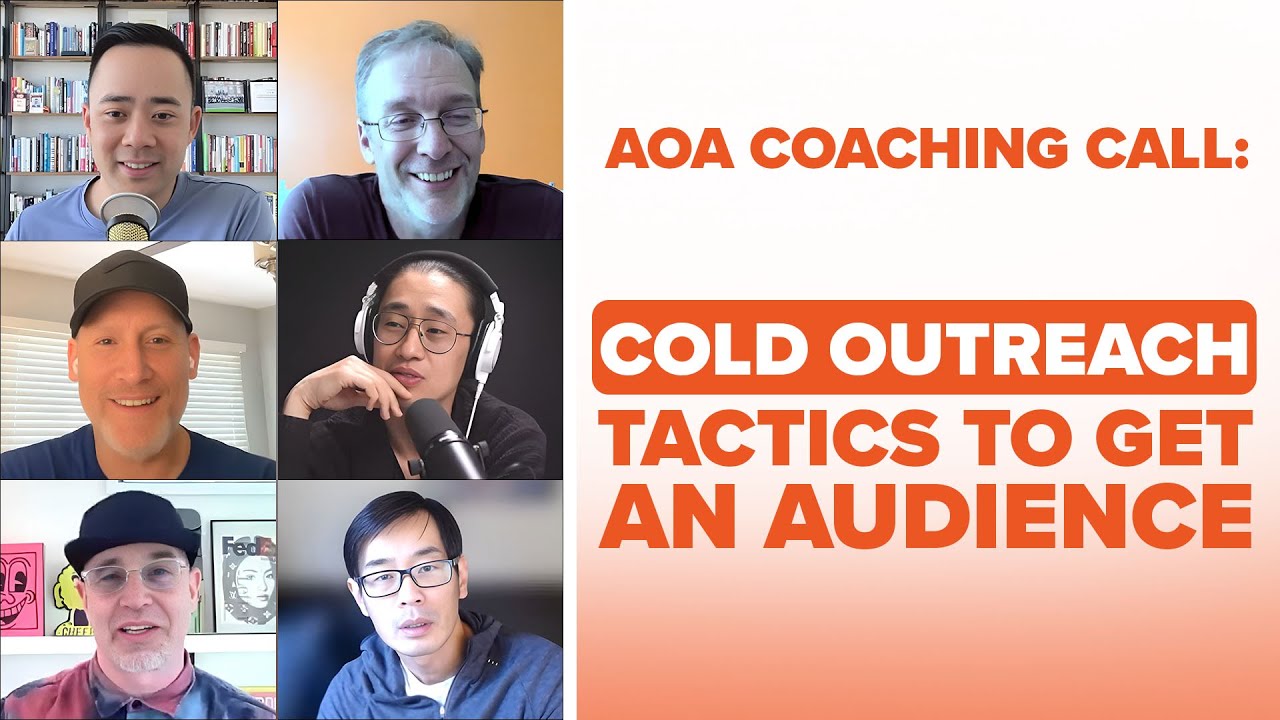
This content was created by Eric Siu. This content was uploaded by Eric Siu. This is a YouTube video titled "Outreach Secrets: Winning Tactics to Engage Decision Makers" (created 2024-06-08) — a short preview of a coaching/peer-group call from the Agency Owners Association run by Eric Siu and Neil Patel. The excerpt is a multi-participant group coaching session (Eric Siu plus attendees and contributors such as Dave Fox, Ezra, John, Abhinav and other speakers) focused on outreach and account-based marketing for agencies: LinkedIn nearbound strategies, warming contacts, getting past gatekeepers by building trust, using podcasts and client interviews for brand building, AIDA/awareness tactics, PR, and foot-in-the-door offers. The clip also includes promotional mentions of the Agency Owners Association (marketingschool.io/agency) and NP Digital (npdigital.com).
Chapters
All right, so we have a little treat for you. So this is a coaching call from the Agency Owners Association. This is a group that Neil and I have for agency owners to help you grow faster. So if you're in the agency space, you are a services business, this is applicable to you. It's a little preview of a call. It's probably 10, 15 minutes or so, and you get a sense for what it looks like to be in the group. If you wanna learn more about the group, you can go to marketingschool.io/agency. Again, it's marketingschool.io/agency. Hope you enjoy the episode.
David, why don't you, why don't you go ahead? First, so jump right on, explain your challenge.
Hi everyone, I'm Dave Fox. I own a branding agency. We also do some digital marketing, some search engine optimization, some content writing for a lot of small businesses. I'm trying to get away from the solopreneurs and the very small budget, small clients and get into some mid-market or just large SMBs. Getting through to the decision maker is pretty challenging. You know, they're pretty well gatekept. And, you know, just aside from nagging them and friending them on LinkedIn and spamming the crap out of them, I'd like to hear some tried and true methods for getting through the gatekeeper to get an audience.
Yeah.
So, Adam, you're muted, Adam.
Yeah. Go ahead and jump in.
Thank you, Ezra. So I'm just big on LinkedIn and What I do is like, they kind of call it nearbound. It's kind of like, it's like you have the person and then you have the circle of other people who also make it. So we also find that the person at the top, maybe the CMO, the director, is probably not gonna answer your LinkedIn message. But if you start to— well, you know, I use LinkedIn Navigator because it kind of maps out who's in this company in the marketing department. And so then I just kind of get my list of those 6 or 8 people that are circling around there. I start there first, liking their stuff, commenting on their things, getting familiar, and then go in for the director and, you know, like, say something interesting, insightful about it, non-selly. And then, then I hit up the director with something that's interesting or related to what they've had said. Now, the challenge often is if for you guys, I don't know, you could tell me, but the marketing people are on LinkedIn quite often because we're kind of a showy bunch, all these brand marketing folks. So they're often showing off on there. So I have the opportunity to kind of connect with them. Now, if you're trying to reach a CTO or whatever, I don't— what I hear is that they're not on there or not checking it. Like marketing people are at least on there once a week. But a lot of them, but the other folks, not as much. So I don't know what to do about that.
So you're establishing yourself as a connected expert or at least contributor and you're becoming familiar, you're warming yourself to them sort of in a stalker sort of manner.
Exactly. But, you know, I also think about it like myself, like when someone likes my post, I'm always, Sometimes I have 8 likes, sometimes it's 24, but whoever's doing it and I haven't seen them before, I'm checking them out. So if I'm checking out the people liking my stuff, I'm sure that they're doing the same thing. So you want to kind of make sure that you're— obviously your profile has a call to action and all these other things, but it's just like human nature. I believe that if someone says something interesting or complimentary or contradictory, You're gonna go check out who, who's saying this, who's this person. So that's what I kind of like believe, but I'd love to hear anything contrary.
Here's my 2 cents on it, at least from what I've experienced over the years, is that, you know, it's all about trust. And so you've got that gatekeeper, and gatekeepers aren't the admin these days. The gatekeeper is the digital marketing manager or somebody along those lines. And from, at least from what I found, if I'm able to establish trust with that person, that person is usually the, that person that is usually going and saying, yeah, I need your services. And so they're going to then take that to the person with the budget and saying, I want this. This is why I trust this person. And then they're gonna make that introduction to you. So those gatekeepers, I don't find them to be gatekeepers as much anymore, at least they are in the marketing world. They're the digital marketing managers or directors who don't have signatory approval, but they're the ones that are championing, championing you to the people who can sign off on the budget. And hopefully then, of course, they will make an introduction. Everybody can get on a mutual call. But I don't even try and get past the gate. I don't even consider anybody to be gatekeepers anymore in the traditional sense. It's more of gaining that trust so that I can have those conversations internally when you're doing account-based marketing like that. But it's all about the trust. If you don't get that trust, you ain't got nothing.
All right, everyone, quick message from the Agency Owners Association. So this is the peer group for agency owners that Neil and I both put together. This is for people that are doing 6 figures, 7 figures, 8 figures, even 9 figures as well. And we're all here to help you grow your agency faster. In this group, we share leads, we share learnings with each other. It's a community where people can ask questions, their most burning questions personally, professionally. We'll share templates, reports, things like that. We're constantly adding more value to the group. I will tell you that the price is continuing to increase. The good news is that there's no long-term commitment, so you can just learn more by going to marketingschool.io/agency. Once again, that's marketingschool.io/agency to learn more, and we hope to see you inside.
Just to chime in to that is I also believe you should be posting on LinkedIn once a day or every other day. I don't do it on Fridays. Don't do it on sometimes Mondays, but just because that's the other factor of trust is that you're active, you have interesting ideas. And what I found that sometimes I get zero likes on stuff, but then other people's on a phone call or something, they'll say, yeah, I like what you've been saying on LinkedIn. I'm like, how come you didn't like anything? Because there's just more lurkers and people are not— they're more like introverts and worried about what people are gonna say, or maybe they're worried that I'm gonna DM them and try and sell them something. So I would just try to also be active. I think that's related to trust in some way.
I like it.
Abhinav, you wanna jump in?
Yeah. One thing that's worked for me and it's still panning out, but it's a lot more work is I started a podcast 6 months ago and I'm able to get people in the room, have a conversation, an hour-long conversation that's a lot deeper than any like cold outbound channel that I've used before. And it is a longer play. It's a lot more work, but I've seen it pan out where I'm able to get folks in the room that would normally not even engage with me on any social platform. And because I do them in person in Austin, I have 30 minutes before the interview, 30 minutes after, and we just talk shop about whatever they're working on, if there's any way I can help. And so that's worked well. Now, I don't have a lot of data to back this because I'm only 40 episodes in, but I've landed 2 deals just from 2 of the guests I've had on, and people love talking about their stories, so it's not always a hard sell, but that's, that's something that's worked for me personally. I think the only thing is some folks who are higher up at bigger companies start gatekeeping where they do interviews. So some people have said, hey, once you get to 100 episodes, let me know. I'll be happy to jump on after that. So that's the only other downside to this, but it is a much more longer brand play and just establishing your credibility. But that's worked for me in the product and development space.
Hey, Abhinav, what's the pitch there?
What do you—
how do you ask them to come? Are they existing clients or potentials?
No, pure cold. Like a lot of the guys I'm talking about are just pure cold intros. I have a decent network in Austin, so If it's very high up person, I ask for a warm intro. My podcast is called Funds and Founders, and it's sort of generically brand for entrepreneurs, investors talk about their journey of wherever they are in life. And so it's not that hard to cold DM people. I just cold DM people, link them to 2 or 3 episodes, and say, hey, I'd love to talk about your early days at XYZ company and talk about how you went from $0 million to $10 million, or whatever that particular person's story is. And I send a couple cold DMs every day and people come on. I book out 2, 3 months, but when you want to talk about their story, their journey, it's not that hard to get some response.
Got it.
I don't know if that answers your question though, but—
It does. I mean, so for me, something I'm thinking about to do this, right? To do basically brand building and get inbound versus doing outbound. Is basically interviewing the clients right now. And, you know, instead of doing podcasts, actually put posts on LinkedIn. So mainly because it does a couple of things. One, it builds you as a brand, like, oh, okay, these guys are working with David and probably buying from them, from him, right? And 2, the For me, podcasts are a high commitment, right? So, you know, it takes a while to listen to all of it. But if you can just basically TL;DR it and you can, you know, we provide TL;DR more with, you know, the publishing format, right? Like basically just a short article within LinkedIn, then you can distribute it there. Maybe it even gets more. Then, you know, Then leveraging off your idea, like once this is there, right? It's always like the conversation is always interviewing a client, right? That makes it easy to just, you know, keep going for content and content and content, right? Like what are the things that you successful? What makes you think the marketing things that can make you different? That type of thing. Then you can just parlay that to, you know, hey, would you like to? Can I do an article for you on the things that you've learned so I could publish it on our On LinkedIn, right? Then maybe be that, that way you build your brand and, and get your inbounds.
Makes sense.
Yeah. I mean, similarly to that, you could also start the group yourself, right? Like there's a lot of LinkedIn groups, but you could be a member. But what if you basically are the moderator, right? Then you just control everybody who comes in and you ensure quality and it's not like 10,000 people in there.
I want to take a second to tell you about my podcast co-host's agency. So NP Digital. So Neil Patel Digital. What they do is they do a whole host of marketing services and they are global, they're worldwide. They have SMB services as well. They have mid-market to enterprise services as well. They cover the entire gamut. So you can just go to mpdigital.com to learn more about it. And now back to the episode.
Great ad, David. Anyone else? John?
Sure. So David's question was very account-based marketing focused. But I reread his question and it's kind of a little bit broader than that, which leads into my question was, yeah, I'm a 6-figure agency. Okay, I don't have special talents. You know, we're a good agency. Our customers love us. But beyond that, there's very little awareness. As we all know, there's just tons and tons and tons and tons of marketing advice out there by amazing, amazing people. And I don't have access to my own data platform to really do a whole lot of custom stuff like that Neil does from Ubersuggest. So how— what I'm interested in is more broader, you know, how do I build myself up? Um, I'm not in a particular niche. How do I build up awareness about our, our agency, um, when there's a— when I can literally probably throw a rock and hit another agency a few doors down from me?
Yeah.
How, how do we build that awareness to attract people beyond my own network. That's the struggle that I'm having because we do good work. We've got well-known customers, um, of all sorts of different sizes and all sorts of different industries. How do we build that awareness that people say, oh yeah, okay, yeah?
You want awareness or leads, John?
Well, awareness to generate the leads.
Got it.
This is building up people who know our— everybody's agencies here. How do we build up that awareness of more people outside of our own personal network have heard of us?
What we kind of— I mean, we do this for our clients too, but have you heard of AIDA? A-I-D-A? It stands for awareness, interest, desire, action. It's a funnel, you know, kind of thing. But whether it's, you know, ads or, you know, you do need an aspect of awareness to You can't just go after the— if we could just go after the bottom of the funnel, we'd be sitting on an island somewhere. But what I've found is more leading with a foot-in-the-door strategy than trying to sell the whole agency. Because I think it's like an elephant. How do you eat an elephant? One bite at a time. And a lot of business owners just don't know what an agency does or what your agency does. Everybody's agency is different. So, you know, some kind of foot-in-the-door strategies we utilize is AI chatbots. Like right now we have an AI voice SMS email chat all in one, like a personal assistant for a business owner. So we use that as it's new, it's very powerful. I mean, it's not just a shiny object, it's It's something we could do. It's something I could introduce to them for free, you know, kind of thing, if I needed to. But it just opens the door to a conversation, um, and then I can solve their problems, start understanding their problems more. It's really— it's getting to know. And then the good thing is we're a full-service agency, so, uh, we can solve most, you know, start crawl, walk, run, we call it. You know, what— how do we crawl first?
SEO.
We might start with ads first as a crawl strategy to generate some revenue, some leads for them. They like it, they see that, then we go, hey, invest in SEO. You can't always eat junk food, you need to eat good food too. And so, um, that's kind of how we do it. We kind of start small. Like, we try to create awareness about our agent. We— I've tried that in the past and it just takes a lot more money, a lot more time, a lot more effort. Yep. Public relations is good for that, like just creating awareness in industry publications that you're targeting, things like that. We do press releases and then we'll send them out directly to publications that were like insurance agency publications or medical, like where we're trying to reach certain audiences. They don't always pick it up, but you start developing relationships over time. And those are just some of the ideas. I don't want to consume all the air oxygen in the room here, but those are some ideas that we've used to get— create awareness about our agency.
And John, the other thing you said is that your clients love you. And if they're— that's— I don't want to say that's rare, but it's a great thing to build upon. So whether it be testimonials or, you know, talking to them, interviewing them, I don't know if podcasts is the way to go, but something is there you can work on if you have that positive thing. I mean, what attracts customers are often referrals or other people saying good things about you, because we could all say great things about ourselves. That's one thing, but when someone else says it, it means something different. So I don't know what you can do with that, but if they truly are really happy, they'd probably be more glad to help you out in some way. You just need to find out what the ask is.
Thanks.









