Prediction: Google’s AI to personalize search better than ChatGPT, Starbucks' 7-month turnaround
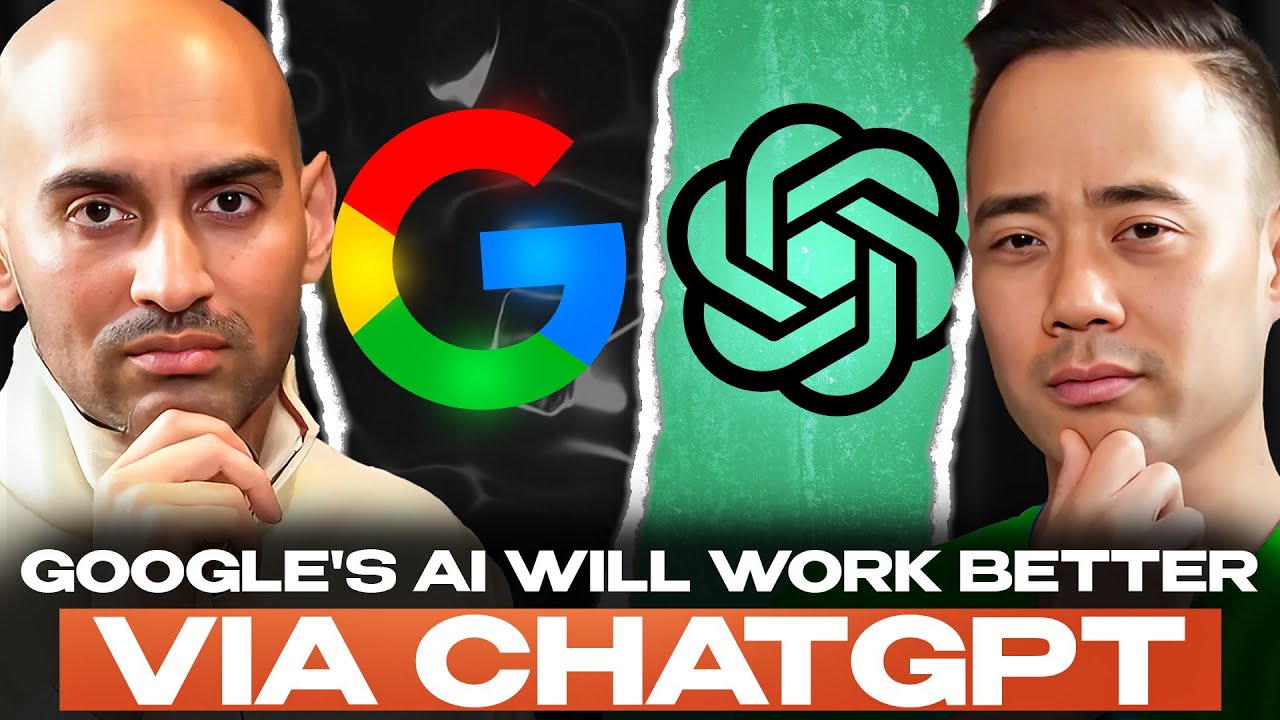
Neil Patel and Eric Siu argue Google's Gemini has a data advantage over ChatGPT because it can tap Gmail, Drive, YouTube, and Android for personalized search. They discuss Starbucks' turnaround from near-insolvency in seven months by adding ten customers per store per day.
Chapters
I believe Google's AI will be better at personalization or personalizing your search experience over ChatGPT.
Oh yeah. I mean, yeah, well, I like, they have access to your Gmail, they have access to your Drive, they have access to everything.
Bingo. Not even just like search, but just anything. When you're using the AI, I believe it'll be much better for you, right? Because it's like, dude, in Gmail, you nailed it. They can just go and scrape everything that you've bought, right? From Amazon and be like, This is what Eric likes. So when he asks Gemini a question, this is the type of stuff we should end up showing him. I don't think they're doing anything like that right now, but I bet you they'll start doing that. ChatGPT doesn't have the data that Gemini has.
Yep.
Or Google has.
Yep. Imagine how much affiliate commission Google's going to get off this.
Yeah, it's kind of ridiculous to think about.
Yeah, because they'll know all your preferences. They'll tell you when you need to renew again, or based on the product that you buy, how often like you need to, you know, maybe pick it up again. And they'll just collect maybe a 10, 15% cut on that. And by the way, people laugh at me all the time when I'm like, this is where I think the blockchain comes into play to verify transactions and easily loop everything together. Because affiliate marketing is like, it's hard to connect everything together, right? Because you have to sign up for different accounts and things like that. But that's going into the weeds a little bit. But I think we are going to see a lot of these assistants helping us. Planned travel would be another one, right? Like I even use Gemini now because I'm planning to go to Europe in like 2, 3 weeks or so. But it's setting up all the workflows and I'm like, well, I don't really like this. Well, what's the best logistical way to do this? And it'll like draw out a map for me and it'll show me like where to go. So it's going to get better and better.
Yeah. And it has everything, right? Like they know your location, they know your address. Because if you think about Google, unlike ChatGPT or OpenAI, Google has Android devices. So they have tons of data there. They have YouTube, they have Google. They have Gmail, and I don't know what else they have, but they have a lot of other stuff. Google Docs, you know, like their product suite is so big. Chrome, they know what you're browsing even when you're not on their own website.
Did you mention Android too, right?
Yeah, I mentioned Android.
Yeah.
But Chrome, Chromebooks, you know, like the list goes on and on. They just have so much data. It's kind of ridiculous, right? It's hard to figure out how to analyze that data and personalize because it just takes so much computing power, but they have tons of data centers. It's a long-term project, but—
YouTube's going to get crazy because YouTube, if you think about it, there hasn't been a way to easily analyze videos, but now you have multimodal with all these LLMs where they can do like audio, video, and everything. And so they'll know your YouTube preferences too and make recommendations that way, but they have everything at the palm of their hands, so they better not botch it.
Yes. And I also think because of this, Facebook's AI will be amazing over time too. I think, you know, They have quite a bit of ways to catch up, but they just have so much data from Instagram and Facebook.
Okay, so we talked about this in the past. We picked one stock, right? If you were to pick 3 stocks for the next 10 years, what would they be?
If I had to pick 3 stocks?
Yeah, you had to hold them for 10 years.
I had to hold them for 10 years? Google would probably be my first choice. Meta would be my second choice. Amazon would be my third choice.
Okay. I would pick Meta because it's still founder-led. I would pick Tesla because it's still founder-led. There's a lot there. And I still think Nvidia has a ways to run for the next 10 years or so. And it's also founder-led. So there's something to be said when you have the founders running the show. I still think Microsoft will be successful. I still think, you know, Apple will be really good. Apple will be successful. But I like to bet on the founders.
So Yeah. Yeah. And the reason I love Amazon is forget all their other products, just their e-commerce platform, dude. As our generation gets older and older and our parents' generation starts disappearing, right? Sadly, what's going to end up happening is, is more of us are used to buying online than in brick and mortar. And you're going to start seeing a bigger shift to e-commerce.
I struggle, like I would totally bet on Amazon if Jeff Bezos was still there. I struggle with it a little more now, but just because of like how much risk-taking you do. They're still going to be a great company, right? But I just go with the 3. You know, there's— did I tell you about the— what are you laughing at?
Every time people like say Jeff Bezos, I think of like him trying to like work out and get buff and then like taking those boat pictures and stuff like that.
I just think about the song. Have you seen the Jeffrey Bezos, the yacht video where they're like singing his song? That's the best. Um, but like Jeffrey Bezos.
Yep, yep, yep.
I gotta take a minute to tell you about the Agency Owners Association. This is a peer group for agency owners. Think YPO or EO, but for agency owners. And I just wanted to read you a couple of testimonials. So this first one comes from Carrie, and we asked her, what do you like most about the group? She said, having a group of people to discuss and bounce ideas. The leads are great too. Yes, we share leads in this group as well. This one from Ollie, and he says, The ability to really post whatever I want and need, and the group responds. Great experienced members, getting a lot of insights from conversations with other members, getting a lot of value from sessions from Eric, getting advice from others as well. And so if you want to grow your agency faster and you want a peer group to do so, just go to marketingschool.io/agency. This is a group that both Neil and I created, and our hope here is to create a vibrant community of agency owners and do a lot more with it in the future. So Again, marketingschool.io/agency, and we'll see you inside. Neil, have you heard about the Starbucks turnaround story?
I have not heard about the Starbucks turnaround story. Okay.
So Starbucks was 7 months away from insolvency, and this is when they were publicly traded. They were already a very big company, thousands and thousands of stores, right? And what happened was Howard Schultz, the original founder of Starbucks, he got—
Not founder, he purchased the company.
He purchased it, yes, yes. But you can almost call— you know, Ray Kroc was the founder, okay, of McDonald's. But he wasn't really the founder, right? He took—
He was not the founder either.
But the movie was made, The Founder, right? That was what he was called. So, you know, that term is loosely used. See, now I have to restart it again. Neil, have you heard about the Starbucks turnaround story?
No, Eric, I haven't heard about the Starbucks turnaround story.
All right. So they were 7 months from insolvency and here's what happened. Howard Schultz, the CEO of Starbucks, got everyone together. He got 10,000 of I believe it was he got 10,000 people together and he wanted to get all the managers together. That's what it was, right? Because when he first started Starbucks, everything was about the barista to customer experience. Everything was good. It's like, what's your name? I'm going to write your name over here. Oh, you want to customize your drink? Whatever. There's community in Starbucks, right? And eventually, they became a publicly traded company. And what happened was the board was like, okay, we need to cut costs here. We need to cut costs here. Okay. Maybe we need to do more share buybacks. All these things, right? To kind of boost the the stock price. But what happened was the customer experience started to go down and that's why they were 7 months from insolvency. And what Howard realized was that, you know what? All we need to do talking to the 10,000 managers is we just need 10 incremental customers per day. And if you can just deliver better experiences across the board every single day, we're going to be able to turn this company around. We're going to be able to save this company. Everyone, the CFO was like, don't do this. It's a bad idea. It's going to freak everyone out. But it actually rallied everyone and the 10,000 managers who are the leaders of these stores, they got everyone to rally and do the 10 incremental customers per day. But it all comes back down to customer experience again.
That's kind of cool. And one thing to note before I give some feedback on that, the reason Eric is saying, I got to redo this, I got to redo this, is, and this is a tip for everyone else, When you're recording podcasts or you're doing anything on video, you ideally want clean clips that you can cut and that way you can repurpose the content and use it for social media, whether it's Shorts or long form. It just ends up getting more views versus if it's choppy. So you ideally want to have clean cuts like Eric just did.
Yeah. By the way, when we do stories, they typically perform pretty well. And especially when we talk about like more larger TAM stuff like Shake Shack and Chick-fil-A. Yeah.
But I agree with this. It really does come down to the customer experience. And I remember years and years ago when the economy was good, we would get tons of meetings or tons of people hitting us up from private equity firms saying, we want to buy your company. We still get them now, but not as frequently because the economy's not as good.
Not as good as multiple either.
Not as good as multiple either, yeah. And when we were getting hit up, in most cases, Assuming if someone was willing to come to me and they wanted to meet up, I would actually take the meeting even if I wasn't interested in selling. And I would be blunt and I would tell them like, look, I don't think I'm interested in selling at all, but if you want to come, I'll meet up with you. The reason I did that is so I could learn from all these private equity people. And they're asking us, they're like, what's one of the key drivers for your growth? We would tell them, put the customer first and really try to overdeliver and satisfy. They're like, They're like, okay. And I remember every time we told private equity people that, it wasn't that they didn't believe us. They're like, all right, that can't be why you're getting growth. They're like, so what else? And they would keep trying to press us on like, what else? Like they're like, are you using, you know, specific software or technology, you know, that's driving growth? Are you doing a specific marketing tactic? And we're like, no, we're really focused on overdelivering to the customer. And most of them didn't end up getting it. And we're just like, if you look at most of our competitors, the big publicly traded holding companies, a lot of them are run by CFOs and they do cost-cutting measures. And a lot of them are just trying to hit quarterly earnings and they don't always prioritize the customer first, even if it hurts the business in the short run. And I, no joke, private equity people are smart, they got it, but a lot of them really didn't believe that was one of the keys to our success was just the overall customer experience and putting the customers first.
Yeah. I mean, look at Amazon, literally customer obsession. Look how well they've done over the years. Nobody, nobody believed in, nobody believed in them. And look at everything they do now. By the way, The Boys is back. I don't know if you watched The Boys, but—
You talking about the superhero one?
Yeah, yeah, yeah, yeah.
It's back.
Came back yesterday. I want to take a second to tell you about my podcast co-host's agency. So NP Digital. So Neil Patel Digital. What they do is they do a whole host of marketing services and they are Global, they're worldwide. They have SMB services as well. They have mid-market to enterprise services as well. They cover the entire gamut. So you can just go to mpdigital.com to learn more about it. And now back to the episode. Okay, going back to this thing, I think we probably should do an episode in the future about how to actually have a good customer, a good customer service or a good customer experience, because a lot of agencies actually don't understand how well their customer experience is going, right? They might have sales nailed down, they might have marketing nailed down, operations and finance, But sometimes the client services piece is a black box, right? So, but it's the most important piece arguably.
And yesterday when we were on the, what's the agency group called?
Agency Owners Association.
The Agency Owners Association, which if you guys want to end up joining, you can end up going to—
Marketingschool.io/agency.
And someone was asking about haters and what do you do when you end up having haters and, you know, negative things out there, how can that affect your customers and how you're doing your business? And I was like, you should ignore a lot of that kind of stuff. What you should do is continually try to delight your customers. And the way you know if you are is when you're doing things like NPS surveys to figure out your NPS score. If you're continually seeing that your results are getting better over time, you're doing things great. If you're seeing them go backwards, You're doing things wrong. If you're seeing things not go up, you got to figure out why they're not going up. Talk to people and improve upon them. If they're going down, what are you doing wrong? And improve upon those. If you're doing things that cause people to be more delighted and these people weren't delighted before, you should talk to them and find out what made them really happy to give you a better score. And then from there, you end up— Doing more of that kind of stuff because you know it's working to cause a better customer experience.
And also, if they rate you a 9 or 10 out of 10, then that's where you can ask for a testimony or ask for a referral or ask them for some type of thing, right? If it's below a 7, for example, because 7 to 8 is neutral, if it's below that, then you just got to ask them, hey, what can we do better, right? What's the feedback you have for us? But you have to keep that NPS going. And the other thing is obviously you can look at numbers too, your revenue churn, your customer churn, your logo churn, I should say. Revenue churn matters a lot too. And then you wanna look at how these accounts are expanding. But I think the other thing too, these are more micro things. You wanna check in with your team. Ideally, you have, if it's a really big account, you wanna have an executive sponsor. And for smaller companies, that might just be you, the CEO. You're going in and you're talking to these customers, right? 'Cause they like that interaction. And oftentimes when it's a smaller agency, the CEO's often the superstar, right? So you wanna, the more interactions you have there, it's probably gonna extend the LTV of the account. They'll probably expand and they'll probably stay longer with you. So things to take into account.
Yeah, and it's hard to get amazing NPS score like Apple, but you can all strive for it. And the key is keep improving based on the feedback you're getting, but also be patient. You're not going to have the best NPS score overnight. A lot of these companies have been continually fine-tuning their customer service, their product, their experience over the years. And the other thing that you have to keep in mind is people keep expecting more and more over time, and that's okay. So if you just do the same stuff, you're not going to get a better NPS score. You actually may notice that your NPS score goes down. But what you need to do is continually innovate, try to delight people even more, go above and beyond. All these things will really help you separate yourself from the competition.
You know, the one thing I— our mission at Single Grain is to— we say our mission is to be the most innovative marketing company that drives customers. And I say that so much where it's so annoying, now with the entire team. It's just something that's— you got to be the chief reminder officer sometimes, right? And the more you say it, the more it starts to become ingrained. And then once it becomes annoying and people know what you're going to say, that's when you know it's really ingrained in the company, right? And I'm sure you guys have things like that at NP Digital as well.
We do. And you're spot on. You got to keep pushing the message and it takes a long time for things to get really ingrained. The only time I've seen things get ingrained really quickly is when a company is suffering, just like the Howard Schultz example that you gave. Hey, we just need 10 more customers per store per day. We really need you guys to focus on delighting the customers, right? Or like the Treehouse example that you gave. Hey, everyone's going to be out of a job in X amount of months because we're running out of money. Oh, so we can't just work 4 days a week like No, no, no.
We still did the 4-day work week even though we only had 3 months of cash left.
No.
Yeah. And then, oh, also, you know what? It was on me to manage marketing there, right? It was like, that was a situation where— so the difference is Howard Schultz actually told everybody, right? The difference in this situation is it was not told. And only a select few people, like the leadership team knew, so.
That sucks. I've raised money for a startup that's losing money in the past. And when things are bad, the best things that we would do is my co-founder at the time, it was my brother-in-law, Hiten Shah, we would just be transparent with our employees and let them know. And what we found is by being transparent, if you're working with amazing people and the company has a good culture, These people will help you solve your problems. They'll also have ideas that you don't have, and some of their ideas may be better than yours, or they can help solve the problem for a specific portion, but it all adds up. And I do think it's better to be transparent than it is to hide some of these things. But on the flip side, if it's something that's small and it's not going to really make an impact to people, There's no point in, you know, telling the whole company about something when it's not that important. Like if it's not going to affect most people. Make sure you go to marketingschool.io/agencies.
That's right. That's right. See, even with Neil's jet lag, he remembers it. All right. That's it for everyone. Please don't forget to rate, review, subscribe as well. And we'll catch you later.









