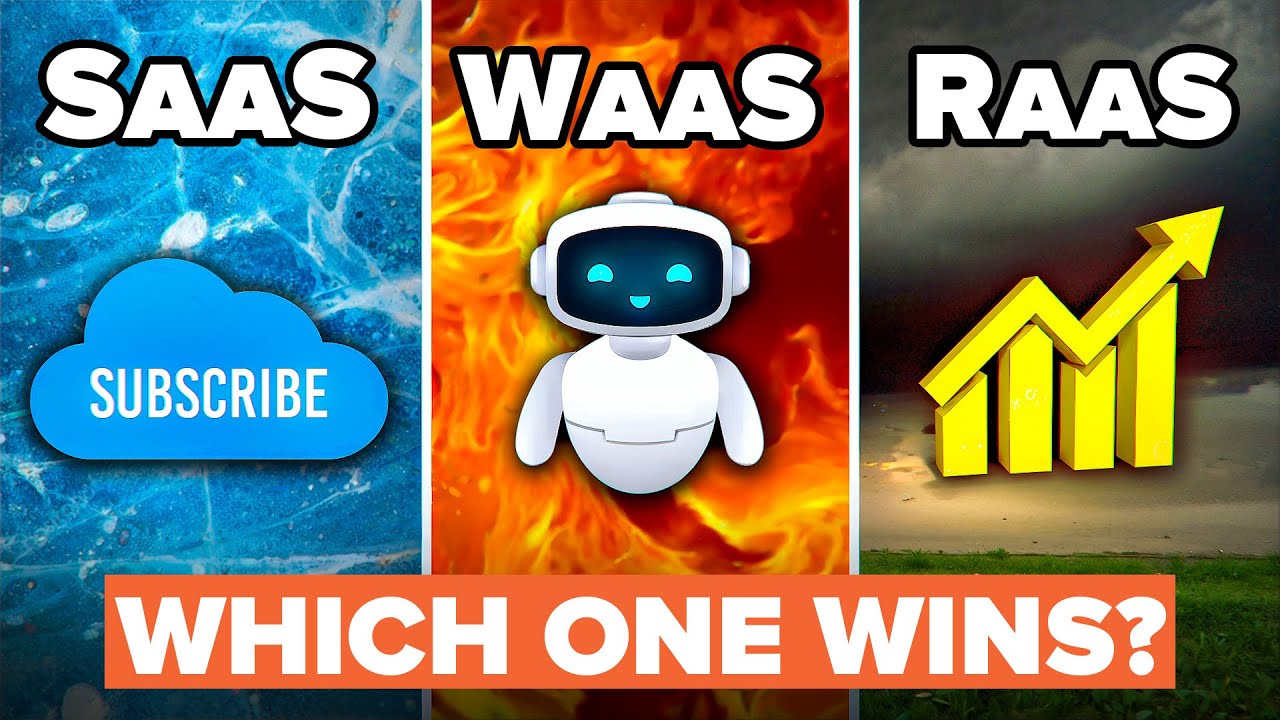
Eric Siu and Neil Patel break down three pricing models: SaaS charges for software access, WaaS charges for the work software does, and RaaS ties payment to results. Intercom charges per support ticket resolved; OpenAI plans a $20k agent fee. The catch: measuring results is hard, and companies hate unpredictable costs.
Chapters
Talk about SaaS to WaaS to RaaS. So this post is from Dharmesh Shah, co-founder and CTO of HubSpot. So software business models in the age of AI. Do you know what WaaS is?
No, there's too many acronyms.
I have written before about the ideas of RaaS, results as a service. Okay, so there's software as a service, SaaS, results as a service, but he's— there's another intermediate business model that I think we should also start to see. Work as a service. So pay for the work that the software does. So let's just rewind real quick. SaaS would be you pay a monthly fee. I think Uber suggests maybe you pay $8 a month or whatever, and that's what it is. Results as a service, if I help you increase your leads by X amount, you pay me per lead. That's results as a service. Why are you smiling?
No, nothing. Someone's asking me a question. Okay, continue.
All right. So for RaaS to be effective, results as a service, there has to be some objective, measurable result that the customer is paying for. A common example is a customer support ticket resolution. So like Intercom charges $1 for resolution, right? It makes sense in that case because we have reasonable ways to measure whether AI is quote unquote resolved a particular support case to a sufficient level of customer satisfaction or not.
You can even do this with AI agents.
Yeah.
The whole RAS model.
But I think what he's saying is this model doesn't work as well when the result is subjective. So the result is, Neil, you wanna be happier. Did I make you happier? Right?
Has to be black and white.
Yeah. So point is, and so otherwise a good intermediate step might be WAAS, okay? So that means, I'm just looking at this example, I'm literally, I'm reading this for the first time. RAAS would be paying for the number of images you might deliver, right? But that doesn't make sense because it's, if you're paying for creative, you better hope it converts, right? But—
Yes, and if you end up paying for a lot of images and they don't convert or you don't like the quality or doesn't stick with your brand guidelines, you're not going to want to use them.
So we define RAAS, we know what SaaS is, but What the question mark is, WASP. So WASP is— he says a good intermediate step might be WASP. This is how life works for people now. Your creative director might hire a junior designer to help with visuals for your sales materials. You probably just paid them a salary, have them do work, and expect them to— expect as they learn the business, they'll get better over time. So I think this is starting to make sense where, um, I mean, you look at OpenAI, like you've read about how he's planning to charge $20,000 for agents.
Yeah.
I think in that case you're just paying for the work, work as a service, I guess. But in that case, isn't it just SaaS? But maybe it's just a one-time, so maybe it's just work as a service. Does that make sense?
So WAS is work as a service.
Yep.
I get the RAS, results as a service, and SaaS is software as a service.
Yep.
But what he's saying to me sounds like service as a software.
Yes, yes. So look, he actually has a diagram. We should have started with the diagram first, but the diagram shows SaaS, software as a service, pay for software. WaaS, work as a service, which is service as a software, pay for work software does, okay? And then RaaS, results as a service, pay for outcomes software delivers. And I think all 3 will be relevant.
Yeah, but I just see WaaS as what everyone's talking about as service as a software.
It's service as a software, which is a fairly new term too.
Yeah.
Yeah, so.
And I get why he may be using WaaS because software as a service is the same acronym as service as a software.
Yeah, you should change it up from a marketing standpoint so it's not confusing. But I think all of these are relevant. I don't think SaaS is going away anytime soon. But like for example, you know, results as a service, by the way, we talk about pay for performance a lot, but when it comes down to it, most people don't want to do pay for performance.
No.
Yeah.
And most big corporations do not. And anytime I've gotten someone in the past to agree to pay for performance, and the moment it performs more than their liking—
Oh, then they're done with you.
They're done with you. And then you don't get paid out or it creates legal problems. It doesn't matter if you have great contracts, always a pain, uh, and big corporations that really can spend the money just don't accept it.
They, they need predictability.
Yes.
Yeah, they don't want to go crazy. All right, so I wanted to take a moment to tell you about my podcast co-host Neil's agency called NP Digital, and they work with a whole host of global companies or global organization. Also, Neil has SEO tools such as Ubersuggest and Answer the Public. All you have to do is go to npdigital.com to learn more, and we'll see By the way, I mean, it does work. We know some people in the pay-for-performance space where they've built significant businesses, like, you know, $1 billion plus in revenue. Those are few and far between, but you also have to control a lot of leverage if you're going to do that. You have to build the landing pages, you have to build the entire funnel, you have to own the whole customer experience at the end of the day, which is why they ended up buying call centers. Why are you smiling again?
No, someone's messaging me something funny.
Okay, okay, okay. So anyway, that's where we're gonna end it today. Thank you all for listening. Please don't forget to rate, review, subscribe, and we'll see you tomorrow.