Should You Donate All Your Money Before You Die?
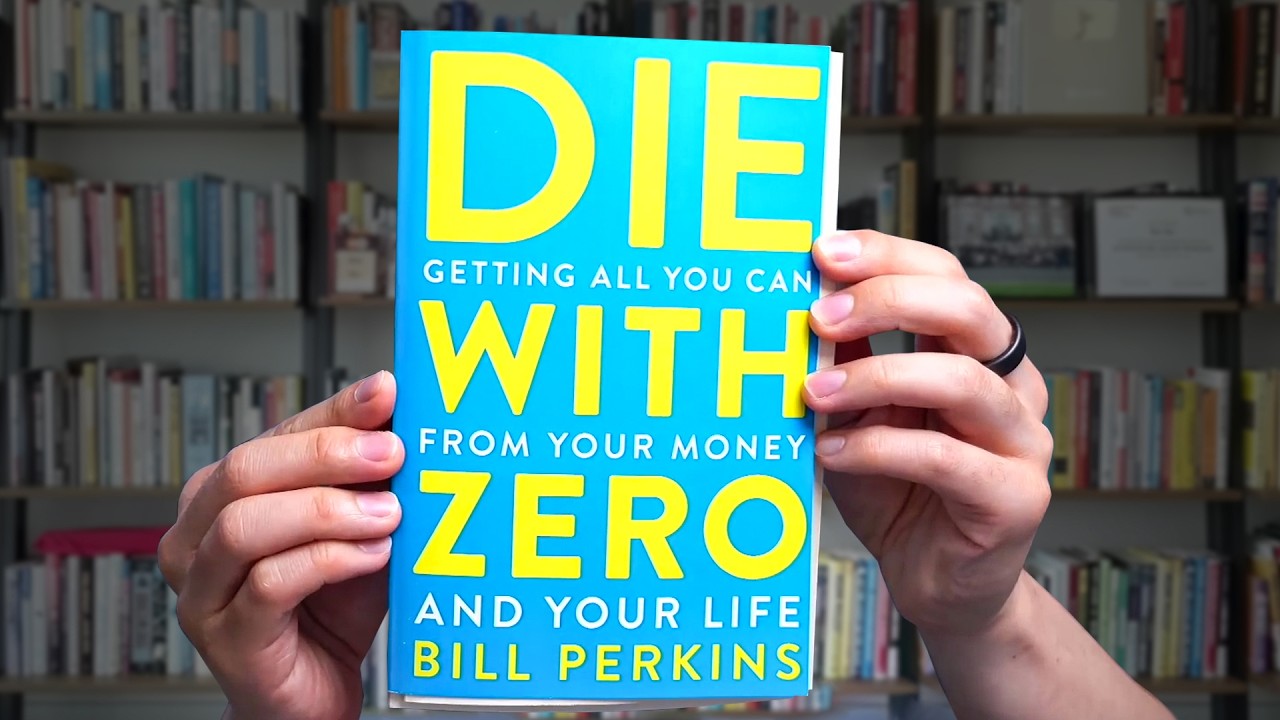
In this solo‑hosted YouTube video, the speaker reviews Bill Perkins’s book Die With Zero and interprets its ideas through an entrepreneurial lens. He argues that the traditional goal of amassing wealth for future generations is flawed because wealth typically dissipates by the third generation and can dull the recipient’s drive. Instead, he advocates spending money to build a “experience bank” while you’re healthy, giving meaningful financial support to children early (ages 26‑35) to help them launch, and donating the bulk of your wealth before you die. The talk covers several supporting concepts: the intergenerational loss of wealth, the importance of adversity for personal growth, time‑bucketed life planning (segmenting goals by decade), health optimization (biomarkers, nutrition, exercise, preventive screening) as a prerequisite for a long, experience‑rich life, and examples of philanthropists such as Chuck Feeney, Warren Buffett, and the Giving Pledge. The speaker also shares personal anecdotes, including a 45th‑birthday celebration funded by Perkins, and practical tips like using ChatGPT to bucket experiences. Mid‑video, he promotes his own community, the Agency Owners Association, and his marketing agency Single Grain, describing programmatic CRO and AI‑driven strategies. He concludes with an 8.5/10 rating for the book and encourages viewers to comment.
Chapters
If you don't want to squander your life energy, you should aim to spend all your money before you die. That to me makes a lot of sense. All right, so it's time for another book review and this one's going to be about Die With Zero. I really enjoyed this book. The rating for me for this book would be— This is written by an energy trader named Bill Perkins and he's also a poker player as well. I followed his stuff and I've had a couple of my friends tell me about this book. I've read it before and then I reread it and you can see it's basically falling apart now because I, I, it's, it's pretty good. It's so good that I actually read it in the, the sauna. In this episode, I'm going to talk about what I learned from Die With Zero. This is a book review and, and what you can learn as well. And I'm gonna talk about this from an entrepreneur's perspective so you can talk about how you can maximize this for, well, really your own benefit at the end of the day, right? Because I, I believe that That looking at things from an entrepreneurial perspective is going to help you get the most out of life because ultimately it forces responsibility upon yourself. So I think that's the most helpful lens. And hopefully you get at least one or two takeaways and we go from there. What I'll say first is when I think about this book, the whole concept of dying with zero, it's never really made sense to me in the beginning at least, because I was like, okay, well, if I'm going to make all this money, if I'm going to do well in life and business, Then wouldn't it make sense for me to give that to my family and have them give it to their families and just continue on the legacy? But the reality is when it comes to wealth, and there's a Chinese saying for this, and I believe there's a saying for every country that the wealth is basically completely lost by the 3rd generation and sometimes even by the 2nd generation. When you think about the Vanderbilts, I believe the Vanderbilts were involved with railroads. And so the Vanderbilts were very successful, and that fortune was basically completely gone in about 3 generations or so. And so in Chinese sayings, they like to say that by the second generation, you're basically going to lose, let's say, you know, 70% of it. And then, you know, by the third generation, it's basically completely gone, 90% plus gone, right? It's because that future generations haven't really gone through the experiences necessary to understand how they can wield that, the power of wealth, right? When you come from nothing and you, you You understand how to pull yourself up from your own bootstraps and you understand how to make things happen. You understand the power of relationships. You understand the power of spending less than you make. You understand the power of compounding over time. You understand the power of hiring amazing people. You understand the power of being involved in your business. All these things you learn, these superpowers you collect as you continue to play the game of business. The future generations just haven't learned that stuff. Yeah. And the other thing too is if you're the entrepreneur, if you've gone through all that pain and you've achieved that wealth, you don't wish that suffering upon your future generations. You want them to live comfortably. But actually doing that takes away from their ability to spread their own wings and live their own life because you've given them this sense of comfort. But that actually doesn't help because at the end of the day, who we are is forged by all the experiences that we've been through. We're forged through The rough times. And it's the rough times that make us. It's the adversity that makes us at the end of the day. And most people aren't willing to go through that adversity, which is why you see a lot of people that have a silver spoon or even a golden spoon, we can call it that. They don't want to go through the pain of knowing what it feels like to work. They don't want the pain of responsibility. And thus they become useless people. And so it's always made a lot of sense to me. You hear about a lot of these wealthy people. Yeah. They're like, you know, I'm not going to give much to my kids. And they just want to donate that money away. And Chuck Feeney is actually a good example. So he's the guy that founded the duty-free stores. He became super successful. He became a billionaire. He ended up giving away, I think, $8.9 billion or something like that. And he was maybe left with $1 or $2 million at the end of his life. He lived in a small San Francisco apartment and he ended up dying, I believe, in his 90s or so. And he gave away a lot of his money anonymously and he did it over time. And so there's a lot of lessons. We're going to talk about charity from this book as well. But what I really learned from this is that there's really no sense to give the money away to future generations and wait to give that money away. In fact, you're better off giving the money away earlier. And so if you want to give money to your kids, I'm not saying don't do it. And this guy's not saying don't do it. Bill's not saying don't do it. He's just saying, look, at ages 26 to 35 years old, that's a good time to inherit because he's He shared a story around someone that was really struggling in their 30s or 40s, and they were basically about to live on the streets. In fact, I believe they did become homeless for a little period of time. And by the time they're 60 or 70, everything was set and their life was good. And they they they received this this small windfall. And by that point, they're just like, okay, that that money's not that useful. What am I going to do with this? So really, when you're 26 to 35 or so, those are years where you're really maturing. You've kind of understand. You've come to understand yourself, and maybe you're having a family. Maybe you've just gotten married. That's where the money really goes a long way. And so I think that makes a lot of sense to give that money away at 26 to 35. And maybe it's not something to spoil them, but it's to get them going, to get them started. Right? I believe that the school of adversity is where you're going to learn the most and where you're going to become battle-hardened. And by the way, not everyone does well with adversity. I know some people. In my life that are close to me that let adversity beat them. And they became a shell of a person at the end of the life, right? At the end of their life, I should say. And so, 26 to 35 years is a good time to donate that money away. And then you can look at spending your money over time and spending it down until when you're around to— when you're close to dying, right? And you still want to have some type of nest egg towards the end, but that's kind of his point in this book. And so one of the other key points that Bill makes is that the money's not really going to go with you at the end of the day, but what does go with you is your experiences, right? Your experiences are what make you. It's what's valuable. And so instead of thinking about continuing to acquire money and build up your bank, think about continuing to build up your experience bank instead. And so your experiences bank, I should say. And you can do that with your kids. You can do that with your friends, your family, your mom, and your in-laws. And those are all things that are worth their weight in gold. And when I think about a lot of the experiences I had in, let's say, elementary school, high school, college, those are all experiences that have made me who I am. And I think they're invaluable. And it's hard to quantify the dollar amount worth of those experiences. But as I get older, I do realize that money or power. That's not really what the goal is. The goal is one, you want to have loving friends and family around you. And two, you want to have amazing experiences because we're only on this planet for a very short amount of time. It's really like we're just like a flash, right? And we're just gone. And so yeah, it does make a lot of sense to build up experiences. I got to take a minute to tell you about the Agency Owners Association. This is a peer group for agency owners. Think YPO or EO, but for agency owners. And I just wanted to read you a couple of testimonials. So this first one comes from Carrie, and we asked her, what do you like most about the group? She said, having a group of people to discuss and bounce ideas. The leads are great too. Yes, we share leads in this group as well. This one from Aliyan, he says, the ability to really post whatever I want and need, and the group responds. Great experienced members. Getting a lot of insights from conversations with other members, getting a lot of value from sessions from Eric, getting advice from others as well. And so if you want to grow your agency faster and you want a peer group to do so, just go to marketingschool.io/agency. This is a group that both Neil and I created. And our hope here is to create a vibrant community of agency owners and do a lot more with it in the future. So again, marketingschool.io/agency, and we'll see you inside. I think a caveat, by the way, it's saying die with zero. Well, when do you know if you're actually going to die? Are you going to die in your 80s, your 90s, your 100s? There's actually— he does in a chapter in his book talk about projected end-of-life calculators, right? And I ran myself through one and it said I'd probably die around 90 or 95 years old or so. And there's one that was more specific and it asked you about your health. It asked you about if you know your biomarkers and all that. So, that's stuff that I recommend looking into, studying longevity, understanding You know, getting your blood drawn every quarter or so and understanding what your biomarkers are, sleeping well, taking care of your body, taking care of your health—all those things—a lot of people don't do it, and it seems like it's table stakes. But again, that comes down to adversity again. Most people just aren't willing to put in the work, and thus that's why they become overweight. Thus that's why they become depressed, and you know, thus they don't get the. This is why they don't get the life that they think they deserve. And you know, complaining about it's not going to get you anywhere. It's you taking responsibility at the end of the day, and this this is constantly reinforced. Throughout this book. I mean, Bill didn't become a successful energy trader by just letting life happen to him. He took advantage of whatever opportunities he got. He took advantage of the adversity. So that's what I would say. And, you know, Bill also did something, I believe his 45th birthday or so. This was great. He paid for all his friends and family to show up. Seems like they went to some type of tropical destination. It seemed like the hotel was really expensive and some people he knew couldn't afford it. So he paid for some of those people. And he just made it a really good time for everyone. And I think he hired a singer to come as well, a famous singer. I just forgot who it is. And that's an experience that everyone's going to remember. In your 40s or so, you can still do a lot of things, but you start to get to 50s, 60s, 70s, 80s, you really can't do a lot more. In your 70s, 80s, it's hard to even walk up a flight of stairs, right? And then if you fall, you can break your hip bones really quickly and then you get in a lot of trouble and you might even die from that, right? His whole thing is, you want to do things now. You want to take advantage when you're still younger. So in your 20s, okay, yeah, you might be broke, okay, but still. He shared an example about someone. I believe this was in the early days of him becoming a trader. I think they were working for some Wall Street firm. And one of his coworkers went $10,000 or $20,000 in debt and ended up going to Europe and stayed in hostels for Maybe 2 months or so and came back and said that experience was worth it and he would go in debt all over just to do that again. And so that's an extreme example, but that's an example of doing it now. Because in your 30s, 40s, you're probably not willing to stay in a hostel, but in your 20s when you're broke, you want to take advantage of what you can. And in your youth, you can do anything you want and you can recover pretty quickly. Let's say you go drink or something, your hangover time is a lot shorter than when you are— your recovery time, I should say. Yeah. is a lot shorter versus someone in their 30s or 40s, right? So the whole premise of do it now makes a lot of sense if you're trying to accumulate experiences. And so one really interesting concept that he has that I hadn't really thought of, and I actually ended up using ChatGPT for this. So here's what you can do. You can time bucket your experiences. And what that means is from ages 20 to 30, okay, what are all the things that you want to do? From 30 to 40, what are all the things that you want to do? 40 to 50, what are all the things that you want to do? Let's say, okay, for example, I want to get a Brazilian jiu-jitsu purple belt. I want to become rated above a 4 in tennis. I want to do quarterly vacations. I want to go to India. I want to go to China. I want to go to Portugal. I want to build a school. I want to go to Machu Picchu. I want to go to Great Wall of China, right? Or, and then maybe I want to go to, I want to donate. I want to donate to causes that I believe in. I want to do dog sledding in the Arctic, right? And so I listed all these things and I basically said, hey, I went to ChatGPT. I said, hey, based on all these things and based on what's realistic from a health standpoint, can you bucket these from in 5-year buckets starting from ages 35 to 40, 40 to 45, and so on till age 95 or so, right? Or age 90. And it bucketed everything. And you know, 85 to 90, it shows it over here. It says give away all my money before I die, right? And then, but that starts happening, the giving away. I mean, it happens basically immediately, right? But I just want to make sure I give away all that money and, you know, give my— make sure that I've given enough to my family, but not so much where they They lose all sense of what the world actually is like. And I don't want to give them money where they feel like they are entitled. And by the way, the money makes them comfortable and makes them useless at the end of the day, right? So, I believe if someone is really resourceful, they're going to figure it out no matter what. And sure, you can give them a little money for a head start. Like, that certainly helps a long way. But one thing I remember, I'm reading this book with J. Paul Getty. He was the richest man in the world for a period of time. And he was also an oil tycoon. Yeah. And his father came up from nothing, built himself up to become an oil guy as well. And they were wealthy growing up. When J. Paul Getty wanted to start his business, his father's like, okay, I'm going to give you a loan, but I'm going to take 70% of the profit. You're going to take 30%. He would never really just give him everything. And he wanted his son to learn the value of hard work, right? So that's where this stuff comes in. Again, you want people to understand the value of hard work. Because, again, adversity sharpens while comfort dulls. So, that's what that looks like. But going back to the book itself, so we talk about time buckets. Okay. So, obviously, if you're going to do all these things, if you're going to go around the world collecting these experiences, you want to make sure that you're investing in your health. We talked about that a little earlier. So, you only have one body. And so, I'm going to maybe go a little deeper. How well are you sleeping? How often are you drinking? How often are you looking at your biomarkers? And what core supplements are you taking? I'm not saying you need to take 40 pills a day like a Bryan Johnson, for example, or 100 pills. Sorry, he takes 100 pills or so, right? I've actually gone up to 40 pills a day. I'm not saying you need to do that stuff. And you don't need to get too hardcore about this. I mean, just enough. Are you making sure that you're consuming less calories than you're taking in? That's a very simple way to look at things. And if you're sensitive to certain foods, are you avoiding those foods? Are you trying to eat clean foods? And that goes— the diet goes a long way. Are you lifting weights? Because that helps with longevity too. You want to make sure that you have— and I'm not a doctor by any means, but strong strength and good VO2 max contributes to a longer life cycle. And that's what you should be thinking about because you want to not only be taking care of yourself, but you want to be taking care of your family, right? But in order to take care of your family, you have to take care of yourself first. It's the whole analogy behind putting your oxygen mask first before you're helping other people. And so, I mean, I don't think enough people do that today and it's much easier said than done. But investing in your health, I mean, this is why America at least, what I think 60%, 70% of people are considered overweight and that number is continuing to grow. And that to me is crazy. When you look at people in Europe, when you look at people in other countries, it's not quite the case. And so, We just eat a lot of processed foods. We're not paying attention to what we're eating. And, we have nasty environments. We have all these microplastics, things like that. Things are getting— I mean, you have people getting cancer earlier and earlier now. And so, that's something to pay attention to. And, other preventative things that you can take in would be getting your calcium CT scans to see if you have any plaque, colonoscopies, and the MRI scans to make sure that you don't have any potential issues with cancer. Yeah. So, there's a lot of preventative things that you can do because ultimately, you want to live a long life to enjoy more experiences. And so, all these things go hand in hand. And I think it's helpful. I mean, it was through a friend that I was talking about this where it's like, yeah, he makes a certain amount of money, but he just wants to enjoy life. And sure, he spends a lot of time running his company and it's very stressful. But that stress, the reason you go through that stress is to Earn what you need to do the things that you want to do. All right, quick note. This is about my company. It's called Single Grain, and Single Grain is an ad agency where we're focused on driving innovation. And so I want to talk about a couple of new strategies. And if you need help with marketing, great. If not, here are a couple of new strategies that you should try out. One is programmatic CRO. So we are doing programmatic conversion rate optimization on our site. We're building products that will automatically optimize your site to increase conversion rates. We're also auto-optimizing, auto-updating from, from an SEO standpoint. And we're constantly thinking about what else we can do in terms of enriching the visitors that are hitting your website, and also tailoring custom messages for them using AI. And so there's a handful of things that we're doing from a marketing standpoint. And our mission is just to drive more innovation. So if you want to learn more, just go to singlegrain.com, grain like rice. So singlegrain.com to learn more. And we'll see you inside. A couple other things here. I mean, There's a quote that sticks out to me from the book. So he says, if you don't want to squander your life energy, you should aim to spend all your money before you die. That to me makes a lot of sense. Let's look at Warren Buffett, for example. He's continuing to donate. I mean, he's in his mid-90s right now. He's enjoying the game that he's playing. The value of money to him is very little, right? He just likes playing the game right now. Because he's at the end of his life. So he signed the Giving Pledge, which is basically to give away most, if not all of his money by the end of his life. Now, do I think he has enjoyed his life experiences? I don't know enough about that. I mean, I've studied a lot of his work, but I don't know if he's enjoyed a lot of— I've heard he's had issues with family, for example, and he's just worked a lot at the end of the day, right? And so if that is the case, as much as I admire Warren Buffett, My whole thing is I want to make sure that every quarter at least, I'm going on some type of trip to collect experiences, right? And I know one friend that does that. He does every quarter, he goes on a trip for 7 days or so at the very least. And when you come back from these trips, by the way, you're so energized. There's the ideas that you come up with and it gives you the space that you didn't have when you're so kind of in the trenches with whatever it is that you usually do. To have that space that gives you room to be creative. And oftentimes those ideas are the ideas that really propel you forward in whatever industry that you're in. And so I do believe, yeah, you should be out there trying to collect experiences. You're donating to causes you believe in. You're spending on yourself. You're spending on family and friends. And let's use Charlie Munger, Warren Buffett's partner, as an example. I believe Charlie Munger said that he just didn't have it in him to give the money away. He gave his money all the way to his kids and then his grandkids and his great-grandkids. Yeah. And so when you make billions, when you're worth billions and billions, that is a lot of money. And at least for right now, the way I think about this is that the billions and billions is probably better spent giving it to the world for a lot of causes. There's a lot of issues that we have in the world versus giving it to your family because that's already so much and that's more than they know what to do with. I remember when Yahoo approached Facebook and offered them $1 billion. And Mark Zuckerberg was in the room with Peter Thiel, one of the investors, and Peter Thiel of PayPal, Palantir, all these companies. And so Mark Zuckerberg walks in the room and he's like, hey guys, I think this is only going to take 10 minutes. We're going to tell Yahoo that we're not going to sell. And Peter Thiel said, well, Mark, I think we should think about this because you're in your mid-20s right now and $250 million is a lot of money. That's what Mark would've gotten. And Mark said, well, if I had $250 million right now, I really wouldn't know what to do with it. And secondly, I wouldn't know what to do with my time either. I'd probably want to go build another social media platform. And to be quite honest, I like what we have right now. And so, we're going to decline the offer. And that took a lot of guts to do that at the time. But that just goes to show you that at a certain point, you don't really need that much more money, right? So, some people might say, okay, I need $10 million. Some people might say $25 million, the FU number. And by the way, With $10 million, okay, each year, if you're earning 5% on it, that's $500 grand, okay? $20 million, okay, great. Well, you're at a million now, right? And so that's a lot of money. And you could, I mean, I just, I think, look, if you want to be like done, done with life, I think, look, 10, 20 is very good already. I think if you're in a high-priced country like the United States, for example, to be done, done, Done, done, done, maybe it's $100 million or something like that. And then you really don't need to worry about anything else. And then I think anything above that is icing on the cake. And that's what it is. And so that's why I think this book makes a lot of sense. I think that the whole concept of dying with zero makes a lot of sense. And maybe, by the way, maybe you don't have to die with zero, zero. Maybe you die with a little bit. And you give away a little bit at the end because Again, you just don't know when you're going to die. So look, it says die with zero, getting all you can from your money and your life. That last part is very important. I think we're all trained growing up to think about, oh, it's important. Like, yes, your career is important. The ability to make money is important because that shows that you're valuable to somebody, that you have some type of skill to offer. That is all important. But I think what we haven't been taught is what is actually more important At the end of the day, because growing up, education, all the things that we've been doing, the pressure that you get from your parents, because your parents want to see you do well. They want you to be safe at the end of the day. They care about your safety, right? And arguably, that's more important than the happiness. And I've talked to a lot of parents about this. I was like, do you think you're responsible for your kids' happiness? 100% of the parents said, I initially thought I was responsible for their happiness. And then I realized the only thing I'm responsible for is is keeping them safe as they grow up and then teaching them how to be safe. And then other than that, I have no more responsibility. And that's what it is. And I think part of being safe is keeping yourself there mentally. Do you have those friends and family around you? Because I know a lot of wealthy people that sure, they have all the money in the world and they're alone. I mean, they're lonely and they're in their, you know, could be in their 70s, 80s or so. And all that money in the world doesn't mean anything because you don't have anyone to spend that with. And it's because investing in your business is one thing, but investing in the relationships around you, compound interest, that applies as well. If you don't spend time tending to your garden on both your business and both your family, then you're going to get the result that you deserve at the end of the day. So I really enjoy this book. We'll even add a rating system to this. The rating for me for this book would be, I give it a solid 8.5 out of 10. 8.5 out of 10. So go pick it up. I highly recommend it. And let me know what you think about this review. If you want to see more book reviews like this, drop it in a comment below. And that being said, we will catch you later. Peace.









