Should You Focus On Creating Shorts Or Long Form Videos?
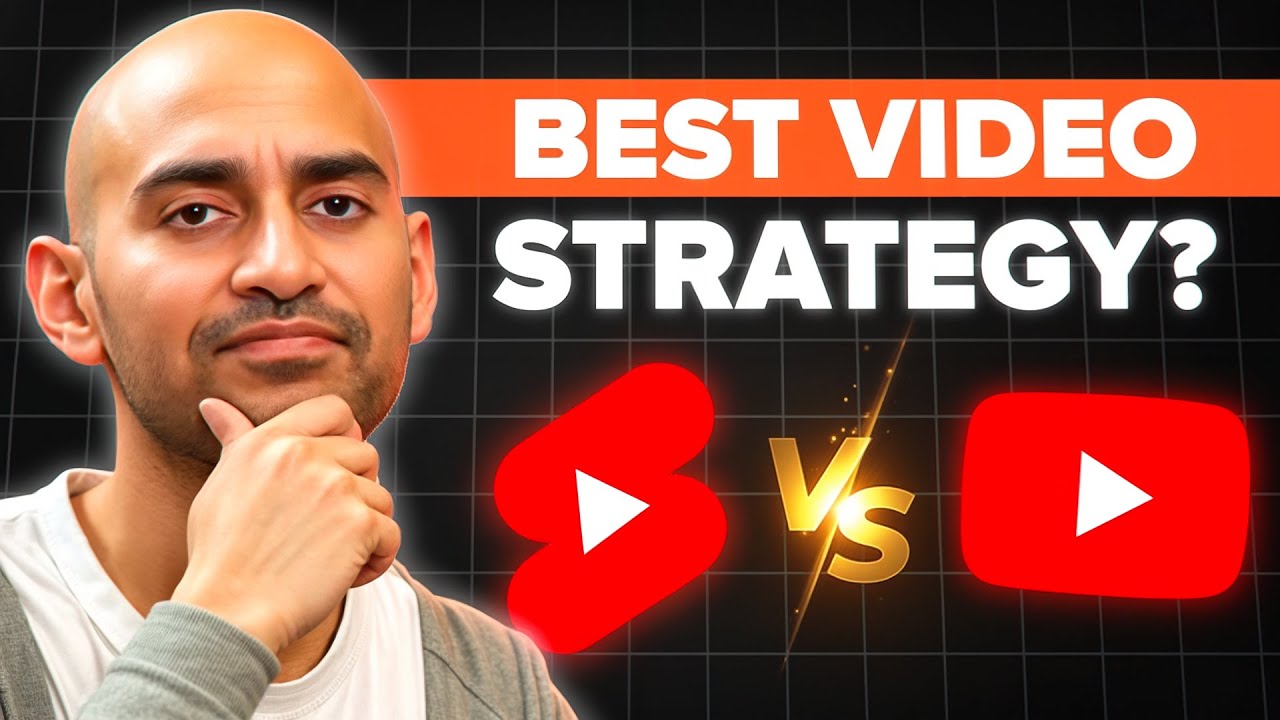
Eric Siu and Neil Patel compare short-form and long-form video strategies, weighing audience engagement, revenue, and conversions. They use MrBeast as an example and discuss how creators should choose based on their business goals, not just platform trends.
Chapters
Too many people spend time recording short-form videos. Eric and I are big believers in recording long-form video and chopping them up into short form. But what we found historically is short-form videos are great at bringing people in. Long-form videos are better at converting people into revenue. And you may not get the views from long-form that you will from short, but it just converts better. And if you don't believe us, MrBeast has posted quite a few times his, some of his revenue earnings from videos. Short form barely makes him any ad revenue versus long form makes him an arm and a leg. Why? Is because the viewer that's watching long form, even if they also consume short form, it's just they're more engaged with long form. They're much more likely to convert more. Hence advertisers are willing to spend money. Advertisers would've already been willing to spend an arm and a leg on short form videos if they could drive people from a short form to the website and get them to convert. It's because the conversion metrics aren't flowing through. The ad spend isn't as high compared to long form. Hence everyone is focusing, at least advertisers are focusing on long form because it just generates way more revenue.
I just believe that short form is cool and there's entertainment factor. For example, when Neil and I talk about discounts or we talk about Shake Shack or you talk about Laurel Piano, like it's entertaining, right? But that only goes so far. When you go long form, you go 5 minutes, 10 minutes, 15 minutes, 20 minutes. If someone watches a 1-hour talk, you're building a deeper relationship with them. And when you build a relationship, people remember you for that and you're actually teaching them something too. At least we are teaching them something. I remember one MrBeast Shorts, okay? They had a Lamborghini driving through like one tape, one piece of tape and then 1,000 pieces of tape, 100,000 and then eventually like they couldn't— the car couldn't run through it anymore, right? Now, that was interesting, that was entertaining but I tend to remember the MrBeast videos like when he did Beast Games, for example. That was an entire season. I think it was 13 episodes or so but I actually got to know his contestants a lot more. I got to understand how he goes about doing his shows, right? And then you got to see a lot of behind the scenes stuff. So I got to understand him a lot better as a content creator, as a business person, and also an entertainer as well. So when I start to think about, oh, how does MrBeast do things? I think about that stuff. I don't think about the Shorts. I feel like I know him and that the long form gives you an opportunity to build a one-to-many relationship. Whereas I think a short form, it's a gateway drug, so.
Yes. And we both create long form videos and Eric and I were discussing this the other day. Some of the consultants and people I use to help me out like with editing and stuff, they're like, oh yeah, you should just drive everyone to YouTube, only post your long-form videos there. Sure, I may put on YouTube first and keep it there for the first week or 2 weeks exclusively, but I'm going to put it everywhere where my audience is. Most people don't have MrBeast's revenue model or business model. Don't try to drive people from all the other platforms to YouTube. Instead, just show them the content wherever they are.
Yep. And MrBeast, his style, just so everyone knows this, and he knows this too, his ideas are to go widest TAM, right? So largest total addressable market. He wants to reach the widest audience. He wants to get the most eyeballs. That's not my business. That's not Neil's business at all. What we're ultimately trying to do here is we are trying to drive people to our business to ultimately convert. His model is, I'm going to try to drive the most amount of views to my YouTube channel. I want to be known for being a YouTuber. And that's what he is. We're not YouTubers here. And most of you watching this are not going to be purely YouTubers. You have to think about what's going to drive the most amount of revenue for you and then optimize for that type of funnel. Just because one person does it this way doesn't mean you need to do it that way. And by the way, just because we're saying we do it this way, it's what works for us. So you have to find out what works for you by testing over time.
Dude, I was at a conference yesterday in Arizona. When I was at this conference, someone stopped me as I was walking by and they said, hey, I got a question for you. When you're creating all this content, do people ever come up and say, hi, hey Neil, I see you on YouTube, or I see you on Instagram? Or I'm like, yeah, every once in a while. And then they ask me, what do you do to optimize for that so you can grow it? And it made me remember or think about a time where I have a friend who lives close by. He drives a Ferrari, an expensive one, like one of the most expensive Ferraris that you can buy. And wherever he goes, people tell him, hey, what's up? You know, like, good to see you. Can I take a picture? My buddy was asking me, don't you want that? And I'm like, I get a little bit, but not as much anywhere near as you or a Gary Vee or Tony Robbins or anything like that. He's like, don't you want that? He's like, if you create more content on broad stuff, you'll get so much more of that. And I'm not saying it's wrong or right, or I'm not saying that you should optimize or you shouldn't optimize for more people to recognize you. My model has always been create content for my ideal audience and focus on what drives revenue. Because at the end of the day, at least with me, I rather focus on what's making me money versus what's making me quote unquote famous. Some of the wealthiest people that I know, no joke, that are on the Forbes list have $10, $20+ billion, like literally, and you can look them up on Forbes if I mentioned their name. But if they walk down the street, you would not know who they are. And I'd rather have that than everyone recognizing me and not generating the revenue.
All right, so I wanted to take a moment to tell you about my podcast co-host Neil, agency called NP Digital, and they work with a whole host of global companies or global organizations. Also, Neil has SEO tools such as Ubersuggest and Answer the Public. All you have to do is go to npdigital.com to learn more, and we'll see you on the other side. Yeah, well, the other thing is, you know, part of the game is you've already played the game up to this point, and the leverage is already there, so you might as well continue. And, but I think if you were to go back in time, if you could find a way to make $20 billion and be anonymous, you would just do that. But, you know, it's just where— it's just the— it's just where you stand at the moment. All right. So that is it for today, guys. Please don't forget to rate, review, subscribe. There will be no more Agency Owners Association. We'll save that for another Marketing School episode. And that being said, you know, we'll have some other things to throw your way in the near future. So catch you later. Bye.









