The $100M Mindset That Alex Hormozi Stress-Tested
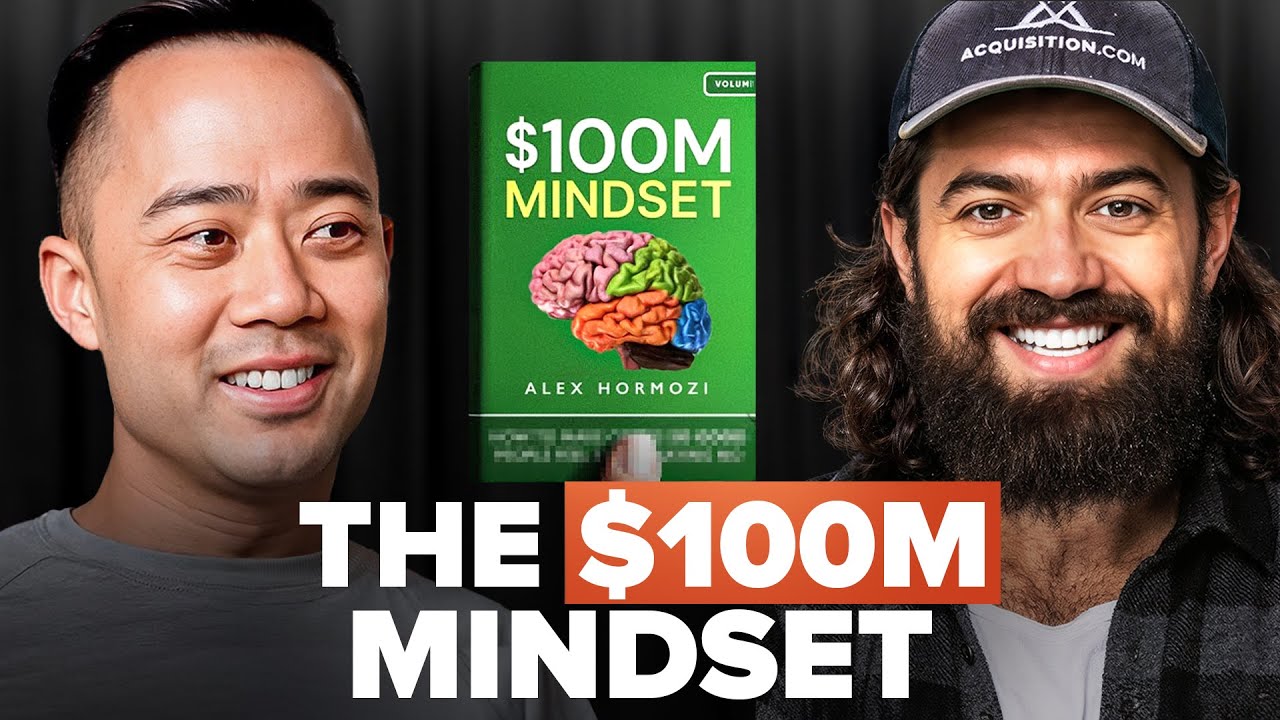
Alex Hormozi runs a holding company that acquires service businesses through a funnel of 3,000 monthly applications, screening down to deals with $1M+ EBITDA. His media team of 9-15 people produces content twice monthly that generates deal flow, and his book $100 Million Offers has sold 500,000 copies. He tweets spontaneously with no ghostwriter, using it as a personal tool to reinforce patience and confidence.
Chapters
Here's the deal. Neil and I have been traveling and we're slightly behind on the podcast right now. So we are going to share with you some of the greatest hits. You're going to like these and they're going to be very helpful to you. And I would encourage you to listen to them all the way through. And these are our top podcasts or some of our top interviews. So check them out. Dude, so what happened with the Crocs?
Yeah, so you introduced us to whatever, some guy at Crocs.
Dan. Yes, Dan. Yeah.
Um, and he, you know, then sent us all these cool designs for some acquisition.com Crocs, which would've been dope, and I would've totally repped him. Um, and it was like, yeah, we'll do some sort of collab thing. And, uh, right when we were ready to move forward, I was like, cool, send me whatever link I can promote, and let's do this. I didn't even really care about money splits or anything. I just thought it'd be dope if everybody had some.
Yeah.
Um, and then he was like, well, just... Tell us how many you want, and here's the bill. And I was like, huh? And it wasn't even that they were priced at normal Crocs. They were priced at twice what the normal— it was like $80 to us to have the Crocs. And I was like, there's some massive misunderstanding. I was like, so many people, if there was an acquisition.com Croc, would rep these, for sure. Yeah. I had tens of thousands of people who did the thing, like, I'd get this one or whatever. And so, um, because I was a prima donna, I was like, no, I'm not wearing Crocs again. Um, and so after that, I stopped wearing Crocs.
We're not done here. I'm gonna help sort this out. So, the story here is, um, so at my thing last year, at my event, you were in Crocs, and you were just like, dude, I'm ready to take it to the next level. I'm super motivated to promote. I was like, dude, I happen to know their VP of digital there. And, uh, no, we are going to rectify this. And I just wanna see it happen. It's not like he's gonna pay me or anything. Um, so that's a good place to start. And you know, it's interesting enough, Dan, he actually has a holding company. And what I wanted to bring up was this. I was at an investor conference a couple months ago called Capital Conference.
Cool.
And every year there's like rage. I think the year before it's like all about the hedge funds. This year it's about holdcos, right? Everyone's holdco.
Interesting.
As if it's really easy to start a holding company, right? And then it's like, no, there's a lot that goes into it. You— I mean, you have a portfolio of businesses, right? And maybe we can spend some time talking about how difficult it actually is to not only be creating content, which we'll talk about in a second, but running a holding company. It's not just, oh, I'm going to hire an operator and that's it, right? It's like much easier said than done.
Yeah. Well, to dial in on the holdco side, I mean, we have— it's tough if we try to pull apart media from the actual people, but I think we have like just just under 30 people who work at Holdco, which is like a lot of people for a holding company. But we're really hands-on in terms of how we like add value to companies. So I think there's, there's kind of 2 models, at least that I'm aware of, or at least that we considered. One is the completely decentralized model, the Berkshire Hathaway model. I know you know this stuff. I'm saying this for the audience, which is the whole, you know, delegation to the point of abdication, right? Like, just like, don't call me unless everything's burning and then still don't call me. And that's one model. But part of the reason that we have basically the complete opposite model is that the deal flow that we have usually wants our help to grow. So we're definitely growth partners more than we are, let's buy at a good price and hold it and just try and arbitrage the value that we can get from the business and then reallocate capital at the holding company. And so for us, we're looking at Is this company in our deal box? Do we really like the founders? Because a lot of times if you're buying a company, you kick the founders out and then you put in an operator that you trust, etc. So like we have a lot of which actually makes it harder for us to do deals because there's so many reasons that we won't do a deal. Like we don't like the founders, they don't have a big enough vision, we don't think the product's good enough long term, which means like we won't redo product market fit. That's one of our big— like that's why $3 million, if anyone's curious, like why $3 million in top line is kind of the minimum. And for us, it's $3 million-ish, but at least $1 million in EBITDA. Because unless you're there, like usually it's— you're still figuring stuff out. Like we want to have at least a basic product market fit.
Like you've done something.
Yeah, there's something that's here, right? And so we won't redo that. And then we want it to be in a couple areas. For us, it's usually consumer services or business services, which is either brick-and-mortar chains or national services like mortgage sales or something, right? And those are places where if we can see like an easy like 5x or something like that, that's usually what we will want to pick up. So if there's like a bunch of like— it's kind of funny, like the double-edged sword of you want a good business, but my head of biz dev said, he's like, we want you to be very specifically incompetent, as in like incompetent in all the ways that we are excellent.
Okay.
And so it's like if someone's like, oh yeah, our sales process is horrible, Or like, man, we can't get enough demand gen, but we have like a huge LTV and we're really sticky on the back end. Like, those are companies that we come in and just murder. Yeah. I mean, we just, we just bought a 32-location teeth whitening chain and I was so excited about this. And then we went to the facility and the experience was fine in terms of the product. But the sales process that I went through was like, I was like giddy. I was like, oh my God, there's so many things that we can do to improve this. And so we just rolled out our first level and we 5x'd LTV.
Wow.
In one rollout. And so this is 32 locations. And I was like, great. Like, we just created $50 million in enterprise value. Like, let's just roll this out over the next 12 months to all 32. And I was like, and that will be a W for the year.
Agency owners, if you want to grow faster, my partner Neil Patel and I, we are hosting live agency owner workshops in Beverly Hills. And you're going to learn how to get more clients. You're going to learn how to take yourself out of the day You're going to learn how to recruit the right people, and you're going to be hanging out with like-minded people such as yourself. So if you want to learn more, just go to marketingschool.io/agency. Again, it's marketingschool.io/agency, and we'll see you on the other side.
One of the hardest parts about what we have is that you have this desire to have activity, right? It's like we have all— because right now we get 3,000 companies a month that apply, so it's continued to grow. But we don't necessarily make more money by doing more deals. And so it's way more about finding— and like, the hard part is sticking with the plan and not getting like, Eyes bigger than your stomach. And so anyways, that's, that's been the biggest challenge for us is like just being very selective about the deals that we know are the best deals for us, not necessarily just good deals.
And you talk about the deal box, which is Warren Buffett's, like you wait to swing, right? So what do you think it is for your deal box? You kind of mentioned a couple of things.
Yeah. So right now, and I think that over time we'll probably expand it as we bring in other like, like ex-operators. So somebody, you know, if someone's scaled and exited a business for like $100 million plus, in like software or something, then I'd be like, well, dude, just come into my deal flow and we'll make a deal that makes sense for both of us. You don't have to spend 3 years building out this massive deal machine. I'll just partner with you on it and then we'll kick off a different pod. But for right now, our stuff has been focused on services just because like that's the world we just know really well.
Got it. And that kind of starts to go into content a little bit because you've been very prolific in the last 2 years with leveling up your content. Did that teeth whitening company, did that come through your content or where did it come from?
Content.
So walk me through how that works, because actually I was having lunch and my friend has a pet holding company. He's like, I want to ask, like, how? Because he does produce content. He's like, how much does that content actually help with deal flow? So what happened with that story?
All of our deal flow comes from content. So yes, it does help. Yeah. I mean, it's like someone will watch a number of pieces, they'll listen to a bunch of podcasts, they'll buy the book, they'll read the book, they go through the course and, you know, they'll have spent 100 hours with me. virtually before they decide to take the first action, which I like because then a lot of times they'll fix a lot of the low-hanging fruit, which is kind of nice because then you don't have to like have a thing that has all these issues. And so they'll apply. Our, you know, head of business— well, there's multiple screenings. We have an automated screening that weeds out like probably like 90% just because they're not big enough or they're in a space or they're international, etc. And then once that, we have somebody who immediately reaches out to just qualify that this data is accurate, which again, that's like another wave. And then from the qualifying stage, we have somebody who then does a way more in-depth business case and basically writes up a full like one-page write-up per business. And then the ones that that person thinks are big enough and in our deal box then get passed on to our managing director of managing, managing director of business development. And so then he takes the deal from that point until close, which is usually like several more conversations, which he usually weeds out most of them and then We'll try and do— we target— not that— we usually do about 2 LOIs a month is what that results in for us.
I think just for those people listening, it's hard. Once you're in it, like, you understand how hard it is, right? But when you look at your team, it actually is a team of badasses. It's like a SWAT team, right?
Yeah.
And so you have people that have actually been there, done that. You've talked about your CFO before. You said it's 30 people.
Yeah.
Who else are kind of the key players on that HoldCo team? Because I don't want people to think this is easy.
Oh, yeah. Everything's easy if you don't do a good job. So it's like, so for us, we look at it by function. So it's like we have somebody who's an IT— we call them SMEs, so subject matter experts. So subject matter expert for IT, for finance, for HR and recruiting, for— we have 2 different marketing SMEs, one that's more on like the tech side, like martech and like media buying and like funnel optimization stuff, CRO. And then the other one is more like truly like the art side of like the words, the copy, like video sales letters, ads, that kind of side. And then we have a director of sales and we have a director of customer success. And so each of those people has years of experience building and scaling multiple teams to bigger than most of the companies that are coming to us and now have experience doing their function and scaling it within each of our portfolio companies. And we've just— it's just a very long process of step by step codifying every play in the playbook. And I think that it's kind of like the Bruce Lee of like, in the beginning, everything's simple, and then you have like a zillion, you know, punches and kicks, and then it comes back to just like, don't get hit.
Yeah.
And I think that right now we're getting better and better at like, okay, we crushed this playbook really well. We crushed this playbook really well. And so right now we've got like a 3-playbook that it's like we can 10x like services companies. And so I'm just trying to see like, okay, there's 20 other things that we do really well, but like, what are those like easy, just massive levers that we can crank on? And then I think that's where I want to just like— I might even say let's get even more efficient at just pulling these 4 levers, immediately 10x-ing the business and then saying like, okay, so do we want to exit or do we want to like double down again or do a dividend recap or something like that and then reinvest for another 10?
I think when we were hanging out like a year ago, it was service plus other businesses. And I think now you guys are honing it even more. And that's what business is, right? You just hone in more and more and more.
You get— because then you get even more efficiencies at holdco and then you can get more. And then it's even easier at the holding company to deliver value or really not deliver value, create value within the portfolio companies because they're doing the same. Like if you're switching from shit, like let's say an e-commerce, like the pet thing, right? So like let's say I had one of his companies, which would not be in my deal box, and I'm— we're optimizing a Shopify page for chewing toys for dogs, and then like the next call is about the brick-and-mortar teeth whitening chain. It's like it's such a jarring switch of like perspectives that you don't get a lot of like accretive, you know, benefit between both of those calls. Whereas if you have brick-and-mortar teeth whitening and the next call is brick-and-mortar photography, and then the next call is brick-and-mortar gym chain, and all of them are selling sessions and appointments, it's like, okay, like Run this play.
Yeah, you so you had a talk recently, and and I want to go into this a little more because back in the day, at least for me, it was like I had this senior living business. There's this education thing. There's this SaaS thing. There's this. There's this. There's this, right? And for you, you had like nine different businesses or whatever, right? I mean, just how bad was it when that was when that was actually happening? Because I don't think people really understand how important focus is until they get punched in the gut. But it's like, how do you prevent that?
So I think the the big difference is because people are like, Alex, you talk about focus now, but you have thirteen. portfolio companies, but like I have one holding company. And if you were to reframe it as like, I own a marketing agency and I have 13 clients, it feels that way except I own them, you know what I mean? But there's a full CEO and leadership team that run each of the companies and we have our leadership team that runs that. And so like I own the holding company and that's my work, you know what I mean? But where I've made the huge mistake when I was earlier on is like I have one company that makes money. I'll start another. And so then you end up becoming CEO of 3 companies and it's a nightmare. And so that's the part, like, it's weird because I feel like I only— I mean, I don't want to speak this over myself, but like, I was only really able to understand how to do multiple things once I sold Gym Launch, because then I think it was the first time I was really above the business. And then at that point I was like, okay, so the, the above the business is the one thing The portfolio is the one thing. And then that's when you're like, your value prop as a, as a holdco, it is a bit like the holding company is a business in and of itself. And I think that's the big epiphany that I had is like, it is a business. And then you get really specific, you niche down just like you do in any other business on what specific type of customers, even though they're not customers, you serve.
And you talk about working. So there's above the business, in the business. Yeah. You know, on the business, right? What's What's the difference with above? Just for the audience. Yeah.
So in the business is like I'm taking sales calls. I think on the business is like I'm in leadership positions, I'm managing, I'm leading, I'm casting the vision, I'm inspiring the team. And then above the business is the business is you look at many businesses and they are all almost like product lines or clients, as I was saying earlier, that you don't sit anywhere on the org chart. for these businesses. And that's probably the easiest litmus test is like, do you have a direct report from the company? And I have zero.
Yeah.
From any of the companies.
Yeah. It's funny. So Neil sometimes will call me in the middle of the day and he'll be like, what are you doing? I'm like, I'm working on stuff. He's like, I'm bored. Yeah, it's like, right. But it's not like that. But he works really hard. But I think the other good Comparison here is the difference between like a parallel entrepreneur and a serial entrepreneur, because a serial entrepreneur actually waits to the next level. Yeah. A parallel starts multiple things.
Yeah.
But then to your point, how are you supposed to compete?
Yeah. I mean, the focus— the one person who's going all in on one thing is always, in my opinion, going to make the most money. And if you look at the wealthiest 50 people in the world, they all went all in on one thing.
Yeah.
And, you know, and there's a couple private equity investors who are at that top now. But I would make the argument that they were— they got into the business of private equity and that was their one thing. Even though they bought and sold companies, it functioned the same way as having a marketing agency, except the unit size was bigger with more zeros.
Yeah. Do you think when you had the 9 different companies— was it 9?
Yeah. Okay.
When you had the 9, A, it felt frantic, right? But did you feel like you were really close to losing it all?
Every day. Yeah, it was horrible. It was like it was so stressful because, I mean, I had, I had 9 companies worth of employees. I didn't— I just didn't understand how to operate. I didn't understand how leadership worked. I didn't understand management. I didn't have one-on-ones. I didn't have a communication cadence. And I was the rainmaker for all the businesses. Like, it made— it was so ridiculous when I think about it now. Like, it's so obviously stupid, but you just don't know when you're ignorant.
Before we move on from here, what do you say to all the people now that want to start a whole— they're just like, I'm going to go buy businesses because that's what cool people do.
Yeah.
And I'm going to go hire an operator. You have any words for those people?
Well, right now buying businesses is like in vogue. I don't really know why it got in vogue, but my best guess is that we have so many people retiring right now that there's just a huge supply spike. And then a lot of people who'd never made their money buying businesses selling courses on how to buy businesses. Um, because the thing is, is, and this is kind of for the audience, is like if you, if you make your money buying businesses and you're really good at it, You don't need to sell a course. Like the best people at buying businesses buy businesses and hold them and invest. Like I think Naval said, like the best investors don't sell courses on investing.
Yeah.
You know what I mean? Because like if you're really good at it, you don't need to.
Yeah.
And I just, I like, I kind of stick by that. And so it is kind of shitty and there's a lot of marketing dollars that are going behind that and a lot of content being made because it's like sexy. And the idea of buying a business for no money down that makes $500,000 a year, which is absolutely possible, you totally can do that. But the thing that they miss is that I'm going to say this. I'm going to try and make sure I say this the right way. I can buy a business for $0 down that makes $500,000 or $1 million a year and know how to run it. If you've never run a business and even if you do somehow magically pull off that deal, you're still screwed because you have no idea how to run a business. And so it's like you still lack the skills even though you can close the sale. Like I could sell, I could sell that I could build a skyscraper. And if I somehow managed to BS my way through the negotiations and close the contract, I still have to build a skyscraper. And if you've never built a building before or even a house, very tough. And the likelihood that you then lose your ass on— because like you're not— you'll get the business that does $1 million in profit per year for $0 down, but not for $0. And that's the piece that I think a lot of people miss. Like, it's not free. Like you have a liability or you have a debt if you do some sort of seller financing, creative financing, whatever. It's like, but now you owe this person.
Yeah. And that's the marketing piece, right? I think we get the It's the headlines at the end of the day. Art, do we have any water? Thanks. So I want to talk about the content piece. So I was hanging out, I was speaking at a real estate mastermind a couple of weeks ago. And there's this one guy based in Arizona. He owns like about $1.5 billion in real estate. And he was crushing—
Oh, I'm good. I got it.
Oh, you're good? OK. Thanks, Art. So basically, this guy owns $1.5 billion in real estate in Arizona. And then in the middle of the pandemic, he's like, I'm just going to do YouTube for fun, right? Because he couldn't go anywhere. So he grew to like 400K or so. Oh, sick. And then, but his content is like top notch, right? It's like he understands it. Yeah. It's like this guy's deep. You can tell, right? Tax advantages, whatever. And but then is it Ken McElroy?
Okay.
Yeah. So you should definitely talk to him. Super smart. And but then you look at other people who are getting millions and millions of views a month on YouTube and they're talking about all these different businesses, but then they know the YouTube game, but they don't have depth when it comes to business. Right. So I see it as a tradeoff at the end of the day. But you're actually playing, you're actually able to play both, right? And so they were talking to me, they're just like, okay, what's the point of even creating content? I'll just go buy more business. Actually, this was last week. One of my friends went to me like, Eric, I don't need to create content. I'll just go buy their businesses. And then I posted that to Twitter, X, the next day. And Layla was like, so Layla was like, oh no, but you create leverage. This is where we get our deal flow from. And you said all your deal flow comes from that, right?
So I guess we have the same as, you know, we have a network and things like that come through. But yeah, I don't— I can't— I don't think we've done a deal that's not come through our deal flow.
And of the 3,000 that come through each month, what percent actually make it?
Oh, tiny. Right. We do 2 LOIs a month. And that's not to dissuade people. It's mostly because we just have a lot of people who don't have qualified businesses. Just to be clear, like, if you have a qualified business, hit me up. But we just have a tremendous amount that are doing less than $1 million in profit and they're like, I'll give you 5%, Alex. Oh man, so tempting.
So, okay, if, for example, the— I mean, let's just use a fake example. Someone has a bunch of locations, they're doing $1 million in EBITDA. Um, well, let me just rewind for a second.
Minimum is $1 million, just to be clear. So like, ideally for me, like, I love that like $3-ish, $4-ish, you know what I mean? Like, that's where like you're right about to hit that so we can just like Boom, 20. And then it's like—
And you're aligning with them. It's like, hey, if we want to hold forever, you're like, hey, like, if I like you, maybe. Yeah, right.
Yeah, I'm good on either way because like, we don't, we don't need the liquidity. Yeah, I'm happy to let it compound tax-free. So like, I'm good either side.
And I'll just rephrase over here because I think when we hung out a year ago, it's— you talked about how you were maybe moving more towards instead of minority investments into majority. How are you thinking about it now?
Yeah, we're 100% in that, in that camp. Our Um, and it's, you know, it's almost like, uh, it's almost like finding your price when you're selling a service.
Mmhmm.
Except in the deal world, and this is one thing that, like, if you really wanna get into this world, like, it is such a long game. Because if you think about product-market fit, you have the same concept that happens at a holding company when you're investing. You have deal fit. And so it's like, what's my offer? But not to a customer, but to a— to an entrepreneur, to a founder, to somebody trying to grow their business. And so it takes way longer to, to have enough qualified candidates to even make the offer. And then it takes 90 days to even see if you can close the offer. And then from closing the offer, it takes another year or 2 to see if it was actually like worked out. So like your feedback cycles are so long that it's, it's very painful as somebody who is an ex on whatever you want to call me, who's used to being able to like, hey, let's try this out. And in 30 days have it both spun up, tested, and have data like in 30 days, we might be able to like talk to a couple entrepreneurs that we think are interesting. And so anywho, we have moved towards bigger and bigger chunks of companies. Right now we target 49% with most of the deals. We just, we just did a majority deal 2 months ago. And so we're now doing both minority and majority, and our minority slugs are bigger because it's the same thing where it's like It's the same work for us at 20% as it is at 51%. And in some cases, weirdly enough, it's almost less work at majority because I have fewer emotions to manage on the founder side because it's like, listen, I'm the one who's taking all the risk on now. And so this is what we're going to do rather than saying, hey man, I think this is what we should do. What do you think? And so I have way— my speed of implementation on majority companies is so much faster.
Yeah.
And like what I would like to do in the next— and this is why it takes years to do this, but like over the next 2 or 3 years, I'd love to show the difference between our minority holdings and our majority holdings of how much more profitable and how much faster we grew them.
Yeah.
To then make an even more compelling case of like, I don't necessarily want to fully exit founders. That's not my intention. It's more like we have done this before. Like, please, like, let me love you. Like, let me, let me just do what we already know how to do many times.
Yeah.
And that, like, I remember I had a conversation with one of our founders This is one of the companies we actually ended up buying majority of. We had like 6 phone calls to talk about a price change that I wanted to implement. And we implemented the price change and we doubled profit. And it was a big company already. We doubled profit in 30 days.
Yeah.
And like, we increased the price and increased close rates. Like, we call that a wonderful, wonderful thing because they were mispriced. Like, we did a bunch of research. We saw the competitors in the marketplace where we were like, we're not even going high. I was like, we're just going up to market.
Yeah.
Which is— I mean, I love those opportunities. They're not always there, but like, but if it had been a majority holding, it would have just been an email and be like, this is what it needs to change to. Let the team know. Here's the bullet points to talk to the sales director. And he would just let them go. Yeah.
Do you think before— so when you had the 20% or so, like, I think we were talking about this already. It's like they weren't— not that they weren't taking you seriously. I mean, maybe you just didn't have—
You know, it was more of a consultative relationship. And to be fair, like, it's not like we wield authority. Like, I've— I'm not really an authoritative person from that perspective. Like, it's always soft influence. We've never taken a vote in any company ever. Like, what? Because it's funny, because during the deal process, they're like, well, how many? Who gets— I'm like, dude, we will literally never look at this contract again. Like, I pride myself on the fact we've never taken a contract out after a deal. But it still feels a little different. Like, no matter what anyone says, like, if you, if you buy majority, It just feels different. It's like, here's the plan. Let me know if you have questions about it, or what do you think? And I want feedback more than— I want feedback. I don't wanna sell someone on it. You know what I mean? And I think that's the—
You're looking to collaborate.
Yeah, exactly.
Yeah. And so now we rewind back to the content again. So, how... How do you think your content strategy has changed in the last 12 months? Because I can— from afar, I can see some of the adjustments. Caleb's not here today, right?
Yeah, I know. The team's bigger now. I mean, um, how big is the media team now?
I'd say like 9, maybe.
9 people? Yeah, it's 9, and then we have some vendors. So probably, if you included their teams, probably like 15 or 16, somewhere in there.
OK.
Um, I mean, I think the big thing is just like we try and focus on content that only we can make. That's the big single throughput line. If someone else can make this piece of content, I don't wanna make it. And so that's why we try and, you know, we call them, you know, one of zero stories, which is like something no one else can do. And so like no one can talk about like how they bought a teeth whitening chain and then like implemented a new sales process and then 5x'd it. No one can say that because that's such like no one did that.
I did that.
And so someone might be like, here's how Coca-Cola— here's a breakdown of Coca-Cola's business model. But like, I'm not going to do that because someone else can do that. But this is the stuff that I can do. So it's more— it's going to be more capturing out what we're literally doing, because I think the more people saw what we actually do in companies, one, it would get even better deal flow for us. But also it's more unique than I think what most people do. So that's kind of like us trying to play more to our strengths, which is like our day-to-day is our strength and we almost diverted from our strength to create content to just like learn this game. But as our infrastructure gets bigger and better, we're leaning more and more. So we, we, we just bought a big headquarters here in Vegas.
Hmm.
And so we're going to be centralizing the whole media team. That'll be our big media headquarters.
And so Got the gym in there, too, right?
Yep. We have a whole floor.
Nice.
Um, and so there's gonna be a ton of new content we're gonna be pushing out. 'Cause it's funny, 'cause right now people would probably be like— it's so crazy to even say this, but they're like, you've made it. You're at the pinnacle of content. I'm like, dude, we literally haven't even started. The amount of stuff that we're planning on doing for, like, 2024 is bananas.
I can't wait.
Oh, it's gonna be— it's gonna be like— we will be pushing out a lot of content, and it will be—
really good.
Yeah. Because you said one thing earlier, but I love this statement, but it's like the second throughput would be like too good to fail because that buddy of yours, Ken, it's like you don't have to know the algorithm, in my opinion. Like if, if it— if the piece is good enough, you don't have to nail the thumb. You don't have to nail the headline. If people start watching it and they're like, this is so good, they will share it, they will keep watching it, and they will come back and watch the next time. Because what happens is like if you think about the human behavior side of it, if you just watch, if you overdeliver like crazy on one video, The next time you post a video, that person will click it and they don't even look at the thumb. They don't look at the headline. They're just like, oh, Alex or Eric made another video. Yeah, it must be good because all the other videos are good. And I think it's more important to have more good stuff— sorry, fewer good pieces than more mediocre pieces.
Dude, so here's where I'm coming from. Looking at Ken's during the pandemic, he had videos that would get a couple hundred thousand, and that's when you know you're doing pretty well with each video. Neil, same deal. He had a couple hundred thousand, some videos would get a million views or so. And then same deal for me, a couple hundred. This is like 4 or 5 years ago. And my thesis here is that you have to be in the good graces of YouTube and you have to be consistent. You cannot stop, right? And because those guys— Neil stopped, Ken stopped, I stopped— we're in this box right now where I look at Neil's YouTube, I'm like, dude, your videos are the same shit from the last couple years ago, but you're only getting like 5, 10K views, right? So there's— I think there's like this This penalty box, almost.
I think it's, um— so, in my opinion, all social media has switched to the TikTokification of social media. Um, I— you know, I actually think it's good, because what it does is it— like, subscribers mean nothing. Followers on Instagram mean nothing. They're literally just a vanity metric now. And so the only thing that matters is click-retain-reward. That's it. Like that. Like, and it doesn't matter what the platform is, they're all the same. It's like, did you get them to click? Did you get them to watch? And did you get them to come back?
Yeah.
That's it. And so the algorithm, like, it also, by doing that though, it makes it— there's never been a better time to start because in the earlier days when it was subscriber-based, it was basically an email list. Like, you build a subscriber base and then they push out your stuff to subscribers, but they don't do that anymore at all. And now it's just like They do lookalike audiences based on what they predict someone will like your thing or not. And so you could be a brand new account and have your first video do 10 million on the first upload ever, which I think in some ways is like a great equalizer and it makes the content king.
Yeah. And so actually going to the Shorts for a second, you're a team of 16 people.
Yeah.
What percent of your work with you and your team goes, you think, into Shorts versus the long-form stuff?
I mean, Shorts for me is like almost no work. Um, that's all the team.
OK.
That's all them.
So they're cutting up your long-form stuff.
Yeah. That's almost the majority of it. We did direct-to-camera stuff early to kinda kickstart things, but I can't remember the last direct-to-camera shoot we did.
Um, 'cause direct-to-camera versus— it's a very— it's a different setup.
Different experience.
So, like, no more direct-to-camera?
Not that I'm against it. It's just that they've got enough other stuff, and I prefer the other stuff, 'cause I think it's more organic. But the direct-to-camera stuff, my— the usability per minute of footage is highest. Whereas if like we do a vlog day, they're going to get 3 or 4 Shorts from a full day, but they got to go through like 8 hours of content. Whereas if I do like 2 hours of direct-to-camera, we have like 100 Shorts.
Yeah, it's a lot.
Yeah.
Yeah. And so what about from this? This you pull like what, like 20, 15 Shorts?
You would know. Yeah, it all depends.
Like, say like 10, 10, 20 shorts.
Okay, got it.
So you go for 2 hours or something like that? Okay, got it. Um, and your spend a year ago was like, I think like $120 grand a month. Like, what do you think that looks like now?
It's probably double.
Okay, so $240.
Yeah.
And are you getting paid on, on AdSense, any of this?
Yeah, yeah, yeah.
Okay.
I mean, not enough to make it back.
It doesn't equal it out.
Okay, doesn't equal it out, but it's okay.
The deal flow is good.
Yeah, yeah. No, yeah, like Media is just like a loss leader if you want to consider it from that perspective. We lose money on media, which is funny because people are like, he makes money on his $2 book, which, by the way, Amazon takes— you get paid like $0.30 on a book that's $2. But anyways, that just goes to fund the money-losing media team. And I say that with absolute love, you know what I mean? But that's— I mean, all marketing loses money until it makes you money.
Like, you know, it's long game. And rewinding back to the deal stuff for a second. So of the 24 LOIs that you do, that comes from content, by the way, so it does make money. How many of those actually go through?
About half.
Okay. So 12 go through. Okay. Pretty high conversion rate, but it's also good qualification.
Yeah, but I think we've just continued to get narrower and narrower and I like— I wouldn't be surprised. Well, our deal flow keeps going up. So if we might actually have the same number of deals done on 5 times the amount of deal flow. Yeah, because we're just getting better and better at picking.
Yeah. Well, one more thing before we go back to content. What is the craziest thing someone has offered you? Because here's the thing, right? Like, I do believe there is the brand equity that you have gets you good deal terms. Like agencies that come to me, oh yeah, we do $4 or $5 million a year, we'll give you 20%. It's like, what? Like, right? So like, what is the craziest thing someone's offered you? Like their newborn? Like anything like that?
Like, well, I mean, you have honestly the people who, who, who make the craziest offers usually don't have anything of value to offer. You know what I mean? But I would say almost all the deals that we do have favorable terms. You know what I mean? In terms of both price and just terms in general. We try to keep our contracts as simple as humanly possible. I've put this big emphasis on the legal team to make it plain English contracts. And my lawyer had a heart attack when I was like, I want a 5th grader to be able to read this contract. Because the biggest issue that happens in the deal process for anyone who's ever done a deal is that their lawyer starts talking to your lawyer, and then they just keep having these conversations and translating back and forth. And then you have all these miscommunications and then—
The bills keep going up.
Yeah. And the only person who wins there is the lawyer. And so we've taken a little bit of a different approach of like, let's keep our conversation as primary and then we together tell the attorneys what we want them to do. And that way, like any negotiating happens between us and that way, because like I remember there was a deal we were working on and they're, you know, attorney who wasn't even an M&A attorney. By the way, if you are going to sell your company or have somebody invest, like, have an M&A attorney. Anyways, it's like, no, he's a family friend. I'm like, doesn't mean he knows anything. So he was like, we need this non-compete to be, you know, 24 months and a 50-mile radius around the brick-and-mortar locations.
They asked for this? Yeah.
And I was like— so the lawyers are talking for like 2 weeks about this. And I finally— I call the founder up and I was like, are you planning on starting another chain? I was like, you still own majority of this business. Do you plan on competing with your own business? He was like, no. And I was like, cool. Then as long as you own majority of the business, you don't compete with your business. And he was like, yeah, that's fine. It's like, great. Glad we had this talk.
You know what I mean?
But like, that was probably like $10,000 in lawyer fees that went back and forth that was settled by 2 entrepreneurs in 2 minutes.
Yep.
Just obvious stuff. You know what I mean? But like, that kind of thing is the stuff that like hangnails, you know what I mean? Like on deals. Yeah.
Dude, that's good. See, that's a good short over there. So, Now we rewind back to content. Sorry for jumping all over the place.
Yeah.
Um, the— so when you're thinking about the ideation piece, right? So is that like— are you separating that into another day? Is that like on the same day? And then how are you thinking about like the hooks, the stories, all that type of stuff?
Um, the team brings everything.
OK.
So the team brings everything from like— 'cause they'll watch this podcast, and then they'll be like, dude, that story was interesting. Can we do a thing on that? 'Cause basically the team is— inherently curious people who like my content. And so, like, to use some Gary terms, like, they fuck with my content. And so the stuff that they want to know more about, we go into more depth on.
Yeah.
And so I haven't been asked to come up with topics in a really long time, but I'll tell you how I would come up with topics, because this is how I was doing it when it was just me starting out, is that I just like to use time as my, as my, like, anchor for this. So I go far past, which is like, what are the, what are the life-changing experiences or conversations that I've had that have shaped the way my worldview? And so those are stories that I will tell because I think they're impactful and people get value from them. Then I have recent past, which is like, let me look at my calendar over the last week and just look at all the meetings I had. And I just like, I would have my phone up and be like, okay, so I was talking to one of our portfolio companies who's trying to make a change on pricing. And so this is what we were considering, you know what I mean?
Yeah.
I'm just, I just literally go through what my life was. I have present, which is whenever something comes up in the moment, I always have a way to like brain dump it. And so for me, Twitter or X is kind of my brain dump whenever I—
Threads.
Yeah. Well, they repost stuff. Got it. But Twitter is my, is my home, home base for that.
Yeah.
And so they'll also come with the tweets that they thought were like interesting to make more content about. And then you've got like manufactured, which is stuff that doesn't exist at all.
What's an example?
Like, I lived on $100 for 30 days. Like, here's what happened, as an example. Yeah. That wouldn't be one that I would make, 'cause somebody else could make that.
Yeah.
But stuff like that. Um, and then, uh, and then, like, case studies and vlogs. So those are kinda like the buckets that we think through. But most of it, you'll notice, is just, like, real stuff, so we don't have to come up with... Like, what would people find interesting? Like, well, this is what I did. And if they find it interesting, awesome.
And what's like the micro there? Is it like one day at a time? They just dump a bunch of topics on you?
Well, when we do recording, because we record like twice a month. Okay.
And this is what— how much in a day?
It's a full day. Okay. So it's, it's 2 full days a month is when we do the recording. Once we get the headquarters, it'll probably be smaller chunks more frequently. But for right now, it's just like one 8-hour day twice a month.
Got it.
But they'll have like full, like, 6-page preproductions for every video.
Nice.
Of like, these are the themes, these are the 4 or 5 stories that we think are— that we've pulled from your other pieces that we think would tie well together around this topic. I talked to the team to get stats on some of these companies for this case study. So like, the media team now will talk to our subject matter experts at Holdco to get like, hey, what was new this week? Did you guys do any implementations or whatever? And then they'll take that and then repackage it, and then that'll become content.
Dude, I mean, this is a sidebar here, but like, I know even with Caleb and my just sense in general, like, you like to be friends with your staff, right? And which I think is good. And that's how they really understand what you want and how you think as a person. How do you indoctrinate them into your way of thinking? Like, a chief of staff would just be sitting and watching you and shadowing you for a couple months, right?
Yeah, I think it's osmosis.
Okay.
I think it's just proximity and exposure. And that's why, that's why I'm so excited for the headquarters. It's funny because as a, as a Previously remote before it was cool. You know, that's how we scaled Gym Launch. Everything we had was remote. And this will be since my brick-and-mortar chain. This will be the first in-person stuff I've done. But it's weird because I feel incredibly confident at how much of a game changer I think it's going to be.
Dude, I mean, here's where I'm at, right? And maybe my staff might crucify me for saying this if they find it, but I, I'm an introvert and I do— I've been working remote at tech companies for the longest time. And like we were doing hybrid even before the pandemic hit, like a couple of years, 3, 2. But I'm just like, dude, you cannot replace like this, right? Like, this is a relationship and it goes much further. And I just think commercial— I think commercial real estate is going to come back in the next 5, 10 years. So it just seems to be moving that way because how are you supposed to— if there's this, how can you compete?
Yeah, right. I think, you know, one of the— this is kind of interesting is like if I— if we had like an SOP on how to handle difficult conversations, right, or bad news, Whatever. If I teach an SOP around that, people will be like, okay, got it. These are the steps. But it's incredibly different to see me get bad news and then watch what happens. Like, it's a completely different experience. And I think that is something that becomes memorable and that's what can change someone's behavior way faster.
Yeah. I mean, dude, like that in itself is a story and people remember stories. And so when it comes to your videos, because you're pretty good at just Your memory, I think, is really good. I just forget stuff, right? But it's like you seem to weave into stories pretty well. Like, how much is it just second nature to you now? How much are you thinking about your stories when you're creating content?
Yeah. So the storytelling component was something that I really worked hard on and I have continued to work hard on for almost probably 6 years. So when I started Gym Launch and I had to start teaching, basically when I had to start teaching, I realized that teaching was making connections between things that people understand and things that they don't. And so that's why metaphors and analogies are so strong, because they're like, okay, so energy. So you're kind of like a car, and if you put your gas in, it's kind of like your body and the food, you know what I mean? So it's like, I understand this, but I don't understand this, but I can apply the same principles. And so when I realized that I used to just kind of like lecture people on like jargon, right, their eyes would roll over and I just didn't get the desired result. So I had to start learning. Yeah. Like, so then I started reading books on how to tell stories. And the TL;DR on like how to tell a story is just you have a character, you have an unmet desire, you have an obstacle, you have a guide who comes in with some sort of solution. The person tries the new way. Yeah, it works. And then there's an internal achievement and an external achievement, meaning like who did they become in the process and what happened on the outside? And so like I just pretty much just try and think through that process of like desire, unmet desire, obstacle, Guide, plan, execution, result.
The fact that you can just roll that off your tongue means like it is burned into you, right? Because I mean, I just— oh, it's like sounds like the Harmon Circle. Oh, is it? Yeah. Yeah.
Like the stories are the same. Yeah. You know what I mean? Yeah.
It's— I mean, it's for me, I just riff on it. This— I was kind of making fun of Neil and myself when I look at both of our YouTube channels. I was like, you know, we suck at YouTube because we just lecture people, right? It's like But then we do like a— we do like a live recording and then I'm just sharing a story about MrBeast. 2 million views on TikTok, right? Or anyway, point is, so the story is huge. Do you think about your hooks a lot?
Yeah, the hook's everything.
And let me just rewind the stories real quick. Which books did you read to get better at storytelling?
Honestly, I think reading fiction and then I'm a big articles guy. Like, I don't— I don't actually People would be amazed at how few books I read. I'm like really narrow. I'll like binge consume a field of study. And so I might read like 9 books on— so like when we, when we started doing deals@acquisition.com, I read 9 books in 1 month on dealmaking and I was like, okay, I feel like I have a better understanding of just the leverage, the tools that I have available in my tool belt that I didn't know existed.
Mm-hmm.
But then I haven't read one since.
Yeah.
And then same thing with like, you know, storytelling in general was more reading all the different articles and stuff that were out there about storytelling so that I could understand. There's a million different like story, you know, unmet desire, character, you know, whatever. But they all more or less follow that same trajectory. And so to answer the first thing you said, like, how much do we work on the hook? A lot. And if that sounds like it's in contrast to what I was saying earlier, It's not because if you have something that's amazing, it'll get shared no matter what. But if you have something that's mediocre, if you have an amazing hook, it'll also get shared. And so if you can create an unbelievable hook, you can still have content that just murders.
Yeah.
And I'll tell you a story that isn't mine and how it related to one. So a buddy of mine was a big infomercial guy. He's a little older and he did this book. He had a book that he was selling and so he had Larry King fly out and record like a 1-hour book infomercial promo. And so it was like a big deal for him, you know, getting interviewed by Larry King. And so he had Larry King be like, and you're live with Larry, like the same intro he does for all the shows. And this guy is a very good marketer. And so he ran the ad and he was like, this thing's going to murder. I'm gonna make so much money. And it tanked. And he was like, what is going on? And so then he, he was like, so he started studying game footage. He looked at his all-time best ads. He was like, All right, I'm watching this one. He watched this one and he was like, I messed up the hook. He's like, the hook's wrong. And so he flew Larry King back out, reset up the entire fake setup of Larry King Live, and rerecorded the first 30 seconds and then pushed out the new one with the new hook. $100 million in the next 12 months.
That's crazy.
And so we had like— my story is not nearly as significant as that, but we had a video recently that was like, we all were like, this is a good video. And it got like 5,000 views or something, which is pretty small for our account. And so the guys just cut out the first 3 seconds and then it was, it was basically saying like, so I had this time when— and then they just cut that out and just went to the when the thing happened. Yeah. And it went from 5,000 to 900,000.
Is it because in analytics you just saw a big tank like drop off?
Like, like they hear the first 3 words or 5 words or phrase and they're like, not interested.
Yeah.
And so you have 5 seconds, but it's more like 2.
Yeah. Or like 2 milliseconds in a Shorts. Yeah, tiny.
But it makes all the difference in the world.
So going back to your team then, like, is most of your content team based here?
I'm going to give a really good— go for it. Sexy tactic. Yes. So this is something that I haven't even shared with you guys, but I just had this realization. So, so I had a tweet that just crushed this morning and I was thinking about this when I made it was I wanted to give a business example And then I used the same principle in a marriage. And then, and then I did the generality of the principle. But then I was like, I should put the marriage one first because it's the way wider hook. And then I did the business one and then it had the philosophy, the philosophical principle, and then it way outperformed. And so we would like when we're thinking about our hooks, we'll probably go wide business principle rather than like any of the other versions of that so that we can get a wider demo. But anyways, this is just kind Like, I enjoy the game. Yeah, I just enjoy the game. Like, I think, I think it's fun to learn this stuff.
Yeah, I want to go to marriage in a second too. But so, God, what was I going to ask? We're just going to go to marriage for a sec because one of the quotes from you— no, no, you're fine. You're fine. All right. Quick note. This is about my company. It's called Single Grain, and Single Grain is an ad agency where we're focused on driving innovation. I want to talk about a couple of new strategies. And if you need help with marketing, great. If not, here are a couple of new strategies that you should try out. One is programmatic CRO. So we are doing programmatic conversion rate optimization on our site. So it's building products that will automatically optimize your site to increase conversion rates. We're also auto-optimizing, auto-updating from an SEO standpoint. And we're constantly thinking about what else we can do in terms of enriching the visitors that are hitting your website and also tailoring custom messages for them using AI. And so there's a handful of things that we're doing from a marketing standpoint, and our mission is just to drive more innovation. So if you want to learn more, just go to singlegrain.com, grain like rice. So singlegrain.com to learn more and we'll see you inside. You fell in business love with Layla first before you fell in love love. What do you mean by that?
Well, I liked her mind first. I mean, I pitched her on working for me the first time we met and I was like, hey, this might not work out, but like, you should totally work for me and we can make a bunch of money together. And I just said, like, plain black and white, I'll pay you twice as much as you're currently making. So But still look at the offer independent of me. Like, it should make sense for you. And so obviously she said no for the first 30 days because I asked her every day and she said no. But then when I did the turnaround business, launched 3 gyms, came back with a big stack of money, she was like, oh, so this works? And I was like, yeah. And I mean, the first question she actually asked me after we processed all the money, because I did it together, a little bit of a flex, we processed like $120 grand in like 45 minutes. And she was like, I mean, I'm 27, she's 23. She's like, whoa. She's like, is this legal?
Yeah. Your first couple of dates were you guys just like working at Starbucks or something?
Yeah, just working together. Yeah. I mean, I didn't— it was weird because like, I just, I just like liked hanging with her. Like, I just liked her around. And that was like whenever I had the choice of like me being alone and me being with Layla, I just like always wanted to be with her and she kind of had the same thing. And so But we didn't have like romance, chemically love until much later. Yeah, but I got her to quit her job and fly out with me within like 6 weeks.
And even when you guys got married, you— I think you like, you weren't in love love yet, right? Like, at what point did you say she's going to be one, but we're not in love love yet?
I'd say that we like really got into like love love in December of '19. Okay. So that was 2 years, 2 and a half years after we got married.
Okay.
And that was because we made a conscious decision. We were actually both pretty miserable, mostly because we were— and I was really upfront about this and we both agreed. I said, listen, here's what— here are the priorities. I was like, business and then us. Yeah. Like, we got to feed the business and the business feeds us. That's how this works. And in December of '19, we were both like— we had this like deep conversation where she's like, I'm just like not happy with this. And I was like, me neither. And so we're like, I think we— I think our premise was wrong. And so we said, well, what if we just like made marriage the priority and then the business would flow from that? Yeah. And so that's when we flipped everything and it's actually been great since then. And again, it was fine. It wasn't like, you know, combative. It was just— it's just much better.
Yeah. And I think you said this before, it's love is something that you decide to work on. It's not— it's like an active thing. It's not passive.
I also think there's a lot of different versions of relationships. Like if you think about your friendships, like, like your friends with like 7 different dudes that, you know.
Yeah.
You probably have like the relationship is different with all of them. And so I think love is a really general word and we're just more limited by like our vocabulary than anything else. Like, I think Layla and I have a very different love than most people who are married and together. But I would say that it is absolutely founded in respect. And that to me was probably the most unique aspect of my relationship with her was that I, I just respected her and she respects me. And I would say until that point, I probably had the more traditional relationships that were just like more lovey-dovey, more chemically, more romance, etc. But the thing is, like, I'm a really extreme person. And so if someone doesn't like what I like, like, they're not going to see me very much. And if they do and if they are that way, anytime I do something, it's going to feel like I'm doing them a favor.
Yeah.
And that, that tally board of like who's doing who a favor is— would get way out of whack really fast. And then I would start resenting them because I'm like, I want to do this other thing. And it's not that I don't love you. Yeah, I just want to work and that's what I want to do. And so the fact that she just like— the biggest thing that made me really love Layla was just that she has never tried to change me.
Yeah.
Like she just— it was pure acceptance on this is Alex. Like, I'm not going to get him to dress a certain way. I'm not going to get him to behave a certain way, talk like— I'm not going to ask him to Nothing. She just is like, you do you and I will do me next to you. And as long as we agree on where we're going, we'll get there and have a good time.
And that's who told me this. Neil told me this, actually. It's like I was like, so why did you decide that his wife is the one, right? Michelle? Yeah. And he's like, she just let me be me. Yeah. And like, you know, we've dated, right? I've seen, you know, people come and go. But and then now, you know, he's hounding me about kids all the time, right? It's like, you got to get married to have kids, right? Lecturing everyone. Last week at my thing, he was lecturing Syed, the WordPress king, and he's like, "You need to have more kids." Blah blah blah. But where I'm going with this is, do you think kids will be on the horizon for you?
I mean, I think that will change things. I think it's possible. Yeah. Layla's still young. Like I mean, we have time. I mean, you're still young. Yeah. I mean, right. Yeah. I'm still. But like, I'm not the limiter. You know what I mean? For for youth in terms of procreation. Yeah. But yeah, I mean, she's still young and. If we were cool either way. So if it happened, like if she got pregnant tomorrow, like we'd have the kid.
Yeah. I mean, this is like, this is all like conjecture at the end of the day because like you guys adapted your marriage a little and then it might adapt to the next level. It's all levels, right?
Yeah. I'm not worried about it. Yeah. I think I would, I would like to have kids at some point, kind of like when people who don't, who are employed and are like, I'd like to start a business someday. Yeah, it's an easy thing to say, you know, like Sounds great, but I'm sure it would be very different. All right.
We're going to go back to content and then I got a bunch of stuff to double down on here. So the going back to the structure of your content team, like, A, where are they based mostly? And then who are kind of the key players there?
We're all US-based. Okay. And most of them are West Coast because we're on the West Coast. So I think right now, 100%— nope, we have one person on the East Coast. Everybody else is either Southern California or Vegas.
Yeah. So what I found is, A, the reason I'm asking that is because when I, when I see it fail on content, it's because we've gone cheap and relied too much on offshore. And it's like, dude, where's the strategy? Like grammatical mistakes. They're picking the wrong areas for the hooks, right? See you nodding your head over there. Like wrong areas for the hooks, just bad part. Like there is no story. And it's like, no wonder everything's falling flat. And you look at the metrics, right? And you're nodding your head. Seems like it's happened to you.
I mean, early.
Yeah.
But I think the big thing that everyone messes up with the content and even, even the quote going cheap is that like they have to understand brand. And that was— I mean, that's been my big epiphany after post Gym Launch was I didn't understand brand when I had Gym Launch. Like, I understand— I don't wanna say I understand brand, but I have a much better idea of it now. And like, so like my team right now has so much footage and they could clip a bunch of moments during the vlog days and make me look bad and get a zillion views. Like, we could do that. Mmhmm. But that doesn't help me. And so a lot of people will do anything for the algorithm. They become algo-whores, is what we call it, um, which is just like, this is really hot right now. We should make that stuff. But, like, I'm not gonna— like, if it's not on-brand for me, if it's not something I'm an expert in, I'm not gonna talk about it.
Right.
And that's— I think that's, that's my one piece of advice for anybody who's like starting to get into the game of content is like, just talk about stuff you know about. Like, don't worry. Like, just don't pretend to be someone you're not. Like, if you, if you're only good at sewing, then just talk about sewing. Don't start making content about how people should invest their money. Like, just talk about sewing.
Let me ask you this. When you produce content now, those full days now, are you very much looking forward to it? And are you enjoying it when you're creating your content? And I'll tell you where I'm going with this.
Yeah. Um, it really all depends on how much I've slept the night before. Like, it's actually like the biggest factor is just like how much have I slept the night before? Um, like we just had a recording day recently and I basically didn't sleep at all the 2 nights before. Um, and so like that was like I had to use willpower. Um, but most times I don't have to use willpower. I can just, I can just rock and roll.
Yeah. And so you feel like for the most part when you— let's assume you had a good night of sleep, then you feel like you're creating the content that you wanna create?
I think it's always an evolving process. I mean, I think it's more like a pendulum. I mean, I think, like, it's more, um, a dichotomy to be managed than a problem to be solved. And so there's, like, stuff that I super, super fuck with exclusively, and then there's stuff that the audience absolutely loves and the algorithm loves. And so we just try and find that middle ground. Um, and if anything, we're probably right of center of, like, If Alex doesn't like it, he's not gonna keep doing it.
Yeah.
But I'm looking at this on a 20-year time horizon, and so, you know, we had a video that, uh, that was ready for this week that we were supposed to post, and then I saw it and I was like, I don't wanna post it.
Yep.
And so we didn't have a YouTube video go out this week.
Huh.
And... I will survive.
I like it. And so the— now I'm just trying to think from the team's perspective, like, all the hard work on the edits, the jump cuts, the thumbnails and all that, How much effort are you putting into that now? Because like, I actually— that one talk that you did recently, I saw the headline change like 3 times in the span of a couple hours. So what's going into all the testing right now?
Well, yeah, it's right off the bat. So our head of YouTube— I mean, we'll still— we will still do a good job. And so we'll still split test like we would for an ad. You know, we'll try different headlines, watch different thumbnails, because at the end of the day, like, the mission is to get real business education accessible to everyone. And that means that we have to meet people where they're at, which is why I have to tie in more stories. And I don't just like review Excel sheets on, on YouTube screen shares, you know what I mean? Because like, that's not going to help anyone.
Yeah.
It's in fact, it'll help basically no one. And so we have to make it accessible, which is part of the reason the vlog is, is like that is, is it's a form of consumption that a lot of people can do. And so we're going to be doing more of that because more people can consume it. and benefit from it.
Yeah.
Um, but yeah, we will, we will, we will play the game just like anyone else does. Um, but, but the thing is, is like they will send me thumbnails and headlines and I'll be like, that's not, that's not true.
Yeah.
Or, um, I don't like how this makes the person that we're talking about in the video sound.
Yeah.
Um, I think it was like, I'll give you an example. We had, uh, we had an affiliate video that went out basically explaining how you can use affiliates to promote a business. and I was talking about it within the context of the book that's like my next book that's coming out.
Yeah.
And I think one of the headline split tests that was sent to me was something like how I got or how I convinced. Yeah, I think it was how I convinced 12,000 people to promote my book. And I was like, if I'm an affiliate and I see that headline, I was like, that doesn't make me feel good. And so I was, I was talking to you. I was like, we have to think about it. We have to think about it from every angle. So there's, there's the Alex brand angle. Does this reinforce or dilute the values that we have in the position that we want to associate ourselves with? Then we have the, the audience of like, who's actually watching this? Does this make them feel more aligned with that, that ultimate mission? Does this leave them better than they were when they started? And then it's also who's the subject of the content, right? Like I could make content that makes me look fine and the audience would enjoy, but it's me bashing somebody. That's not gonna be— I'm never gonna do that, because I would never do that. Um, and so I guess that's just kind of like, we wanna— if we don't have a win-win-win, then it's not right, and we will keep doing it until we have a win-win-win.
Got it. I love that. And that aligns with your values, the unimpeachable character.
Yeah, I'm never gonna throw shade.
Yep. Um, and— damn, I had a really good question there, but—
I'll criticize publicly. Sorry, I'll criticize generally. And I will pray specifically.
Warren Buffett. Yeah. All this. So you have Mosey Media right now. You've got the vlog. You've got the new studio coming. And then this, this podcasting. I mean, you've got 2 full days that you record already. I imagine this has to start getting annoying at some point before you're doing a ton of pods. But it makes sense because you're on the book tour right now.
So I only do podcasts with people that I feel like doing podcasts with. So if I like So this is actually— this might be kind of interesting. I will only do— so this is for anybody who's trying to get me on a podcast. I will do podcasts if I think the person who's doing the interviewing has good questions. So I did one recently with somebody who had no, like, a very small audience.
Yeah.
But I saw, or the team had seen, that he like did a ton of research on every person, would watch like 50 hours of content to ask like really good in-depth questions. Not like so. Tell me your origin story.
It's Danny, right?
Yeah, Danny. Yeah, yeah, yeah, yeah. And so, yeah, Danny did a great job. Yeah. And so I'm like, and he's doing it absolutely the right way, which is like, do the work and you can, and you can bat outside of your, outside of your league if you do the work. But the flip side is like, if somebody's got like they've been doing a podcast, they've got 500 episodes, they've never taken off. And the first question that they ask in every video is like, so tell me about yourself. No, thank you. I'm just not interested. Like, my audience already has 50 podcasts they can watch of me saying the exact same story.
Yeah.
And so I would like to— there's an element of, of there's their audience and I can do the TL;DR on that like in 2 minutes, which I can understand, but I'd prefer them just provide the context for me so we can actually like rip and roar. Yeah, but that's the— I don't like— I enjoy the good conversations. The hard part is just how many do you have?
Yeah.
And which ones do you pick? Because like right now I think we get like 10 requests a day.
Yeah.
For podcasts.
A lot.
Yeah, it's a lot. And I feel bad because I want to— I want to say yes, but mathematically I can't. It's not even like a reschedule. It's just like, it's just a no. Yeah. And so it really comes down to the quality of the interview. And if we can do it in person, I feel like the, the in-person podcasts outperform The Zoom podcasts.
Yeah.
It's literally just like all of the in-persons and then all of the Zooms.
Yeah.
So the best Zoom podcast is probably about as good as the worst in-person podcast.
Yeah. Dude, I mean, I enjoy these, right? 'Cause these are much longer. I think if we did this on Zoom, it'd probably be like an hour or so.
Yeah, and you get tired. I don't know why. I feel like I'm way more— I'm like way— I feel like I tire out faster. I'm less interested. I don't know.
Just staring at a screen, basically.
Yeah, maybe.
I wanted to start to dovetail this into the book, but just I'm curious. You started to compound on all the channels, right? Twitter, LinkedIn, everything. How are you compounding? Are you like you're a numbers guy too? Like you're tracking the month over month growth. Like how are you looking on those across the board right now?
I see the compounding as a consequence of what we're doing rather than the goal.
What do you mean by that?
Yeah. So like we are, we're human and we love having things that we can measure. And the more ways you measure, the more we can win. So I can appreciate that. But like we're big on if we have a piece of content that we're like, this is going to really help someone. And even if it's not super wide and we know it's not going to get— it's not going to perform, we'll, we'll, we'll push it for sure. And so it's— I think it's really been all about the too good to fail is like as long as we make sure that what we are putting out is high quality and that I am proud to have it out there, it's kind of like the rest will take care of itself. Like, we will do our jobs, we will do a good job, we will do all of the basics, and we will do it every time. And if we do that on a long enough time horizon, we will get the result we want.
Yeah, makes sense. And as you were talking, I just, for whatever reason, just started thinking about your Twitter workflow, which I think is probably the most interesting to you because you're writing.
It's the only one I do. Yeah, the only one that I'm directly posting.
You taking a poop while you're doing it, or like, what are you— No, actually, um, where do these thoughts come from?
So there are 2 places. One is I wake up with them. Yeah. So I usually wake up with like 3 or 4 tweets in my head and I won't usually even get out of bed until I put them in.
That is nuts.
And so, yeah, so like you'll see all like a lot of my tweets are front-loaded for the day because—
But they're super refined too.
I think Twitter lowkey is the single greatest tool for learning how to write. Yeah. Because it forces you to have word concision and you get immediate feedback. And so you like—
Dopamine hits feel so good.
Like just the feedback on the language, you know what I mean? You get to learn really quickly and it's It's based on your words. So I think there are 2 things that have improved my writing more than anything: Hemingway, the app, and Twitter. Like, the 2 things that have improved my writing the most.
Use Hemingway to tweet?
No, no, no. But like, when I wrote— like, when I write the book, that has helped me. And Twitter.
Got it.
But you said— so the second place that I do it is when things come up naturally during the day. And so I'll say something on a meeting, and literally, the team will be like, That's a tweet, and then I'll just fire it off. But there's no, um, there's no cadence. There's no ghostwriters. You'll also see 2 days in a row where I won't tweet at all. So, like, it's just whatever. And some days I'll tweet, like, 11 times. It's just if I'm in the zone.
Makes sense. Um, I think there's a lot of wisdom there. I think there's a lot of beauty in the written word, and if you can articulate yourself that way, then it's like you're next level.
Well, dude, I had a guy, um, a really successful tech entrepreneur. So he had had 2 unicorn exits, so, like, really successful. hit me up on Twitter, and we hopped on a Zoom call. And he was like, dude, so what's your Twitter strategy? Are you in one of these engagement groups? And I was like, no. And he's like, oh, dude, I won't tell anybody. Like, just what's the playbook? And I was like, I tweet shit as I think of it.
Yeah.
And he just, like— he asked like 3 or 4 times. Like, he just wouldn't believe it. I'm like, that's what it is. And you'll notice, because the tweets are usually themed, 'cause it's just top of mind. So if I'm feeling— 'cause usually, I'm tweeting to myself, and that's what people don't get. Like, my tweets are me trying to bang myself in the head and be like, dude, like, be fucking patient, or like, relax. Like, you know, whatever it is, or like, you don't need to care about this person's opinion. And so like, they're so violent because I'm in the moment of discomfort, and I write that to myself to get over the moment and move on with my day.
Dude, that's so fat. It's like what we'll talk about in you, your 80-year-old self mentoring you. But it's, it's weird how we use it in our own— like, you use it to beat yourself beat yourself up, or no, no, sorry, I use it to beat myself up sometimes. You're talking to yourself just like, it's like reminders for yourself, right? And Gary is like to motivate people. So it's just interesting. But okay, so how does— now the first book that you released, $100 Million Offers, you sold what, how many copies?
I think it's about 500,000.
That's a lot, right? Like what, I saw like 12,000 positive 5-star reviews or something.
It's crossed 16,000. 16,000. Okay, that's great. I just saw it.









