The 6 Benefits of Speaking at Conferences
This content was created by Eric Siu. This content was uploaded by Eric Siu. This is a YouTube episode titled "The 6 Benefits of Speaking at Conferences" (published 2024-01-31). It contains an English conversational interview between Neil Patel and Eric Siu discussing the ROI of speaking at events — personal branding, social content, press, business leads, and networking — plus practical tactics (hosting curated speaker dinners, Jeffersonian dinners), examples of deals sourced from dinners, and broader marketing topics like SEO/Google rankings, Quora, Reddit, email list building, and the origin story of Single Grain. The episode is a casual podcast-style discussion with concrete examples and tactical advice.
Chapters
What does speaking at conferences really do for you? You know, you've been speaking at events for a long time. I have as well. I actually took time to jot down all the things I've gotten from speaking.
Yeah.
And try to map out the ROI for me.
Well, that's great. You jotted it down, so you go first because I was— I had this topic idea too, but no, you go because you've thought about it a little bit, and then as you go, I'm thinking.
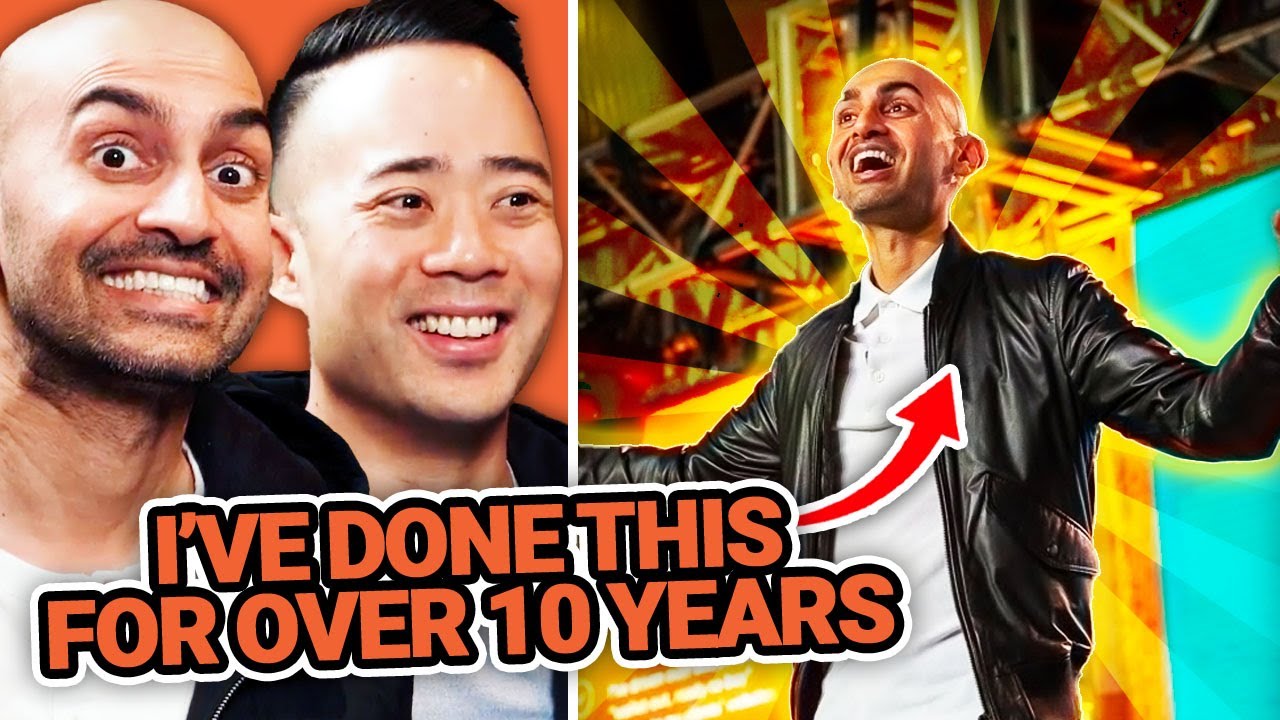
All right, so I've spoken at over 100 events. I've been doing this for way more than 10 years now. I used to charge for speaking at events, but that slowed down and I don't really care for the speaking fees these days. I more so just want to do it for fun.
Just a first-class flight and first-class accommodation, you know?
Ideally, yes. But sometimes I don't even care if I pay for that. It's more so I want to make sure the right audience is in there. I love all people, but I want to make sure I can pick up business. And when I look at what it's done for me so far, first off, personal branding. I found that I build a deeper connection with the audience when I speak in person versus just creating a reel or a blog post. And I know that the impressions on the social content are way higher, but still that connection is deep. And I think that really helps with personal branding because you can develop more of an emotional connection. I've also found that if you keep speaking at events, people over time take pictures with you, which also helps with personal branding and makes you seem more like an expert versus not an expert. The second one was social content. One of the best forms of content that I put up on my social platforms is just video clips of me speaking on stage, chop it up. I know you've done that as well. And again, this tends to elevate the brand because it just shows people you're speaking on stage and you're just taking nuggets from it. The third is business opportunities. It was really simple. You speak about marketing to the right audience, you get some leads and maybe some of those close into customers. But it's been more than just, getting customers from my ad agency. I've also gotten advisor shares in numerous companies like Freshworks or other cuts in people's businesses and they're giving me a check each month. Some of it worked out, others didn't. I haven't taken advisor shares in I don't even know how many years. I haven't taken cuts in other people's business in the same thing, like I just don't do it anymore. And the advisor shares have produced more than $500,000 in income over the years, so that's not bad. Press is another one. I found that most of my PR opportunities have come from me speaking at an event and then the journalist trying to set up appointments after my speech. And that's how I got featured on like Forbes or Inc. or Entrepreneur or CNN. And my favorite one is, and I know you do your own dinners, but when you go to events and you speak, a lot of times they have speaker dinners. From there, I end up going to the dinners. You end up meeting a lot of experts who are great at certain things that you may not be experts in, and they end up sharing their knowledge. I think that's really good because it just helps you as, You know, you taking your turn, it helps you level up your game.
That's right. All right, so on my side, I think to add to this, speaking at conferences adds a lot of perspective at the end of the day. So being like last year, actually Neil and I were at a couple events together last year. So Dubai, for example, we're in Dubai. I think to be able to explore the world, going to Dubai, going to Hong Kong, going to all these places, I don't know where else did I speak? Brazil, for example. There's a lot of interesting places that we've both spoken at. And I think that adds a level of humility. So it's good from a personal standpoint. But also on the social proof side of things, same thing with what Neil said. We take the content, we chop it up, we post it. And then what happens is you get invited to speak at one conference and you get invited to speak at other conferences because other arrangers or organizers are also in the crowd and they want to see you elsewhere.
Or the same one over and over again. Because you've mentioned that to me like with Affiliate World, you're like, hey, do you want to speak there again? Yeah, yeah, yeah.
Yeah. And the other thing is when you go to these things, as you become more experienced as a speaker, you get to maximize the event. So I spoke at SaaStock for a couple of years. It was a SaaS conference in Europe, still is. And for example, I'll speak, but then also there's a podcast stage. So I'll try to maximize as much podcasts I can do. So I'll do like 4 or 5 podcasts too. And then I'll set up a dinner in addition to the speaker dinner as well. So I'll set my own dinner because then I can control the audience and I can control— I can control—
Wait, so you do the speaker dinner and your own dinner or just the speaker dinner?
I do both. Yeah, so usually I'll host the dinner. I'll just cover the bill because it's just easier that way. And then I'll kind of curate the group.
Let's go back here. Okay, so you do your own dinner. How many people do you typically have at the dinner?
Typically it's 10. Sometimes it's up to like 20.
And how do you pick the people for the dinner?
So I'll look at the speakers list. I'll be like, who do I think is interesting here? Do I want to have to come to the thing? Sometimes I'll also ask them like, who else do you know that's really interesting that should be here? And then what I'll also do is I'll look at people that are local in the area. Let's say I'm in London and I have some other badass friends there. I'll try to mix them. And then you and I are both in YPO. I'll try to get some YPO people or some, like when I was in EO in the past, I'll find people in the area and I'll just try to meld the pot together. And then it's like, I just become the connector and then people remember me for that.
And then what's the purpose of the dinner that you're setting up?
Mine, I just know when I set up these dinners, like it all comes back to me later, right? Like whether it's business deals, people giving me equity, whatever it is exactly, or someone introducing me to a hire, it all comes back. I just, it's the quote that your partner Heaton used to like to use. Help others get what they want and you'll get whatever you want. So that's why I like doing the dinners.
So when you're doing the dinners, let's say you have 10 people. Let's just keep it simple. What's the format of dinners? Is there arranged seating?
Yeah. It's, um, so sometimes, very rarely is it arranged. I would say most of the time people are just sitting, like I do encourage people to sit next to people that they don't know. And sometimes when I see like a clique together, I'll break it up a little bit and just, just to make it more interesting. Um, the main thing I do at the dinner, a lot of people fail this when they do that. When you guys, if you're going to set up a dinner, don't just like have everyone come in like you and I would We went to dinner recently and we all just got— you and I, it was me and you, maybe we talked to some people around us and we just went home, right?
Yeah.
That is not the way to do a dinner. The way to do a dinner is, and you've seen me do this because you came to my dinners. It's like, hey guys, we're going to go around the table. Food hasn't arrived yet. You're going to talk about who you are, what you do, one thing you can offer, and one thing you need, right? And sometimes I might add like another fun question. And then at least we get the intros out of the way, get the food order, and then like you can just talk about whatever you want. Or you can make it a situation where it's only, it's a Jeffersonian dinner, which means you only have one topic. So you can't talk to other people, there's only one conversation happening the whole time. I've done that a couple times, that works too.
Ooh, a Jeffersonian dinner? I've never done that.
So when Thomas Jefferson used to do dinners with all the pre— like, you know, badasses in America, it used to be just one topic they were talking about, and everyone had to stay focused on that.
So you can't just discuss random stuff?
No, no. As long— well, you can discuss random stuff as long as everyone's in on it.
But that one's if it doesn't align with the topic.
Then like, then it starts to like break down. But like, I've never seen a Jeffersonian dinner fail. It's actually pretty good. Like TED does that a lot, the conference.
Oh, okay. Yeah. And then you've mentioned that you've gotten business from these dinners. How have you gotten business from these dinners? Like, how does that happen? Is it someone at the dinner saying, hey, Eric, you mentioned you do marketing because you did the intro, you say, hey, I'm Eric Siu. Actually do your intro so that way people can get it.
Yeah. So I'm like, hey guys, my name is Eric. Most of you probably know who— I won't say this part, I think. But usually, sometimes I'll say this, but I'll I'll say, hey, look, I'm a marketer. You know, main business is an ad agency. And, you know, one thing I need right now is I need these sales hires. And if you know anyone that's a badass agency salesperson, let me know. One thing I can offer is, you know, I really like podcasting. You know, I'm decent at SEO. And, you know, I usually get asked about, you know, marketers to hire. So maybe I can make an introduction for you. So it might be something like that. And then, oh, one fun fact about me, I used to play poker 14 hours a day in college.
Wow.
So yeah.
Okay. And then how does a business come about in most cases? Because you've done— how many of these dinners have you done?
A lot. I don't— it's probably over— I don't know, it's got to be close to like 100 or something. It's a lot. And I would— okay, here's what I'll say. I remember this one dinner I did in San Francisco, and this is like, you know, peak tech, right? This is when Sidecar was around, Uber, Lyft, right? And one of the people at the dinner They were a client, right? They were already a client, but then they introduced Lyft next. And that's how we got Lyft. And then in that dinner too, somebody else introduced Looker, the analytics company that sold to Google eventually, right? So they became like, we talked to them, I think we did like a small engagement with them. So yeah, that led to like 2, 3 things right there.
And what's the biggest contract that you've gotten from one of these dinners?
I can't— I feel like it— I think it was probably like $200,000 or $300,000, something like that.
Per year, customer stays a few years. So yeah, half a million plus.
Yeah. Yeah.
Not bad. Dinner cost you what, $2,000?
Dinner will cost me usually around $2,000 to $3,000 or so. And then if it's like a, you know, sometimes it might— the bigger one, I remember I did a really big one that was like $10,000.
So yeah. Yeah. Ouch. The $10,000 one hurts.
Yeah. Yeah, it does hurt. I didn't get anything from that one, by the way.
Which means that it's really important to curate the list and make sure you have the right people in the audience.
Yes. Yeah, you can't— here's what's really important. You need to have founders. Like, if you're going to do founders, just have them all be founders. If you're going to have all marketers, just have them all be marketers. But they all need to be around the same level. That's something I learned pretty early in my career. Like, because if you have like CEOs and you have like an intern, for example, the intern's going to feel out of whack, right? And then also, like, if you have like half interns, half CEOs, the CEOs are going Dude, why am I wasting my time here, right? So it's got to be balanced out. You got to be a good curator.
So cool. Another thing that, you know, we've talked about, I know you and I have done a lot of interviews, we've done podcasts, you guys are talking about dinners right now. What has ranking on Google done for you? Like when I look at, you know, my life, I look at it funny enough, I've gotten a lot from speaking at conferences. And the other thing I've gotten a lot from is just ranking on Google really high up over the years.
I have a story. Go for it. Okay. Without Google, Single Grain wouldn't be here today. Like, this is back in the day, right? This is when I was trying to— the background with the ad agency is I came in, I actually made the company go from bad to worse in the first year.
Whoa, you got to explain the bad to worse because I didn't know about this.
You do know. So I— when I took over Single Grain, so Neil was actually one of the partners in Single Grain before. He wasn't one of the founders, but I took it over.
I was a silent partner that just would get my 10% check.
Oh, you're a very loud partner. But it was— I was like 26 or 27 years old. Neil wasn't actually that loud. But I didn't know how to run a business, right? And so what happened was, you know, we had a bunch of people quit in the first year. And what I would say is we had— we got lucky because when I first joined, we started guest blogging pretty hardcore. And the guest blogging actually got us to rank for the keyword digital marketing agency. We got number— we held number 1 for that for like 2 years or so. Because we were able to do that and because you and I were hanging out at Traffic and Conversion Conference and you're like, dude, why don't you just try referring the leads out? I was like, oh, that's really smart. And because I had the ranking, I referred all those leads out. We referred it to a mutual partner and then that was able to help us recover and then eventually hire the right people to save the company.
See, the reason I think you struggled at the beginning wasn't any of that. I think you paid more for the business than you should have.
$2?
No, you paid more than that.
I paid $2 out of pocket.
Yeah, but you had to pay payments on the back end.
Yeah, well, we'll not— we won't go into that, but continue.
Yeah, but when I looked at the business and the health of it at that time, there were some issues that ended up happening, hence the partnership ended up breaking up. Nothing between Eric and I, but there was just general issues on what was happening with the business. And my feedback to Eric was, you should take over the business and pay $0 for it. Yes, he did pay $2 upfront, but he paid money on the back end. And I believed at that time, and I know I pushed you on this, you should have taken it over and got it for pretty much free.
Hey, I'm not going to argue against that. I think I should have gotten it for free too.
Yeah.
It was a lot of work. Yeah.
No, not just a lot of work, but like, uh, there was financial issues with the business and you didn't take your fair share.
Yeah.
Right. So you shouldn't have to pay anything for it. I was in the same boat as you, but I didn't care because it's not like I was putting any sweat equity into the business or anything. You should have just gotten the business for free.
But I agree with you. I would just say going back to the original point around the how has Google ranking helped? I mean, it's made me millions and millions, like millions and millions of dollars, right? Like, and I think your point was, let's go to your story over here. How much like have you made from Google rankings?
Dude, I don't know the dollar amount, but it has to be a lot of revenue. And the reason I say that is if I look at the brand building that I've done, a lot of it's come from blogging and Google rankings. If I look at, You know, the press I've gotten, a lot of it came from journalists doing Google searches and then hitting us up. Look at a lot of the customers we've gotten, same thing. If I had to add up all the years I've been in business, I would be fairly certain it's over $100 million in revenue just from Google rankings.
There you go. So this is how Neil made $100 million from just Google.
Not profit, not profit, not profit. There's a lot of expenses involved in these things and you know that.
And then you said, what was the other thing that you said?
Press, speaking engagements, which we already talked about, branding, which I think has helped tremendously. It's also helped me build a following on all the networks because then I ended up taking the traffic from the website and pushing it to other social networks to get more followers. The big thing that no one really talks about that SEO is really amazing with is email list building. My list is like 1.5 active people because I scrub my list on a daily basis. It just regularly scrubs automatically. So our open rates are well north of, not well north, but they're north of 30% on average. Sometimes we can get 40%, but let's just call it 30% for the bottom bar. And emails, they're really, the money is in the list as everyone says. And it's just like, I wouldn't have anywhere near that size of a list if it wasn't for SEO.
Dude, it's, I think what's hot right now is email lists, It's podcasts. I think even though like SEO is declining, we still— it's still like, you know, pretty significant.
Yeah.
Right? What else is there?
You were telling me the other day Quora is back in a big way.
Yes. So Quora, most people don't know this, but like I even said this a couple of weeks ago. I said, I think Quora is dead, right? But here's what it says over here. So Quora just raised another $75 million from Andreessen Horowitz. This funding will be used to accelerate the growth of Poe, and we expect the majority of it to be used to pay bot creators through our recently launched creator monetization program.
Was that AI-related? I thought I read the article.
It's AI-related. They don't need the money though, because here's the thing. Here's the key point here. Last week was our highest usage week ever, and with over 400 million monthly visitors, we will continue to invest in core with the majority of our employees. So they're basically saying like, you know, they have a lot of data. That they can use for the AI, right? Which is— that's, you know, by the way, I finished the Elon book and Elon's like, towards the end of it, it's like, uh, he's like, yeah, you know, I didn't know that the data would be so valuable with X, but, uh, you know, I guess it's pretty nice. So same deal here. It's pretty nice to have this data.
Dude, and Quora has some of the most commonly asked questions in the world. Uh, it is probably one of the best, if not the best repository for questions.
Are they public?
No, Quora is not publicly traded.
By the way, they're also cash flow positive.
Why did they raise the $75 million?
Because they want to move faster on AI.
Okay, I can see it. I don't know what their valuation is, but it must be in the billions at least by now. Yeah.
So yeah, I mean, that's interesting because you and I, like, I don't use Quora that much. You don't use Quora either. Like, I will tell you, I do read a lot of Reddit. And now that, you know, after the helpful content update, like, there's a lot more Quora, there's a lot more Reddit stuff that you can see. They almost have like a little box in the SERPs. Do you know what I'm talking about?
Yeah, yeah, but that's how I get my Quora info is from the SERPs from Google.
You click it?
Yes. Okay.
Yeah, so Neil clicks it.
I click it.
I click more Reddit than Quora, but Quora is still pretty decent.
I click more Quora than Reddit.
By the way, Quora helped me when I was, when I was like 25 years old. I got like a $30 grand a month SEO contract because I was writing answers on Quora all the time and someone found it, reached out to me, and it was $30 grand a month. And that lasted for like a good like 8 to 9 months. It's pretty good.
Well, the easiest way to respond to answers on Quora is you can— well, now what I used to do is just look at my blogs and see what questions I already had answered in text, copy and paste my own blog post and then paste it on Quora. But now you can actually probably use ChatGPT to answer the question and then put it on Quora and then you're good to go.
Do you know who made a lot of money on Quora? Jason Lemkin from SaaStr. That's how he built his brand. And then that's how SaaStr— it's the largest SaaS conference in the world. I think it does like just call it $20 million a year or so. So, you know, it's a decent business, right? And he's probably got a lot of deal flow through that too.
That's true. I thought the largest SaaS conference was the one in Europe. I forgot what the name is. The one where you throw axes in the castle and stuff.
SaaS Stock?
Mine? Yeah.
No, they're like bitter competitors.
Oh, okay.
Yeah, yeah, yeah.
Well, cool. That's it for this podcast. Make sure you rate, review this episode. Give us 5 stars. We really appreciate it. Thank you for your time.









