The agency that makes $100M+/year, The problem with podcasting, Peloton and Allbird's decline & more
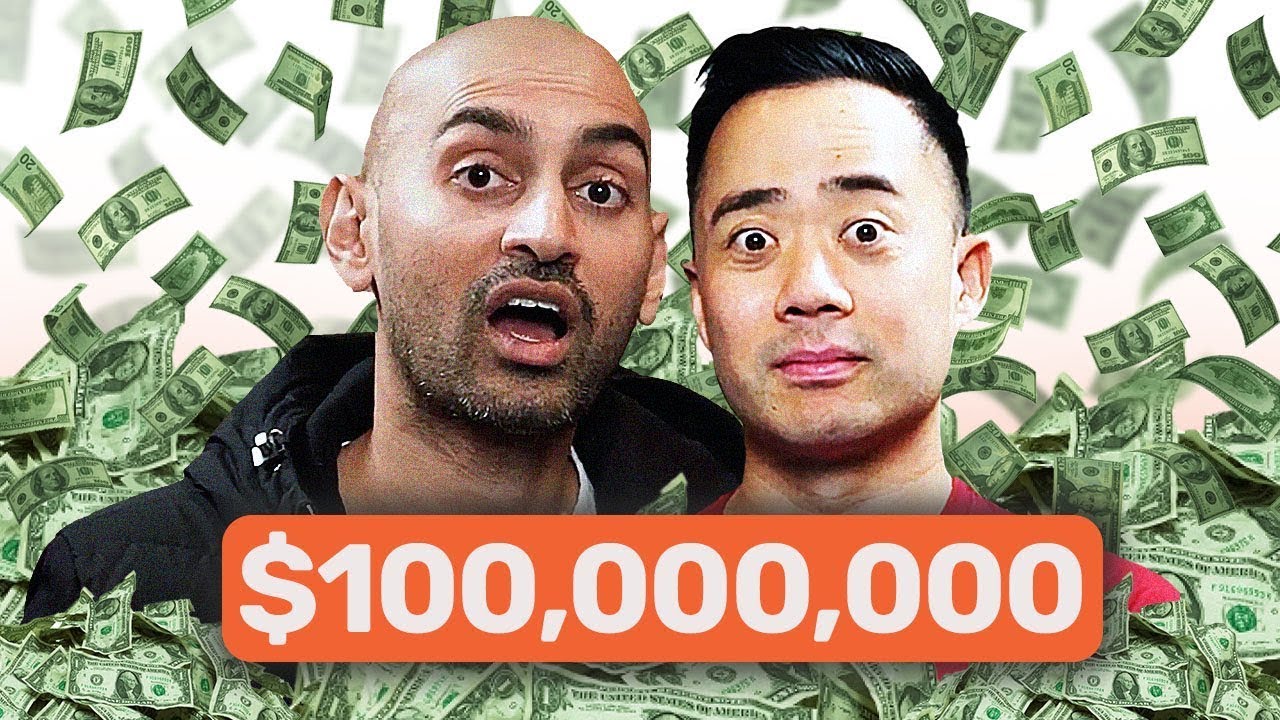
Eric Siu and Neil Patel discuss an agency managing adult-content creators that hits $100M+ annually, why boring industries like HVAC and bottled water outperform trendy ones, and why Peloton and Allbirds failed despite strong branding. They also cover the economics of 23andMe and Liquid Death's PR strategy.
Chapters
Okay, so here's the story. There's an agency that makes over $100 million in profit and they only focus on the adult industry.
Adult as in adult content or like—
Adult content.
Yeah, adult content for other websites or their own community like an OnlyFans?
Like, like an OnlyFans. So here's, here's the thing. Here's the business model. Basically, let's say Neil, you're a bikini model, right? Okay.
So legit bikini model? I'm actually really skinny.
Everyone has different tastes.
I have weight gaining problems.
Everyone has different tastes, but Let's say, you know, you— they basically manage influencers in this space and they're making these influencers on the low end, maybe they're making like $20-ish, $30K a month or so. On the high end, they might be pulling in $200,000 to $300,000 a month, right? Those are the higher-end ones. And they basically just hire you a bunch of VAs to handle the chats for you and manage the process. And I think they take like a 50% cut or something like that. Now, I don't—
And they do the marketing, I'm assuming?
They do the marketing as well. This company, I don't have exact numbers here, but it's basically doing, let's call it $20 to $25 million a month or so, right? And so let's go on the lower end, $20. So that's $240 million a year, 50%. You know, we can mark it down a little bit more, but like, that's still a lot of profit per year, right?
So— Yeah, but how do you know that's profit? How big, how many team members do you think they have?
That I don't know. But my friend, YPO buddy, who you also know as well, gave me the numbers. He doesn't want me to reveal who the company is. But I just like, dude, There's always different ways to do things. But also keep in mind, like things like this with Sora and all that, like maybe there's no— maybe not that much OnlyFans in the long term. So yeah.
Dude, and it's so funny because entrepreneurs these days try to make money and stuff like, oh my God, I'm going to create the next ChatGPT.
It's a hustle.
Yeah. And they're trying to innovate. That kind of stuff is hard. And I always talk about the best industry to be an entrepreneur in is like the boring, ugly stuff that no one wants to touch.
Trash.
Yeah. Trash. We have a mutual friend, Devin, who's in HVAC, like Dude, whether the economy is good or not, you need either heating or air conditioning, right? Depending on the season.
People fix it.
If it's winter, whether you have money or not, you're going to make sure that your heating works. And when it's summer and it's 100 degrees in your house, you're going to make sure that your air conditioning works.
We need clean water. We need— people are looking at clean food. People are looking at better sleep. Now it's like the basics.
Dude, you know what's hilarious? I look at the Forbes 1000 or rich list every once in a while. And there's this guy in China. I forgot his name. I don't know how to pronounce it either way, but really smart guy. He's one of the richest people in China. You know what industry he's in?
Is it appliances?
Water.
Okay.
What's his name?
No joke.
I don't know. I don't know how to say it, but he's on the Forbes list. Forbes China billionaire water. Let's see if it pops it up. There you go. Zhong Shanshan. And I do apologize for mispronouncing your name.
That's racist.
I can say it because I'm Chinese. How do you say the name correctly?
Just send it to me.
Z H O N G. Zhong. Okay. S H A N. S H A N is the last name.
S H A N. Shan. So, Zhong.
How do you say it again? My bad.
Zhong.
Tong. Tong.
Or Zhong. Zhong. Zhong.
Tong. Shan Shan.
Yeah, whatever.
Net worth, $65 billion from bottled water.
Have you heard of a hire before? the appliances company in China? Okay, they are huge. They're basically like, they're about to go bankrupt and then the culture was terrible. But now they have like 4,000 business units within the company and 3 or 4 of the business units are publicly traded companies. They build like smart refrigerators, smart appliances, and they're number one. They like were in the outhouse and now they're up in the penthouse. That guy has a book called The Startup Factory and it shows their entire process on how they went from like Nothing. Pivoted, pivoted again, and pivoted again.
What's the dude's name?
I don't know. Just search for H-A-I-E-R. That's the company. H-A-I-E-R?
Uh-huh. I'm assuming he's on Forbes?
Probably. I don't know. He's rich. The guy used to be a government worker and he became a CEO of this thing.
Hair? Is that—
Haier.
Haier Smart Home. Uh-huh.
Did you type market cap?
Oh, they're publicly traded?
I don't know. Are they?
I don't know.
I don't know.
Let's find out.
That's good though. Startup Factory. Everyone go pick up the book while Neil finds more information on Haier.
Haier Smart Home Ltd. Yahoo Finance. I'm not going to do well with the currency exchange. Market cap in CNY, $213 billion. CNY to USD. Let's check this out. So $213— their market cap is $29 billion USD. That's massive.
Yeah, it's pretty good. But I just— it's like it just goes to show you that people doing boring things for a long period of time— I think he's been there for 30+ years or so. I bet you the water guy's been doing it his whole life.
Yeah. So, the founder of it is called Zhan— gee, I'm not going to even try to pronounce his name anymore.
I'm just going to butcher it. Zhan.
Anyway. Last name R-U-I-M-I-N.
Yeah. Anyway, main point here for everyone is do something boring, do it for a very long time, do it consistently. Don't get distracted, and you're going to be able to build something pretty good. And it doesn't matter which industry you're in. I will say, however, that you want to do something ideally that has longevity too, right? That's kind of what we're talking about too. If it's been around for the last 100 years, it'll probably be around for the next 100 years. That's known as the Lindy effect.
But the best thing about it is like, dude, people need their clothes washed. People need bedsheets. People need carpet, right? They need cups to drink out of. They need water. Like, They need chairs to sit on. We take for granted so many things in this world from business. And it's like, oh, who wants to make furniture? It's not cool. Well, we all have furniture. Eventually you're going to end up needing it if you buy a home or you rent a place. Like, it costs money. Someone's making it. They're making a crapload of money doing furniture.
Dude, look at IKEA.
The IKEA— are they publicly traded? I think they are. Either way, the founder of IKEA was one—
I don't think so. He's gone.
But he was one of the richest people.
Yeah.
And his family was too. But then he set things up in a specific way to decrease his net worth, but I think pass along the money to other people so he would avoid taxes or something like that, right?
Hey, that's what we all want to do for our kids, for our family. By the way, Neil and I have an agency owners group called the Agency Owners Association. All you have to do, just go to marketingschool.io/agency. Once again, it's marketingschool.io/agency. To learn more. And now back to the show. Dude, did I talk to you about this one? That the problem with podcasting today?
No. What is it?
Let's talk about this briefly. So I think this is a big problem. Like when you think about it, you probably don't listen to 3-hour podcasts, right? 3-hour, 4-hour-long podcasts. So like, you know, Joe Rogan, Lex Fridman, Chris Williamson, all these people, right? And I— there's another one, Diary of a CEO. So they're all doing these long-form 3 to 4-hour podcasts. The problem with these podcasts now, and there's a couple of people talking about it, it's like You start to— like, they're interviewing this guy. This guy's 60 years old. Oh, my God. And this guy is like an astrophysicist or whatever. And then all of a sudden, it's like, hey, what do you think about dating? It's like, what? This guy's like 60 years old. What do you know about dating? So, the problem with these, like, you start to stretch them so long, you start to talk about a bunch of nonsense, right? And it's just like, okay, maybe just talk about what you're good at. And maybe it's 60 to 90 minutes or so. It's a good conversation about that and that's it, right? I think I did a podcast interview recently. We got to about an hour and 40 minutes and I was like, Am I going to try to stretch this to get more clips or I'm just going to end it? I was like, yeah, no, I'm just going to end it right here. So thank you. Good episode.
But I'm confused here, right? So people are going really long with their podcasts and it's creating a lot more listens by far.
It's creating— no, it's creating more listens. But there's also this— there's only so much talent, right? Like you start to interview all these— it's like the same circle because you want to interview people that have a large following too, right? Or like big authors. But then like people start to contradict each other too. So like you might say, oh, you should sleep 9 hours. I might say you should sleep 8 hours. I might say you should take this, you should take that. And then like, then people just don't know what to listen to anymore. And it's like all the same guests over and over. That's the problem. The problem is if everyone's following a certain formula, then it's all going to be the same thing.
But that's also the problem with AI. If you look at AI, they're just regurgitating content. They're just taking what was already out on the web and creating stuff from it. I get you can put in prompts and have a video created that's new stuff, but the quality isn't there yet.
I think if you want to stand out with podcasts, like for example, the reason we stand out for this one is because it's daily.
We've been doing it 7 years.
I thought about it this morning when I was driving here. This podcast has been around longer than your kids have been alive. Longer than— this podcast started before you got married, right?
This podcast has been around before I even started dating my wife.
Exactly. Oh yeah, that's true.
Right? How old is this podcast? 8 years now?
7, 8 years, something like that.
Yeah. I've been married for like 5-ish years.
Yeah.
So, probably close to around the same time where I met my wife.
Yeah. So anyway, point is— well, I digress, but the point is You have to have an angle and you have to stick with that angle. For example, the long-form podcasts I do, if that's 60, 90 minutes, 2 hours sometimes, I just focus on business, marketing, and personal growth. I don't talk about like, even though I'm into like health, fitness, longevity, I don't talk about my ApoB. I don't talk about all these things. It's like I just talk about what I'm comfortable with.
But you got to have an angle in everything, right? Not just podcasting, even in your marketing or even in business.
Any content, really.
Yeah, but even any business model, like look at Casper and Allbirds and Peloton. They've gone crushed. Like, what's so cool about Allbirds? I know you used to wear Allbirds shoes all the time.
I used to, yeah.
But not anymore, right?
Oh, you remember that?
Yeah. Dude, you even bought me a pair of Allbirds.
I did?
Yeah, a long time ago.
Why would I do that?
I don't know. You said they were like reusable, great for the environment, I should wear them.
I don't think I would say something about the environment.
You did. You said Allbirds was like a renewable company or something like that. It is.
Yeah.
You weren't trying to pitch that like, that's why I should wear them. You're just telling me about the company.
It was comfortable. They have a store at the Century City Mall. I'm like, nobody goes in there.
Yeah, because no one cares for Allbirds. No.
And Peloton, like, I was all— I still use my Peloton, right?
But it's just like, you know, dude, so I go to the gym, I go to the gym in this building, they have a version of Peloton. It's not called Peloton. And it's similar. There's an instructor, you just get on it. And the same with their treadmills.
Yep.
What does Peloton offer that's unique now, other than Edward Norton doing their TV commercials and using his voice?
The problem with these companies, Casper, Allbirds, and Peloton, was that their unit economics broke. Yes, it just— it was just a paid ads arbitrage thing. I'm oversimplifying, but you get what I mean. It wasn't like their products were super amazing. It's not— there is no moat around Peloton, Allbirds, or Casper. The products aren't that much better. It's not like Loro Piana or Brunello, you know what I mean?
So yeah, but a lot of those brands are old, right?
And funny enough, I think quality—
yes, but the quality is amazing. I think the brand is your real moat in business these days. Like, what separates Fenty from the other brands out there? Well, Fenty is Rihanna. Everyone loves Rihanna. Well, that's why she does well.
Fenty or Fendi?
I thought it was Fenty.
With a D, right? Fendi. I think it's Fendi.
Fenty.
I'll bet you a dollar.
It's F-E-N-T-Y.
Oh, okay. Then there's Fendi's the other brand then. Yeah, see, I'm not—
Yeah, I just Googled it. Fenty Beauty and Skin. That's Rihanna's company.
Continue, continue.
And then there's also Savage Fenty.
There's Yeezy.
Yeah, there's Yeezy. Yeah, but these brands is the real moat. You know, Michael Jordan shoes— what's really good about Michael Jordan shoes versus, uh, Steph Curry shoes, which is under New Balance? The quality of shoes probably very similar. Yeah, one has a Jumpman logo and the other doesn't.
It's cool. It, you know, everyone knows Jordan. Everyone wants to be associated with greatness, and that's the brand behind it. And so like these— Casper, Allbirds, Peloton— they're really good at user acquisition, but once the, the ads got harder, the whole model broke. And then Because they, they spent all the time just acquiring new users. They didn't try to build community or build brand.
And they got crushed.
Yeah.
Their businesses aren't bad. They're not worth billions and billions of dollars as a publicly traded company.
Yeah.
By the way, have you ever actually looked up Allbirds stock and their financials?
I'm looking at Peloton stock right now. How's Allbirds?
Allbirds is worth $146 billion as of this recording. But I looked this up, funny enough, like days ago, because that video that you linked in the sheet, I haven't watched it or clicked on it, but I bet you it's from CNBC because CNBC—
It's the CNBC one. Yeah, yeah.
I watch CNBC every day. Or at least on the weekdays. Allbirds, if you look at their quarterly numbers, $57 million a quarter in revenue. It was down 21% year over year. That may be impressive, but compared to the TAM of the shoe industry, they're really tiny in revenue.
Yep.
On the flip side, right, that's $57 million a quarter. If you look at Nike, per quarter, $13.39 billion in revenue.
Yep.
That's a massive difference.
And you know, they almost died a couple times too.
Nike.
Nike? Yeah.
Yeah, did you watch the Jordan movie?
No, I read the book, the Shoe Dog book. What's the Jordan— Air?
Yeah.
I've never seen it. Is it good?
It's good.
Maybe that's what I'll be watching tonight, guys. It's—
I think it's on Amazon Prime. It's on one of them.
Yeah, it's on Amazon Prime.
It was free. I know I didn't pay for it. That I know.
Dude, Peloton stock down 82% all time. Okay, by the way, separately, 23andMe, that's a whole— maybe we can end on this one, down 92%. It's a penny stock now.
23andMe stock? Yeah.
Wow. 23andMe, just so everyone knows. And so like, that's the thing where you spit your saliva and you get a DNA test. I still have my 23andMe. It's pretty accurate. It's fun. But they never figured out what else they could do because once you spit, you don't really need to renew. You don't need to do anything else. It's a one-time purchase. So they couldn't figure out another business model that's recurring.
Dude, it was so funny because I looked up 23andMe right now and I clicked on the founder. I'm like, I know her. This is Sergey Brin's ex-wife, I think.
Yeah, they dated and then she's like—
No, no, they're married. They have kids together.
Are they? Dude, she's Susan—
Spouse, Sergey Brin, 2007 to 2015.
You know the people that gave Google garage space is Susan Wojcicki or whatever, right?
Who ran YouTube as CEO. That's her sister.
Yes.
She has 3 kids with Sergey Brin.
Oh, I didn't know that.
Yeah.
Yeah.
I'm assuming she has 3 kids with Sergey Brin because it shows that she was married to him, no one else.
Yeah, we don't know, guys.
3 kids. Yeah, they have a son in 2008, daughter born in 2011, but good for her on 23andMe.
Let's end it on this one over here. So, Liquid Death is a good example of someone that— so, I'm pulling up this LinkedIn post over here.
Are they still doing well?
I think they're doing well. So, get this. So, I'm looking at a LinkedIn post over here and this is from Tien who works at Coca-Cola, okay? So, she puts a LinkedIn post up. She's like, Liquid Death probably won't sell us the ad on their box, so we decided to put an ad on their eBay listing. So enough with the death talk already, crank open something smart, right? So she— Smartwater, right?
Yeah.
Um, and so Mike, the CEO and founder of Liquid Death, he posts something. He's like, even the biggest beverage company on Earth is interested in our biggest ad ever. And for the record, we would 1,000% sell Coca-Cola the ad space for their Smartwater brand. Tien Phan, as a 4-time award-winning marketer, which is her tagline on LinkedIn, right? As a 4-time award-winning marketer, you know the CPM value of running a Smartwater ad on Liquid Death boxes across The biggest national retailers and the media attention from Coca-Cola doing this and the announcement on our Liquid Death social channels of 7.6 million followers is a way better— it's way better than running a banner ad with 0.01 to 0.04% CTRs, click-through rates, on our eBay page with very low traffic that is mostly marketing executives. So he basically shat on her, right? Um, but like, he's active on LinkedIn. He's active.
What's the Liquid Death founder's name?
Mike Cesario. So C-E-S-S-A-R-I-O. But the point is Liquid Death, they built the brand, right? That's the difference.
It is the real power. You know, our agencies do well because of the staff and the people and the results we produce. But it's also because we've built some sort of a mini brand, nowhere near any of these celebrities, but it's helped us within our own vertical.
Yeah, there's a mini brand and we're known for like, there's a little quality with what we do, right? And we've upped the quality of this thing. So it's like if you want to do good, Good stuff. You want to build a brand, just high quality. So, yep.
Yeah. Well, that's it for this podcast. If you want to meet up with us in person in your agency on March 8th—
May 8th to 10th, go to marketingschool.io/agency to learn more. You can go there to apply. We got— there's programs for 6, 7, 8-figure founders of agencies. Go there and we'll see you tomorrow.









