The Companies That Pay MILLIONS For Your Data…
In this episode Eric Siu and Neil Patel discuss several hot topics at the intersection of AI and marketing. They start by examining how AI labs such as OpenAI and Anthropic are offering six‑figure to million‑dollar deals to buy proprietary data, debating when it makes sense for a business to sell data and warning against selling sensitive information (e.g., medical data). The conversation then shifts to a Bain study that found only 6 % of marketers see a measurable performance lift from AI, highlighting the adoption gap and the need for a top‑down, centralized AI strategy that focuses on customer value. Eric shares how AI has dramatically compressed his own content‑creation workflow—enabling faster video production, automated editing, thumbnail generation, and scheduling—while Neil points out the three biggest AI‑driven marketing wins he observes in his client work: dominating paid and organic search with LLM‑generated assets, rapid creative testing, and data‑driven spend optimization. They also review a recent Andreessen Horowitz chart showing that only about 2 % of households are paying for AI services as of April 2026, underscoring the early stage of consumer adoption. The hosts then discuss YouTube’s new Shorts recommendation policy that rewards original content and penalizes re‑uploaded clips, explaining why they no longer hire “clippers” and how AI tools are now handling clipping automatically. Throughout, they sprinkle promotional plugs for their agencies (Single Grain, Single Brain) and talk about content cadence strategies—balancing long‑form monthly videos with short‑form twice‑monthly releases—to avoid creator burnout while still driving qualified B2B leads.
Chapters
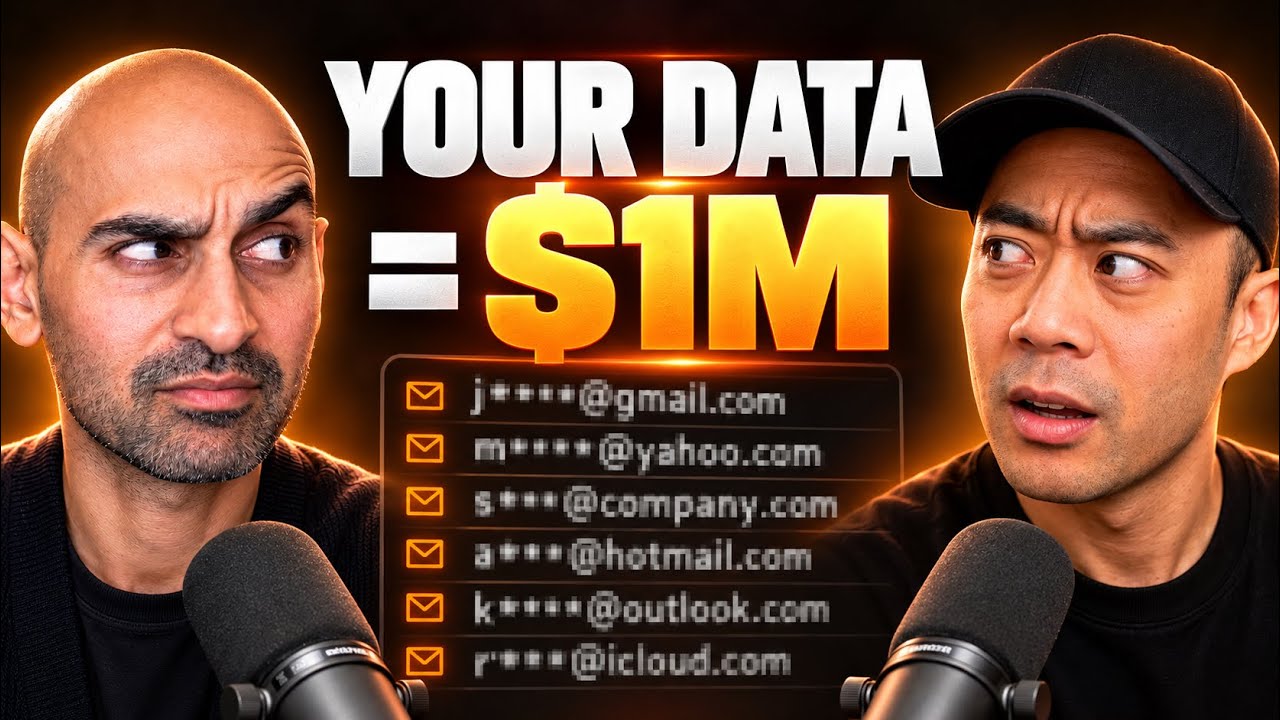
By the way, one more thing we should talk about, Neil, is the fact that OpenAI labs, like OpenAI, they're paying for data, right? Whether it's OpenAI or Anthropic. And so you've probably gotten these offers too, right? So there's like funny videos being made about this as well. So some people, depending on the size of your business, it could be millions of dollars or it can be like hundreds of thousands of dollars. So these labs are going through third parties and the third parties are reaching out to you and they're offering, they're saying, hey, You know, they would like to buy your data. Are you open to selling it? Right. So the question, Neil, is if you own a company, should you be selling your data to these labs? And it also depends too, because if you're in like the medical field, you probably shouldn't be selling that data. Right. But I think it depends. But you can answer first.
You cut out at the last minute. They could be messing with my electricity or something, but—
Oh yeah. So what I was saying is that should you be— the labs are paying millions for your data, right? Or at least hundreds of thousands of dollars. Should you be selling your data to these labs?
It depends on your business model. If you are Britannica, sure, because it's hard for you to monetize in other ways. If you're a corporation selling a product or a service, you're like Amazon or something like that, and you have a lot of e-commerce data, you should not be selling your data.
Yep. My take on this is exactly that. Like, if you're in the medical field, you shouldn't be selling your data. You have a lot of confidential information in there, and that's bad on you to do that. But I'll say this, like, if you're in transition with your business right now, let's say you're transitioning to a completely different type of business, you're becoming more AI-enabled or whatever it is, technically you can sell your stuff right now as you make this transition because it kind of doesn't matter, right? Provided that you're in an industry that allows you to do it. So I think the answer is it depends. But here's the other thing, Neil. If these labs are willing to pay millions and millions of dollars for data from all these people, guess what? My bet is they're all going to come and try to compete in these places. In these spaces. Like, why wouldn't you? If you have the best frontier intelligence, why would you just not try to compete with everyone where it seems like there's a good place to attack?
Yep. Yeah, I agree with you. And I think the data is what's really going to separate you from the competitors because everyone's going to have similar models over time and it's catching up. I know these models are getting better and better, but I don't think the innovation is growing as fast from the leaps and bounds perspective from version to version, like compared to what it was a year ago. I know it's better, much better now, but you would see leaps and bounds. And it was also at a much earlier standpoint where there was a lot of bad stuff and you would see things being fixed and just being much better. Yeah. Like you can see video comparisons of people using OpenAI versus Anthropic and like, yeah, I'm all— I'm all Claude, I'm all ChatGPT. And you're looking at the videos and they're like, they're pretty much similar. There's not that much of a difference. Like they both work.
Yeah. Well, I'll say one thing, like I was, I was, um, I've been making more YouTube videos, right? Because I'm no longer encumbered on that front. And I've talked about this on this podcast so I can pump out a lot more content. So yesterday I had one come out, um, and it did decently on my channel. I think like 17,000 views or something like that in the first 24 hours. And so for me, because I'm targeting more B2B and, and, and, uh, business type You know, audience with my content. Like, by the way, it's been driving leads too. I'm like, this is good. But my point is that your time is compressing a lot faster, right? And so I would say last year, Opus 4 or 5, from around December, you can code a lot more, but you couldn't do what you're doing now from like an editing standpoint or like a design standpoint from thumbnails. So you're just able to do more now. And that's why it's not as impressive as it was like a year ago where it was a major step change. Whoa, what was that, Neil? Did someone drop something?
That's what I was saying, the electricity. They're doing construction on the lights in the house right now.
I see, I see. Okay, so look at this study. It says 94% of marketers say AI hasn't made a significant impact. I have thoughts on this already. So the key takeaway says a new study found that just 6% marketers report that AI is impacting performance at their firms. The problem certainly is in adoption, with 47% of marketing leaders saying that AI is a core capability for the industry. Researchers note that to become a marketing leader that actually sees impact, you have to establish a centralized AI strategy that focuses on customer value. So Who said this exactly? Oh, study from Bain. Okay, so it's from Bain. All right, okay, got it. And, you know, only 6% of marketing professionals say that AI has influenced performance in a significantly positive way, despite 47% of leaders noting it's a core capability. So how are these 6% of professionals making a difference with marketing? They focus on providing top-down centralized AI strategy rather than throwing tools at employees and hoping for the best. Let me react to this one first, okay? First and foremost, this is coming from Bain, okay? Okay, so Bain is not exactly like— to me, they're like a slow-moving behemoth, right? I think they're like a poster child for what's going to happen to a lot of these services firms, right, if they don't adopt quickly. And so they probably surveyed a lot of their employees as well. But here's what I'll say. When you have a lot of bloat in your organization, you're talking about the top 1 to 5% or so. This actually maps pretty well in my mind. And so of course, only 6%. These are the top 6% of people. The rest are just slot-grenading it or they're not even using this stuff. That's my opinion. Go ahead, Neil.
So I used to, when I go to conferences, I used to ask people how AI is impacting them. And then most people would say it doesn't really produce much revenue for them. And then over time it changed where a lot of people like, yeah, it does produce a lot of results. And then I started asking follow-up questions to the audience when they used to say like, yeah, it produces really good results. Because then it started becoming the majority. And then I'd say, other people are raising their hands. How many of your guys' companies actually growing this year? And so many put their hands down. I'm like, okay, so it's actually not working out the way you think it's working out, right? The biggest way we see AI helping in marketing is actually driving new business. I'm not saying the technology can't help marketers perform better, do better A/B testing on creatives and be more efficient with campaigns. But where we really see the win is people who are dominating paid and organic on the LLMs. That's the number one way we're seeing more growth. The second is things like creative testing. That's the second area that we see huge wins on. The third area is in data and analytics and reducing wasted spend. But those are the top 3 areas we're seeing right now with most of the companies we're working with when they're seeing wins from AI specifically. But yeah, does that mean that's how it's going to be in the future? No, I think it's going to get better. But the technology is really early on and the issue you have at the same time that you're seeing positive gains, what's distorting the whole image and the data is you have a lot of people just using AI, running up costs and working on things that don't matter in marketing that would never move the needle. Whether they hired 5 more humans to do this or whether they use AI to do this, it doesn't matter. They're working on crap that doesn't really move the needle. And that's, I see, is a bigger problem in organizations than the technology itself. It's people are focusing on the wrong thing. But that's what we're seeing on our end.
Real quick, if you want to acquire customers faster and more efficiently this year with the latest strategies and tactics, then check out singlegrain.com. That is my ad agency. Again, www.singlegrain.com. Check it out. And if it seems like a fit, We'll get in touch and help you with a free marketing plan. So let me just call this out and then I'm going to show you a chart over here because, Neil, we like charts. So the challenge is, and we've talked about this on the podcast quite a bit, AI is just an intelligence amplifier, right? And I've called this out quite a few times. And so here's the thing. Why do most people say that, okay, being average is not a good thing? And also, why do most people say that being like most people is also not a good thing? It's because you're average, right? But when you think about it, What does the average person want? The average person wants everything, but they don't want to work for anything, right? And so if you, if you put that in, if you take that in mind, right, and if you think about, well, if AI is leveraged, it's going to blow up the mindset of, of the good people, right, in terms of the good— I'm not gonna say any of these people are bad, but the people who want to work hard versus the people that don't want to work hard, that gets blown up completely and it reveals everyone completely. We've talked about this so many times. I don't think it's gonna be the last time that we talk about it, Neil. And the other thing that Andreessen Horowitz called out too There's a chart that I'm trying to pull up right now. Only 3% of people in the world are paying for AI right now from like a personal standpoint. So here we go. Here, I have the chart. Let me show you the chart and then we can react to this. All right, so check this out. You see this? So check this out, Neil. This is— and you're muted, by the way. So this is from Andreessen Horowitz. It says more and more households are paying for AI. So when you look at January 2023, it's like basically 0%. When you look at today, this is April 2026, 2.2%. So 98% of households aren't paying for AI yet. Neil, what you just said earlier, we're still very early as well.
Yeah. And on a random note, I know we have time for a few more topics. Eric and I are no longer looking for clippers. We don't need our content clipped anymore. You saw the recent YouTube announcement, right?
Oh yeah, yeah. Oh yeah. Explain what clipping means though.
So
clipping means 2 things. So
sure, what a lot of people do when they talk about clipping and marketing is they take long pieces of content like this, or it could be content that we created from other podcasts or speeches, and they'll take short little clips, 30 seconds, 60 seconds, and they start posting them from a lot of different accounts on Instagram, on YouTube, and all the other social networks. Sometimes these accounts are other people's accounts, Sometimes it could be Neil Patel SEO clips, Neil Patel business clips, Neil Patel social media clips, right? And it could be for a channel that's just specifically about me talking about social media or just Instagram and me giving Instagram advice. So YouTube ended up putting something out there and it says, hey everyone, our recommendation systems are designed to connect viewers with videos they find genuinely valuable. We evaluate billions of signals, including watch history, topic interests, and engagement, to ensure the best possible experience for viewers. To improve the Shorts experience for everyone, we're updating our recommendation systems to further prioritize original content and reduce the reach of content re-uploaded from other creators without adding anything of their own. This update to our recommendation system delivers a better experience for viewers while ensuring creators publishing original content have the best chance to grow and succeed. This change is also aligned with our existing YouTube policies. What this means for you, focus on originality. Channels identified as primarily aggregating or re-uploading other creator videos without significant changes will likely see less distribution within the Shorts feeds. If you use clips from another creator, make sure you're adding real value through your own original commentary unique edits or storytelling. And add in your own, then the next bullet was add your own unique perspective or take, which is kind of similar to the one on being more original.
Yeah, so by the way, Instagram was already doing this, right? And so what Neil's really calling out here is that the reason why we're no longer hiring clippers, one, clipping is actually easier now because these bots are going to get better at clipping the moments for you. But also what Neil's talking about in terms of spamming, like a lot of these clippers were spamming, like they would actually, they would take some from some of my interviews like your Rich BFF, They would steal the clip and then they would put it on another channel and it would blow up on another channel, right? And so that unoriginal stuff, or even, uh, like these— a lot of these faceless channels where they use AI to generate a lot of this content, they're trying to reduce that because they know that if it just becomes a bunch of low-quality stuff, people are going to leave the platform and they're not going to make as much money.
Did you ever get pitched on creating like Eric Siu SEO, Eric Siu marketing? Did you ever do it, like creating like 20 channels?
No, I never did it. No.
You? Yeah, me neither. I never liked it because I was just like, I don't mind people clipping my own content and then me posting my own content. But like, dude, even my team, like, you need to create 10 channels. Look how Mosi does it. I'm like, that's great. It's probably working really well for him. I'm not interested in this tactic.
Yeah. What I'll say is, like, by the way, I'm sure you see this in your DMs when you check your Instagram DMs. There's all these clippers that reach out and it's always like, hey bro, hey bro, hey bro, hey brother, hey brother, hey brother. And it's like, dude, you start with that, man, I'm just not going to respond to you, man. Like, like, and these are like But what I say, like, if you're a kid right now, uh, like, by the way, I think kids can do many amazing things. We hire people like teenagers, right, um, that are doing amazing work from like a coding standpoint, and their parents say it's okay, right? Um, but my whole thing is the people that we hire, they behave very professionally, and it's all about, hey, what can they actually build and what leverage can they add, right? Because to me now, if we're talking about clipping, like, if we use my YouTube channel as an example, Yeah. Like, I'm going to pat myself on the back over here because there's 3 different things happening right now. I no longer need a thumbnail person. I no longer need an editor anymore. I don't even need a poster for me on this one anymore in terms of someone scheduling it because the AI just does it for me. Right. And so some of these videos, like I got this one out, like I recorded this, uh, after Dev Day. I just recorded it. It's like a 7-minute video and I just cranked it out. Right. And I'm like, hey, yeah, put some gold in there, you know, put some, you know, put that in there. Hey, for this one, you know, put, put the dots in there, put the Grokbots in there. I'm enjoying myself. Look, look, look, look at the muscle one over here. Right. Where it's like, did that one do as well? No, it didn't do as well, right?
But I'm just thinking— You know, you enjoy the content and it's related to your Single Brain company and you'll get more qualified leads. And it did well from that perspective. Maybe you didn't get 14,000 or 20,000 views, but who cares? Because it's targeting your ideal customer. Because someone who's talking about JEV maxing and JEV for marketing is an ideal customer for Single Brain, not the grain side, but the brain side. Which many of you guys haven't heard of yet and you guys should check out. And that's the type of content that's going to generate you revenue because the companies that already know about JEV, they're usually companies who are on cutting edge and looking for services like your CMO brain.
By the way, to Neil's point, I actually want to pull up Neil's channel in a moment here, but if you're doing 1,800 views, imagine you're in like a basketball stadium, like a high school basketball stadium, right? Like that's close to 2,000 people that watch it or Neil, When I do my webinars, I put them live and I actually want to come to you in a second. But when I did like this one over here, 5,800 views, right? Or this one has 12,000. So you do a webinar, you can somehow fill up like a stadium full of people. That's amazing, right? And so anyway, Neil, let's go to your channel real quick because you do the webinars, but you don't set them to go live here, right? What's the reason for that?
It goes live on YouTube.
Yeah. But then you don't, you don't leave it there.
Uh, yeah, I have no idea why we do or do not do it.
I think it makes sense for you to leave it there if you have, like, unless you're trying to gate it all and like people get around it. But I'm like, if they get around it, they get around it. So.
I'll find out from my team. I know we do use it in email sequence follow-ups to collect more leads, so it could be that's why they don't want to end up, uh, putting it live, but, or keeping it live. But I'll find out from
them. That's cool. By the way, this is Neil and I from 6 years ago. It's pretty funny with Noah here as well. But Neil, do you want to go through your channel real quick? Because you've been, you've been cranking out more content. And so let's, let's look at your channel for a second.
Yeah. So let's see, is GPT-6 going to change marketing? Got a decent amount of views. How to start an AI marketing agency. We're looking for more agencies, hence some of that content as well. Why ChatGPT is ignoring biggest chains. So we're trying to go very specific. Chains would be like local franchises and stuff like that. Franchises make up good customers for us because you have to remember, we may not make a lot from one store, but if they have 500 stores in the United States or 500 stores or 1,000 globally, it adds up to, you know, a pretty penny over time.
I think this is smart. Look, when you go with the chains, because Neil wants more chains, right? Why ChatGPT is ignoring the biggest chains. It's like, oh damn, like I'm a chain. Like I need— like if you're a chain, like you're doing a lot in revenue, right? You could just stack them all up together. So And by the way, I'm pretty sure Neil tweaked this with his team over time because before, like, there's like how to become rich right now. It's, I'm sure a lot of your opinion comes into this, right?
It does. And it's not just my opinion. We take it from our sales team. So what's in the pipe? What are our best customers? What has the lowest churn? We're taking those types of customers and then creating content based on their problems.
Yep. I think that's really good. And so by the way, guys, like if you have your customer calls stored in like a Gong or whatever it is, you can easily just query up the API to MCP and you can use Jev to classify it, right? And then if you're creating content, then it can give you a list of content to go after. So anyway, at least for me now, Neil, I'm enjoying YouTube more. I don't know about you. Are you enjoying it more?
I'm enjoying it. And yeah, I'm picking more of the topics and being more specific. So much so that my recording sessions are pretty quick now. I've also condensed it too. So I only do long forms once a month and I do short forms twice a month and that's it. Because it was getting overwhelming. Like sometimes I'd be recording twice in a week and I'm like, this is becoming too much.
Yeah. Cool. Well, anyway, guys, that's it for today. We hope you enjoyed it and we will catch you tomorrow.
More from Eric



Even Beverly Hills Can’t Escape These Grocery Prices #shorts #business #inflation