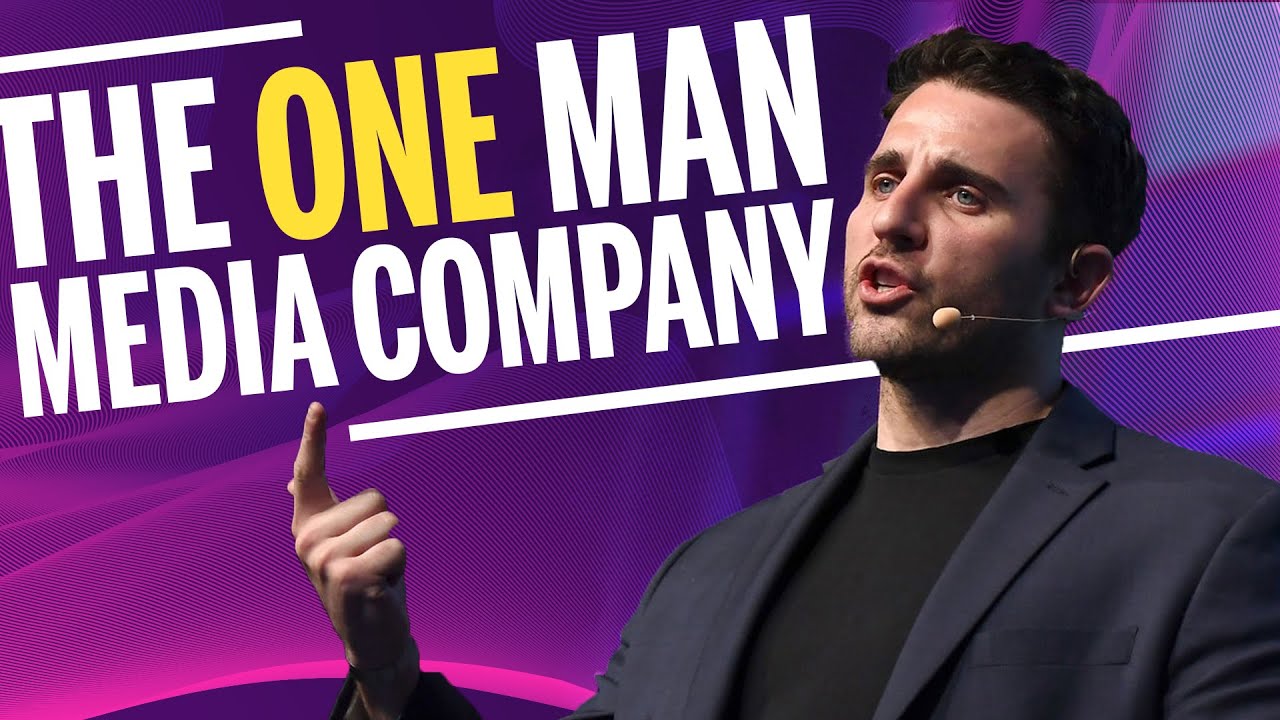
In this interview, host Eric Siu talks with crypto investor and media creator Anthony "Pomp" Pompliano about how to grow a large social media audience, especially on Twitter, and how to turn that audience into a profitable one‑person media business. Pompliano describes his intensive, high‑volume approach to Twitter—tweeting constantly, liking, replying, and following to flood the platform with content and engagement—which helped him grow from a few thousand followers to over 100,000 in a year. He discusses the spectrum of one‑person media models, contrasting creators who aim for pure subscription/advertising revenue with those who use their platform to launch products and companies. Pompliano emphasizes that his ability to juggle multiple projects—podcasts, newsletters, a rolling fund, and investments—stems from genuine enjoyment of the work, allowing him to work long hours without feeling it as "work." He highlights podcasting as a powerful, low‑cost growth and relationship‑building tool, noting the still‑small but expanding podcast advertising market. The conversation also touches on the shift from traditional, unbiased news to personality‑driven, opinionated content that audiences crave, and ends with a brief nod to Pompliano’s strong belief in Bitcoin over gold, plus how listeners can follow him online.
Chapters
All right, everyone, super excited to bring you our guest today, Anthony Pompliano, also known as Pomp. So, uh, he is the founder and partner at Morgan Creek Digital, which is a hedge fund which specializes in blockchain technology and digital assets, among other things. Anthony, first and foremost, welcome to the show. How's it going?
Absolutely. Thanks so much for having me.
Twitter is a great place to learn stuff, um, but also Twitter is a great place to build an audience too. So You know, what did you do exactly to go from zero to a couple hundred thousand? What are you at, 300,000 or 400,000 right now?
Yeah, on Twitter, you know, look, I obviously understand how a lot of these platforms work just having ran the Facebook Pages growth team. And so when you kind of think about what these platforms want, they want 3 different things. They want tons and tons of content to pick from to put into somebody's feed. They want lots of engagement. And then also they basically want you to be fairly active, so kind of in the comments and things like that. And so in 2017, I spent honestly an unhealthy amount of time on my computer and phone just doing everything I possibly could to grow that Twitter account. And so I was tweeting kind of nonstop. I was responding to every single tweet. I was going and I would like as many tweets as I could on the platform. I would literally go find people that I thought would like the content and I would try to like their content, reply to their tweets, follow people, like do anything I possibly could to kind of put my content in front of people. And then just having high-quality content, it also then entices them to follow you back and kind of do all that kind of stuff. And so ultimately ended up growing from kind of 2,000 or 3,000 followers to about 100,000 followers in the first year.
And so is there anything you did? I mean, obviously there's a lot of work involved, right? So I think spending a lot of time tweeting, creating the content, engaging with other people, that's huge. Is there anything you think that was a like a turning point? Because I just spoke with a guy, his name's Tim Sykes, and he, he like, you know, Bow Wow jacked his pictures. And then all of a sudden he called out Bow Wow and then like, you know, Bow Wow like targeted him. All his haters came and his followers grew by like 400,000 on Instagram. So is there anything you did, maybe not like that, but where it just kind of shot you up quickly?
There's been like maybe mini events. along the way, but nothing that really sticks out in my mind that's like, oh, I went from $20,000 to $40,000, or I went from $2,000 to $50,000, anything like that. I've kind of had this growth that was just grinded out. So if you kind of think for 3 years, or really from the beginning of 2017, so we're almost, I guess, 4 years into this now, 3 and a half years, pretty much done about $100,000 You know, followers per year. And so that wasn't just kind of a one, oh, now you have all these followers. And so it's just, I think I really understand what the audience wants. I think I've got a pretty good handle on how Twitter works. And, you know, I just kind of keep going, right, and see where it goes from there.
One topic that keeps coming up is the whole idea of a one-man media company, because it's not like you have a ton of employees right now. You just, I think you mentioned you're adding to the team and all that. But Really, anybody can start to build an audience and they can drive a healthy, you know, good 6 figures or even up to 7 figures plus a year in, you know, profits for themselves. So I guess what's your take on this whole one-man media phenomenon that's going on right now?
Yeah, I think it's basically what do you want to do, right? Some people want to be a one-person show and kind of wake up every day, write, maybe record a podcast once a week or whatever. And that could be a great business like you mentioned. I think really the big thing is just the tools are available now, right? So if you want to do that, now that there's the possibility that you can do it. At the same time, there's some people who say, I'll start out there, but I wanna grow into something that's bigger and kind of build like a true media company. So kind of think of a legacy type media organization. And then there's people like myself who I look at it much more as, well, I know the playbook, I've done it, I've executed it, I can teach other people how to do it. I've now got a couple of other people who are starting to do it. There's not like a traditional media organization type business. Instead, it's basically a network of a bunch of people who are doing this and working together to grow it. And so I always tell everyone that one of the key aspirations I ask people is like, do you aspire to have 100% of your revenue through subscription and advertising, or do you aspire to build products and companies and then like put them through your distribution? And those 2 things are very, very different. And I think that speaks a lot to like the type of business you're going to end up building. So I'm in the latter category, but there's a lot of people in that former category who, you know, they have no aspiration to do that. And they can still build great— I mean, literally, you know, Ben Thompson, I think, has got kind of a mid-6 or a mid-7-figure business. He basically writes an email, right, you know, 4 days a week. It's very good, but he writes an email every day for 4 days, and then he does a podcast 3 times a week that people pay for. Like, it's pretty simple, right? Logic behind it.
Yeah, and some people are probably thinking, well, you know, Pomp's doing all these different things. He's creating content, he's investing, you know, he's got Morgan Creek already. Now he's doing this Rolling Fund. Like, how do you even have time to do a rolling fund?
I mean, I'm not apologetic about this at all. I just literally outwork people, right? And there's a lot of people who, they come to me, they're like, how do I do this? And I'm like, don't even start because you literally, you don't have the work capacity for it, right? And so if you look kind of over the last 2 days, I was looking at it this morning, so I just know it off the top of my head. I recorded 8 different podcast episodes over a 2-day period. I wrote the newsletter, you know, obviously both days. I signed a term sheet for an investment that I came across while doing the podcast previously. And then I've done a bunch of other calls and also signed an agreement on a new project that I'm doing, this business that we're working on. And so it's like, people are like, how do you do all that? It's like, that's every day. I've been doing it for years. And so it's just like I have this capacity for work because I genuinely enjoy it. I kind of ask people like, what do you enjoy doing? And if you did that every day, how much could you do it? They're like, oh, I could do it all day long. Of course, because you enjoy doing it. And so I think that the people who kind of question capacity of work, they're the people who tend to be doing something they don't enjoy. But if you genuinely enjoy doing what you're doing for a living, then you end up working 10, 12, 14 hours, not because you feel like it's work. Like, what else are you going to do type thing? And that's kind of the way I look at it. It's like, I literally do not have anything else to do. And if I made $0, this is the stuff I would be doing because I enjoy it. So I might as well figure out a way to build a business around it. But ultimately, when you look at kind of what the internet empowers, it's a whole different type of content. It's a whole different audience. If you just look at the addressable market for what we're doing today versus what a television network, for example, has, it's very different. And then it's also this idea of like people wanna subscribe to people. They want the personalities. They don't care about the unbiased news. One, they don't trust it a lot of times. And then also two is like they can read it everywhere. It's commoditized. And sure, maybe somebody gets it 10 minutes before somebody else has it or whatever. And that's kind of what they're optimizing for. But what people really want is they want the opinion. They wanna know like, what does Eric think? And why does Eric think that? And if Eric has a viewpoint of the world and has a bias of the world that I agree with, I actually want more of Eric's content. And so it's like every time something happens, they then want to look and say, well, oh, it's marketing related. Like, what does Eric believe about this? Does he think this is a good idea? Is it working? And I want to see him break it down. All that kind of stuff is the exact opposite of what kind of the traditional media has been about. They want to be unbiased, but as we know, humans aren't unbiased. And so I think that it's more just being authentic on the internet. allows you to kind of lay the foundation to build really, really big businesses now.
I think podcasting is one of the greatest cheat codes right now. I think as of last year, there was only 700,000. It's probably a little more now, but the market's still— podcast advertising market's still below a billion a year. And so, you know, to be able to talk to people and then afterwards, it's like, hey, like, you know, can we do something together? Or, you know, what do you need? Sometimes I'll connect someone, like maybe they need a new hire, but you're just building relationships, high quality laser-targeted relationships. And I think it just makes sense to do it, as long as you have a point of view and you have interesting things to say.
Absolutely.
So I do want to talk about your take on Bitcoin right now, gold, right? Obviously, without going too much into economics, everything that's going on right now. So you are a big Bitcoin guy, and you've had these debates with Peter Schiff, who's a big gold guy. And I've watched quite a few of them, and I think they're entertaining. The one where I think you both were drinking at night, that, that was like probably the best one. But, uh, yeah, what's your take on that?
So absurd.
So absurd. Cool. Well, Pomp, this has been awesome. What is the best way for people to find you online?
Um, just go to Twitter, follow me on Twitter @APompliano, or, uh, go subscribe to the email. That's just at pompletter.com.
All right guys, go check out all the stuff that Anthony puts out. Pomp, thanks so much for doing this.