The Luxury Era of The Creator Economy Has Arrived
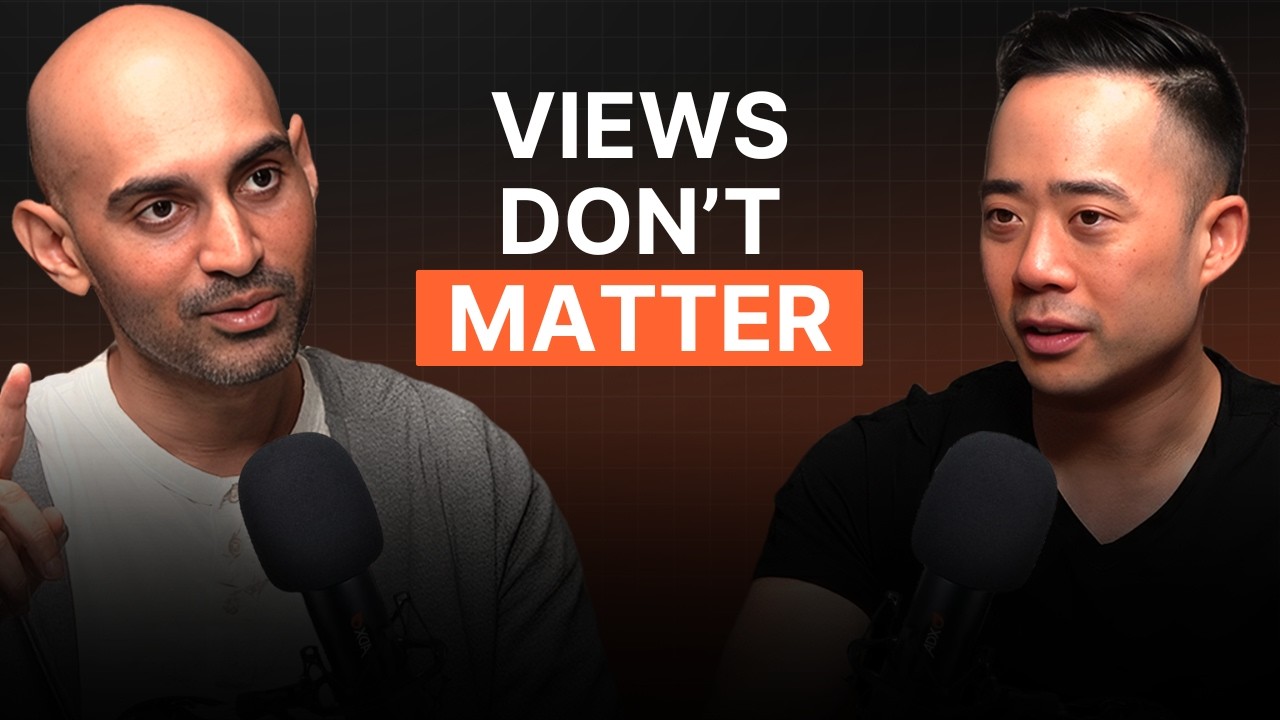
In this informal podcast episode, Eric Siu and Neil Patel explore the booming creator economy, high‑CPM podcast monetization, and the emerging shift from traditional SaaS to AI‑driven software agents. They walk through a detailed $10 million revenue model for a podcast (TBPN) using $300 CPM ads, discuss Goldman Sachs’ forecast that AI agents will capture 60% of software economics by 2030, and argue that software will move toward outcome‑based AI agents (e.g., SEO tools becoming result‑focused). The conversation then pivots to OpenAI’s new Frontier platform and its partnership with Clay, highlighting how AI agents can automate GTM functions such as CRM enrichment, sales scoring, and marketing campaign generation. They share practical tactics for content creation, including scoring team AI fluency, leveraging recorded sales calls versus direct customer interviews, and hiring skilled video clippers. A side discussion covers crypto investment philosophy, invoking Warren Buffett’s long‑term holding advice, and critiques short‑term trading hype. The episode closes with a humorous take on Anthropic’s Super Bowl ad campaign and Sam Altman’s reaction, before a call‑to‑action for listeners to subscribe and engage.
Chapters
TBPN, okay, so TBPN, check this out. So you like, here's a little P&L for you, okay? So congrats TBPN, $10 million plus in revenue. They started it last year as a podcast, okay?
Okay.
$300 CPM, $300 CPM, okay? 20 ads a day, true respect. So when you look at this one, 250 ads, 250 episodes, 20 ads per episode, $5,000 that you can make per episode, right? And sponsorship packages, 20 average sponsor deals, $500 grand, $10 million in revenue. average sponsor deal over here and they just do the math. Cost per ad, $2,000. Views per post, 6,000. CPM is $333. Main thing again is they know they don't have heavy, heavy volume. They might have like 2,000 to 5,000 listeners at a time, but they know it's really valuable.
So yes, because one of their listeners could listen to an ad and then sign a multimillion-dollar contract.
Yeah. With Salesforce or something like that.
Yeah.
Right.
I get why people spend it. If you're a big company too, you just have to end up spending money on brand awareness. And that's why a lot of companies do Super Bowls because they just have so much You've seen this, right?
As you scroll by. So the cool thing is like, and I know one of the co-founders at Ramp, I should reach out. Ramp is a presenting sponsor, so they put the sticker up there and then they have these like Formula 1 hats where it's like marketing school and you have all the logos that sponsor you. I'm like, that's pretty cool. Imagine we have like an orange one like McLaren. That'd be pretty cool. See, I don't have time to manage this, nor do you, but it'd be nice if someone would manage it.
Yes.
Yeah. Anyway, you can pick another one. Here's the problem with most marketing agencies. They don't understand what is happening with the world of AI. With my agency, Single Grain, we think about agency We think about creating agents for the future. When we think about SEO, we think about creating different products such as internal linking products or content consolidation products. And on the other side of things, we think about building products such as Karat. We just think about making marketing easier overall. If you want to stay at the cutting edge of marketing and at the same time leverage the power of AI, go to singlegrain.com and we'll see you on the other side.
All right, let's go with, uh, let's see, Goldman Sachs. AI agents will overtake SaaS quickly.
Ooh, did you see this graph here? Let me show it to you.
Uh-uh.
Okay, so this, I keep calling it a graph, it's a chart. No, it's a graph.
Same thing.
Yeah, so okay, the profit pool in software is expected to shift towards AI agents. So this is a study from Goldman Sachs. So this shows the illustrative shift in total addressable market, TAM, for software as a service, SaaS, and agents over time. So you see in 2025 over here, then it goes to 2026. Okay, 2025, you have SaaS TAM and agent TAM is relatively the same at $30 billion. Okay, then you go to 2026, you know, kind of the same. And then you go to 2027 and then agents start to move higher while SaaS starts to go downwards, right? You go all the way to 2030 where the agent TAM is $50 billion, SaaS TAM is down to $20 billion.
This is just so confusing because most of the SaaS companies I know—
I think it just becomes this.
Yeah, have agents and are creating agents for their customers. I'm like, this is Goldman Sachs, they're just creating a bunch of bullshit.
Yeah, so that's exactly what I was going to say, right? Like, wait, this doesn't just disappear, it kind of just becomes Yeah, HubSpot's been big on agents.
Didn't Dharmesh buy that agent web domain or something?
He bought a lot of, you know, he started an OpenClaw site this week too. Remember how I've been talking about OpenClaw and ClaudeBot? Like he started that too. So what we've been saying earlier is that a lot of this stuff is going to shift towards outcomes. Like even SEO software, this is going to shift towards outcomes because people just, people ultimately don't want to do things. They just want things done for them.
Yes.
Yeah, that's how it is. And so let me just see. Oh, This OpenAI Frontier thing I got to check out. Did you see that today?
No, but I've been watching crypto prices all day.
You have? Oh, you're waiting. I still think there's more room to drop.
Oh, me too.
Yeah.
Not financial advice.
Yeah, not financial advice, but you called this a couple months ago. Okay, so let me just— this Goldman Sachs thing and then we can move on. A recent Goldman Sachs research project projects AI agents are set to take over the profit pool in software. Agents are expected to account for 60% of software economics by 2030. I think whoever wrote this should be fired. That's what I think. Yes. Yeah.
Oh, oh, oh, dude, you want to hear something interesting? Because we were talking about crypto prices for a little bit.
Yeah.
So I texted someone earlier this morning because they had shares in a crypto company and I said, happy you liquidated some. I'm like, you can't control prices and why live in stress each day? They're in a place where their shares are worth so much they could just buy a home free and clear and that would be life-changing for them.
And I told them, Do I know this person?
Yeah, you know him. I'm like—
Tall person. Yeah.
I'm like, if it goes to zero, you're screwed. If it triples, quadruples, yes, your life gets even better, but going to zero really screws you over.
You can't afford to go to zero.
Yeah, you can't afford it. I'm like, you should at least start liquidating. Eventually they started. And I told them like, no one can predict when it'll go up or down or any of it. It's all random. So then they text me back while we're recording this podcast. Yeah, it looks like it definitely has hit the bottom though. Have been holding above X price. They're talking about their stock.
Yeah.
Which is just above the value of their book or whatever it may be that they're claiming based on whatever's public information. Like you can Google this company and you can actually see all their holdings because they have to report it. And this person isn't exact where they know all the financials for quarterly earnings or anything like that. And then he straight up said over text, have been— we've been one of the strongest stocks in the last few days. People are deleveraging, it appears, across the market. And I responded with, no one knows the bottom, sadly. It's all a big guess. Because the moment they say they think their stock has hit the bottom and then they're crossing their fingers, no one knows any of that.
Yep.
And then they respond with, sure, it could definitely go lower. and trade for free essentially, but also why it took some off the table. What do you think is going on? And no one really knows what's going on. Whatever happens, happens. You can never predict the bottom. All you can do is invest in companies you believe in. And I'm not saying their company is good or bad, but it goes back to the Warren Buffett philosophy. I wouldn't want to hold their stock for 10 years or 20 years, whether it looks like a buying opportunity or not. I'm not a buyer because I wouldn't hold it.
Mm-hmm. Right?
I'm not recommending people buy Bitcoin or cryptocurrencies, but certain things like Bitcoin, I'm a believer that I would still want to hold it 5 years from now. I don't know if the price is going to be worse 5 years from now or higher, but when you believe in something, it makes the pill much easier to swallow when things go wrong. And if you're not really, if you don't believe in the company where you're willing to hold it during its down times and just keep pushing through, then don't buy it in the first place.
What did Warren Buffett say again? If you're not going to hold it for 10 years, don't even hold it for 10 seconds. Right? Yes. It's the same thing here. And so that's, I would say, the psyche of maybe those of you that are listening to this are a little younger. You might think trading is the way. You see all these people on YouTube, oh, you look at this red candle over here and this, you know, I think the downside is this and that. And then they draw like another line and goes like this. Yes. I'm just like, what is this? Oh dude.
And that same person used to be like, oh, after every Bitcoin halving it goes up like this and this is what the stock's going to do.
It's a 4-year cycle.
I'm like, dude, people are just talking out of their behind.
Yeah. It's like they're trying to just justify something from out of nowhere. So yes, just because something happened in the past, Doesn't mean it repeats itself again in the future. What do they say? They say history rhymes, but it doesn't repeat. It rhymes, but it doesn't repeat. So keep that in mind.
I haven't heard that one before. I like it.
I have a lot of good quotes today. See, we need some good clips. Anyway, so by the way, I'll speak for Neil too. We're hiring good clippers. So if you're really good, by the way, don't send me a DM with like how you're good at it. Show me examples on the work that you did for us. And yeah, he nailed it when he said for us.
Don't take other random people and show us the clipping.
Show our stuff.
You don't have to show us a lot, just enough where we're like, sounds good.
Dude, some guy, before I show you this OpenAI Frontiers, some guy had like a lot of followers and I looked at his profile and he like, he has a lot of good clips, right? I was like, you know, if you really want to stand out, I would recommend that, you know, doing what he's doing. Well, you have a lot of good examples, whatever. I'm like, but yeah, you just look like everybody else. So good luck to you and your business. But let's go back to clipping for a minute.
Didn't you hire a company that was doing all these clips for you and experiments?
I'm still doing it.
Oh, okay.
But what I've realized is, so they're good at it. I've realized, so people, PB Launch, shout out to PB Launch. I've realized that when I'm like this, I enjoy making the videos and they tend to do better, right? The problem is when someone writes the scripts for me, I tend to just let it, I just follow it. And then I look at the performance and it's just not that good, right? Don't get me wrong, it's creative. It's like there's clone videos of me and all this cool stuff. But I like talking about the stuff we talk about, so.
So what I've found to be super effective And you can do this with your team. We go and interview the people who deal with specific things for clients. So someone may only deal with Reddit for clients. We'll have people who only deal with Instagram for clients or Meta ads for clients or LinkedIn ads, and you get the point, email marketing. And we will talk to them about not just what's new and fresh, but more importantly, because I already know most of that stuff, it's more so—
Yeah.
What are customers continually hitting you up for and what issues do they have and what problems are they trying to address? And we look for enough people saying those, giving them those signals.
Yeah.
Then we create a script around those problems and then the solutions we provide, and then we integrate case studies and then we release those videos. You don't get as many views, but you get more customers. Works really well. I found it very efficient. You're writing notes to do this?
I'm going to do this with my little— because it's very doable. So you know what I've done recently, right? So because a lot of our calls are saved, I want to see over time kind of how people, how teams are adopting AI and what the AI score is relatively, or it can even score you on like, hey, Neil's like trending over time on core values. And it cites actually examples of quotes that you say. And so I tested this recently and it actually said like, oh, like Sean, CTO, for example, right? Like, you know, his AI fluency is like, you know, 8.8 out of 10. And it shows some examples of exactly what he said. I mean, it also shows some other people on the team where it's like, hey, maybe this person's like a little behind. Now I can literally take that framework and use it for what you just mentioned over here for content ideation. And it could just pop up like deal of the day, deal of the day.
Yes. But we don't like just using recorded calls. I understand that, especially if you get approval for calls. The reason we like to talk to the people on our team is a recorded call will tell you what people are asking, but it doesn't tell you what people are willing to pay for it. So what we find is when you talk to people on your team, there's certain issues that maybe not the majority say, but enough people say, and someone's willing to pay you $500,000 or $1 million to solve that problem.
Yeah.
While they could get a Reddit problem that a lot of people are asking you for, but people are only willing to spend 10 grand for.
Wait, I'm confused. Why would your calls not be recorded.
No, no, I'm saying let's say your calls are recorded, assuming you're getting permission. If you have recorded calls, potential sales calls, what they're willing to pay for their problems varies a lot.
Yeah, yeah.
Versus when you talk to someone, let's say if we're just focusing on Reddit, if you have 100 recorded calls of potential customers talking about their Reddit problems, you can create a video on that. AI can help you with that. But what we found to be more effective Is because with the recorded calls, like if you use Gong and stuff like that, it's really easy to parse and get the data from. But what we found to be better is when we're talking to our sales reps and our team that works on, let's say Reddit, for example, because we're using Reddit for this case, and they break down what our best customers, the ones who are paying us the most and sticking around the most, are having issues with Reddit. and how we solved it, and we look at all the commonalities and then create content around that versus what just the majority of the recorded calls say, we tend to pick up better customers because it's appealing to our ideal customer profile versus anyone who has a Reddit marketing issue.
Wait, but I'm still missing it. It's like, so how do you have that conversation if it's not recorded? Because we have Gong in all of our calls and it declares that it's recording.
Yes, but I'm talking about we will go and talk to, let's say Noah here, let's say he runs Reddit marketing for our corporation. We'll ask him the biggest issues for client-related calls. We don't record all our calls. So let's say he has a company, there's a company, Single Brain, and he's talking to you and you already signed up. The conversations are going to be different than what they are for a sales call.
Oh yeah, I think we're on the same page. So I think you might have the gone calls, but I think you're still talking to people too on the side, but you're trying to get whatever data you can. So I think this is kind of similar to what we were talking about earlier in the conversation is this is not the end-all be-all. You know what I mean? It's, you still need to have conversations.
Yes, but we're finding if we use data from recorded calls, the content quality isn't that good.
Yeah.
And the reason is, is we have too much volume and what people are looking for varies drastically. While if we just pull out what our ideal customers are looking for and base it off of that, it's much better content, not necessarily from the views, but from a conversion from a watcher to becoming a customer.
But you can also segment those calls too.
You can, yes.
Yeah, that's— so my point is, I think a lot of this is— this does, again, amplify— AI amplifies your nature, right? So hopefully you're someone that thinks a little step, a couple steps like, hey, like, don't just take the data for what it is, segment it, but also use that with actual conversations that you're having in person too. So the final thing to call out here is this OpenAI Frontier thing came out today.
Wait, I just have one business question for you. So you record all calls, your clients will let you record calls after they become a customer?
Yeah.
Oh, we can't do that.
Yeah, you can't. But like ours, our thing keeps declaring there's a call recorder and they, some do ask us to remove it and we do, but yeah, no, no, almost all our clients still want it. The vast majority of our call recorders are in there. Yeah. Yeah.
I would say if I have, if we have 10 calls with customers, uh, I'm lucky if one lets us record it.
Yeah. You probably have some type of, uh, it's probably these enterprise ones. Yeah. Yeah. So, okay, so speaking of enterprise-ish company OpenAI today, so they just introduced today, this is breaking news, they introduced Frontier, which is a new platform that helps enterprises build, deploy, and manage AI agents that can do real work. Frontier gives agents the same skills people need to succeed at work: shared context, onboarding, hands-on learning with feedback, and clear permissions and boundaries. That's how teams move beyond isolated use cases to AI coworkers that work across the business. So Clay actually just came out. So they're part of this and I want to share this, Varun. So Clay is one of 6 companies to join OpenAI's New Frontier program. Tomorrow's best companies will run on AI across every function. Clay is already a creative tool powering growth teams at Cursor, Ramp, Figma, and OpenAI itself. Now we're making that same power available for enterprises through OpenAI's new platform. So here's some ideas of the benefits that we can talk about. You know, our reactions to this. So here are some ways Clay and OpenAI help GTM teams use AI to grow together. Number 1, RevOps and GTM engineering teams can turn their CRM into a living entity, one that automatically refreshes dedupes and surfaces accounts that are ready to buy. Okay, that's cool. Number 2, sales teams can score companies showing buying signals, pull verified contacts, generate personalized messaging, and sync everything to their CRM. Marketing teams can build targeted audiences and ship relevant creative campaigns from ads to landing pages to email. I think the main thing here is that You have all, imagine your sales team, your marketing team, they're all working within their own context. If you have shared context, you're going to be able to move a lot faster. Yeah. Yeah. So Clay's doing this. Clay's under Sierra, Harvey, which is the lawyer one.
Sierra is Brent Taylor, right?
Yeah. Brent Taylor, which he, I guess—
He's on the board of OpenAI.
They make bots, I guess. But I think the Clay one's actually—
I think a lot of Sierra stuff is manual too, right? Is what they're saying.
I think they use a Palantir model, which is like, They have the scaffolding and then they customize the chatbots for every client, which again, I think that's the future of software. So anyway, going back to this piece, if you're able, because here's my thing, right? I'm like, okay, I have so many ideas when it comes to sales, GTM, marketing, and you do too, but how do you make sure this stuff is happening? And I remember Dharmesh posted about vectors a long time ago where you want everyone kind of pointing in the same direction, because if I want to do marketing this way, you want to do marketing this way, we're actually neutral. We're not moving in the right direction. You want everyone moving together and you can actually see now you can onboard people the same way and all that. So This just came out today. I'm excited about it and maybe I'll go try it when I go home.
On a side note, did you see the ads that—
Oh yeah. Did you see the one with the workout one?
Yeah.
The workout one was funny.
I don't know why I'm blanking on the company.
We were just talking about it. Anthropic versus— Anthropic made these ads, Super Bowl ads. Basically, they weren't calling out OpenAI, but they were saying, hey, we'll never have ads in our products.
Yes. Yeah. It was hilarious.
Yeah. Like, it was funny. So we'll just describe it real quick and I highly recommend you watch. I think they have 4 ads that are coming out. out, but one guy's like, you know, I'm trying to, I wanna get a 6-pack. And then there's this one ripped guy, he's like the AI, right? He's like, perfect, that sounds like a very reasonable plan. Here's how you do it. And the guy's like, amazing, right? And then the other guy's like, okay, well in order to get started, sign up for this brand over here and we'll give you this discount. And the other guy's like, what? He's like, Anthropic will never have ads. Claude will never have ads.
Yeah.
And then Sam Altman responded.
Yo, he was pissed.
Yeah, so the funny thing about that response is someone who is a very popular VC tweeter, he likes both Claude and OpenAI. He's like, dude, the Sam Altman response was, and I can say this, he seemed like his butt hurt. He's like, just to let you know, the ad was in good jest. I laughed at it, but just so you know, Texas has more ChatGPT users than all of Claude, right? There's no reason to say that. And it's not like Anthropic was making— Anthropic just wants their users. It wasn't calling out OpenAI. So I thought it was— he's a little butthurt about it.
Yeah, that was funny. Yeah, I watched him. I enjoyed him a lot. That's pretty much it.
I think we're done. So that's it for today, guys. Please don't forget to review, rate, review, and subscribe, and we will see you tomorrow.









