The Most Valuable Marketing Skills Right Now (Per Greg Isenberg)
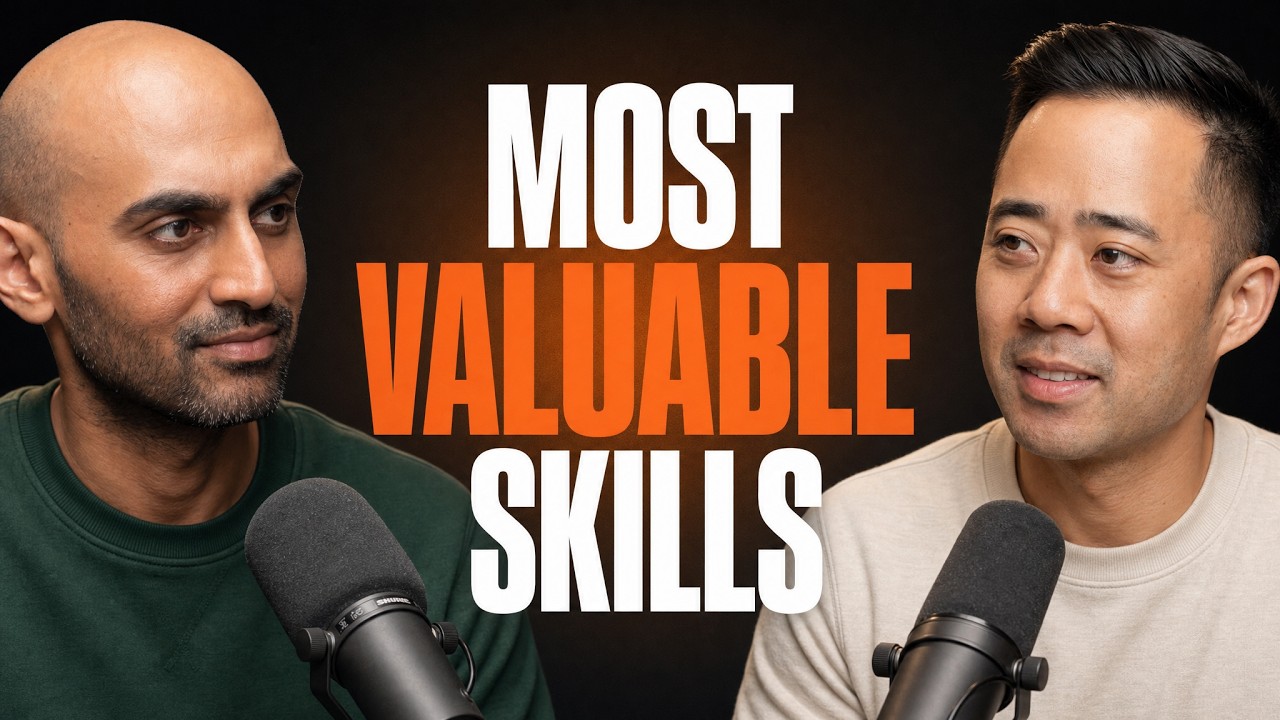
This content was created by Eric Siu. This content was uploaded by Eric Siu. This is a YouTube conversation (title: "The Most Valuable Marketing Skills Right Now (Per Greg Isenberg)") recorded June 30, 2026, featuring Eric Siu and Neil Patel. The hosts discuss high-value marketing skills — community building and events, storytelling, data literacy, marketer-builders who can ship, culture and retention, networking/masterminds, and the rise of forward-deployed marketers and AI agents. They cover practical examples and anecdotes (conferences, founder stories), tooling and platform issues (Claude Tag, HubSpot, APIs, agent usage, governance and lock-in), and include a brief promotion for Neil’s agency NP Digital.
Chapters
The most valuable marketing skills on the planet right now. Okay, so Neil, we can kind of go back and forth here. So I think number one in my mind is if you have the ability to build community, and when I say build community, that means hosting small dinners, hosting happy hours, hosting small events. If you know how to build these communities, these are going to become more and more valuable over time. I mean, I remember even Sam Altman talking about this. I think it's maybe 3 years ago or so, saying communities, events are going to become more and more valuable. And I truly believe that because we talk about all this AI stuff right now, but what ends up mattering is we start to realize that it's the human connection that matters more. So if you know how to build that stuff, you can start small first. I've always mentioned this, start small with a small dinner with like-minded people. You don't have to have a big network, right? You might be thinking, oh, it's easy for you to say. I literally started with a bag of chips and I didn't even have any money and I was like 26 years old. And I just connected a group of marketers together and we just talked about our biggest problems. And then we talked about the biggest hack that's working well for us right now. And then eventually that transitioned into doing happy hours. Then that transitioned into doing smaller events and then larger events, right? And then you can even— then all those skills, by the way, those skills compound. And so let's say you get invited to speak at a conference. Well, then you can throw a side event that's tied to that, right? And so I think there's a lot of different ways to play it. And I think doing these events is a lot better than sponsoring a booth, for example.
Yep. Dude, I totally agree. I think another skill set that's super important in marketing that people take for granted is storytelling. I look at marketing as building relationships with people. I know Eric talked about doing in-person events and building a community, but people tend to buy from people that they can relate to, that they like, that they can connect with. And to do it at mass scale, you really need to leverage storytelling. Yes, there's a social web and getting your message out there on Facebook or Instagram or TikTok or whatever channel you choose. But if you're not good at storytelling, you're not going to just be able to bring people in as much and build that relationship and be able to close them. I think it's a very underutilized skill. Everyone talks about storytelling and how it's powerful in marketing, but very few companies actually leverage storytelling from what I see.
Yeah, I think another one's going to be— I've talked about this, the rise of the forward-deployed marketer. So Palantir has this forward-deployed engineer, and people have different definitions of this now, but Palantir's model is they insert basically a full-time engineer in your company, and they learn how your business works, and they help you deploy on their Foundry system, right, which is what Palantir has. And so I think you can also have versions of this where it's a full-time marketer on your staff, where they go into a company, they implement agents, so they will set up the agents properly, they'll customize them, And they'll continue to maintain them for the business. And they might have an engineer helping from time to time. So at least that's what we're doing with my company. And so now, like even when I had a good chat with somebody yesterday, it's even when I had the chat with him, I'm like, look, man, we're not hiring you to join traditional agency. That model is dead, right? You're coming to be a forward-deployed marketer. I'm here to break the model, right? And he's like, that's exactly what I want to do. You get him excited, but then he has to be able to speak the game. He has to talk about what he's actually deployed before. Because my belief now is that the human can say, okay, the human starts at the beginning, they find what they want to do. The agents should be able to handle the bulk of the work. I'm not saying all of the work, but a lot of the work. And then you have the human at the end for judgment and taste, right? And then you should be able to compound that a lot more. But all that stuff, like your clients want this, right? They want you to figure out how to manage it for them. They want you to figure out the right connectors. They want you to figure out the right workflows. They want you to even figure out token routing as well, token optimization. I mean, I'm in this one AI chat right now where there's like 23, 24 execs, and a lot of them are operators of businesses doing— they have like thousands of employees. I'm talking like some are 5,000, 8,000 employees or so, and they're all talking about their AI challenges. But I can see this. I'm telling you, a lot of people want this done for them, and they want some form of Four deployed happening for their business.
I would say another skill set that's super important is being able to understand data. And you may be thinking, Neil, why do I need to understand data when I can just use ChatGPT and it can just crunch all the numbers for me or use Claude or any of the other solutions out there? It's not the same. The reason I say it's not the same is let's say you are starting a brand new marketing campaign and you want to run Google and Facebook ads. In the first few days, if you're having it analyze your profitability and ROI, The chances are you're losing money and it's doing terrible and you're not going to, you know, it's going to end up telling you, hey, it's not working. But if you've been doing marketing for a long time, you know that your first few days, even first few weeks, sometimes even first few months aren't going to go as well as you may want. The campaign's not going to be fully perfect and fine-tuned. It takes time to scale, ramp it up, and fine-tune conversions and experiment with different marketing messages, campaigns, landing pages, Creatives, et cetera. So if you just have AI look at the data, it'll tell you it's not working, but it may not understand that it needs time to really learn and figure out, it needs time to learn and figure out what traffic sources are best for you, what creative combinations are best for you with the headlines and text and all that kind of stuff with the landing pages. But a marketer who understands data combined with having experience is going to much better understand what's working, what's not, how fast it's progressing, and if, you know, they should keep doing it or not. And I wouldn't recommend fully relying on AI just for number crunching. In many cases it's off. I'm not saying majority, it's gotten a lot better than before, but I think you as a marketer need to be good at understanding data, reading it, and deciding what to do based off of it. I don't think you should be relying 100% on AI to just analyze the data for you and then tell you what to do because there's going to be a lot of times where it's wrong. There's also going to be a lot of times where it's just rinse and repeating what's worked for other people in the past. And what we see in marketing is doing new stuff that other people haven't been doing is, you know, much more successful.
Yeah.
Then in many cases, that's what bears the success than just rinse and repeating the same old playbook that everyone else is using.
You know what AI is, Neil? For some people, AI— not some people, a lot of people— AI is the abdication of intelligence. You abdicate your intelligence because you expect to just do everything for you. Oh, analyze the data, and then they take it at face value, and then they have the guts to present that data to you as well. That's the worst, right? Or when you see people, let's say they do a sales presentation, right? You're doing this, they're doing a sales presentation. Oh, wait a minute. Wait, Neil, the sales presentation you're showing me, didn't you just do that with Claude Design? Because it has all the elements from Claude Design and it looks like slop. And so if you aren't— we've said that there's that 2x2 where you have people that are maybe not the smartest and then they use AI, they become slop cannons, right? You don't want to do that.
Yeah.
So I think another one that sticks out to me is you don't only want just someone that's good at marketing. That's obviously very important and it's becoming more and more important. You want to know how to— marketers who can ship. So let's say like a builder or like a builder, like a marketer-builder. That's what we'll just call it, right? If you can build something, let's say you get a prototype out there, it's 80% there and you continue to iterate on it, but you know how to drive distribution. So you know how to make LinkedIn work, you know how to make X work, you know how to make short form work. Like you see a lot of these people on Instagram right now, comment this, 9,000 likes on it, right? So if you learn how to crack the code on one of these, just get one of them good and eventually you can learn the other ones, you're going to be in a really good spot.
Yeah, I would also say the next skill that, you know, if you want to succeed as a marketer is you need to— I wouldn't say creativity, right? Because I think AI can help you with quite a bit of creativity, but it's more so Leveraging that creativity and running a lot of experiments. If you can't run enough experiments on different channels and you're not good at thinking of what experiments to run, it's just tough to do well. Because what I found is when everyone says, oh, go look at me, look at this case study, this is what works, go copy it step by step, and then enough people eventually do it, it tends not to work as well going forward in the future. All good marketing channels eventually get saturated. The way you end up winning, right? Eric talked about that compounding effect. If someone's using AI before you and they've been using it for a year, you have a lot to catch up on. The way you catch up isn't by doing the same stuff that they did. It's by trying a whole new approach. If someone zigs, you zag. By doing something drastically different, in many cases, you can catch up and beat someone by doing 1/10, you know, 1/20 of the output, but by just doing something totally different that the market will love. And it's hard to figure out what that is unless you experiment and you're going to get a lot of failures.
Yeah. I want to talk about something before I talk about how agents will use software 100 times more than people. So, you know, you and I, we know somebody, okay, who is, you know, relatively well-known in the creator space. I'll just leave it at that. And it's interesting because, you know, the number of creators that this person has hired for their, let's say, their creator team, has gone through like 4 iterations basically, right? And what I had learned from one of these individuals working with this guy is that he actually had a good quote. He's like, look, man, like the content can build the brand, okay? But it's the culture that retains. I'm going to say that again. You can get all the views in the world and that'll build a great brand for you, but ultimately, Once people come to work for you, they start to realize who you actually are and they start to ask themselves if this is a place that they actually want to stay at, right? So the culture that you build matters. And culture, those of you who might be thinking, oh, like, what does that even mean? Culture is just how you do things, right? And you might align with how certain companies do things, you might not align. You just got to find a culture that works for you. But I just found that was really interesting because there's a lot of good people that churned from that company. And it's interesting because when I play poker with this group of entrepreneurs, that was kind of the topic that came up. It's like, oh yeah, that company had churned through like a lot of creators, right? So all that to say is that you can, like we just talked about, it's important to build distribution. It's important to build a good brand. But I think if you really want to compound, using that word again, for the long term, you have to learn how to bring people along. What's that inspiring mission? Okay, what's that culture? How do you—
Yeah.
Bring them into that culture too and not just be— make it all about you, you, you all the time, right? And I'll just leave it at that.
Yeah. Dude, people forget about culture in marketing. It's like you have a crap culture, it really screws up the team in the long run. I think that goes well beyond marketing, but just generally people like, oh, I want to hire this person, they're so amazing what they do. I'm like, but they have a crap culture, they're not— or they have a crap attitude, their beliefs don't align with your company beliefs, it won't end up working.
Well, Neil, hold on. I mean, one second on that. Like, you think about this, right? You look at your relationships you've had over the years from people that worked with you a long time ago. I look at my relationships that I've kept over the years. So for example, uh, Raghav, shout out to Raghav, who's Gary Vee's right-hand man now. Like, he worked for Single Grain for a while, right? I keep in touch with these people, but, and you've kept in touch with some of these people for a very long time, even people that have left you. And like, and some of these people that have worked for you, and same thing for me, they've gone on to start their own companies. And I'm very proud of these people, right? And so People like over a long period of time, this is why people like to watch long-form podcasts to see who you are, right? They can tell who you are. And so all I'm saying is like, you can do the content thing, but eventually like people are going to realize who you are. You should just play for the long game. And that means treating people the right way. And so all that does factor into your marketing.
So go ahead. And I would say another thing that you really need to do as a marketer is have a great network. So Eric talked a little about community at the beginning. That was the first one. But Eric and I have both been to a lot of conferences. And when you go to conferences, you'll see sessions. People talk about what they're doing, what they're not, what's working, what isn't, share some stats and case studies. But Eric and I, when we've been at conferences or just business networking events, we found that some of the best strategies come not from being in the session, not necessarily from drinking with people. I don't think Eric drinks alcohol. I don't either. But it's come from sitting down one-on-one, kind of like at a bar. It doesn't matter what you're drinking and just sharing what's working with other people. And people just talk and they'll end up saying, hey dude, you should try this out. Look at the results from this. And they'll share the stuff with you that they would've never shared in public or to a mass audience. I've gotten a lot of strategies that way. I don't know if you have, Eric, but I'm guessing you have.
All right, so I wanted to take a moment to tell you about my podcast co-host Neil's agency called NP Digital. And they work with a whole host of global companies or global organization. Also, Neil has SEO tools such as Ubersuggest and AnswerThePublic. All you have to do is go to npdigital.com to learn more and we'll see you on the other side.
And that's why—
Neil, I have a really good one. Let me give you this one. Do you remember there's this time when we both went to Traffic and Conversion Conference in San Diego and we sat at the bar of a Starbucks? Do you remember this?
No.
Okay, so this had to be like close to 10 years ago. So sorry to interrupt you, Neil, but This one conversation Neil and I had saved my business, okay? This is the time, the same time when I took over Single Grain, I made it go from bad to worse, and the outside accounting firm said it might be time to shut it down. This is weeks after I had that conversation, okay? So Neil and I were just talking at Traffic and Conversion Conference. He's like, at the time we started ranking number 1 for the keyword digital marketing agency, right? And so, but Neil's like, oh, you should refer the leads to this one agency. We refer all the leads to this agency and we take a, like a, we take a nice cut from them, right? And I was like, oh, who's the agency? That we started sending all the leads over there. That revenue recovered us. So we were able to hire the people that we needed. But that's an example of a random conversation Neil and I had. And it wasn't even like I was looking for that conversation. It just happened.
Yeah. And that's what happens when you get people one-on-one. But I would have never said that publicly in front of a speech at that time at Traffic and Conversion, even though it was a paid mastermind. Although I didn't pay to go. I don't know if you did. It was a paid mastermind. I don't know what people were spending. Was it $25,000, $50,000?
We weren't at the mastermind. We were at the big conference for that one. It wasn't War Room.
Oh, okay. Traffic and conversion, not War Room. But still, right? Traffic conversion ticket, let's say it's a few thousand bucks. Whether it was that or whether it was War Room, I don't think I would've went on stage and be like, hey guys, in front of 100 people or whether it's 1,000 people and said, you can end up doing this. But one-on-one, people are more flexible. And you get some of the best marketing strategies from it. Dude, I was one-on-one 2 weeks ago with someone and they were talking about, what is it called?
Quora.
So I don't use Quora too much. And Quora is not really like a social site like Reddit where people give reviews on a company or product, but sometimes they do mention companies and stuff like that. And there was this guy in there, he was telling me on how there was a thread on Quora and it mentioned his company name and it did it in a really negative way. And I'm like, you mean Reddit? He's like, no, no, Quora. I was like, oh, okay. And I was like, so what'd you do? He's just like, I got it deleted. I'm like, you got it deleted? He's like, yeah, I know someone who can get a lot of stuff deleted on Quora. I was like, oh, that's interesting. He's like, let me know if you need an introduction. I'm like, I'm good, but thank you. For example, if I needed something deleted on Quora, I could leverage that introduction. My philosophy though, when it comes to social communities, isn't to focus on quote unquote deleting. It's to be proactive and try to figure out the root of the problem and then solve that. Because if you just pay to get something deleted, I believe it's just going to come back with someone new and all they're going to end up doing is just trying to milk some money off of you, right? Because they're just like, oh, I'll pay to get this deleted or paid. People keep charging you. And 2, I don't like the concept of pay for play. I believe if someone's mad at you because of a review or a bad product or a bad experience, if you fix it and you show it and you show that you genuinely care, it can be used as an opportunity for marketing and for you to get more customers. I think North Face is a great example of this. Someone was hiking with the North Face jacket that's supposed to be waterproof. It didn't work out well. They put on social media complaining. North Face flew with a helicopter, delivered the new product, and the person was ecstatic, and it really helped their brand get out there. That's why I'm a big believer in not paying to delete or delete. Instead, what you should do is fight fire or fight people hating on you with kindness, and I found that that usually pays off.
That was a great North Face thing campaign, but I think that was a UGC campaign that they put together.
Oh, I didn't know that.
It looked real to me. And then someone's like, oh, it's a UGC campaign.
I'm like, oh, okay.
But they did it a few times too. But one thing to go back on with Neil talking about networking in general. So I always collect intros. I'll tell you this much, because like, for example, like maybe there's a Quora guy, maybe someone does this, maybe someone does that. So I always will say, like, who are the best people, you know, who should we talk to, right? And then I always just make a list of these people that I potentially come back to later. That's one thing you can do. So it's all about building relationships.
Yeah.
But going back to War Room, so War Room was the mastermind that Digital Marketer had, and I did pay for it, Neil. This was in 2017, 2018, something like that. But it was our late friend Brandon Stapper, and then Yaniv, we joined as a throuple basically, and we were real estate investors. And so that's, we got a good deal there. But anyway, all that to say is that from that group, we formed almost like a mastermind group from that. Like it's a group of like 8 or 9 people where we meet every single year. Since 2018, we've met every single year. First, we started with Cabo. We've been to Bodrum, Turkey together last year. Like, we go to like, you know, all these places in Mexico, right? This year, next year, we're going to Mexico again. But all that to say is that I remember, you know, we would go on, we went on like a little boat trip. Somebody, I'm not going to name names, someone had a conversation and that one conversation led to millions of dollars for one person. I'll just leave it at that, right? So, I'm just saying that like these relationships compound and you want to keep them over time. And then look, William has joined us as well. William's going to be famous on the internet.
So yeah, and dude, one thing I learned from talking to— with Yaniv from Nextiva, he has a phone company. He's like, dude, one other way to do well is you go into industries that are regulated or hard to just enter in. And even because like he's in telecom, you can't just go set up a telephone company and just compete. It is very regulated throughout the whole world. But the same goes for even setting up a marketing agency. It's not hard. Like, we opened up incorporation in Taiwan. The amount of money we had to put in and all the restrictions and stuff just to get it set up in Taiwan, it adds up. Those things just make it more and more harder for other people to play and compete.
How dare you enter my country? But anyway, I need some space if you want me to end sooner. But if you want me to enter your country, me too.
Oh, there you are. I'm not on mute.
Your dad cannot come in. You guys can come though. All right, so I'm going to move over to— yeah, tell her when you're on mute. Okay, so Aaron Levy says this, agents will use software 100x, 100 times more Emma more than people. So when that happens, here, let me share my screen over here so you can see this, Neil. So check this out. Okay, so when that happens, there's a huge need for guardrails on what the agents are doing so they don't leak data or change the wrong information, authoritative sources of truth for them to work with, logging and auditing of what they're doing, the ability to collaborate with people through these systems and more. So all this to say is that you look at Salesforce, people are using Salesforce 5 times more than before 'cause they have this headless system, right? And nobody wants to log into UI 'cause Salesforce UI is a piece of crap. A lot of the stuff I query around HubSpot now is just me talking to the API, right? And just querying from my agents. And so we've talked about, you know, our softwares, like whether it's Ubersuggest or whether it's ClickFlow, like we do have an API, we do have an MCP for it, and we're starting to see this happen more and more. I think, was it Stripe that just came out with the agent directory?
Yeah.
And so all this stuff is forming right now, and I think if you can start to optimize For the agents. I think, by the way, someone just mentioned on X that he's just creating directories for med spas, for example, to kind of just spam for the agents to pick up, right? And so there's going to be a lot of agent spam for sure. We would encourage you again to take the long approach here, but I do believe that agents will use software 100 times more than people. And because of this usage, I think they'll probably come up with more creative ways to use it as well.
Dude, I totally agree with you on that one. The other cool part with agents is the moment they start using software, I think you're going to start seeing a whole boom in the software industry. Yeah.
Well, by the way, we've seen like HubSpot, HubSpot's doing well. Like what was it like $3.8 billion in revenue, but then the valuation is the market cap is $7 billion.
$3.7 billion is the projections for 2026.
Yeah. By the way, I did, I actually made a YouTube video on this right before, but I figured we should talk about this too. So Neil, did you see that Claude tag came out?
No, I haven't seen that.
Okay, well, here's what Claude Tag does, right? So let me just show you on my screen over here. So basically, these are like— I've been working like this inside of Slack for a while, right? So imagine that you can talk to your data inside of Claude. So this— they're like, oh, it's a new way for teams to work with Claude. So you can have Claude and Slack team up together, and you can combine it with HubSpot, you can combine it with Asana. So you can like a lot of the things we've been doing already, right? But a lot of people are already using Claude. And so this video got 15.7 million views on it. And you can see here, like, this person's asking Claude questions. Hey, you know, what should we do for our cadence picker for how often we talk about this, you know, product launch? Or over here, it's like, hey, you know, here's our scheduled export for this launch. This is in beta. Would you like me to add this and this thing over here? So your team starts to work inside of Slack and it's with your agents and it becomes multiplayer. Now, Neil, let me get your reaction on this. How cool do you think this is? Are you guys going to use this? You're muted.
I think it's cool. We definitely would end up using it. Okay.
I think it's dangerous to use this. Let me tell you why, Neil. And this is going to be another money-saving conversation for you. Just like I said, I saved you $10 million last time. See, you guys, we get to have these private conversations in front of you where everybody saves money. So, um, so this is a good, um, good thinking behind it. Okay, so Claude Tag is actually a Trojan horse, not because Anthropic is trying to be, be evil, but think about it this way, right? So all the things that you have to—
They're locking you in to just make money.
What's that?
They're locking you in to make more money. That's really what it is.
So what they're locking you into is— it's not just— we're not talking about model lock-in where they're forcing you to use their models, but it's context lock-in, right? So Neil, if you start If you start to compound all your knowledge inside of Claude and that, it hangs there. And like, people quit your company, it's not like you can share that memory across, but that entire Claude system has your memory as a company, right? And so you're actually better off making your own or going with like a managed service here where someone puts it together for you. But if you want to make your own, like, then you can choose what models, you can choose token routing, you can choose token optimization, but you can also choose The scaffolding that you want with the memory, the storage, permissioning, governance, all these things. And so you can use something like a Nemo Claw that ties in with Hermes or ties in with OpenClaw, and then you can decide how you want to go about setting up the different models that you want, right? So you can do this yourself, or you can— done for you, whatever. But I think Claude's going to do this. I think OpenAI is going to do this. I just think it's dangerous to have this right now because once they're locked in, like, you're basically You're basically renting from them to run your company, right? And you don't want to do that.
Yeah, but there'll be a— I believe eventually there'll be a way to export it all and someone else can— just like, let's say you have a CRM and you're using Salesforce and you want to export it all into another company like HighLevel or whatever it may be. I do believe that there's ways you can just export and import into whatever new solution you want to end up doing. Happens with most companies. And these corporations, these AI companies are getting much more flexible. Like we get alerts now on usages and billings and if people are over the limits in advance, and then that way we know if we're going to spend more than what's budgeted internally when it comes to things like OpenAI. And you're seeing these companies become more company-friendly and they have no choice because then what ends up happening is a competitor will release the features and say, hey, we're not going to handcuff you, we're going to let you leave. as you please, you can export whatever it may be. And then what happens is, you know, they end up losing business if they don't adapt.
Yeah, I think the other thing too is, just so everyone knows, that Claude Tag, it doesn't charge you on a per-seat model like a typical Claude Teams or enterprise subscription does. It actually charges you on usage. So you are paying on basically API. And so I think, again, it's going to be extremely useful. I think, like, remember what I said, Neil? I was like, Like when I did my talk a couple months ago, I was like, most companies are going to be working like this. I didn't anticipate that they would do this as quickly. Um, I thought they would do something like this eventually, but it's faster than I thought. Um, but I think, sure, you could, you can export and things like that, but do you want to be paying on usage? And if you're going to do this, like, there's limited connectors right now. You can add more, obviously, but I also don't want, based on the permissioning in there, like, you can have different people that are in your Slack that maybe they aren't Claude users, they can get access, they can ask for things, right? Then you start to think about prompt injection, you start to think about other threats that maybe those people aren't thinking about. So there's a lot of lockdown that needs to happen here, again, from a permissioning, governance, security standpoint. But I do think it's— I don't think they're trying to be evil. I think they're going to make a lot of money from this and the world will move on.
Yeah. And I think you'll also start seeing a lot of these things become more affordable over time. Look, the ideal way— I know what Eric's talking about, doing things internally. Most companies don't want to end up dealing with it internally or dealing with security or all that kind of stuff. It's just easier to pay someone else to end up doing it. This is why a lot of companies pay software solutions like NetSuite instead of just building it on their own. But what you have over time as the competition heats up, More and more things will become affordable, not as closed in which you can export, import, and they become more friendly. It's like, you know, when cloud first came out and AWS took the scene, AWS has made it really easy for you to move off of AWS into another solution and vice versa. They all have no choice but to be friendly.
That's it for today, and we will see you tomorrow.









