The One Thing Missing In Your AI Stack That Will 100x Revenues
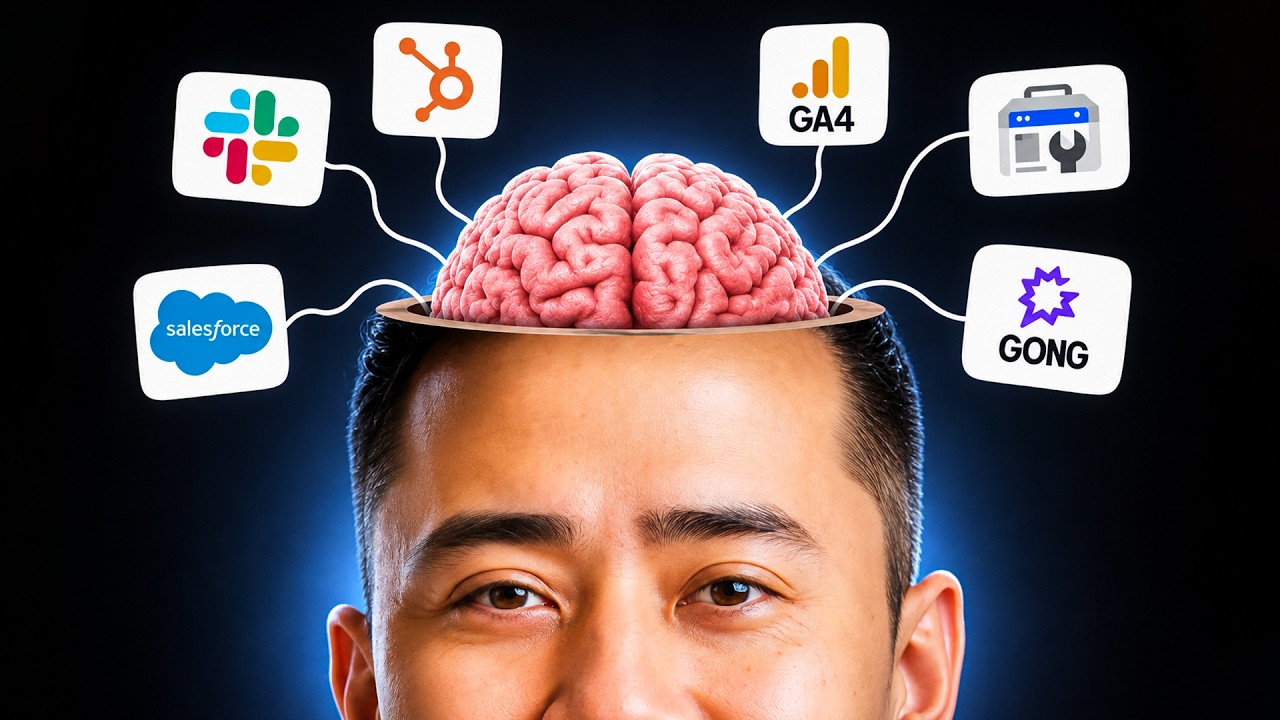
Eric Siu argues that connecting multiple AI agents to a unified "single brain" that accesses all your company data and tools creates 10x to 100x productivity gains, not the marginal improvements from isolated agents. He shares his own numbers: $7,500 in token costs generated $500K in savings, a 66x return. Real examples include automated cost-cutting, real-time dashboards, and AI-generated ad creatives at scale.
Chapters
OpenClaw, Hermes, whatever agent you're talking about right now, I'm going to tell you one thing. If you want to grow your revenues a lot faster, you want to make a lot more money this year, you have to check out this video because this whole entire concept of combining these things together to build a single brain, this is the concept, this is the strategy that's going to make you a lot more money. So stay to the end of this video. I'm going to walk you through how to go about doing this and real-life examples on how this works. Let's get into it. So the whole idea behind this, this is a keynote talk that I did, and the whole concept here is that you have one brain. If you have one brain, you have a single brain, everyone on your team is not going to just move 10x faster, they're going to move 100 times faster. And the problem right now with most AI adoption is that you have what, like 9% of people deploying? And here's the thing, 75% are experimenting. They're using ChatGPT, they're using Claude, they're just using it to search and come up with recipes, for example. And that ain't it. That's not what's going to help you make more money, right? And on this channel, obviously, we talk a lot about agents and things like that. But it's cool to have the agents. But if you have them in isolation, and they're not working together, and they're not plugging into all the different tools that you have, you're not giving them enough context to not only help you do better, help your team do better, and ultimately, your business is going to do better. Okay, so the problem is, this strategy that other companies have right now, where it's like, oh, you know, I'm going to dabble a little bit in cloud, cloud, you know, cloud desktop, you know, cloud code, ChatGPT, whatever it is exactly, they don't have the compounding nature of a single brain. So the tools don't talk to each other, the knowledge stays siloed, change management stalls, and, and pilots never ship, right? This is a lot of business lingo, but the main thing here is that none of it compounds. And if you want these things to compound with you, the only way you're going to do it is, is, is, is if you have these systems working together, okay? So here's an example. Like, you might have Slack over here, you might have GA4, okay, Google Analytics. You might have your HubSpot over here, you might have your Salesforce. These are your CRMs. You might have your Google Search Console over here. Now the challenge with this is that you have 5 tools, 0 conversation. They're not talking to each other right now. There is no single brain. They're not aware of each other. Okay. So what you got to do is you got to have your single brain in the middle. Okay. So you might have Slack, GA4, Search Console, Salesforce, GitHub, HubSpot. You want to have all these things talking to each other because what then happens is this. I'll give you an example. Okay. So you might be using Slack. Inside of Slack, your team is asking the agents, they're asking the single brain, hey, what are the patterns behind all the deals that we've lost in the last 90 days or so? Okay. And then can you cross-reference that with what people are talking about, what are they looking for exactly? Can we look at the Google Search Console data to determine, hey, based on whatever people are asking for, maybe we should create content around that? Okay, I'm just saying sky's the limit. When you have these things talking to each other, you're going— your team's going to be able to move a lot faster. I'll give you more examples here. We've had an intern, he onboarded himself using SingleBrain. Nobody asked him to do it. When you have this ability— by the way, if I want to look at Google Search Console What are trending keywords that are moving? What are people talking about inside of Gong? Based on that, let's use the ClickFlow API, which is our content generation API for AEO, for SEO. Let's use that to generate more high-intent content based on what people are looking for. So you see where this is going now. Everything starts to connect. And once everyone starts to work like this, they start to talk to these inside of Slack. They start to feel like they're not just 5x, but they're 10x, sometimes even 100x more. Okay. So the whole idea here is that you have this unified brain. Okay. So single brain, unified intelligence. And you might have Alfred as your chief of staff. So we use OpenCLAW, we use NemoCLAW, which is the enterprise runtime for NVIDIA. We also use Hermes as well. Those are the bots that we use. So Hermes kind of serves as the checks and balances to make sure that Alfred's doing the task. Single Grain is the execution layer. This is where we have our staff helping. And then these are kind of the agents that fall under the fleet, right? And so the whole idea here is that you have these layers and the org chart of the future now looks different. The other thing I'll say is that you might have your team over here. So Alfred might be the chief of staff. Hermes would be checks and balances. Oracle, good for intelligence, good for pulling SEO information, good for pulling— oh, maybe you have some product information. Oh, maybe, you know, when you change the language on this page over here, it actually increased the product usage by 34%, and you should do this more. So you can pull in Mixpanel data, you can pull in Stripe data, whatever you want to pull in, like product data, how engaged your users are. You can do that. Okay, Flash, you can use it for social media. I've had social media posts that are generated by, by these agents, 350,000, 500,000 views or so. It generates leads for us. So my point of saying all this is that once you have your agent fleet, they're all talking to each other and they're connected to your data, they become a lot stronger. Okay, then what happens is you now give every person on your team a fleet. So let's say someone's leading paid media on your team, you know, they might have their fleet, and this fleet might be customized based on what their goals are. Based on what their individual needs are. You just do this for the rest of your team, and you have it for your SEO lead, paid media people, content, ops, sales, just across the board. The possibilities are endless. By the way, if you're enjoying this whole concept of a single brain right now, that's exactly what we do for customers. We build these custom revenue agents, and we give them a single brain as well, and we pilot it with our customers. Just go to SingleBrain with a B, check it out. And now back to the video. So as we go through this, you, you have to really understand too, you have to think about, okay, where's your team at right now? If they're at the ChatGPT, Claude, Gemini, they love it, they love using them for recipes, that's not enough. You got to get them to over here. Okay, so done with you, you have the agents, you know, they are doing maybe social media tasks for you, they're doing SEO tasks for you, they're doing sales tasks for you. So you want your organization to at least know how to work with the agents here. And then at the very top, you might have a single brain at the top, and then you have these, the, the, the CEO agents or chief of staff agents kind of holding this accountable. And this, this you could just, you know, play with on your own, but, but you got to get your team up to this level over here. Otherwise, this stuff is not going to work because I can talk about it all day, but we're talking about change management here. You got to change behavior. I'm not going to bore you with all those details. I mean, that is one of the biggest challenges that we have at my company right now, Single Grain with a G. But that's what we're taking everyone with, Single Grain. Okay, so just remember this: if you're able to have 1 human plus 5 agents, you're gonna have a 10x team member. Okay, the math doesn't work without this brain. And in fact, I truly believe some people are going to be 100x. Okay, so just some examples here. Look, okay, give me a 7-day pulse on client XYZ, ROAS by platform, top spending campaigns, anything anonymous. And then boom, it's pulling out all this data over here. Here's how it's going. Top spending accounts, anomalies. The question now that you should be asking yourself, your team should be asking themselves is this: why build for 22 weeks when you can build it in 22 minutes? Because human timelines no longer work, okay? Meaning that your 2025 clock speed no longer works in this year. It just doesn't work anymore. And I'll give you an analogy. Let's say we're all riding our horses before. We wanted to go from Los Angeles to New York City. If you wanted to do that back in the old days, it would take you 90 days to do that. If you got in a pickup truck, you can go a lot faster. You can get there in 4 days. Not only are you 22.5 times faster, your capacity has increased. A lot because not only are you— the horse can only carry you, okay? Maybe it can carry some additional items, but it really can't carry much more than you. You're in a truck, you can carry way more, you can go a lot faster. That's what the single brain concept allows you to do. You can literally build this stuff and you can literally build creatives on demand. I mean, you could look at the campaigns and you can build creatives. Look at this, you're literally Picasso, which is our ad creative agent. You're literally building that within here, okay? So I think the concept of single brain you should take in. You don't necessarily have to use our single brain, you can just make your own. That's totally fine. We think it's so big. And that's why we have a lot of the focus on it right now. This is, by the way, this is real stuff that we're doing right now. So what's our ROAS this week? Okay, so Oracle, what's our ROAS across Meta and Google this week? Here's the split last 7 days. Here's how Meta's looking. Here's how Google's looking. Top creative is this one over here. Imagine if you could just say, hey, that founder creative, show me what that creative looks like. And let's double down on that. Let's triple down on that. That is the power of having a single brain and right, scale it to 200 variants, scale our top creative to 200 variants on it, spinning up 200 across 4 formats. Over here you have static carousel video story, it's going to take 18 minutes and then you're just going to get delivered. So that is the power that you're going to be able to prompt something in, you're going to be able to get a campaign out. So we are now talking about building end-to-end solutions with a concept like this, but none of it is possible unless you start to connect these things together, unless you start to think about security, Unless you start to think about reliability, you start to think about stability. These things all matter ultimately, and you're going to have to test it. If you're going to build it yourself, you got to test it. But there's a lot of different ways to play this, right? I've talked a lot about OpenClaw. I've talked a lot about Hermes. I've talked maybe a little bit about NemoClaw, but you've got to test this yourself and you got to make sure that it's working well for yourself. You got to make sure that you dogfood it for yourself. And that's why for us, we've been testing it for a while, and then now that's why we've been rolling it out. So I just want to call out again too, like, if you are going to be doing this, just be prepared to spend a lot more in tokens. This is just my personal spend. Obviously it could be more, but $7,500 in tokens. You're probably thinking about the return on investment on doing this. I think you have to do this no matter what. Okay, so $7,500 spent on tokens. I got $500K back. How did I do that? I basically, at least on my end, the real life example is we cut $500 grand in costs that it found running a monthly kind of a CFO cron job. Okay. And it's like, oh, you're spending too much on software over here. Oh, your contractors are a little too high over here. Here's what you should be cutting. 3 days later, we made those cuts. $500 grand. That is massive savings, right? I think that's like a 66x return or something like that on the $7,500. So all that to say is you're going to get savings from this, but you also have to think about token optimization. Okay. And that's a whole other conversation. But just keep in mind, your tokens are going to continue to scale up. You're going to continue to spend more because you're spending more on intelligence. Okay. So You're going to be enlisting the help of Hermes, of OpenClaw, of NemoClaw. If you're part of a business, probably should have like a NemoClaw if you're at any sense of scale to be able to think about from an enterprise standpoint, like, are we thinking about security? Okay, so the last thing I'm going to say is this. You have this quote over here from Microsoft CEO Satya Nadella. AI agents will become the primary way we interact with computers. Your agents will become the primary way that you do research, that purchasing decisions get made as well, and that it will be the primary way that, that we interact with computers. You're going to be interacting with their agents all the time, and that is happening right now within this whole single brain concept. So look, if you enjoyed this video, we've talked a little bit about OpenCLAW. You got to check out this, this video over here. We're talking about OpenCLAW revenue agents. Check it out, and we'll see you in that video.









