The ROI of creators is… 0?, and Brand trust: Why human attention beats algorithms
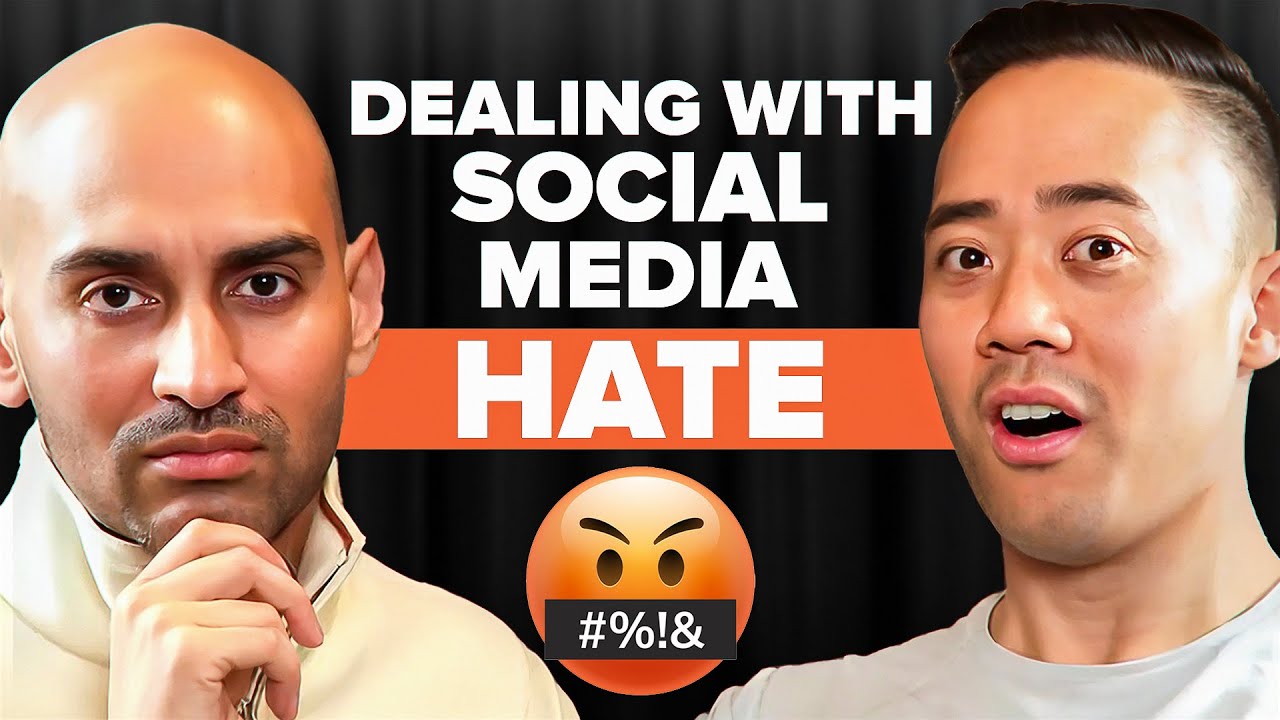
In this conversational YouTube episode, Eric Siu and Neil Patel dissect the diminishing return on influencer marketing, especially in the hospitality sector, where macro‑level creator deals often yield no measurable ROI. They cite a social‑media manager’s thread highlighting that hotel brands are abandoning free‑stay swaps because the cost outweighs any sales lift. Both hosts advocate performance‑based, revenue‑share arrangements with micro‑ and nano‑influencers as a profitable alternative. The dialogue then shifts to broader marketing strategy: the superiority of human attention over algorithmic optimization, the need to chase platforms where organic reach is strong, and the pitfalls of chasing algorithmic rankings. Interspersed are promotional plugs for the Agency Owners Association and Single Grain, personal health‑app anecdotes, and a discussion on handling online hate, illustrating their practical, no‑fluff approach to modern digital marketing.
Chapters
Neil, did you know the ROI of creators is zero?
No. What do you mean by that?
Okay, so I was reading a thread. This is interesting. So, um, this person on Threads, this is the first time sharing something from Threads, uh, Rebel Media. I am a social media manager for 18 hotels and restaurants in Germany, Sri Lanka, Maldives, and Thailand. I got back from a hoteliers conference a few weeks ago where collaborations with influencers and creators was a hot topic. Let me tell you guys some key points. And then before you come for me saying I don't want— I don't work with the right people, quote unquote, please remember that I've been doing this for over 6 years and I'm successful at my job because I know what I'm talking about. So this gets like 3,100 likes on it, on, on, and then like 1,000 comments. So she's like, okay. Number 1, the ROI of creators and influencers posting us on their stories is zero. People genuinely just don't check things people promote anymore unless it's a very, very established long-term travel content creator. Even then, it's not what it used to be. And by the way, she starts off with like, none of the hotels I manage work with creators anymore. So they're done working with creators, right? This is just hotels. Number 2, we do not have the marketing budgets to let people stay in $400 a night rooms and pay them ridiculous amounts they asked for on top of that for a couple pictures. 3, we prefer to pay local photographers who understand our brand slash we have worked with before a fair price for 100 pics from a day of shooting. So just because you have 100,000 followers, that does not mean you have influence over them. Final thing, number 5, Many of my fellow social media managers in the hospitality industry feel the same. Instagram algorithms are so picky and it just isn't the way it used to be anymore. The other week in one of our hotels, we had 9 guests with over a million followers each. So let's say 9 million potential viewers. We got a total of 11 followers and no extra room sales, DMs, website clicks. And yes, they were in the travel niche. At our last marketing meeting— this is the last part— at our last marketing meeting for one of the hotel groups, we decided that no one gets to stay for free in exchange for anything anymore. The most someone who fits our criteria and target market will get is I disagree and agree. Go on.
We've done a lot of tests with influencers in all spaces, including travel. The ROI of creators is there. You cannot pay them the way you used to. We're finding when you pay influencers a ton of money to promote, you usually are not ROI positive when you look at the LTV of a customer. When you work with micro or nano influencers and you do a rev-share deal, we're finding that to be extremely profitable. You drive revenue, you get paid. You don't drive revenue, you get paid zero.
So performance-based.
Performance-based. We're finding it to work really well and the smaller influencers will push really hard and they'll do it because they don't have millions of followers.
Yeah. I think to this gal's point, the old way it was like, dude, you can stay at the Maldives for free. It's like 30 grand. You can't do that. And then we'll also give you like another like 20, 50 grand or something like that, right? That doesn't work anymore because they're just throwing money at the problem before.
Yeah.
And it was this perceived value that was just never there. But to Neil's point, with the micro-influencers, they have more, um, they have more engagement with their audience and they have more affinity with their audience too. And if it performs, great. If not, then you get nothing. So that's a good deal.
Dude, it's funny because Double is a co-founder of— there's like a bug on my microphone. Double was a co-founder of, I think it's like Discover Earth or one of those Instagram social profiles. And his partners eventually ended up getting him out. And I forgot how much he got paid, but it was really, really cheap. Like, I'm not talking about like $20,000 or anything. It was much lower. So call it like $10,000 or $5,000. I don't know what the number was, but it was really tiny.
Right.
He did tell me. And I looked at that and I was like looking at what they're posting and I was like, dude, you guys don't know what you have. When you have an account with millions of followers, you should easily be able to make $100,000 to $200,000 a year in pure profit. Just from affiliate commissions if you know what you're doing. Most people don't know what they're doing, but I'm like, you guys make zero from this account. And I'm like, this is terrible.
Right.
And, uh, I was having this conversation with Double and another friend like, oh, do you think I can get some free hotel stays and travel? Because Double likes travel. And I'm like, no. I'm like, people do not do that anymore. It's too hard to pan out an ROI of you staying at a place for a week because that doesn't cost $400 a night. Including food and taxes and cleaning and all this kind of stuff. Maybe their costs on it is $3,000, $4,000, tack in airfare, maybe $5,000. It's hard for them to generate an ROI from that. But instead, if you can promote some products or venues and get paid affiliate commission, you can do deals all day long. Right.
Yep. It's interesting. I mean, the thing you said, the reality is most people just don't know what they're doing.
Yes.
And let's be fair too. Come on. We're, we're, we're still figuring things out as we go, as we go along. But for, for the most, the vast majority of people, they don't know what they're doing, nor do they want to figure out what to do. Right. We're just, it just takes a little more effort to be informed.
We figured out the basics. I think where you and I are trying to figure things out now is how to continually grow. And growth stage is different because you always have different problems. Some years are good. Some years are bad. It's harder to grow when you're at scale. But yeah, no, when you're starting off, we have the basics down because we've done it so many times. And just people make mistakes. And when I was in that conversation, they're like, oh, so should we just promote these places where people can travel and they can spend all this money? I'm like, it won't work. But what can work is you go find the venues that have a lot of empty space that are amazing. They're just not filling up. They just do crazy ridiculous offers.
Yeah.
And you promote them. And people are like, wow, I can go on this trip for 1/3 of the cost what it normally would, because you're making some money versus no money, assuming that hotel can still make it profitable. They can run promos like that with influencers. That would do better than just check out this hotel that I went to in the Maldives and look, I can stay in a hotel room under the water. Well, yeah, no crap, it's not going to work. 99.9999% of people can't afford to stay in that hotel room, forget a week, not even one night. Yeah.
Dude, that trip is like, you're probably paying like $50 grand at least.
For a week, probably even more. Including flights and everything.
It's at least $50, if not significantly more.
Yeah, and that's where I think a lot of these resorts and hotels get it wrong.
I got to take a minute to tell you about the Agency Owners Association. This is a peer group for agency owners. Think YPO or EO, but for agency owners. And I just wanted to read you a couple of testimonials. So this first one comes from Carrie, and we asked her, what do you like most about the group? She said, Having a group of people to discuss and bounce ideas. The leads are great too. Yes, we share leads in this group as well. This one from Aliyan, he says, the ability to really post whatever I want and need and the group responds. Great experienced members. Getting a lot of insights from conversations with other members. Getting a lot of value from sessions from Eric. Getting advice from others as well. And so if you want to grow your agency faster and you want a peer group to do so, just go to marketingschool.io/agency. This is a group that both Neil and I created, and our hope here is to create a vibrant community of agency owners and do a lot more with it in the future. So again, marketingschool.io/agency, and we'll see you inside.
Yeah, let's talk about brand trust. You know, I was reading an interesting article on Ad Age on why human attention beats algorithm— algorithms. And it's when you look at marketers, we all try to optimize for algorithms, right? Like, oh, I want to rank on top of the Google algorithm. I used to be more so that way. Yeah, less these days. And I still get messages from Skype, like guy in the UK, dude, I got this hack. It beats Google's algorithm. Check this out. And it took me, no joke, almost 2 weeks to respond. And it wasn't because I felt the guy was full of it or anything like that. Really smart dude. He's an amazing technical SEO. I just knew that anytime someone says they have something that beats the algorithm, it's really short-sighted.
Mm-hmm.
Trick was really short-sighted, which they— Yeah, I knew him. And it was impersonating quote unquote Google and clicking on the listing to drive it up and just maximizing the click-through rate. Again, short-sighted. But when I see these marketers trying to fight for algorithms, it's just like, why not go where the attention is? And the attention could be influencers. The attention could be a new platform that's up and coming that is craving users. Or even LinkedIn, they're craving content. If you give content to LinkedIn, you tend to do better than most of the other networks out there. And I just don't know why people don't go to where the attention is, because if you go to where the attention is in the places that are craving attention, you're more likely to do better.
And social networks ebb and flow, and sometimes organic reach is very strong. You want to take advantage and strike the iron when it's hot, right? Strike when the iron's hot. And so I think a lot of people, like maybe the old us, we'd be very focused on blogging and SEO. But if you just continue to do that, you'd be stuck in a pigeonhole and you wouldn't be taking advantage of organic social right now, whether it's on short-form content or YouTube or LinkedIn or whatever, or even X or Threads, right? Threads does pretty well sometimes too. And so marketing 101 is where are your people hanging out? And then how do you bring people to the point of sale? That's all marketing is at the end of the day.
Yep. On one side note, it just hit me. I know this is a little backtracking. We were talking about the Call Her Daddy podcast, right? He didn't really get $100 and something million for a 3+ year deal. What it probably is, is, hey, how much were you making from ads? What can we actually make from ads?
Yeah.
All right, we're going to bring you over and we're going to pay you this lump sum. One is for some brand exposure marketing for Cirrus. 2, We have a ton of advertisers that we could pull that out, then we could recoup probably all our expenses.
Yeah, hopefully plus some. Exactly. Yep. And we should back up a second too. So we talked about— so where we did land after the first chat was 1 to 20, you should have someone that's involved, right? Um, for, for like a CEO, you know, running a company and then getting out of their way. But I do believe to your point, because we didn't finish the discussion here, that if a company's bigger, we're talking you're doing hundreds of millions a year. They've done— they've been there, done that. You can probably leave them alone more. And they should be telling you what to do. And then you are sharing some of your guidance with them on like your opinions, right? Like, that's what works out well. So, you know, I do think I do agree with you. Like, it does depend on the stage of the company.
Yeah. And I also agree that a founder working with a CEO, if you— Pass them over the reins. Working together is better than them just letting them run the ship. And it's not that, it's not that you can't let them go and just do their thing. But at the beginning, there's a lot of stuff that you can transfer over that someone may not know. And yes, it is really hard to find a good CEO no matter what stage of a company you're at. Like the guy who's now at Starbucks did the Doritos taco and caused them to explode.
Yeah. And then did that do well?
Extremely well.
Did you buy one?
No, I don't really go to Taco Bell.
That used to be Neil's favorite restaurant. He even had an infographic on his about page showing it's his favorite restaurant, but times have changed.
And remember when we met up originally back in the day? Our meeting was at Taco Bell.
Yeah, I got like— I remember what I got. I think I got 2 gorditas. Yeah, and like something, and then you got like, you got some soft meal. It wasn't a lot of food.
Dude, it was funny. I've been craving Taco Bell for the last 3 days. I just never ordered it.
Why don't you just get it?
It's so unhealthy.
Why don't you just get tacos from Erewhon?
It's not the same.
Oh, well.
It's nostalgic.
You can get it. We call it a cheat day. You can have a cheat day.
Yeah, I don't want to do that.
You know what I've been using? I've been using My Body Tutor. Did I tell you about this?
No.
So what they do is they— I record my food every day and then basically there's a tutor in there saying, hey, like, why are you eating this? You should be eating this. So I basically record my workouts, all my food and everything, and then I tell them what the goal is and every day I get feedback on it and it's been pretty good. So right now, like it shows right on progress for the goals.
Yeah.
All right. Quick note. This is about my company. It's called Single Grain, and Single Grain is an ad agency where we're focused on driving innovation. I want to talk about a couple of new strategies. And if you need help with marketing, great. If not, here are a couple of new strategies that you should try out. One is programmatic CRO. So we are doing programmatic conversion rate optimization on our site. So it's building products that will automatically optimize your site to increase conversion rates. We're also auto-optimizing, auto-updating from an SEO standpoint. And we're constantly thinking about what else we can do in terms of enriching the visitors that are hitting your website and also tailoring custom messages for them using AI. And so there's a handful of things that we're doing from a marketing standpoint, and our mission is just to drive more innovation. So if you want to learn more, just go to singlegrain.com, grain like rice. So singlegrain.com to learn more, and we'll see you inside.
Dude, speaking of body and goals, I had an Instagram post the other day on my daily routine.
Yeah, yeah.
And I don't really log into social media that often, but one of my buddies Albert, he's like, dude, you get hate too. I'm like, what are you talking about? I'm like, I know I get hate, but what are you talking about? And even you, when I get people talking a lot of shit about me online, usually send me the link or someone sends me the link and that's how I learn about it, right? And we've been through a few instances of this. Like remember someone sent you a message And then I apol— I didn't get to it within 24 hours responding to them on LinkedIn, and then they blasted. And then I showed them— oh yeah, I told them I'm sorry.
Yeah.
And then I also showed them other areas previously we gave them credit for.
Yeah.
And then they just ignored it.
It didn't matter anymore.
They didn't care. But the message they sent me originally was really nice. But then once they got the quote unquote spread and the reach and the love, they're like, oh, cool.
They say fame changes you.
Yeah.
Yeah.
But recently people are like, dude, this guy's giving bad advice. He doesn't know anything about working out. And I'm like, oh, I'm not trying to tell people how to work out or how to get buff. I don't have a 6-pack, nor am I trying. I'm pretty skinny. I'm 100 and call it 30 pounds, 31 pounds for being 5'9.
Yeah, which is light for your height.
Yeah, for 5'9. Yeah. Like if I wanted a 6-pack in 3 to 6 months, I genuinely think I could get one. It's more so diet. I just choose Not to. Um, and funny enough, I have the opposite problem of once every 2 or 3 weeks, I chow down on a ton of unhealthy food like ice cream or whatever to gain back my weight to get back to 130.
Mm-hmm.
Because on a normal week, I usually lose weight and then I have to eat unhealthy to gain it back. That's when I'll do like the Taco Bell. But, um, what I was getting at is it's funny with social media, dude, it's just, I always forget it's so easy to just get so much hate. And then he's like, what are you going to do with it? And I'm like, ignore it. Who gives a crap? And a lot of people, if you look at marketing agencies or PR agencies, they'll tell you, oh, embrace the negativity, respond to it, try to get more reach, leverage it more. I found the best thing to do in marketing when you get hate is to just purely ignore it and just move on.
I think it makes sense, like, because we have, our businesses to operate. The more you engage with that, there's a chance to be— there's another chance to get canceled, right? But you know who does this really well? The video I got, and we're going to pause for a second after this, but Vivian Tu, 6.6 million views on that one. She was responding to all the comments where people getting hurt. And one of the comments was like, she'll never get married. Like, look at that big-ass rock on my brain, right? So she's just like responding to all the hate comments and then it caused more Backtrack on this.
What is the video that got 6.2 million?
So the way it started was like, if you want a traditional woman, then be a traditional man. So it started that way, right? And then like basically what happened in the comments is the men started fighting the women back and forth. The men were like, nobody wants a woman that's like with that attitude.
You were saying this on a podcast?
I wasn't saying it. So I asked her the question and then she's like—
Oh, you're interviewing someone.
I'm interviewing her and then she's just like, No, like if you want, you know, non-traditional women, then like you got to provide, you got to bring it, right? Like don't expect me to like work and then ask me to do things that you're not willing to do, which is fair, right? But the men really hated it and the women really loved it. And so the engagement just kept going. And then she fanned the flames even more by responding to the comments that were negative against her.
This is— was this your rich—
Your rich BFF.
BFF.
Yeah, yeah.
Always mess up the BFF part. But he was saying that If you want a traditional wife, you should provide.
Yeah.
And don't expect the woman— Yeah.
And let me go do my thing and I'll cover the family.
She does really well though.
And it's fair. Anyway, please don't forget to rate, review, subscribe. Go to marketingschool.io/agency to join the Agency Accelerator— Agency Owners Association. All right. Talk to you later. Bye.









